Michelle Nunn continues her cross-country trip and writes about her time spent in Detroit, Michigan.
The Lafayette Coney Island Hot Dog Stand in downtown Detroit hasn’t changed much since it was founded in 1929. Menus aren’t really necessary – you can get hot dogs, chili, “loose” hamburgers and pie, and the servers take your order and yell to the kitchen how many “coneys” have been ordered.
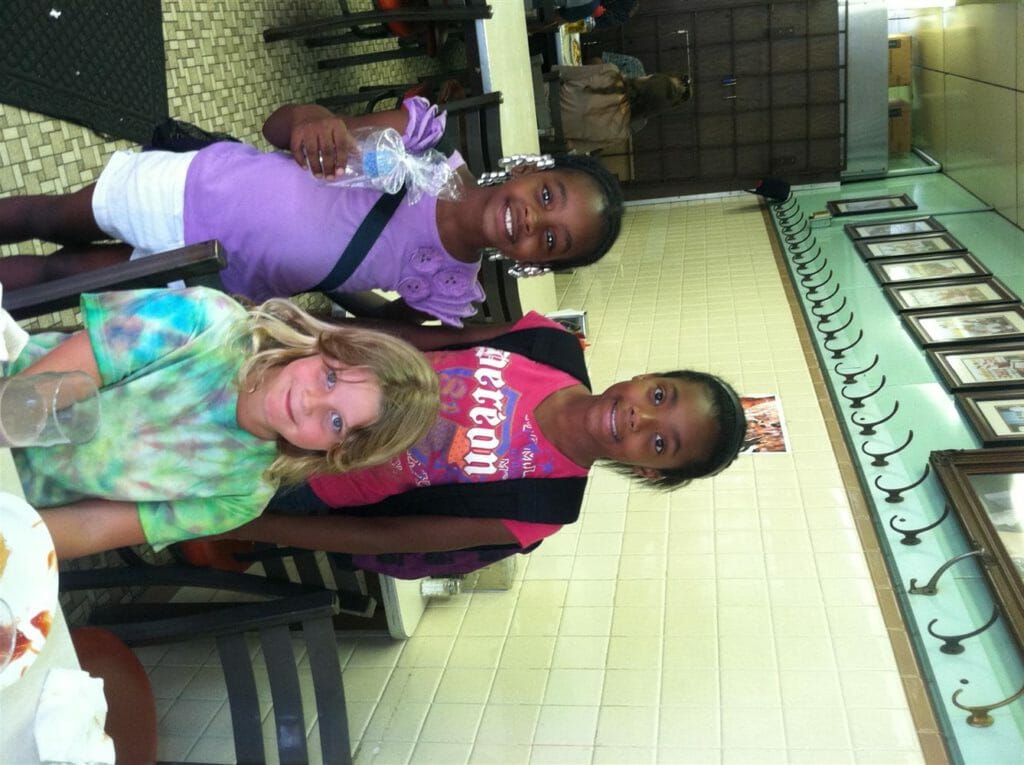
When I was eating lunch there on my visit to Detroit, Asia, an enthusiastic 9-year-old girl, came to my table and explained that she was selling candles for $5 each. I asked her how many candles she could sell in a day and she replied, “If I talk to 100 people, I can sell 35, but if I am in the zone, I can sell 60.”
Asia became the face of Detroit’s future for me. The city is resilient, undaunted and optimistic, leaning into its entrepreneurial spirit and ready to take on a challenge.
With a 19 percent office vacancy rate and a city population that has shrunk from several million to less than 700,000, Detroit is a city that has to reimagine itself. New alliances are needed, along with new energy and a new form of civic renewal.
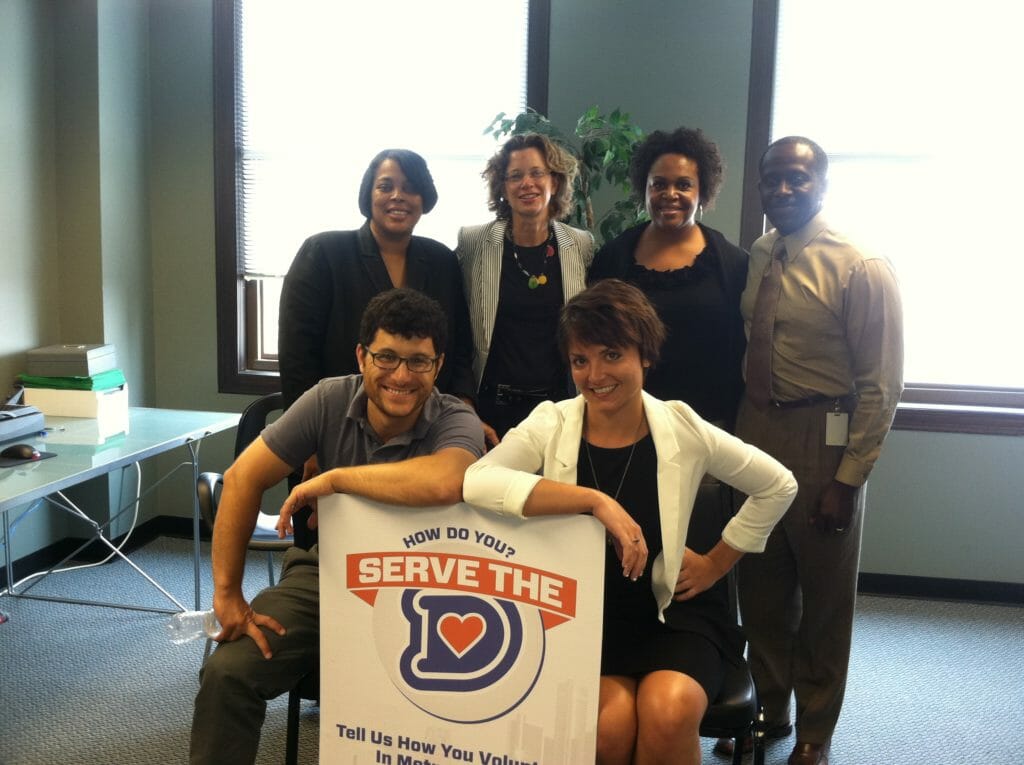
I was struck by both the enormity of the challenges that Detroit faces and the reservoir of optimism and determination of its citizen leaders. When I asked a group of leaders, who have come together in a collaboration called Serve the D, to rate on a scale of one to 10 their level of optimism about their ability to tackle the tough problems of the city, they all enthusiastically said 10 or even 11.
The group includes the city’s chief service officer, the Michigan Nonprofit Association led by my hosts Kyle Caldwell and Donna Murray-Brown, neighborhood and faith-based groups, and new generation approaches like Summer in the City. This diverse group of service leaders talked about the economic and racial rifts in the city and how central volunteer and civic engagement is in bridging differences and bringing the city together. Service, they said, is the essential ingredient for making tough decisions and finding the pathway forward.
Throughout my visit to Michigan, I was impressed by the rich civic infrastructure that undergirds its service work. Volunteer Centers of Michigan, the statewide volunteer association and network led by Diana Algra, supports and coordinates with 30 Michigan volunteer centers to embrace best practices and peer learning. In partnership with the Michigan Community Service Commission, led by Paula Kaiser VanDam, they have created a real model for collaboration at a statewide level, adopting HandsOn Connect as a unified technology platform, embracing the Reimagining Service Service Enterprise Model and focusing concerted energy in cities like Detroit. (Throughout the country, I have seen how a really small allocation of dollars from the Service Generation Fund is rippling out in creative investments and solutions.)
I walked into the D:hive in downtown Detroit, an initiative funded by the Hudson-Webber Foundation to accelerate the renaissance of this city. The D:hive is literally buzzing with activity – they give newcomers tours of the city to attract urban pioneers and run eight-week courses for entrepreneurs who want to start new businesses and civic ventures. Detroit has so much to offer, and D:hive helps newcomers find things in the city, from great jobs to community organizations.
I also saw how tough challenges can generate creative solutions. I met with my friend David Fike, who is the president of Marygrove, a small college serving largely first-generation college students. He and the leadership of this formerly women’s Catholic college have carried the institution into a new generation of growth and vitality by focusing on creating urban leaders. With a grant from the Kellogg Foundation, the college is revising its entire curriculum to develop leadership skills in each of its students and make Marygrove a significant leader in the drive to rebuild Detroit.
Back at the Lafayette Coney Island Hot Dog Stand, I asked Asia about school. “I love school, I love learning, and if I do well, I can help people,” she said. Given all the great leaders I met who are helping others in an effort to help Detroit, Asia will have a lot of company and, I hope, a lot of success.
The Employee Volunteer Program – Putting the CSR Puzzle Together
Today’s guest post is written by Cristina Andoni, ATLAS Corps Fellowfrom Republic of Moldova, serving at Points of Light as Corporate Institute coordinator. If you’re interested in contacting her for more information, please e-mail [email protected]
It’s not surprising that employee volunteer programs (EVPs) benefit businesses in a variety of ways. Companies with engaged employees experience 26 percent higher revenue per employee, a 50 percent higher market premium and 3.9 times the earnings per share growth rate compared to organizations with lower engagement (Gallup). Engaged employees feel more connected to their organizations and communities, and have overall higher productivity, ROI and job satisfaction rates. Add in the societal benefits and the return on investment is even greater.
With a proven business case for employee volunteerism, businesses today seek to maximize EVP efforts and get the most of their investment in corporate social responsibility activities. Although there is not a single recipe for the success for an EVP it is certain that impact is amplified when employee engagement actions are planned and aligned strategically to the company’s values, vision and culture. According to the latest Trends of Excellence Report: Employee Volunteer Activities, several trends around EVP practices have emerged:
Going green
Environmental causes and sustainability is on everyone’s agenda these days, including companies. Consumers are more concerned about a brand’s moral value than before, and brand loyalty is built upon a proven record of green practices. Companies such as Timberland went even further with the development of a GREEN Service Standard in which each volunteering event minimizes waste and supports the company’s environmental agenda, while others, such as Caesars Entertainment which collects soap when cleaning hotel rooms, which is then sterilized and distributed to underprivileged families globally to help prevent disease.
Infuse non-traditional engagement
Employee volunteering is expanding to correspond to the ever changing demographics, expectations and needs of the workforce. Take millennials for example, in just 10 years they will represent the biggest group in the workforce. At the same time, millennials who frequently participate in their company’s employee volunteer activities are more likely to be very proud to work for their company (55 percent vs. 36 percent who do not volunteer), and are twice as likely to be very satisfied with the progression of their career (37 percent vs. 21 percent) and their employer (51 percent vs. 32 percent) (2011 Deloitte Volunteer IMPACT Survey). Driven by impact and values, it is not a surprise that millennials find non-traditional volunteering appealing. It is now up to companies to make their offers appealing to millenials.
An integrated approach to volunteering
Cooperation, rather than and competition is taking over. Research shows that companies have learned that by joining forces they gain much more, both financially and in value. Excellent EVPs engage customers, business partners and other stakeholders to participate in volunteering activities. Other excellent EVPs increase employee participation in volunteer activities while enhancing employee work-life by incorporating volunteering into everyday workplace experience.
Cbeyond involves customers in its Week of Service, while 41 percent of volunteers at Timberland’s 2011 Serv-a-palooza day of service were business partners, vendors, consumers, partners, family and friends of employees.
Tailor volunteering
Not only do employees want more impactful volunteering and corporate involvement, but they are looking for opportunities which would best address their own development goals and interests. Companies which focus their EVPs around their employees’ areas of interest achieve greater success in attracting and retaining volunteers. Skills-based volunteering is a great way to build upon existing skill sets and develop new skills. It is also almost three times more cost-effective in comparison to regular training.
In the 10 months that I’ve worked with Points of Light, I have been amazed at how EVPs have evolved and how fast new research and trends in employee engagement have mushroomed. Companies have become more creative with matching business priorities to employee desires and community needs. EVP managers work more tightly with human resources and corporate CSR policy becomes more holistic. The path towards impact and success is paved with creative volunteer offering and innovative service practices. It is up to each company to decide which ones would bring competitive advantage and work best for business.
The article included data from the 2012 Points of Light Trends of Excellence Series, 2011 Deloitte Impact Study, Gallup, CECP’s Giving in Numbers 2011 survey.
Click here to download your Trends of Excellence Report.
Addressing Medical Needs in Rural Ghana with Blue-Med Africa
Today’s guest post is written by Laura, a second year pre-med student from the UK. During the summer of 2012 she chose to volunteer with Blue-Med Africa in Ghana, and volunteered on several medical projects while out there. She writes for Degree Jungle, a resource for college students.
Across the world, billions of people suffer from health inequalities that lead to untimely and unreasonable deaths. In the developing world health care is not accessible for many, and the basic living standards needed in order to fight off diseases can also not be achieved. During the summer of 2012 I chose to broaden my view of health care across the world by spending a month in Ghana. During my time there I worked on several medical projects, the majority of which focused on delivering care to those in rural areas who could not access it.
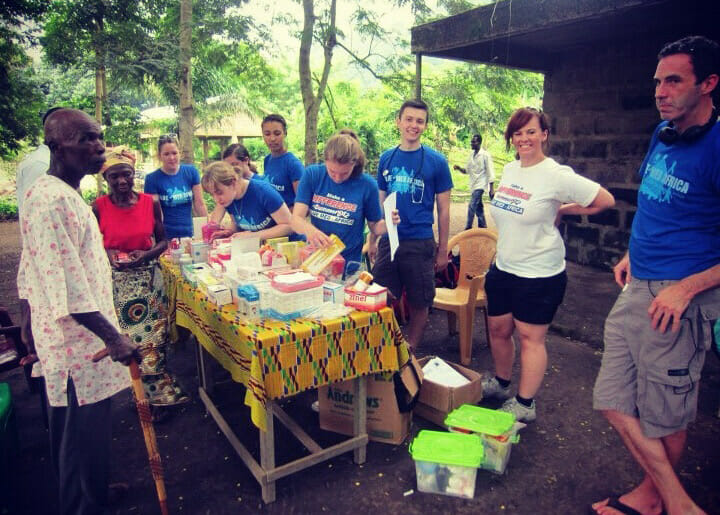
As an international volunteer, one of my main areas of focus was medical outreach. The areas our group visited consisted of derelict buildings which we would use to set up our stations. Those who came to the make-shift clinics we set up would often not see a doctor or nurse for months, and so the health of the patients there would be dire. Our first port of call would be to take basic vital signs, before passing the patients over to a nurse for a consultation, who would then refer them to our emergency pharmacy. Over the space of five hours we attended to hundreds of men, women and children with diseases like cholera, malaria and severe hypertension. The majority of the children who saw us would have severe fevers, and without the right assistance would have contributed to Ghana’s child mortality rate.
While visiting rural communities as a part of our medical outreach program was beneficial for a short while, it left many of us wondering what the real long-term benefits would be. For those who received treatment for diseases like malaria, no real follow-up appointments were available, and so there was no way to ascertain whether what we had done was effective. Unfortunately, many rural residents across Ghana cannot access treatment that is any better. Health care is not free here, and so if they cannot afford basic fees and a taxi fare to the nearest hospital, they have to suffer. We saw one example of this in its extremes during our last medical outreach, where one girl had a wound across her forehead that required stitches, but could not afford the $10 to reach the hospital and pay for treatment. In the end, we paid for her.
Throughout my time in Ghana, I have also assisted on maternity wards without basic facilities, and in a leprosy village where the residents never leave. During these times I really felt as though my presence made a minor difference, but I am still aware that a long-term solution needs to be found in order for care to be fair and accessible. Overall, my time with Blue-Med Africa in Ghana has made me realize that the world needs to do more to make access to care equal, otherwise injustices will continue.
Michelle Nunn’s Be The Change Book Is Reissued
Points of Light is thrilled to announce the reissue of “Be The Change,” an inspirational book by CEO Michelle Nunn that showcases the ways in which people find meaning and transform their lives by helping others.
“Be The Change” explores individuals’ capacity to create change in world – whether they are a well-know businessperson, national leader or ordinary citizen. The book intertwines practical tips on service and volunteerism with real-life stories of personal transformation. Throughout the book, Michelle offers reflections to create a narrative of hope and encourages readers to begin their own journey of service and discovery.
The new version features updated stories of service, showcases the work of civic leaders and social entrepreneurs, and includes a foreword from President George H. W. Bush. Michelle also provides the story of her own service journey, the development of Points of Light and the transformative power of service.
Jorge Betanzos is a summer intern at generationOn and rising senior at Columbia Engineering studying chemical engineering. His interests include education and pre-Columbian history.
Before last summer, I never imagined that hunger issues could exist in New York City. Had you asked me to define issues tied to food and hunger, my mind would quickly think of global issues such as food scarcity and availability; problems that could only exist in a third world country and not in a metropolis. Working with the Mary Mitchell Center in the South Bronx opened my eyes to the food issues that affect so many and seem to be unheard of.
Working in a team (four students), our job was to help the Mary Mitchell Center, a community center providing after school programs, summer camps, martial arts classes and countless more services to their neighborhood, alleviate the effects of the food desert they found themselves in. The problem wasn’t the lack of food in the area but rather the availability of the right food; sugary drinks had overrun fresh produce, neon colored chip bags and the all-too-convenient dollar menu.
It was a crash course of new terminology from the first day onwards; food justice, food access, sustainability, organic farming – the list kept growing. The manner of combating the problem was to create a nonprofit business, a community delivery system of fresh produce and whole grains at a competitive price. After a summer of research, trips to New York’s Hunts Point and meeting with community advisors we determined what the Mary Mitchell Center could do. Our final deliverable was La Canasta, a business providing healthy food to the community.
Working in the East Tremont area was eye opening and an experience that has fueled my interest in working in the nonprofit sector. I often wonder why the spotlight isn’t on helping communities such as the South Bronx. With growing numbers of diabetes in youth and with startling statistics on health declination in the region (due to unhealthy eating, lack of exercise and many other factors), we should place more attention on our local communities.
Our mentor and boss, Heidi Hynes, along with other food leaders in the South Bronx community, made the remark that the reason attention is steered away from communities such as the South Bronx is the lack of romance that comes with helping people so close to home. If there is something I left last summer’s experience with it was to never stop thinking locally. I do think that we should help those abroad whenever possible, but that doesn’t mean that we should neglect our own community.
Then, share the Activity Booklet with the kids and teens in your life to educate and inspire them on the issue. Help them become real-life Hunger Avengers by taking them to CommunityActionHeroes.generationOn.org so they can make a difference in your community.
This summer you can make your mark on the world and inspire others to do the same through generationOn’s Community Action Heroes summer program! Visit communityactionheroes.generationon.org to find out more about the range of youth service projects you can get involved in to help prevent hunger in your local community, as well as the national recognition and prizes that you can win for your creativity and effort.
Michelle Visits Columbus and Cincinnati. Collaboration is Key to Collective Impact
Michelle Nunn continues her cross-country trip and meets Russ Porter, a Point of Light in Cincinnati.
My family has continued our cross-country journey to discover people at the center of change. As we have made our way from Buffalo to Columbus and Cincinnati, we have found a few common themes – collaboration across sectors is the essential ingredient for community success, organizations are increasingly focused on the idea of collective impact, and citizens have a great reservoir of compassion and energy for meaningful engagement.
As we pulled into Columbus Wednesday evening, the arts district where we were staying was alive with people. This vitality was a preview of what we discovered in Columbus. This relatively small city is home to the country’s number one rated zoo, library and science center. (We also discovered the ice cream at Jeni’s Splendid Ice Cream. The experts may be right that Jeni’s has the #1 ice cream in the country. But we are determined to keep up the search!)
I met with Marsha Grigsby, the City Manager of nearby Dublin, Ohio and Christene Nardecchia who runs the volunteer program for Dublin. It was a fascinating lesson in the power of public/private partnerships and how government can engage citizens in a meaningful way. With a population of approximately 45,000, Dublin engages more than 3,000 volunteers in its programs, from running special events and festivals to serving as bike ambassadors to cleaning up the graveyard after a recent storm. They have discovered that citizen engagement can not only extend the service of government but also inform governing priorities and allow for real transparency with citizens and officials working side by side. Imagine if every city was effectively engaging citizens in identifying and meeting the critical priorities in this way?
The theme of public/private partnerships was further embodied in my visit with our affiliate, HandsOn Central Ohio. I was struck by the range of their programs – from running a 211 hotline that allows community members to give or get help, to administering a foster grandparent program with one hundred plus seniors giving tens of thousands of hours to marginalized children. One of the newest programs is a multi-sector partnership, administered by HandsOn, to create a centralized virtual reception center where homeless individuals are finding a path for placement into shelters.
Focused on improving access to dental care, the Dental OPTIONS program perfectly illustrates the benefits of cross-sector collaboration and the capacity of volunteers to leverage their unique skills. Funded in part through state-resources, HandsOn links patients with volunteer dentists who provide care for free or at reduced rates. Over the last 15 years, it has provided more than $4.5 million worth of dental care to individuals. Nearly 40% of the people in Ohio do not have health insurance and there are many that suffer enormous pain and serious health affects as a result of failure to receive expensive dental care.
In Cincinnati, I had lunch with Jeff Edmondson, managing director of the Strive Network. I was taken by Jeff’s vision of the importance of a multi-sector approach – how his community of Cincinnati is finding that downtown development, education, and virtually every other advance is dependent upon cross-sector collaboration and civic leadership. Building the civic infrastructure to support the success of every child, every step of the way, from cradle to career is the vision of STRIVE – a Cincinnati-based nonprofit initiative that is bringing together all sectors of the community to ensure success for the community’s children. Strive has met with extraordinary success: a 9% rise in kindergarten readiness, an 11% increase in high school graduation and a 10% increase in college enrollment. They are not creating more programs, but re-aligning community resources around proven methods of effecting change. Their successes have given birth to the Strive Network which works with communities nationwide to create a civic infrastructure which unites stakeholders around shared goals, measures and results in education.
And, as I have met with corporate partners, ranging from Cardinal Health, to Nationwide, to Procter and Gamble and The Limited, I found a shared commitment to collaboration. Each of these corporations is embracing an increasingly sophisticated corporate responsibility agenda structured to build upon their unique business assets to create greater impact.
As I walked around Cincinnati, (which was hosting 40,000 participants of the World Choir Games managed by thousands of volunteers) and admired newly created parks like Fountain Square and Washington Park, I was struck by this idea of a comprehensive, vibrant civic infrastructure. The workings of our business, nonprofit, and governmental sectors are key to the meaningful progress of any community. Cincinnati enjoys the highest per capita concentration of headquartered corporations in the country and their presence was clear from its world class arts institutions to its remarkable Underground Railroad Freedom Center.
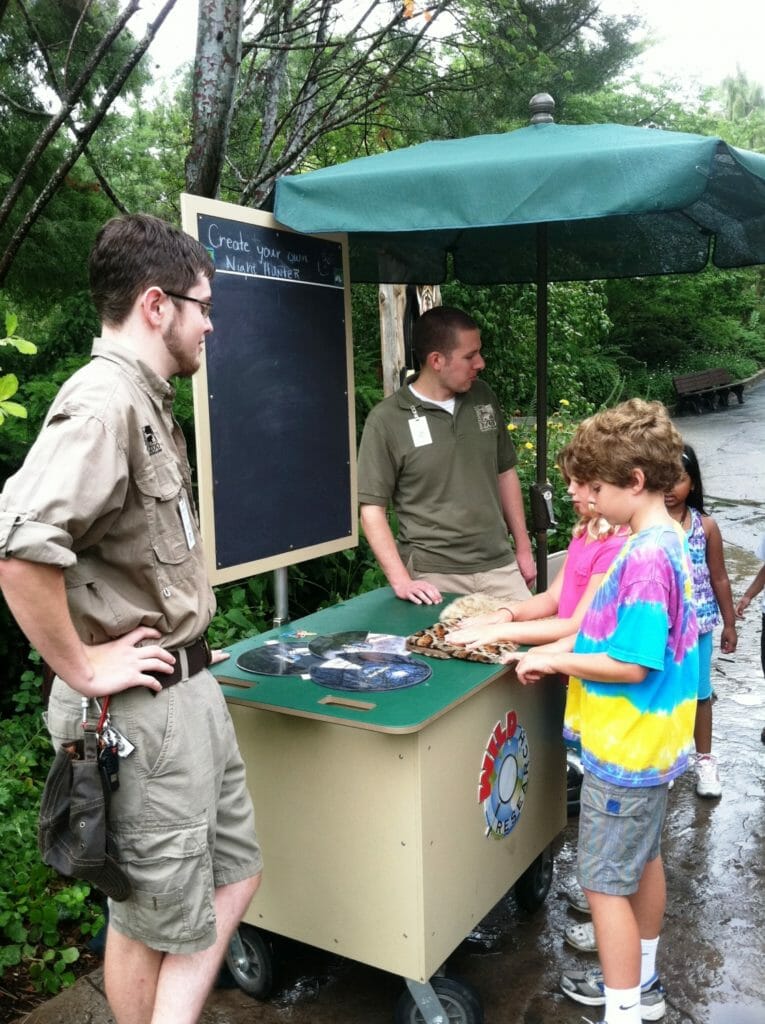
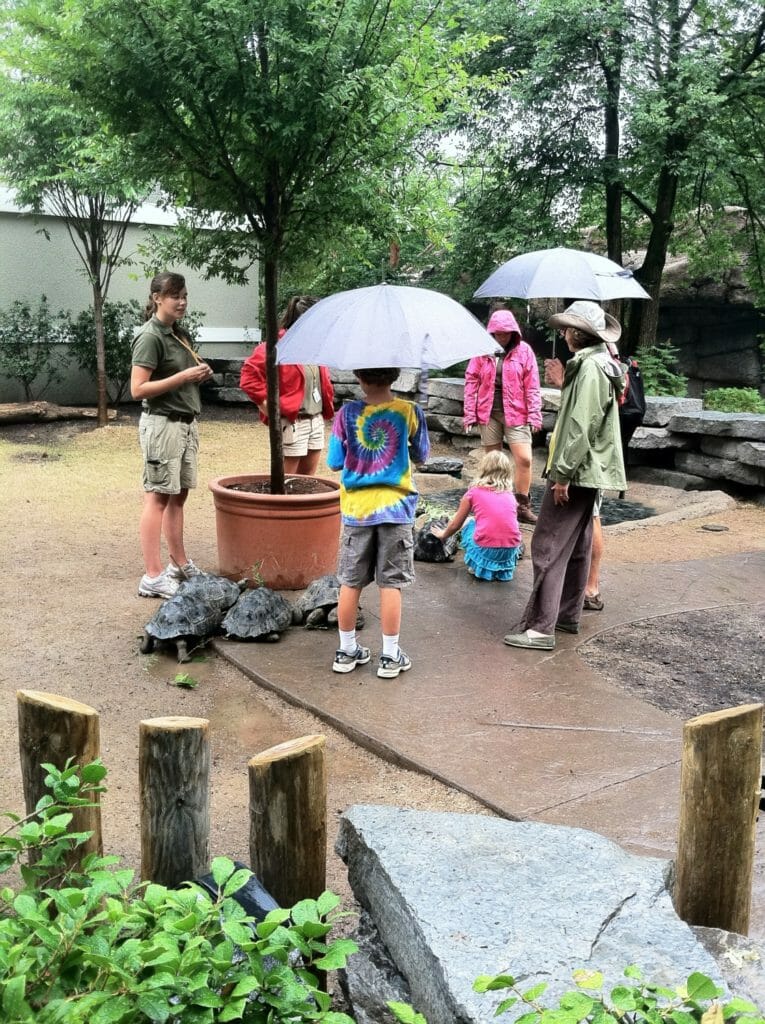
I met with remarkable individuals like Deanna Castelleni, who founded Ugive to create life-long givers by making philanthropy relevant to students. Deanna hosted us for the fun of a Reds’ Baseball game (they won!) and a behind the scenes tour of the Cincinnati zoo. This world-class zoo enjoys the leadership of hundreds of corporate sponsors, the engagement of close to 1,000 annual volunteers and the support of government. They have a fabulous teen program engaging teens and students in the care of the animals and the education of guests. One volunteer told me that spending every Saturday at the zoo with the animals and visitors was the best stress reliever possible and the favorite part of his week.
We have, of course, found not only innovation and interesting forms of collaboration, but the purest forms of service and compassion. We met Russ Porter at the Drop Inn Center – a homeless shelter in downtown Cincinnati. Russ is a retired executive from GE who for the last twenty years has been running a foot clinic for homeless men and women. When he learned that one of the greatest needs of homeless individuals was care of their feet, he created a clinic that travels to eight different shelters and provides care. Russ, accompanied by nurses and ordinary individuals trained in foot care, goes out into the city three times a week and creates mobile clinics where they bathe, massage, talk with, and care for the feet of the homeless. Russ cuts nails. They provide new shoes that fit and refer people who need it for further medical care. Russ says that this is the most rewarding job he has ever had – his paycheck is the thousand thank you’s he gets every year from the people he serves.
Russ is emblematic of the humble, empathetic servant leadership that makes our nation great.
Daily Point of Light Cassandra Lin on TEDx
TEDx is a program of local, self-organized events that bring people together to share a TED-like experience to share inspiring stories and connect to spread new ideas.
In this TEDx talk above, 13 year-old Cassandra Lin, a 2012 Hasbro Community Action Hero, proves that young people have the power to change the world. In the video above she shares her inspiring story of how she and her friends came together to start T.G.I.F. to turn grease into fuel & make a difference.
I have just returned from one of the most inspirational trips of my life. I’d like to share my experiences from the generationOn Youth Summit that took place in Chicago from June 18-20. Upon my arrival to McCormick Place in America’s third largest city, I was taken aback by the number of people attending this volunteer conference. It was really amazing and inspiring to see how many people out there are trying to make a difference. The large majority of these people were attending the general “Turning Point” Conference put on by Points of Light. I was attending the Youth Summit and Workshops alongside approximately 50 other teens.
On the first day we listened to several speakers and then prepared disaster response kits for local Chicago seniors. These kits consisted of food, water, flashlights, emergency contact numbers and guides to responding to disasters. It was an amazingly simple task, but it really demonstrates how easy it can be to make your mark on the world. Following this project, we listened to a panel moderated by none other than the grandson of George H.W. Bush, Pierce Bush. Pierce dug into the service projects of four young leaders of nonprofit organizations. He helped the audience understand exactly what it takes to start a nonprofit and the panel members really inspired me. After my first day in Chicago, my family and I stayed with a friendly couple who graciously invited us to stay on the fourth floor of their house. These two wonderful people belong to the Illinois Chapter of POA.
On the second day, the Youth Summit attendees decorated bags for seniors and filled them with puzzles and memory games to help keep their minds sharp and agile. This was another example of just how easy it can be to volunteer and make a difference. Several speakers came and shared various inspirational projects with us, and this marked the end of the second day.
The Conference for adults started right after the second day and Youth Summit and Workshop attendees were welcomed to attend the opening ceremony and listen to speakers including Second Lady Dr. Jill Biden, Barbara Bush, Neil Bush, Lauren Bush, Pierce Bush, Kevin Bacon and more. I had never seen so many famous people all at once, so that alone made the ceremony really stand out.
On the third and final day at the Summit and Youth Workshops, I learned a lot about public speaking, grant writing, more youth projects and tips on making them come to life. I was also able to share details about the big fundraiser I did after my Youth Ambassador trip to Ecuador with some of the people I met at [the] Conference. I met a huge number of truly inspirational young volunteers whom I hope to work with in future endeavors.
It was great to spend three days in one of my favorite cities in the world, to learn from some of the brightest young volunteers in the country, sharpen my public speaking skills and take home a head full of inspiration. I am thankful to Partners for allowing me to attend and represent them among so many great service-minded people and to generationOn for hosting such a great event. This experience is something I will not soon forget.
Andrew Carlone, 17, is a senior at Northville High School in Northville, Mich. He is a member of Partners of the Americas, an international network that promotes social and economic development in the Americas through leadership, voluntary service and development programs.
Beginning in Buffalo – Michelle Nunn’s Trip Cross-Country
In today’s blog Michelle Nunn describes her experiences in Buffalo as she journeys across the U.S. discovering people at the center of change. Read more about Michelle’s trip here.
Buffalo was a terrific place to begin our journey across the country to visit with volunteers and citizen innovators. I met with community activists, AmeriCorps members and Alums who are driving civic change in Buffalo with their energy and idealism.
Britney McClain was my host and guide to explore PUSH Buffalo’s Green Development Zone. Britney is a poised, knowledgeable and passionate advocate for PUSH – People United for Sustainable Housing. PUSH was started by two young civic entrepreneurs who had a vision for transforming a neighborhood through community organizing, advocacy, and energy/green renovation. As Britney led me through the neighborhood, we visited community gardens that have been transformed from empty lots into flourishing vegetable gardens. The neighborhood was alive with community members working everywhere we turned. Young people were creating an urban farm and marketing their fresh produce. The organic, authentic power of community and of raw idealism put into action was everywhere – from founder Eric Walker to Opportunity Corps VISTA members.
PUSH has engaged more than 300 residents and together, they are remaking their community – retrofitting homes with new energy efficiencies and transforming the neighborhood into a sustainable, green environment. In addition to physical improvements, PUSH is committed to improving the community’s economy – a percentage of the jobs retrofitting houses employ community members. Buffalo has one of the nation’s highest rates of home vacancies. A renaissance in Buffalo depends upon citizens banding together to create new approaches to economic development and healthier forms of community. This initiative is a really interesting model of authentic community organizing combined with new green approaches to economic development. It will be fascinating to see how PUSH develops in both its Green Development Zone and in its broader advocacy efforts to influence legislation and systems.
Next, I witnessed how The Service Collaborative of Western New York is providing the civic leadership and spark that is giving Buffalo new possibilities. This civic hub houses and runs programs ranging from VISTA members who are educating community members in financial literacy to a YouthBuild program, to ABLE – AmeriCorps Builds Lives through Education – providing tutoring to help students to reach grade level. They have 85 community partners and are engaging close to 500 national service members. I was struck by the energy and enthusiasm of the program staff, AmeriCorps members and Alums I met in a roundtable conversation hosted by Kate Sarata, an AmeriCorps Alum and now executive director of The Service Collaborative. We had a great discussion about the challenges they have faced and what inspires them. We talked about how collaboration is key to their work and how HandsOn Connect has created a platform for a central call to volunteer action in Buffalo.
As I am leaving Buffalo, I am taken with what a critical pipeline AmeriCorps is for our communities. After completing their AmeriCorps service, many of the Alums in Buffalo are staying to serve, to advance their education, and to work – a veritable wellspring of talented young people committed to improving our communities. Special thanks to Ben Duda, Executive Director of Points of Light’s AmeriCorps Alum initiative. He connected me with a fascinating assembly of idealists who are clearly shaping the future of Buffalo. He also led us to the classic, riverside “Old Man River” burger and seafood joint- famous for sweet potato fries doused in honey and butter- what could be better!?
Michelle Nunn’s Reflections From Chautauqua Institute
Chautauqua Institute is quintessentially and uniquely American. In the words of David McCullough, “There is no place like it. No resort. No spa. Not anywhere else in the country, or anywhere else in the world. It is at once a summer encampment and a small town – a college campus, an arts colony, a music festival, a religious retreat, and the village square. It is all of these things and it’s none of these – just. And there is no place – no place – with anything like its history.”
Chautauqua was founded in 1874 as an experiment in out-of-school, vacation learning. It was successful and broadened almost immediately beyond courses for Sunday school teachers to what is now a multi-faith, inclusive community of learning and the arts. It was created at a time when Americans had not fully invented “leisure” – when the idea of rest or rejuvenation was considered to be a complement to the pursuit for self-improvement. Today, 138 years later, Chautauqua is a thriving community that for nine weeks blossoms into a community of 7,500 who join together each day to listen to lectures, go to operas, ride bikes, go sailing, and gather together across generations.
For me, Chautauqua was the perfect place to start my family’s journey across America. We spent the 4th of July week here enjoying a series of conversations led by Jim Lehrer, diving into the forces that will shape the 2012 election and how the outcome will impact us all. We gathered each morning to hear some of the nation’s keenest political minds, from Michael Gerson to Donna Brazille to Mark Shields. The dominant theme was the current and seemingly growing polarization in the country. In the last twenty years, we have almost doubled the degree of difference between Republicans and Democrats. The generational gap is wider than it has been on issues in forty years. In every conversation, there was a genuine hunger for bridging this divide and finding room for compromise and common ground.
And how do we do that? How do we re-build relationships among our political leaders, demand civility in our debates and in ourselves, passionately support not just our own ideologies but the pursuit of practical answers? The answers to these questions depend upon all of us – upon citizens. We can’t wait for the political leaders – we, the people must lead. Rev. Buzz Thomas, one of the week’s speakers and President of the Great Schools Partnership, declared on July 4th, “If there is an American exceptionalism, it is based upon service, not dominance.” Truly, America’s greatness is dependent upon the service and engagement of our citizens.
This past Monday, I was honored to give a lecture (yes, it is indeed called a lecture) at the revered Chautauqua Amphitheater. This is the same space where FDR and Susan B. Anthony addressed their fellow citizens. I opened a week of lectures with the theme of INSPIRE, COMMIT, ACT. I talked about three principal ideas: 1) That we are wired to help others 2) That our history and America’s story have been shaped by people acting on this empathetic impulse to help others 3) And, that we have more power to drive greater change and help more people than ever before. The complexity of our challenges demands that we all take up our power to create a better world.
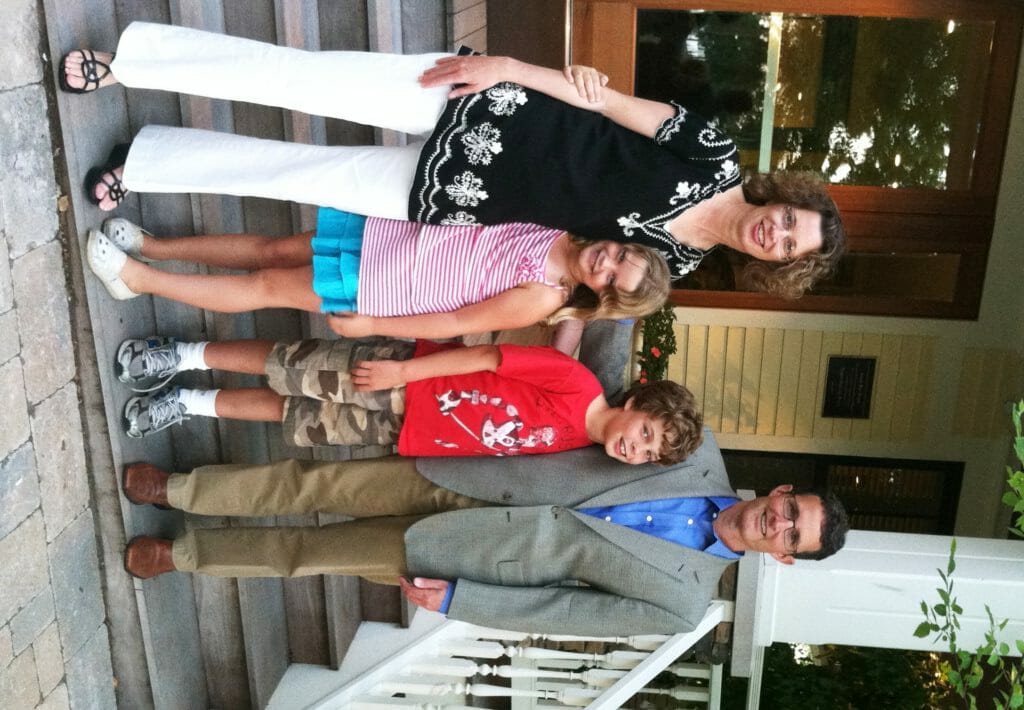
I am now heading off across the country, with my family, Elizabeth (age 7) and Vinson (age 9) and my husband Ron (partner, driver, navigator, tour guide, and baggage packer, etc.) in tow. We are looking forward to discovering the stories and finding the civic innovators and citizen leaders who are shaping our nation’s future. I look forward to sharing what I learn from the people we encounter along the way.

 In Cincinnati, I had lunch with Jeff Edmondson, managing director of the Strive Network. I was taken by Jeff’s vision of the importance of a multi-sector approach – how his community of Cincinnati is finding that downtown development, education, and virtually every other advance is dependent upon cross-sector collaboration and civic leadership. Building the civic infrastructure to support the success of every child, every step of the way, from cradle to career is the vision of
  In this TEDx talk above, 13 year-old Cassandra Lin,
  Today’s blog is republished from the
 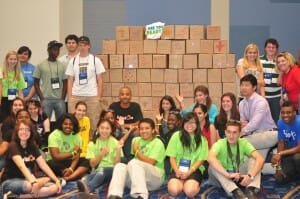 On the first day we listened to several speakers and then prepared disaster response kits for local Chicago seniors. These kits consisted of food, water, flashlights, emergency contact numbers and guides to responding to disasters. It was an amazingly simple task, but it really demonstrates how easy it can be to make your mark on the world. Following this project, we listened to a panel moderated by none other than the grandson of George H.W. Bush, Pierce Bush. Pierce dug into the service projects of four young leaders of nonprofit organizations. He helped the audience understand exactly what it takes to start a nonprofit and the panel members really inspired me. After my first day in Chicago, my family and I stayed with a friendly couple who graciously invited us to stay on the fourth floor of their house. These two wonderful people belong to the
  On the third and final day at the Summit and Youth Workshops, I learned a lot about public speaking, grant writing, more youth projects and tips on making them come to life. I was also able to share details about the big fundraiser I did after my Youth Ambassador trip to Ecuador with some of the people I met at [the] Conference. I met a huge number of truly inspirational young volunteers whom I hope to work with in future endeavors.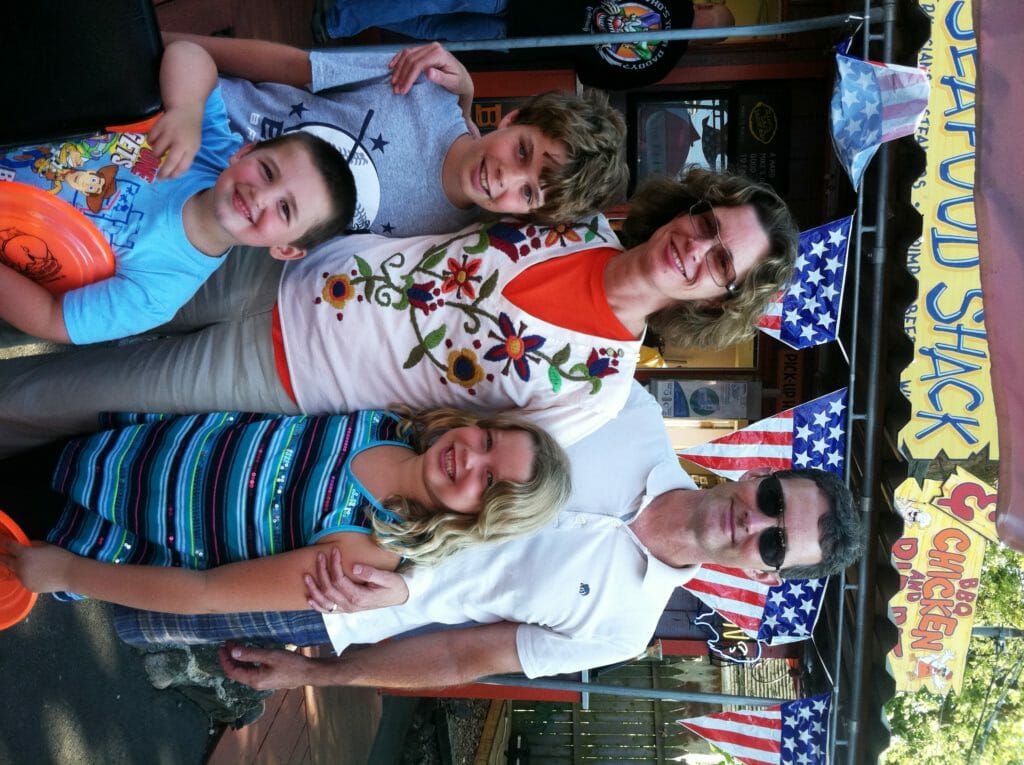
 Chautauqua Institute is quintessentially and uniquely American. In the words of David McCullough, “There is no place like it. No resort. No spa. Not anywhere else in the country, or anywhere else in the world. It is at once a summer encampment and a small town – a college campus, an arts colony, a music festival, a religious retreat, and the village square. It is all of these things and it’s none of these – just. And there is no place – no place – with anything like its history.”
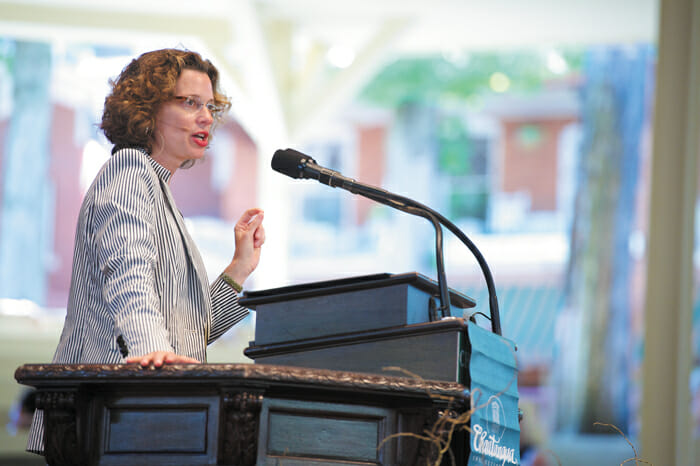 This past Monday, I was honored to give a lecture (yes, it is indeed called a lecture) at the revered Chautauqua Amphitheater. This is the same space where FDR and Susan B. Anthony addressed their fellow citizens. I opened a week of lectures with the theme of INSPIRE, COMMIT, ACT. I talked about three principal ideas: 1) That we are wired to help others 2) That our history and America’s story have been shaped by people acting on this empathetic impulse to help others 3) And, that we have more power to drive greater change and help more people than ever before. The complexity of our challenges demands that we all take up our power to create a better world.