Transformative Impact

Volunteering is impactful for individuals, communities, and society

When volunteering is rooted in community voice and shared ownership, it becomes a powerful force for change. Communities have greater ability to shape solutions that reflect their own needs, priorities, and strengths. Service helps meet immediate challenges, but its value extends further: it strengthens civic life, builds resilience, and contributes to lasting social change. Organizations and institutions work alongside communities as partners, not simply as providers.

Goals for Transformative Impact

Measure and Show the Difference Volunteering Makes

Evaluation ensures that the impact of volunteering is visible, credible, and actionable. It requires moving beyond basic outputs to capture meaningful outcomes – enabling organizations, funders, and policymakers to understand what works, improve effectiveness, and invest with confidence.

Emerging Opportunities for the Field
1. Collaborate Through a Volunteerism Research Network and Hub
2. Develop a Volunteer Outcomes and Impact Framework
3. Strengthen Volunteer Impact Measurement and Storytelling Across the Field
4. Integrate Volunteer Engagement in Public Measures of Organization Impact


 

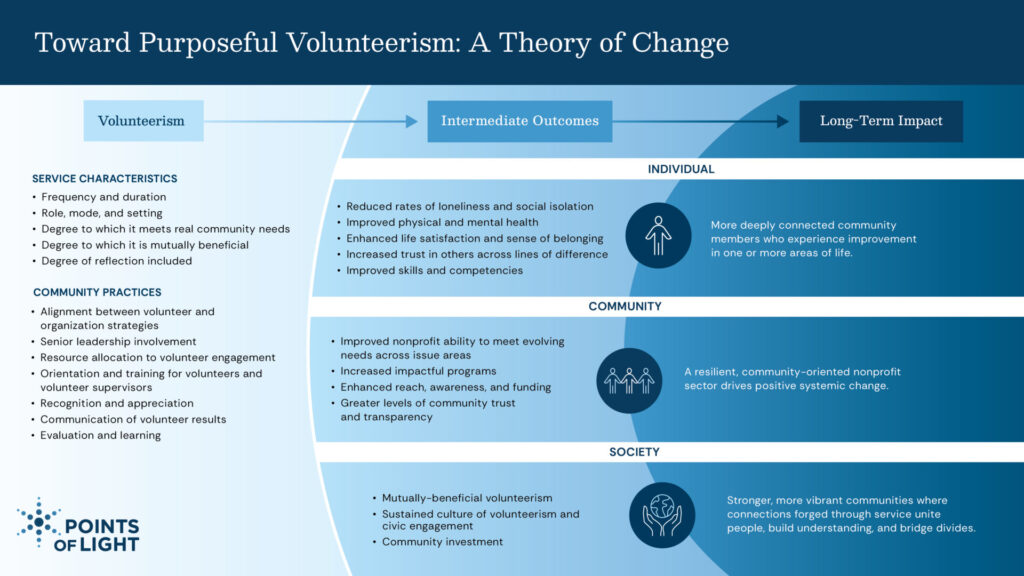
Toward Purposeful Volunteerism: A Theory of Change Toward Purposeful Volunteerism: A Theory of Change

Toward Purposeful Volunteerism: A Theory of Change

Purposeful volunteering requires intention. This theory of change shows how, when designed well, volunteering creates positive outcomes for volunteers, organizations, communities, and society.

The National Volunteer Strategy is the roadmap for making those conditions a reality. Its framework and goals outline how we can work together to strengthen volunteering and create more opportunities for people to engage in purposeful service.