



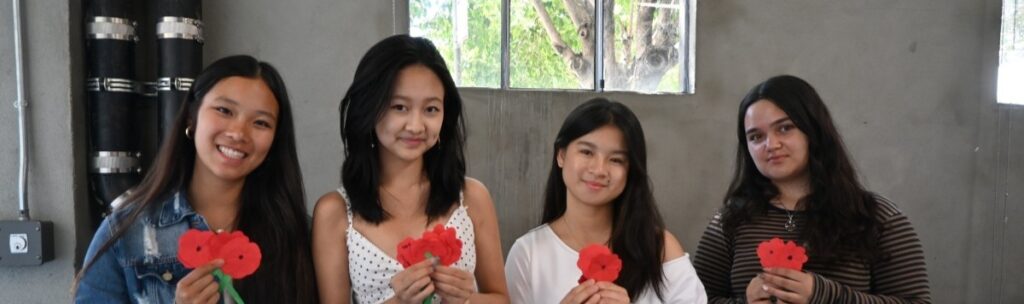
Meet Daily Point of Light Award honoree Michelle Ye. Read her story, and nominate an outstanding volunteer or family as a Daily Point of Light.
Points of Light is proud to share the following uplifting and inspiring story. However, we acknowledge that portions may be difficult for some readers. We encourage you to please care for your own wellbeing above all.
Seventeen-year-old Michelle Ye has always loved dance, but the associated pressure spurred on body image issues from a young age. And she wasn’t the only one affected. With their discovery of shared challenges and the lack of support for young people experiencing disordered eating, Michelle and her Co-Founder Diya Mankotia created Project EDSA (Eating Disorder Support & Awareness) to bridge the gap. Now, as the world’s largest youth-led eating disorder organization, Project EDSA is a network of youth across 59 countries that embeds prevention, awareness, and peer support systems into schools across the world.
In just a year and a half, Michelle has helped train 2,000 student leaders who have, in turn, educated 100,000 peers through events and workshops. Youth are more likely to confide in someone their own age than an adult when they’re struggling. By equipping young leaders with the knowledge to help, the organization hopes to empower them to seek support amongst their peers.
What inspires you to volunteer?
Growing up, my grandparents helped my parents take care of me while they were at work. That led to a feeling of responsibility to take care of others. I just want to contribute to my community.
Tell us about your volunteer role with Project EDSA.
Our main focus is our chapter program, through which students create a club in their own school or community. We’re partnered with ANAD (National Association of Anorexia Nervosa and Associated Disorders) and work closely with their school ambassador program. Our chapter leaders undergo training with ANAD to learn about eating disorders, facilitating discussions, and advocating on their campus. After that, we give them a 30-day starter kit with basic guides for them to get set up.
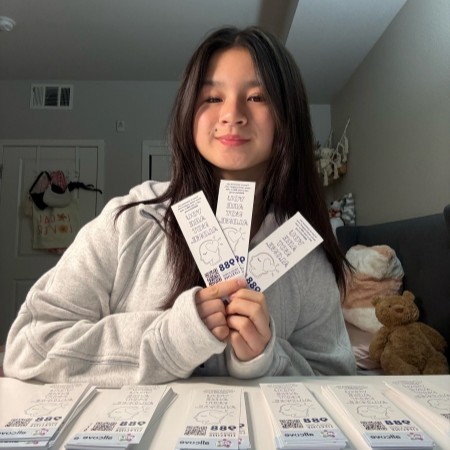
Our other major focus is our volunteering program, but that’s more to help with our operational work. One in three youth report lacking reliable access to mental health resources, and about 50% wouldn’t know what to do if they felt like harming themselves. In honor of Suicide Prevention Month last year, we distributed 7,500 bookmarks across 40 schools and libraries with the 988 Suicide & Crisis Lifeline and local mental health resources.
As the Co-founder and COO, I oversee everything and do social media. I help with a lot of internal work like onboarding our chapters—120 so far—and volunteers and creating guides for them. I also strategize with Diya.
What inspired you to get started with this initiative?
Growing up dancing, there was a lot of pressure to have a certain body type. That pressure really got to me when I was nine. I never had an eating disorder, but I started hating my body and have had body dysmorphia since then. When I was 14, one of my dance teachers body shamed my peers and me. That’s why I stopped competitive dancing and left that team. It led to many of us developing disordered eating habits, and motivated me to volunteer at a local eating disorder nonprofit, where I met Diya.
Together, we realized that while there was support there, all the programs were designed for adults despite adolescents being most at risk. She had her own EDSA club at her school, but she wanted to expand it, so together, we launched the organization.
What are your long-term plans or goals for the organization?
We’re in the process of onboarding our new executive leadership board. That’s our main focus. We’re also working on the State of Eating Disorders. Each chapter leader will report on their school’s current level of support, so we can use the information to advocate for policies.
We’re also trying to get into crafting care packages for those struggling with eating disorders in hospitals. When Diya was in recovery, she really enjoyed the art supplies people brought. It can be isolating when you don’t really have anyone to speak to. And we’re working on a formal Eating Disorder Awareness Week campaign that we can do every year.
What’s been the most rewarding part of your work?
It’s being able to connect people from all over the world. It’s cool how an initiative one chapter is doing in Texas, for example, can be adapted for New York City or expanded to Peru. We have a Slack channel for everyone and an Instagram group chat for chapters. Everyone always likes each other’s messages. Even though they don’t really know each other that well, we’re connected by this shared community.
What have you learned through your experiences as a volunteer?
Volunteering is super rewarding, but it also requires patience. I work with many different people, and it can be challenging when the same questions are being asked over and over. Patience is important.
Also, volunteering instills empathy. You have to empathize and be an active listener to understand the struggle. It’s important that you’re passionate and knowledgeable about the issue you’re focusing on, so you’re able to do meaningful work.
Tell us about future partnerships, programs or events that you are excited about.
We were awarded a $5,000 grant for our 9/11 initiative. There are multiple chapters participating, and we’ve been able to give them—and some close partner organizations—up to $500 to each.
My chapter will assemble care packages at my local American Legion Auxiliary Post to target hunger within the veteran community. Many veterans rely on food stamps, and we want to address that by packing shelf-stable nutritious food and recipes along with positive messages in each box to brighten their day.
Why is it important for others to get involved with causes they care about?
Throughout your life, there have been people who have helped you along the way, and sometimes those actions shape or help you the most. It’s important to do that for others. Also, if you have a certain lived experience, volunteering is a great way to help those who are going through that same type of challenge.
What do you want people to learn from your story?
Youth can change the world. We’re dominating as changemakers now more than ever. There are so many amazing initiatives out there proving we have this ability.
Do you want to make a difference in your community like Michelle? Find local volunteer opportunities.