

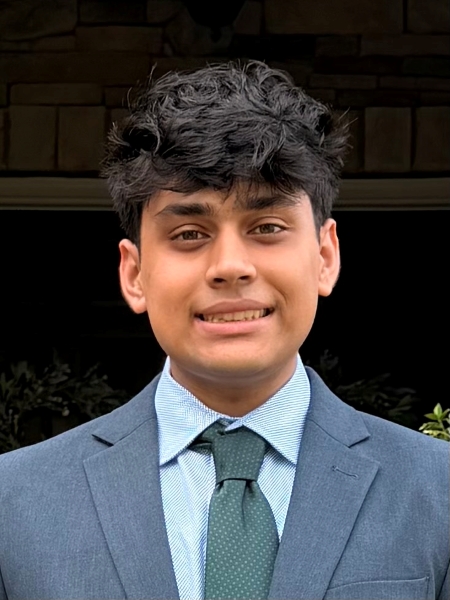
Meet Daily Point of Light Award honoree Niam Kathrotia. Read his story, and nominate an outstanding volunteer or family as a Daily Point of Light.
Niam Kathrotia saw what was happening in his community, and he knew it was time to take action. Last year, immigrant enforcement operations came to a peak in the Charlotte, North Carolina, area, with enforcement operations around the city. This caused a tremendous amount of uncertainty for the area’s large immigrant population. As the founder of Indian American Youth Leadership, a youth-led nonprofit organization dedicated to empowering young leaders through advocacy, education, and community-driven initiatives to create meaningful change, Niam knew he could use his education and skills to help the people in his community to live safe, stable lives.
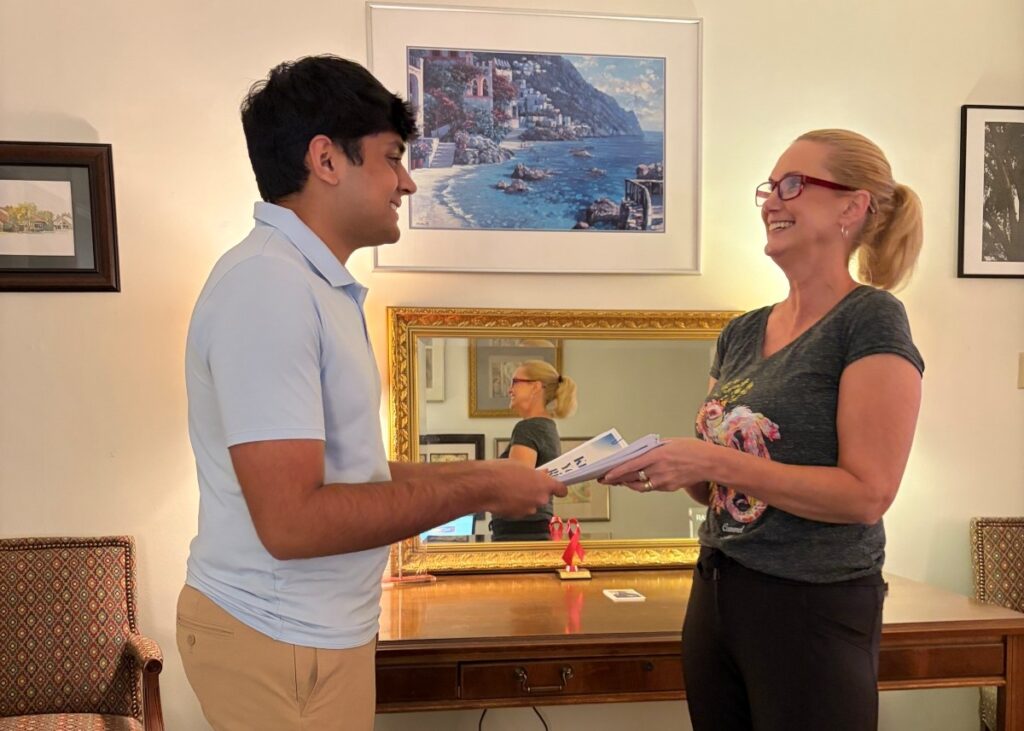
Enabled by his education working as an intern at a law firm, Niam developed “Know Your Rights” guides to help immigrants understand their rights. He sought feedback and guidance from qualified attorneys and translated the guides for the diverse Charlotte population. Niam reached out to Charlotte businesses and inquired as to whether they’d be willing to keep the guides in their establishments. Niam would reach out to 50 different businesses, and it was likely that 40 of them would say no. But for the 10 businesses that agreed, Niam had succeeded in providing a tangible tool that helps their clientele. Thus far, he has partnered with more than 30 businesses and organizations across the Charlotte metro, reaching over 10,000 people digitally. On top of his busy school workload, he contributes around 30 hours per month to this important project, and isn’t slowing down anytime soon.
Currently a high school senior, Niam has spent so much time immersed in learning the legal rights of his fellow community members that he’s now interested in pursuing a legal career when he heads off to college. He’s fascinated by the intersection of law, policy, and decision-making, and would love to explore federal regulation or immigration law in a way that betters civil rights. Niam’s dedication to his volunteer work has been so successful that it’s even helped him discover a future career path. His willingness to advocate for his community through volunteerism is a testament to just how much change the willingness to help others can create.
What inspired you to get started with this initiative?
Last fall, a lot of immigrant communities really felt uncertain about what rights they had. Being someone who’s in the South Asian community myself, I saw this firsthand. Having been in legal spaces before as an intern, I did what I could. I reached out to some people I had worked with at a law firm previously, and they were in that same immigration space. I really wanted to reconnect with them and see what we could do. From there, we launched partnerships. We got them to translate our materials and help distribute them. Then, it became a citywide volunteering project. But it really all started because I saw what was happening in the community around me.
What inspires you to volunteer?
Honestly, it’s a personal tie-in. It’s seeing not only how this affects me, but also how my community is impacted by these kinds of issues. It’s knowing what I can do to step in, since I may have more resources, connections, and links to better the community that I live and go to school in. Just knowing that really inspires me to help the people around me that I live and work with.
Tell us about your volunteer role with Indian American Youth Leadership.
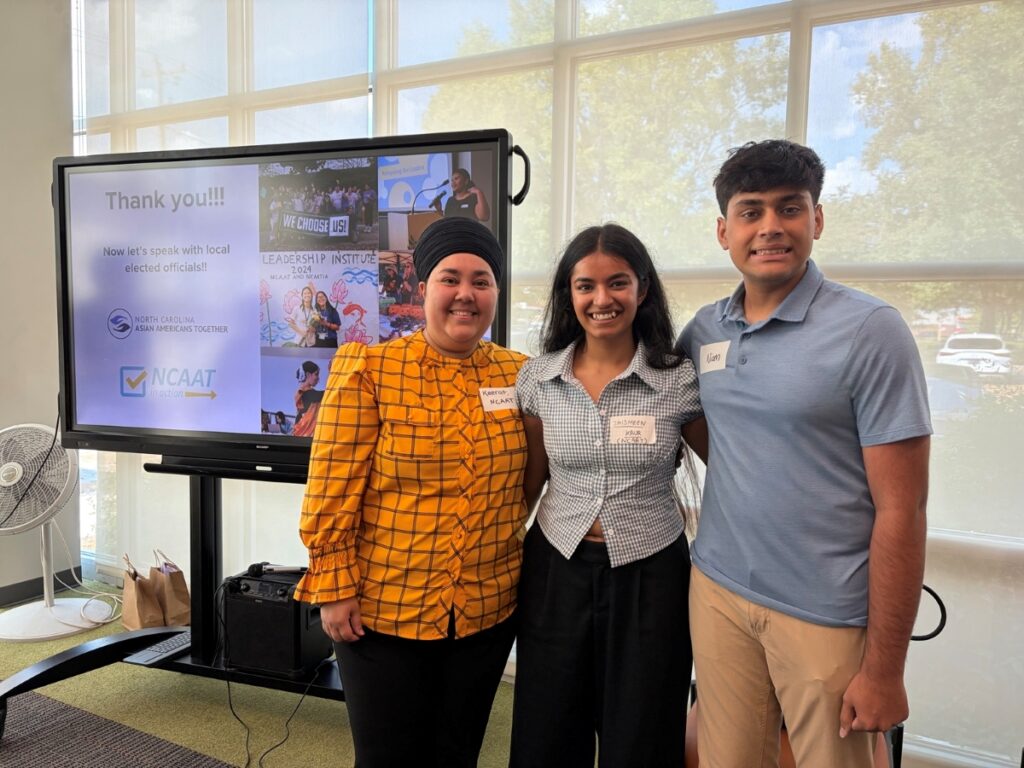
As the founder of the organization, I launched this campaign and came up with the idea. I started reaching out to the law firm, and from there I spent most of the summer driving around Charlotte and calling businesses. I’d say, “Hey, I think this would be a resource that would really help you out because you guys are in an immigrant community,” or “You’re in an area where information may not be as readily accessible.” Sometimes that would require Google Translate because it may be a Spanish-speaking business or another language. A lot of my work was outreach and distribution. Then later on, there were opportunities like speaking engagements and advocacy opportunities with elected officials. It really was just about getting those materials out there, driving around the city, putting the boots on the ground, and doing that work.
What are your long-term plans or goals for the organization?
Long-term, I really hope to scale this initiative and bring it across the state of North Carolina to places across the country, because the information is not solely localized to the Charlotte area. It’s simple Know Your Rights information that applies to all across the United States. Especially when we see all these different things on TV about policies and actions, people get really confused. But having a simple guide to demonstrate that is really important. Currently, I’m working with another Asian American organization across North Carolina to expand it into schools and more places that people have to go every single day. Expanding that accessibility into those everyday spaces is really important. In college, if they had their own social justice initiatives or volunteerism initiatives, that would help me continue that work.
What’s been the most rewarding part of your work?
The most rewarding part of this volunteer work is just getting to see who’s impacted by this, especially living in those kinds of communities. Seeing people who maybe don’t understand what legal rights they have or what their rights are at school; seeing some classmates who maybe don’t understand what their rights are; seeing them have that access to information, then personally thanking me and saying it’s really helpful. Not just having a guide in a law firm, but having it in a coffee shop or in a Colombian bakery, places that people go every day. People have really told me what it means to them, and that’s been really meaningful for me.
What have you learned through your experiences as a volunteer?
The importance of speaking to people. I’ve really learned the importance of clear communication, especially when it’s an issue that affects people’s lives directly and there’s an urgent need. I’ve learned to communicate in a clearer way and learned to just meet people where they are.
Why is it important for others to get involved with causes they care about?
Getting involved with causes that you care about is so impactful because it affects everything around you. You may not think that it affects you, but all of these issues affect you. If you care about an issue, whether it’s gun rights, environmental safety, or immigration rights, it in some way affects you, your family, and your community. Getting involved can put your own personal experiences and perspectives into play, because there may be someone who has similar experiences to you, but they don’t have your exact experiences. Bringing your own perspective to the table, getting involved is so incredibly meaningful and helps you become a better, more well-rounded person who benefits the community around you.
What do you want people to learn from your story?
I want people to learn how important it is to simply have access to information. Expanding access to that kind of trusted educational information. What are my voting rights? What are my civic rights? What are my healthcare rights? Those are things that affect people’s day-to-day lives, and having access to that information can directly empower them in situations where they may feel uncertain. It just helps them engage and helps them understand what exactly they can do. Being informed is the first step, and it leads to so many better things. Communicating that idea to people and having them learn simple, clear information is one of the most important things for any volunteer project or anything that’s benefiting the community.
Do you want to make a difference in your community like Niam? Find local volunteer opportunities.