



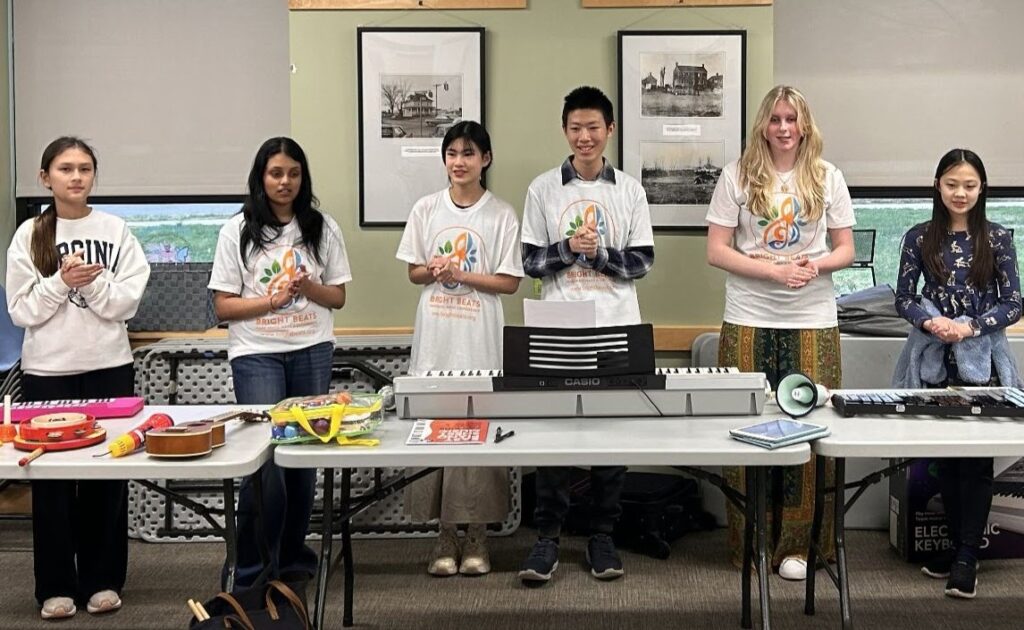
Meet Daily Point of Light Award honoree Ryan Qi. Read his story, and nominate an outstanding volunteer or family as a Daily Point of Light.
When Ryan Qi’s younger brother was diagnosed with a developmental delay at 2 years old, the family faced an uncertain road. Then, one afternoon as Ryan practiced on the piano, his brother — who usually kept to himself — wandered over and joined in, tinkering with the keys and dancing alongside him. That moment of connection inspired Ryan to found Bright Beats, a youth-led nonprofit that brings free, adaptive music sessions to children with disabilities.
Today, the 17-year-old from Virginia leads a team of more than 100 volunteers who bring sing-alongs, rhythm games and instrument play to families across several states and countries such as China, Vietnam, and Uganda.
What inspired you to start Bright Beats?
About three years ago, my brother was diagnosed with a developmental delay when he was about 2 years old, and that was a really hard moment for our family. We had to start caring for him a lot, and his future was uncertain in terms of his educational goals and things like that. One day I was playing piano, and my brother, who usually just keeps to himself, came over and started playing the piano with me. He started tinkering with it and dancing, and it was really amazing to see him interacting with us in a way he hadn’t before. That’s the point where I really started to see how powerful music was for fostering that kind of connection, and that’s what prompted me to start Bright Beats: to bring music to more families who are facing a similar situation as mine was.
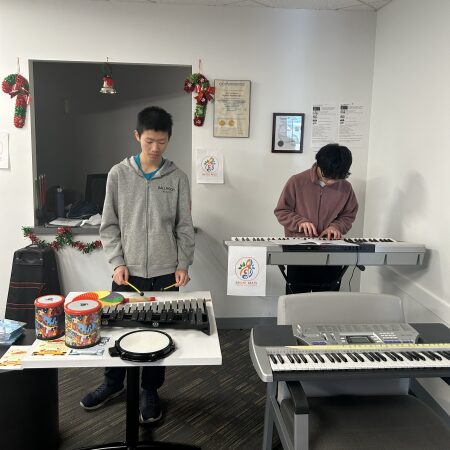
How has Bright Beats grown since you started it?
It started out really small, within our community. My first programs and sessions were at my brother’s school, which is specifically a school for special education. During their summer session, my sister and I would go to the school, go to all the classrooms, and provide music sessions for them. We have sing-alongs, rhythm games, and music games like musical chairs. We also have a lot of percussion instruments for the kids to free-play with, like bells and drums, so they can express themselves however they please. For our sing-alongs, we choose songs a lot of the kids probably already know, like “Twinkle Twinkle Little Star” and “The Wheels on the Bus.”
The sessions last about 45 minutes to an hour before we switch classrooms, and we’ve basically carried that structure over into our current sessions. I spent a lot of time at that small scale really designing the core session well, and then, about a year and a half later, I started to expand Bright Beats to other locations in our community. We established a library session that happens about monthly at our local library, so more kids and families can join. They don’t have to be part of a school; they can just come to the library and experience the music sessions. We also expanded to virtual sessions for families who don’t live in Virginia or near where I live, so we can connect with families one-on-one or in small groups over Zoom and provide adaptive Bright Beats sessions. And we established some new partnerships, like with an organization called The African Child, which is located in Uganda. We send them pre-recorded sessions to help the kids they engage with, who also have disabilities.
What’s been the most rewarding part of this work?
I think my favorite part of Bright Beats is sharing the music with the children. It really makes me happy to see them learn and have fun in a safe community where they can interact with their peers.
Is there a specific moment or memory that sticks out to you?
At one of our library sessions, there was a kid who at first was really nervous and shy, and didn’t really want to play with the volunteers or the instruments or talk to the other kids. But as the session went on and we sang some familiar songs, that child soon felt more comfortable and welcome, and by the end of the session, the child was playing with the instruments and having a lot of fun. I think that really shows that Bright Beats sessions can help kids feel welcome and comfortable.
What have you learned from running your own nonprofit?
I think the most important thing about running a nonprofit is having a core purpose. I know a lot of youth nowadays create nonprofits just to get into college, but I think making a nonprofit is really about helping people in your community. It’s important to understand what your purpose is in creating a nonprofit, because that itself will really guide the founder and the leaders to figure out how they’re actually going to help their community. That’ll help them design their events, their branding, and whatever else they need.
What are your long-term plans for Bright Beats?
As for the chapter in Virginia, when I graduate from high school — and we’re actually already facing this in some of our other chapters, where leaders are graduating and going to college next year — we have a big leadership team, so Vice Presidents and Directors will move up and fill in the roles the President or Vice Presidents have left behind. That’ll really help the chapter stay sustainable. As for the graduating leaders and volunteers, they join an alumni network, or a mentor network, that continues to guide the leaders who are actively involved in the chapter. So we can kind of keep all the chapters sustainable. And graduates can also take Bright Beats to where their college is and start new initiatives there.
Why do you think it’s important for people to get involved with causes they care about?
I think it’s important because it really allows you to pay it forward in your community, and for all the skills you gain along the way, you’ll have a way to show the world what you really care about and make a better impact on the world.
What do you hope people take away from your story?
I hope people can take away that there’s always help out there. Even though there’s a lot of stress and anxiety in the world, there are always people who are volunteering and willing to help you, no matter how bad your situation is.
Do you want to make a difference in your community like Ryan? Find local volunteer opportunities.