November Board Member of the Month: Mr. Ethelbert Miller
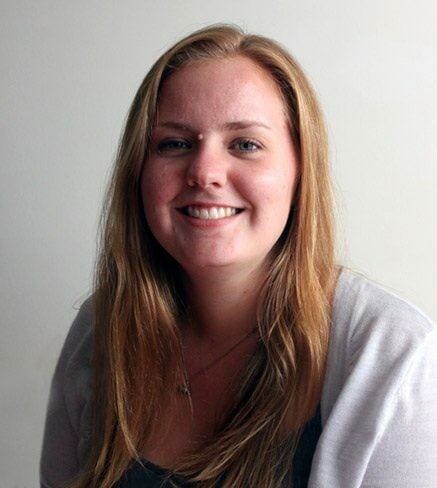
Today’s guest post is written by KaCey Venning who serves as the manager, Cause Programs of Points of Light. She is excited about encouraging people to become more active in their communities.
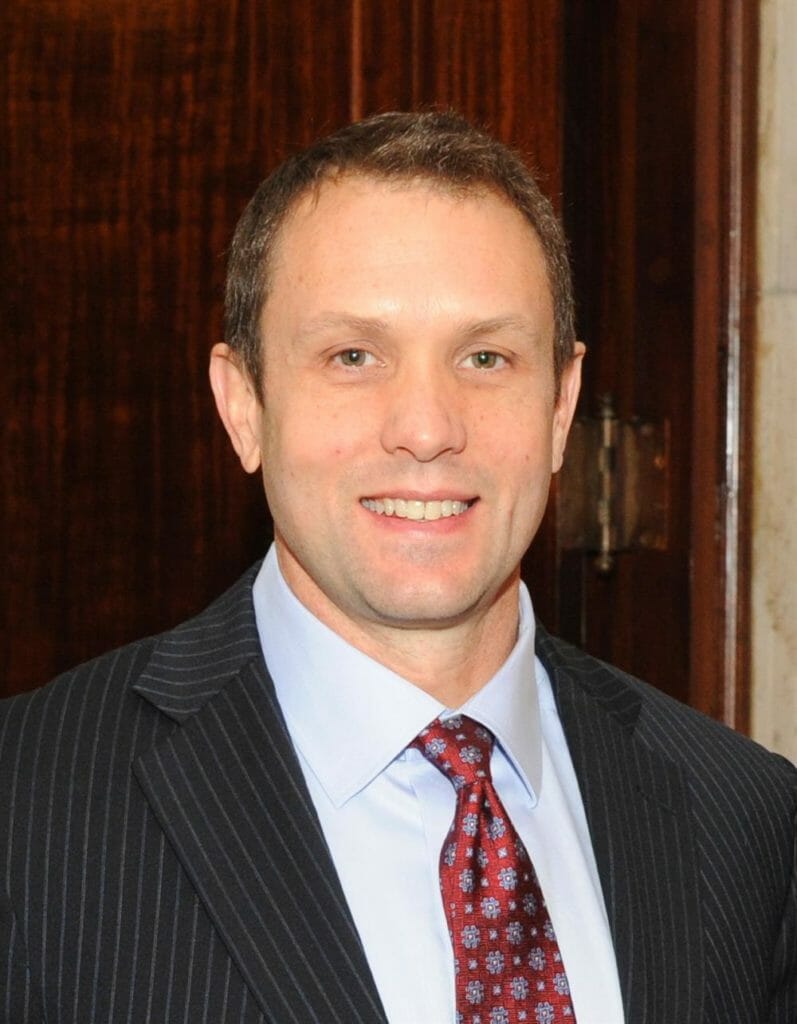
in Washington, D.C. He has served on the IPS board for 18 years, 10 as chairman. His contribution to the organization runs deep, even offering his own 60
th
birthday party as a fundraising opportunity.
“I believe each board member has something to offer and it is my responsibility to ensure IPS continues to grow and remains a vital part of the community,” Ethelbert said. “As we approach our 50
th
anniversary as an organization, I am excited to acknowledge those who helped us achieve so much and celebrate the young leaders who will help us move forward.”
For those wishing to serve on nonprofit boards, Ethelbert said: “Be ready to make a commitment. Understand time management and, most importantly, do not accept a position if you are unsure of your commitment. Ask yourself, ‘When I step down, what did I do?’ And be willing to lead the organization if necessary.”
Ethelbert said he accepts the award on behalf of those who blazed a trail before him and those he serves alongside today.
As the November 2012 Board Member of the Month, Ethelbert receives complimentary registration to the BoardSource and Points of Light national conferences and a year of BoardSource membership. He also becomes a candidate for the Board Member of the Year Award, which will be announced in December 2013.
To nominate an outstanding board member for this prestigious award, click
2012 Election: Implications for the Service Sector
Today’s guest post is written by Julie Murphy, vice president of government affairs and public policy at Points of Light.
On Wednesday, Nov. 7, the nation awoke to a familiar political scene: the re-election of the incumbent President and Congress still split between a Democratic Senate and a Republican House of Representatives. Here are some trends and opportunities for the service and volunteerism sector:
Cooperation, Compromise, Common Purpose
“What makes America exceptional are the bonds that hold together the most diverse nation on earth, the belief that our destiny is shared, that this country only works when we except certain obligations to one another… That’s what makes America great.” President Barack Obama on election night
At Points of Light, we share the president’s view that the greatest hope for our country lies in our impulse to honor the obligations of our citizenship through service. In the next four years, we will work with both the White House and Congress to promote policies and programs that advance and integrate volunteer strategies directed toward national needs across the public sector.
Some of these strategies may even be derived from our own in-house initiatives:
How can HandsOn Schools and generationOn inform education reform and resuscitate federal service-learning policies?
How can the work of our disaster team and our affiliates engaged in the response to Hurricane Sandy improve federal disaster response programs?
What are we learning from the Community Blueprint regarding veterans’ and military families’ services?
What does the Civic 50 tell us about the potential for greater coordination between private and public sectors and does this imply changes in such areas as tax policy?
What can the 750,000 alumni of AmeriCorps over the last 20 years tell us not just about national service but also about social policies writ large?
How has volunteering changed employment strategies in this country over the past four years and does that need to be reflected in federal economic policies?
Are there ideas from our thought leadership agenda such as converting federal student work study programs to “serve study” programs or creating a volunteer background check “fast pass” that are ripe for consideration by Congress?
Status Quo
An election that yields no substantial shifts in power means we need to renew our relationship with our bipartisan Congressional and White House allies and introduce ourselves to the newbies — quickly. Given that we have status quo, the time and energy needed to hand over the keys and unpack the boxes can now be spent by the White House and Congress on getting busy, and we need to be ready to be the voice for citizen engagement in Washington.
Fiscal Cliff
The looming budget crisis means that we will need to be aggressive and smarter in our opposition to further cuts to the Corporation for National and Community Service. We will need to gather our best stories about the impact of service and volunteering programs such as the Volunteer Generation Fund and rapid fire these into the inboxes of members of Congress.
Our AmeriCorps alumni, our affiliates and our partners will all be called to become vocal advocates for a resolution to our country’s fiscal problems, a resolution that 1) does not compromise effective volunteer and national service programs; and 2) protects the most vulnerable in our society.
Demographic Shifts
“What the world saw this week was a picture of America at its best: edgy, experimental, open-minded – and brilliantly diverse.” Fareed Zakaria, Washington Post, Nov. 9, 2012
Zakaria framed it well and we, as a sector, will need to rise to this same challenge to embrace the changes in our country’s demographics to ensure that all Americans have opportunities to serve.
Limited but Energetic Government
David Brooks said this about the 2012 election: “It’s about leaving behind the stale Big Government versus Small Government framework and figuring out how to use limited but energetic government to help people work harder and strive more.”
We, at Points of Light, believe that an energetic government’s best fuel is its people and our policy agenda for 2013 will include the smartest investment the federal government could make: identifying and replicating volunteer-driven community solutions that show proven results.
Any thoughts/ideas on what the election means to the volunteer and nonprofit sector? Share in comments.
Volunteer for Family Volunteer Day on Saturday Nov. 17
Family Volunteer Day, a Points of Light signature day of service, demonstrates and celebrates the power of families who volunteer together, supporting their neighborhoods, communities and the world. For 22 years, Family Volunteer Day has been held on the Saturday before Thanksgiving to “kick-off” the holiday season with giving and service. This year Family Volunteer Day takes place on Nov. 17 and is being powered by generationOn and sponsored by Disney Friends For Change, a global initiative that inspires kids and families to take action to help people, communities and the planet. To learn more about family volunteering find resources on generationOn.
Today’s post is republished from the HandsOn Blog Aug. 3, 2012.
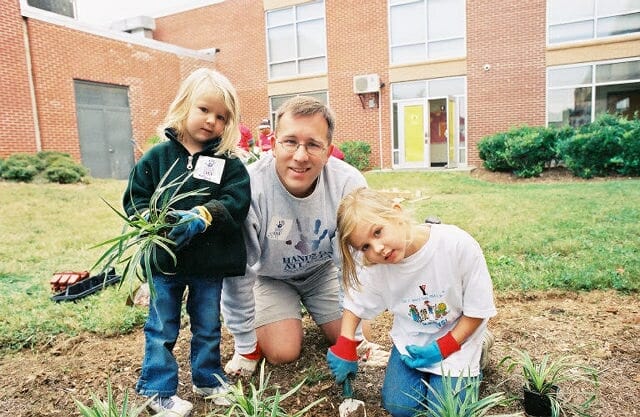
Chances are, if you’re spending time volunteering and reaping the benefits, you’ll want to tell everyone! Why not get those closest to you in on the action with family volunteering? Proponents of family volunteering have stated that the benefits to families from family volunteering include sharing quality time together, transmission of values, modeling of compassion and civic engagement by parents, and improved communication between family members.
Family members can utilize their talents to work on an issue they feel passionate about. Family volunteering also teaches children the values of kindness, making others feel good, and giving back.
The benefits of volunteering together as a family are many! Several themes stand out as reasons why families should volunteer together. Family volunteering:
Brings the family closer together.
Creates a value system strengthened by volunteering. It is good for children to see parents involved.
Builds extended family among youth and other youth, as well as youth and adults.
Gives something back to the volunteer. Volunteering provides a strong sense of self-satisfaction, which makes the whole family feel good.
Shows strength in numbers. When a family works together, they can get more done than an individual!
Helps to improve family communication.
Benefits youth. Volunteering benefits kids on several levels, such as helping with job and college applications
Gives children a chance to see how lucky they are. Parents are pleased to give the children a reason to focus on someone other than themselves.
Provides a positive influence to the people helped.
Is fun! Volunteering is a social activity and gives children something to do, especially in those long summer days.
Respondents to a survey of families who volunteer conducted by the Points of Light Volunteer Center National Network indicated that:
Almost half volunteer with their family as frequently as every few months.
The majority of families were satisfied with their accomplishments and enjoyed the day.
Most felt that volunteering has given them a new perspective on the world.
Two-thirds of youth felt that volunteering has helped them decide what they want to do with their life.
Volunteering helped them to share values and talk more easily with their family, and it allows them to spend quality time together.
KPMG Supports Family Volunteering with Family for Literacy
Today’s guest post is written by Abby Fennewald, on the Corporate Institute team at Points of Light.
KPMG’s Family for Literacy program began in the same way Harry Potter did – scribbles on a napkin. Just like bestselling author J.K. Rowling, the idea for one of KPMG’s signature volunteer programs came to Beth Veihmeyer, spouse of KPMG’s current chairman and CEO, and her friend, Susan Flynn, spouse of then-chairman and CEO Timothy Flynn, as they brainstormed one afternoon in 2007. Today, KPMG’s family volunteering program is five years old and operating all around the globe.
The Family for Literacy program is largely run by spouses of employees with support from KPMG staff. Using KPMG donations, First Book, a national nonprofit focused on eradicating illiteracy, provides new books to schools serving low-income families who otherwise might not have the opportunity to own their own books. Then, KPMG volunteers take time out of their day to read with the kids.
“As a spouse, there were a couple of programs that had been floating around that I would have loved to participate in,” Veihmeyer said of the KPMG CSR programs that were already in place. “The [Family for Literacy] program began to take shape from the thought that, if you harness the energy, passion, resourcefulness and talent that are in the extended KPMG family, you can oil the engine even more.”
KPMG has become a stronger company because they have connected the support and interest of their “extended family” to their volunteer programs. Traditionally, they have always been part of the firm but, through this program, they have taken on a new role that has given them direct ties to the company and allowed them to invest their entire family more fully. “Don’t lose that talent because it’s not getting a paycheck,” Veihmeyer said. “Make it work. The strength of volunteerism is beyond money.”
The other, perhaps more obvious, benefit of such an expansive program that draws on all of a corporation’s resources, is the social change it can bring. In KPMG’s literacy program, children and teenagers who volunteer can make an especially big impact. When a KPMG intern took the time to read with a young boy in a school in Washington, D.C., he was able to get through to him in a way that none of his teachers had been able to, Veihmeyer said. “He had taken the time, the connection had been made.”
That kind of connection can have huge benefits for employees’ children, as well as the cause they are supporting. Studies have shown that children that start volunteering at a young age are more likely to continue giving back to their communities as they grow older. Volunteering as a family can be a great way for parents to teach their kids about their values. Corporations can do their part by providing opportunities for employees’ entire families to engage with their community service efforts.
Disney, the sponsor of this year’s Family Volunteering Day, has also taken huge steps to get families with kids involved in volunteering through their Disney Friends for Change program. They have played a huge role in making this annual event possible and also run a great volunteering program for kids year-round. The wide variety in their work showcases the fact that families and children can get involved in all kinds of causes when given the opportunity.
This is why creating a volunteer program that will be engaging for employees, their families, even interns and retirees, hinges simply on finding a cause that everyone cares about and wants to support. Literacy was the cause that stood out to KPMG, but the possibilities are endless, as are the rewards that come from engaging whole families. “There is no reason [other companies] can’t engage their families in some way,” Veihmeyer said. “It’s just mind-boggling where those resources can take a company.”
Civic 50 Award Shines Light on AT&T Community Engagement
Today’s post is reposted from the AT&T Consumer blog published on Nov. 8, 2012.
It’s been quite a week, hasn’t it? With Hurricane Sandy still fresh in our minds and recovery crews and volunteers feverishly at work, current events remind us of the importance of community. I’m continually inspired by the passion AT&T employees bring to efforts like these.
That’s why I’m humbled to share that AT&T has earned the No. 3 spot in The Civic 50, an inaugural list of America’s most community-minded companies. Sponsored by the National Conference on Citizenship, Points of Light, and Bloomberg, LP, the survey ranked S&P 500 companies committed to using their time, talent, and resources to empower the communities they serve.
TheCivic 50 – featured in this week’s edition of Bloomberg Businessweek – measures how a corporation’s policies, activities, and employees affect the civic and social fabric of a community. With the help of our customers, AT&T is making measurable impacts through initiatives like It Can Wait by promoting responsible use of our technology, and spreading the message that no text is worth dying for. Aspire Mentoring Academy is tackling the high school dropout crisis with the goal of our employees providing 1 million hours of mentoring. And Do One Thing reminds all of our employees to think about the little things we can each do to foster more sustainable communities.
Along the way, AT&T employees and retirees poured their hearts into more than 6 million volunteer hours last year alone, supporting more than 18,000 worthy organizations. These investments in time and money not only strengthen our communities, but they bolster our company as well. They are the reason we can be among the first to respond when disasters like Hurricane Sandy strike.
We’re looking forward to a full – and fulfilling – 2013. But it’s worth taking a moment to say thank you – to Civic 50 organizers for the incredible recognition, to our customers who power our technology, and to our committed employees, 241,000 strong, who are truly deserving of this honor. THANK YOU.
Jackie Norris: Creating a Standard for Doing Well by Doing Good
Today’s blog is republished from the Ideas Lab on Nov. 9, 2012.
The executive director of the Points of Light Corporate Institute highlights the ‘Civic 50’ a yearly list of companies that improve their communities alongside their business.
Ben Franklin knew – without the aid of economic modeling, PR professionals, public opinion polls or the 24-hour news cycle – that companies could succeed by doing good. Today we have the benefit of all of these things to confirm Ben Franklin’s intuition.
According to a 2010 CSR Perception Survey conducted by Penn Schoen and Berland, 75 percent of consumers say good corporate behavior is important to them. More importantly, as it pertains to consumer behavior, respondents reported a greater likelihood to purchase products or services from a company after reading its responsibility agenda.
The practice holds benefits for employees and corporate recruitment efforts as well. A Cone study found nearly eight of 10 employees born in 1980 and after, want to work for a company that contributes to society, while more than half say they would refuse to work for an “irresponsible corporation.”
Recognizing this trend, the National Conference on Citizenship and Points of Light launched The Civic 50 to identify civic-minded business. We are proud to have had so many S&P 500 companies participate in the survey.
For decades, NCoC and Points of Light have promoted the idea that companies wanting to stand out in today’s competitive environment and do the right thing should devote resources to building a corporate infrastructure that promotes responsible business practices. But how do we get there and what is the best, most impactful approach?
The Civic 50, with its unique scoring methodology and focus on seven dimensions, is our initial attempt to answer that question. You see, NCoC and Points of Light believe that “responsibility” has the most meaning when companies use their core competencies to create lasting change in communities.
The Civic 50 illustrates how companies are using their time, talent and financial resources to empower and improve the communities in which they do business. From employee volunteering to community nonprofit partnerships, the range of activities are broad and they are making a difference in health, education, child enrichment, poverty reduction and disaster relief to name a few.
The Civic 50 recognizes companies making lasting impacts in their communities, but perhaps more importantly, it encourages companies to make these practices a part of their corporate DNA. Check out the list of the top companies. We congratulate the companies awarded today and salute them for their achievement.
Jackie Norris is the executive director of the Points of Light Corporate Institute and leads the corporate strategy and employee engagement programs.
Service to Help Veterans Get Back On Track
Today’s post is about Kelly Landry, who is an AmeriCorps VISTA member assigned to the Community Blueprint Network at American Red Cross South Florida Region (FL) through the American Legion Auxiliary Call to Service Corps. In her assignment as a service to the armed forces associate, Kelly coordinates resources and services that better respond to the strengths and needs of the military community in South Florida.
When Kelly Landry met Capt. Juan Fernandez, he was lost. After retiring from 20 years in the Marine Corps, including time in Afghanistan, he was facing a disease that left his vision impaired, depression and feelings of isolation. To help him get back on track, Kelly knew what she had to do.
She and her team had to ask him to serve.
Kelly, an American Legion Auxiliary Call to Service Corps member with American Red Cross South Florida, said she has long felt a responsibility to help veterans and military families. “My dad is a combat veteran and raised me give back. I know it’s a cliché, but I believe in the idea of ‘home of the free because of the brave.’ Veterans gave everything and we are obligated to support them in return.”
Her work, part of the Community Blueprint, focuses on three important areas: homelessness, reintegration and volunteerism. She said this work deals with the continuum of challenges returning veterans face and solving each bridges the gap between a life in the military and finding a successful, satisfying place in the community.
“Having even one veteran on the street is unacceptable. After that, we focus on helping veterans find the right job for their skills, following up with them throughout their employment and finding ways for them engage with and serve others in the community,” Kelly said. “These men and women just need a little boost to get on their feet. From there, the potential is sky-high.”
For Capt. Fernandez, opportunities to serve other military families as a Red Cross volunteer gave him a reason, he said, to “keep fighting.” He’s now employed as a Junior ROTC leader, has connected to other veterans and is seeing improvements in his health.
“All he needed was to be asked to help,” Kelly said. “Our veterans are an untapped resource who naturally want to serve. It’s up to all of us to make sure they get the opportunities and support they need.”
Honor Our Veterans
Today’s post is written by Mike Monroe, vice president of military initiatives at Points of Light.
I am a U.S. Marine Corps veteran. I continue to serve out of uniform at Points of Light, working to create initiatives that will help veterans.
Around Veterans Day, so many people are thinking about causes and ways to help. I wanted to offer a few things to think about.
When you think about veterans, please also think about military members, their families (including their children) and families of the fallen. All of these people have made sacrifices. They all deserve our appreciation.
Don’t make Veterans Day a day of just pausing and reflecting. Make it a day where you annually reaffirm a personal commitment to do something to help.
Not all veterans have had the same experiences. Not all were in combat. Some may not have had a good experience during their time of service.
If you are talking to a veteran, listen… but don’t prod. Many may be reluctant to share what they went through. Do not be offended—they are coping the best way they know how.
Veterans are not charity cases. They want a fair shot at a good life, just like everyone else.
If you want to help—donate or volunteer. Look for organizations that are doing more than providing “moments.” What I mean is that while veterans are appreciative of free concerts or theme park tickets, these are things that only help them for a moment of their life. You need to donate or volunteer at organizations that are providing services to veterans that are bettering their lives over the long haul. Organizations that are giving them reasons to get out of bed in the morning. Look for organizations that are doing work around basic needs—health care and wellness, education, employment. These form the foundation that ensures a vibrant veteran and translates to an amazing asset to your community.
Look for organizations that are working at the community level. Veterans leave the military and return to communities. Services provided at the community level are the ones that are making real differences. A suggested place to start for more ideas: www.the-communityblueprint.org
This Veterans Day, make the commitment to look around your community and figure out where you can donate your time and resources in meaningful ways – ways that will give a veteran, military member, their families or the families of the fallen a reason to want to get up in the morning. To find volunteer projects that focus on veterans, check out www.signupandserve.org.
Turn a Sea of Goodwill to Action for Veterans Day
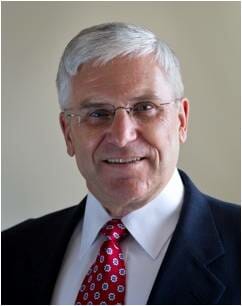
This post is by Gen. George W. Casey Jr., who served as Army chief of staff and senior coalition commander in Iraq.
One of the most common pleas I hear as I go around the country is, “I want to help our veterans, but I can’t figure out how.” Having worked in the government for 41 years, I can understand that. The government is a big bureaucracy and sometimes it can be hard to help.
The government is doing the right things, but it is just too big to handle the complicated individual issues that plague many of our returning veterans. It will never meet every need for every veteran, nor should we expect it to.
Holistically caring for our veterans and their families will take effective public-private partnerships that can leverage the power of both sectors. On the private side, there are tens of thousands of nonprofits out there working hard to help veterans. All are contributing, but many focus their services in very specific areas and affect a relatively small number of veterans.
What’s been missing – until now – is a coordinated, collaborative effort at the community level that makes the most efficient use of public and private resources and energy without hindering the creativity that we find in the private sector.
A few years ago, representatives of 55 nonprofits and government agencies – including the VA, the U.S. Chamber of Commerce’s Hiring Our Heroes and Blue Star Families – started talking about how to work together to help the one million veterans who will transition out of the military and rejoin communities across America in the next five years.
The wheels started tuning, and smart, experienced people got to work. They produced a virtual toolbox of proven programs and resources that can be adapted and adopted by local coalitions searching for ways to help veterans, military members and their families succeed.
I first heard about the Community Blueprint in June 2012, and the more I heard about it, the more I liked it. It was started by experienced organizations that specialize in veteran and military issues working together. And instead of dictating solutions, it offers scalable tools that can be used to help veterans reintegrate in society; find jobs, housing and health care; get financial and legal help; and keep their families strong.
In the past year, the Blueprint itself has gotten stronger. It’s now led by Points of Light, the world’s largest volunteer service organization. It’s staffed, in part, by a group of 75 AmeriCorps members, half of whom are veterans themselves. And it’s supported with help from a five-year, $5 million grant from ITT Exelis and the volunteer help of its 20,000 employees. It’s the kind of public-private partnership we need to best serve our veterans and their families.
The Community Blueprint is getting bigger, too. Right now there are 20 communities using its tools – including communities in Atlanta, Miami, Dallas, Los Angeles, San Diego and Seattle. The plan is to increase that number tenfold in the next two years.
Can you imagine the impact of hundreds of communities armed with the right tools helping our military, our veterans and their families? I can. And I can’t imagine a better way to ensure all of our veterans are taken care of.
When I think about our veterans, I am reminded of a quote on a monument in Burma to a British division that held off a numerically superior Japanese force at great cost. It reads, “When you go home, tell them of us and say, for your tomorrow, we gave our today.”
The men and women of our armed forces have been giving their tomorrows for our todays for 236 years. We are blessed as a nation that we have had generation after generation of Americans who have believed so strongly in the values and ideals that this country stands for that they have been willing to put their lives on the line for them.
It’s our turn now. Welcoming returning veterans with our thanks isn’t enough. We need to turn that sea of goodwill into action. We need to match their service with our own.
Post written by Michelle Nunn, CEO of Points of Light and author of Be The Change.
Over the next five years, more than one million veterans will transition out of the military and rejoin communities and families across America. Many politicians speak of them as people with needs, but that’s only half the picture.
Our veterans – steeped in discipline, steeled with the hardships of serving in two overseas wars and equipped with vital skills and broadly applicable experiences – offer the nation an extraordinary reservoir of human capital and talent.
How can the nation capitalize on veterans’ talents? Take a look at these three initiatives, led by veterans, for some of the answers.
Team Rubicon. In the aftermath of the Haiti earthquake, veterans Jake Wood and William McNulty realized a simple truth: The skills cultivated on the battlefield – emergency medicine, risk assessment and mitigation, teamwork and decisive leadership – are invaluable in natural disasters.
They founded Team Rubicon to mobilize veterans to help in the gap between when a disaster strikes and the point when conventional aid organizations respond. In recent weeks, 50 veterans from Team Rubicon worked to rescue people stranded by Hurricane Sandy, delivered emergency supplies to hard-hit shelters and helped treat the medical needs of evacuees.
“We utilize military-style plans and military-style leaderships to be more effective with less overhead and less bureaucracy, to be fast,” Matt Pelak, an Iraqi veteran and Team Rubicon’s director of strategic partnerships, told an NBC News reporter. “Our teams are good at improvising and adapting. That’s what veterans do best.”
The Mission Continues. After Navy Seal Eric Greitens returned home from Iraq, he visited wounded Marines at Bethesda Naval Hospital in Maryland. Each veteran he spoke with expressed the desire to continue to serve. One young Marine said, “I lost my legs – that is all. I did not lose my desire to serve, or my pride in being an American.”
Greitens used his own combat pay and two friends contributed their military disability checks to found The Mission Continues to use volunteer service to help veterans, many of them wounded, reintegrate in society. The group places post-9/11 veterans in six-month fellowships at local nonprofits, where they help others find meaningful volunteer work, full-time jobs and paths to higher education. In 2007, there were three fellows; in 2012, there are more than 500.
The Community Blueprint. After serving nearly nine years in the Navy, Liz Perez returned to civilian life in southern California feeling good about a new job and a fresh start. But Perez, the daughter of a veteran who was raised on military bases, faced challenges she never saw coming.
“When you’re in the military, everything you need is on base,” she said. “When I left, I had no support. I didn’t know where to go for things like housing or childcare, I didn’t realize how much is taken out of your paycheck. I had a really hard time.”
For a short time, Perez and her young daughter were homeless, relying on a local food bank to eat. A property manager at the San Diego construction firm where she worked helped her find a place to live and she slowly found the resources she needed to get back on her feet.
Perez has been pursuing a graduate degree and running her own general contracting firm. These days, she’s turned her attention to helping other veterans as part of a big, new public-private partnership, the Community Blueprint.
Started by a coalition of 55 organizations, the Blueprint unites community resources to help veterans find jobs, housing and health care; get financial and legal help; and keep their families strong. Instead of dictating solutions, the Blueprint provides a virtual toolbox of proven programs and resources that can be adapted and adopted by local coalitions searching for ways to help.
The effort is led by Points of Light and staffed in part by Liz Perez and 74 other AmeriCorps members, half of whom are veterans themselves. It’s supported by the Corporation for National and Community Service (home of AmeriCorps) and ITT Exelis, which has pledged $5 million, along with the volunteer help of its 20,000 employees.
Today there are 20 communities using Community Blueprint tools – including Atlanta, Miami, Dallas, Los Angeles, San Diego and Seattle. The plan is to increase that number tenfold in the next two years.
“I had to struggle to find the answers,” Perez said, “but it gave me a passion to share what I’ve learned. I want to be able to give veterans the resources I had to find the hard way.”
When we call upon our veteran’s gifts, we tap into an enormous wellspring of ingenuity and talent for our nation. On Veterans Day we should remember that those who have given so much already, have even more to give. They have helped us defend our country and now they can help us strengthen it.