Today’s turning point post from guest writer, Peggy Flynn, a Project Director at ETR Associates, who is her spare time is on the Board of The Volunteer Center of Santa Cruz County (CA), and through them a volunteer literacy tutor. She also volunteers with United Way of Santa Cruz County and with Planned Parenthood Mar Monte.
I am very fortunate to have come from a family where I saw both parents volunteer in our community, mostly in church activities, but also with sports. It’s especially admirable that both of my parents had the energy to do much besides raising seven children! Of course I didn’t fully appreciate all the work and management that it took to raise, feed, and nurture us until I was an adult and had step-children. My mind still boggles at how my mother planned, shopped and prepared three meals a day for nine people. They also made time to read to us, help us with our homework and finish all the school projects that we left to the last minute. “Good Gravy!” as my mother used to say. How did they do it all?
But even with this great modeling as a child, I was a young adult before I became involved in a meaningful way in my community. I was lucky that I also come from a family of readers; in fact, reading was one of the ways we could escape from each other—living with eight other people can sometimes be confining. I majored in journalism at George Washington University and was surrounded by people who were voracious readers and interested in all aspects of life: politics, economics, culture, etc. We all read. In fact, I didn’t know anyone who couldn’t or didn’t read. Reading meant understanding, exploring and led to intellectual, emotional and even psychological attainment as new ideas were explored or different perspectives pondered. I couldn’t imagine not reading, not being able to read.
A few years after undergraduate school I saw an ad for volunteer literacy tutors for our local Vietnamese and Cambodian community. I signed up, received some training and started meeting with families. Their children were learning English in school, but the parents and other adult family members weren’t. It opened my eyes to so many things, like the difficulties of learning a new language as an adult, the stress of having to rely on children as interpreters and the isolation of being in a new culture without the language skills to negotiate it. I also wasn’t prepared for how I would be treated. In one family there was only one chair, and they insisted I sit on it, even though I would have been more comfortable sitting on pillows on the floor with everyone else. “No, no,” they all cried, “teacher gets chair.” It was another insight for me into how much education and teachers were revered within their culture. It was also humbling for me because in my eyes I was “just a volunteer” coming to their homes a few hours a week, but to them I was the conduit to information and skills that they needed and wanted. I was humbled and thrilled to share their successes, like the first time a young mother was able to call school and report that her child would be absent: in English and all by herself.
I’ve been involved in many other volunteer activities since, but 30 years later, I am still a volunteer literacy tutor, working through my local volunteer center in Santa Cruz County, Calif. I still am thrilled when I see someone gain language skills, knowing that it means they are on the road to experience so much. Once you can read, the world opens up to you in so many ways; you don’t have to rely on others for translations or interpretations and you can participate in the larger community around you.
My Turning Point: Service As A Lifestyle
Today’s turning point story is written by Shannon Zoet, Assistant Director at Michigan Campus Compact, an affiliate of the Michigan Nonprofit Association. Shannon is also a Membership Co-chair for the Young Nonprofit Professionals Network in Grand Rapids.
As long as I can remember, my family has instilled a spirit of service in me. Though nobody ever used that phrase, looking back, I know that is what I was learning. My parents and grandparents have always modeled a lifestyle that showed me that service is not just about those flashy one-day events we all love, but rather, it’s an ongoing process of supporting others with your time and talents.
I always knew that this type of ever-present service would be a part of my life, but it wasn’t until I was an adult that I realized I could make a career of it. My personal turning point came several months after I graduated from college. I had a degree in communications and went to work at a publishing house where I was asked to promote books that had no meaning to my life. I knew I would not last in a job that didn’t play to my personal passions, so I left that position to join AmeriCorps.
After two years of service as an AmeriCorps VISTA, I knew I was on the right path. I knew that a career in the nonprofit sector – inspiring others to serve and supporting the infrastructure for widespread service – was how I wanted and needed to spend my energy. I earned an advanced degree in nonprofit leadership, and I now work for Michigan Campus Compact (part of the Michigan Nonprofit Association), supporting colleges and universities to promote public and community service and develop students’ citizenship skills. I am proud to be part of an organization that is helping cultivate current and future leaders of service.
I have not only chosen to make a career in the service sector, but I continue to exercise the spirit of service my family instilled in me as a child. Rather than focus my time on one or two volunteer opportunities by dedicating myself to a particular cause or passion, I have chosen, for now, to spread my energy as wide as possible. I look for small opportunities to serve others in everyday life; I serve on the board of my local Young Nonprofit Professionals Network to encourage the growth and success of the service sector in my community; I ask how I can serve the people and organizations I care about, and then I show up wherever and whenever I can.
My Turning Point – Encouraging Others to Make Positive Life Changes Benefits the Whole Community
Today’s turning point story is written by JoAnna Phillips, a student at the University of Southern Indiana, and an AmeriCorps member who works with Counseling For Change.
Growing up in a very rural community out in the country, in an “old fashioned” household, I was always taught to be a hard worker, self sufficient and care about the needs of those in my community. Everyone knew each other and we did things for each other. I was raised to serve others and to respect the dignity and worth of everyone, no matter what their race, culture, gender or economic status was. However, as I grew up in this small southern Illinois community, population 1,800, I realized there was no diversity in my community and our area was also plagued by drugs and alcohol. This was my “turning point.”
This observation encouraged me to expand my horizons, go to college and try everything I could to gain the tools needed to help addicts and to broaden my horizons as well. As a single mother, I am currently going to the University of Southern Indiana, about an hour drive from my hometown. I am a social work major. When AmeriCorps was offered at our university, I jumped at the chance to join something that would give me the opportunity to help and serve others, but also broaden my perspectives and encourage my educational growth.
I was placed into an outpatient drug and alcohol treatment facility, with the main job of GED tutoring for their clients in recovery. I absolutely love the interaction I get with the clients, and I love encouraging others to make positive life changes. Also, as an AmeriCorps member, we have served at the local homeless shelter, and we had a Martin Luther King service day at a local school where we taught the children lessons about serving others, just as Martin Luther King did. Joining AmeriCorps has been life changing for me, and I encourage anyone that has an opportunity to join AmeriCorps, do so. I promise, it will be a major turning point for you and for all of those people you will help and serve!
Change Notes: President George H. W. Bush’s Points of Light Vision
Friends,
Throughout human history, underlying the sweeping reforms and essential institutional responses to disaster, to poverty, to environmental degradation, and to all forms of need has been the one reliable but often unheralded individual volunteer. The Red Cross worker, the soup kitchen cook, the foster grandparent, the patient tutor who turns a child’s life around.
In the past 20 years, we have seen a rekindling of the unique brand of American voluntary action. The spark for this modern-day service movement was President George H. W. Bush who noted in his 1989 inaugural address that, even in times of scarcity, we have one resource that always grows, “the goodness and courage of the American people.”
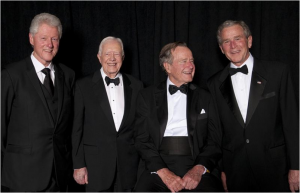
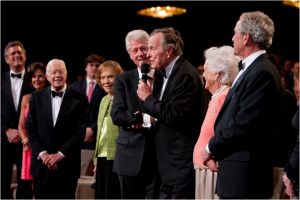
To honor his vision, Points of Light hosted “All Together Now: A Celebration of Service” one year ago – March 21, 2011 – at the Kennedy Center in Washington, D.C. This star-studded event brought together four former presidents, leaders from across the service sector and those working to make change in communities around the globe. The more than 2,000 in the Kennedy Center audience and millions that watched in primetime on NBC were moved by the stories of inspiration and left with a renewed sense of purpose and energy for their own capacity to make a difference.
Since that event, Points of Light has leveraged the incredible support provided through the $30 million Service Generation Campaign to power innovation and help inspire, equip and mobilize our networks, including the next generation of volunteers, as well as strengthening our financial sustainability. This has included the expansion of our generationOn Clubs to engage young volunteers, innovation in our technology assets, launch of our Good & Ready emergency preparedness campaign and enhancements to our Corporate Institute to help companies tap into their employees’ power to create change.
At his inauguration, President Bush called for “a new engagement in the lives of others, a new activism, hands-on and involved… a thousand points of light.” Just 30 years prior, another newly inaugurated president stood on those same U.S. Capitol steps and beckoned us to see our citizenship as an invitation to serve, rather than a license to consume. Both John F. Kennedy and George H. W. Bush knew that the great executive, judicial and legislative triumvirate of our constitutional system would preserve and nourish our democracy but that it would be the enlightened and inspired citizen volunteer who would hold the key to its domestic and international promise.
Following his 1989 speech, President Bush established what has now become Points of Light, an organization whose mission is to inspire, equip and mobilize people to take action that changes the world. President Bush also signed the National and Community Service Act in 1990, building a new threshold of presidential leadership that has been continued by each successive administration.
From 1989 to 2010, the number of individuals volunteering annually grew by 25 million. Young people, in particular, have stepped forward in dramatic numbers to serve. Indeed, community engagement has become a natural pathway for young Americans who weave academic and athletic achievement with outreach to their communities and who are knocking at the doors of Teach For America and City Year in droves.
Since President Bush invoked a thousand points of light, we have seen a profound shift in power. We have witnessed what author John Cooper Ramos has called the “super-empowered” citizen, evidenced by the contagion of democratic impulses in regions thought impervious to political freedom, in the proliferation of civil society organizations and in political movements fueled by social media. According to Cooper Ramos, the future will be written by these super-empowered citizens: the pace of change continues to accelerate, the tools for self-organizing continue to strengthen, and the powers of individuals to make choices and act continue to grow.
More than 20 years ago, President Bush looked out from the Capitol steps and saw, across the country, individual points of light, lights that are inextricably tied to the beacon in New York harbor. For in that “imprisoned lightening,” as Emma Lazarus described it, is the yearning to be free from oppression and free from want, to be a part of a better world.
Now, we must re purpose our commitment to service and provide avenues for dialogue and action that ensure that our own democracy is inclusive, compassionate and vibrant. More than any other factor, our citizenry will determine our nation’s destiny.
At Points of Light we are invested in actively providing new ways for individuals to exercise all of their assets – time, talent, money and voice – in meeting the challenges of our time. Whether you join us online, through an existing project or you create your own; you’re a corporate partner, leveraging the time and talent of your employee; a social entrepreneur launching an exciting new venture; or a nonprofit actively engaging volunteers in delivering on your mission – we thank you for all that you do and hope you will continue to help us realize the power of President Bush’s vision.
Yours in service,
Michelle Nunn
CEO, Points of Light
Points of Light Tribute Event Anniversary
“This day is really a celebration of service, of the capacity of people to join hands and work together, and of President and Mrs. Bush who are really emblematic I think of all those characteristics.” –Michelle Nunn, CEO Points of Light.
Today marks the 1 year anniversary of the Tribute event. It was truly a night to remember for us at Points of Light. It was a celebration, bringing together celebrities, corporations, partners, friends, families, Daily Point of Light award winners, and volunteers to highlight how service has made a difference in solving our nations problems. It was an inspiring night for all participants to feel the personal effects of volunteering on the world and hear amazing stories of change. Watch the excerpt below from the event to see how volunteers changed Tonya Ingrams life:
One year later we are still reinvigorated to work harder to create change. Ultimately, the Tribute’s success is in generating sustained energy and optimism in each and every one of us, to remain stalwart in our commitment to take concrete action, to support not only Points of Light, but those in our own communities who are taking action to create change. We hope you can feel that again on the anniversary and continue to take action.
Please join us in celebrating Points of Light, the people who take action in your communities on our innovative online wall. Those who post can immediately begin helping their communities by signing up for local volunteer opportunities. To post a Tribute and view the Tribute wall click here.
Click here to donate in support of the volunteer movement and towards creating continuous innovative civic solutions. You can also donate your time, voice, or facebook status, among other things if you want to get involved in other ways.
Using Your Social Networks To Find Fundraising Partners
Today’s guest post is written by Joseph Baker. He enjoys volunteering in his community, writing, and baking. Read his work at professionalintern.com.
Need materializes with little regard for resources. When a serious medical condition first manifests, the uncertainty of knowing where and to whom you turn increases an already daunting emotional weight. For these solemn times, harnessing the potential of social media can be key to identifying the human resources needed, especially when it comes to meeting financial challenges of a family dealing with a serious health situation. Locating partners who can leverage their own resources and notoriety is one very practical need that can be met through online networking sites.
Knowing someone who knows someone
From relevant expertise to serious influencers, networking is all about getting through degrees of separation; it’s all about knowing someone who knows someone. In the case of diagnosing a less-than-common cause for a medical condition, the sum diversity of experience matters much more than the individual knowledge of even the most trusted physician. For doctors and families of patients, tapping into a web of skill not only hastens the right diagnosis, but relieves the terrible burden caused by uncertainty.
Adding to the support needs of a family beyond those posed by health matters is the cost of treatment, and the ancillary costs of travel, child care, housing and other unexpected financial expenses. Knowing both a diagnosis and treatment plan provides more definitive dollar amounts that can help when seeking fundraising partners with experience in raising cash for specific medical causes. Examples of this are in no short supply.
Holden’s Story
When the family of Anderson, Ind., toddler Holden Harless (then 2 years old) became concerned about recurring back pain, local doctors were unable to accurately diagnose the real source of little Holden’s suffering – a spine tumor. After months of inconclusive test results, Holden’s mother, Wendy, contacted Riley Hospital for Children at Indiana University Health for a second opinion. Through that connection, doctors at Riley brought to bear their own considerable experience in treating serious diseases to correctly pinpoint the exact cause of Holden’s pain. Following a successful surgery, Holden had to undergo extensive physical therapy to regain his ability to walk again.
Holden (now 8 years old) was recently the beneficiary of a partnership begun more than two decades ago, years before social media was even a term. Taken by limousine to a Indianapolis Colts home game early in the current NFL season, the young survivor helped start the game by performing the opening coin toss. The event, Riley Coin Toss Kids, a collaboration between Riley and the Colts, has helped raise awareness for the work done at Riley Hospital for Children by putting a human face to what might otherwise be an abstraction for those not directly involved in a person’s illness.
Make it personal with social media
The key elements in Holden’s story recommend using social networking sites for fundraising. The most obvious of these is how networking, in this case through securing a second opinion, overcomes limitations posed by basic geography. Tying into a networker with a carefully cultivated list of industry-specific contacts can be a multiplier for fundraising potential. The point here is not that these contacts will have fundraising resources, per se, but that they can propagate awareness among a community already invested in a common theme. LinkedIn is the site of choice for connecting with business relationships, yet other sites can help overcome another aspect of successful fundraising – again, putting a human face with a cause.
The very name Facebook speaks to the issue of personalizing need. From symbols, such as the universally recognized pink ribbon for breast cancer, to the actual images of medical condition sufferers, 800 million overcomes a lot of geography when it comes to appealing for help.
Just as Riley Hospital for Children teamed with the former Super Bowl champs to combine the humanity of a child survivor with the awareness of a regional medical resource, networking through technology can multiply the most crucial elements of fundraising efforts.
A 2nd Grade Service-Learning Project Was My Turning Point
Laura Saldivar pictured on the right at the 2011 National Conference on Volunteering and Service
To highlight the end of AmeriCorps Week we are featuring a high school senior who strives to be an AmeriCorps member in the future. Today’s Turning Point story is written by Laura Saldivar, a member of the Corporation for National and Community Service’s Youth Council. She is in her senior year of high school and is looking forward to attending the University of Illinois and major in community leadership and civic engagement.
Second grade was a huge turning point in my life. I had the unique opportunity to participate in a service-learning project with local high school students in my area. Jacobs High School in Algonquin, Ill., had a service-learning club that was funded through Learn and Serve America. After completing a meaningful service project, I knew when I grew up I wanted to be a member of that group. Throughout school I began volunteering and tagging along with the Jacobs High School Service-Learning Team. When I was in seventh grade, the club invited me to attend the National Service-Learning Conference with them.
At the conference, we attended a plethora of sessions and discovered a new program called Project Ignition. Project Ignition is a teen safe-driving campaign that is a youth-led effort in high schools around the country. Teens educate their peers on the importance of safe driving through service-learning. On the plane ride home, my fellow peers and myself started mapping out our very own safe driving program.
This experience has caused me to dedicate my life to service-learning. Most of my projects focus on education and healthy futures. I have completed different summer camps to bridge the achievement gap for local elementary students in the summer and have established more than 50 different safe- driving campaigns at my high school.
Later on in my freshman year of high school, I had the honor of joining Learn and Serve America’s Youth Speakers Bureau. This board was made up of youth leaders around the country that were Learn and Serve grantees. This board gave me the knowledge and confidence to speak to others about the importance of service-learning.
Learn and Serve America has given me the keys to success with service-learning. I have served on a plethora of youth boards including: National Youth Leadership Council’s Youth Advisory Board, National Organizations for Youth Safety’s Teen Distracted Driving Prevention Team, Youth Service America’s Youth Council, IL SADD Student Advisory Board, National Safety Council’s IL Coalition and more! These boards have taught me self-confidence, public speaking, grant writing and much more.
Currently, I am in my senior year of high school. My experiences with service-learning have caused me to dedicate my live to paying it forward. In the fall I hope to attend the University of Illinois and major in community leadership and civic engagement. I hope to one day work for the White House Youth Engagement Center, AmeriCorps and the US Department of Transportation. Service-learning really has transformed my life.
This is my turning point. What’s yours?
My Turning Point Happened When I Signed Up To Be A Big Sister
The theme for this year’s National Conference on Volunteering and Service is “Turning Point.” At Points of Light, we are highlighting turning point stories – stories about the moment or moments that inspired your service. Today’s Turning Point comes from guest writer, Lizzy Seymour, manager, Conference Operations for the National Conference on Volunteering and Service convened by Points of Light. Lizzy leads the Conference registration system and is involved in event planning for several Points of Light initiatives throughout the year.
When I was 5 years old, my parents gave me the nickname Little Miss Helpful – based on the “Little Miss” characters in the children’s books by Roger Hargraves – because I was always eager and willing to help with chores, volunteer at church and with my Girl Scout troop. I liked the feeling of “doing good” and it was fun being part of the community.
As I grew older, my desire to help led to a desire to help others. In high school, I dreamed of being a physical therapist and helping people recover from injuries. But after enrolling in anatomy and a physical therapy introductory class at a local college, I quickly realized my talent did not lie in the medical field and that a career as a physical therapist wasn’t for me.
In college, I joined a sorority and became active on campus. Being “Greek” meant completing community service hours, and while some of my sorority sisters complained about the required volunteering, it hit me: this is how I can use my talents to help others! With an eye for details, I joined a committee on campus that planned a year-long fundraiser for St. Jude Children’s Research Hospital in Memphis, Tenn. It was at this point in my life that I realized I could use my event planning skills and education to help people.
After college, I took a position at the Arby’s Foundation where I planned fundraising events to support local Big Brothers Big Sisters agencies. Since I was working so closely with Big Brothers Big Sisters professionally, I was driven to apply to volunteer my personal time to become a Big Sister. That’s when I met Ali – a 9-year-old girl who needed a friend and mentor – and now we have been matched for four years.
Ali loves art and music, singing, dancing, painting and playing the viola. Ali and I have done all sorts of things together, but our favorite activity was spending time helping others by volunteering. This year, Ali and I participated in the Martin Luther King, Jr. Day of Service and joined a HandsOn Atlanta service project at a local Boys and Girls Club. Ali painted murals for the club’s gym. After six hours of volunteering on our day off from work/school, she looked at me and said, “This was one of the most fun things we’ve done together. When can we do it again?” At that moment, SHE realized she could put her talents and passion for art to good use, by volunteering and helping people.
I’ve been volunteering my whole life, but my Turning Point didn’t come until I became a Big Sister and could see the impact my time was making on Ali’s life. Ali and I plan to volunteer together at least four times a year so we can continue to use our talents to help people.
If you like helping, I encourage you to try all types of volunteering because I know that one day, you too will experience your turning point.
Friday Volunteer News Round Up For AmeriCorps Week!
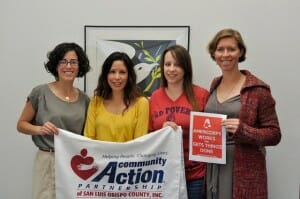
AmeriCorps Works Here! Alums Jill (2010-2011), Francine 1997-1998, 1999-2000), Bryn (2008-2010), and Amanda (2007-2009) working for the greater good at Community Action Partnership of San Luis Obispo County.
Happy Friday! This week was AmeriCorps Week, and we have themed our news wrap-up this week to reflect all the good that AmeriCorps does, and show how AmeriCorps Works throughout the country. If you are an AmeriCorps member and have not taken part in the photo project– follow the link to find out what that’s all about!
Check out what our enterprise, AmeriCorps Alums, has been doing for the week. Thanks to all the AmeriCorps current and past members who have made meaningful changes to communities- your work is appreciated! See below for inspiring stories of the week-
Read more about the exciting new FEMACorps and how you can apply to be in the disaster recovery corps!
Make Me Care
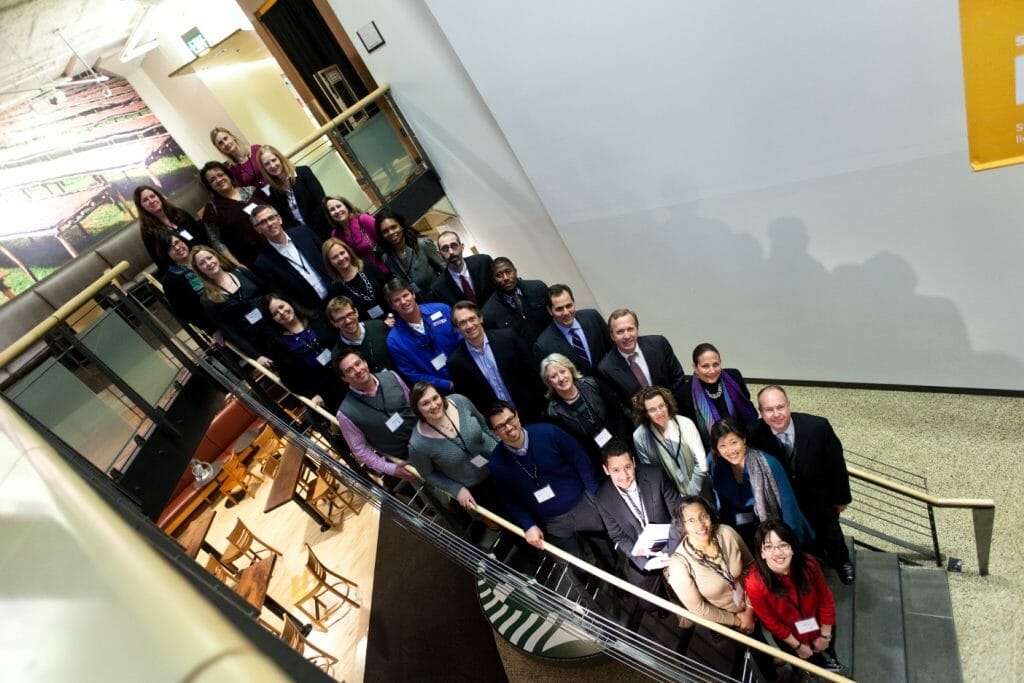
Corporate Service Council- Photo Courtesy of Points of Light
Today’s post is written by Daniel Horgan and republished from his blog “Discover U: Carpe Diem” on March 11, 2012.
This past week, I had the opportunity to travel to Seattle and attend the Corporate Service Council, a convening of the Points of Light that is structured to share innovations in corporate volunteerism, corporate social responsibility and corporate philanthropy as well as advance networking and problem solving discussions. My experience with the Council caused me to recall an important quote from Andrew Stanton, the filmmaker for “Toy Story” and “WALL-E” as well as a recent TEDspeaker on the topic of storytelling: “Make me care.”
The message behind Andrew’s three words is that to advance our passion and influence people, we must play the role of a storyteller and bring people on a journey that illustrates for them why they should care about that which lights a fire in our belly. The Corporate Service Council engages representatives from close to 75 companies around the globe including Starbucks, Kraft, Disney, Accenture and Chase. These companies employ hundreds of thousands of people and reach even more through their customers, community relations and marketing. There exists not only an opportunity but an obligation for these companies to “nudge and inspire the human spirit” as Cliff Burrows, President of US & Americas Starbucks Coffee Company, shared with us.
It was with this principle in mind that Starbucks launched their job development and small business loan campaign by investing $5 million from their foundation and inviting customers around the country to contribute to awakening the American economy. It was a bold move to step out front, to lead, and to shine a spotlight on an issue that is tearing communities and families apart. As a masterful storyteller that relies on bringing people from diverse walks of life around a community table over a cup of coffee, Starbucks has made me and hundreds of others care to the tune of an additional $3 million invested in small US businesses over the past several months.
Another speaker at the Council, Eric Liu, Founder of Guiding Lights Network, reminded us that “society becomes how we behave” and that “we’re all better off when we’re all better off.” There is this “fierce urgency of now” that companies of all sizes and industries must join forces with nonprofit organizations, schools, foundations, civic groups, and individuals to combat the complex issues plaguing our society. These issues are only growing more complex and can not be resolved at the hands and resources of one player; a collaborative approach is required if we are to spark a movement in which more and more people care, engage and remain committed.
While it is important for all players in this game of social change to maintain their own identity, to differentiate their investments of time, talent and treasure, it is equally critical that “community” remains at the forefront of our actions. We must not lose sight of the fact that communities dictate our success. When schools flourish with strong leadership, well-supported and trained teachers and academically successful students, a strong and robust workforce emerges. When nonprofit organizations have the resources and the capacity to advance wrap around support services to residents in need and ultimately reduce the dependency on a social safety net, communities thrive with residents reaching their full potential. When businesses “do well by doing good” they have more satisfied employees and loyal customers that will propel their growth and development.
When we all care, the story of our lives is richer. And we will all believe, in the words of Marianne Williamson, that “playing small does not serve the world.” So I continue to challenge myself and you to “make me care.”




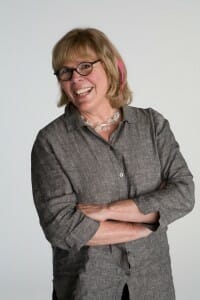 Today’s turning point post from guest writer, Peggy Flynn, a Project Director at ETR Associates, who is her spare time is on the Board of The Volunteer Center of Santa Cruz County (CA), and through them a volunteer literacy tutor. She also volunteers with United Way of Santa Cruz County and with Planned Parenthood Mar Monte.
 Today’s turning point story is written by Shannon Zoet, Assistant Director at Michigan Campus Compact, an affiliate of the Michigan Nonprofit Association. Shannon is also a Membership Co-chair for the Young Nonprofit Professionals Network in Grand Rapids.
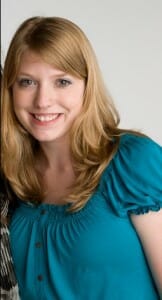 Today’s turning point story is written by JoAnna Phillips, a student at the University of Southern Indiana, and an AmeriCorps member who works with
 To honor his vision,
  Following his 1989 speech, President Bush established what has now become Points of Light, an organization whose mission is to inspire, equip and mobilize people to take action that changes the world. President Bush also signed the National and Community Service Act in 1990, building a new threshold of presidential leadership that has been continued by each successive administration.

 Today’s guest post is written by Joseph Baker. He enjoys volunteering in his community, writing, and baking. Read his work at
 The theme for this year’s