Five years ago, the only thing I knew about volunteering came from papers published in academic journals. I was an ivory tower academic studying social networks and people’s perceptions of volunteering.
When I left grad school it was tough finding a job. I heard about AmeriCorps and figured it would be a great way to learn more about how volunteering actually works for when I would be in my PhD program.
My interview with Volunteer Maryland was terrifying, but that was nothing compared to how I felt after two weeks of training. This group of people were dedicated to the causes they worked with and passionate about the power of volunteering to change communities.
As if the interview and training process wasn’t frightening enough, my first day serving at the Maryland Department of the Environment was even scarier. I met the Secretary of the Environment who was an alumna of the program that I was serving in, and found out the only resources they had to support their idea was a volunteer waiver form.
No big deal, right? Build a volunteer program from nothing, compare yourself to dedicated and passionate people, and have a cabinet-level politician be invested in the work that you’re doing? No problem.
I took a little bit of time to freak out and then got to work. After a few months, there was a fairly strong program that used a small group of volunteers to manage large amounts of information efficiently. So, I decided to take a week out of the office to test if my program could run on its own and help a fellow AmeriCorps member with a project they were working on.
I spent a week working with 2,000 other people to rebuild a community playground that had been destroyed by arson. I thought I was going to swing a hammer for a week, but I got assigned to work in a tool shed.
I thought it was going to be boring. It turns out it was one of the best jobs on the site.
You see, everyone who showed up needed to come by the tool shed for something, so I ended up talking to just about everyone who showed up. I got to hear their stories about why volunteering is important to them and hear why they came back to rebuild the playground they’d originally worked on. It was a great experience getting to know complete strangers who were working for some idea of what is good—of how their world ought to be rather than simply accepting how their world was.
I volunteered for five days in a row. On the sixth day, I got a lot of phone calls asking me how to do things or how to fix some of the power tools. It was the first time that I realized that I was valued not just as a volunteer, but as a volunteer with a specific skill set that was beneficial to the project I was working on.
The people I worked with changed how I thought about community.
Before I worked on the playground, I thought your community was just the place you lived. I learned that community is the place that you care about, and that you care about making better. I learned that volunteers are valuable, not only for the work that they do, but for all of the skills that they bring with them to an organization. It’s something that I always knew, but finally began to really understand.
Working on the project made me realize that I wanted to keep working with volunteers. It was my turning point that made me realize how volunteers were a powerful force in their communities, and a big part of why I signed up for a second year in AmeriCorps with Volunteer Maryland, and why I’m still supporting the work that volunteers do across the country.
News Flash: Buy a Tumbler, Help HandsOn Network
When you pick up your morning coffee this week, keep an eye out for a flashy Starbucks tumbler that does more than just keep your favorite beverage hot. This specially designed, limited edition tumbler provides a unique connection to community involvement.
For every tumbler purchased, Starbucks is donating $5 to HandsOn Network, an enterprise of Points of Light, to support those working to create positive change in neighborhoods across the country.
This new dimension of the Starbucks-Points of Light partnership was announced last Thursday in Seattle at a meeting of Points of Light’s Corporate Service Council, the premier national platform for advancing corporate volunteerism. Cliff Burrows, president, U.S. & Americas for Starbucks Coffee Company and chairman of the Council, presented the tumbler to Points of Light CEO Michelle Nunn.
Nunn said the promotion creates new awareness of how people can connect to volunteer opportunities in their neighborhoods and is an innovative example of Starbucks’s commitment to inspiring change, making a difference in people’s lives and using their size to bring about positive change.
Get one while supplies last and help us inspire, equip and mobile people to take action that changes the world.
Apply for the generationOn Youth Advisory Council
Today’s guest post is written by Rachel Shuster, a 10th-grader at Half Hollow Hills High School West in Dix Hills, N.Y, who is an inaugural member of the generationOn National Youth Advisory Council. At 12-years-old, she started a local chapter of a Kids Care Club, Kids Care HHH. Under her leadership, Kids Care HHH engages in service projects throughout their community raising awareness, money, creating change and bringing smiles to a variety of people while serving needs and causes both locally and globally.
The generationOn Youth Advisory Council is accepting applications from Tuesday, March 13, 10:00 a.m. EDT through Tuesday, April 10, 5:00 p.m. EDT. To apply, click here. If you know of a young person who would make a great leader, spread the word!
“This was the best day of my life.” These are the words that were told to me by a 5-year-old homeless girl as I and the other members of my Kids Care HHH packed up our carnival at a local shelter this past fall. Experiences like this continue to fuel my passion for service and volunteerism.
This was the most amazing year of my life. My experiences as part of generationOn’s Youth Advisory Council have inspired, taught, guided and compelled me to elevate my passion for service to another level. The Youth Advisory Council (YAC) quickly became a cohesive unit of 10 young adults that all had a similar goal to make their mark on the world. As a council, and as new and fast friends, we have worked together to spread the message in our communities that young people are valuable assets to our global society that can create change. The leadership training program provided by generationOn is invaluable. It has empowered me to be a better public speaker and leader of my organization. I know that this level of training is not ordinarily available to young people.
In addition to organizing a myriad of significant projects and events as a member of the YAC, I have had unique opportunities to share my ideas and experiences of engaging youth in service and inspiring them to make a difference in their communities by attending and hosting thought-provoking and inspirational events.
GenerationOn is on the cutting edge of empowering and equipping youth to take action to create change. I am so proud to be a part of this program and contribute to this important mission. I not only urge all youth to go out and “make their mark” but to apply for generationOn’s Youth Advisory Council and continue to engage their peers and other young people to work together to change the world for the better!
IBM: Making Volunteer Service a Celebration
This post is written by Diane Melley, Director, IBM, Corporate Citizenship & Corporate Affairs, who will be hosting a free live webcast, in partnership with Points of Light, on March 13, 2012, 1:00-2:00pm EST. Learn about the many strategies IBM follows to sustain a strong, effective, and worldwide volunteer program that builds healthy communities and helps the world work better. Register today!
Last year during IBM’s Centennial, I had the opportunity to join more than 100 IBMers and 100 local NGO leaders in Boston during our Celebration of Service milestone day in June. I participated in a marketing strategy session workshop, where IBMers shared their expertise in marketing strategy and social media with our community partners. In small working groups, we brainstormed best practices which leveraged ideas from the “Basics of Marketing” Activity Kit, a set of materials designed to introduce not-for-profits to marketing fundamentals such as planning, segmenting, targeting and brand strategy with the end goal of helping these organizations effectively reach and serve a full range of stakeholders. It was amazing to see the energy and give-and-take from the IBMers and community leaders. I was in awe being able to witness first-hand the passion of the IBM volunteers and their sincere desire to share their skills to make a difference. Their dedication didn’t end on that particular day – several volunteers even made commitments to conduct follow up projects with their NGO partners.
I am extremely proud to work for a company that has a long tradition of service. Even though IBM has been committed to service since its founding, the ways in which our company has been able to contribute to our communities and the world has evolved over time. When I joined our Corporate Citizenship group, we primarily donated hardware, since that was the focus of our business. Over time, as our business mix has changed, we have seen a transition over to donating software, services and consulting. Recognizing that our employees have a wide-range of intellectual capital, including legal, marketing, and countless other skill areas, we have also become comfortable sharing expertise outside our areas of core strength in technology.
Our IBM Centennial Celebration of Service was the culmination of this type of skills-based volunteering, and a case-in-point for the integration of all of our programs at a massive, worldwide scale. What makes IBM unique was our ability to bring all of these elements together. Not only did more than 330,000 IBMers around the world contribute more than 3.2 million hours of their time on the service milestone day, but we also enabled our service leaders with tools, successful models, and more than $12 million in grants at various award levels.
Another key part of the Celebration of Service was the creation of a portfolio of activity kits, robust and polished sets of volunteer materials ready for any volunteer – in or out of IBM – to take into schools and nonprofits. I mentioned the Basics of Marketing Activity Kit above, but there are now more than 30, with each kit including all the materials an individual or team needs to conduct an impactful volunteer activity: presentations, speaker notes, volunteer guides and handouts. The activity kits were built from the most successful and innovative skills-based volunteer activities performed by IBMers around the world, and represent the contributions of IBM’s most valuable asset – the skills and expertise of its employees.
IBM considers these kits just one contribution among many to making the planet a better and smarter place in which we all work and live. It is our hope that you will leverage these free activity kits as a way to grow your volunteer programs.
My Turning Point: How Americorps Worked for Me…
Today’s post is written by Ken Tran, the current External Relations Coordinator with AmeriCorps Alums. He served as a National Direct AmeriCorps member with the Get HandsOn Campaign in 2010-2011 at Points of Light. He fancies volunteerism, hashtags, strong coffee, and of course, Beyonce.
AmeriCorps members go through plenty of “aha!” moments (as dubbed by Oprah), during our service years. Those situations are when the imaginary light bulb finally lights up and we realize that what we’re doing has purpose and direction. That our actions are positively impacting those around us and that the effects of our service will be felt long after we have left.
I signed up for a National Direct AmeriCorps position with the Get HandsOn Campaign in Oct 2010, not really knowing what I was going to get myself into. Like most recent college graduates in our economy, I took one of the first opportunities offered to me. I got my BA at UC Irvine in June 2010 without a job lined up and moving across the country to Atlanta, Ga. with my friends sounded like a great opportunity. I could dive right into the real world, while increasing my chances of hanging with my girl, NeNe Leakes. The latter has yet to happen, but my Turning Point has!
During my AmeriCorps term, as a way to fulfill my 1,700 hours, I helped one of my peers with a school-based tutoring program through HandsOn Atlanta. Initially, I saw my AmeriCorps position as a job and didn’t see the impacts of my actions contributing to the greater benefit of my local community. I wasn’t doing the “traditional” volunteer service that most members would commit to during their AmeriCorps year, so it was nice to get out of the office and serve in my community. It wasn’t until I met the students at this school that I realized that my service could mean the world to one community.
The school that the weekend tutoring program was held at was incredibly diverse, with students representing more than 35 countries. Most were South Asian refugees, as that county of metro-Atlanta has a huge refugee population. On my first day at the program, I immediately got noticed by most of the students, as I looked a lot like most of them. With a majority black/ white dichotomy, most of the students had never seen an Asian-American, let alone one that was older than their elementary peers. One student, a 1st generation Vietnamese student with an adorable bowl cut, we’ll call him “Tommy”, stared at me for a bit, before coming up and saying, “You look like the same language as me!” Though technically incorrect, that quote has stayed with me since, as I realized the impact of my service as a minority in AmeriCorps and working directly in a minority population.
Volunteering at that school twice a month throughout my service year helped lay the foundation for the type of work that I want to continue on as an AmeriCorps Alum. As a citizen of color, born in the U.S., I want to help be a role model for younger generations, as they are learning to find their place in our national community. I want to keep service an integral part of my life, because at every step, I want to be able to be an example to those “Tommy’s” and other students, that they can keep pushing forward and be successful when the odds seem difficult. I want them to see how “AmeriCorps Works” in my life and continues to shape the intentions behind my actions.
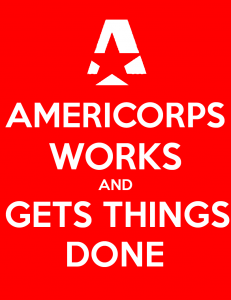
I invite you all to join AmeriCorps Alums as we celebrate AmeriCorps Week, March 10-18. This year’s theme of AmeriCorps Works resonates with the mission of AmeriCorps Alums as we celebrate how our service has helped get us to where we are today. Join or register a local AmeriCorps Week event in your community and find out more ways to connect with Alums in your area.
Change Notes: Japan One Year Later
Friends,
Sunday will mark one year since Japan was hit with a devastating earthquake and tsunami. Nearly 16,000 people lost their lives. The natural disaster damaged or destroyed more than 139,000 buildings and 2,000 roads – taking with it the physical and cultural infrastructure in towns and cities in the northeast and eastern regions of Japan.
Over the past 12 months, thousands of volunteers – from within Japan and abroad – have come together to not only rebuild structures, but also renew communities.
Points of Light’s affiliate, Hands On Tokyo, has been organizing volunteers to help with recovery since the immediate aftermath – initially delivering supplies to more than 37 shelters and now helping restore community life by creating safe spaces and opportunities for people to connect and convene as a community.
Points of Light has built a partnership with the Major League Baseball Players Association and Trust and partnered with Ebay Giving Works to use individuals’ generous donations to help HandsOn Tokyo expand its mobile Community Café model that provides the opportunity for those living in temporary housing to come together as a community and share experiences, activities and a spirit of hopefulness. The cafe serves as a hub of connection, inspiration and action, and fosters well-being, collaboration and sustained volunteer commitment.
This support is also helping Hands On Tokyo begin construction of a community center with the help of volunteers in Ogatsu-cho, one of the most-impacted communities, this spring.
Corinne Johnson, chair of the Hands On Tokyo Board of Directors, explained that prior to the disaster, Ogatsu-cho was a thriving community. The city lost most of its public facilities in the tsunami and now has only 900 residents. To rebuild the community, materials and supplies have been donated to be used to build a community center and Hands On Tokyo will organize and manage volunteers to help build out the facility – including bringing volunteers in from Tokyo and collaboration with local residents. The completed facility will serve 165,000 people.
“Seeing the power of volunteers to create change and rebuild the community has been enormously inspiring,” said Corinne.
The reasons behind volunteers’ commitment to rebuilding in Japan are varied. Corinne shared the story of one woman who has lived in Japan for 17 years. Since the disaster, she has made 17 trips to the remote Tohoku community – a six-hour drive – to assist in the rebuilding effort to thank the country she said has been so welcoming to her. Another woman, Naho Hozumi, was a housewife before the disaster and found her passion to help led her to become Hands On Tokyo’s full-time program manager for disaster services.
While Corinne said there is still a lot of work to be done, she said the “impact possible when volunteers come together to help communities recover, and to significantly improve the lives of hundreds of thousands of people” has been wonderfully illustrated in Japan.
Points of Light Disaster Services – like those deployed in Japan – focus on three primary areas: emergency preparedness, response and recovery. Annually, our HandsOn Network volunteer centers engage more than 100,000 volunteers in disaster response activities. These volunteers contribute more than two million hours of service with an economic impact of more than $40 million to communities recovering from disaster. In 2011, Points of Light was awarded Member of Year by National Voluntary Organizations Active in Disaster (VOAD).
Time and time again, we see the amazing response of individuals across the globe to helping their neighbors (across the street or across the globe) recover from devastating disasters. In the process they not only physically rebuild but restore precious hope. We encourage you to learn more about how you can help or make a donation to our disaster recovery efforts.
Yours in service,
Michelle Nunn
CEO, Points of Light
My Turning Point: An All-American Vantage-Point
Todays’ turning point is written by Keith Lee, the Points of Light volunteer of the week. We are highlighting his story for the upcoming Americorps Week. Keith is an Americorps member currently at West Suburban PADS (Maywood, IL) & Chicago Cares. He is a physician in training, dancer and traveler hobbyist.
I have lived in the three largest cities in the United States: New York City, Los Angeles, and Chicago and have spent countless summers in the South. Although each city is uniquely diverse in resources, citizens, and geography – the hearts of the American people are filled with compassion to serve one another. It was in my home town of Joliet, Ill., that I learned the importance of community and more importantly community involvement.
My mother was a single mother working hard to support and raise her children. However, there was never a moment were I felt like I was raised only by my mother. The community surrounded my family and helped out where needed with excellent effort and compassionate hearts. This example would make a lasting impression on me causing a contagious servant heart.
Years later while still in high school, I remember riding a bus filled with eager community members to the state capital to join a protest and lobby for change in the school system addressing achievement gaps, resource allocation, and the list rolls on. After rolling 600 miles, long days, and a lot frustration, nothing happened. Yes, I understood and was constantly told that change was gradual, but there was work to be done. So, at the age of 16 I began to tutor at an after school program to elementary and middle school students in the areas of math, science, and reading. I became a peer mentor to youth at a community center and spent a couple days a week playing basketball and talking with the kids. I went to soup kitchens cooked food and cleaned. My community provided clothes to the disadvantaged and computer and technology training to the community at large. I was also a volunteer videographer filming community events and broadcasting on local community television.
This lifestyle of volunteering continued as I lived, traveled, and studied across America. In 2008, I made a personal pledge to consciously volunteer 72 hours a month to my community: local, state, country. Three years later, my pledge became a lifestyle as I serve as an Americorps member at West Suburban PADS in Maywood, Ill. By sharing talents and time unselfishly the community becomes strong and is able to function better. As a result, a student does not struggle in math class, a homeless family is fed and given shelter, a garden is planted, and a computer is repaired. Service unites a community, fills the gap when there’s no budget, and inspires others to serve. Points of Lights embodies community service and a collaboration of government, corporations, and citizens that will no longer stand and watch but take action. I am a point of light.
With AmeriCorps Week (March 10th – 18th) quickly approaching, AmeriCorps Alums, the national network for all AmeriCorps Alumni, is actively partnering with the Corporation for National and Community Service to help celebrate how this year’s theme of AmeriCorps Works is making positive contributions throughout the country.
As AmeriCorps Alums, we have seen time and time again how AmeriCorps Works in our lives and in our communities. AmeriCorps worked when disaster relief was needed in Joplin. AmeriCorps worked when we were interviewing for that first job right after our service. AmeriCorps worked when we networked with our fellow Alumni in our Life After AmeriCorps.
We want to celebrate and connect with current and non AmeriCorps members to share our stories as Alums and how we continue our Lifetime of Service.
AmeriCorps Alums will be celebrating AmeriCorps Week in these three ways:
AmeriCorps Week Events – We anticipate our national network of chapters to engage in specific AmeriCorps Week activities and programs. These local events range from AmeriCorps Night at the minor league hockey rink, to community service projects, to outreach as mentors to current AmeriCorps members. Through AmeriCorpsWeekEvents.org, you can find an event or register your own for others to sign up for.
AmeriCorps Works Here – With our photo storytelling campaign, Alums will take pictures at their place of current employment to demonstrate the diversity of career paths and instances of leadership that Alums are pursuing. These photos will be shared through our social media properties (primarily on Facebook and Twitter), with the hastag #AmeriCorpsWorksHere, as a way to profile the diversity of AmeriCorps alumni after their service year. Click here to learn more about the campaign and how you can participate!
AmeriCorps Online Townhall – Titled, “Inspirational Pathways of Service and Leadership”, this Townhall will take place on Tuesday March 13th from 3 to 4:30PM ET. AmeriCorps Alums will host a webinar featuring a townhall-style conversation with Five AmeriCorps alumni, who have followed five different career paths from their service year. Click here for more information and to register for the webinar. The alumni panelists featured will be working in the fields of higher-education administration, fundraising, AmeriCorps program management, education reform, and social media consultant and share how national service has guided them into their current career paths.
Follow Twitter and Facebook to keep up with #AmeriCorpsWeek Events throughout the country!
Comment and share: how do you plan on celebrating AmeriCorps Week in your local community?
Exploring Youth Volunteer Opportunities
Today’s post is written by Simone Bernstein, a sophomore at St. Bonaventure University in Olean, N.Y., co-founded Volunteen Nation with her brother, Jake. Simone will be joining generationOnas a summer intern this June. Jake is a member of the generationOn National Youth Advisory Council. If you know a teen who is a leader in youth service, the application period for the next generationOn Youth Advisory Council opens on Tuesday, March 13, on www.generationOn.org.
Connected is one of my favorite words. So it is no wonder that being a volunteer helps me feel connected to my community. During high school, I was an avid volunteer at a local crisis nursery shelter for young children. I was invited, along with many of my peers, to join their Junior Board. The St. Louis Crisis Junior Board is comprised of young people (high school and college students) finding ways to promote the organization and assist with fundraisers for the agency. Junior Board members volunteer in the nursery with the children, help out at events and conduct their own smaller functions to benefit the Crisis Nursery Junior Board. It was an incredible opportunity for me to get involved, brainstorm, problem solve, and meet and share ideas with other dynamic youth volunteers. Teen advisory boards give youth a voice and demonstrate that adults are interested in hearing our ideas and suggestions. I was fortunate to find out about this volunteer and Junior Board opportunity from my neighbor. Yet, I was frustrated that it was so difficult to find volunteer opportunities for high school and middle school youth.
My brother and I searched online and realized there were limited opportunities for youth to volunteer on-site, since many organizations and nonprofit agencies had age restrictions due to safety, security and liability concerns. There was no regional website dedicated to youth volunteers. So my brother and I contacted local organizations that offered youth volunteer opportunities and encouraged others to create youth volunteer programs. We organized a regional website to make it easier for area youth to explore local volunteer opportunities. The success of the website inspired us to host an annual St. Louis Youth and Family Volunteer Fair and days of service for youth and families. The regional website serves as a resource for area schools, youth groups and nonprofit organizations.
We knew there were incredible opportunities for youth to volunteer throughout the United States at local libraries, serving on mayors’ youth advisory councils and at local hospitals, so we decided to create a national website for youth to explore and share volunteer opportunities in their communities and to encourage nonprofit agencies to find ways to include youth and families as volunteers. Every library, food bank and shelter can find ways to include youth volunteers. Youth want to get involved. VolunTEENnation.org wants America’s teens to give back to the community. To do this, Volunteen Nation is challenging every organization and American corporation to add a volunteer opportunity for teens to the site within the first 100 days.
My Turning Point Came When I Realized that the Having the Ability to Help Meant Also Having Responsibility to Help
Today’s Turning Point comes from guest writer, Max Wallack, 15, a 2011 Hasbro Community Action Hero, an award recognizing outstanding young service leaders presented by Hasbro in partnership with generationOn, the global youth service division of Points of Light. Today is the last day to submit nominations for the 2012 Hasbro Community Action Heroes, nominate a youth by 5pm EST!
I have sometimes been asked when the moment first happened that I realized I couldn’t just stand by and watch the needs of others go unmet. For me, this moment came when I was very young. At 5 years old, I was named a Davidson Young Scholar and invited to a conference in Nevada. At that point, being a Davidson Young Scholar meant, to me, only that I was smart, but I had pretty much figured that out on my own during the parent/teacher conference that ensued when I got into big trouble in nursery school for reading my classmates’ confidential records (out loud when the teacher was out of the room). I didn’t realize that in only a few months, in Nevada, I would have an experience that would help me define who I am.
That summer, I traveled to Nevada with my parents, where I met about 20 other Davidson Young Scholars, as well as Jan Davidson, the founder of the organization. Jan and her husband, Bob, had become very wealthy as the developers of a children’s educational software company, and they had decided to invest their money into an organization to support the needs of gifted students. I attended a presentation given by Jan, where she said that the reason they were investing in these students is that they felt that, if these students were encouraged, they would be the ones most capable of contributing positively to society.
To this day, I remember Jan saying she believes that “anyone who has the ability to help another person, has the responsibility to help them.” Interestingly, no one else remembers Jan saying exactly those words, not my parents, not my Davidson counselor, not anyone that was there. Apparently, that’s just the way my 5-year-old mind understood what Jan was saying. Nevertheless, it was at that moment I understood that it was my responsibility to do whatever I could to help others and make the world a better place.
Ever since then, I have made it a point of being observant of those around me and “filing away” in my mind whenever I notice a need being unmet. When I was 6, I noticed my great-grandmother was having trouble getting into our minivan, so I built her a special step, The Great Granny Booster Step, with a handle attached. The next year, the special step won a prize and I was invited to Chicago. While there, I saw many homeless people living in the underground highway system under the Million Dollar Mile shopping district. At my acceptance speech, I remember saying that it was my responsibility to do something to help these homeless people. Five years, I later I invented the Home Dome, a shelter for homeless people and victims of disaster, that won first prize in the Intel/BKFK Trash to Treasure contest.
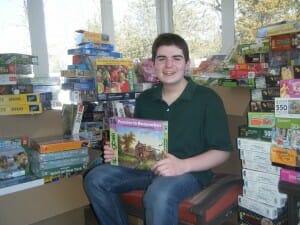
Many similar scenarios have been repeated, continuing to my current project, PuzzlesToRemember, which distributes puzzles to more than 700 facilitates that care for Alzheimer patients across North America in an effort to ameliorate the affects of memory loss, and my work as an Alzheimer’s Research Intern, but it all boils down to a few elements. First, I realized at age 5 that everyone has the responsibility to do what he/she can to help others. Next, that to identify a need, one has to be observant. Third, that microphilanthropy, doing just some little thing that helps, is a very powerful force. If everyone would do just some little thing that they recognize as helpful to others, the world would be a much better place.




 Since we are highlighting Turning Point posts for our National Conference on Volunteering and Service we are specifically highlighting current or past AmeriCorps members for AmeriCorps Week. Today’s post comes from Michael Nealis, Interactive Strategy Coordinator with Points of Light. He served as an AmeriCorps member with Volunteer Maryland from 2008-2010
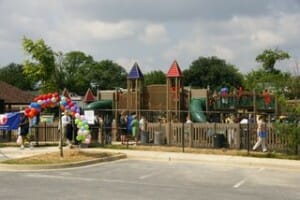 I spent a week working with 2,000 other people to rebuild a community playground that had been destroyed by arson. I thought I was going to swing a hammer for a week, but I got assigned to work in a tool shed.
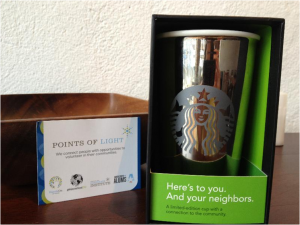 For every tumbler purchased, Starbucks is donating $5 to
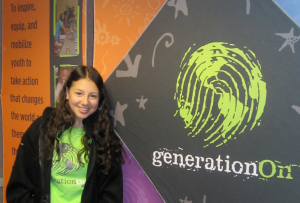 Today’s guest post is written by Rachel Shuster, a 10th-grader at Half Hollow Hills High School West in Dix Hills, N.Y, who is an inaugural member of the generationOn National Youth Advisory Council. At 12-years-old, she started a local chapter of a
 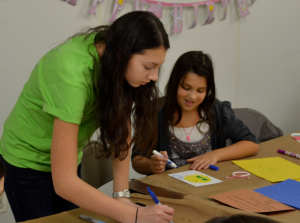 This was the most amazing year of my life. My experiences as part of generationOn’s Youth Advisory Council have inspired, taught, guided and compelled me to elevate my passion for service to another level. The Youth Advisory Council (YAC) quickly became a cohesive unit of 10 young adults that all had a similar goal to make their mark on the world. As a council, and as new and fast friends, we have worked together to spread the message in our communities that young people are valuable assets to our global society that can create change. The leadership training program provided by generationOn is invaluable. It has empowered me to be a better public speaker and leader of my organization. I know that this level of training is not ordinarily available to young people.
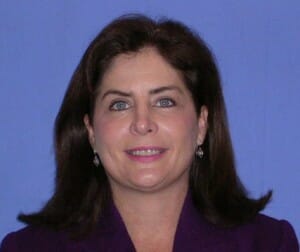 This post is written by Diane Melley, Director, IBM, Corporate Citizenship & Corporate Affairs, who will be hosting a free live webcast, in partnership with Points of Light, on March 13, 2012, 1:00-2:00pm EST. Learn about the many strategies IBM follows to sustain a strong, effective, and worldwide volunteer program that builds healthy communities and helps the world work better.
 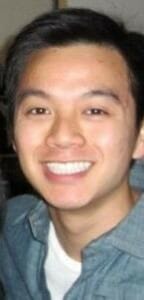 Today’s post is written by Ken Tran, the current External Relations Coordinator with
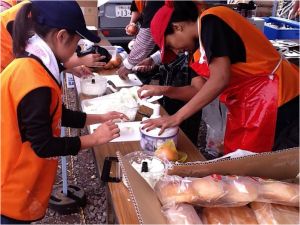 Points of Light has built a partnership with the Major League Baseball Players Association and Trust and partnered with Ebay Giving Works to use individuals’ generous donations to help HandsOn Tokyo expand its mobile Community Café model that provides the opportunity for those living in temporary housing to come together as a community and share experiences, activities and a spirit of hopefulness. The cafe serves as a hub of connection, inspiration and action, and fosters well-being, collaboration and sustained volunteer commitment.
 Todays’ turning point is written by Keith Lee, the
  With
With  Today’s post is written by Simone Bernstein, a sophomore at St. Bonaventure University in Olean, N.Y., co-founded Volunteen Nation with her brother, Jake. Simone will be joining