My Turning Point Occurred With The Death of My Father
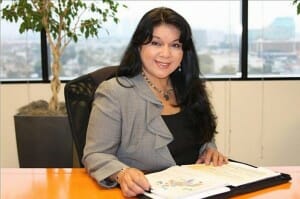 Today’s turning point story is written by Pilar Pinel, founder of Embracing Latina Leadership Alliances (ELLAS). ELLAS is dedicated to the educational, professional and political advancement of underserved Latina youth. She is also a L’Oréal Paris 2011 Women of Worth honoree.
Throughout my young life, I found pleasure in helping others. It wasn’t until I was in my 20s that I embraced the thought that everyone was born with a unique purpose and that time would lead me to realize what mine would be. For me, giving to others was not because I was wealthy, but because it was the right thing to do. As a Latina, I felt a responsibility to step up to the plate at such a historical turn in our nation’s history for women, in particular for Latinas who lacked role models in their environments and the resources to reach their full potential.
My father passed away when I was 24, the following year a brother passed away as a firefighter and one month later my brother-in-law died while driving in Mexico. Each left this world tragically and unexpectedly, but not without a lifelong footprint of their humanitarian contributions to their family, friends and community. During this time I felt abandoned in an emotional fog of – why? Little did I know that these experiences would make me who I am today, and how I would gain my wisdom and strength.
A year later, unexpectedly divorced and raising our 3-year-old son alone on limited income, I went to college while working nights and weekends. Navigating through the post-secondary process alone, without role models or support, was extremely tough. There were times when my son was in class with me at 6 a.m., because I had no one to take care of him and quitting was not an option. Finishing my studies, I worked for two community college districts and later the legislative department. The political awakening I’d gained greatly influenced my founding “ELLAS” in 2003. When my son was young he would call me “Zina” (a princess warrior), because he said “I could overcome any difficult challenges thrown my way.. My name (Pilar) refers to “column/strength”— for me, each day is about faith, love and being grateful for those who committed their lives to our country’s freedom and strength.
My “turning point” was the synergy of my life experiences linked to timing and opportunity and seeing so many young Latinas reminding me of me at their age. However, if asked to put one experience at the top, it would be my father’s death. It opened my eyes to how fragile life is, and the window of opportunity we all have to contribute to positive change and the importance of setting one’s moral compass to assist others in their challenges regardless of our own challenges. To recognize the monumental power each of us possess when we give of ourselves selflessly in kindness and empathy. My passion possibly would not have been realized if not for someone seeing the potential in my vision and investing in the mission. A dear friend once said that “positive energy is only as good as it is shared.” SHARE! After all, we take nothing with us when we depart this world.
Healthy Messages
This is republished from today’s For the Win series on the White House blog. The series features the remarkable initiatives that young Americans are advancing to win the future for their communities
 Nimansha Jain is a 2011 winner in Scholastic’s “Clifford BE BIG in Your Community Contest.” Scholastic Media, a division of Scholastic Inc., the global children’s publishing, education and media company, and HandsOn Network, the volunteer activation division of Points of Light and largest volunteer network in the nation, recently announced the call for submissions for the fourth annual contest. BE BIG invites kids of all ages, teachers, parents and community leaders to submit proposals that demonstrate how Clifford’s BIG Ideas can make the world a better place. Submitted ideas vie for the chance to win up to $10,000 in community grants from the BE BIG Fund to be used to implement the winning proposals. To coincide with the contest launch, Scholastic Media and HandsOn Network released a study, “It Starts with Character: Inspiring Kids & Teens to Volunteer” which found that kids and teens who have more exposure to character-building skills, such as sharing, being kind and helping others, are more likely to volunteer in their communities, and with greater frequency. For more information about youth making their mark on the world, visit generationOn, the youth activation division of Points of Light.
Many nutritionists report that a single stock of broccoli has more vitamin C than two hundred apples. It’s interesting facts like these that led me to lead a new project, called Live Well Lunching, with several active youth in Omaha, Neb., including my brother Mohit Jain. Inspired by the “These Come from Trees” initiative, which uses smart statistics to reduce paper use, I helped start this program which uses point of purchase prompts to help change student’s ideas on what it means to live healthy and fulfilling lives. As an active advocate for health and helping youth in Omaha live healthy lives, one of my main focuses and passion has been to be a healthy living advocate in my community. This program shows me, and youth who are involved with service-learning, the true impact that small, cost-effective, things can have on the everyday environment.
The current program has two components called the “Healthy Fact of the Week” and “Easy Choice.” Each fact uses smart messaging in order to present impactful statements so that students will make healthier choices. This ranges from portion sizes to direct health benefits. Who knew that just eating a single apple can help build your stamina in the gym? The Health Fact of the Week aims to utilize point of purchase prompts through facts that will engage students to recognize the consequences of the food choices they make and the reality of the healthy benefits provided by healthier alternatives. It’s these small phrases and ideas, that take just a quick glance, that leave an impact on students, even in the environment where a student’s only goal is to get in and out as quickly as possible.
The Easy Choice part of the program includes changes in operating procedures inside of the lunch line. This includes rearranging the food items, and changes to the names of the food items so that they are more appealing and exciting to youth. Easy Choice seeks to bring about changes in the arrangement of the facilities in which students choose and eat their food. It also focuses on the aesthetic appeal of the food, both in the manner the food is presented and the name that it is given. These few simple changes in the lunchroom environment have shown measurable change in the past.
The program is currently in its trial run at a local high school in Omaha. We hope to see measurable change through the program, and expand the program throughout the school district and to the rest of Omaha. It’s truly simple changes, and interesting ideas, that give vitality to youth today and drive their interest. As youth in our community, it is our responsibility to take action for our generation’s health. I hope to use this program to catalyze true change in my city of Omaha, towards a goal to reduce obesity in Omaha.
News Flash: A Billion + Change Mobilizes $1.6 Billion in Skills-Based Volunteering

More than 100 leaders in business, policy and civic engagement celebrated the continuing success of A Billion + Change on Monday with the announcement of 78 pledge companies and more than $1.6 billion of skills-based services contributed since the summer of 2011. Virginia Sen. Mark Warner, the campaign’s honorary chairman, announced this as part of a program hosted by Morgan Stanley at the company’s headquarters in New York City on International Corporate Philanthropy Day. The event recognized the innovative pro bono programs companies are developing to deliver high-impact services to address community needs.
A Billion + Change, housed and managed by Points of Light, is a national campaign to mobilize billions of dollars of pro bono and skills-based service from corporate America by 2013. The campaign is seeking 500 companies willing to pledge their best business skills and talents to serve the needs of nonprofits and communities at home and around the world. The campaign’s vision is to inspire the largest commitment of corporate pro bono service in history.
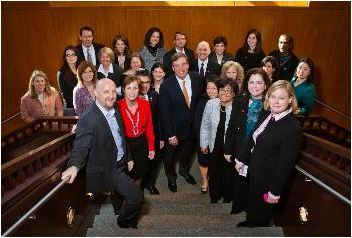 At a time when public resources for social services are stretched, Sen. Warner emphasized the salience and the critical nature of A Billion + Change. “As a percentage of our GDP, we are spending less on safety net programs in 2012 than we did in the 1960s. Future spending trends on these programs are also under great pressure. To be competitive, we need to spend more on things like education and workforce development, and nonprofit action in this sector will be critical,” he said. “A Billion + Change is an opportunity for businesses to get involved, not to just write checks, but to give their most valuable expertise.” Senator Warner also outlined the creative ways businesses are stepping up to invest in communities in a front-page article published by the Huffington Post on Monday.
The skills-based volunteer programs of campaign pledge companies are redefining what it means to help. Morgan Stanley’s annual Strategy Challenge, for example, has delivered more than 14,500 hours of pro bono services to 36 nonprofits across the nation, worth approximately $2.2 billion. One Strategy Challenge team was able to save New York-based New York Cares $30,000 annually by recommending improvements to its volunteer on-boarding process in 2009.
A Billion + Change is encouraging companies of all sizes across all sectors to achieve this kind of change. Pledge companies range in size from small businesses, like gothamCulture and AltruHelp, to large companies such as Nielsen, General Mills, State Farm, Hewlett-Packard, UnitedHealth Group and Morgan Stanley. To date, these companies have committed to give more than 11 million hours of time and talent to nonprofits by 2013.
Read more about A Billion + Change, see companies that have taken the pledge and follow media coverage of the campaign online. Photos of the event can be viewed on Flickr.
A Billion + Change was launched by the Corporation for National and Community Service in 2008 and continues as an initiative of the federal agency. Reinvigorated in 2011 with expanded leadership under the honorary chairmanship of Sen. Warner, it is now housed and managed by Points of Light. The initiative is powered by the support of Deloitte, HP, the Case Foundation and IBM with additional founding support from State Farm, McKenna Long & Aldridge LLP, and Morgan Stanley.

My Turning Point Was During My Dad’s Deployment
 Simone A. Bernstein is a sophomore at St. Bonaventure University in Olean, N.Y. Simone and her brother, Jake, created a website http://www.stlouisvolunteen.com, and will soon launch http://www.volunTEENnation.org, a resource for youth throughout the nation to find volunteer opportunities in their communities.
Over my winter breaks from college, I often stock up on old movies and watch them curled up on the couch. I recently rented the 1970s movie, Turning Point. Anne Bancroft and Shirley McLaine, the lead actresses, reflect and ponder on how difficult and complex decisions impacted and altered their lives. Fortunately, as a college sophomore, I have not yet had to face such difficult life choices as these actresses in the movie. Yet, each of us has our own turning points that mark and highlight the beginning of a new and positive change in our lives.
My turning point was during my dad’s deployment. As a military dependent, it was difficult and challenging for my mom to maintain a sense of normalcy with three young children. Yet the outpouring of support our family received from the community: from volunteers bringing meals, neighbors helping my mom with childcare and errands, and even strangers mowing our lawn, sparked my siblings’ and my desire to get involved and help others. I immediately called the local USO to see how we could all sign up to volunteer. Although they appreciated our interest, due to safety and security concerns, volunteers had to be 18 years old to volunteer onsite. It was tough for my brother and I to find nonprofit organizations allowing youth onsite. We were active with scouts and our religious youth groups, but we wanted to do more.
Though word of mouth, we discovered a few local volunteer opportunities available for youth. We volunteered at the local library, at an emergency shelter for children and, as we got older, the VA Hospital. We were hooked. We met with nonprofit agencies, religious institutions and schools to find ways for local nonprofit organizations to include youth. We created a simple website for youth and nonprofit organizations to connect within the community. The positive feedback in the community from the site led my brother and me to organize the first St. Louis Youth and Family Volunteer Fair. The Volunteer Fair is now an annual spring event. Thirty-five youth- and family-friendly volunteer nonprofit organizations recruit students and families with young children. More than 1,500 youth and families attended the fairs.
We wanted to create more opportunities that offered youth flexible options. My brother and I organized events to engage youth in volunteer service from offering free tennis and basketball clinics for youth with special needs to a youth and family park clean-up. Youth are interested in volunteering service when they are offered interesting, fun and rewarding volunteer opportunities. More than 5,000 youth have found volunteer opportunities though our website, organized volunteer projects, Twitter postings, Facebook notices and text messages. The care and concern we received from the community from our dad’s military service commitment was the turning point for my siblings and me to pay it forward and give back to our community.
To find more resources/tools for military families check out the Community Blueprint Network for best practice sharing and more effective delivery of services among organizations that serve military personnel and their families. To find youth volunteer resources check out generationon.org.
29 Things To Do In Chigago for the National Conference on Volunteering and Service
In honor of Leap Year, today we are highlighting 29 things to do while you are in Chicago for the 2012 National Conference on Volunteering and Service, June 18-20.
- Create new ideas for service with old friends, colleagues and new contacts who believe in the power of people to create change.
- Explore Chicago’s lush Millennium Park, home to the famous Cloud Gate or “Bean” sculpture and the Crown Fountain that spouts water from its digital faces.
- Hear about first lady Barbara Bush’s personal commitment to service and how she is encouraging multi-generational service leaders and social commitments.
- Deep dish pizza – need I say more?
- Tour the exhibit hall and meet 80 vendors from nonprofit, government, corporate and merchandising sectors as they demonstrate the impact and results of their programs and services.
- Roar with the lions at one of the nation’s last free zoos. Offering an unforgettable wildlife experience amid a stunning skyline, the Lincoln Park Zoo is open to the public for free every day of the year.
- Join our first-ever Solution Centers for a casual conversation with experts in various issue areas. Experts include: the Corporation for National and Community Service, Team Rubicon and University of Phoenix.
- Meet one of the 50 most influential people in the nonprofit sector, California Association of Nonprofits’ Executive Director Jan Masaoka.
- Check out one of the workshops offered in the Youth Leadership track to see what the kids (and those who work with them) are doing these days.
- Tour McCormick Place West (your Conference convention center) to see one of the largest collections of public artwork in Illinois. The breath-taking displays feature paintings, sculptures murals and more.
- Tweet with hashtag #NCVS and let people know what you’ve experienced.
- Walk down the Magnificent Mile, Chicago’s famous Michigan Avenue with world-class shopping, dining and architecture. Bring your walking shoes and your wallet!
- Party at the Welcome to Chicago Celebration featuring mini-service events, sponsor booths, activities, regional bands and famous Chicago cuisine.
- Check out the News Desk outside the exhibit hall on the third floor of the convention center for the daily newsletter, the latest Conference hot topics, media interviews and more.
- Hear from former U.S. Army Chief of Staff Gen. George W. Casey about how a lifetime of service – both military and community – influenced his viewpoints on leadership, vision, organizational culture and leading transformational change.
- Ford the Chicago River by boat tour and explore the city’s architectural wonders on the only river in the world that flows backwards. The reversal of the Chicago River was a massive public works effort that saved the Chicago region from waterborne diseases in the early 1900s.
- Volunteer at the Conference. It’s what we do!
- Visit the tallest building in North America – the Willis Tower – and step out onto the Ledge, a suspended glass box at Skydeck Chicago that is more than 1,000 feet in the sky.
- Participate in the Sunday Supper, an opportunity for people of diverse backgrounds to come together to share a meal, discuss the challenges our nation faces and take action.
- Meet up with Lil Sis, have dinner, convince her to move home. Wait … This isn’t my personal to-do list.
- Share your Turning Point story to inspire others to find their passion.
- Check out a Civic Fellows session, intimate dialogues with sector leaders like Susan Ellis, Michael Carter, Isabel Wilkerson.
- Experience our nation’s leader singing “Sweet Home Chicago” or check out the local music scene whether your genre is jazz, blues or eclectic festivals.
- Hone your professional speaking skills to make better pitches to funders, improve your presentations and feel more comfortable in the limelight. Be sure to check out session 2299, Professional Speaking Training with Bill Hoogterp.
- Watch the fireworks, visit the beer garden and ride the ferris wheel (not necessarily in that order) at the Navy Pier.
- Meet the wonderful staff from the Chicago Convention and Tourism Bureau on the first floor of the convention center. They have everything you need to plan meals, outings, transportation and anything else you can’t even think of to make this your best trip to Chicago ever.
- Join a conversation about innovative thinking, entrepreneurship and leading change with Brad Keywell, Lightbank and Groupon co-founder.
- Upload your Conference photos to NCVS on Flickr.
- Relax, have fun, meet some new people and go home re-energized for your community!
Evaluate Your Surroundings, Then Take Action
 Today’s Turning Point story is written by Dallisa Hocking, Director of Sustainability and Community at The Cosmopolitan of Las Vegas. Dallisa is on the Advisory Council for Communities in Schools and an officer for the Las Vegas Business Academy. In her spare time she enjoys cooking and traveling with her grandma Eloise.
“Even when opportunity knocks, a man still has to get up off his seat and open the door.” – Anonymous
I’ve been an outgoing person since childhood – from taking center stage in my school performance of “Little Red Riding Hood” to convincing neighbors why buying rocks was a good investment. As I grew into my teen years, I took my talents and targeted them towards the greater good of my community.
How can you take your energy and create change? Simply stated: Evaluate your surroundings and then take action. In other words, look at the world around you and determine what could use some extra care and attention.
Putting this theory into practice started in high school – I kept hearing about the dangers of cigarette smoking. For me, not smoking myself wasn’t enough. I began going to elementary schools and teaching children the dangers associated with cigarettes. Then a few years later in college, people I knew were affected by date rape drugs. So, I put my voice to good use and began facilitating sessions in college classrooms about the warning signs and signals to watch for. And, about four years ago, my brother was a Marine stationed in Iraq. Through our regular communication, he told me that many of his fellow soldiers didn’t receive packages and letters from home, and again I knew something had to be done. At work, I started a program called “Operation Camo Care,” rallied employees and created hundreds of care packages that were shipped to soldiers around the world.
These are a few of the ways I’ve taken inventory and then taken action. It doesn’t always have to be a grand gesture that helps many. It could be a small act of kindness that changes the life of one person, even if it is just for a moment.
So, keep your eyes open to the possibility of today and what you can contribute to the greater good. You may be surprised to see how far your good deed will go.
My Turning Point Was Influenced By Strong Female Role Models
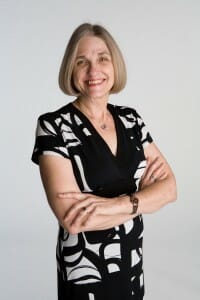 Today’s Turning Point story is written by Eileen Bostwick, Director of the Foster Grandparent and Senior Companion Programs in northern California. In Eileen’s spare time she enjoys traveling, spending time with her 6 grandchildren, and volunteering at their school fund-development events. She also serves on the National Association Foster Grandparent Program Directors Board and on numerous local non-profit boards and committees.
My mother and the experiences I had growing up as a flower child of the 1960’s greatly influenced the person I grew into.
Issues surrounding aging have been part of my life since my early childhood. I never realized that my interest in aging was unique or different than that of my peers, to me it was normal. My mother was an amazing woman who adopted me late in her life. She had a rich fabric of friends who had achieved success in their chosen fields. These strong, educated, caring women mentored me from my birth. Each of them made a tremendous difference during a time when women weren’t recognized for such contributions.
Mildred was a social worker with the Native Americans of the Southwest. A graduate of U.C. Berkeley her accomplishments are more remarkable due to her physical limitations. She had Multiple Sclerosis and was wheelchair bound most of her years. Jenny was a revolutionary and was instrumental in establishing Unions to protect the workers of our country. Evelyn was a poet, writer and dreamer and recorded history as it unfolded. These women along with others shaped my beliefs, nurtured my interests and raised my social consciousness and showed me the tremendous wisdom of older adults.
While in Community College in Marin County, CA I helped to raise cash and collect clothing to support Cesar Chavez, co founder of the National Farm Workers. With 3 other students we drove to Delano and marched on the picket line to boycott grapes. We met Cesar Chavez, and had the honor of eating dinner with him. This experience showed me a reality that I previously had no knowledge. It provided the impetus to be community-minded and volunteer my services, something I have done most of my adult life.
Since 1990 I have recruited older adult men and women as volunteer tutors and mentors for special needs children in the Foster Grandparent Program (FGP). In 1999 I implemented a Senior Companion Program (SCP) by recruiting older adult volunteers to assist frail elders to remain living independently at home. Annually, over 85,000 hours of service provided by these dedicated FGP volunteers result in children attaining grade level and being able to promote to the next grade, at grade level. Senior Companions assist older adults to “age in place, at home” rather than moving to assisted living or nursing homes for care.
Working with these programs has reinforced my understanding of the incredible need in rural communities for services for frail elders as well as the lack of access to existing services. Too many older adults are unable to access medical care, nutrition programs, housing and recreational activities. Isolation, elder abuse, alienation, depression, malnutrition and transportation are very real problems for the majority of older adults in the area. I have worked to provide meaningful roles for older members of the community. I would like to help society develop a better understanding of aging and change the stereotype of ageism that is prevalent today. I would like to become a mentor to others as I was given mentors as a child.
From A Thousand Points of Light Toward New Innovations in National Service and Social Impact
 Today’s guest post is written by Jackie Norris, the Executive Director at the Points of Light Corporate Institute, an Iowan by way of NY, Mom to 3 Boys, Previous Chief of Staff to Michelle Obama. You can find her on twitter: @MsJackieNorris
When President George H. W. Bush invoked a thousand points of light in 1989, he set off a movement of individuals, nonprofits and corporations working together to create positive change in our communities through volunteer service. He was also the catalyst for launching Points of Light, which is today the nation’s leading volunteer organization dedicated to inspiring, equipping and mobilizing people to take action to change the world.
More than 20 years later, the need for volunteer service is greater than ever before. Every sector of our society is facing serious challenges, from our uncertain path toward economic recovery and social unrest at home and abroad, to the cultural and demographic forces shaping our society and workplaces. But as the decades have brought more complex challenges, they have also brought innovations in service and deep commitments from the private sector to take a greater role in creating a more sustainable world.
A Billion + Change is a great example of the kind of innovation and of the growing scale of commitments taking place in the nonprofit, business and service sector. A Billion + Change is a national campaign to mobilize billions of dollars of pro bono and skills-based services by 2013. It is challenging and inspiring companies to lend their most valuable assets—their talent and their human capital—to help nonprofits achieve more with scarce resources, so they can be effective agents of change.
The scale of corporate commitments to this campaign so far has been significant. In November 2011, 50 companies had pledged more than $1 billion worth of skills-based volunteer services to build nonprofit capacity. Today, on International Corporate Philanthropy Day, the campaign will announce progress toward its overall goal of having 500 companies pledge to create or expand a pro bono program. Together, these companies are stepping up to inspire the largest commitment of corporate pro bono service in history.
There is also a lot to be said about encouraging companies and employees to lend their professional skills to build nonprofit capacity. For nonprofits, the value of skilled support in areas such as general operations, technology and professional services can be 400% greater than the value of traditional volunteering. So in a real sense, A Billion + Change is redefining what it means to help.
Morgan Stanley, whose annual Strategy Challenge is an excellent example of the value skills-based volunteering can have on nonprofits. Since it began in 2009, this initiative has used the financial analysis and business strategy expertise of its talented professionals to deliver more than 14,500 hours of skills-based volunteer services to nonprofits. These services are worth approximately $2.2 million, and have been contributed to 36 nonprofits across the nation. A team of Morgan Stanley employees participating in the Strategy Challenge was able to save New York-based New York Cares $30,000 annually by recommending improvements to its volunteer on-boarding process in 2009.
Pledge companies are delivering high-impact volunteer services like this daily to address every aspect of community needs, from education and healthcare to economic and community development programs and programs helping victims of domestic abuse.
I ask you to ask yourselves: have you, as an employee, an employer or as a civic leader, thought about how you or your company can contribute your skills, knowledge and talent to join the growing pro bono movement? To learn more, visit A Billion + Change online, and take part.
My Turning Point Occured in the East Harlem Subway
 Today’s Turning Point story is written by Gina Keatley, Founder/Director of Nourishing NYC, a community food program that feeds, educates, and advocates for tens-of-thousands of in need families annually. Gina is an award-winning chef, nutritionist, and humanitarian who has been chosen as a 2011 CNN Hero and a L’oreal Women of Worth.
In 2003, I had moved to New York City like many young, wide-eyed hopefuls with 900 bucks in my pocket and a ready-to-take-on-the-city attitude. I attended culinary school in NoHo followed by NYU for nutrition in the Village, but as I said I moved here with very little resources and found myself living in East Harlem across from the city projects. I had experienced poverty as a child, so I was not shocked or surprised by how these low-income people where living, I was, however, shocked that within a few block radius as the checkbooks got bigger, the waist lines got smaller. There is an invisible divide on the cross streets on 96th Street and Lexington near where I lived. Below the street line, the financial demographics include some of the highest income brackets, the streets filled with fresh vegetables stands, little outdoor restaurants, and parks. In contrast, right above the line are the lowest income brackets and the streets are filled with liquor stores and fast food takeout stands.
My turning point was when I was walking to the subway in East Harlem and had to walk over a man lying on the floor with an amputation. Was this man a veteran or in a horrific accident? No, this man was a victim of diabetes! I was shocked to see that here in America, mere blocks from smoothie shops and gourmet grocery stores, we had Americans starving for nutrition. East Harlem has the highest rate of diabetes and obesity in all of Manhattan. As a trained chef and nutritionist, I had to do something.
Nourishing NYC/USA was the answer to the problem that I was seeing in my community. At Nourishing NYC, our direct service arm, we feed through our urban produce program thatdistributed more than 25,000 pounds of fresh produce on the streets on Harlem to in-need clients in 2011. We educate through our award-winning junior chef programs where we teach children culinary and nutritional skills for themselves and family. We advocate for a healthy environment through seasonal eating and workshops. Nourishing NYC has been so successful that we decided in late 2011 to expand nationwide with Nourishing USA, our nationwide advocacy arm.
Through Nourishing USA, Americans who are interested in helping their community can offer “nutrition for all” by ordering a free anti-hunger advocacy kit and grow, gather and give right in their community. To continue the programs, we are in need of donations and encourage anyone that feels these programs are worthy to please donate online at www.NourishingNYC.org or www.NourishingUSA.org. I am proud to have founded an organization that is reaching so many in-need clients. At Nourishing, I try and teach clients to be chefs both in the kitchen and out of the kitchen. As my grandma once said, “to eat is to enjoy, but to teach how to eat is to love.”
Civic Entrepreneurship: Doing Well by Doing Good
 Today’s guest post is written by Benjamin Kotey, the Venture and New Program Development intern in the Civic Incubator at Points of Light. He provides research support in new program developments and analysis of the social enterprise arena. He holds a BBA in Risk Management and Insurance, and a graduate degree in Economics from Georgia State University.
When I first read about Jon Bon Jovi’s Soul Kitchen Community Restaurant in N.J., I couldn’t help but to think of the phrase civic entrepreneurship. A phrase I got very well used to mentioning as an intern with the Civic Incubator unit here at Points of Light
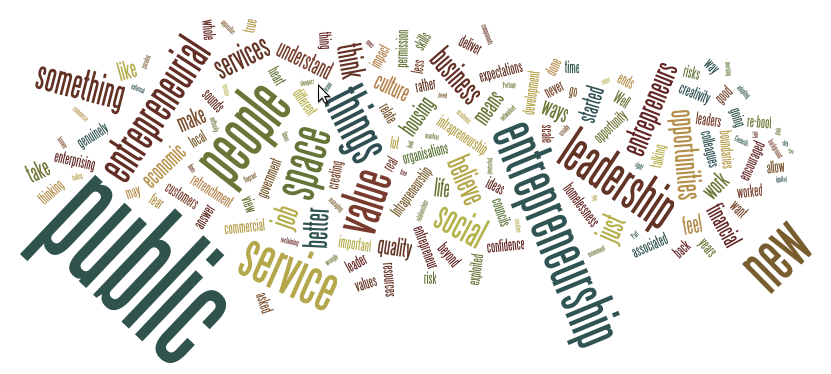
Bon Jovi’s Soul Kitchen Community Restaurant on the prima facie is just like any restaurant except there are no prices attached to the menu. The model is simple: 1) Eat the meal of your choice and pay an amount equivalent to what you think the food is worth, of course above a certain minimum; 2) Volunteer in the kitchen and enjoy a free meal; or 3) Volunteer somewhere else and earn a voucher with which you can eat free food from the restaurant. In short, if you are financially stable, pay for the food you eat. If you don’t have enough money, you can do some volunteer service and we will feed you. So, in essence, we have here a clear picture of a solution to a hunger problem, and at the same time a mechanism to encourage community involvement. This I would call a multi-platform approach to tackling social problems.
Civic entrepreneurship has been around for some time now, but the phrase is only catching on as more and more people are seeking ways and means to do well by doing good. The phrase civic entrepreneur is often extensively used to describe people who are employing innovative approaches and the power of community involvement to tackle social problems.
Let us look at another civic entrepreneur: Charles Best, the founder of DonorsChoose.org. He also offers a clear example of how individuals can tap into the power of innovative and creative thinking to solving social problems. As a Social Studies teacher at Wings Academy (a public high school in the Bronx), Mr. Best realized his class wasn’t able to carry out certain projects due to lack of adequate funds. This problem and his search for a solution led to the creation of DonorsChoose.org, a website that allows teachers all over the country to post classroom projects in order to receive funding through the power of crowd sourcing. Since its inception in 2000, more than $106 million has been raised and nearly 6.2 million students have been helped. Again, we have a clear picture of an innovative solution to a persisting social problem.
“To us, civic entrepreneurship represents both the spirit of change and the spirit of community.”-Stephen Goldsmith, author of The Power of Social Innovation
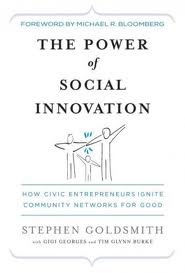 Past and present civic entrepreneurs provide us with examples of how we can view our communities as solution–driven rather than problem-driven. This statement consists of two ideas. One (problem-driven) is the idea of looking around and seeing only problems, then sitting back and hoping that it’ll all change soon. The second (solution-driven) is the idea of using creative and innovative thinking to tackle our present social problems through a hands-on approach. The second part, I believe, submerges the effect of the first. That is, solution-driven communities in the long run can lead to problem-free communities. Just like Jon Bon Jovi and Charles Best, everyone has the power to make a difference; everyone is a change agent and a civic entrepreneur in one way or the other.



