Change Notes: Supporting a Bipartisan Legacy of Service
Friends,
Demand for volunteer support is higher than ever. The waiting list for those seeking to serve through AmeriCorps, for example, has more than tripled since the beginning of the Great Recession. Local communities are dealing with the challenges of chronically high unemployment, increasing poverty, and children and families struggling each day to make ends meet, even as the economy slowly recovers. It is with this backdrop that Points of Light seeks to increase, not reduce the effective public-private partnerships we know are needed to equip individuals and organizations to serve.
This is why we are disappointed in several key elements of President Barack Obama’s proposed funding for national and community service. We understand that fiscal constraints mean tough choices, and we were heartened to see the administration maintained current spending levels for AmeriCorps and SeniorCorps in the fiscal year 2013 budget request to Congress.
However, Points of Light strongly regrets that the proposed budget includes an elimination of the Volunteer Generation Fund(VGF). The VGF was created by the overwhelmingly bipartisan 2009 Edward M. Kennedy Serve America Act to grow and strengthen community volunteerism in direct response to critical national priorities. It represents the heritage of service that began with President George H. W. Bush and has continued with each ensuing presidency.
For the past two years, while under-resourced as compared to its authorization levels, the Volunteer Generation Fund has seeded an array of innovative and impactful volunteer programs in 19 states:
In Sioux City, Iowa, the VGF helped create a new volunteer center that mobilized thousands of volunteers to respond to the Missouri River flooding in 2011
Florida targeted its VGF grant to areas with high poverty rates and engaged more than 7,000 low-income volunteers in 17 counties across the state
Last spring, tornadoes decimated entire communities near Tuscaloosa, Ala.; the state used its VGF funds to support a 211 volunteer hotline that mobilized more than 60,000 volunteers to assist with disaster recovery
With less than $4 million, the Volunteer Generation Fund has set the stage for a new era of impact volunteering whereby citizen-led strategies, using measureable outcomes, are having a direct impact on the needs of communities. In education, disaster response, nutrition education and an array of locally determined priority areas, volunteers and volunteer-driven interventions are seeing results that matter.
We were also dismayed the president’s budget request did not restore funding for Learn and Serve, the federal government’s 20-year long commitment to service-learning. Service-learning uniquely binds our youth to their place in our civic life by giving them opportunities to serve as they achieve academically. This essential program should be reinstated.
As the largest volunteer network in the country, Points of Light and its network of 250 volunteer activation affiliates across the nation and around the world, will continue to advocate for growth in the Volunteer Generation Fund, for the reinstatement of Learn and Serve and for all public-private alliances that leverage the most cost-efficient and effective volunteer strategies that have proven impact on the nation’s challenges. In this way, we can truly engage the full power and breadth of our nation’s human capital in solving our nation’s problems and lifting up our communities.
To that end, we are pleased to announce the formation of a Volunteer Policy Working Group to build support for the Volunteer Generation Fund and similar federal, state and local policies and programs that enhance community volunteer opportunities and community volunteer impact. If you would like to join these efforts, please contact Julie Murphy, vice president for Government Affairs for Points of Light, at [email protected]
Yours in service,
Michelle Nunn
CEO, Points of Light
Teaching Was My Turning Point Into Service
The theme for this year’s National Conference on Volunteering and Service is “Turning Point.” At Points of Light we are highlighting turning point stories – stories about the moment or moments that inspired your service. Today’s Turning Point story comes from Mark Moravits, director of strategic partnerships at generationOn – the youth service enterprise of Points of Light. Mark is a proud Texan transplanted to New York City who travels extensively supporting generationOn’s work around the nation–so maybe you’ll cross paths one day. He also makes a mean guacamole.
The people I admire most in my life are teachers. But not just any teachers–really effective, really “do everything it takes” type teachers who are turning the tables through innovation combined with old-fashioned dedication. These teachers know that all children deserve a top-quality education regardless of their circumstances at home or where they were born.
I think education is the common denominator among social challenges in our nation. It’s the one social issue that has the potential to push other social issues to decline – poverty, crime, hunger and the list goes on. I’ll never forget managing a corporate volunteer project at Roger Williams Middle School in Providence, R.I.. On the wall of this 80-year-old school was a quote by recording artist Lauryn Hill,
“In my travels all over the world, I have come to realize that what distinguishes one child from another is not ability, but access. Access to education, access to opportunity, access to love.”
In college, I worked hard academically and was en route to a consulting job. However, my heart was in my extracurricular activities. For two consecutive terms, I led the University of Oklahoma’s Big Event – one of the largest student-run service programs in the nation bringing more than 5,000 students together to volunteer on one day. I put significantly more time and energy into this than I did into my course work.
I had the “social good” bug and I had it bad. Sitting in an office all day? PowerPoints? Audits? No way. Enter Teach For America. In the back (and front) of my mind I had doubts that I’d be accepted into the program. The letter arrived. The envelope was regular size. It was clearly one page. A rejection letter – it had to be. It wasn’t. For the next two years of my life, I’d be teaching English as a Second Language to third graders in Houston, Texas.
I was in Houston, now responsible for the education of 22 students in a school greatly impacted by poverty, immigration issues and crime. Did my students have access to everything they needed to grow up healthy and strong and educated? No. Did they have the same opportunity as their middle class peers? Absolutely not. Did they deserve equal access and opportunity? They did – they do – and I say this with every shred of assurance I can muster.
Perhaps you’re asking yourself, “If you think education is so important, then why did you leave the classroom?” Education extends far beyond the classroom – to the home, to the community and beyond. More than ever, we need to engage children in becoming global citizens. I’m so proud of the work we’re doing at generationOn and Points of Light to inspire, equip and mobilize youth (and the caring adults in their lives) to take action that changes the world through service and volunteerism. We’re helping communities come together – schools, nonprofits, families and companies – to give kids the access they need and the opportunities they deserve. The work is exhilarating and the results make me thankful to have the job I do. I could’ve been somewhere very different right now.
Forty-four third graders were my turning point. Have you reached your turning point yet?
Change Notes: The Eli J. Segal Entrepreneurship Award
Friends,
Eli Segal was an architect of the modern national service movement and an extraordinary civic entrepreneur.
An aide to President Bill Clinton, Eli was instrumental in driving several of the Clinton administration’s most praised projects. He helped create AmeriCorps – the national service program that today deploys Americans to serve in communities across the country – and he went on to serve as the first CEO of the Corporation for National and Community Service, the agency established to run federal service programs. Nelson Mandela turned to the “father of AmeriCorps” for uniting post-apartheid South Africa through service. Eli and President Clinton helped realize Mandela’s vision of black and white youth serving side by side through the creation of City Year-South Africa. During the overhaul of the federal welfare system, he was the “chief implementer” – finding 20,000 companies to move one million Americans from welfare to work.
Since his death in 2006, Eli’s spirit of service has been embodied by the community impact made by the more than 700,000 current and alumni members of AmeriCorps. To celebrate his legacy, AmeriCorps Alums, Points of Light’s national network for all AmeriCorps national service alumni, annually awards the prestigious Eli J. Segal Entrepreneurship Award.
This year, the award will honor two outstanding AmeriCorps Alums who demonstrate the essence of citizen service that Eli so well embodied. This is the highest honor awarded by AmeriCorps Alums. Along with lifetime membership in the Eli J. Segal Citizen Leadership Program, winners will also receive $5,000 to be used to continue their citizen leadership efforts and/or community initiative, and be recognized at a special AmeriCorps Alums event.
If you or someone you know is an AmeriCorps Alum with the entrepreneurial vision and leadership to create change, now is the time to share your story. Applications for the award are due by Feb. 29, 2012.
Leaders from HandsOn Network’s 10 Innovation Hubs recently came together for a five-day summit near Atlanta to share creative ideas, develop new strategies to engage volunteers and create cutting-edge community engagement models that can be replicated across the network.
“The summit was an intentional and strategic deep dive into innovation and how it is applied to community challenges in a rapidly changing world,” said Tara Smith, executive director of Seattle Works. “I think it ignited a conversation that would have otherwise not happened and will yield powerful results for our role in community transformation across the country.”
The summit included presentations by Alison Fine, co-author of the bestselling “The Networked Nonprofit,” Rick Smyre, president of the Center for Communities of the Future, and Michael Margolis, founder of Get Storied, who helped drive and enhance the ideation process. It was facilitated by Michelle James, founder and CEO of the Center for Creative Emergence.
Now back at their respective offices, each Innovation Hub is working to develop strategies and plans based on the themes that emerged during the summit including:
How might we modernize and reinvent “done in a day” projects? While HandsOn Network revolutionized this work 20 years ago, we are searching for ways to build on our success, while at the same time developing strategies attuned to changing local conditions and delivering a demonstrable social impact.
What are new forms of ongoing projects we should create and develop? For instance, creating meet-ups to develop online guides for communities or developing a community-wide contest to preserve green spaces.
How can we create a civic tipping point? How could a HandsOn Network affiliate address one specific service area like education, environment, economy or emergency preparedness, and create measurable change?
HandsOn Network’s first group of Innovation Hubs – Boston Cares, Chicago Cares, HandsOn Central Ohio, HandsOn Greater Portland, HandsOn Twin Cities, New York Cares, Seattle Works, Volunteer Center of Bergen County, Inc., Volunteer Center of Santa Cruz County and Volunteer Marin/Center for Volunteer and Nonprofit Leadership – were chosen for their potential to innovate and their desire to advance the collective mission of HandsOn Network, Points of Light’s network of local volunteer action centers.
This strategic investment supports the Innovation Hubs in becoming learning labs for community engagement , experimenting and testing new ideas, programs and strategies to meet the needs of 21st century volunteers and communities and replicating promising practices across the country.
“To me, acting like a network is moving the best ideas freely between us all to help us all be better, faster and more successful,” said Smith.
My Turning Point: 76 Days of Life That Changed Mine Forever
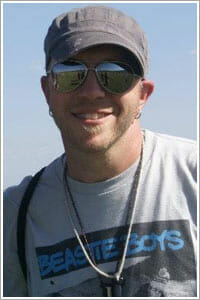
The theme for this years National Conference on Volunteering and Service is “Turning Point.” On the blog we are continuing to highlight turning point stories – the stories of when someone recognized they could no longer stand by and watch the needs of their communities go unmet. The moment when they stepped in and took action. Today’s Turning Point comes from guest writer, Tymm Hoffman, Senior Designer at Points of Light. Want to share your turning point story and have it published on our blog? Email stories to: Listen [at] pointsoflight.org
Burying a child is never easy.
Burying a child amidst some of the worst poverty you could ever imagine was not only hard – it was life changing. It redefined our purpose and sent our family down a very different path while changing what the word “community” meant to me.
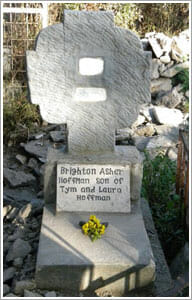
In 2008, Brighton, our son that we were adopting, passed away in an orphanage in Ethiopia. That year was a benchmark year for me personally and for my family as a whole. As we stood in an overcrowded cemetery looking at his headstone we realized just how incredibly blessed we were. We realized just how incredibly much we have.
And we realized how incredibly much we have to give.
Upon returning from Ethiopia that year – we knew our hearts and minds had been reset. I immediately got busy with leaving my job and was intentional about finding employment with an organization that was doing good through the service of others. I landed at Points of Light.
But we didn’t stop there. My wife and I started serving in our local community through our church as volunteers as well as mentors to college students. At this point we had a daughter home and we were determined to raise her in a setting where serving others was as natural as playing with others was.
2 years after his death we founded a nonprofit organization called Brighton Their World that focuses on the dire needs (mainly nutritional) of children in orphanages in 3rd world countries. Our main focus is on Ethiopia where we have created a partnership with an orphanage in the capital city there that we have shipped over 44,000 bottles worth of formula to so far. We recently received our 501.c.3 approval from the government and are excited to not only be providing for the children in need at our partner orphanage but also creating a way for people to serve alongside us.
I also lead several teams a year to Africa to work in orphanages and to visit the children – and though it is always difficult leaving family – I am positive that my absence and what I am doing will have an immeasurable impact on my girls (we have 2 daughters now) as they grow.
Of course I wish Brighton was with us today to play and run and laugh and serve with his sisters. But his spirit is with us every day. He is there every single time we stop to talk to a homeless person or help feed the hungry or mentor a student or step foot in an orphanage in Africa. Especially in Africa.
Serving others. It’s what we were built to do. It doesn’t always take the death of a child at 76 days old to help you see clearly. But sometimes it does.
This spring we hope you’ll join us at Points of Light in talking about your turning point – the moment or moments that inspired your service. For Tymm, it was a distinct moment in time. A moment that redefined his life and pointed it down a road of service.We know you have a story too. To share it with us and/or on this blog, send your story to: Listen [at] pointsoflight.org
My Turning Point: Life As An Army Brat
The theme for this years National Conference on Volunteering and Service is “Turning Point.” At Points of Light we will be highlighting turning point stories – the stories of when someone recognized they could no longer stand by and watch the needs of their communities go unmet. The moment when they stepped in and took action. Today’s Turning Point comes from guest writer, Saxon Seay, Points of Light’s Manager of Marketing. Want to share your turning point story and have it published on our blog? Email stories to: Listen [at] pointsoflight.org
My family and the experiences I had growing up as an “Army brat” is one of the single largest drivers of who I am. Oftentimes when people learn that I am a “brat” they comment on how difficult a lifestyle it must have been, but I cannot think of a better way to have grown up. My diversity of experiences as a child taught me several important lessons but the most important lesson was about living life in service to others.
When I was younger I saw that my father did not have the luxury of working regular hours in safe conditions. Giving back to our community and country was an inherent part of his profession and both he and my mother taught us to live our lives with the same enduring spirit and dedication to others that they demonstrated every day.
For me, there isn’t one experience that stands out as my turning point – there is my parent’s legacy of turning our minds and hearts toward others day after day.
As a result, I started volunteering at a young age. Now I continue to give back to my undergraduate institution by engaging millennial-aged alumni with the school as a member of the Berry College Young Alumni Board and acting as a mentor for students interested in marketing or nonprofit management. I truly enjoy working with university-aged students and have spent hundreds of hours serving this demographic through Passion conferences/Passion City Church, a faith-based organization that engages students to meet the world’s greatest social needs through Do Something Now.
I’m also forever indebted to the army family who stood by our side during my dad’s 27-year-career as an Army aviator and look for ways to give back to that community. That’s why I’m so excited to see Points of Light increasingly support active-duty military, veterans and their families through our work on Community Blueprint, an initiative led by the Points of Light designed to provide a “blueprint” for community leaders to take action and serve with and for the military community.
This spring we hope you’ll join us at Points of Light in talking about your turning point – the moment or moments that inspired your service. For Saxon, it wasn’t just a moment. It was years witnessing her parents living a life of service to others and their country.We know you have a story too. To share it with us and/or on this blog, send your story to: Listen [at] pointsoflight.org
A Labor of Love? Confessions of a First-Year Conference Staff Member
My name is Lizzy Seymour and I am a first-year staffer on the core planning team for the National Conference on Volunteering and Service. I started in April of this year – just two short months before the big 2011 event – when planning was complete and we were in full execution mode. Some of you who attended last year’s Conference in New Orleans may recognize me as I was stationed at the registration desks from open to close. My job was to ensure that all of our attendees had a smooth and enjoyable onsite registration experience and welcome you to the world’s greatest Conference on volunteering and service!
We jumped immediately into planning for 2012 after a successful 2011 Conference. Our goal for the fall season was to execute a request for proposals for a new registration system. We were searching for a solution that could support our many registration pathways for volunteers, Points of Light members, National Service members and programs, scholarship applicants, vendors, media, etc., etc.! In years past, we had cobbled our main registration system together with other low-cost options to just … make it work. But I was determined to find a solution that would work for us and be an easy experience for our attendees.
We found a new registration system and set out to build all of the pathways I just mentioned – no small task. And did I mention that my supervisor was on maternity leave October through mid January?! And, oh, don’t forget about Thanksgiving, the week our office was closed over Christmas, and that little day of service called Martin Luther King Jr., Day. But, I am happy to report that with a little love, a ton of hard work and a lot of determination, we successfully launched our new registration system!
If you’ve registered with our Conference before, you will immediately notice that the new system is simpler to navigate, it’s pretty and we have lots of great customer service staff standing by if you do need assistance. Registration for general conference attendance is now open and, in March, we will launch our itinerary builder application allowing registrants to add individual workshops, plenaries, super sessions, service projects, sessions with a fee, etc.
One thing I love about working for Points of Light is the opportunity to work on just about any kind of project. Whether your background is event planning, operations or graphic design, our leaders have the confidence to give us roles (way) outside of our skill sets and nurture in us creativity, perseverance and leadership. After birthing the registration system “baby,” I now know I can take on anything!
Our Conference happens once a year. But you may not realize that we work year round on the strategy, programming, speaker procurement, venues, logistics and everything else, and our planning team members have other projects and events that run concurrent with Conference work. Sometimes it’s hard not to look at the planning documents from the previous year and simply change “2011” to “2012,” or “New Orleans” to “Chicago.” As tempting as it might be to do so, it’s not good enough for our attendees or our Conference.
As the leader in service sector innovation, we strive to accelerate progress by convening and connecting the brightest and most cutting-edge civic entrepreneurs for change. Our Conference always has been and always will be a don’t-miss experience for social entrepreneurs to exchange ideas about what’s working, and to generate new ideas to create a brighter path for the future.
With the launch of Conference registration, we’ve revealed our new theme, “Turning Point,” which we think perfectly embodies our approach in 2012. It’s a decisive year for the service sector and the world; an election year when economic instability is putting even more pressure on government, business and nonprofits; and a year that will determine the future of national service. It’s time to teach people how they can harness their power to create enduring change. It’s time for “turning points” in advocacy, policy and service.
My personal turning point was a long time in the making. I am the oldest of six children born to a preacher’s family in a small southern Louisiana town. With half a dozen of us, my siblings and I made an instant choir and a traveling art show. My younger brother David brought home strays – pets, people, anyone who needed a little extra care. We didn’t call this “volunteering,” and “service” was where we went every Sunday with Daddy standing at the front of the congregation. These activities didn’t have a name – it was simply the way we lived.
Until I became a single mother my senior year in college, I had big plans to become a lawyer or a broadcast journalist. But bringing a sweet, tiny, precious little girl into the world made me re-evaluate my life and the way I wanted to raise my Valerie. I didn’t want to depend on my parents or the system for support. I vowed to make my own way and to raise my girl with the same character-building activities with which I was raised.
I became an AmeriCorps working for the Saint Mary Community Action Agency to raise funds for a community housing project. The first step was a mapping activity to understand the current state of housing in the rural, 10-parish community that Saint Mary’s served. My turning point came on the day that I visited an old sugar cane plantation that had turned into a share cropping community and later housing for poor families. On this beautiful old farm lived a lively group of hard-working, welcoming, weathered individuals. But their living conditions were horrible with semi-permanent structures and barely any protection from wind and rain. Upon seeing that level of poverty in my own little community, I knew that my job as an AmeriCorps was no longer a transition for me, that I had to make a difference for me, for my daughter, for my little hometown and for my world.
It’s 17 years later and I am proud to work on the world’s largest Conference on volunteering and service. I volunteer at my children’s schools and my church, I serve on the board of directors for an organization that makes a direct impact on my community, I teach and mentor, and I am constantly inspired and re-energized to do more and better work by the amazing people around me.
That’s the story of my turning point. What’s yours?
Hatching An Idea Into A Civic Venture
Today’s guest post is written by Benjamn Kotey, the Venture and New Program Development intern in the Civic Incubator at Points of Light. He provides research support in new program developments and analysis of the social enterprise arena. He holds a BBA in Risk Management and Insurance, and a graduate degree in Economics from Georgia State University.
About a year ago, I heard this song by Diana DeGarmo entitled “Dreams.” It starts with something like “dreams are just dreams when they are stuck inside your head…” and the lyrics go on from there. This song struck a chord with me because I’ve always been fascinated by how something as abstract as an idea of a social venture, can be turned into something tangible to be witnessed by other people, and even have a real social impact. If you are a social entrepreneur trying to start a new venture, the question of how to turn an idea into a real solution is easy to answer when you have the necessary resources at your disposal. On the other hand, this is a difficult question to answer when you don’t have those resources at hand.
With the latter scenario, how then do you move from point A to point B? At this point, building a solid business plan or a model with which you can convince funders to support your venture and solicit help from potential partners can help. For startup non-profit and for-profit civic enterprises, the process of building a business model is essential because not only does it help you define your value proposition, vision and mission, but by tackling some of the difficult questions such as the four Ws (what, why, where, who), you the civic entrepreneur, becomes better equipped with a plan of action and a solid sense of direction than before.
I spent the last three months at Georgia Tech Flashpoint with the Civic Incubator team from Points of a Light going through the process of building a business model for a new program that we were working on. Judging from where we started to where we are now, I would say that it paid off, given the amount of time that we spent pondering over some difficult questions, writing and rewriting our value proposition. Now we have a clear sense of what this program is about and a clear sense of direction as to what steps to take next. I am proud to say that the idea is no more stuck in the head.
Once you have your ideas written down and tested the next step is action. Fortunately for for-profit startups out there, there are over 200 accelerator programs like Flashpoint in the country that are providing mentoring, seed funding, office space and networking opportunities to help entrepreneurs bring their ideas to life. On January 10, 2012, Flashpoint held its Atlanta Demo Day and it was incredible to see how some of the teams have grown, having been there to observe some of the pitch practices. Hundreds of startups are graduating from these programs each year and they are making effective contributions to the economic growth and development of their localities. The majority of these accelerator programs are focused on technology and for-profit startups. But with more than 50,000 nonprofit organizations popping up each year, coupled with the benefits that come with increased civic engagements and community building activities, it looks like startup civic enterprises can use some accelerator programs here. Check out what Points of Light is doing in this space. After all, we can’t have great positive ideas just stuck in our heads.
Change Notes: Reflections on MLK Day
Friends,
This weekend, I joined with millions of Americans to reflect and act upon Dr. Martin Luther King, Jr.’s words and life. Points of Light worked in partnership and galvanized more than 250,000 people in service projects and forums for conversation about Dr. King’s legacy and his vision of a “beloved community” on the Martin Luther King, Jr. Day of Service.
We have seen terrific response to Points of Light’s initiative to create a self-organized movement of individuals and groups coming together to celebrate Dr. King through America’s Sunday Suppers. People from diverse backgrounds came together to share a meal, watch thought-provoking films, discuss issues such as hunger, poverty and homelessness that families and veterans are facing today, and be inspired to take action.
One example of an extraordinary partnership is with the sorority Alpha Kappa Alpha (Coretta Scott King’s sorority). Each of the sorority’s more than 950 chapters hosted Sunday Suppers and service projects to commemorate the life and legacy of Dr. King. More than 20,000 participated in dinner, a documentary movie, meaningful discussion and service projects. The sorority also engaged 5,000 middle school girls participating in its Emerging Young Leaders program in service projects focused on human rights and creating equal opportunities for all Americans.
I gathered a diverse group of Atlanta friends and leaders around my own dining table on Sunday. We broke bread and talked about the bright spots and challenges in our community in terms of race, class and the unfulfilled dimensions of Dr. King’s dream. We talked about how Dr. King’s nonviolent and creative dissent continues to animate our world – from the Arab Spring to Occupy Wall Street.
We reflected upon how both relevant and near Dr. King remains to us. One of our participants, journalist Maria Saporta, shared her personal story of being a grade school friend of Yolanda King and her sleepovers with the King family. Maria recalled partnering with Dr. King to wash the King family dishes. She shared her memories of his enormous personal magnetism alongside of his ability to respectfully engage her in conversation as an 11-year-old child. Dr. King’s life and message is still very close at hand and closer still, when we join together in service and social action.
Today, on MLK Day, we are seeing continued growth in the number of participants.
HandsOn Network, Points of Light’s network of local volunteer action centers, engaged more than 14,600 volunteers through 24 affiliates and partners organizing more than 320 projects. Additional projects will take place in all 50 states, including weatherizing homes, beautifying schools, serving meals and supporting veterans and military families. Many organizations use the day as a springboard for year-round service, such as signing up mentors and tutors for at-risk youth.
Points of Light awarded six grants to organizations throughout the country to mobilize more than 185,000 volunteers and impact more than 500,000 people.
Our youth activation enterprise, generationOn, hosted Grow Involved! at PS 57 in East Harlem where 600 kids, families and community groups viewed an excerpt from “Whatever it Takes” by Christopher Wong, then broke into small groups to discuss the film and participate in a hands-on service project. More than 20,000 students, parents and teacher also gained access to Grow Involved! toolkits to expand service-learning opportunities.
AmeriCorps Alums, Points of Light’s national network for all AmeriCorps national service alumni, brought together service leaders at chapters across the country to mobilize 1,000 in Sunday Suppers.
Points of Light’s Corporate Institute, which enables companies to engage their employees and customers in service, provided tools to help employers recognize MLK Day both in their offices and at off-site service projects.
Earlier today, I joined hands with Delta employees and volunteers in Atlanta to make 6,000 lunches to be distributed by Hosea Feed the Hungry and Homeless. I worked hand in hand with my 9-year-old son, Vinson. When talking about his role, Vinson recounted having personally put together “thousands” of lunches for people in Atlanta who are homeless on this day. And, indeed, Vinson, working together with hundreds of others, did feed thousands and these efforts rippled out across the country in real and meaningful ways to fortify and inspire us to integrate Dr. King’s undone work in our own life’s work in the coming year.






 The theme for this year’s
  Since his death in 2006, Eli’s spirit of service has been embodied by the community impact made by the more than 700,000 current and alumni members of AmeriCorps. To celebrate his legacy,
 The theme for this years
  In 2008, Brighton, our son that we were adopting, passed away in an orphanage in Ethiopia. That year was a benchmark year for me personally and for my family as a whole. As we stood in an overcrowded cemetery looking at his headstone we realized just how incredibly blessed we were. We realized just how incredibly much we have.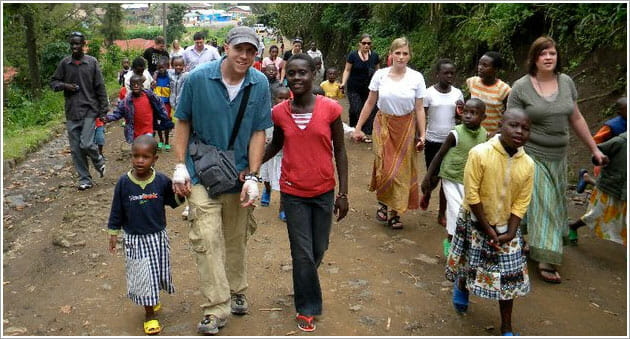
 The theme for this years
  My name is Lizzy Seymour and I am a first-year staffer on the core planning team for the
  Today’s post comes from Delores Morton, Vice President of
 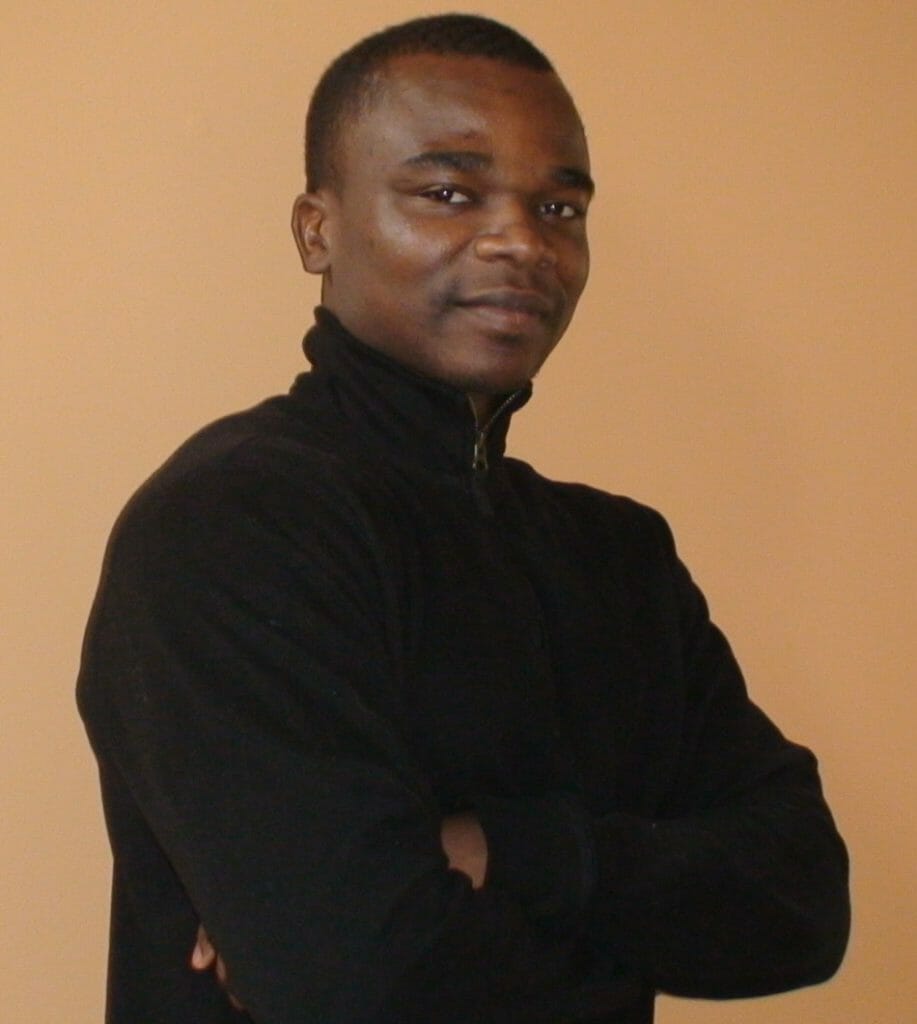 Today’s guest post is written by Benjamn Kotey, the Venture and New Program Development intern in the
  With the latter scenario, how then do you move from point A to point B? At this point, building a solid business plan or a model with which you can convince funders to support your venture and solicit help from potential partners can help. For startup non-profit and for-profit civic enterprises, the process of building a business model is essential because not only does it help you define your value proposition, vision and mission, but by tackling some of the difficult questions such as the four Ws (what, why, where, who), you the civic entrepreneur, becomes better equipped with a plan of action and a solid sense of direction than before.
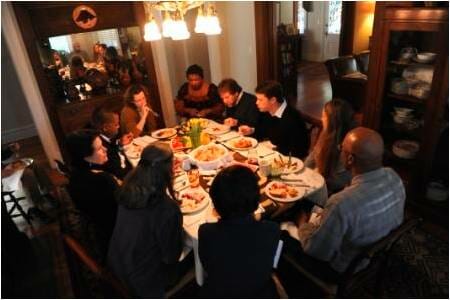 I gathered a diverse group of Atlanta friends and leaders around my own dining table on Sunday. We broke bread and talked about the bright spots and challenges in our community in terms of race, class and the unfulfilled dimensions of Dr. King’s dream. We talked about how Dr. King’s nonviolent and creative dissent continues to animate our world – from the Arab Spring to Occupy Wall Street.
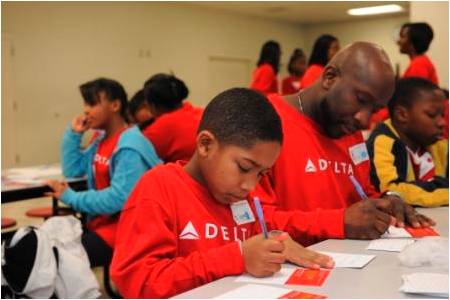 Earlier today, I joined hands with Delta employees and volunteers in Atlanta to make 6,000 lunches to be distributed by Hosea Feed the Hungry and Homeless. I worked hand in hand with my 9-year-old son, Vinson. When talking about his role, Vinson recounted having personally put together “thousands” of lunches for people in Atlanta who are homeless on this day. And, indeed, Vinson, working together with hundreds of others, did feed thousands and these efforts rippled out across the country in real and meaningful ways to fortify and inspire us to integrate Dr. King’s undone work in our own life’s work in the coming year.