Today’s guest post is written by Cristina Andoni, ATLAS Corps Fellow from Republic of Moldova, serving at Points of Light as Corporate Institute Coordinator. If you are interested in contacting her for more information, you can reach her at: [email protected]
Volunteering is on the rise. According to the Corporation for National and Community Service, volunteerism is at a 30-year high. Corporations continue to increase their giving and further diversify and develop their employee volunteer programs (source). National campaigns such as A Billion + Change create business value through strategic alignment of philanthropy and business goals by mobilizing billions of dollars of skills-based volunteer services to build the capacity of nonprofits to meet community needs.
Although trends vary from country to country, corporate civic engagement is growing everywhere. Corporate engagement continues to boom in countries with strong traditions of civic innovation, such as United Kingdom, and even in countries such as Poland, where only 2 percent of companies ran an employee volunteering program in 2008.
Additionally, companies from emerging European markets, where civic consciousness is only awakening, are beginning to realize that corporate civic engagement and corporate social responsibility go beyond being expensive, sporadic PR campaigns and philanthropy. Companies incorporate responsible business principles into core business activities. Corporate volunteering, for example, is becoming an integral part of companies’ strategy and culture and has proved to tackle important organizational and community-related issues.
Kyivstar, a Ukranian telecommunications company and the winner of the National Corporate Volunteering Contest in the Innovation category, is a great example. It is one of the first companies in the country to integrate corporate social responsibility into its business strategy and implement innovative practices and approaches in employee motivation, such as paid release time, impact communication, employee recognition or scalable employee volunteer projects.
Why is this happening? I would speculate that it is globalization that is pushing a new normal in corporate citizenship, as well as empirical evidence of the benefits it generates for the company, its employees and communities.
Companies in America hold a great opportunity in their hands, the power to be leaders in corporate volunteerism for the world around us. In the years ahead, it’s not just the nice thing to do, but the necessary thing to do for businesses to stay relevant and competitive.
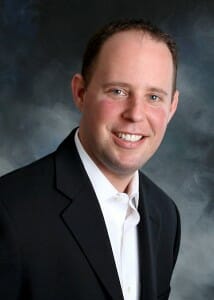
Today’s guest post is written by Jay Cranman, a hands-on leader, entrepreneur and all-around problem solver. Jay serves as the VP, Venture Development for the Civic Incubator, a platform from which social entrepreneurs are able to launch and scale new ventures. He serves on several Boards for Atlanta-based nonprofits and is passionate about education, the economy, and really good apple pie.
Happy New Year! I’m looking forward to 2012.
Before I look forward, let me first take a moment to reminisce. Today marks my 1-year anniversary with Points of Light. After a 14-year career as a strategy and technology consultant, I decided to make the plunge into the nonprofit sector. And 2011 proved to be quite the wild ride – exciting, scary, fun, and at times overwhelming.
I felt lost much of the time, and only after 12-months do I finally feel like I’m gaining traction. I no longer make rookie mistakes…like calling a surplus a “profit” or an MOU a “contract”. I no longer have to run to Google to learn what BCLC, NCVS, CVC, CNCS, or CSC mean (can someone please buy a vowel). Worst of all, I find myself using terms like “theory of change” and “capacity building” with such ease that my wife no longer has any idea what I’m talking about.
All in, I feel like I belong and am thankful for the patience and grace I’ve been given over the last year.
With my sea legs under me, I’m ready for 2012 to be a breakout year for the Civic Incubator. We continue to push the envelope on social innovation and have set a foundation over the last 2 years from which we can grow.
Over the last 3 months, we have been participating in an accelerator program at Georgia Tech called Flashpoint. It has been a transformative experience for me personally, but professionally it has been a true blessing …where we have experienced the new emerging science of lean startups, customer acquisition and business model canvas.
In addition, we have had the opportunity to work side-by-side with 17 amazing startups, have access to proven entrepreneurs and investors, and have been pushed to new heights of innovation. The program is finishing up in January with pitch events in Atlanta, New York (at Union Square Ventures) and in San Francisco (at Andreessen Horowitz). While we won’t be sharing the stage with the other teams, we will be there in the audience to cheer and root them on.
Most exciting for me personally, we are set to launch our own accelerator program in 2012 focused specifically on civic ventures. Our vision is to launch hundreds of innovative new solutions to social problems and engage hundreds of thousands of people in the process. Yes, you read that right – hundreds of solutions and hundreds of thousands of people engaged. And we are confident that we can hit this goal by combining two of the most promising trends happening today…the power of people to drive change and the disruptive nature of entrepreneurs and startups. Sparks will fly!
And if you are reading this blog, you can say you were one of the first people to learn about the new Civic Accelerator program launching at Points of Light. And if you happen to be an entrepreneur or investor working on an idea to engage people in solving our nation’s most intractable problems, we’d love for you to tell us about the work you’re doing.
By next year I hope to report back that I’ve finally figured out what “Theory of Change” really means. Until then, have a great year and lets all keep swinging for the fences!
Change Notes: Resolve to Serve in 2012
Friends,
The New Year is always a great time for clean slates, aggressive goals and personal resolutions to be good and do good in the world. Our Points of Light goals for 2012 are ambitious. This year, Points of Light and its enterprises – HandsOn Network, generationOn, AmeriCorps Alums and the Corporate Institute – plan to:
Provide people with access to 500,000 projects and other opportunities to learn new skills and engage in work to improve their communities
Mobilize 3.5 million people to use their time, talent, voice and money to create community change
Play a significant role in improving the civic health of the communities we serve with projects like the Community Blueprint Network for military, veterans and their families; generationOn service clubs providing kids and teens a way to begin a lifetime of service; and opportunities for AmeriCorps Alums to create transformational change and serve as advocates for the power of service
Contribute to a measurable change in education and student performance, environmental sustainability, economic prosperity, and emergency preparedness and recovery in communities we serve by connecting people to their power to make a meaningful difference by providing access to tools, resources and opportunities
I hope you will share your resolutions with us on the Points of Light Facebook page. As a community, we can support one another as we strive to meet our individual goals. We’ll keep you posted on our progress and hope you’ll do the same.
Here’s to a transformational 2012.
Yours in service,
Michelle Nunn
CEO, Points of Light
Change Notes: The Spirit of the Season
Friends,
This is a Season in which we turn our attention to children. We are delighted and refreshed by their capacity to see the world as magical and good. They help us reignite our own belief in small and large miracles. At its best, the Holidays evoke our sense of wonder and the ability to see our neighbors both near and far with empathy and solidarity. In that light, I was struck by a story that was sent to me last week about a group of children and military service men and women – those individuals in our nation that embody our most profound values of service and sacrifice.
Points of Light has more than 1,800 registered generationOn Clubs made up of kids volunteering in extraordinary ways throughout the year. Over the last year, Club members across the country and the world have made “smile sacks” for kids in foster care, put together breakfast bags for the homeless, sang songs and played Irish tin whistles for residents of a nursing home and advocated for the adoption of shelter animals, among many, many other projects. The following is an excerpt from an email sent by the leader of Universal City Kids Club Care, a generationOn Club in Universal City, Texas, about the club’s holiday project.
“This month, our kids voted to support the Wounded Warrior Family Support Center. We held our meeting to prepare the kids for the injuries they might see during the event. We downloaded a disability etiquette manual from a spinal cord association and discussed injuries the kids may encounter. Each child was given an injury, asked to act it out and tell the rest of the group how they wanted to be treated.
Later that night, we welcomed home a Wounded Warrior from the hospital. We went dressed in red, white and blue and all of us were waving flags. We chose one child to give him a blanket that we all signed. A balloon popped while we were there and the Marine jumped and started to cry. One girl understood the effects of PTSD and asked him if she could give him a hug. We presented him with the blanket and he said he was so grateful for it. Later, as we were walking away, he came up to us and said, ‘Hey, I just want all of you to know I am going to sleep with this! It is like a great big hug.’
We took cards, cupcakes, letters, stamps and blankets to the Wounded Warrior Family Support Center the following week. There were about 250 people there. We delivered all of the cupcakes and they were calling us the ‘cupcake kids.’ We then gave each child a blanket and told them to find someone that had an injury that they had during our meeting and give it to them. The kids spread out and gave out their blankets. These men were so grateful for their blankets. We wished we had 100 more to give out. We told them we appreciated their service and dedication to our country and thanked them for their sacrifice.
Afterward, we talked to the kids about giving and how much better it felt to give than to receive. The kids told us what they learned. While staring in the face of the most catastrophic injuries I have ever seen on a human being, those kids saw a man. I have NEVER been more proud of any kids in my life than I am of these kids.”
This simple exchange between young people and our wounded warriors reminds us of the fundamental grounding and transforming power of empathy. It is the animating spirit of our great religious traditions and of this Season of Giving. This is the hope of the Season – our children bearing witness to the ultimate power and guiding light of compassion.
May you all be inspired and renewed by the spirit of the Season and may compassion and service to others guide us all in the coming year.
Yours in service,
Michelle Nunn
CEO, Points of Light
Why Measurement Matters: 5 Steps to Improving Corporate Volunteer Programs
Today’s guest post was written by Sadie Miller with True Impact LLC. Prior to her work at True Impact, Sadie was the national AmeriCorps*VISTA Leader at Campus Compact, outreach and planning intern at the Corporation for National Community Service, and graduate research assistant at the Brandeis Center for Youth and Communities.
As a young VISTA (Volunteer in Service to America), I was committed to measuring the impact of my volunteer programs with participant surveys. When I got back the results of my first survey, the only thing I learned was how much college students like to complain about the food and timing of volunteer events. Of course, making programs comfortable, filling, and convenient is important for keeping volunteers coming back. I didn’t get any deep insights by asking about satisfaction and hours in the community. Many of us fall into the process measurement trap, losing focus on the end impact. In Mapping Success in Employee Volunteering, the Boston College Center for Corporate Citizenship found that many Fortune 500 respondents track satisfaction, participation levels and volunteer hours. Getting an employee volunteer program requires fulfilling business and community goals beyond how many volunteers leave happy. Here’s a checklist for improving the bottom-line impact of corporate volunteer programs.
STEP 1: Make a list of stakeholders
Cast a wide net when identifying stakeholders; you’ll never know who will be your biggest advocate– or squeakiest wheel. Map all of the internal and external people and organizations that influence and are affected by your volunteer program. Here’s a start:
Advocacy groups
Beneficiaries
Community partners
Customers
Government agencies
Public Relations and the Communications Department
CEOs and CFOs
Prospective employees
STEP 2: Define social and community goals
It doesn’t matter if you have a 5-year strategic plan or are in the first year of your employee volunteer program. Every program has a set of explicit or implicit expectations for social and community change. Brainstorm a list of outcomes your stakeholders want to see to guide your evaluation. Process indicators, like the monetary investment and the number of volunteers engaged, can be left off the list– focus on the bottom-line outcomes. Examples of social goals include:
Get low-income middle school students to matriculate into 9th grade on time and prepared for high school
Inspire young people in our communities to go to college and major in science, mathematics, engineering, or computer science
Prevent children under five from death and illness caused by water-borne disease.
STEP 3: Define business goals
Sustainable CSR programs forward the social and business bottom-line. Who wants to support a community program that bores employee volunteers? Inspiring programs resonate with a company’s business goals, be it training a future generation of engineers and entrepreneurs or reducing employee turnover. Business goals for employee volunteer programs include:
Enhancing brand and reputation in the community
Fostering productive and committed employees
Networking with advocacy groups, leaders, and customers that provide the company with a social “license to operate” in the community
Identifying sales opportunities with other volunteers, organizations, or companies, because your next business partner may be as committed to Habitat builds as your employees are!
, we firmly believe that measuring the right things is simple and attainable, as long as you focus on measuring the outcomes that capture your program goals.
Your employee volunteers are best equipped to evaluate the personal, professional, and business effects of their volunteerism. Examples of business outcomes include:
Skill development
Job satisfaction related to volunteerism
Employee recruitment through volunteer activities
Relationship development with business stakeholders
The monetary value of employee volunteers.
Community partners are the key to evaluating social outcomes, and are the most invested in proving the value of their outreach. Long-term social outcomes include:
The number of middle school students tutored by employee volunteers that matriculate into 9th grade and graduate high school
The number of high school students mentored in a STEM program that major in science, mathematics, engineering, or computer science
The number of children protected from water-borne diseases because of volunteer investments in training and clean water infrastructure.
STEP 5: Prepare for change
Once you and your stakeholders define a program’s goals and evaluate the end outcome, it is much harder to justify programs that don’t make a difference. It is also harder for internal stakeholders to ignore programs that enhance employee satisfaction, develop sales opportunities, and make lasting social change. So take the next steps to make programmatic changes that will leverage employee skills. And when your evaluation points toward significant social impact because of your volunteers, toot your own horn to build institutional support and get more employees engaged. Because measuring impact is only as good as the work it does for you.
For more information or to participate in the ongoing Volunteerism ROI Tracker, visit us at
Now more than ever CSR and EVP managers need to prove value, invest more strategically and continuously improve the impact of their programs. Points of Light can help! Learn about our exciting new tools and services for measuring and benchmarking. Such as the ROI Tracker, provided in partnership with True Impact LLC and the Employee Volunteer Program Benchmarking Tool, developed with the support from the AT&T Foundation. For additional information contact Jennifer Highsmith, Director of Business Training and Consulting at The Points of Light Corporate Institute.
I’m Volunteering My Story
Today’s post is written by Jackie Norris,the Executive Director of the Points of Light Corporate Institute and former White House Chief of Staff to Michelle Obama. This piece was originally published on December 13, 2011 on Momsrising.org.
As I pecked away at my laptop on a 6:30am flight to Atlanta, I took a moment to reflect on the three tasks I just completed long before I landed to start my day job. First, I reviewed the budget projections for Lafayette Elementary School’s 2nd grade class to assess if we were on track with revenue and expenses. Then, I mapped out key goals and milestones which undergird the 2012 strategy for the Impact Center Leadership Council, which I chair on a volunteer basis in support of women’s leadership development. Last, I reviewed and edited a press release for my local food bank in advance of a big event they are having this month.
My guess is that my morning is probably pretty similar to that of many moms across the country. As moms and professionals, we volunteer for things all the time, and think nothing of it! What I do is “just what you do” to support and give back to the world in which we live. It’s pro bono—for the good of our children’s lives, our community’s health and our cultural future.
But pro bono means something more. While as moms, we consider volunteering for school or community projects as part and parcel of what it means to be a mom, as professionals, only a minority of us think of volunteering our skills and expertise to make the world a better place.
What does pro bono, or skills-based volunteering, look like? The clearest example I can offer is an accountant. If an accountant wants to volunteer, they have two choices – to go out and do some “hands dirty” volunteering like stuffing envelopes, which is valued at approximately $12 – $15 an hour, or take the same amount of time to audit the books for a local nonprofit, which is valued at $150-$250 an hour. Think of what a nonprofit could do with the money they just saved! They could support one more bed at the homeless shelter, an additional meal at the church, an extra round of home visits for shut ins, an afterschool program for latch key kids who’d rather not go home and be alone.
Interestingly enough, best practice businesses are embracing pro bono service as the “new normal” in volunteering, recognizing that value to nonprofits can be leveraged when professionals move beyond painting walls, hammering nails or stuffing envelopes. With skills-based volunteering, businesses can harness the talent of their workforce to attract, develop and engage their employees, while creating shared value for themselves and their communities.
Take Alison Hager, she’s a great example of what skills- based volunteering is all about. Alison works as a Manager in the Corporate Controller’s Financial Controls Team at Pfizer. As part of Pfizer’s Global Health Fellows Program, she was stationed in Rwanda for 6 months, where she worked with the Access Project at Columbia University’s Earth Institute and the Rwandan Ministry of Health to help improve management systems for health care in the country. Pfizer has found its program to be a powerful leadership development and training tool, as well as a way to enhance its reputation around the world.
How can we then scale volunteer programs like Pfizer’s to achieve widespread social change? We can do so through initiatives like A Billion + Change, a national campaign to mobilize billions of dollars in skills-based and pro bono volunteer services from the corporate sector by 2013. The campaign aims to inspire and unleash talent and expertise to help build the capacity of nonprofits to achieve lasting change across the country and around the world. Guided by Points of Light and powered by visionary organizations like Deloitte, HP, IBM, the Case Foundation and the Corporation for National and Community Service, the main purpose of A Billion + Change is to get all of us – as moms, employees and professionals to ask the key question – how can we do the most good? To date, more than $1 billion worth of service has been pledged.
Pro bono really is for the good — of business and community.
To find out more about A Billion + Change, its upcoming activities and to see which businesses have pledged to lead the movement, visit www.abillionpluschange.org.
Employee Volunteer Programs: On The Corporate Radar As Never Before
Today’s guest post is written by Jennifer M. Highsmith, Director, Business Training & Consulting for The Points of Light Corporate Institute. If you are interested in contacting her for more information you can reach her at: 404-979-2929
As reported in the 2011 Trends of Excellence Series, there’s a direct relationship between the size of the investment in a company’s employee volunteer program (EVP) and its level of performance. With today’s EVPs engaging 43 percent of employees annually, more and more companies are making the investment and putting their dollars behind their employees’ passion, interests and skills.
Consider this… In 2006, Points of Light found that EVPs invested on average $30 per employee, excluding salaries and grants. Today, EVPs are investing at least $104 per employee, excluding salaries and grants, whether they volunteer or not. That’s more than a 200 percent increase!
It appears that even while the economy and company profits may have declined, companies have invested increasingly more resources and money into employee volunteering. Now more than ever before, employee volunteering is positioned at the core of many corporate social responsibility (CSR) programs.
Why? The answer is clear. EVPs are one of the most compelling, cost efficient and can be one of the most visible ways of demonstrating a CSR program. EVPs also offer a huge return on investment for the company, employees and the community or agency it supports.
In addition to supporting CSR initiatives, EVPs help improve the corporate image and relations with key stakeholders; increases employee skills and productivity; improves employee morale, recruitment, and retention; and can help increase sales, clients and consumers.
Want to learn more about EVPs and how companies of all sizes and industries are getting involved?
Volumes 1-4 of the Trends of Excellence, is a series of reports analyzing excellent EVPs to identify best practices including company support, strategies, policies, activities and outcomes. The research findings indicate a number of key practices and trends companies should consider when developing or enhancing an EVP. Findings include:
Companies should consider investing at least $104 per employee, excluding salaries and grants, whether they volunteer or not; the figure jumps to $179 when including salaries, travel and other items.
In order to best manage limited resources to produce greater impact, companies should align their EVP to support specific business functions.
EVPs should draw on company assets, such as employee skills, marketing channels and commercial products, to strengthen the contributions the EVP makes to society.
Reward the efforts and accomplishments of employee volunteers to better support the EVP’s concrete goals.
The report is based on information from the 2010 Points of Light Corporate Engagement Awards of Excellence finalist companies. Download the series today and learn more about excellence in employee volunteering.
As an economics major, I sometimes felt out of my element as I found myself more concerned about people and their well-being than I did about money, profit, and finance. As my classmates competed for the typical financial analyst positions, I found myself applying for the Peace Corps. As those very same people took internships at high paying investment banks, I decided to pay my way to South Africa to learn how to mentor emerging young entrepreneurs. And as my classmates received their job offers as we approached graduation, I saw my dreams collapse before my eyes as medical clearance was revoked, just weeks before I was to receive my invitation to be a business advisor in sub-Saharan Africa though the Peace Corps.
I felt lost for a while as my dreams took on new shapes, and eventually I found myself looking for opportunities with non-profits. I wanted to move to DC, a major hub for non-profits. A friend finally recommended AmeriCorps, and my old dreams of helping people rise out of poverty were finally rekindled as the Peace Corps dream turned into the AmeriCorps reality. At pre-service Orientation I found myself surrounded by like-minded people, and finally feeling understood by my peers was a welcome change.
Four months into my service, I am proud of the decision I made. I am learning about a population previously very foreign to me (the military community), but at the same time I am developing strategies and practices that could easily be applied to other groups. I am having a cultural exchange as well, from west to east coast, though admittedly not quite as dramatic as the Peace Corps would have been! I am thankful for the experiences I have been given and for the great team of people I work with here in DC, and I am looking forward to the rest of my year of service.
Americorps Thoughts on the Community Blueprint Network
I chose to work on the Community Blueprint Network and with the American Legion Auxiliary due to the target population. Growing up, I spent countless hours at my local American Legion Post, where my mother was a Legionnaire, working on fundraisers, outreach to the community, etc. My mother separated from the US Army before my time, but nonetheless she taught me that there is nothing greater than one’s selfless service to our country by serving in the military. Thanks to her encouragement and dedication to the veteran and military community, I have followed her footsteps in an attempt to make a difference for those who so admirably serve our country.
This is my second service year with AmeriCorps VISTA and American Legion Auxiliary Call to Service Corps. It is truly a unique opportunity to assist the military community, while standing true to the Auxiliary’s motto, that I’ve grown up with, service not self. Both VISTA-ships have afforded me the opportunity to be part of a support system for communities to engage and retrain volunteers in service towards veterans, service members and their families.
The thing I admire most about the Blueprint is that it is designed to assist communities to be proactive from within. It guides them to suggested paths, but recognizes there is more there one way to reach a desired outcome in each of the eight impact areas. I feel fortunate to say that in my seven months on the Blueprint, I’ve seen it become defined and take shape into something a community will benefit from using.
It is truly an honor for me to be able to serve the military community and volunteer in such a way in conjunction with my American Legion Auxiliary membership to honor our nation’s bravest, those like my mother.
Where Are You From? Challenges Military Families Face
For Veterans Day we are highlighting all types of stories regarding Military service members, families, and communities. This guest post is written by Tyler Anger, a graduate of the University of California, Berkeley. As the son of an active duty member of the Army, Tyler grew up on military installations throughout the United States, and attended high school in Heidelberg, Germany. He joined AmeriCorps and the Community Blueprint Initiative with the hope of mitigating the challenges and inequities faced by veterans, service members, and military families in communities across the country. As a writer for the Blueprint, he is responsible for the Behavioral Health, Employment, and Family Strength impact areas.
It’s an easy question. In college, when I first moved away from the insular military communities in which I had grown up, I heard it all the time. It’s one of those basic canned niceties you’re supposed to ask and answer without much thought, an old-fashioned hand-me-down from the days such things were a more acceptable metric of evaluation. Say your name. Shake hands. So, where are you from?
It seems silly now, but after a while I came to hate the question. At first I simply said “All over,” which came off as awkward and evasive. There was a subsequent period when I said “Heidelberg, Germany,” which was where I had attended high school, and for a time I enjoyed the profit of distinction this seemed to give me in classrooms and at parties. Inevitably, though, someone would say “Oh, but your English is so good!” sending me backpedaling to square one. I’d thought about saying New Jersey, where I lived for a remarkable three years, or Oregon, where I was born, but both rang false in some profound and meaningful way. These days I’ll say Berkeley, California, where I attended college, and this is usually sufficient to facilitate the continuation of meaningless small talk without a lengthy digression into my experience as a military child.
The ubiquity of “Where are you from,” aside from providing for pithy self-deprecating anecdotes, points to an important truth about the military family experience. There are certain unpleasant realities that you internalize, one of which is that you will be relocating frequently. “Where are you from?” isn’t a question we asked in my Department of Defense-run high school. Other aspects of these internalized realities are even less pleasant, such as the slow shift into acceptance of those long months when one parent is away in some distant corner of the earth, missing your soccer games, skipping your school plays, dodging those boring parent-teacher conferences, and – you try not to think about this one – living in a war zone, in constant danger of becoming a statistic. That’s your reality, and it’s one that, for all its grasping, American society still fails to understand.
If there is an indelible fingerprint that the military experience leaves on families, it can be found there, I think, in the disconnect between the basic social implications of “Where are you from?” and the ability of a military child to answer.
I joined AmeriCorps and the Community Blueprint in order to resolve that disconnect. As a VISTA, I work to hone the support of and responsiveness to service members, veterans, and military families in communities across the nation. The challenges I faced growing up with a parent in the Army shaped me into who I am today, and I am proud of my family’s service to our country. At the same time, it is my sincere hope that, through my work with the Blueprint, I will reduce and eventually eliminate those challenges for future generations.
Tyler Anger is a graduate of the University of California, Berkeley. As the son of an active duty member of the Army, Tyler grew up on military installations throughout the United States, and attended high school in Heidelberg, Germany. He joined AmeriCorps and the Community Blueprint Initiative with the hope of mitigating the challenges and inequities faced by veterans, service members, and military families in communities across the country. As a writer for the Blueprint, he is responsible for the Behavioral Health, Employment, and Family Strength impact areas.


 Today’s guest post is written by Cristina Andoni, ATLAS Corps Fellow from Republic of Moldova, serving at Points of Light as Corporate Institute Coordinator. If you are interested in contacting her for more information, you can reach her at: [email protected]
 Today’s guest post is written by Jay Cranman, a hands-on leader, entrepreneur and all-around problem solver. Jay serves as the VP, Venture Development for the
 Over the last 3 months, we have been participating in an accelerator program at



 Today’s guest post was written by Sadie Miller with
  STEP 1: Make a list of stakeholders
Cast a wide net when identifying stakeholders; you’ll never know who will be your biggest advocate– or squeakiest wheel. Map all of the internal and external people and organizations that influence and are affected by your volunteer program. Here’s a start:
STEP 1: Make a list of stakeholders
Cast a wide net when identifying stakeholders; you’ll never know who will be your biggest advocate– or squeakiest wheel. Map all of the internal and external people and organizations that influence and are affected by your volunteer program. Here’s a start: Today’s post is written by Jackie Norris, the Executive Director of the Points of Light Corporate Institute and former White House Chief of Staff to Michelle Obama. This piece was originally published on December 13, 2011 on
  Today’s guest post is written by Jennifer M. Highsmith, Director, Business Training & Consulting for The Points of Light Corporate Institute. If you are interested in contacting her for more information you can reach her at: 404-979-2929
 As an economics major, I sometimes felt out of my element as I found myself more concerned about people and their well-being than I did about money, profit, and finance. As my classmates competed for the typical financial analyst positions, I found myself applying for the Peace Corps. As those very same people took internships at high paying investment banks, I decided to pay my way to South Africa to learn how to mentor emerging young entrepreneurs. And as my classmates received their job offers as we approached graduation, I saw my dreams collapse before my eyes as medical clearance was revoked, just weeks before I was to receive my invitation to be a business advisor in sub-Saharan Africa though the Peace Corps.
 I chose to work on the Community Blueprint Network and with the
  For Veterans Day we are highlighting all types of stories regarding Military service members, families, and communities. This guest post is written by Tyler Anger, a graduate of the University of California, Berkeley. As the son of an active duty member of the Army, Tyler grew up on military installations throughout the United States, and attended high school in Heidelberg, Germany. He joined AmeriCorps and the