After Returning from War in Afghanistan, She Raises the Profile of Female Soldiers and Veterans
Genevieve Chase founded American Women Veterans to connect women veterans with the resources necessary to make the transition from military to civilian life.
Meet Daily Point of Light Award honoree Genevieve Chase, who was a Top 10 finalist for the L’Oréal Paris Women of Worth Award in 2018. Each year L’Oréal Paris and Points of Light recognize and celebrate Women of Worth who make a beautiful difference in their communities. Ten honorees each receive a $10,000 grant to support their most cherished cause, and an online vote determines one honoree who will receive an additional $25,000 grant. Nominations for 2019 are now open! If you know a woman who works to create lasting and significant change in her community, nominate her to be one of the 2019 Women of Worth.
“Transitioning from combat to civilian life can be difficult, and it’s even more difficult for veterans whose contributions are ignored, as women’s often are,” said Genevieve Chase. “I want raise the profile of the woman veteran – to give her a platform to share her stories and a way to connect with others like her, to ensure that she gets the benefits she earned, and to inspire her to continue her service out of uniform.”
Picture this: You’re a woman who was injured in battle in Afghanistan. Now you’re back home, and every time you go to the veteran’s affairs hospital, the staff assumes you’re there for your husband. When you’re up for a big promotion at work, and you lose out to a man who has experience in a field it was illegal for you to work in despite having more qualifications than him. That sort of treatment is what prompted Genevieve Chase to start
“We want to change the profile of what people think when they hear the word ‘Veteran,’” said Genevieve. “Being seen is shockingly undervalued but so incredibly important.”
Following 9/11, Genevieve left a successful real estate career to join the Army as an intelligence agent working to thwart attacks against military personnel. She spent 2006 in Afghanistan, and when she came home, she fought to conceal her brain injury, developed PTSD and became deeply depressed. She tried to fight her suicidal urges by getting involved with veterans’ groups, but she felt her contributions were minimized because she was a woman.
At the end of 2008, Genevieve invited a group of female veterans to a cafe in New York City. Hearing their experiences led to the creation of American Women Veterans, and founding the organization saved Genevieve’s life. “It gave me a purpose; it made me feel like I had a right to live,” she said.
American Women Veterans started as a Facebook page, with a primary focus on raising awareness of women’s contributions to the military and giving female veterans a place to connect and share their stories. Its secondary focus was advocacy. Genevieve and her organization worked to repeal “don’t ask, don’t tell,” lift the policy excluding women from combat and improve treatment of women veterans at VA hospitals.
As part of that work, Genevieve testified before the Senate Veterans Affairs Committee and the Senate Foreign Relations Committee. She also organized letter-writing campaigns, gave speeches and advocated her positions to congressional representatives. While working on the combat exclusion issue, she helped draft legislation. Due to her efforts, and those of others, women – who make up about 15 percent of military personnel – can now receive the same training and promotion potential as men for work they have already been doing.
American Women Veterans continues to focus on raising the profile of female soldiers and veterans. It also connects women veterans with the resources necessary to make the transition from military to civilian life. The organization’s Facebook page has become a one-stop source for information about scholarships, job opportunities, benefits updates, events and more. Genevieve said that because of her organization’s reach, military branches and service providers often get in touch with her directly when they want to get the word out about something.
Today, American Women Veterans is a small organization with a roster of about 30 active volunteers and only a few partners: the law firm Orrick, Herrington, & Sutcliffe; private donors and in 2017, REI; and ally Army Women’s Foundation. What Genevieve is trying to do with the organization is build community. Her digital community is up and running, with more than 109,000 Facebook followers, many of whom are quick to comment on posts and share personal stories.
Genevieve believes the next step is to create local chapters of the organization so that women can connect face-to-face with other female veterans in their area. “I want to help them build community where they are,” Genevieve said.
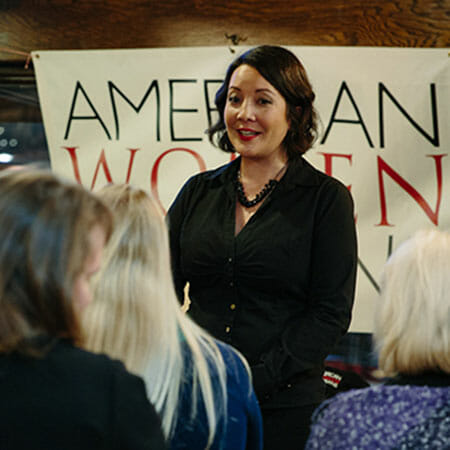
Genevieve Chase delivers a speech on behalf of American Women Veterans./Courtesy Nilaya Sabnis for L’Oréal Paris USA
In the military, personnel assigned to a new area are given a sponsor – someone who has been there a while who can tell newcomers what to expect and where to go to get their needs met. Genevieve would like to see her organization function in the same way. “There are a lot of resources out there, but they’re not all effective,” added Genevieve. “Sponsors can point people to the valuable ones.”
Allison Adkins first met Genevieve in basic training and has been involved with the organization since its early days. A 14-year soldier who is also a lesbian, Allison was particularly appreciative of American Women Veterans’ efforts to repeal “don’t ask, don’t tell.”
“It was very hard for me; I wanted to be out and be happy and to let people know that this is who I am while also serving my country,” Allison said. “ [American Women Veterans] kept me up-to-date on what they were doing and sent me messages saying, ‘Don’t give up.’”
When Allison was assigned to Colorado and found herself confronted with discrimination, the organization helped connect her with local groups – a rock-climbing club and a sewing group – so she could build a friend network. When Allison felt suicidal in 2015, Genevieve found her a therapist and life coach who helped her work through her emotions.
As someone whose military contributions have often been overlooked, Allison is also grateful for Genevieve’s efforts to raise the profile of female soldiers. “People forget that women serve in the military,” said Allison. “They just don’t get a lot of recognition, and American Women Veterans is trying to change that.”
Early in her first deployment to Afghanistan, a car carrying an improvised explosive device plowed into the truck in which Genevieve was riding. She and her fellow soldiers suffered external wounds and traumatic brain injuries.
Genevieve is still living with the after-effects of the brain injury, but hasn’t let that stop her from trying to make life better for the nation’s two million female veterans. She works without a salary to keep the organization afloat and continues to serve as a 1SG in the Army Reserve.
Believing that Kindness Matters Most, She Teaches Kindness Curriculum to Students
Laura Reiss created Kindness Matters 365 to teach kindness curriculum to students across the United States.
Meet Daily Point of Light Award honoree Laura Reiss, who was a Top 10 finalist for the L’Oréal Paris Women of Worth Award in 2018. Each year L’Oréal Paris and Points of Light recognize and celebrate Women of Worth who make a beautiful difference in their communities. Ten honorees each receive a $10,000 grant to support their most cherished cause, and an online vote determines one honoree who will receive an additional $25,000 grant. Nominations for 2019 are now open! If you know a woman who works to create lasting and significant change in her community, nominate her to be one of the 2019 Women of Worth.
“My commitment is that every person in the world finds their soul’s purpose, their happiness, and is the best version of themselves that they can be,” said Laura Reiss.
“Gratitude, compassion and kindness” is the magic formula that Laura encourages all of us to apply to situations that arise in our everyday lives. Laura’s parents taught her the importance of gratitude and giving back. When she became a parent herself, Laura found that their approach worked for her own daughters, and she wanted to share the values of her upbringing with other students at her children’s school. She had the simple but profound idea that kindness matters, and that sharing specific strategies for diffusing tension and building community would create kinder relationships and a better world.
In 2008, Laura approached school leadership and started an after school club with 35 children that has grown exponentially and includes 159 programs in nine states. Laura believes that the impact her original club had on students, teachers, administrators and the entire school community is what catalyzed other parents to approach her, wanting to learn her curriculum and start programs in their own communities.
Laura’s organization, Samaritans365, more commonly known as
, teaches a kindness curriculum to students throughout Florida and the United States in school, camp and community-based kindness programs. Lessons and activities provide leadership, experiential learning and social-emotional learning opportunities that take a proven approach to creating a kinder world, both now and for generations to come.
The core mission of Kindness Matters 365 is to create global kindness and, to that end, Laura finds ways to incorporate community organizations, parents, schools and children of all ages into her curriculum. Most programs operate in public schools, but some have been started at camps, community centers and in private schools. Laura’s curriculum encourages participants to work with local community-based organizations and nonprofits to create experiential-learning projects, such as serving meals at a local soup kitchen or cleaning kennels at an animal shelter.
Based on initial requests from other parents, Laura put her curriculum into action by training a cadre of certified ambassadors to teach kindness and implement service learning in their own neighborhood schools and communities. In 2014, just a few years after starting the single club in her local elementary school, Laura incorporated Kindness Matters 365 into an official nonprofit organization.
In early 2019, Kindness Matters 365 piloted their first of many Kindness in Schools programs. Through Kindness in Schools, kindness is implemented throughout entire schools as a part of their curriculum – in classrooms, aftercare, morning announcements – and other school wide assemblies, service projects and activities. Rooted in social and emotional learning, the program is helping teachers to be teaching ready, and the students to be learning ready. Everyone involved acquires and applies the skills necessary to be self-aware, manage emotions, set and achieve positive goals, feel and have empathy for others, establish and maintain positive relationships, and make responsible decisions. In less than two months, five additional schools signed up for the program.
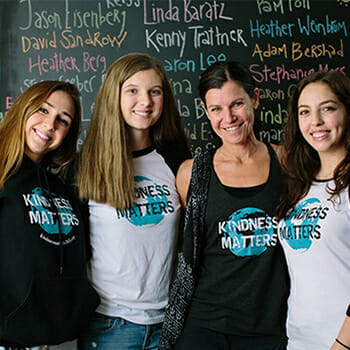
Laura Reiss and students participate in Kindness Matters 365 lessons and activities.
The kindness movement that began as a single club at Laura’s children’s school has now spread to nine states, with more than 500 ambassadors and 4,770 members across 159 programs. As part of their experiential learning and community service projects, these programs have collected and distributed $1,347,300 in goods, supported 45,800 individuals, raised $2.5 million in disaster relief and reported 613,213 community service hours.
Alongside this sizable impact, the program has the capacity to transform the individual students who participate. Shari Kline, a certified ambassador who hosts the club at a Florida elementary school, shares a story of a young boy who often acted up during club meetings and disrupted speakers. School administrators offered to remove the boy from the club, but based on the principles of inclusivity and patience that are integral to Kindness Matters 365, he continued to participate.
During one meeting, an organization that held an annual camp for children with cancer presented, and the boy sat rapt. As Shari remembers, “At one point he raised his hand and asked if they had any other spots available at camp. He shared that his sister had leukemia. They were able to find a spot for his sister, and this kid became a different person. You don’t know what a little kindness can do. What in his life will he go on to do? Years from now, we are going to see a change in the world. If you grow up learning kindness, it can change everything.”
The Kindness Matters 365 model is easily adaptable to other communities, schools and neighborhoods, allowing the organization to grow and expand to serve people outside of its original service area. By tapping certified ambassadors as leaders, Kindness Matters 365 needs only one advocate in a community to get started, making the organization one with limitless potential. The curriculum is created and shared online, and is available to those who are interested in implementing it in their own communities anywhere in the world.
“In my left hand, I hold my three children, who are the most important thing in the world to me,” said Laura. “And in my right hand, I hold the betterment of the world. Without exaggeration, it is my commitment to leave this world better having been here. I created what I think is a really powerful formula to give to people, and an effective program to internalize it and then go out into our world and make it a kinder place.”
After Seeing the Disadvantages of Homeless Children, She Took Matters Into Her Own Hands
Alisha Zhao founded Kids First Project to bridge the gap between a child experiencing homelessness and the resources they need to help them reach their full potential.
“I think that obviously housing is a human right,” said Alisha Zhao. “But even the right to extracurricular activities should be a human right because everyone should be entitled to the different services and critical resources that allow a person to become their full potential.”
When Alisha, now 20, first volunteered at a family homeless shelter five years ago, she expected to mostly see adults. She was surprised to discover that many of the shelter’s clients were homeless children. During her time as a volunteer, the children shared their hopes of becoming dancers, doctors, or even the president of the United States. While their dreams inspired Alisha, they also saddened her because she realized they were at a major disadvantage when it came to reaching their full potential.
“Childhood development is most critical around the time that these kids are experiencing homelessness,” Alisha said. “When they’re not given programs and are not given structural activities, it can affect them for the rest of their lives.”
After seeing the lack of nonprofits in her area that provided homeless youth access to extracurricular activities, Alisha took matters into her own hands.
She started the Hope for Homeless Club during her freshman year in high school. It has now grown into the
, a nonprofit serving 10 locations with more than 400 volunteers in the Portland, Oregon, and San Francisco Bay areas. With the help of her board of directors, advisory board and volunteer leaders, Alisha estimates that her program serves about 500 families experiencing homelessness each year.
Unlike other extracurricular programs that make parents bring the children to them, Alisha and her volunteers bring the programs directly to the children. Kids First Project’s primary programs include peer mentoring, physical activities, arts and crafts, tutoring, life skills classes, monthly field trips, and a variety of themed programs like puzzle or poetry night.
While the organization is called the Kids First Project, it’s not just kid-oriented. During the hour that the volunteers play and work with the kids, the adults are given time to relax, find housing or focus on themselves. The program also provides civic and government classes for the parents, which teach them their rights as people experiencing homelessness.
Alisha believes there is still discrimination and stigma surrounding people experiencing homelessness, because they are perceived to be homeless due to drug or alcohol addiction. However, many people become homeless because of a difficult economy or a lack of affordable childcare, health care, housing and more.
Norena Arias and her family are an example of this. After struggling to keep their small food court business alive, the family fell behind on bills and lost their apartment. Eventually, they ended up at the Goose Hollow Family Shelter, where Norena met Alisha.
Norena was struggling with math in school, but her family couldn’t afford a tutor. Alisha gave her the tutoring she needed and showed that she cared. With Alisha’s help, the assistance of
and her counselor at school, Norena and her family have been able to transition out of homelessness. She will be a freshman at Portland State University this year.
Many big corporations, including T-Mobile, Prudential and Disney, have sponsored Alisha’s organization, but what really makes a personal difference in the lives of these children are the volunteers who come out every week to help.
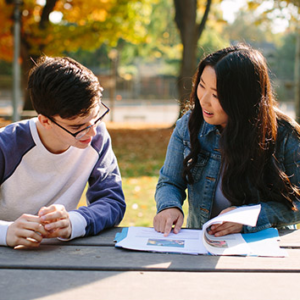
Alisha Zhao mentors a participant of the Kids First Project, which brings extracurricular programs directly to kids and teens.
“What’s so important with working with youth experiencing homelessness is that you can’t always have random people coming into their lives, forming relationships and then leaving,” said Alisha. “It’s been really valuable to see volunteers come in and become recurring volunteers with us. They’re able to create and sustain relationships with the kids.”
Even with the burden of schoolwork and her own extracurricular activities, Alisha continuously finds ways to better her organization and help homeless youth. The Kids First Project is starting a
for the upcoming school year and summer to provide one-time educational assistance for students experiencing homelessness in the Portland metro area. Title IX only covers educational recreational programs related to public schools, which might include funding for after-school clubs, but it does not include summer camps or various conferences and events. The scholarship will provide funding for youth experiencing homelessness to participate in the summer camps, conferences or events that they want to take part in.
Alisha realized that while direct services like the ones her nonprofit provide are definitely needed, they only hit the surface. Advocacy and policy change are needed to get to the root of the problem, and those who are affected should be at the forefront of such movements and decisions. Kids First Project is launching its first Summer Advocacy Program in June 2019, in which a cohort of youth currently or formerly experiencing homelessness will participate in a two-day civic education workshop in Portland to learn skills such as how to engage in effective advocacy and craft a pitch. The program will culminate in a four-day trip to Washington, D.C., where they will have the opportunity to share their stories and biggest needs with legislators on Capitol Hill.
Alisha said she is able to see how big of an impact her organization makes when kids who were able to find housing come back to the homeless shelter to volunteer, and help kids who are in the same situation they were once in themselves. She is currently majoring in political science and human rights at Stanford University, and she is president of the Stanford Housing Justice organization.
“It can be difficult to balance everything,” Alisha said. “But Kids First Project is one of my biggest passions and so when I’m doing it, I don’t feel like its work. Everything I do is because I want to work on the issue of youth homelessness and human rights for my entire life.”
Fulfilling her Grandmother’s Last Wish, She Changes the Life Trajectory of Vulnerable Girls
Shreya Mantha created Foundation for Girls to change the life trajectory of vulnerable girls and youth by connecting them to economic opportunity.
“Youths and professionals working together create so many opportunities to help and support those in need,” said Shreya Mantha. “Adults bring experience and expertise to the table, while youths bring new, innovative ideas. This collaboration can change the way we approach philanthropy.”
Maya Angelou once said, “When you get, give. When you learn, teach.” This is the message 17-year-old Shreya’s parents consistently instilled in her. They encouraged her from a young age to engage in her community beyond just school, family and friends, and it was this upbringing that brought the idea of
to life.
A promise to Shreya’s late grandmother was the catalyst that started the organization. Diagnosed with pancreatic cancer in 2014, her grandmother’s last wish was that Shreya and her sister make an impact by helping vulnerable girls and youth. Determined to fulfill her grandmother’s wish, that’s exactly what Shreya did. Based in her hometown of Charlotte, North Carolina, Foundation for Girls was officially established as a 501(c)(3) organization in 2014 and was eligible to receive grants. Shreya became the CEO and founder at just 13 years old.
Through its innovative and diverse programming, Foundation for Girls provides at-risk girls who are experiencing homelessness, in foster care, survivors of human trafficking and domestic violence, as well as teen moms, with the tools they need to realize their full potential and become strong, confident and self-reliant women. “We empower these girls in their journey from dependence to independence,” said Shreya. The organization offers programs in financial literacy, leadership, digital literacy and health and well-being. “Knowledge is power,” she said. “We are giving them knowledge and skills for a lifetime.”
Shreya believes that there is a leader in every girl; some just need a little help and nurturing along the way to find it within themselves. “These girls are lacking self-confidence and don’t have the ability to take charge of and own their lives yet. They’ve never had a caring coach, and without that they could fall back to where they came from,” says Shreya. She aims to never let that happen and works tirelessly to give the girls the support they deserve.
Foundation for Girls uses a partnership-based model to achieve its goals. With more than 20 community and corporate partners, Shreya, her sister Sahana, her peers and her group of adult professionals empower, educate and connect girls to economic opportunities. “When we work together we can achieve far more,” said Shreya.
Despite the city’s booming economy, the odds continue to be stacked against at-risk youth in the Charlotte area. Among the 50 largest cities in the United States, Charlotte ranks dead last in economic mobility due to segregation and a lack of educational opportunities. Twenty-two percent of North Carolina’s homeless population are children, and more than 10,000 children in the state are in foster care. Additionally, North Carolina is one of the top 10 states in the country regarding the number of sex trafficking reports.
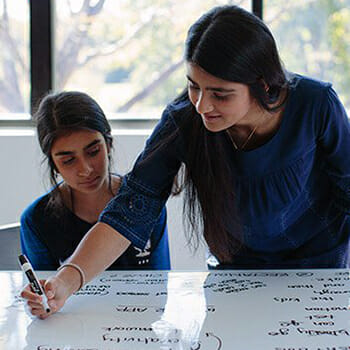
Shreya Mantha collaborates and plans for a Digital Literacy workshop with her younger sister./Courtesy Nilaya Sabnis for L’Oréal Paris USA
Shreya aims to combat such inequalities with her collaborative and human-centric approach to community, and advocates for #GirlsWithoutLabels. In the past four years, Shreya and her team of more than 46 volunteers and 12 youth ambassadors have empowered more than 1,800 girls through their programs. Since its founding, Foundation for Girls has hosted 346 workshops, provided more than 16,000 hours of training and has exceeded $180,000 in funding. Shreya herself has invested more than 2,300 hours teaching digital literacy. By 2020, she aims to have impacted 2,600 girls and provided more than 20,150 hours of engagement for vulnerable girls and youth.
The program continues to grow throughout the United States and across the world. During the summer of 2019, Foundation for Girls will expand to new cities including Gastonia, North Carolina, and Rockhill, South Carolina, and will be implemented in Chile and India in fall of 2019.
Shreya is committed to creating a collaborative, youth-led movement for change. This commitment is apparent in the approach that Foundation for Girls takes to program design, always keeping the girls themselves at the center. These considerations include bringing programs to the girls rather than asking them to travel to a facility or location, encouraging youth and adult professionals to work together to provide services and developing programming that considers the individual needs and strengths of each girl instead of a standardized approach.
What’s extraordinary about Foundation for Girls is the lasting impact it has on those it empowers, said Diamond Williams, who has benefited from the programs the organization offers. “Growing up, I didn’t experience a stable living arrangement. My dream is to own my own home to make sure my daughter doesn’t have to go through my same situation,” she said. “The Foundation’s financial wellness program helped me plan, budget and take steps toward one day becoming a homeowner.”
“Foundation for Girls has helped me secure training as a Registered Behavior Technician and I will have a full-time job with a 401K, health and dental benefits. This is far more than what I had ever imagined,” said Diamond. “I am so happy that my daughter will have everything that I never did. Foundation for Girls is my family and they are helping me every step of the way.”
Foundation for Girls is helping thousands of girls like Diamond fulfill their dreams. “Their past does not define them,” Shreya said. “I don’t look at where they’ve been or what their past is. I look at where they are now and what they want to achieve.”
5 Reasons Why Nonprofits Leaders Around the World Should Attend the 2019 Points of Light Conference
Kostapanos Miliaresis (center) of Ethelon participates in a panel discussion on global changemaking at the 2017 Points of Light Conference in Seattle, with Daniel Morais (left) of Atados and Sue Toomey of HandsOn Hong Kong.
in Greece, one of the biggest benefits of my role is connecting with people from all over the world who are trying to make this world a better place. The highlight of this is having the chance to meet those people in person, and there is no better place to do that than the annual
I will never forget the first moments at the 2017 Points of Light Conference in Seattle when, even before the opening of the conference, people from all over the world were hugging one another like they were relatives coming together for Christmas. That was the first time I understood that the global Points of Light Network is something more than the emails, the internal group and the common projects. It is your international family, a place where you feel welcomed, beloved and safe to get out of your comfort zone.
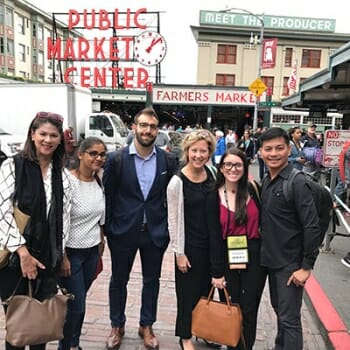
At the 2017 Points of Light Conference in Seattle, Kostapanos (center) visits Pike Place Market with Maria Feliza Cojuangco (left) of Hands On Manila, Neha Shrivastava of iVolunteer, Sue Toomey of HandsOn Hong Kong, Ana Cristina Perez of Voluntarios de Panama, and Dondon Marquez (right) of Hands On Manila.
2. The Conference Outside the Conference
We are all well aware that at these types of events… content is the king! The difference is that the Points of Light team makes sure each participant makes the most out of it, even outside the core agenda. Parallel events, private venues, activities, and a cultural tour around the city are only a few of my top memories from the 2018 conference in Atlanta.
3. All-Star Team
Imagine if you could select individuals from different organizations, each with their unique added value, and combine them all together. In the NBA, they call it the All-Star Game; in civil society, we call it the Points of Light Conference.
For three days, you have the chance to listen to amazing case studies from all over the world, from organizations that are leading their sector. The best thing? It’s up to you to select who you want to hear from and what you want to learn, thanks to the flexible DIY conference agenda.
4. What If… Why Not Me?
During the sessions or the breaks, and especially while you are traveling back home, you get this feeling. “What if I could also do that?” “Could it be me and my organization presenting next year?”
The motivation and out-of-the-box new ideas that you take back with you give you what you need to feel ready to create change in your community, knowing that other folks around the world have already made it!
5. The Power of Connections
The Points of Light Conference lasts less than a week, but its impact lasts forever. The real magic starts through all the new collaborations that are being created with the amazing people you met at the conference. It’s there that you understand that if you connect your powers, nothing can stop you!
I could write so much more, but the truth is — it cannot be fully understood, until you experience it. Greetings from Greece, and hope to see you all in St. Paul!
Kostapanos is the general director of Ethelon, a Points of Light Network affiliate located in Marousi, Greece. The 2019 Points of Light Conference will be his third.
Dentist Restores Smiles for Those in Need, with Pro Bono Dental Care
an outstanding volunteer or family as a Daily Point of Light.
Your teeth play a larger role than what most people give them credit for. They are an integral part of the structure of your face, and healthy teeth are vital to diet, health and an overall sense of well-being. However, dental hygiene can often take a backseat in people’s lives due to a lack of resources.
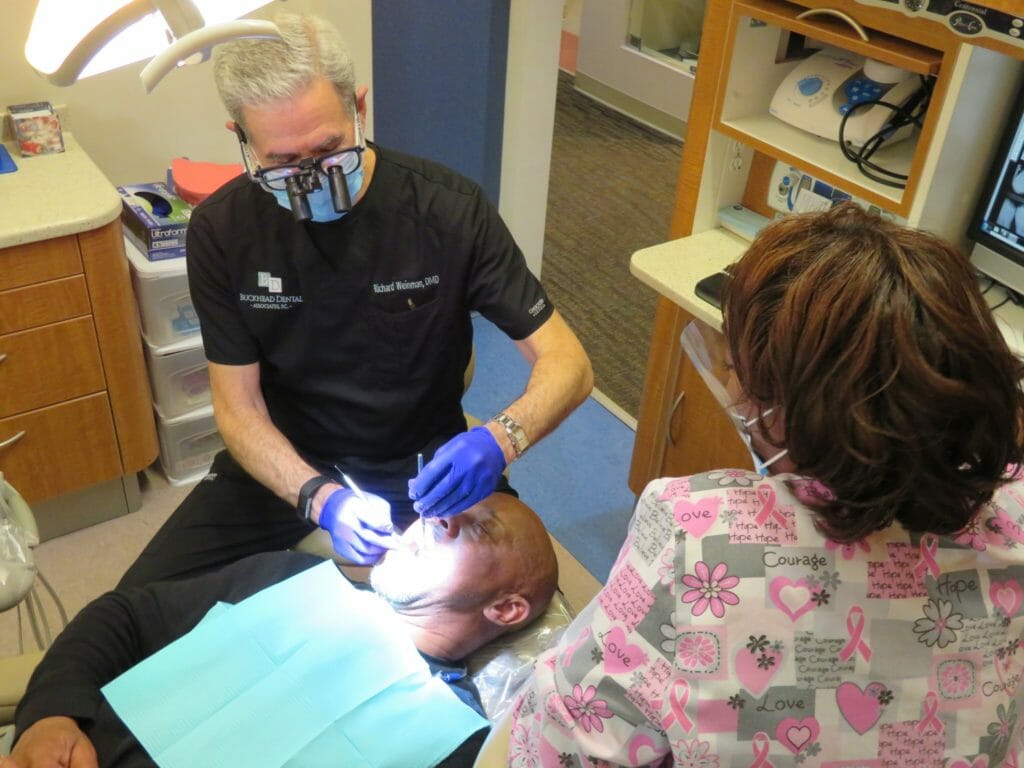
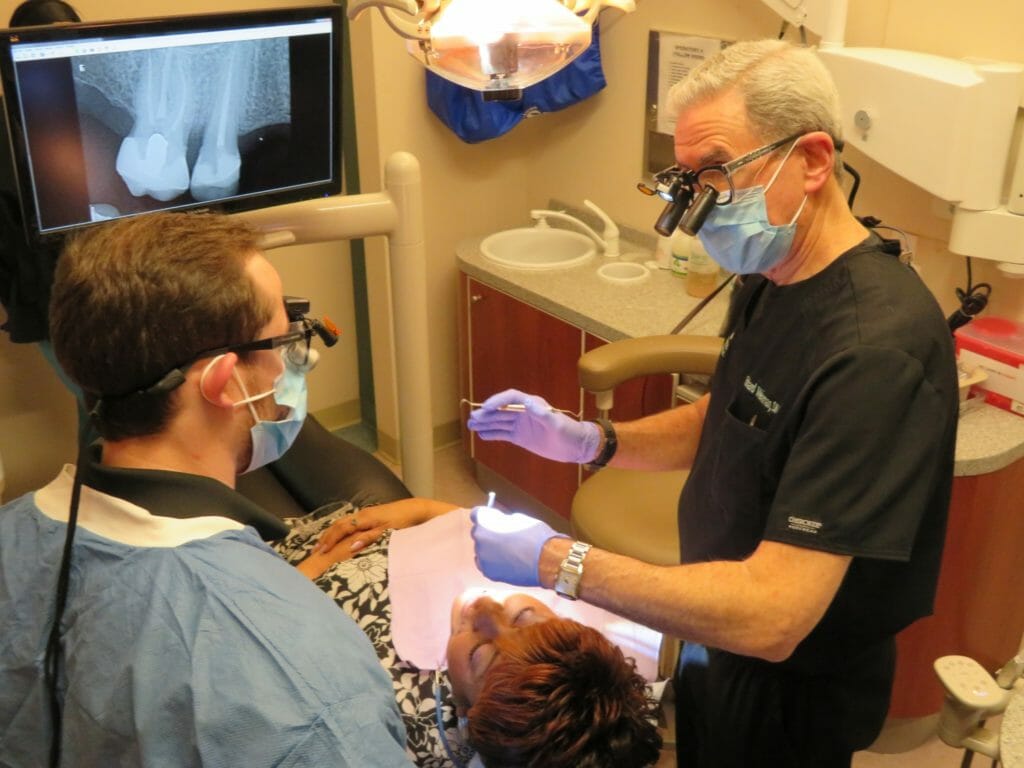
That’s where Dr. Richard A. Weinman comes in. Devoting several hundred volunteer hours each year across several organizations including the
, in addition to the Special Smiles program, this Atlanta-based dentist gives his time and talent to treat more than 180 low-income patients annually across the state of Georgia, at no cost.
The average price of annual dental care runs over $600 according to
, and sometimes runs even higher. Dr. Weinman is giving people in need a reason to smile. We spoke to Dr. Weinman to learn more about his work involving free dental care.
What inspires you to volunteer?
My family inspired my volunteerism, especially my mother who volunteered for many, many organizations. My father always supported her, and always made it a point to give to many different charities. His contributions weren’t a secret; he wanted us to know that giving back was something he felt was important, like a personal responsibility. Some people have different hobbies, and for me, these different volunteer activities keep me busy and happy.
You are an active volunteer. Share some information about the organizations you work with.
Ben Massell Dental Clinic: Over 100 years old, this is the oldest continuous dental clinic in the country. It’s 100% charity. There is no sliding scale, so we are able to take care of the neediest people first. The staff is completely volunteer based, and we have more than 190 dentists on staff that include all specialties for adult dentistry, and we treat between 2,000 and 3,000 patients each year. I have volunteered at the clinic for over 35 years treating the people who fall through the cracks, both low-income and no-income people, and serve as a member of the clinic’s board of directors.
Donated Dental Services: This is a year-round charitable program that provides free, comprehensive dental treatment to Georgia’s most vulnerable people with disabilities. The elderly or those who are medically fragile. I led the effort to establish this program in the state after seeing how well the program did in other parts of the country. In 2016, the Georgia Dental Association made a three-year commitment to the Donated Dental Services program.
Special Smiles Program: I have been a volunteer with this program for 20 years. It’s run by Georgia Special Olympics and provides comprehensive oral health care information, including offering free dental screenings and instructions on correct brushing and flossing techniques to participating Special Olympics athletes.
Georgia Mission of Mercy: I serve in a lead role for the Georgia Mission of Mercy project, a two-day free dental care clinic that provides about 2,000 patients with nearly $1.7 million in care.
Let’s talk more about the Georgia Mission of Mercy project.
The Georgia Dental Association’s Foundation for Oral Health sponsors this free dental clinic about every other year. Approximately $150,000 has to be raised in advance to host an event of this size, and then in-kind donations are coordinated. Several hundred Georgia dentists and more lay volunteers gather from across the state to donate their time and expertise to provide dental care to thousands of adults in need. Basic dental services are offered to low and no-income adults including cleanings, fillings and extractions. We will see a couple thousand patients over this two-day period. These are people who are really down and out, and they’ll wait overnight in lines like you would for a rock concert. We see as many of them as we are able.
Describe your volunteer role as the Chairman of Governmental Affairs Committee for the Georgia Dental Association.
My job as chairman of the governmental affairs committee for the association puts me in the lead to ask for funds and help level the playing field a bit in supporting our dentists and providing care for the community. While the legislature is in session, we ask dentists from around the state to come in and talk about different programs we support. I attend about 6-8 sessions in total, and I might also be called on to testify in committees. Last year, we were able to achieve helping dentists with their student loans. This year, we’re working to address the shortage of dentists in rural areas, a crisis affecting all medical professions. We are asking to put into place a program that encourages new practitioners to work in underserved counties by offering to pay their malpractice insurance if they relocate. Lastly, we successfully got the state to commit to paying for a coordinator for five years to help facilitate donated dental services. This role helps the association continue their service to patients across the state.
Share one impactful story from your volunteerism.
One young lady had problems with drugs, which is common with some of the patients we see because they’re so out of it. They don’t take care of their teeth, they get horrible decay and their mouths become ruined. She came to me through the Donated Dental Services program. In addition to her addiction, she had anxiety issues. Once she recovered from drugs, she then became homebound because she was anxious about the way she looked. I took her on as a patient and restored her teeth. She was an attractive lady before her teeth were fixed, but she kept her hand in front of her mouth when she talked to you because she was that embarrassed. I’ve kept her as a patient since then to help her maintain her dental health. When she comes to see us now, she always says how our help changed her life.
You’ve dealt with some very serious medical situations. Explain.
Let me tell you another patient story. This patient was also referred through the Donated Dental Services program. She had stage four cancer and had such severe dental problems that her doctor stopped her chemotherapy because she would have likely died from dental infections if she took drugs to suppress her immune system. The concern was that she’d likely die from cancer if she continued on without chemo. I coordinated her care because it required some extractions, and because she wasn’t healthy we got oral surgeons involved in her care. We restored her dental health and got her back on chemo. Once we were able to get her squared away, we knew she was going to be able to take care of herself.
What’s one thing you want readers to take away from your service?
What people don’t realize is that it’s not uncommon for dentists to take on patients on a volunteer basis, whether they’re doing so through their church, for a clinic or organization. People sometimes stereotype us as those rich dentists making money and buying cars, but there are many of dentists that really provide for those most in need who don’t talk about it. They’re not tooting their horn, they’re just out there providing care. When we can make someone look good and get them out of pain, it’s a great feeling. It’s a great profession, I wouldn’t want to do anything else.
What’s your favorite part of being a dentist?
My favorite part of dentistry is restoring a patient’s smile. A patient can’t tell when something is technically correct, but everyone can appreciate when we give them an attractive smile.
Outside of Georgia, how can those in need get dental help?
Many years ago, as a fellow of Leadership Philadelphia, I attended a seminar where an accomplished anthropologist spoke about the power and influence of networks. She asked the group of leaders, “what is the most valuable currency that will move a critical agenda forward in your company or organization?” Fellows, which included CEOs, executive directors and other C-suite leaders, took their best guesses – money, power, position, influence – but none were correct. The greatest currency? Trust and respect, she shared. That is the currency that moves civilizations.
When we think about today’s society, it’s evident that trust and respect are valuable. When present, this currency propels economies and provides limitless opportunities with connections we make through popular apps – allowing us to stay in a stranger’s home while on vacation, or to take a quick ride to work with someone who drives their own car for a couple of hours each day. These are signs of the power and potential this currency provides, when trust and respect are present. The lack of it impacts our daily lives, from how we navigate our personal and professional relationships, to our confidence in important institutions. As we try to build a better world and move society forward, with the greatest currency seemingly lacking in critical places, I feel compelled to ask: who is responsible for change?
Last month at the 2019 World Economic Forum in Davos, the Edelman Trust Barometer was released. This study, in its 19th year, measures trust around the world in formal institutions – including government, media, nonprofits and business. The results were staggering. Only 1 in 5 individuals feel that these systems are working for them; nearly half the population believe these systems are failing them.
As the world faces more political challenges, people are losing faith in the power of government. Here in the United States, we just concluded the longest government shutdown in our country’s history. Political unrest continues around the world as individuals want and expect more.
We see people turning to businesses, specifically their own employers. Of those surveyed in the Trust Barometer, 76 percent said CEOs should take the lead on change, rather than waiting for the government to impose it – an 11-point increase in the last year. Further, 73 percent of people also agreed that a company can increase profits, and improve economic and social conditions in communities where it operates.
Interesting swings in the pendulum, when just 10 years ago the same Trust Barometer told a very different story. In 2009, after the financial crisis of 2008, people were looking toward government to fix challenges and hold businesses accountable. Only 38 percent of people surveyed back then had trust in business.
Now, people are starting to think locally, trust locally, and invest in their local networks. The currency of trust is moving to local communities.
Each year, Points of Light polls U.S. businesses to establish The Civic 50 – honoring the 50 most community-minded companies in the country and turning their results into a benchmarking report. The results from last year showed these same trends to be true. People are expecting more and companies are answering the call, moving from just being supporters of causes to becoming stewards of community resources, working in partnership with people and organizations to drive meaningful change in the communities where their employees work and live.
However, businesses cannot become the sole entity relied upon to do good. While many companies have found ways to innovate and increase shareholder value, and commit resources to social progress through their corporate social responsibility programs, not all companies are achieving this balance.
So when we think about the earlier question – who is responsible for change? – the answer, I think, is that it requires partnerships, an intersection of many groups, but it starts with individuals. Individuals who may possess money, power, position or influence, but more importantly, individuals who hold the greatest currency in the world, trust and respect.
In my last blog, I talked about the force of human kindness. It is the lack of kindness and empathy that leads to an unjust society. When you see someone with less, but don’t care. When you see someone being bullied, but don’t stand up. When you see a woman being harassed, but don’t intervene. This lack of empathy, the ability to look away, creates a sense of “otherness” and is likely the initial seed of mistrust. It is the force of human kindness that will change this trend – but it will take every person, man, woman and child, to act to create this wave of change.
People outside business and government must work to make change locally, get involved and raise their voice. People within institutions must speak up and say, “we can do better.” It takes all of us.
Indeed, we have the power – there is light in all of us, and we must use it for good.
Trends in Business & Social Good: What Changes Will 2019 Bring?
By Jenny Lawson, Chief Civic Innovation Officer
I am lucky to love what I do. For the last eight years I have had the privilege to watch and encourage the incredible growth of civic and social engagement in companies. Over this time, we’ve seen incredible growth – from only 24 percent of companies offering pro bono programs (CECP, Giving in Numbers, 2011) to 56 percent offering such skilled talent to communities today (CECP, 2018). From CEOs speaking out to Super Bowl ads focused on social action, companies are leading and lending talent and resources at an unprecedented scale.
This year, we are already witnessing more change. Each year in January the Points of Light Corporate Service Council meets to exchange new ideas, hear from experts and shape their company community engagement strategies. Over two days, members from leading companies gather to discuss building purpose into the center of their business and breaking down barriers that prevent people and their employers from taking action that changes the world. Just ahead of Davos, where CEOs and world leaders would tackle some of the toughest global challenges, conversations at this year’s annual CSC meeting helped us understand how the challenges we face in our own communities can be examples for larger social issues.
Through our work and partnerships with these companies, which are working to strengthen their value and connection to communities, we see a few trends for 2019 that haven’t made the headlines yet.
Companies are building out the “S” in ESG
The powerful environmental, social, and governance factors have rapidly weighted and shaped investment decision making. Spurred by BlackRock’s Larry Fink’s letter ahead of Davos 2018 and reinforced in his 2019 update, companies continue to develop measures to capture created value beyond profit. With a highly visible demand from stakeholders to tackle climate and environmental challenges over the last five years, and issues of governance watched closely by investors and creditors, clear and commonly understood measures around the “S” in ESG have been slower to develop. But 2019 promises to be the year of the “S.” Several powerful studies and initiatives are tackling social impact measures head-on. We see inspiration and action from:
Coalitions building consensus and reporting muscle among leading brands like CECP’s Investor Initiatives and Impact2030 efforts to build measurement strategies connecting the impact of volunteerism to the SDGs.
Companies are innovating how they work with the social sector.
With ESG awareness and interest flooding into business thinking, companies are seeking shared value relationships and opportunities with external partners and inside the organization, too.
Companies are expecting more measurement and data analysis and seeking transparency around impact and value from their nonprofit partners. Companies are also understanding that nonprofit partners need support, including pro bono staff time from the corporate world, to build the capacity and infrastructure to be meaningful data-driven partners. Initiatives like Booz Allen Hamilton’s Data Science for Social Good are opening new pathways and partnerships.
Moving beyond support to stewardship, companies are seeking next-generation collaborations among stakeholders, including clients, vendors and respected NGO partners, to add depth, leverage and shared value to causes that reflect authentic interest in social challenges that align with the voice and values of the brand.
While companies are driving to connect their social engagement strategies to authentic brand values and have natural alignment with their products and services, they are also understanding that the “whole employee” has relationships, social values and causes that they care about. As Gen Z comes into the workforce, companies are getting creative with community engagement strategies and initiatives that support employee passion as attributes of their authentic brand values. It’s a tricky but doable objective for an increasing number of companies, focused on blending a suite of opportunities from company-sponsored events, to matching gifts, to recognition for civic action through rewards. There’s a growing interest in more family volunteering, too, that may build as companies look to support millennial and Gen Z families.
Over the next year, we look forward to partnering with corporations and business to achieve these goals. As society expects more from business, we help companies engage their customers and employees in the challenges facing their communities and our world.
The Points of Light Corporate Service Council provides networking opportunities, best practices and new ideas that catalyze high-impact social change initiatives. To learn more about how your company could benefit from membership, connect with us at [email protected].
Honoring Dr. King’s Legacy Through Community Volunteerism
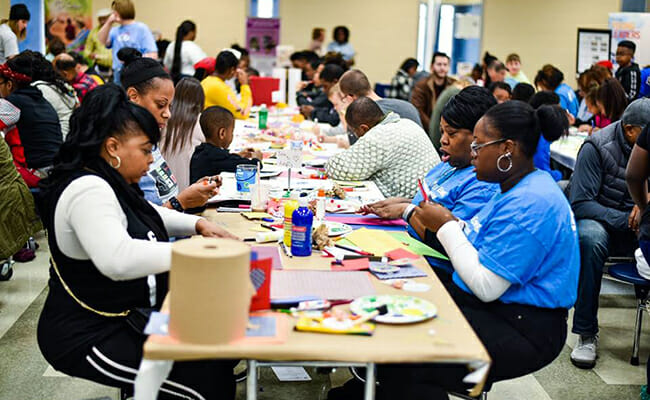
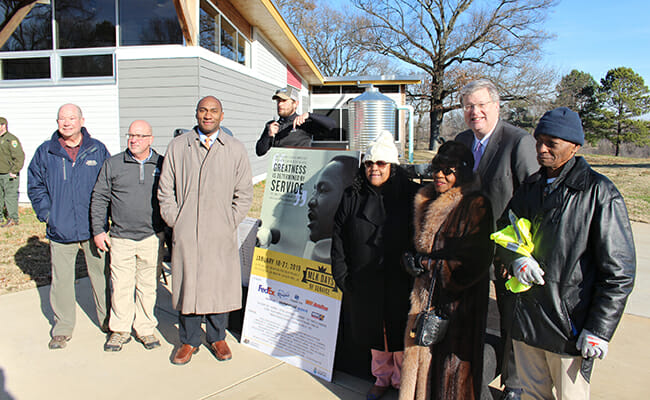
As the largest national day of service, MLK Day is valued as a day “on,” not a day off – an opportunity to reflect on the gains we have made, and re-commit ourselves to addressing contemporary issues facing our nation through meaningful civic dialogue and community volunteerism.
Each year on the third Monday in January, millions around the country unite in service to honor the legacy of Dr. Martin Luther King. And in communities around the country, Points of Light Network affiliates start the year off in the spirit of volunteerism and service, creating hundreds of opportunities for individuals, families, nonprofits and business to work together to build stronger, more resilient communities. This year, we want to shine a light on five affiliate organizations that not only brought together thousands of volunteers on MLK Day of Service, but are also committed to carrying forward Dr. King’s legacy all year round.
Hands On Atlanta
Hands On Atlanta provides diverse and unique service opportunities for its community, including arts and culture, youth and family services and hunger and homelessness projects. For MLK Day weekend, Hands On Atlanta brought together nonprofits, individuals, families and schools to honor Dr. King’s legacy and his vision of the “Beloved Community.” The organization engaged more than 2,000 volunteers to serve at 32 projects across metro Atlanta, participating in a diverse and impactful series of events at local nonprofits and schools.
At Truly Living Well, volunteers helped winterize fruit trees, composted and helped clean a pond. With a pop-up letter writing station outside of the King Center, participants joined the Atlanta Legends football team to craft encouraging messages for Atlanta public school teachers. Volunteers helped create a large mural at Frederick Douglass High School; sorted diapers and bundled clothing at Helping Mamas; and helped organize supplies for classes at the Amani Women’s Center, which gives refugee women a place to work and learn.
Jersey Cares
As a leader in volunteerism in New Jersey, Jersey Cares envisions a community in which everyone is motivated and empowered to make a positive difference. Since its founding in 1993, the organization has been engaging volunteers in rewarding and effective efforts that address local community needs. Each year on MLK Day of Service, Jersey Cares brings together people of all ages across the state to build a stronger New Jersey and give life to the words spoken by Dr. King, “Everybody can be great, because anybody can serve.”
This year, more than 3,000 volunteers engaged in more than 7,000 hours of service. Volunteer projects included revitalizing schools with organization and beautification activities, creating bravery award kits for children of deployed military parents, building birthday-in-a-bag kits for children who spend their birthdays in a shelter, and giggle bags for children in hospitals.
OneOC
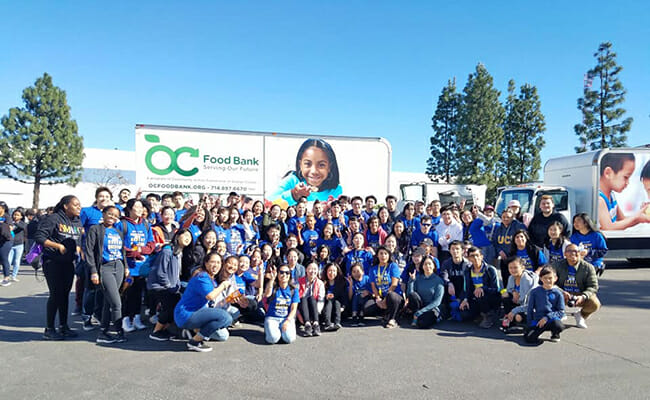
Accelerating nonprofit success is the core mission of OneOc. For more than 60 years, the organization has provided volunteer opportunities, training and consulting for nonprofits across the Orange County, California, area to help them become as efficient and effective as they are passionate about their mission. OneOC celebrated its 20th year of honoring Dr. King on MLK Day of Service, and made it a “day on” through meaningful service opportunities for their community.
This year, OneOC partnered with the Orange County Food Bank in Garden Grove, California, to offer volunteer opportunities for individuals, groups, families and companies to address the critical issue of hunger in the community. More than 1,460 volunteers, including 64 family volunteer groups, participated and packed more than 12,000 boxes of food that will be distributed to low-income community members in need.
United Way of Central Carolinas
When neighbors help neighbors, people from all walks of life can solve the most difficult local problems and build stronger communities. That is the mission of United Way of Central Carolinas, as they focus on education, health and financial stability for every member of their community. Each year, the organization turns this spirit of service into an opportunity to honor the life and legacy of Dr. Martin Luther King Jr. with family-friendly projects for hundreds of volunteers.
The organization’s MLK Day projects not only deliver valuable assistance to nonprofits, schools and other service providers, but they also allow participants to start the new year by reflecting on the meaning of Dr. King’s life of service. This year, the United Way hosted four project sites around the Charlotte area, where more than 1,000 volunteers came together to answer Dr. King’s call to serve. Volunteers made more than 200 crib blankets for new families in need, created more than 1,000 alphabet and number sets for students, wrote hundreds of encouragement cards for seniors, and created materials geared towards early childhood literacy. Whether it’s the needs of an entire neighborhood or simply the needs one family has tomorrow, United Way of Central Carolinas is dedicated to bringing volunteers together to help their community reach its full potential.
Volunteer Memphis
For more than 40 years, Volunteer Memphis has been connecting people with opportunities to serve their community. Volunteers are at work every day of the year tutoring and mentoring children, helping individuals and families make pathways out of poverty and create environmental conservation opportunities.
For its third annual MLK Day weekend, Volunteer Memphis partnered with more than 30 community groups to facilitate more than 100 projects that united residents in making a difference. Projects included outdoor clean-ups, tree planting, distributions of clothing to homeless populations, and mentorship activities with MENTOR. More than 2,000 volunteers collected more than 100 bags of trash, planted more than 40 trees, put hundreds of much-needed items into the hands of the homeless, and collected thousands of tires that will be recycled into one of the longest porous trails in the world. “We answered Dr. King’s call to serve and make a difference in the lives of all Mid-South residents,” said Andrea Hill, director of Volunteer Memphis. “Volunteer service is a powerful tool that unites us around a common purpose and builds strong communities.”
How Do You Give Good Proof? Let Cabot Help You Thank Your Volunteers
By Cabot Department of Gratitude
When you shop you get proof with a receipt. When volunteers help, their proof is your thanks. Just as we’d never leave the store without that little slip of paper, volunteers shouldn’t go for long periods of time without getting the vital proof of how valuable they are to you. Luckily, there are many ways to honor your volunteers and document the impact of volunteer service!
Cabot’s longstanding partnership with Points of Light provides nonprofits with opportunities to show appreciation to their volunteers. Our Department of Gratitude – yes, Cabot has a whole department dedicated to showing gratitude – features programs that any nonprofit organization can take advantage of:
Our work with Points of Light helps you make sure your volunteers hear those vital thanks, serving as proof that their work matters.
Multiply Impact with a Thank You
“Thank you” reinforces to your volunteers that their work matters. Thanking volunteers also multiplies the impact of the initial volunteer work through “social proofing” – when one person is moved to action by seeing the good work of another. Seeing our friends volunteering and having fun makes us want to volunteer, too.
Programs within Cabot’s Department of Gratitude and other volunteer appreciation efforts end up increasing volunteerism through that concept of social proofing, so a thank you becomes much more than a thank you. It becomes an open door for other people to volunteer.
It’s Not Just New Volunteers
Of course, it isn’t just about recruiting new volunteers. Remember the old campfire song, “Make new friends, but keep the old; one is silver and other’s gold”? Like friends, new volunteers and old volunteers each have their own value. Without volunteer retention, organizations are left in a continuous state of retraining new recruits. Long-standing volunteers save time and resources, hold institutional knowledge, and provide continuity.
According to the 2017 Volunteer Impact Report, only 55 percent of nonprofits are measuring the impact that volunteers are having on the organization’s goals. But those 55 percent are enjoying 19 percent higher recruitment and retention because volunteers can see that their work matters.
What’s the best way to retain volunteers? Yes, you guessed it – thank them. Retention is cemented by thanking volunteers verbally, passing along praise, and acknowledging their work in writing. When volunteers log their hours, it’s easy to track their work and give concrete examples of how their contribution impacts the organization. Volunteers reported that hearing feedback about the impact of their work plays a big role in keeping them engaged in the organization.
Not All ‘Thank Yous’ are Equal
Canadian researchers found that 80 percent of volunteers would like to be thanked by hearing about how their work has made a difference. However, there are other ways to give volunteers warm feelings of appreciation.
For instance, Cabot provides delicious meals through the Gratitude Touring Team, taking care of nourishment by providing grilled cheese to keep volunteers fueled. We also celebrate volunteerism with our celebrity cruise and by promoting the use of Reward Volunteers. While younger people expressed a desire for small gifts, all volunteers stated they would rather be recognized throughout the year on an informal basis rather than saved up for a single event like a ball or a banquet.
So, set aside time today to see if you fit with the 55 percent of organizations that are tracking volunteer impact. Then, let your volunteers know how much you appreciate them with a big, heartfelt thank you, and maybe a little grilled cheese to boot.