Through Unique Challenges, GE Volunteers Get Kids Excited About Science, Technology, Engineering and Math
Under the guidance of volunteers, a group of teens from Ghana developed a technological solution to tackle the improper disposal of waste. Their idea – create an app that would teach people how to sort trash and recycle waste.
Across the globe, outside Philadelphia, volunteers demonstrated hands-on projects to elementary school students in the areas of science, technology, engineering and math – fields known collectively as STEM. Most of the activities involved materials the children could get from the grocery store, so they could experiment at home.
The need for STEM career counseling and job readiness training transcends political, geographic and socio-economic barriers, and these hands-on learning experiences provided early exposure of skills needed in STEM-related industries.
The recent activities in Africa and the United States were part of the ongoing GE Global Month of Service, for which GE and Points of Light have come together to support and encourage GE employees to address issues that matter most in their regions.
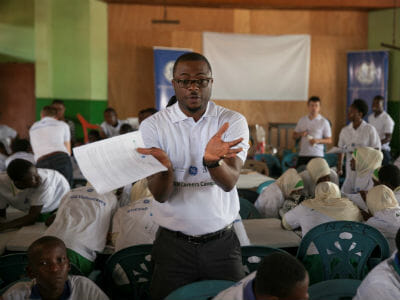
In Ghana, GE Ghana volunteers engaged 200 students, ages 13 to 17, from 10 schools in a STEM Careers Campaign, in partnership with JA Africa and Points of Light.
A GE volunteer urges students in Ghana to consider a wide variety of STEM careers.
The project raised student awareness of STEM career opportunities, created opportunities for students to interact through a challenge in a competitive – but safe – environment and also fostered public speaking, team building and problem-solving skills.
During the campaign, volunteers shared their job experiences and guided students in thinking about sustainable solutions to problems in their communities using STEM.
Students were given a STEM challenge to work on in teams and presented their solutions to a panel of judges. Flagstaff House Basic School took home the grand prize for their waste-disposal app idea. Similar STEM events were held in Nigeria and Kenya.
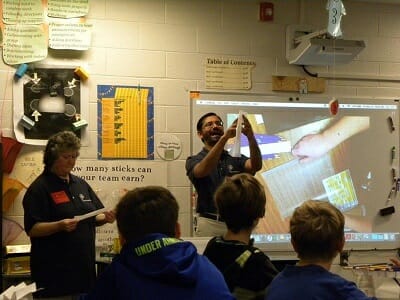
At Valley Elementary School in Bensalem, Pennsylvania, about 30 GE volunteers of the Greater Philadelphia Council hosted a STEM day. The volunteers interacted with 775 students participating in activities such as constructing “Towers of Pasta,” making lava lamps, using M&Ms to calculate probability, building paper structures to discover the strength of paper, making paper boats to float and move on water, discovering how a pendulum works in a grandfather clock, making objects on a computer and computer coding.
GE volunteers Vidya Sundaresan, center, and Patricia Popowich, left, use paper boats to teach the concepts of buoyancy and surface tension to Pennsylvania elementary school students.
“I enjoy seeing the excitement in the kids when we can teach them something fun and different from their regular curriculum,” said volunteer Cayle Hamman, a lead mechanical engineer from GE Water and Process Technologies in Trevose, Pennsylvania. “The one class of first graders almost all either wanted to be a scientist or teacher when asked what they wanted to be when they grow up. That makes the day worth all the effort.”
Fellow volunteer Wendy Segal, a specialist in waste water and membrane chemistry from GE Water and Process Technologies added, “It was amazing to see so many faces light up with understanding and excitement during the exercises. The enthusiasm for learning is strong in children, and we definitely sparked some young minds in the direction of science, technology, engineering and math.”
6 Ways to Give Back on #GivingTuesday
#GivingTuesday is a global celebration of generosity and giving back. For many charities and nonprofits, it’s one of the biggest fundraising days of the year, a day when supporters turn out in droves to donate money to the causes they care about.
While not all of us have money to give, most of us have time. So here are a few of the many ways you can give back on #GivingTuesday, without reaching for your wallet.
Skills-based and pro bono service makes a deep and lasting contribution to the organizations you support. According to A Billion + Change, 91 percent of Fortune 500 human resources managers said volunteering knowledge and expertise to a nonprofit can be an effective way to cultivate business and leadership skills. Whether you’re an accountant, an IT expert, a visual designer or a marketer, your skills can benefit nonprofits. Find opportunities in your community through All For Good.
Getting the neighborhood to donate goods to the local food pantry or homeless shelter is a great way help those in need this holiday season – and to clean out your shelves and closets while you’re at it! You can donate food, warm clothing or blankets, hygiene supplies and more. Choose a date and location where you will accept donations, and identify the community organizations the items you collect will benefit. Then, spread the word. Get more info here, and make your donation drive a fun activity for the whole family!
The Internet has done a lot to make doing good easier than ever before. From “passive giving” through websites like Amazon and eBay to crowdfunding opportunities to digital volunteer databases, giving back is just one click away. Another way to give back is through virtual volunteering. Help feed the hungry by answering vocabulary questions, share career advice with low-income youth online or provide counseling via text to young people in crisis. Find more virtual volunteering opportunities at All for Good or UN Volunteers.
Volunteering with family and friends at a local soup kitchen or food pantry is not only a great way to help your community, but also a wonderful bonding activity – and a great way to teach your kids the importance of helping those in need! Check out All for Good to find opportunities near you.
The holiday season is the perfect time to think about the things we are grateful for, and say thank you. Send a thank-you card to your children’s teachers, to a local organization doing good things in your community, to a veterans’ group or military service member, or any person who has had a positive influence on your life this year. Spreading kindness is an easy way to brighten someone’s day.
Care packages not only bring a smile to someone’s face, but also provide some much-needed relief for those in need. Pinterest features a number of ideas for creating care packages for different recipients: Whether it’s filling resealable bags with basic supplies for the homeless, putting together healing items for cancer patients or sending fun and practical items for soldiers deployed overseas, these thoughtful gifts make a real difference in the lives of those who receive them.
For more ways to get involved on #GivingTuesday, please visit www.givingtuesday.org.
How to Respond to Tragic Events with Compassionate Parenting
This post is by Kathy Saulitis, senior vice president of external affairs at generationOn, Points of Light’s youth service division.
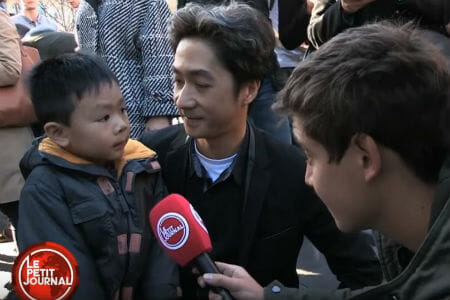
As parents, teachers and caring adults try to calm the fears of children and bring them comfort after the recent events in Paris and around the world, a particularly moving video of a dad explaining the attacks in Paris to his young son has flooded the Internet.
See how this father explains the Paris attacks to his young son in front of a Le Petit Journal reporter. Watch the video here.
French news outlet Le Petit Journal interviewed the unnamed child and asked if he understood what happened in his city and why the shootings happened.
“Yes, because they’re really, really mean,” the boy says. He then goes on to say, “But there’s bad guys, Daddy… they have guns, they can shoot us because they’re really, really mean.”
The dad remains reassuring and focused on the positive, which are both important in compassionate parenting.
He says, “They might have guns, but we have flowers.”
“But flowers don’t do anything,” the boy responds.
“Of course they do,” the father replies. “Look, everyone is putting flowers. It’s to fight against the guns.” (Watch the video here.)
It is not unusual for kids to feel scared and helpless after tragic incidents such as the recent events in Paris, Beirut and other parts of the world. Visit generationOn’s resources page to access a range of articles that offer advice for how parents, teachers and other caring adults can help youth process their thoughts and feelings during these times.
These articles suggest similar ways to help kids deal with tragic events – supporting kids to take action to help others, which can be as simple as a small act of kindness, to volunteering at a soup kitchen, or visiting with the elderly at a nursing home. Dr. Michele Borba, author and renowned parenting expert, gives this advice: “Empower kids with proactive ways to help and model compassion and involvement.”
And generationOn has two opportunities for parents, teachers and caring adults to put this advice to action:
Volunteer as a family on Family Volunteer Day, Nov. 21, and show the youth in your life that giving back to others and to their communities is one of the most important things you can do to help make our world a better place. With sponsorship from Disney Friends for Change, we have been able to organize 25 years of families volunteering together. Do our Seeds of Awareness project, specially designed to help kids work through recent events, or find more inspiring ideas at generationOn.org/fvd.
The Joy Maker Challenge, sponsored by Hasbro, Inc., encourages kids, teens and families to help those in need during the holiday season, from Nov. 23 to Dec. 23. Find projects like our Charity Bake Sale for Syrian refugees’ children or write kind cards to children in Paris with our Caring Cards project. Take action to make the world a better place at a time of the year when giving back is so important. Share your story and find more ideas at generationOn.org/joymaker.
Feeding Hungry Children Becomes a Family Affair for GE Volunteers
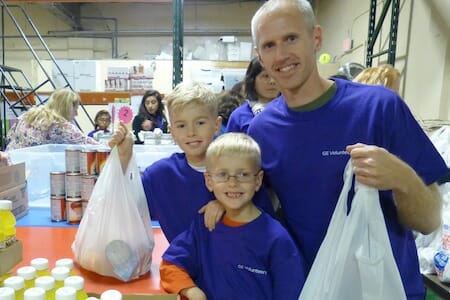
Steve Gustafson took a recent volunteer project as a teaching moment for his kids, Thomas and Andrew, ages 10 and 8. The family joined volunteers from the Schenectady, New York, GE Volunteers Council, their family and friends to pack 369 bags with food that will be provided to local school children in need.
From left, Thomas, Andrew and Steve Gustafson, show two of the bags they packed with food for the City Mission of Schenectady’s Weekend Backpack Program.
Gustafson, manager of the GE Global Research Knowledge Discovery Lab, remarked that seeing how much better behaved his sons are when they’ve eaten and slept well was a reminder that not every child has those same basic needs met, “and it’s important to give other children that same opportunity.”
The Gustafsons, helping the City Mission of Schenectady’s Weekend Backpack Program, were contributing to the good deeds GE employees are undertaking around the world this month as part of the GE Global Month of Service. GE and Points of Light have come together to support and encourage GE employees to address issues that matter most in their regions.
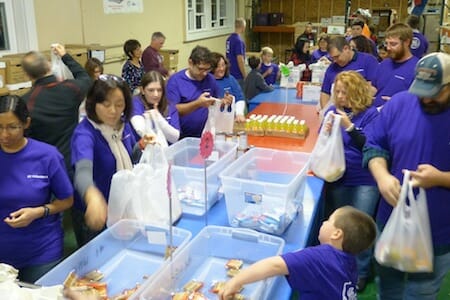
GE volunteers in Schenectady packed in each bag a box of rice mix, bag of pasta, drinks, can of chili, Nutrigrain bars, graham crackers and loaf of bread.
“The difference this program makes for children who are food insecure is clear,” said the City Mission’s Kathy Carney, program coordinator for the Weekend Backpack Program. “Their attendance is better at school; because they aren’t hungry from the weekend they are ready to settle down on Monday morning; their grades are up and they are less likely to get into trouble.”
Volunteers from the Schenectady GE Volunteer Council pack bags for local school children in need.
Even at 10 years old, Thomas Gustafson could appreciate the significance of the volunteers’ service.
“It’s important that children be able to eat well so they can do well in class and have a great future. I feel good about giving back to my community,” he said, while his younger brother said he liked knowing he was helping children whose parents couldn’t afford to buy them healthy foods.
Principal Engineer Adam Rasheed, who helped organize the backpack event, said he was thrilled that so many GE volunteers brought their families to participate, adding, “It’s important that GE, as a corporate citizen, help those in our community.”
Biologist Lisa Lowery was one of the volunteers who specifically was looking for an activity to which she could bring her son Dean, 7. “It’s important for him to see how lucky he is, and to have an opportunity to open his eyes to see what others don’t have,” she noted. “I’m hoping that by starting him volunteering young, he will continue to help others as he grows up.”
That she accomplished her goal that night was evident, as Dean reflected, “For children who don’t have food, it’s pretty sad, and when they get to see the food we packed, they’ll be happy.”
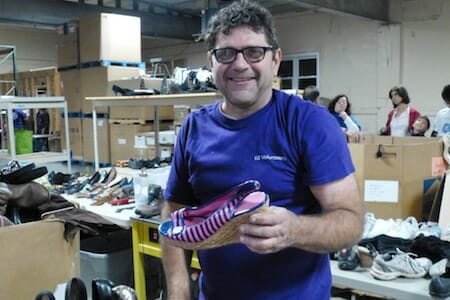
GE volunteers, such as Kent Sante (pictured above), helped sort shoes donated to the City Mission of Schenectady after they finished putting bags of food together.
For PR Subramanian, manager of the High Temperature Alloys & Processing Laboratory, packing food for impoverished children was personal. “I’ve seen children who don’t get a square meal a day, and I’ve always felt we should do more so children don’t have to worry about where their next meal is coming from,” he said.
For Senior Scientist Kareem Aggour, it was especially important for him, as a Muslim, to show that “we positively contribute to our community in the U.S.,” while his 8-year-old son Ayyoub said he wanted to help the poor have a better life, “not living by luck, but through people helping the poor. That’s what I thought about when I was packing the bags.”
“I’m amazed at the number of people who volunteered for this event,” said co-organizer Tahira Komal, manager, marketing and commercial operations for GE Ventures. “We needed only 20 people, had 35 sign up and even had to turn volunteers away. That people would choose to come here on a Tuesday night after work instead of going home demonstrates that there’s still good in this world.”
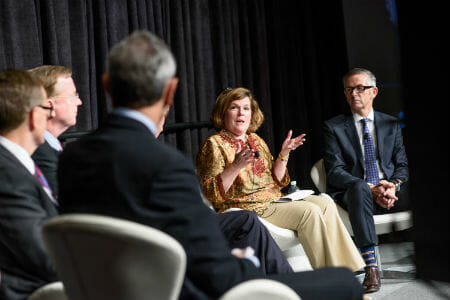
Kerry Sullivan, center, president of Bank of America’s Charitable Foundation, participates in a CEO panel during the Conference on Volunteering and Service Business Track.
Having a mantra – a group of words that hold special meaning for you – can both ground you and make you feel powerful.
In the days following Points of Light’s Conference on Volunteering and Service in Houston, it was terrific to hear from so many business leaders that attending the conference brought a renewed sense of power and inspiration that helped them embrace the challenge of being a change maker at their companies.
So, we at the Points of Light Corporate Institute went looking for five mantras from the conference’s Business Track to remind attendees of those moments of inspiration – at least until we all meet again for next year’s conference on June 27-29 in Detroit.
Enjoy!
“Volunteering is part of America’s infrastructure of opportunity,” – Joaquin Castro, U.S. Congressman (Texas), Opening Plenary
“Don’t be discouraged by life’s little stings. Get back up and spread your wings,” Mikaila Ulmer, 11-year-old CEO, Bee Sweet Lemonade, Business Track Opening, CEO Session
“You need to have patience for change and also the urgency to act,” – Emily Saunoi-Sandgren, manager, corporate social responsibility, Target, followed by, “But don’t let perfection get in your way,” from Anna Cunningham, manager, community investments, Starbucks, Workshop:From Cause Marketing to Purpose Driven Brands
“How can we use data not only to decide what kind of movie we want to watch, but also what kind of world we want to live in?” – Miriam Young, communications specialist, DataKind, Workshop:Using Big Data to Advance Social Missions
“The new 17 Sustainable Development Goals around poverty, hunger, education and gender equality are key to the success of future generations and the health of our planet,” – Sue Stephenson, vice president, Community Footprints, The Ritz Carlton Hotel Company, Workshop: IMPACT 2030: Achieving the Sustainable Development Goals through Employee Volunteerism
As you reflect on these mantras and get inspired to take the next step, we invite you to explore all the presentations, articles, highlights and resources from the 2015 Business Track on our resources website.
Channeling a Belief in ‘Peace and Joy and Relationships’ Into Good Deeds for Veterans
This week, in honor of Veterans Day, we celebrate the men and women who have served our country, who today are channeling that impulse to serve to make a difference in their communities. Meet Edwin Rodriguez.
Edwin Rodriguez
As a sergeant in the military, Edwin Rodriguez learned this mantra – When you see something wrong you should do something about it.
“I continue to keep that mantra alive in my life,” he says. “Life is about peace and joy and relationships.”
Driven by that mentality, Rodriguez signed up for a term of service with the Veteran Leader Corps, an AmeriCorps program run by Points of Light.
After he graduated from Bellevue University last March, Rodriguez sought opportunities to help veterans while simultaneously engaging in his own career development. He landed as a Veteran Leader Corps member at Lutheran Family Services of Nebraska; he served as a job readiness coach, helping vets acquire schooling, find benefits needed to navigate their career paths, build their resumes, and boost their job-readiness skills.
“Veterans come to the table with leadership skills and valuable assets that are essential in any company but are sometimes judged by their background,” Rodriguez says. “Transitioning into the civilian workforce can be difficult, but not impossible.”
Rodriguez recalls a gentleman named Mr. Henderson who affected his outlook tremendously. Henderson was a highly skilled veteran in need of employment. He moved from California to Nebraska with years of experience in the electrical field.
Henderson experienced a job-related injury, in which he lost his hand. As a result, he wears a prosthesis. He could do many jobs, but not the one he had come to know and love.
“As I talked to him, I realized the unwavering sense of hope and joy that he had despite his many setbacks in life,” Rodriguez recalls. “I said to myself, ‘I need to get him a job.’”
Rodriguez connected Henderson with a supervisor at an auto parts store; the supervisor was also a veteran who experienced job-related injuries. Henderson landed a job at the store.
Though Rodriguez’s AmeriCorps service ended last month, he says helping fellow veterans succeed remains his passion: “I want to stay committed to the process and pave the way for others.”
If you’d like to serve veterans in your community, or serve alongside them, check out the opportunities at AllforGood.org.
5 Things You Should Know About Using Data for Good
This post is by Miriam Young, communications specialist at DataKind.
As someone who has built her career engaging business, technology and data professionals in pro bono service to change the world, I could not have been more excited to participate in this year’s
, held a couple of weeks ago in Houston, as a panelist for the Using Big Data to Advance Social Missions session. In the session, we explored the many ways that nonprofits can use big data to advance their missions.
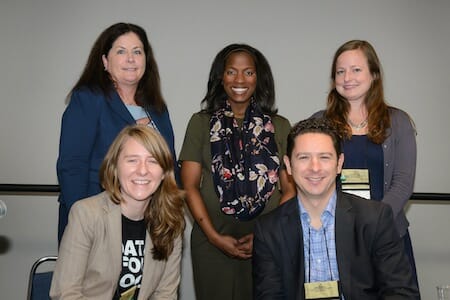
Clockwise from top left, Diane Melley, Crystal Barnes, Katherine Price, Corey Marshall and Miriam Young
When we talk about big data, we’re really talking about the scale of data generated by everything around us at all times. Today, data is constantly being produced from a variety of sources at an amazing velocity, volume and variety. It comes from cell phones, social media accounts, websites, satellites – you name it. But to extract meaningful value from big data, you need analytics capabilities, tools and skills. That’s where the volunteers come in.
Joining me for this discussion was a power panel (pictured above), including Crystal Barnes, vice president of corporate social responsibility at
, moderating the session.
If you couldn’t make it, here are my top five takeaways.
5. Full house for an 8:30 a.m. panel on data!? Who are these people?
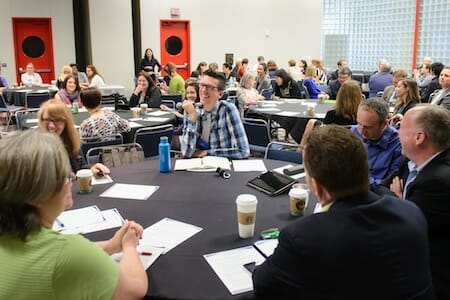
Conference on Volunteering and Service attendees interact at the Using Big Data to Advance Social Missions session.
My kind of people. Professionals starting the day equally excited about changing the world using volunteer power as they are using the power of data. We had a mix of more than 80 corporate social responsibility (CSR) folks from companies like Humana, NetSuite and Capgemini, and nonprofit professionals from groups like VolunteerMatch, KaBOOM! and United Way, which made for a lively discussion about the ins and outs of using data for good.
4. There is humanity and a story behind the numbers.
Panelists and audience members alike shared many powerful case studies of how data can be used for the greater good:
Splunk4Good analyzed text messages from Hurricane Sandy to help the Federal Emergency Management Agency Innovation Team inform resource deployment for natural disasters.
Nielsen helped the United Nations World Food Programme more efficiently collect data to inform its work battling hunger by using mobile phone surveys.
The City of Houston is rallying citizens in a series of hackathons to help design solutions to make government services more efficient.
3. And what if my organization/the nonprofits we serve don’t have any data?
Got a website? You got data. Got social media accounts? You got data. There’s census data to learn more about the populations you serve, open data to make your city smarter, crowd-sourced data to give you on-the-ground insights, information from websites and PDFs that can be scraped into a usable format.
But you know what? Forget about data. Start with the
to measure poverty levels of villages in Kenya and Uganda using satellite imagery is a perfect example. They came with a question: Which villages should we expand to next? Our volunteers used satellite data to create a novel solution to answer it. You don’t need to know what dataset might be useful – you just need to know what question will help advance your mission.
P.S. We’d love to help you with this! Learn more about
Kudos to Crystal Barnes of Nielsen for hammering home a critical ingredient for any volunteer or data-for-good initiative – measurable outcomes. Before you think about the data or the tools, you must first surface the key question, need or opportunity you’re trying to address. Then decide how you’re going to measure what success looks like. Measurable outcomes help us learn, fail fast and iterate to do even better the next time.
1. What if we all worked together?
Measurable outcome of a successful panel? One that inspires action after everyone goes home. My favorite moments of the session were when opportunities for collaboration surfaced.
The workshop helped spark new ideas for folks and we’ve already heard from a few people thinking of ways they can join the Data for Good movement – from Blue Cross Blue Shield to our friends at
to NetSuite – who are thinking about how they can connect project managers to nonprofits to help in the “problem discovery” and scoping process.
Here’s to many more gatherings that help surface more collaborations – the only way forward is together.
If you want to learn more about the power of big data for social good, Points of Light has packaged all the tools you need to get started on this
As we approach Veterans Day, Nov. 11, make plans to celebrate the sacrifices and courage of our armed forces through volunteer service.
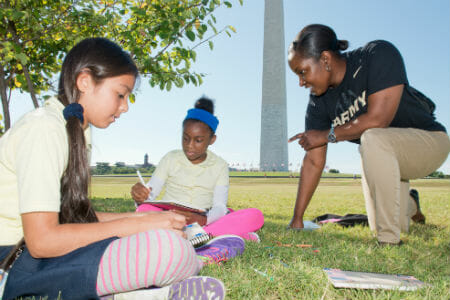
Army veteran Mary Tobin, right, tells her story of service to Washington, D.C., students during an Honoring Service event on the grounds of the Washington Monument on Sept. 11.
Points of Light and the Travis Manion Foundation are teaming up to conduct Honoring Service projects. These events, happening across the country, will engage youth and military members in service to address the most pressing issues in communities, while inspiring a legacy of service among the next generation. The volunteer opportunities both strengthen the ties between civilians and the military and help ease returning veterans’ transition back into their communities.
Each event will begin with a presentation of the Travis Manion Foundation’s “If Not Me, Then Who” message to youth to provide the context for why service is important. The projects will motivate youth to recognize the value of sacrifice and foster a spirit of service in others.
The service projects include revitalizing local schools, cleaning community parks, welcoming home troops, creating disaster kits and more.
If you’re in the areas listed below, sign up and join us:
Today’s nonprofits face challenges that extend far beyond meeting the needs of their community and clients. Delivering on a mission means cross-sector collaboration, volunteer management, fundraising, performance measurement, and more.
To meet these challenges, many nonprofits are turning to
, a strategy that helps nonprofits build their capacity and increase their community impact by maximizing their effective use of volunteers.
The Service Enterprise model was developed by the Reimagining Service campaign and through the efforts of Points of Light and partners like Algorhythm and RGK Center for Philanthropy and Community Engagement. The
grants to state service commissions.
Starting in California with the partnership of CaliforniaVolunteers, Points of Light has refined Service Enterprise and today supports 29 hubs in 18 states and soon, Puerto Rico.
Already, 169 organizations have become Service Enterprise certified. State commissions in Arizona, Iowa, Maine, Massachusetts, Nevada and Utah are helping bring the model to more nonprofits in their states.
Service Enterprise organizations undergo a diagnostic that indicates areas for improvement and then receive extensive training, coaching, and certification. By the end of 2015, Service Enterprise organizations will be able to display the seal on their Guidestar profiles showing the world that they are cutting costs and better serving their communities by building in efficiencies through volunteers.
What does this mean? More than 165 organizations are investing in their future by putting the necessary culture in place that supports the deployment of volunteers, both skills-based and traditional, to deliver their missions.
Service Enterprise gets to the heart of organizational capacity by measuring capacity and volunteer engagement practices in 10 key areas identified through research performed by Deloitte and the Service Enterprise researchers. TCC Group found that “Service Enterprises not only lead and manage better, they are significantly more adaptable, sustainable and capable of going to scale.”
Why does this matter? Research demonstrates that Service Enterprise nonprofits operate at almost half the median budget as their peers. Managing volunteers takes time and an investment, both in the volunteers as well as in the staff who manage them.
Service Enterprise ensures that a culture of volunteerism is embraced at the highest levels of the organization so that proper support and training exists to carry out the organization’s mission.
Today’s nonprofits need support in order to be a part of community solutions. Service Enterprise is a tested and proven way to maximize volunteer efforts, reduce cost, and make a difference.
For more information about the Service Enterprise Initiative, please click here.
ServiceWorks: Putting Opportunity Youth on the Pathway to Progress
This post is by Delores Morton, Points of Light’s president of programs.
Across America, more than 5.5 million youth are disconnected from college and careers. That’s a jobless rate in excess of 15 percent for inner-city 16- to 24-year-olds. Having that many young people out of school and not working is not just devastating to those displaced youth and their future, but it’s a long-term hindrance to the economic development of the communities in which they live.
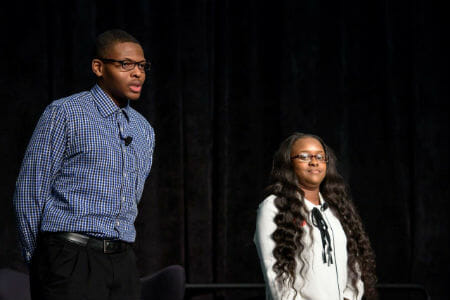
ServiceWorks graduates Nathaniel Scott, left, and Daquana Warren speak at the Conference on Volunteering and Service.
It’s a challenge that needs public-private partnerships combining resources and expertise. It’s a problem that needs nonprofits and government agencies providing solutions that benefit these young people and their neighborhoods and across the country. Indeed, it’s an opportunity for a program like ServiceWorks to help unlock the American dream for so many who may not believe they have a chance.
Thanks to the forward-thinking and valuable partnership of the Citi Foundation, the hard work and dedication of the AmeriCorps VISTAs on the frontline of our success, and the local agencies joining us in advancing this cause from their respective spheres of influence, we’re now in the second of a three-year effort to civically engage 25,000 youth.
And I’m thrilled to say ServiceWorks is already being recognized on the national level as a leading program for civic innovation and problem solving. Atlantic Media (publishers of The Atlantic and National Journal magazines) has named ServiceWorks as a finalist for a Renewal Award, putting this Points of Light program among the nation’s best at working toward long-term economic development.
To that end, I’d like to personally encourage all of our program partners, participants, volunteers and supporters – along with your networks – to please vote for ServiceWorks to be declared one of the six winners of this prestigious award by Nov. 2.
Scheduled for official launch in early 2016, this three-course, web-based training allows “opportunity youth” – young people ages 16 to 24 who are not in school or employed – to start their own journeys toward self-discovery, community service project planning and the development of the leadership skills needed for college and career success. It’s free and easy for organizations to implement. And our goal is to reach at least 7,000 young people all over the country through this online curriculum.
The conference also provided a chance to hear directly from Service Scholars, participants of the program. Dallas Service Scholars Daquana Warren and Nathaniel Scott (shown above) shared the impact ServiceWorks has had on their personal development. At a session on advancing youth opportunity, they proudly spoke of how they’re now better prepared for college and more ready to lead effectively in a professional environment.
As inspiring as this progress is, we still have a lot of work to do. We want to expand our number of ServiceWorks partners. We want at least 13,000 more youth choosing to grow personally and professionally by serving their community. We need more volunteers as success coaches helping change the lives of the young people for whom ServiceWorks may be their last, best opportunity.
Working on ServiceWorks is a professional high point in my career and I’m proud to show you more about it with this video.
The end to a challenge of this scale begins with an individual recognizing his or her power to do something about it. So I invite you to be a part of a movement to end persistent youth unemployment – as a partner organization, a volunteer or a Service Scholar.