Days of Service Spark Commitment to Volunteering Among Belk Employees
Belk’s plan was ambitious – 125 days of volunteer service to celebrate the department store chain’s 125th anniversary.
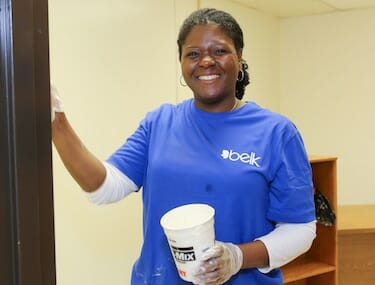
Nicole Dean, Belk’s vice president of internal audit, participates in a day of service at Reid Park Academy In Charlotte, N.C.
“Giving back to and being involved in our communities has been a part of our DNA since our founding in 1888,” said Jessica M. Graham, vice president of communications and community relations for Belk. “We have a rich history of supporting our local communities and of encouraging our associates to get involved.”
The 125 Days of Service events last year – 8,000 associates participating in 304 projects at schools in 16 states – helped deepen that commitment and forge relationships that have lasted beyond the endeavor.
The idea was “to not only do a one-day project, but to continue those ties after the 125 days were over,” said Eric Law, executive director of Hands On Charlotte. The organization, a local affiliate of Points of Light’s HandsOn Network in Belk’s North Carolina hometown, helped plan and carry out the 125 Days of Service program.
Hands On Charlotte helped identify schools that needed improvements and were near Belk stores, and they worked with principals to design projects that met the schools’ most pressing needs.
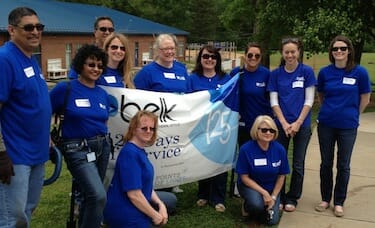
Belk volunteers gather for a day of service at Ashley Park PreK-8 School in Charlotte, N.C.
“What we were looking to do was to make it a better place to learn and a better place for teachers to do their jobs,” Law said.
Belk employees signed up for two-hour shifts to work at the schools, though some of them went back to help out on their own time, Law said.
The 125 Days of Service project was the catalyst for forging a deeper relationship between an Alabama school and the Volunteer Center of Morgan County, the local HandsOn Network affiliate, as well as solidifying the center’s ongoing relationship with Belk.
The center helped managers from the Decatur, Ala., Belk store plan their service day at Austinville Elementary School, where many students come from low-income households. Belk associates delivered 300 to 400 books they had collected during an in-store book drive. Employees built bookshelves and picnic tables and painted murals, among other projects at the school.
While the Belk employees worked, the children sang songs and started reading some of their new books. Some of the kids even helped employees build picnic tables.
As a result of that day of service, several of the employees remain involved with the Decatur schools, said Heidi Parkhurst, who was store manager of the Decatur Belk at that time.
“It just really inspired them to continue their volunteer work,” said Parkhurst, now store manager at a Huntsville, Ala., Belk.
The Belk event at Austinville Elementary led to an ongoing relationship between the school and the Volunteer Center of Morgan County that has encouraged children to volunteer. The students participated in a can-a-thon the center and Belk conduct each year, collecting food to be donated to a food bank, and have been involved in a community garden and a drive to get restaurants to donate leftovers.
Some of the students and their parents also attended a summit on childhood hunger that the center organized, and several have toured the center to see the operation first-hand, said Kay Woller, the center’s executive director.
As the work at Austinville Elementary has been so well received by the school, students and Belk associates, Belk asked the volunteer center to plan a similar day of service project for a Cullman, Ala., school, probably in January, Woller said.
Going forward, Belk is continuing to build on the relationships the company made during the 125 Days of Service. This fall, Belk associates learned more about developing and leading volunteer projects for their stores by participating a Points of Light volunteer leader training webinar. They also received tactical and practical tips through a new quick reference guide.
And, in early 2015, HandsOn Network affiliates will develop and manage school-based projects for Belk associates in five regions.
“This year we are implementing a fundraising campaign during the holiday season that will benefit local schools in all of our markets – many of the same schools that we partnered with last year,” Graham said, adding that the department store chain this year launched a tracking program, Belk Associates Give, to keep up with volunteer work by its employees.
Law, of HandsOn Charlotte, said that when Belk employees give their time, even for just a day, it matters: “A lot can be done in a one-day service project.”
Let’s Disconnect to Connect this Holiday Season and Teach Kids the Value of Caring
This post is by parenting expert Dr. Michele Borba and Daniel Horgan, executive director of generationOn, Points of Light’s youth and family division.
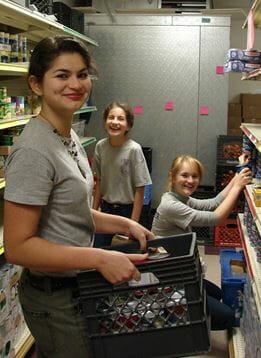
The Miscoe family of Texas help at a food pantry.
While parents are consumed with their iPads and phones, their children are modeling their actions by being engrossed in games or listening to their music on their own handheld devices.
When asked about their parents’ chatting, clicking and texting during a recent “Dateline” report, kids complained about feeling like they didn’t matter as much. Families may be physically together these days, but they are often disconnected from each other and the community around them.
The holiday season is a perfect time to disconnect from the distractions around us and connect with our families through service to others. That’s why I am partnering with generationOn, the youth and family division of Points of Light, and Disney Friends For Change to invite thousands of families around the country to serve on National Family Volunteer Day on November 22.
There are many ways to take part – from creating baskets of cheer for the elderly to providing Thanksgiving meals to those in need to making cards for children in the hospital.
Volunteer and then share your service story for a chance to win one of several exciting generationOn prize packages and be featured in FamilyFun magazine. You can learn more, explore project ideas, and search for local volunteer opportunities at www.generationOn.org/fvd.
Most parents instinctively want their children to develop a strong moral character and to care about others. Volunteering is a powerful way to teach kids valuable real life lessons about empathy and caring.
Caring is the trait that helps sensitize our children to different points of view and it increases their awareness of other’s ideas and opinions. It also enhances empathy, which is the foundation of moral behavior. Kids who care will grow into adults who have the skills they need to live successfully in our diverse, multicultural, 21st century world.
Here are five tips to raising caring kids…
1.Be the change you want to see.
You know what makes kind and considerate kids? Kind and considerate parents! The simplest and most powerful way kids learn behaviors like kindness and consideration is by seeing them in action.
In fact, parents are one of the biggest influences on whether their kids volunteer. Parents can lead by example, talk about important social issues and urge their children to donate their time and money to causes important to them.
2. Prioritize regular, meaningful time with your kids.
Plan regular, emotionally intimate time with your children. Some parents do this through nightly bedtime reading or building one-on-one time with their children into their weekly schedules rather than leaving it to chance.
When together, take turns asking each other questions that bring out your thoughts, feelings and experiences such as what was the best or worst part of your day and what did you accomplish today that you feel good about.
3. Make caring for others a priority.
Consider the daily messages you send your children about the importance of caring. For example, you might say, “The most important thing is that you’re kind and that you’re happy.”
When your kids run into conflicts with other kids, encourage them to work out problems by considering the others’ feelings. Ask your kids’ teachers and coaches about how they are demonstrating empathy for others in addition to their academic skills, grades or performance.
4. Nurture an attitude of gratitude.
Consider making expressing gratitude a daily ritual at dinnertime, bedtime, in the car or on the subway. Encourage children to express appreciation for family members, teachers, friends or others who contribute to their lives.
Have your kids keep a gratitude journal where they log the things that they appreciate each day. Give your kids opportunities each day or week to practice caring at home, at school or in extracurricular activities.
5. Get your kids to give back.
Children learn habits at an early age, and the best way to teach them behavioral life skills is to get them involved in a hands-on way by doing caring deeds. Help your child chose a charity or cause that he/she is interested in and then get them involved.
Explore the cause further by reading a children’s book about the issue, meeting with an organization to learn more about their work in addressing the issue, or brainstorming a family volunteer project to do together.
Be sure that you are intentional in your quest to raising a caring child, and check out www.generationOn.org/fvd for more resources and ideas to connect this holiday season!
Fast Company Highlights PwC, Points of Light Initiative to Support Women Entrepreneurs
Fast Company magazine ran an exclusive today – the first Women’s Entrepreneurship Day – about a new initiative to boost women entrepreneurs.
Andrea Lo, cofounder and CEO of Piggybackr, represented Points of Light’s Civic Accelerator at Women’s Entrepreneurship Day at the United Nations.
With support from the PwC Charitable Foundation, Inc., Points of Light will select the next group of entrepreneurs to benefit from its Civic Accelerator with a gender lens, selecting only startups that help women and girls gain equal access to opportunities. The majority of these ventures will be led by women founders.
The Points of Light Civic Accelerator is the first accelerator program and investment fund in the country focused on “civic ventures” – for-profit and nonprofit startups that include people as part of the solution to critical social problems.
The three-month, boot camp-style program convenes 10-15 teams in person and online with the goal of equipping each startup to seek investments and scale their social innovations.
The Civic Accelerator was launched in 2012, in partnership with Village Capital, and receives generous support from PwC Charitable Foundation and Starbucks Foundation, both founding partners, and from the Blackstone Charitable Foundation, SAP, The Committee For Children, and the official hotel sponsor, Hilton Worldwide. For more information, go to www.civic-x.org and follow @PointsofLight #CivicX.
Top Five Resources for Nonprofits
From managing volunteers to making your organization more hospitable, these key resources will give you effective strategies for addressing challenges that face nonprofits today. For more resources, check out the searchable resource library managed by Points of Light’s HandsOn Network.
Managing Volunteers
For many nonprofit organizations, volunteer help is vital. However, recruiting and engaging volunteers in an organized way can be tough. This HandsOn Volunteer Management Guidebook can help.
The guide outlines various strategies for organizing a strong volunteer structure, from recruiting and scheduling volunteers to retaining and recognizing their efforts. Paired with questions to consider and activities to help map out goals, the Volunteer Management Guidebook provides resources you can adapt to meet your local program needs.
Calculating Economic Impact of Volunteers
There are many ways to recognize the value of volunteer work. For nonprofits, this often means calculating the monetary worth of volunteer duties, which varies. To make it easier, Points of Light has created the Economic Impact of Volunteers Calculator.
By providing a complete list of volunteer jobs, the calculator can help give your nonprofit a better idea of your volunteers’ economic impact. The calculator lists standard hourly rates and hourly benefits of specific positions. After you input the number of hours, the calculator does the rest of the work.
Nurturing Volunteer Leaders
A solid corps of volunteer leaders can make a big difference in helping your nonprofit achieve its mission. HandsOn Network’s Volunteers as Leaders guidebook is designed to help your organization establish the processes needed to develop a strong volunteer leader program.
This guide outlines various stages of program evolution, from development to volunteer leader recruitment, training and support. Equipped with user-friendly questions, tools for brainstorming and suggestions, Volunteers as Leaders provides pointers and resources you can adjust to meet the needs of your nonprofit.
Assessing Volunteer Leaders
Volunteer and staff feedback on organizational management is your nonprofit’s key to growth and success. The Organizational Assessment for Volunteer Leaders, created by Points of Light, provides a thorough questionnaire to help extract important responses about how your project is running, from a volunteer perspective.
This resource includes activities that help staff or the volunteer coordinator assess organization readiness, recruitment, retention and recognition.
Making Hospitality Part of Your Organization’s Culture
Hospitality is crucial in any company culture, and the same is true for nonprofit organizations. Created by Hilton Worldwide, Points of Light and Taproot Foundation, the Hospitality + Service curriculum is designed to help you serve your clients better by improving communication and connections with clients, creating warm and welcoming environments and effectively managing challenging situations.
Hospitality + Service’s leadership toolkit, Hospitality by Design, shows how to build hospitality into your organizational culture from the ground up, deliver more to your clients, strengthen your team and build your reputation and impact in the community.
When You Feel Compelled to Address Community Challenges, Leadership Skills Come in Handy
This post is by Ross Allen, a senior in philosophy and economics, minoring in leadership studies at Kansas State University. Below, he shares how he used his leadership skills to help solve community problems. To find out more about the programs offered through Kansas State, including the new Community-Engaged Leadership certificate program – in partnership with Points of Light – click here. (Watch a video featuring the program and Allen’s work here.)
Ross Allen, center, interacts with kids as part of his hometown’s Bookmobile program.
Sometimes the concept of “engaging one’s community” can seem a bit daunting. I know that was certainly the case for me in my job as a program coordinator at HandsOn Kansas State, our campus’ volunteer center.
We looked at how college students are often driven to cheap, nutritionally devoid diets as a by-product of juggling tuition, rent and other costs of college. We became aware of a problem and found that we could help, but we didn’t know where to go from there.
Sometimes, though, you feel compelled to act and just do something.
Another student working at HandsOn Kansas State and I researched possible solutions. Last winter, we developed a long-term hunger initiative. Our team hosted a food distribution event where free and healthy food was given to anyone in the community who expressed need. We fed 1,300 people.
But we recognized direct service couldn’t solve the problem: We needed to get involved with a community of service providers. We helped host the Kansas Hunger Dialogue the following February, allowing those in the nonprofit field a space to share ideas, discover innovations and network.
While engaging in powerful conversations and building coalitions are vital to addressing hunger, neither the immediate needs of our community nor our direct efforts have ceased. We now host a food distribution every semester and regularly offer free, healthy food to hundreds of students.
I met a similar challenge as I recognized the problems in my rural hometown of Soldier, Kansas. The majority of the population lives below the poverty line, aging houses are in disrepair, and a large number of youth are left disengaged and find themselves getting into trouble.
It initially seemed like it would be hard to affect change in any one area without first making necessary fixes elsewhere. The road to revitalization seemed long and impassable, but as the old saying goes, the journey of a thousand miles begins with one step.
While I began this project looking to help a local youth pastor renovate a retired gym into a community center over the summer, we quickly became aware that there was a further need to formalize an existing community alliance, CommunityCORE, into a nonprofit organization that could seek the outside grants and donations needed to revitalize the community.
A needs assessment further revealed that what our community needed most urgently was educational opportunities for our youth, more so than recreational space. So, we invested in two summer programs called Bookmobile and The Lunchbox.
With Bookmobile, we retrofitted a recreational vehicle into a mobile learning lab, which we stocked with donated books. The Bookmobile made a weekly stop in four rural communities surrounding Soldier, and offered books to borrow and a story time with volunteer-led activities.
Participants also included many senior citizens who lacked the mobility to access the county library, which, for many, is 20 miles away.
The Lunchbox was a summer nutrition program for K-12 students who qualified for free meals during the school year. This program partnered with the local school district; each participating student received a box of nonperishable food items each week.
By having these two initiatives share distribution points, we were able to strategically encourage overlap in program participation.
I am rewarded by this project because it allows me see change in the lives of people near me. I want to reinvest in Soldier, and re-engage our sense of community so that its inhabitants can aspire to lives beyond the limitations of poverty.
Helping to found a nonprofit in my hometown has shown me the impact that community engaged leadership can have. This experience has taught me that when you see problems you can help solve, you should.
For more information about the Certificate in Community Engaged Leadership, click here. For more information on Community CORE and how you can support revitalization efforts in Soldier, Kansas, click here.
Help All Vets Live With Dignity and Hope
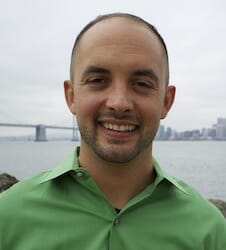
In honor of Veterans Day, this week we’re highlighting veterans serving their communities. This post is by Kevin C. Miller, a veteran who was recently awarded an AmeriCorps Alums National Leadership Award for his AmeriCorps service.
Kevin C. Miller
Transitioning from the Marine Corps in 2006 to the civilian world was far from easy. Even after earning a college degree, I struggled to find meaningful employment, endured a form of homelessness politely known as “couch-surfing,” self-medicated with alcohol and eventually got a DUI.
None of this helped my job prospects. Eight years later, I’ve turned it around. AmeriCorps VISTA and a nonprofit called Swords to Plowshares gave me an opportunity and a home. Today, because I was given the opportunity to serve post military, I’m actively involved in the mission to end veteran homelessness.
Swords to Plowshares brought me on as their AmeriCorps VISTA, put me in my first permanent residence in two years under the Supportive Services for Veteran Families program, and provided legal assistance in my disability claim with the Department of Veterans Affairs (VA).
Coincidentally, Swords to Plowshares was founded by five AmeriCorps VISTA members who were also veterans and one other veteran, who sought to provide resources and a community for their veteran peers.
They applied the capacity-building principles of VISTA and created a comprehensive, care-based model of “vets helping vets.” The organization now provides employment services, mental health counseling, legal assistance on upgrading discharge statuses and VA claims, mentorship, and direct assistance to veterans. Every year we provide another 2,100 veterans with an opportunity to rebuild their lives.
Poverty and homelessness disproportionally affect veterans. Across the country, veterans make up less than 7 percent of the general population but 12 percent of the nation’s homeless population. Swords to Plowshares houses nearly 500 veterans on any given night. These sobering statistics are what inspire me to advocate for policy and programmatic changes in how we serve our homeless veterans.
In 2009, President Barack Obama established the goal to end veteran homelessness by 2015, making our shared mission a national priority. While we have made great strides, much work still needs to be done: Organizations need to expand the definition of who they will serve and provide more opportunities for Americans to engage in civilian service.
According to the VA, a veteran is defined as a person who served in the active military, naval or air service, and who was discharged or released under conditions other than dishonorable. More than 46,000 organizations serve veterans, but unfortunately most organizations limit which veterans they will serve, especially with regard to discharge status.
By adhering to serving only veterans with honorable discharges, organizations leave approximately 20 percent of homeless veterans without access to any resources. Some, like Swords to Plowshares, step in to fill this gap and support all those who have served in the military regardless of gender, branch of service, length of time served or discharge status.
If we really want to end veteran homeless, then we have to end homelessness for all those who were in the military.
Part of the solution is to ensure that all those who want to help veterans can do so through organizations such as my own Swords to Plowshares. For example, more than 4,000 individuals are currently doing their part to end veteran homelessness powered by AmeriCorps, but plenty more individuals wish to serve as well.
Last year, more than 580,000 individuals applied for just 80,000 AmeriCorps slots, so the desire is there if the programs were funded at their full capacity.
I have personally benefited from the transformative experiences of both military and civilian service. Programs like AmeriCorps, and initiatives such as the Franklin Project at Aspen Institute, encourage Americans to exercise their citizenship through service and are essential to meeting the challenges our veterans face.
As we reflect and honor this week those who have served, in recognition of Veterans Day, let us support all of those who have served – not a select few. One key way to do this is by connecting more Americans and veterans to national civilian service opportunities that enhance or introduce them to the power of civic engagement.
Let us aspire to give all of our veterans the ability to turn their lives around, live with dignity and hope, and continue serving.
This post also ran in The Huffington Post and on the AmeriCorps Alums blog. AmeriCorps Alums is the only national network connecting the nearly 1 million AmeriCorps alumni to the people, ideas and resources that support their commitment to a lifetime of service.
Service Before Self – Reflections on Military and Civilian Service
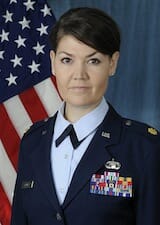
In honor of Veterans Day, this week we’re highlighting veterans serving their communities. This post is by Maj. Rebecca “BB” Lange, deputy legislative assistant at the office of the chairman of the Joint Chiefs of Staff. In September, Lange was awarded an AmeriCorps Alums National Leadership Award for her commitment to service.
Maj. Rebecca Lange
Sometimes, you need a push. Or a shove.
At 17, my parents told me I was on my own to pay for college. Partly because of the expense, partly because they believed I would appreciate a college education more if I earned it. With President Clinton’s 1995 State of the Union Address, I found a way.
When I heard the words, “…there are 20,000 Americans… helping people, solving problems and, in the process, earning some money for their education. This is citizenship at its best,” I was sold.
I took a leap of faith and signed up for the still-nascent AmeriCorps. I joined other young, idealistic, and eager 18-24 year olds in AmeriCorps National Civilian Conservation Corps. We tutored, built trails, painted houses and supported the 1996 Olympic Games. We made a difference to those around us.
And service made a difference for me. I used my AmeriCorps education award to pay my first tuition bill at the University of Colorado. AmeriCorps was also my launching pad to military service. As a student, I became an Air Force ROTC cadet.
With the unique privilege of having seen both the military and civilian side of service, here’s what I can tell you: eyes closed, acronyms masked, locations undisclosed … there are far more similarities than differences between military and civilian service.
Here’s why: We put service before self. Military and civilian service members take an oath to serve a larger cause. One group pledges to defend the Constitution, the other to strengthen our communities.
Our country needs us and equips us to answer its call. Active civilian and military service members are united by a belief that we all have a role to play in our country’s story and welfare. We have a shared sense of responsibility – and the skills to serve as civic leaders.
We’re also changed for life. Military service is sometimes more visible, but service of all types has a profound and lasting impact on those who serve. Most Americans understand that those who have worn our uniform are trained to both lead and follow, to problem solve, and are inherently resourceful.
But, in the words of Gen. Martin Dempsey, the current chairman of the Joint Chiefs of Staff and principal military adviser to the president, “Less understood are the ways we continue to serve in our communities when we take off our uniforms… whether at the end of the day, or at the end of our careers.”
He’s absolutely right – and championing the similarities between civilian and military service is the perfect place to start.
Initiatives like the Aspen Institute’s Franklin Project, led by Gen. Stanley McChrystal and former Marine Jason Mangone, are doing just that. Leaders at Aspen, and their partner organizations, know that while some people need a push, or a shove, many are ready to leap into service.
As the war in Afghanistan winds down, thousands of veterans who understand service are hungry to continue solving our nation’s toughest problems – but we don’t have enough service opportunities available to them.
Each year, more than 580,000 applicants apply for just 80,000 AmeriCorps slots. The Peace Corps gets 150,000 applications for 4,000 full-time positions each year. Volunteering in America is on the rise and millennials are drawn to companies with “clearly-defined company policies on giving and volunteering.”
We’re leaving hundreds of thousands of service-oriented Americans without an outlet to serve. This has to change. Not everyone can join the military. Not everyone is interested in joining the military.
But I firmly believe that every single American is programmed – we are wired! – to serve our nation in our own unique capacity. I’m proud to live in a country where the demand for service opportunities is so great, but we must support efforts to ensure that all have a chance to serve.
Let’s share this story and give more people – military and civilian alike – a chance to leap.
This post also ran in The Huffington Post and on the AmeriCorps Alums blog. AmeriCorps Alums is the only national network connecting the nearly 1 million AmeriCorps alumni to the people, ideas and resources that support their commitment to a lifetime of service.
She Uses Her Background as a Child With Parents in the Military to Serve Vets and Their Families
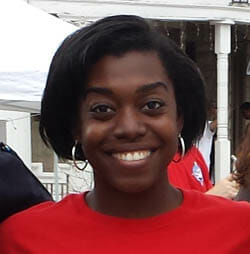
In honor of Veterans Day, this week we’re telling the stories of people making a difference for veterans in their communities. Meet Charity Bowen, a member of the Veteran Leader Corps – an AmeriCorps program run by Points of Light.
Charity Bowen
Having grown up with both parents serving in the military, Charity Bowen knows firsthand the challenges veterans and military families can face. Moving from base to base as a child gave her deep insight into the community she serves today as a member of the Veteran Leader Corps.
“The fact that it’s fundamental to the corps program to help veterans’ families convinced me to sign up,” says Bowen, 25, of San Antonio, Texas. “It was important to me that the program focused on this neglected part of the population.”
The Veteran Leader Corps (VLC), an AmeriCorps program run by Points of Light, serves as a critical component of the Community Blueprint, a coalition of organizations designed to share tools and resources to better serve the veteran community at the local level.
The VLC program – which recruits AmeriCorps members to support the needs of veterans and military families – focuses specifically on providing employment support services and community engagement opportunities for veterans.
As a VLC member serving with the Military and Veteran Community Council – a group of organizations and agencies serving veterans in San Antonio, Bowen has recruited many volunteer leaders from within the veteran community to serve and support veterans focusing on health and caregiving.
Bowen reaches out to veterans and military families frequently to share with them the opportunities available and events she and her team have organized for them, such as job fairs.
“The first veteran I met at the beginning of the program at my first job fair really impacted me,” Bowen says. “He shared his five-year experience in the Navy with me, showed me his resume and mentioned how difficult it was to find a decent-paying permanent job. He was educated and had good qualifications.”
Through her service, Bowen has learned the key components of job fairs that are most helpful to veterans.
“Now every time while organizing a fair, I ask myself, what’s the percentage of jobs versus educational resources?” Bowen says. “Are there any employers hiring? Are recruiters referring job seekers to other employers? Is there resume help? Are there mock interviews? Are recruiters explaining the application process?”
Bowen met veterans trying to get support through the Veterans Administration and find employment; they were frustrated because they either didn’t qualify for services or the process took too long.
She says whenever she or one of her colleagues offered alternative options available in the community, the veterans would often express surprise – and gratitude.
During her service, Bowen estimates that she has assisted more than 200 veterans in getting the help and resources they needed.
In serving veterans, Bowen herself has developed skills and knowledge in the areas of outreach, networking and community coordination, along with refreshing her volunteering spirit.
She says, “My faith in service deepens every time someone comes up and says, `I am glad someone is out there in the community engaging with us veterans, empathizing with what we are going through.’”
Using Our Skills to Serve Those Who Served Our Country
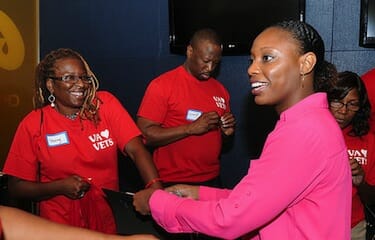
Janaia DeShields, right, works with volunteers at a 9/11 Day of Service event in Washington, D.C.
Veterans Day is not only a day to show your appreciation for those who have served; it’s a time to honor them through service.
I had the pleasure of attending the first annual Joining Community Forces Conference where Adjutant Generals – de facto commanders of a state’s military forces, their staff and community leaders – convened to discuss how to better serve veterans, service members and military families in their states.
During the discussions, I mentioned how A Billion + Change (a national campaign to mobilize billions of dollars of pro bono and skills-based volunteer service from corporate America) and companies are eager to provide skills-based and pro bono volunteer support to the military community.
The initial response was that of surprise, quickly followed by true appreciation and an eagerness to connect with companies that want to provide direct service to our veteran community.
In the midst of a military drawdown and the increased numbers of veterans transitioning from service, it’s more important than ever for companies to reach out to their communities through their philanthropic efforts to fill the gaps in services that nonprofits do not have the capacity or capabilities to fill.
Veterans are not only leaders during wartime but they have a prowess unmatched by many to lead in their communities. The strength of character and professional experiences may be unique to the military culture; but those same attributes can be used as the foundation for building stronger communities. As companies pledge volunteer hours, I encourage them to carve out time to focus on our nation’s heroes.
Pro bono services are not only a valuable asset to service members but also to companies. The experience helps employees master their own skills and abilities, using their expertise to make an impact. They get the chance to connect with individuals outside of the normal humdrum of weekly agendas.
Pro bono service presents an opportunity to give back – to make a difference in a capacity that is priceless.
The philanthropic efforts of a corporation both make a positive impact for those who require support and bring a sense of accomplishment to the employees who offer their services.
Veterans are our nation’s leaders, heroes, and patriots. Leading the charge to protect and serve them is the first step to our continued growth as a nation.
President Barack Obama said, “Our men and women in uniform have taught us about strength, duty, devotion, resolve – cornerstones of a commitment to protect and defend that has kept our country safe for over 200 years. In war and in peace, their service has been selfless and their accomplishments have been extraordinary.”
We can do the same for those heroes. We all can make a difference.
Learn how you can serve veterans through skills-based and pro bono service by visiting the resources section on the Billion + Change website, and stay tuned for a veterans’ webinar in mid-December. (A version of this post originally appeared on the Billion + Change website.)
Veteran Finds His Way to Stability Through the Veteran Leader Corps
In honor of Veterans Day, we will be telling the stories of veterans making a difference in their communities. Meet Spirit Padilla, a member of the Veteran Leader Corps – an AmeriCorps program run by Points of Light.
Spirit Padilla
Air Force veteran Spirit Padilla never imagined he’d experience joblessness, homelessness and underlying feelings of despair stemming from his military service. But that’s what the last several years had been like for him until recently.
Raised by a single mother in New Mexico, Padilla, 46, entered the military in 1986, just two weeks after high school. After serving four years – including deployments to Panama and the United Arab Emirates – he decided to leave the Air Force and started looking for a civilian job.
“I had no plan for life,” says Padilla, who has been living in a shelter for the past 14 months. “I was homeless for a few years; I started drinking and got into substance abuse. It took me many years to acknowledge that I had PTSD (post traumatic stress disorder).”
Realizing that his issues were far beyond his control, he quit drugs and sought professional help and a fresh start.
In addition to PTSD, Padilla dealt with the challenge of translating his professional military skills to the civilian job market. He had a hard time adapting to new circumstances and kept moving from one job to another, usually as a waiter, before his potential was realized by a colleague who introduced him to the
program run by Points of Light. Padilla signed up as a corps member.
Veterans who join the military soon after high school, like Padilla, can face obstacles after their service when competing for civilian jobs. The VLC focuses on providing employment support services and community engagement opportunities for veterans, by placing corps members at host organizations serving veterans and military families.
The VLC, which engages veterans as part of the solution, serves as a critical component of the Community Blueprint, a coalition of organizations designed to share tools and resources to better serve the veteran community at the local level.
Since its launch in 2012, the VLC has placed 158 corps members in 26 communities.
Padilla is about to finish his service at
in New Jersey, where he talks to veterans about local job fairs and helps with job and resume writing events arranged by Goodwill. During his service, he collaborated with a
student – a fellow veteran – to create a resource manual to help homeless veterans navigate available services in New York City.
One story that stands out to Padilla is one of an Air Force veteran balancing a family and evening classes. The veteran is unable to cover his full tuition costs with the GI Bill and has worked with Padilla to find support for tuition, housing and food. The veteran landed a job to fill temporary financial gaps and has worked with Padilla to file a successful claim for 30 percent disability support from the Veterans Administration.
Padilla estimates he has had a significant impact on more than 70 veterans and their families since joining the VLC in March 2014.
“Having Spirit on board has elevated the work we do to build veterans’ capacity,” says Martha Jackson, director of operations at
. “Having a veteran as a staff member gives us credibility in veteran communities, working knowledge of issues they face and insight into the best way to solve them.”
Padilla is looking forward to starting his new job at a high-end steakhouse in New York soon. He is ready to move out of the shelter and eager to go back to school. He’s preparing for an exam to become a certified sommelier. He continues to work through his own needs and feels confident he is on the right track.
“In helping others, I am helping myself,” Padilla says. “I am able to see my life in a new light. I foresee how things will change for the better at the end of this program.”
To find out more about or get involved with the Veteran Leader Corps or the Community Blueprint, please contact Janaia DeShields at [email protected].