This post is by Madeline S. Collazo, AmeriCorps VISTA program associate at the Jewish Coalition for Literacyin San Francisco. Collazo is serving through Corps18, a Points of Light program that supports VISTA members addressing chronic absenteeism across the country.
Madeline S. Collazo
I think that I was born to serve. Who or where I’m serving is irrelevant, what is most important to me is that I am helping those who need support.
Luckily, I have been across the United States doing just that, and loving it. Some of the opportunities that laid the foundation for my deep passion for community service include planting native trees in Massachusetts, teaching second graders in American Samoa and promoting universal health insurance in Puerto Rico.
Currently, I serve at the Jewish Coalition for Literacy in San Francisco increasing literacy rates in public schools across the Bay Area, and this year has given me key resources to think about why I love serving and how I can integrate it into my life, for the rest of my life. (Learn about Collazo’s work here.)
The idea that community service is just a phase for recent undergraduates who want to postpone “real work” is unfortunately common. Even my family and friends laugh when I tell them how I choose to spend my 9-to-5 and ask when I will decide to get a suitable job.
More specifically, AmeriCorps VISTA members are often misunderstood as office helpers, and I continually need to remind others of their role in an organization. When describing my job to people, I am usually met with confused or patronizing comments, which can diminish a sense of purpose and value.
But I’m not worried, because what I do makes me happy and I genuinely believe that working for a good cause trumps making lots of money. Although, I am not going to lie, I look forward to one day earning more than my current stipend, but I wouldn’t do it if it meant abandoning my principles and happiness.
Therefore, after my year at the Jewish Coalition for Literacy, which ends Aug. 8, I plan to re-enroll for a second year and continue developing the systems that will enhance community engagement and student success. During my second year as a VISTA, I will also apply to get a masters in social work or psychology (or both!), with hopes of continuing to serve in struggling communities.
Although I am unsure of the specifics of my future career, my job title and even my geographic location, I am certain that I will not stray too far from my current vocation: working toward a better world for all.
They Taught Kids What it’s Like to Be Homeless – What Will You Teach Your Volunteers?
Want volunteers who are more connected to your organization and the people you serve? One way is to develop a range of interactive experiences for volunteers to participate in before serving your organization.
Thereasa Winnett
Our church took a group of elementary school children and created an entire summer of activities to develop empathy for others. Many of these activities would work for teens and adults as well.
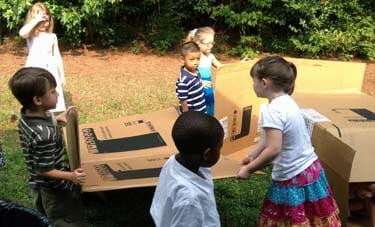
Perhaps one of the most meaningful was the week we dealt with homelessness. Outside the back of our building is a small grassy area that resembles the alley area behind many restaurants and shops. We placed large cardboard boxes and other types of things one might find in an alley around the area.
The children were introduced to the concept of being homeless in today’s world. They learned many homeless people are afraid of shelters for a variety of reasons and choose to stay on the streets.
We took the kids into our mock alley and instructed them to build some type of shelter. They struggled to create something that would protect them from the current high heat and humidity as well as the rainstorm they could see coming.
After completing the activity, we spent time discussing what they had experienced. We examined the emotions, fears and needs the homeless might have. After our discussion, the children were much more empathetic and connected as they worked on the service project we had planned.
Children participate in an activity designed to teach them about homelessness.
Most likely your new volunteers have life experiences very different from the people they will serve. Plan or suggest activities requiring the volunteers to simulate aspects of this very different world. After the experience, have them share their insights.
How accurate are their realizations? Can they understand the emotions living in that manner every day would create? What would be their needs? What might volunteers do that they think is helpful, but actually makes things worse?
Taking a little extra time to prepare volunteers in more meaningful ways will prove extremely beneficial to any organization. Connected volunteers can save you time and money in your fundraising and volunteer recruitment efforts. Their service will be more effective and help you meet your program’s goals more easily.
This post is by Gared Jones, vice president of global service at Points of Light.
Gared Jones
I arrived in Lagos a few weeks ago as part of Points of Light’s partnership to support GE Garages Nigeria, an initiative through which GE is using the leading edge of its business – principles of open innovation and technologies in advanced manufacturing – to spur job growth and build entrepreneurship in Nigeria.
The launch platform in which I participated was a pop-up, three-week innovation and manufacturing center where aspiring makers, entrepreneurs and students could go to develop new skills and learn about advanced manufacturing technologies.
Points of Light’s job is to help connect the volunteer skills, talent, leadership, innovation and compassion of GE employees to the development of the power-sector workforce and the growing number of tech manufacturing entrepreneurs in the country.
GE understands that building Nigeria’s human capital will be critical to solving the near 25,000 megawatt shortfall of power generation capacity in its recently privatized power generation sector – a critical issue that GE has also committed to address.
The last time I was in Africa was nearly 15 years ago when I was working for Deloitte as a strategy consultant in the energy sector. It was there that my passion for volunteering took root through a connection I made with Paradise for Street Kids, a shelter for 120 boys ages 4-18 in the heart of Johannesburg, South Africa. I helped with math and English homework, got other colleagues involved and adopted a “little brother,” Tinashe, who is still part of my family today. It is uncanny how life has brought me full circle.
During the week I spent as part of the Nigerian Garage, I was privileged to witness the powerful beginnings of a social change initiative that exemplified the best of what companies can do to address broader social issues where they do business.
GE Power & Water executives met with government ministers and business partners to discuss their shared commitment to building both infrastructure and human capacity in the country. Tech entrepreneurs and angel investors met within the Garages space to develop strategies for catalyzing startup growth with the support of GE resources.
Leaders from one of Nigeria’s top technical institutes and Dangote Foundation formulated plans with GE for the long-term skills-building initiative that the three-week Garage will launch. And school children designed a lighter-weight prototype for a generator they had created that converts urine to power. They also prototyped easy-to-make tiaras.
All the while, GE field engineers, operations managers, power generation salespeople, and HR and finance professionals worked on plans to engage the skills and passion of GE volunteers, 300 strong in Nigeria and 118,000 strong around the world, to improve the lives and capabilities of the mechanical and electrical engineering trainees, tech entrepreneurs and students.
The currency across all of these connections – and something that had not been known to me – was how quickly Nigerian people are to laugh. Many times throughout the days, ebullient outbursts drowned out the noise of the manufacturing equipment.
It’s clear to me that there is a lot of work to be done. It’s also clear that there is excitement, creativity, passion and laughter – in equal measure – to sustain this effort along the way and to ensure its success.
Three Civil Rights Icons – One Stage
This post is by David Ross, a writer and graduate of the Andrew Young School of Policy Studies at Georgia State University.
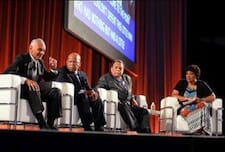
Watch the Rev. C.T. Vivian, U.S. Rep. John Lewis, Ambassador Andrew Young and Bernice King talk about the civil rights movement in this half-hour panel discussion.
The Rev. C.T. Vivian had been on the buses with the freedom riders, protesting segregation at interstate bus terminals. U.S. Rep. John Lewis had been beaten after crossing a bridge in Selma, Ala., during a march for voting rights. Ambassador Andrew Young, an adviser to Dr. Martin Luther King, Jr., was in Memphis with Dr. King when he was shot.
The three recipients of the Presidential Medal of Freedom sat on a panel at Points of Light’s Conference on Volunteering and Service in Atlanta last month to discuss what volunteers can learn from the civil rights movement. Bernice King, CEO of the King Center and Dr. King’s daughter, served as moderator.
As Vivian explained, all three men started out with the intention of becoming ministers, “because we wanted to see people taken care of and not put down, and we thought that was important enough to put our lives on. … I think of when we got on those buses and left. Everybody on the bus with us that was white was going against the grain. But they were a part of justice, truth, and they were a part of making a new world. That’s what you need to be a part of.”
Effecting positive change, the three leaders said, often comes with struggle.
Lewis explained to Bernice King how he landed up on that bridge in Selma, where his skull was fractured by an Alabama state trooper: “Your father and others inspired me to get in the way and get in trouble, and I have been getting in trouble ever since. Good trouble, necessary trouble.” (Becoming a U.S. congressman didn’t change that, except today he tweets about it.)
Young, who preceded Lewis in Congress, told the thousands gathered in the audience, “We can change the world politically and economically one person at a time, but we each have to do what we are called to do.”
All three men encouraged the next generation of leaders in the audience to continue serving their communities even when it gets hard. “You must find a way to keep pushing and pulling, and be thoughtful and optimistic,” said Lewis. “Be bold. Be courageous. And be happy.”
`In Case There’s an Act of G.O.D. – Get Out of Dodge – I’m Ready’
Read about how folks in Oregon and New Jersey are preparing for disaster. To help your family take action, visit Good & Ready, where you’ll learn how to create a disaster plan, build a preparedness kit and more.
Emily Johnson
Emily Johnson was a child the first time her family outran a hurricane. Its name was Erin, and when it struck the Florida panhandle in the summer of 1995, it sent her family – Emily and three of her siblings, her parents and grandparents, plus the family dog – on a drive across Alabama to a friend’s farm.
But one month later, when Opal struck blowing at 115 miles an hour, the Johnsons only got as far as a high school gym. Emily vividly recalls waiting out the storm on a cot while disaster relief volunteers provided aid.
“Having that experience of being afraid and not knowing what to do, it really inspired me to be able to know – `What should I do if there’s an emergency? How can I be more prepared and more resilient afterwards?’” she said.
Johnson is now an AmeriCorps member serving on a disaster action team for the Red Cross in Portland, Ore. She came out last Saturday to help out at the Portland stop along a 14-city Allstate Foundation and Points of Light disaster preparedness tour, which also hosted an event that day in the Philadelphia area. At both tour stops, volunteers from Allstate and affiliates of Points of Light’s HandsOn Network helped participants assemble free disaster preparedness kits and learn about emergency readiness.
The kits included flashlights, ponchos and whistles, among other vital items. Research shows 85 percent of Americans are unprepared.
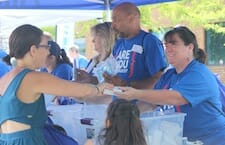
Volunteers talk to attendees of the disaster preparedness tour stop in Portland, Ore., about what to have on hand in case of an emergency.
Sam Workman, an Allstate agent from West Linn, Ore., who volunteered at the Portland event at the Oregon Museum of Science and Industry, said the effort was intended to spur resiliency: “This is to get people thinking about how to be more prepared. We’re trying to keep them hydrated and dry, with some basics in case of an emergency.”
At the Philadelphia-area event, at the Burlington County Farm Fair in New Jersey, Kevin Mass recalled a time when being prepared helped save time when it mattered. He was asleep when he heard the rap rap rap of police officers knocking on his door at 2 in the morning.
“We live on the Rancocas Creek and it floods a few times a year,” he said. “But this time, they were suggesting that we move our cars and voluntarily evacuate. We didn’t think twice. And, I was glad we did – a little while later, there was a gas leak.”
Fortunately, Mass has always been what he terms a “prepper” – “In case there’s an act of G.O.D. – get out of Dodge – I’m ready,” he said with a laugh. So he gathered everybody together, grabbed a few bags packed with provisions for his family and pets – including clothes, food, water and medicine – and left his home.
Kevin Mass shares how he has prepared for disaster and why he brought family and friends to a disaster preparedness event in New Jersey.
That Mass is the kind of guy who can never be too prepared was evident at the preparedness event. After he and his family took in the amusement rides, cotton candy and fluffy animals at the fair, they joined the disaster kit assembly line.
“I wanted to see if there was anything that I hadn’t thought of,” he said. Reaching into a blue nylon backpack with the words “Are You Ready?” emblazoned on it, he pulled out a small crank-operated flashlight that doesn’t require batteries. “I like this – it’s pretty genius!”
At the two events combined, volunteers and attendees assembled more than 1,000 kits.
The items were starting points, the volunteers emphasized. They also encouraged participants to create a household emergency plan including contact names and phone numbers, medical and insurance information and an agreed-upon family meeting place.
“We didn’t have anywhere to go, so we ignored the warnings,” said Tiffany Watkins, a survivor of a tornado that ripped through Tuscaloosa, Ala., a few years ago. Now that she lives in New Jersey, she said, she knows where she’s going should she ever be told to evacuate: back to Alabama, where she has family.
“Once you see someone’s house being smashed flat,” she said, “it’s too late to realize that something bad is really happening and you shouldn’t be there.”
Having served myself and being married to a U.S. Navy veteran, I have experienced the tough transition process from the military life to a civilian career. And even though we seem to have made it, I can relate to others who are having a hard time adjusting to the change.
When you leave the military, it is not like just changing your career but changing your whole life. You come from a system that completely took care of you, starting with giving you strict guidelines about your work schedule and location, to setting expectations regarding your physical fitness, while providing you with health care. You are part of a unit, you go to places that others will never (want to) go to and you have buddies you would die for, and they for you. And then it all stops.
There are some fantastic programs in place that ease the transition, but the newly gained freedom that comes with being on your own can be overwhelming and lonely.
One fantastic organization that I was introduced to thanks to fellow AmeriCorps VISTA member, Alley Smith, is Team RWB. Team RWB’s mission is to enrich the lives of America’s veterans by connecting them to their communities through physical and social activity.
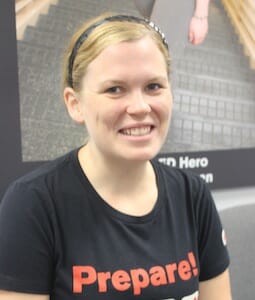
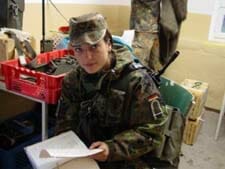
Birte Keays participates in a training exercise with the German Army, in which she served as an officer from 2002 to 2008.
Another great opportunity to get involved is First Lady Michelle Obama’s Mayors Challenge to End Veteran Homelessness. Launched in June, the initiative is a way for mayors across the country to solidify partnerships and secure commitments to end veteran homelessness at the local level. Learn more about supporting veterans and others who are facing homelessness by getting involved with a project near you.
To find other national volunteer opportunities, check out the U.S. Department of Veterans Affairs to find a medical center or hospital. You could also get involved with Habitat for Humanity’s special Veterans Build initiative to help provide housing.
One of the projects that I am working on aims to bridge the gap between veteran, military service members and military family service providers and the volunteers interested in supporting them. While there are a number of service providers in the area, all too often they are not aware of each other. (For those of you in the D.C. area, Serve DC’s volunteer opportunity database, NeighborGood offers one way to find volunteer opportunities.)
During my service, the military built on toughness and encouraged a team spirit, which often led us to look out for others first rather than ourselves. Admitting weakness and helplessness is hard for everyone, and from my own experience, I think it can be even harder for veterans – myself included.
By volunteering with each other you can learn from and support each other without forcing help on someone who does not need any or is not able to accept it at that time. However, they will know that you are there if and when they need someone.
A Lifelong Volunteer Expands His Reach with the Help of UPS
Tony Heath grew up watching his parents serve their community. It was a way of life. His mother involved the family in volunteer work through their church, and his father tried to help people in need whenever he could.
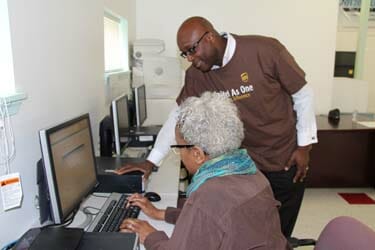
UPS employee Tony Heath, standing, volunteers at the Better Living Center in Chester, Pa., which offers free Internet access to the community.
“They were poor,” Heath said, “but they still helped others.”
Volunteering became a way of life for him, too. He helped found the Better Living Center in Chester, a struggling city in Pennsylvania. The center – which assists low-income residents – provides food in an area with no grocery stores, helps with job searches, provides clothing, offers health education and screenings, and strives to provide individual solutions to individual challenges.
“If you come in and need help, we’ll find help,” Heath said. The longtime volunteer is also actively involved with a similar program through the Chosen 300 Ministries in Philadelphia, which runs a soup kitchen and helps homeless people search for jobs. He’s also provided meals and propane and arranged for other basic comforts to homeless people living in a tent city in Camden, N.J.
These and other works earned Heath, a UPS community relations supervisor, this year’s Jim Casey Community Service Award. Named after the company’s founder, it’s the highest UPS employee honor. Heath credits UPS for making the breath of his volunteer work possible. The company, using its connections and its own expertise as a global leader in logistics, has helped provide trash disposal services for the tent city and donated computers for the youth and job centers. UPS has even hired some of the job seekers.
See how volunteering has become a way of life for Jim Casey Community Service Award winner Tony Heath. (Click image to watch video.)
“The leverage and the reach of UPS gives us access to people and things we might not ordinarily have,” Heath said.
Volunteering is also a way of life for UPS. The company – the title sponsor of Points of Light’s 2014 Conference on Volunteering and Service – encourages its employees worldwide to volunteer in their communities, logging 1.8 million volunteer hours each year. The UPS Foundation, the company’s charitable arm, has four focus areas: diversity, environmental sustainability, community safety and volunteerism, explained Jerald Barnes, director of global employee engagement for The UPS Foundation. “Volunteerism is the foundation of the other three,” he said.
“Humanitarian relief and road safety are the two areas we focus on in our Community Safety focus area,” Barnes said. “Road safety because we have more than 100,000 trucks on the road a day driving safely. We take that skill and teach teens at Boys and Girls Clubs the same methods our drivers use. Humanitarian relief is also important for us because we have the logistical expertise to support nonprofits in a disaster through engineers, planes, trucks, warehousing and equipment.”
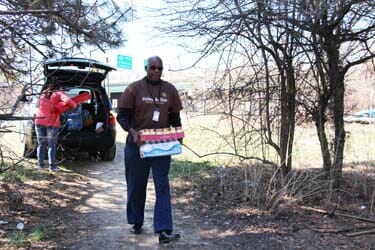
UPS employee Tony Heath brings food to people in need.
Taking on the role of Conference title sponsor this year “demonstrates our commitment to the mission of Points of Light and its effort to engage the world through volunteerism,” Barnes added.
At the Conference, David Abney, UPS chief operating officer and CEO-elect, announced a company pledge of 20 million hours of global volunteerism and community service by the end of 2020.
“Volunteerism has always been an integral part of our company culture,” Abney said during the announcement. “UPS’ founder Jim Casey continually advocated for employees to give back to the communities in which they live and work. Our pledge of logging 20 million hours of volunteer service by the end of 2020 reinforces our corporate giving strategy and our commitment to our volunteering and philanthropic efforts that advance and enrich communities around the world.”
Heath’s own commitment to helping neighbors won him this year’s Casey Award.
“Tony Heath can speak to a homeless person on the corner, train a new driver at Christmastime or go deliver packages in Texas after an ice storm,” said Jill Schubert, UPS’ Chesapeake district manager. “He’s really a total package, and with that comes that sense of community, regardless of where he is, whether it is Houston or Philadelphia or in his backyard.”
Heath is working on another plan now, an expansion of work to help youth through the Better Living Center in Chester. The center’s goal is to fill the role that a YMCA would have in another community, giving youth a place where they can study and congregate safely.
As his parents did with him, Heath has involved his children with his volunteer work. His youngest daughter, at 13, particularly enjoys working in the soup kitchen and talking with the people there.
“She’s been volunteering a good portion of her life,” Heath said. It is a routine his two adult children would recognize. “They all know; they all get it. It’s about respecting people that are struggling.”
Are You Part of a Startup Aiming to Do Good in the World? Could You Use Some Help?
Now entering its third year, the Points of Light Civic Accelerator brings together innovative ventures across the country focused around one common challenge:
How might we create new pathways and increase access to economic opportunity for all?
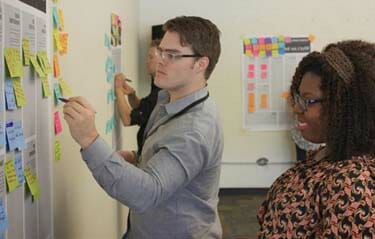
Civic Accelerator participants take part in an exercise.
How It Works
The three-month, boot camp-style program convenes 10-15 teams in person (Atlanta, Silicon Valley and Chicago) and online with the goal of equipping each startup to seek investments and scale their innovative ideas. At the end of the program, ventures give presentations at a demo night attended by impact investors, foundations, corporate executives and social sector leaders. And there’s a twist. The participating entrepreneurs themselves decide which two most promising ventures, one for-profit and one nonprofit, will receive a $50,000 seed investment.
Who Should Apply
As recruiting for the fall 2014 Civic Accelerator program heats up, both for-profit and nonprofit startups that engage people to create greater access and pathways to economic opportunity are encouraged to apply. We’re looking for innovative technologies, platforms and other models that create positive economic outcomes for the communities in which they operate. Potential solutions include (but are not limited to) innovations in:
Job/career readiness
Financial literacy
21st century skills development
Youth development
Inclusive financial/social services
Social-emotional learning
Workforce development
STEM (science, technology, engineering and math) education
This post is by Gary Bagley, executive director of New York Cares – an affiliate of HandsOn Network and Points of Light. He provides a great example of how a volunteer action center strengthens local volunteer engagement. For more about HandsOn Network and local volunteer action centers, go to www.handsonnetwork.org.
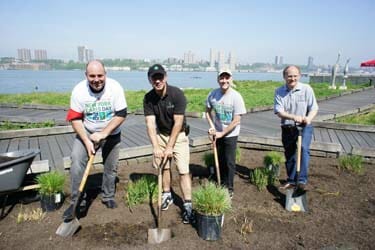
Gary Bagley, second from right, works with volunteers on revitalizing Riverside Park on New York Cares Day.
Since the report in February that volunteering numbers are down in the U.S., I have spent much of my time telling well-meaning people poised to make a call to service to please put down the bullhorn. A call to service is important, but a greater problem needs to be addressed first – improving the ability of nonprofits, schools and community groups to use volunteers strategically to drive impact.
At New York Cares, we think of volunteers as employees who get “paid” with something other than money. That “something else” may be different for each of us. Regardless, the same tenets that make for top-notch HR practices hold true for volunteer management. If a business mismanages its employees, it will lose them. New York Cares was founded in 1987, expressly because so many schools and nonprofits lack staff, money and know-how to use volunteers effectively, if at all.
Our strategies are twofold:
We provide free volunteer management to our Community Partners, allowing them to outsource their volunteer needs to us, at no cost to them or their clients. We have full-time staff who manage every program detail. They diagnose community partner needs, develop programs, create curricula, buy supplies and recruit and train volunteers and volunteer leaders.
We also train Community Partners to grow programs by leveraging volunteers. In 2012, we launched our Volunteer Impact Program (VIP) to go beyond our outsourcing model. During the three-year pilot phase, we developed multiyear volunteer management plans with 15 Community Partners and provided ongoing training and staff support for achieving the goals. The results were dramatic. Our VIP participants from year one had a 138 percent increase in the number of volunteer projects, compared to a 29 percent increase in nonparticipating Community Partners. We are committed to scaling up our VIP work by expanding to more nonprofits through a combination of training and consulting services with New York Cares. These VIP results reaffirm our belief that the question is not whether volunteers are willing and available, but rather, how to better prepare organizations to use volunteers well.
By the way, the numbers may be down nationally, but this is not the case at New York Cares. We orient approximately 18,000 new volunteers annually, and this number is holding strong. Thank you to all of New York Cares’ volunteers, current and future, who are committed to making NYC a better place to live for all New Yorkers.
If you would like to read more of my musings, go here or follow me on Twitter at @GBagley_NYCares.
One Person Changed His Life, Now He Wants to Be That One for Others
Meet Sherman Williams, a volunteer at HandsOn Broward – part of Points of Light’s HandsOn Network of 250 volunteer centers. Williams is using his expertise in business to help people from low- and moderate-income households achieve financial stability.
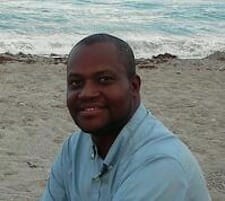
Sherman Williams
As a teenager, Sherman Williams experienced the powerful difference one person could make in someone’s life. A native Trinidadian, he had moved to the United Sates when he was 5.
“Early on, the motivation to adapt to the American culture was a priority,” Williams says.
But adapting was difficult. Teased for his accent, he became a quiet boy who noticed everything but said little. That changed in the eighth grade, when Williams wrote an essay about homelessness and the environment.
“Back home [in Trinidad], homeless people were everywhere,” Williams says. “Then I saw them in the United States and I made the connection that homelessness was a serious issue.”
Williams’ heartfelt writing won him first place in the contest and earned him a spot in the oratory contest that followed. Having never given a speech, and self-conscious of his accent, Williams was dismayed. But a dedicated teacher stepped in to help. She coached him daily, working with him on projecting his voice and slowing down his speech.
“I took her teaching to heart,” Williams says.
Under the teacher’s guidance, Williams practiced diligently and won third place in the districtwide competition. “That was a life-changing experience for me,” he says. “The event gave me the confidence to be whoever I wanted to become. It was an empowering moment in my life.”
Williams wanted to help others feel that same empowerment. Inspired in part by Dr. Martin Luther King, Jr. and the power of one, he began to volunteer here and there. President Obama’s call to service, however, was the final impetus Williams needed to become a committed volunteer. In 2011, he signed up with HandsOn Broward and has been actively engaged ever since.
When Williams learned about the Financial Opportunity Corps – a partnership between Points of Light, Bank of America and the Corporation for National and Community Service – he quickly signed up for the first volunteer orientation and training. The program recruits and trains volunteers as financial coaches who help people from low- and moderate-income households get their finances on track.
Williams, who holds a bachelor’s degree in business management and an MBA, felt he could use his business background and speaking skills to benefit the program, run locally by HandsOn Broward.
“I chose (the Financial Opportunity Corps) because the information it offers is basic but is widely overlooked,” Williams says. “It can make positive impact in communities. … On my path, it took only one person to bring change, the proverbial power of one. Now I can empower others to make positive financial decisions.”