and 17 of the country’s leading national service organizations in an effort to make a year of service part of the American way of life.
The campaign will connect the stories and impact that AmeriCorps members and AmeriCorps alumni are making every day on some of our nation’s toughest issues to the writers and producers in Hollywood who are ready to tell these stories – from disaster relief and veteran reintegration to college access and childhood nutrition.
Our goal is simple, but ambitious: We envision a day when young Americans turn to each other and ask, “Where will your year of national service be?”
AmeriCorps Alums serves as the national strategic partner for this campaign. We highlight the power of national service as a cross-cutting solution to our country’s most pressing problems, by uniting Americans in common purpose.
Nearly 820,000 Americans have served in AmeriCorps over the last 20 years and through this historic campaign, we will showcase how these AmeriCorps alumni are still “getting things done” with more impact than ever before. (Find out who else is working with us on this historic campaign
.)
Over the next three years, ServiceNation will lead this initiative, engaging entertainment companies and TV show executives in an effort to integrate powerful stories of service by AmeriCorps members and alumni into the scripts of their shows. Only two weeks ago, AmeriCorps was
,” a direct result of this effort.
In the coming months, the campaign plans to roll out other partnerships with humorous digital platforms, YouTube stars, social-minded brands, athletes, celebrities and more successful integrations that will help tell the story of national service in America.
We also want to hear from you –
How Serving in AmeriCorps Led to Working for Google
Today’s post is by AmeriCorps Alums member Ben Weaver, who served as a member of AmeriCorps VISTA with Points of Light, in partnership with HandsOn Network and Google. He’s now an administrative assistant with Google’s Site Reliability Engineering team in Pittsburgh.
Ben Weaver
In 2011, I spotted a tweet from @iheartpgh that simply said “Like technology? Like helping nonprofits?” with a link to a blog post. The link eventually lead me to the application for HandsOn Tech, an AmeriCorps VISTA program created by Points of Light in partnership with HandsOn Network and Google.
At the time, I had a full-time job and I was somewhat worried about the very small AmeriCorps stipend, but it seemed like a great opportunity to use my talents and experience with technology to help local nonprofits fulfill their missions. The opportunity to work with the local Google office in Pittsburgh was an added bonus. I knew that Pittsburgh had one of the highest numbers of nonprofits per capita and an ever-growing university landscape and technology sector; I felt that the potential to match these two was huge. I was fortunate enough to be accepted into the program.
At the beginning of our service year, we visited Google’s headquarters in Mountain View, Calif., for training on nonprofit technology solutions. In addition to the support of HandsOn Tech itself, the trip gave me a lot of insight into Google’s nonprofit outreach, employee volunteering and community affairs teams. It was great to see the involvement they had in the communities where each office was located.
Our Google mentors at the Pittsburgh office were incredibly helpful in providing meeting space, guidance with technology questions and – most importantly to AmeriCorps members tasked with living at the poverty line – free lunch every two weeks. Googlers, along with volunteer staff from Microsoft, LinkedIn and local Pittsburgh technology consultants provided training for nonprofits and onsite support on several occasions.
A VISTA member’s service term is limited to one year, but I saw great potential in the program and wanted to remain involved and expand upon it, especially in matching skills-based volunteers from Pittsburgh’s many technology companies and universities with local nonprofits.
Pittsburgh Cares worked with me to create a full-time staff position in order to continue this mission locally. In the new role, I helped to bring onboard a second group of VISTA members and was able to participate in their training in Mountain View. As community programs and technology coordinator at Pittsburgh Cares, I supervised the VISTA team, sharing knowledge acquired the year before, and continued working with Google Pittsburgh on general Pittsburgh nonprofit initiatives.
A job became available in Google’s Pittsburgh office, and I jumped at the chance for a role at Google, especially one that would allow me to continue to work with the HandsOn Tech team, Pittsburgh Cares and the local nonprofit community as a whole. I became an administrative assistant with the Site Reliability Engineering team in Pittsburgh.
Recently, I helped HandsOn Tech Pittsburgh present a social media strategy workshop to more than 40 nonprofit staff members, one of several dozen workshops that I’ve helped with before, only this time as a Googler.
Do you have a similar story of how your current position is rooted in your AmeriCorps service? Tell us how you were Made In AmeriCorps here.
There was some understandable hand-wringing when the Bureau of Labor Statistics recently reported that the volunteer rate in America decreased by one percentage point – to 25.4 percent of Americans – from 2012 to 2013. For the thousands of community organizations that rely on volunteers to fulfill their missions, any dip in the volunteer rate is cause for concern.
But the BLS report, at its core, may not mean that Americans’ commitment to volunteering is waning. Instead the data may suggest an evolution in how Americans volunteer.
When Winter Storm Leon barreled through Atlanta a few months ago, an army of concerned citizens sprang to life. They grabbed shovels to rescue motorists stranded on gridlocked, icy roads. They grabbed chainsaws to free people trapped in their homes by falling tree limbs.
But Michelle Sollicito did something different. She grabbed a laptop and helped hundreds of people get home safely right from her kitchen table.
When Sollicito’s Facebook group SnowedOutAtlanta amassed 50,000 members overnight and helped orchestrate hundreds of rescues, she was called a visionary and even a hero. But you couldn’t call her a volunteer – at least not by the traditional definition. And that points to a powerful need for change.
The Bureau of Labor Statistics relies on a traditional definition of volunteering – unpaid work performed for third-party organizations – which may not take into account several booming trends:
The explosion of pro bono and skills-based volunteer service. More and more companies and individuals are finding ways to volunteer their skills and talents. Just last year, more than 500 companies pledged $2 billion worth of skills-based and pro bono volunteer service that could go uncounted under a traditional definition of volunteering.
The rise in online service. Volunteering used to be exclusively about lending your hands and feet – but increasingly it’s about lending your tweets. Today’s younger volunteers in particular perform acts of service every day, whether they use their social networks to rack up millions of views for civic-minded videos or drive fundraising for people in need through online platforms like GoFundMe and HopeMob.
Traditionalists have labeled online volunteering and engagement as “slacktivism” because you can complete your service from your couch, in your pajamas. But as the service movement evolves, we should acknowledge that, in many cases, the greatest asset a volunteer can offer is his or her ability to quickly mobilize thousands of Facebook friends or Twitter followers to raise awareness or dollars and to inspire action.
The increase in youth and young adult volunteering. While the BLS data indicates that 16-34 year olds are the least likely to volunteer in traditional way, we know from other research that this demographic is highly engaged and civic-oriented. The 25-34 demographic creates more online petitions than any other age group on Change.org, a popular online activism platform. Further, by all accounts, the 18-34 demographic has driven the success of Indiegogo, a popular crowdfunding site, where young adults regularly help spread the word about social causes.
And we see an increase in volunteering by those too young to be measured by the BLS statistics. In just a few weeks last December, tens of thousands of young people acted to help another so Hasbro would donate $1 million worth of toys and games to Toys for Tots.
The number of people using their purchasing power to support causes. Many retailers are sending some or all of their profits to nonprofits, including Toms Shoes, FEED Projects, Newman’s Own, and Alex and Ani. Research shows that more than half — 54 percent — of consumers bought a product with a social or environmental benefit in the past year.
Michelle Sollicito found a way to deliver impact without ever leaving her home. At a time when we were witnessing the worst of Mother Nature, she mobilized thousands of Atlantans to show us the best of human nature and the new ways volunteers are creating impact. In the process, she reminded us that solving the critical needs of our communities requires us to recognize, embrace and leverage the many ways people can bring all their assets to bear to help others.
By any definition, the impact today’s volunteers are having is surely at an all-time high.
is coming up – April 6 to 12 – and we’ve got a special way for your organization or company to recognize outstanding volunteers in your community.
The President’s Volunteer Service Award honors Americans who, by their commitment and example, inspire others to engage in volunteer service. The award is issued by Points of Light and the
with the President’s Volunteer Service Award for the seventh consecutive year. In 2013, Citi employees served more than 15,000 volunteer hours for Junior Achievement USA, which helps young people plan for the future. Employers can also give the award to its employees for serving their communities.
and be sure to place your orders online by March 23 to ensure delivery in time for National Volunteer Week.
And while National Volunteer Week is a great time to recognize your volunteers with the President’s Volunteer Service Award, think of bestowing the honor anytime throughout the year as a way celebrate the volunteers who make life better for others.
What We Have Learned From Businesses That Help Their Communities
This post by Jackie Norris, executive director of the Points of Light Corporate Institute, is part one in a seven-part blog CSRWire series exploring the community engagement practices of winning companies in The Civic 50, an initiative launched in 2012 by Points of Light, the National Conference on Citizenship and Bloomberg. The Civic 50 identifies the top 50 community-minded S&P 500 corporations that best use their time, talent and resources to improve the quality of life in the communities where they do business.
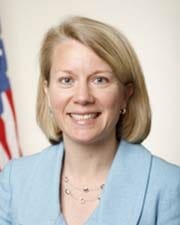
Jackie Norris
Companies across America have been taking note that the key to sustaining a successful business goes beyond interactions with consumers and stakeholders. It’s about playing a part in the communities where they live and work as well.
Accordingly, corporate civic engagement in America is on the rise – showing up in annual shareholder reports, in boardroom discussions and holding increasingly more weight in employee engagement strategies. The Civic 50 was introduced two years ago to recognize the top S&P 500 companies that are fostering and promoting community leadership as an integral part of their corporate culture. Take a look at last year’s results as published by Bloomberg.
In 2013, Civic 50 applicants were evaluated based on several criteria including:
The amount of financial and human resources applied to civic improvement
Whether internal and external resources are used to maximize community impact
How a company’s community engagement activities align with its business interests
How broadly community engagement is supported and institutionalized within a company’s policies, systems and incentives
How a company measures the social and business value of its community engagement programs.
As engagement programs mature and begin to align more with business strategy, recognizing that corporate civic engagement is an emerging field. The survey has also continued to evolve. These changes help create more opportunities to understand participating business’ civic engagement practices across a range of variants like size, sophistication, industry and length of operation.
Some Highlights from the 2013 Survey
Commitment to community is being institutionalized as a top priority throughout companies. Ninety-two percent of The Civic 50 can describe board, executive or senior leadership resolutions or directives that institutionalize corporate policies and practices related to community engagement.
The majority of The Civic 50 companies, 96 percent, evaluate the business impact of civic engagement on at least one aspect of their bottom line, such as increased sales, brand loyalty or employee recruitment. HP demonstrated that its community engagement programs increased sales by 9 percent. Rigorous quasi-experimental design third-party research is conducted approximately every two years including the effect that each of the community engagement programs has on sales. The last third-party study, conducted in 2011, found that all of HP’s key community engagement programs increased sales by at least 6 percent.
Businesses believe that community engagement programs make employees more valuable – employee skill sets have expanded as a result of employee volunteering.
Over the next few weeks, staff members of the Points of Light Corporate Institute will examine best practices and highlight the top scoring companies in each of the five dimensions for 2013’s Civic 50 here on Talkback. Follow along to learn more about how companies are making socially responsible practices and community leadership a part of their corporate culture, including inspirational stories about:
Morgan Stanley’s organizational commitment with their Children’s Hospital
Apollo Education Group’s meritorious strategic investment with Roadtrip Nation
Points of Light announced today that Chelsea Clinton, vice chair of the Clinton Foundation, will be among the featured speakers at the opening session of its 2014 Conference on Volunteering and Service, June 16-18 in Atlanta.
Chelsea Clinton
Ms. Clinton works with her parents, President Bill Clinton and Secretary Hillary Rodham Clinton, to drive the vision and work of the Clinton Foundation. Over the past 12 years, the foundation has built partnerships among governments, businesses, nongovernmental organizations and individuals everywhere to strengthen health systems in developing countries, fight climate change, expand economic opportunity in Africa, Latin America and the United States, and help Americans live healthier lives. Additionally, Clinton Global Initiative members have made more than 2,800 Commitments to Action to improve more than 430 million lives in more than 180 countries.
She also established – and continues to lead – the Clinton Foundation Day of Action program, which identifies and organizes meaningful service opportunities for foundation staff, friends and partners and for the wider foundation community. As one of the strongest champions of the Clinton Global Initiative University, she works to empower the next generation of change makers to take action on some of the world’s most urgent challenges. And through the Clinton Foundation Millennium Network, she plays an integral role in inspiring young leaders and philanthropists to get involved in the work of the foundation.
“Chelsea Clinton is a passionate advocate for the power of each individual to effect positive change in the world,” said Tracy Hoover, president of Points of Light. “She is one of the leading voices of her generation and we are honored to welcome her to Points of Light’s Conference on Volunteering and Service.”
Each year, the Conference brings together 5,000 leaders in the global volunteer service movement for three days of inspiring speakers, thought-provoking discussions, hands-on service projects and learning workshops. For more information or to register, visit www.volunteeringandservice.org.
Volunteering and Hong Kong, With a Dash of Ginger Rogers
In a nod to the recent International Women’s Day and the HandsOn Network affiliates across the globe that make it easier for people to volunteer, we feature this Q and A with Caroline Sprod, executive director of HandsOn Hong Kong.
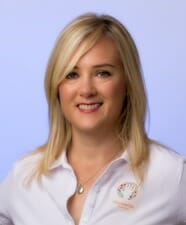
Caroline Sprod
Q. What inspires you about HandsOn Hong Kong, and can you tell us about your work?
A. HandsOn Hong Kong removes barriers that hold people back from volunteering, and enables small grassroots NGOs (nongovernmental organizations) to get the helping hands they need. Hong Kongers want to get involved and make our city a better place for all, but their busy schedules often prevent them from committing to a regular volunteer activity. In addition, many people are not sure where to find volunteer opportunities. Small NGOs are busy with their frontline services, and lack the resources and know-how to recruit and manage volunteers. By having HandsOn Hong Kong in the middle, these two parties are able to come together and both benefit. I know from personal experience how volunteering is not just about giving but about gaining too, so I’m really passionate about facilitating the opportunity to volunteer.
Q: What does leveraging the creative talents, energy and power of youth for volunteer initiatives mean to you?
A: Every journey begins with a single step. When a young person takes their first step to volunteer, it can empower them to journey through life being deeply and actively involved in giving back and making their immediate community and the wider world a better place. And as I’ve already mentioned, community service is not just about giving, it’s about gaining too. Volunteering offers our young people wonderful opportunities to learn new skills, increase their self-confidence and of course have fun and make friends.
Q: Why are women’s leadership and empowerment important to you?
A: I’ve had fantastic opportunities in life. I had a great education, I have traveled widely and I’ve had a variety of intellectually stimulating and challenging roles in my career so far. I would never have had these chances if my mother’s and my grandmother’s generations hadn’t stood up, spoken out, fought for women’s rights and refused to take no for an answer. My generation, and coming generations, need to continue to take action to ensure that future generations of women will be defined only by their abilities and how they choose to use them, not by their gender, or other circumstances of their birth.
Q: Are there websites or books that are inspiring you right now about gender equality, women’s empowerment and education?
A: I actually love some of the memes that are popping up online at the moment. They make us stop and think, and smile at the same time. This morning I saw one quoting Sheryl Sandberg: “I want every little girl who is told she is bossy to be told she has leadership skills.” Another I enjoyed was, “Who’s behind every great woman? That’s right – no one. She has to get there by herself.” And of course there’s, “Ginger Rogers did everything that Fred Astaire did, except backwards and in high heels.”
A longer version of this interview posted originally on the website of Women LEAD. If you are looking for volunteer centers in your area, search the map on the HandsOn Network website. If you’re looking for specific volunteer opportunities, search AllforGood.org
Got Skills? Here’s How to Use Them to Help Others
If you’ve got professional skills you can share to help people in your community, pro bono volunteering may be for you.
Jackie Norris
Investor’s Business Daily recently highlighted the practice by telling the story of Rebecca Fayed, associate general counsel and privacy officer at the Washington, D.C.-based Advisory Board Company, a consulting firm. The company offers its employees 10 hours of paid time a month to volunteer at local nonprofits.
Reporter Amy Alexander writes: “Fayed sharpened her planning smarts while doing pro bono work at Wonders Child Care, a nonprofit day care serving D.C. and Maryland. She crunched a corporate vision statement for Wonders. She studied the kiddie care competition. She floated ideas for new offerings. Then she joined the tots as they played with water.”
Alexander quotes Jackie Norris, the head of the Points of Light Corporate Institute, who explains why pro bono volunteering benefits employees and companies alike: “Norris tells about designers who volunteered at a disability association, then returned to work and cranked out a revolutionary refrigerator. `Their whole design was different,’ she said. `They asked questions like: If you are in a wheelchair, can you access the ice maker?’”
For tips on “how you can leverage good works at your firm,” read the Investor’s Business Daily article here.
Interested in having your company pledge pro bono service to make life better for others in your community? Check out A Billion + Change, a national campaign managed by Points of Light that is inspiring the largest commitment of pro bono service in history.
And if you have your own great example of pro bono volunteering, tell us your story at [email protected].
Thinking About Summer? We’ve Got a Hot Activity for You in June
Join us in sunny Atlanta June 16 – 18 for a gathering of 5,000 people on a single mission – to strengthen communities and change lives through volunteer service. The 2014 Conference on Volunteering and Service will showcase those who have new ideas and proven solutions to tough community problems.
At last year’s Conference in Washington, D.C., participants
got to hear the DC Youth Slam Team recite poetry about
making a difference.
Come learn, share and have fun. (See what participants have enjoyed at past conferences here!)
Interested in a scholarship? If you apply by March 24, you could get your registration fee waived. With support from The Community Foundation for Greater Atlanta, Points of Light is offering 50 scholarships to Conference. We’re looking for applicants with community involvement experience who exhibit the potential to assume senior leadership roles within organizations in the volunteering and service sectors. Click here to apply.
Waiting for you at Conference will be inspiring sessions, powerful special events, service projects and dynamic workshops. Check out what we’ve got lined up:
There are more than 80 other sessions from which to choose, focused on five tracks: volunteer engagement, business, capacity building, innovation, national service, and youth service and leadership. You can pick sessions from more than one track and go deep into one (or more!) of eight impact areas: economic opportunity, education, emergency preparedness and response, environmental, faith, global, higher education, and veterans and military families.
For significant savings on registration, register by April 25. And make sure you get the latest news about Conference by signing up under “Join Our Mailing List” here or following us on Twitter or Facebook.
Digging Out of Debt With Help From Volunteer Financial Coaches
Even with a full-time job, Cat struggled with her finances. She had amassed significant student loan and credit card debt and was having trouble managing her money.
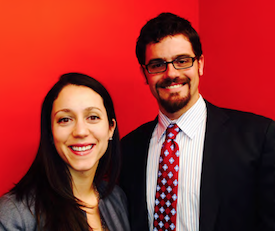
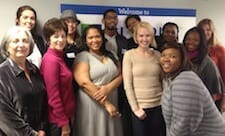
Financial Opportunity Corps members Caroline Ezzo (back
row, left) and Thomas Revelle (back row, third from left) join
with volunteer financial coaches and their clients at Clarifi.
But thanks to a financial coach who came to her through the Financial Opportunity Corps, Cat recently created a budget and identified places where she can cut spending and move toward a debt-free future.
“I think one of the benefits of this program is having a person who is not judgmental and not as emotionally connected to my money and spending as I am,” says Cat, a social worker.
The Financial Opportunity Corps recruits and trains volunteers as financial coaches who then help people from low- and moderate-income households achieve financial stability. The program is a partnership between Points of Light, Bank of America and the Corporation for National and Community Service.
The corps is made up of 20 AmeriCorps VISTA members working from nonprofits in 10 cities across the country. In Philadelphia, where Cat lives, Financial Opportunity Corps members Caroline Ezzo and Thomas Revelle have spent the past six months helping the staff of a local nonprofit establish a financial coaching program fueled by volunteers. The 47-year-old nonprofit, Clarifi, offers financial counseling and education to 15,000 clients each year.
So far Ezzo and Revelle have recruited, trained and activated 21 coaching pairs. In such pairings, a coach is matched with a client based on logistics, personality and complexity of the financial goal. Ezzo and Revelle plan to add up to 10 more coaching pairs every month.
The effort is paying off for dozens of clients – including Cat, who has been able to reduce her monthly student loan payment from $500 to $200. She says her financial coach has been instrumental in helping her become more financially secure.
“It’s hard for me to set concrete steps to achieve my financial goals, because it’s hard to see the big financial picture,” Cat says. “My coach helps me to look at my finances with a new perspective and helps me to set small, achievable goals to help me build confidence in my ability to manage my money.”