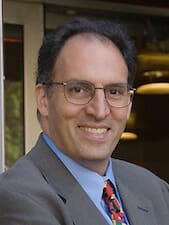
Right after I graduated from high school in 2001, I joined AmeriCorps NCCC (National Civilian Community Corps). My team worked on a variety of projects: We constructed homes for Habitat for Humanity builds in Hawaii, acted as teaching assistants for an elementary school in California, worked as gardeners at a botanical garden in Oregon, served as camp counselors at a camp for children and adults with disabilities, and helped on a disaster relief team for the American Red Cross when a typhoon hit Guam.
Through each project, I became more interested in issues around social justice and learned how to collaborate with a diverse group of individuals. AmeriCorps inspired me to continue enacting positive change as well as develop the relevant skills, such as working as a team player, to actually contribute to this mission.
In the decade following my term in AmeriCorps, I continued to hone the skills I’d built in national service, before deciding to enroll in the SIT Masters in International Education program. When I started at SIT, I had just returned from a year in Vietnam, where I taught English and advised Vietnamese high school students.
Based on that overseas experience, I knew I wanted to work in the field of international education. I only had a glimpse of the field I wanted to pursue while abroad, but at SIT I really learned the why, what and how-to of international education.
SIT provides students with an educational experience deeply rooted in social justice, teamwork and practical, hands-on training. These skills had been introduced in AmeriCorps, and were further strengthened and expanded during my thorough and comprehensive training in SIT.
With the tools I gained at SIT’s Masters in International Education program, I started an internship at the University of Colorado Denver’s Office of Global Education. SIT had laid the necessary groundwork for me to succeed; I already knew the vernacular and important issues of the field, and could easily contribute to a conversation with other professionals. The internship eventually led to my current full-time role as the Asia study abroad coordinator.
My experiences in AmeriCorps and SIT thoroughly prepared me for my career. I use the skills of teamwork, my passion for improving the world and the academic knowledge acquired at SIT every day in my current job. AmeriCorps and SIT had a large hand in this personal and professional development.
When You Listen to Young People, Great Things Can Happen
This post is by Noemi Rodriguez, a member of AmeriCorps VISTA, an AmeriCorps program that focuses on helping communities out of poverty. Rodriguez is serving through Corps18, a Points of Light program that supports VISTA members addressing chronic absenteeism across the country.
Sylmar Biotech Health Academy student Miguel shows his funny side during a painting project.
Miguel stood out to me as soon as I started my service here at Sylmar Biotech Health Academy, near Los Angeles. He always hung around the school offices after school and was not in the least bit shy around us newbies.
Not long after our first day of work Miguel approached me with a request – to create a school drama club. He definitely had a vision and a goal and knew what he wanted. I really liked that about him and appreciated it.
Miguel is not the best student, in terms of grades, but he is very much involved with the school and is incredibly smart and imaginative.
After completing all the paperwork necessary for there to be a drama club in our school Miguel got to work, letting me know that we needed to start advertising the club and raising money so that the club could have some funds for props.
Miguel is always thinking ahead and always ready to work. As we created the drama club, he was full of ideas. And after our first adventure working together, Miguel became my go-to adviser.
A lot of the time he amazes me with some of the things he suggests, not only for the drama club but for other school activities as well. I now search Miguel out when I want to share an idea for a new program. His focus and commitment to his creative vision has really inspired me and has made a huge difference in how I run and create programming for this school.
They are no longer my programs or my ideas but the students’ as well. Not only that, but the connections I have made with Miguel and students like him at Sylmar Biotech Health Academy have provided me with the drive and motivation I need to get a job like mine done.
Sylmar Biotech Health Academy is operated by the Youth Policy Institute, which provides education, training and technology services to lift Los Angeles families out of poverty.
Entrepreneurs: Here’s How to Nail Your Startup Accelerator Application
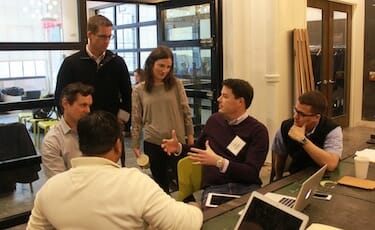
Entrepreneurs in the Fall 2013 Civic Accelerator participate
in a peer coaching session in New York.
For many startup accelerator programs, the written application is your only chance to prove why your venture deserves a shot. How can you ensure your venture will stand out?
This April will mark the start of the fourth round of the Points of Light Civic Accelerator program since our launch in 2012. Our team has met with several hundred social entrepreneurs and reviewed nearly 500 business plans. We’ve figured out how to spot the great ones.
As the application deadline for our spring 2014 program nears (Friday, March 7 – don’t forget!), we thought we’d compile the most common application blunders and offer a few pointers to make your application shine.
Mistake 1 – Confusing market size with traction
Stating a large market size or the gravity of the social issue doesn’t mean that your venture is poised to gain a slice of the market share pie. More importantly, market size is not synonymous with demand.
The Question: What proof do you have that your customers are willing to buy your product or service?
The wrong answer: “Waste management is a $200 million dollar industry, and 1 million people are without proper sanitation services. This is an untapped market ripe with demand.”
The fix: “In our pilot phase, we secured 300 users of our waste management system. Of these users 20 percent renewed their subscriptions, and since opening our product to the public we’ve experienced an increasing rate of user adoption. If we can continue to grow at this rate over the next year, we will net $2 million in recurring revenue.
No one can argue with real numbers. If your product or service isn’t live yet, positive testimonials from customer interviews, preregistered users or results from product focus groups can also hint at potential demand.
Mistake 2 – Believing you don’t have competitors
Even if you are the first to market with your innovation, the status quo is your biggest and most threatening competitor.
The Question: Who are your main competitors, and what makes you different and unique from them?
The wrong answer: “Our community-based waste management system is the first of its kind. We do not have any known competitors.”
The fix: “Our research shows that convenience and acquisition cost are the biggest barriers to adopting any kind of advanced waste management system. The existing solution, while it generates long-term health implications, does not cost the user additional money or time. Our waste management system is the first of its kind to actually generate supplemental household income, and is designed with cultural tendencies and existing user behavior in mind.”
You must demonstrate awareness of the other solutions to the problem (or why they haven’t been adopted). Even better, show that you understand how your target customer currently manages or deals with this problem and why your solution is better.
Mistake 3 – Confusing a lack of seed funding as a challenge versus a symptom
Funding is not your biggest challenge. All of the reasons why you haven’t received funding are your biggest challenges.
The Question: What is your venture’s biggest challenge?
The wrong answer: “We’ve had a hard time connecting with the right investors. With a little bit of seed capital we would be able to successfully scale our venture.”
One possible fix: “One of our biggest challenges right now is identifying the right channel(s) for expansion. Our first pilot was a huge success, due in part to strong local networks rooted in years of personal relationships. We know that this will not be the case in other markets. As we prepare to scale, it is crucial that we identify the right kind of strategic partners and that we are able to quickly and clearly articulate our value to these partners.”
Other great responses we’ve seen to this question include sharing feedback from funders and identifying the struggle to incorporate that feedback.
Other advice to consider:
Demonstrate flexibility. For example, when did you pivot in response to customer or user feedback?
Show you can play nice with others. What do you have to learn from others, and what lessons can you share?
Be succinct. Brevity allows reviewers to find your strongest elements quickly.
For accelerator managers, what other advice do you have for entrepreneurs? For entrepreneurs, what else would be helpful to know about the accelerator application process? Drop us a line at [email protected], and let us know!
So You Want to Volunteer. Now What?
This post is by Katie Greisiger, a writer, yoga teacher and social service professional in Phoenix, where she co-operates the blog phoenixhealthgeek.org.
Katie Greisiger
You care about helping your community and those who are less fortunate. But, how? What’s the first step? If you narrow down your ability of service to a niche like volunteering at an animal shelter, reading to the elderly or promoting AIDS awareness you may get up and move quicker than, say, someone like me who wants to just save the world and accomplish it all overnight.
When it comes to figuring out what you have to offer your community, or one agency in particular, a little self-reflection time should be first on your to-do list.
Think about how much time you can give. Before you can commit to volunteer work you have to determine what days and times you are available to make the commitment and for how long. Luckily we have the Internet and some volunteer work could be done remotely. Maybe you have some writing or website-building expertise and could help out a small nonprofit that’s lacking in the social media department. If web work is not an option, find a place that’s close to your job, home or school. You’ll be more likely to commit if your volunteer work is easily accessible.
Determine what you want to accomplish. It’s a heart-warming feeling to give to others but it doesn’t hurt to try to polish up the ol’ resume, too. If you’re working on developing a specific skill, such as event coordination or volunteer management, offer up those services. After all, the relationship you build with the volunteering organization should be mutually beneficial. Also, it doesn’t hurt to set up goals through your volunteer gig – help someone raise X amount of money or help develop relationships to build community gardens at schools.
Choose your top three volunteer gigs. Research a few organizations, programs or city projects that you’d like to join. AllforGood.org and www.handsonnetwork.org can provide a launching point. Narrow down your top three volunteer opportunities or organizations to approach, then pick up the phone or write an email. Because nonprofits can have small budgets and busy staffs, stay persistent and remember to be patient.
Now, get moving. Have some fun, meet new people, support your community and remember that you can’t do it all overnight. We might not be able to save the world tomorrow but we can start to make a positive mark by turning to local service today.
Already an ambitious volunteer or have some ideas? Share your experiences with Points of Light at [email protected].
Help a Charity Win $10,000 With Two Clicks
They’ve fed hungry families; brought toys to kids who had no gifts to open on Christmas; given shoes to homeless children; donated books to schools, foster programs and shelters; and assembled toiletries and clothes for victims of domestic violence.
Volunteers organized by Mary Vail display some of the
food they collected for Las Vegas families in need.
These Make A Difference Day honorees have come together help people in their communities, and now you have the chance to help reward one of their charities with the $10,000 All-Star Award from the
to sponsor Make A Difference Day, the largest national day of community service. On the fourth Saturday of October, millions of volunteers around the world to volunteer.
Check out the All-Star Award nominees below!
Mary Vail, Las Vegas –
The recession hit Las Vegas hard, leaving many families unable to buy enough food. Vail’s 15th Make A Difference Day food drive at a local supermarket collected more than 4,700 pounds of nonperishables for the Salvation Army food bank – enough to feed 235 families for a week. (Her 15-year total: 27 tons.) Vail, a publicist, led 20 volunteers in inviting shoppers to donate just one item.
Wen Marcec, Geneva, Ill. –
Last year Marcec’s Project SANTA delivered 2,203 new toys and books to Appalachian communities to brighten Christmas for kids whose parents couldn’t afford gifts, besting the 2,100 collected in 2012. In a weeklong drive, more than 140 student “elves” at seven Geneva-area schools purchased board games, puzzles, dolls and more. Marcec, 63, and her husband trucked eight hours south to Estill County, Ky., to deliver the toys, which schools distributed to the county’s neediest families in December. “If it weren’t for these toys,” says Sara Stringfield of West Irvine Elementary School, “Christmas wouldn’t happen for a lot of our kids.”
Nick Lowinger, Cranston, R.I.
– Nick Lowinger, 16, has put 15,000 homeless kids in new shoes in the four years since he created the
. Last year on Make a Difference Day 86 volunteers gathered at a garage that stores shoes donated by manufacturers or bought with donations. In six hours, they filled shoe orders for 467 kids in 22 shelters in 15 states, packed up shoe store gift cards for 300 veterans and readied a shipment of 200 warm pairs of boots for children on an Indian reservation.
After rounding up 113,000 books for at-risk children on their first Make A Difference Day, the women of the Burbank-based Assistance League surprised themselves by nearly copying that success last October: 2,666 members of the service organization led 93 communities in donating 103,036 books to schools, foster programs and shelters. “For many of these kids, it may be the only book they own,” says book drive chairman Kathy Youngman.
– For the nonprofit insurer’s 17th Make A Difference Day, 806 volunteers in 21 states tackled projects from helping seniors to filling 1,482 “Baskets of Hope” with toiletries, books and clothes for women in need. Turnout was highest in the Quad Cities of Iowa and Illinois, where 101 volunteers from Royal Neighbors’ Rock Island headquarters cleaned and painted a Dress for Success center and created 222 Baskets of Hope.
When Schools and Businesses Collaborate, Students Win
This post is by Gayle Villani, vice president of programs for PENCIL, a New York-based organization that since 1995 has created innovative models of collaboration between businesses and public schools.
Gayle Villani
One of the most important trends in education this year will be how the business community continues to act on its desire to support our public schools.
Like most trends, this one has been building for some time: last year, during his State of the Union address, President Obama focused on Pathways in Technology Early College High School (P-Tech) – a collaboration between the Department of Education and IBM – as a model for the future. That model is being replicated well beyond New York state, where it started – in Chicago, for example, they launched four schools built on a similar model.
The P-Tech model is an intensive one, and while it’s inspiring that IBM has invested so heavily in this particular model, not all companies have the resources to create brand new schools. The good news is that there are other models that enable businesses across the spectrum to have a deep impact on schools in their community.
Since 1995, PENCIL has been working at the intersection of school need and business expertise to foster stronger school cultures, engage families in their school communities and prepare students for college and career success: Last year, 9 of 10 principals engaged in our program said their PENCIL partnerships helped improve school culture, student performance or both.
But it takes much more than the willingness to volunteer to make a difference. Any school and business can take steps toward helping students reach their potential if they follow these best practices:
Align volunteer skills with school needs – Before partners begin to work together, they need to best understand how to align the business volunteer’s skills and good intentions with a school’s needs. In these cases, the business volunteer might offer a service that the school doesn’t really need. To avoid this situation, intermediary organizations must strategically match business volunteers’ expertise with specific school needs in the key areas that are proven levers for improvement in school and student performance.
Set clear expectations and realistic goals – Similarly, principals shouldn’t expect – and volunteers shouldn’t promise – more than they can offer. Both schools and businesses should commit to what they really can do – not what they wish they could do. These realistic goals make everyone feel successful, keep everyone engaged and motivated and, over time, lead to those dramatic, inspiring results everyone is hoping for.
Measure impact – Measurements abound in school and in business – firms ask themselves if they’re providing their customers with the level of service that they demand, and schools track student learning throughout the year. But when volunteers and schools come together, too often they forget about taking meaningful measurements.
Maintain ongoing and open communication – When volunteers join a school community, it’s the creation of a relationship. Both parties need to commit to maintaining regular and honest communication with each other, whether by email, phone or in person. When the program isn’t working, communication is about being open to the truth and determining what changes should be made.
Provide comprehensive support – While school-business partners who adhere to the above guidelines can produce great results, the reality is that schools and businesses are two very different worlds. Having an expert intermediary “translate” the realities of each and help both partners understand each other’s challenges – and the ways to address them – is an asset that maximizes school-business collaborations and their impact.
When you take those steps, you can make a tremendous difference. Watch this video to see the impact Morgan Stanley made at the Business of Sports School, where the company worked with school leadership and teachers to mentor students in college and career readiness skills.
By working together in a targeted, strategic and supported way, schools and businesses can find innovative new ways to invest private sector insight and intellectual capital in our students, and in our future.
Not Your Usual Sunday Supper
America’s Sunday Suppers – inspired by Martin Luther King, Jr.’s vision of people from diverse backgrounds interacting on personal levels – encourage people to share a meal and discuss issues that affect their communities, such as unemployment, homelessness, education and hunger. The events often happen around MLK Day, but you can hold them any time of the year for groups big and small to promote volunteer service. Visit www.pointsoflight.org/mlk for resources to host your own Sunday Supper and – for inspiration – read below about two Alpha Kappa Alpha Sorority Sunday Suppers in Maryland during the MLK Day weekend.
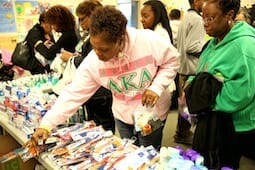
Alpha Kappa Alpha Sorority sisters pack toiletry kits for
people in need.
Contributing to its mission of “service to all mankind,” Alpha Kappa Alpha Sorority chapters across the country hosted volunteer projects and America’s Sunday Suppers to honor Martin Luther King, Jr.
Around 800 volunteers in Mitchellville, Md., and 130 in Baltimore participated in service projects, collecting cans of food, assembling hygiene kits, writing greeting cards to soldiers, and more. They ended the day of volunteer service – which included a performance by a local high school choir – with Sunday Suppers.
The sorority’s MLK Day-related activities nationwide were made possible in part through a $15,000 grant from the Corporation for National and Community Service, administered through Points of Light.
“The purpose of the events was to honor and celebrate the life and legacy of Dr. King and to raise awareness of the need in our community,” said Wanda King, an Alpha Kappa Alpha (AKA) project manager in Maryland. “We are trying to encourage and mobilize the public or others who don’t normally engage with service to get excited about serving.”
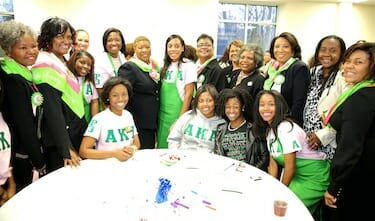
Alpha Kappa Alpha Sorority sisters gather for a Sunday
Supper in Maryland.
The suppers began with remarks and greetings from Maryland Lt. Gov. Anthony Brow and Angela D. Alsobrooks, Prince George’s County, Md., state’s attorney, who attended the Mitchellville supper. Their appearance was telecast live at the Baltimore event.
At both suppers participants contributed to roundtable discussions about th economic sustainability of communities, Social Security, closing the wealth gap and standards of living.
“Everyone was very engaged in the table discussions which resulted in wonderful suggestions and ideas being brought forth,” said Susan Marsh, AKA’s international secretary.
“Our hope is that representatives from the various community organizations and the localofficials who were present will take the feedback and begin to find ways to implement the suggestions from the discussions into concrete action and policy,” Marsh said.
The MLK Day events were part of AKA’s ongoing efforts to encourage Marylanders to volunteer in their communities.
“It was a beautiful sight to see what can happen when you get so many people together focused on service,” said King. “It is so good to know that our efforts will benefit others.”
Veterans: Make the Most of Your Skills as a Civilian Professional
Participants of the first round of the Leveraging Military
Leadership Program meet in McLean, Va.
Are you a veteran wondering how to apply your leadership skills to the civilian workforce?
, a four-month, competitive program designed to help veterans get ahead in their post-military careers.
The first round of the program, which kicked off last month, welcomed a class of 35 veterans with military experience ranging from junior enlisted to senior officer ranks in the Army, Marine Corps, Navy and Air Force.
, Exelis’ chief human resources officer, told the first group of participants as they gathered at Exelis’ headquarters in McLean, Va.: “You know military culture; your new company has a culture, too. You must learn it. Listen and adapt to that culture. … Your key skill is agility. You must use that to make yourself successful.”
The program consists of online, integrated learning components and one-on-one coaching. Participants learn how to chart their professional journeys and how to apply their leadership skills in civilian positions.
Erica Jeffries
“These leadership development services are the same level that Korn Ferry delivers to boards, CEOs and senior executives,” said
, Exelis chief inclusion and diversity officer. “Korn Ferry’s expertise in leadership development, coupled with insight from Exelis employees who are also veterans, provided the winning combination to make this program the true success that it is.”
Jeffries, a former White House fellow and Army helicopter pilot, is the force behind the program’s creation. While participating in an Exelis leadership development program, designed and led by Korn Ferry, she was planning a project to set veterans up for success as they depart military service.
Korn Ferry was eager to extend its reach to serve veterans and their families. It was clear that a partnership between Korn Ferry, Exelis Action Corps and Points of Light would provide veterans the rare opportunity to experience world-class civilian leadership training.
“The Korn Ferry volunteer team has been privileged to work with these accomplished veterans, helping them successfully move into the next chapter of their careers,” said
, Korn Ferry senior partner and key program faculty member. “This comprehensive experience will help them network, plan and strategize for the next phase of their life and career.”
Distinguished veterans are selected through a competitive process. Many of the participating veterans hold public and private sector management positions across a variety of industries.
“Without the support of Points of Light, we would not have received the level of interest we did for the program in such a short time,” said Jeffries. “Because Points of Light spread the word of this rare opportunity throughout their Community Blueprint Network, we could select from a large pool of qualified candidates.”
The Leveraging Military Leadership Program will convene at least twice more this year and quarterly beginning in 2015. The next class opportunity details and application information will be posted
Imagine if one day soon in our country, when a young person turns 18 the most common question they are asked is: “Where will you do your service year?” And they enthusiastically respond: “The Army. AmeriCorps. The Navy. The Peace Corps. The Marines. FEMA Corps. The Air Force. Teach For America. The Coast Guard. Youthbuild.” After this week, they will be able to add Tufts University, thanks to its groundbreaking new “1+4” initiative that integrates a “bridge year of national service” right into the Tufts college curriculum.
The Aspen Institute‘s Franklin Project, chaired by Gen. Stanley McChrystal, and working in close alliance with the National Conference on Citizenship, ServiceNation and Voices for National Service, envisions a day when a year of national service becomes a common cultural expectation and opportunity for all young Americans.
At a time when the desire to serve far exceeds the supply of service year positions, we need to call on all sectors of our society to innovate and develop new opportunities to serve. In particular, we need to integrate national service into the fabric of the American educational system, so that national service is viewed as part of students’ educational success not as something distinct from it. This week, Tufts University stepped forward with a powerful new model.
The Tufts 1+4 degree program integrates a “bridge year of service” right into the Tufts educational experience whereby students apply to Tufts and are accepted into this program upon being admitted. The students spend their first year doing national service at organizations of their choosing. Upon arrival at Tufts for their second year, they take service learning courses and are organized as a leadership cadre under the direction of Tufts’ Tisch College of Citizenship and Public Service.
Importantly, if students are financial aid eligible, Tufts provides resources to support their service year to ensure that all can participate in this groundbreaking initiative. In addition to making a contribution to the nation with this program, Tufts is making an investment in leadership on their campus and for the future of our country. Tufts plans to launch with 50 students in 2015, but expects to grow the program over time.
Earlier this week, Tulane also announced the Tulane AmeriCorps Fellows Program, which is a bookend to the Tufts model as it takes the form of a “4+1” program. This fellowship allows Tulane seniors to apply for a “post- grad” service year where they stay on campus and are placed in a local non-profit, working to benefit the New Orleans community. This is a wonderful opportunity for Tulane and its recent graduates to give back to their community and represents another powerful model for universities to emulate.
Additional innovative national service pilot programs are in the process of being developed at other universities, such as William & Mary and the University of Pennsylvania. If other universities follow suit and just ten percent of all incoming freshmen to four year colleges have a service year integrated into their university experiences, this would create more than 120,000 new full-time national service opportunities every year.
Outside the realm of higher education, government leaders are also stepping up and showing strong leadership on national service. On Monday, Iowa’s Gov. Branstad signed an executive order creating a Governor’s Council on National Service and instructing Iowa’s departments and agencies to work in partnership with the private sector to expand national service opportunities in the state. Branstad’s order is bound to resonate in a state that prides itself on its strong sense of civic engagement and has one of the highest rates of volunteering in the country.
After 20 years of experience with AmeriCorps and fifty years of Peace Corps and VISTA, America is poised to fulfill the promise of large-scale civilian national service. Five years ago, Congress passed and the President signed into law in his first 100 days the strongly bipartisan Kennedy Serve America Act that promises to grow AmeriCorps to 250,000 positions a year. Congress needs to keep its promise by fully funding that law.
And thanks to the dynamic leadership of Wendy Spencer, the CEO of the Corporation for National and Community Service, and President Obama’s new Presidential Task Force on national service, new federal agency corps, such as FEMA Corps and School Turnaround AmeriCorps have been launched and others are in the works.
Cisco has generously provided over two million dollars to fund a new national service technology platform that will allow more non-profits to join the national service movement, and encourage organizations and individuals to develop new service opportunities. Investments in national service bring multiple benefits as research has shown that every dollar invested in national service programs brings in a societal return equivalent to nearly $4.
As Gen. McChrystal emphasized in his speech at Tufts this week, it is time for America to commit to the “big idea” of national service as a new rite of passage for America’s youth. It is the best way to instill a strong ethic of citizenship, unite us as a country and address pressing problems as each generation experiences the power of shared service and sacrifice for their communities, country and the common good.
It will take all sectors and institutions stepping forward in ways large and small for this vision to become a reality. Tufts and Tulane are providing important leadership. Hopefully others will follow their example and contribute to this growing movement so that one day soon every young American will be able to answer proudly when asked “where will you do your service year?”
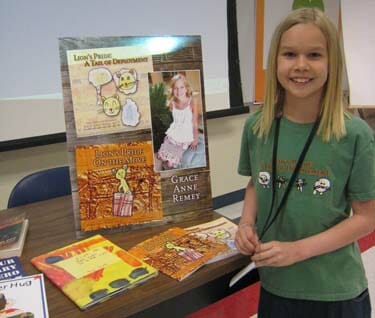
Grace Anne Remey shows her book at a Tucson book fair.
I’ve had an amazing year since becoming a Hasbro Community Action Hero. A couple of weeks after the awards ceremony in New York City – which was so awesome and pretty – my family moved from Arizona to Germany. My dad is in the military, so we’ve moved around a lot.
I didn’t want to move to Germany, but it turned out to be a positive experience. I saw more than 10 castles. My favorite was Frankenstein Castle at Halloween. I also went to Christmas markets and have visited three countries. When I got to my new school, I had trouble making new friends. It was really hard moving, but I got used to it and now I have met new friends and am happy again.
I quickly found places to volunteer. I am still planning on volunteering at our local animal shelter. I have been busy working with Torch Club, which does different volunteer projects. I spent a lot of time doing Project Rudolph Germany, which provides gift bags to military members transitioning through the airport on days leading up to Christmas. I helped Mothers of Preschoolers make bags, received 140 cards from schools near Boston and finally helped hand out bags to troops at an airport in Germany.
This illustration by Grace Anne Remey depicts her
volunteering at an animal shelter, one of her passions.
I felt happy that I was volunteering and making so many other people happy. The best part was seeing the excited faces of the troops when I gave them the bags. I was also able to give toys from Hasbro to other kids through generationOn’s Be a Joy Maker campaign!
I also got some great attention for my book, “Lion’s Pride: A Tail of Deployment,” which came out in 2012. When I wrote it, I knew that I wanted the book to be able to help other children who faced deployment like me. I never imagined that so many people would like it so much. Winning a Bronze Medal for Children’s Book of the Year from the Military Writers Society of America was another highlight of the year. I recently found out that I am a semifinalist for Operation Homefront’s Military Child of the Year. I am really excited about it and hope to win a laptop computer so I can write my next book.
Finally, I was very excited to get a letter from Michelle Obama. She sent pictures of her family and even signed the letter with real ink!
Although it wasn’t always easy and I didn’t want to move, I had a great year. I’ve been able to do a lot more than I thought I would because of the Hasbro Community Action Hero Award. I wish this year’s winners luck and hope they have an amazing year like I had.
Do you know a young person who is doing great work? Nominate him or her to be a 2014 Hasbro Community Action Hero. The deadline is 5 p.m., Eastern, Feb. 25, 2014. Don’t wait – submit a nomination today!