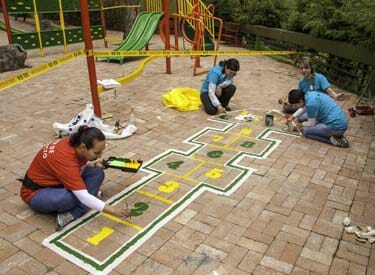
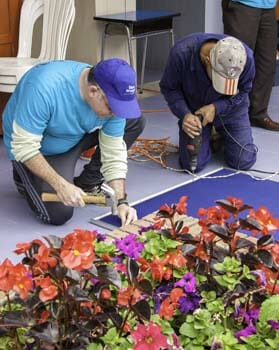
As Hilton Bogotá volunteers planted pine trees, repaired a basketball court, painted picnic tables and more at the nonprofit school Fundación Colegio Nueva Granada during a school day, they had an eager audience.
Hilton Bogotá paint a hopscotch grid on Fundación Colegio
Nueva Granada’s playground.
“A major impact of the project was the fact that the children were watching the volunteers, people they had never seen in their lives, work so hard throughout the entire day,” says Marcela Campos, project manager with HandsOn Bogotá, a HandsOn Network affiliate that facilitated the volunteer project. “I think it gave them a sense of belonging, a sense of, ‘Wow, we matter and look at these amazing people doing something for us.’”
The activities, which took place during Hilton Worldwide’s Global Week of Service in October, show how the leading global hospitality company brings their employees together to serve the communities in which they live, work and raise their families.
During that one week alone – just part of Hilton’s year-round efforts – Hilton employees participated in more than 2,400 service projects, making a difference in more than 730 communities in 72 countries, and bringing to life what hospitality is all about.
Hilton Bogotá volunteers help with a project
at Fundación Colegio Nueva Granada.
For the Bogotá project, beyond planting trees, fixing the basketball court and painting picnic tables, Hilton volunteers also painted a hopscotch course on the playground, created a vegetable garden and installed corkboards in hallways and classrooms throughout the school.
“I loved seeing the smiles on the little kids’ faces after we went to improve their school,” says Felipe Godoy, one of the 48 Hilton Bogotá volunteers. “The fact that I was able to help other people – especially kids that are less fortunate – was inspiring.”
HandsOn Bogotá also partnered with HandsOn Broward for an artwork exchange involving the Hilton volunteers. After their shift at the school, the volunteers traced their hands and painted and cut out the tracings to be arranged on a canvass. Volunteers associated with HandsOn Broward will do the same, and the two nonprofits will display each other’s artwork.
The school volunteer project with Hilton was HandsOn Botogá’s first major endeavor with a corporate sponsor. The nonprofit anticipates similar collaborations in the future.
“We hope this project will give us more exposure and help us reach out to more companies,” says Campos. “I think it shows that we really can be well-organized, cover every detail and help people see the beauty of volunteering.”
Nearly three years after Michael Porter and Mark Kramer published “Creating Shared Value” in the Harvard Business Review calling on businesses to create economic value in a way that also creates social value, we are now seeing a growing number of companies step up to turn that vision into reality.
While Porter and Kramer’s article bemoaned the fact that “most companies remain stuck in a ‘social responsibility’ mindset in which societal issues are at the periphery, not the core,” many companies have recently showed that they are increasingly integrating social issues into the core of their business strategies.
We can see this clearly in this year’s The Civic 50 survey, issued by Points of Light and the National Conference on Citizenship. The Civic 50 was created to measure corporate civic engagement and to recognize top S&P companies that make socially responsible practices and community leadership part of their corporate culture. Businesses recognized as The Civic 50 set the standard for how a company’s time, talent and resources can best be used to improve quality of life in the communities where they do business.
A few findings from the survey show how companies are connecting the dots between their community work and their business bottom line:
Businesses believe that community engagement programs make employees more valuable–employee skill sets have expanded as a result of employee volunteering.
Employees are being evaluated on both business performance and their participation in community work.
Businesses are seeing that a strong, strategic community program has bottom line benefits – improving a company’s brand, recruitment and sales.
Best Practices for Shared Value
Indeed, with companies like those in the Civic 50 stepping up to improve the communities in which they live and work in a serious way that drives business success, we are starting to see a framework and best practices for how companies can achieve real shared value.
“We are encouraged by the results of The Civic 50 survey, which show that increasingly community engagement is recognized as being core to business success,” said Neil Bush, chair of the Points of Light Board of Directors, and Michael Weiser, board chair, National Conference on Citizenship, in a joint statement. “We hope the best practices of The Civic 50 will serve as a valuable resource for other companies that want to transform their business, make a greater commitment to their communities, and change lives.”
Those best practices include:
Institutionalizing corporate policies and practices related to civic engagement.
Tracking the impact of corporate civic engagement on sales, recruitment, retention and skills development.
Incentivizing community involvement throughout the organization – and holding employees and leadership accountable for success. Increasingly, more companies are adding community work to employee reviews.
Volunteering in companies is on the rise and more companies are donating expertise through pro bono support and skills-based volunteering.
Helping their small business and local enterprise counterparts succeed and providing them with the necessary resources to do so.
Institutionalizing corporate policies and practices: At IBM, the Corporate Responsibility Executive Committee includes representation from Community, Legal, HR, Supply Chain, Environment, and Government Relations. The day-to-day work is carried out by a Corporate Responsibility Working Group drawn from all these areas of the company and with global membership. The Working Group convened more than 20 times in 2012.
Corporate civic engagement and the business bottom-line: GE demonstrated many ways community engagement can enhance business drivers. For example, when GE’s corporate audit staff met in Miami for leadership development training, they also carried out a Junior Achievement volunteer project. More than 600 employees participated in the project, and they said that it improved their teamwork, project management, negotiation and presentation skills.
GE also mounted a quick and effective response to Superstorm Sandy. When New York’s Bellevue Hospital Center lost backup power during the storm, service teams from GE Healthcare helped doctors and nurses evacuate and transfer patients and equipment. Elsewhere, GE employees worked long hours to help utilities restore power and volunteered to clear out flooded homes and businesses. In total, the GE Foundation donated $5.8 million in support of Superstorm Sandy relief-and-recovery efforts.
Additionally, as part of its Developing Futures in Education program, the GE Foundation has been advocating for businesses and communities to support the implementation of the Common Core State Standards (CCSS) scheduled to go into effect in 2014 in 46 states. GE sponsored a two-day meeting with business leaders and public officials to explain the impact the CCSS will have on the future workforce. These events occurred in nine cities reaching almost 900 business leaders.
Holding employees and leadership accountable for success: Thirty percent of all employee evaluations at Western Union are based on the “WU Behaviors,” reflecting a strong value of ethics, integrity and community engagement. Responsible behavior includes community engagement and shared value, based on criteria including developing shared value products, leading local fundraising events, volunteering for the Western Union Foundation or in the community. As part of their performance objectives – which are the basis for professional evaluations and bonuses – all Western Union employees are asked to create a “Social Ventures” objective, aimed at reinforcing each individual employee’s commitment to using business assets to deliver business and social results.
Volunteering in companies is on the rise: Members of Capital One’s Brand team developed a pro bono National Brand Campaign for Give an Hour (GAH), a nonprofit dedicated to meeting the mental health needs of returning military troops from Iraq and Afghanistan. For the far-reaching campaign, team members developed television and print PSAs that appeared in Time Square and in Time Magazine, Newsweek, O Magazine, Men’s Fitness and the GAH website. The pro bono brand team’s efforts resulted in an 80 percent increase in volunteers from 2,000 to 10,000 within a four-month time period.
Helping small businesses and local enterprises succeed: Hershey runs a program that sends agricultural and social text messages to rural Ghanian farmers via mobile technology to educate them on up-to-date agricultural practices to help them maximize their yields and incomes. Outcomes are significant, including cocoa yield increases of more than 40 percent, income increases of more than 50 percent and school attendance increases of more than 25 percent.
With all of these inspiring examples of companies stepping up to meet the needs of their communities through their community involvement programs, we are beginning to see how many in the business community are moving away from a “social responsibility” mindset where social issues are at the periphery of business, to one where they are closer to the core of business strategy. What will we see with 2014’s Civic 50 list?
How Did You Celebrate MLK Day?
Enjoying a sunny, spring-like day in Washington, D.C., today, public figures, veterans, students and families gathered at Dunbar High School – the country’s first public high school for black students – to transform Martin Luther King, Jr.’s message of unity and community into hands-on volunteer service.
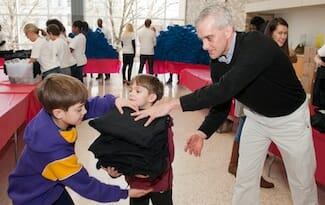
White House Chief of Staff Denis McDonough,
right, helps out on the care pack assembly line.
“Today is a day of service and it’s important to give back,” said Nicole Isaac, a veteran and volunteer who drove in from northern Virginia to help out during the Points of Light Family and Community Fun Day. “We’ve come so far, but there’s still so much more to do to help communities sustain themselves.”
Volunteers – including White House Chief of Staff Denis McDonough, U.S. Trade Representative Michael Froman,
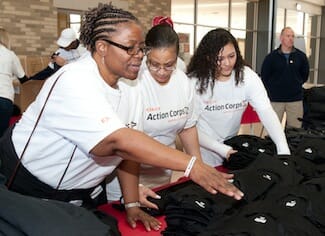
students – assembled 500 care packs containing shirts, shorts, sandals and pants, for wounded service members recovering in hospitals overseas.
Veterans at the event benefited from resume reviews and a resource fair showcasing agencies that help veterans and military families.
Exelis Action Corps volunteers help assemble care
packs for wounded service members.
Meanwhile, kids enjoyed balloon animals and face painting. (One of the boys kept looking up at his mom and asking, “Am I still Batman?”) They also learned how to pack healthy lunches and participated in a fitness challenge – jumping through hula hoops and walking like a crab.
The activities were made possible by the Corporation for National and Community Service. The federal agency, which leads the MLK Day of Service, awarded $125,000 to Points of Light to support volunteer projects at eight nonprofits across the country to feed the hungry, clean up parks and schools, provide financial literacy workshops and more. The nonprofits committed to bringing together 175,000 volunteers through the long holiday weekend.
In another recognition of the MLK Day of Service, today Points of Light honored Christine Wright and her daughter Melanie Stevenson of Birmingham, Ala., with a Daily Point of Light Award. More than a decade ago, Wright and Stevenson created a family tradition of bringing three generations together every MLK Day to volunteer. Read their story here.
It’s not too late to participate in MLK Day of Service-related activities. Visit
, where you can pledge to host an America’s Sunday Supper honoring Dr. King.
Let us know how you celebrated the MLK Day of Service. We’d love to hear from you at
Here’s How to Find Volunteer Opportunities – When You Want, Where You Want
Let’s say you love animals and want to volunteer your time helping abandoned pets in your community. Or, you’re looking for a way to give back this holiday weekend, to recognize the Martin Luther King, Jr. Day of Service.
Try them out today to find volunteer opportunities near you that are meaningful to you. At AllforGood.org, you can search by your area of interest, keywords, and your city, state or zip code. The Huffington post writes, “The largest database of volunteer opportunities online, All for Good is the ultimate platform for finding ways to make a difference. Each month, the site hosts 150,000 local volunteer listings in major cities.”
And generationOn.org “gives young people the tools and know-how to create change in the world,” The Huffington Post says. “From veterans to the environment to bullying, generationOn gives young people concrete concepts and a how-to for ideas, such as recipes to make for families in need or holding a park cleanup.” See a list of projects here.
Serving the Greater Good Without Going Out of Business
This post is by Cristina Garmendia, co-founder of OpportunitySpace, a Points of Light Civic Acceleratorparticipant that aims to bring governments, developers and community organizations together to create vibrant communities.
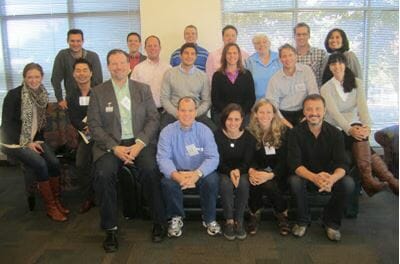
Civic Accelerator teams gather in Atlanta.
What does it mean to be a civic startup?
One of the most common questions we receive here at OpportunitySpace after we explain what we do is, “Wait, are you a for-profit or a nonprofit?” – promptly followed by, “For profit? But how do you make money?” The confusion is understandable. We take public information and make it easier for the public to access it at no charge. (I’m going to leave you hanging on the edge of your seat for a few paragraphs.)
Government often doesn’t know what it owns. It has a worse inventory than your average shoe store. OpportunitySpace has an explicit social mission to provide better data to the public in order to drive community revitalization. Unless you’re great at trolling though tax assessor data, you’re not going to know that a vacant lot is owned by your city. Without stalking your city’s (probably atrociously designed) website, you’re not going to know that the property in question – something your community could put to good use – is up for sale.
We believe that more accessible property data will lead to tangible, quantifiable value for our customers. And there are also less quantifiable social impacts to increasing the transparency of government and increasing citizen engagement.
As we sell governments on the idea, we are honored to be part of the latest group of startups participating in the Points of Light Civic Accelerator, an intensive, 12-week startup boot camp that includes mentoring, entrepreneur education, peer support and networking. We’re joined by 14 other organizations, both nonprofit and for profit, a diverse bunch who share the belief that people are at the center of change. In October, we spent a week getting to know each other in Atlanta. In November, we broke bread in Palo Alto, Calif. In the new year, we’ll come together one last time in New York.
Why be part of an accelerator devoted to civic startups? We have been taking a hard look at our weaknesses so we can make our company more sustainable and a smarter investment. Part of this process has been to more strongly articulate our revenue model. That means defining our value and differentiating between our customers and our users.
What’s the difference between customers and users? Facebook’s users pay nothing and have signed up by the millions. Facebook’s customers are not you and me, rather those willing to pay for access to our eyeballs: advertisers.
So, who are our users? And who are our customers – as in who is willing to pay for access to our users? Our users – including urban agriculturists, artists, next-door neighbors and local developers – pay nothing. Our customers are not our users, rather those who are invested in providing public services: governments.
Like Facebook, one of our jobs at OpportunitySpace is to deliver active users to government. These users represent both greater community engagement in public space and more potential buyers and lessors of government surplus property. We hypothesize that these users will drive cost savings in the form of decreased maintenance costs of vacant properties and revenues in the form of more properties on the property tax rolls.
Let’s wrap up by returning to our initial question: What does it mean to be a civic startup?
For the team at OpportunitySpace, being a civic startup means our success as a company is deeply tied to both improving citizen engagement and quality of governance. Our resolution for 2014? To prove it!
Here’s a Fun Way to Get Your Kids Excited About the MLK Day of Service
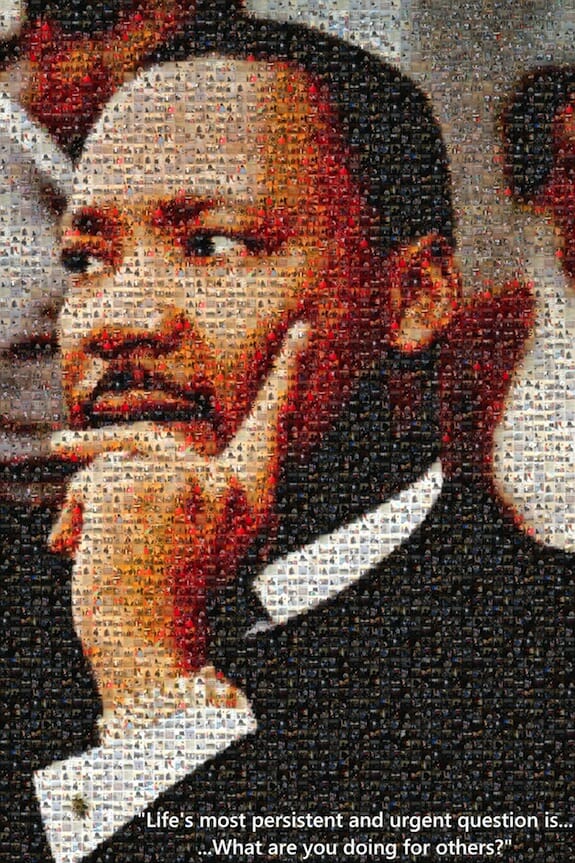
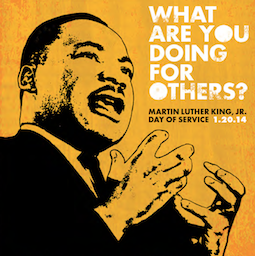
Through art, your kids can share Martin Luther King, Jr.’s message of hope – and win a Samsung tablet in the process.
To enter, students must create posters that answer that question and inspire people to volunteer during the MLK Day of Service, Jan. 20, and beyond. Students in kindergarten through 12th grade are eligible; entries must be postmarked by Feb. 28. In addition to receiving Samsung tablets, winning students may have their posters displayed in the Martin Luther King, Jr. Memorial bookstore in Washington, D.C.
For more information about the contest and other ways to teach children about Dr. King’s legacy, visit www.scholastic.com/mlkday.
And to find out how you can get involved in the MLK Day of Service, go to www.pointsoflight.org/mlk.
The Most Important Number of All
This post is by Tracy Hoover, president of Points of Light.
From a food bank in Los Angeles to a homeless shelter in New Jersey, from a community ravaged by tornadoes in Illinois to a village devastated by flooding in the Philippines, Points of Light brings the power of volunteers where it matters most.
Thanks to the generosity of friends and supporters like you, this year Points of Light and its 250 affiliates engaged more than 4 million volunteers, who supported 75,000 nonprofits in 29 countries around the globe. That’s more than 250,000 service projects – nearly 21,000 every month. Together, these volunteers contributed 30 million hours of service to addressing critical community problems.
At a time when community needs are so great, and government can’t do it all, volunteers are more vital than ever. We see this every day, and I’m sure you do, too. In fact, as you consider the cause that is most important to you, just think about the role that volunteers play in addressing that issue.
As the new year approaches, we hope your New Year’s resolutions include using your time, talent and influence to make a difference for the issues you care about. Your service matters – now, more than ever. And, as you consider your year-end giving, we hope you will
. Your gift will help us inspire, equip and mobilize millions of people just like you across the globe.
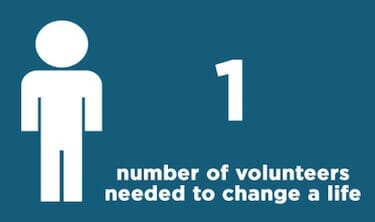
One.
Give Some Real Joy to the World
This post is by Calla Gilson, 17, who inspires other young people to get involved in service as a National Youth Advisory Council member for generationOn, the youth enterprise of Points of Light.
Calla Gilson
The great anticipation for Dec. 25 is upon us and with all of the rushing about to prepare for the perfect Christmas Day celebration, somewhere along the way, something has been lost. Somewhere between the Christmas cookie chaos, and the search for stocking stuffers, the joy that is supposed to come so easily to the world during these weeks has been misplaced.
For me, the search for this joy started early. Even before Thanksgiving, national news coverage seemed to be devoted to the craze of an even earlier Black Friday rollout. But where was the Christmas joy in those long lines, cramped aisles and sometimes downright violent encounters? Where was the giving in all of this grabbing?
It wasn’t until the night of the annual Christmas pageant at my church that I realized that the power to bring joy was within my own hands. As the audience joined our young cast in singing “Hark the Herald Angels Sing,” members of the congregation began to bring canned goods to the manger for those in need. One by one, smiles filled their faces, as they recognized the true joy that giving creates, not only for those who are served but also those who do the serving.
In that instant, the atmosphere of the performance shifted. It was no longer about the preteen angels outfitted with bed sheets and glow-stick halos, or the sweet sound of “Away in a Manger” from the preschoolers. The story had been liberated from the stage and was now being brought to life in the community.
The joy found in the spirit of Christmas calls us not only to celebrate, but to share with those who need it most. This Christmas season,
.
Let’s return the “giving” to the Season of Giving, and allow the incredible power of service to bring “Joy to the World.”
Why You Should Volunteer With Your Kids
This post is by Ilene and Michael Berson, education professors at the University of South Florida and parents of Marc, a member of the generationOn National Youth Advisory Council, and Elisa, a Robertson Scholar at Duke University.
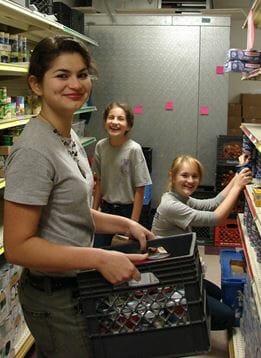
Volunteering together as a family teaches
kids about cultural differences. Above, the
Miscoes of Texas help at a food pantry.
Volunteerism and community engagement are critical components of our family life. Service experiences promote learning through active participation, provide structured time for all members of our family to reflect, create opportunities to use skills and knowledge in real-life situations, extend learning beyond the classroom and foster a sense of caring for others.
As a family, we discuss what we have learned from each experience about ourselves, the issue addressed and the people involved, including transformations that we each observe. Our children’s reflections on their experiences have been powerful, as volunteering has enhanced their awareness of culture, diversity and individual differences.
In our service work, we focus on comprehensive community-building efforts that seek to impact significant social issues by emphasizing the economic, social and physical transformation of an area. In order to build a healthy community, an active citizen base is needed. We believe that through such involvement, our children become empowered and engaged. They learn to build upon the skills, assets, networks, relationships and mediating structures of the community.
This approach teaches our children to value the wisdom of the community and creates shared responsibility and ownership to improve the health and well-being of community members. These hands-on experiences also actively mobilize our children as agents of social change, shifting power to them and recognizing that they have a voice that can be used to call attention to otherwise marginalized or underrepresented issues. They have come to realize that their knowledge as young people is valuable and can affect change.
In raising our children we have focused on building or strengthening existing social networks and support systems for their emergence as agents of community mobilization and action. As parents, we model for our children how to assume an active role in collaborative community-based partnerships that work toward the creation of safety and well-being for all children and their families.
This is based on our belief that inclusive interaction through service initiatives promotes in our children a heightened awareness of available social, emotional and financial resources; a commitment to overcome the barriers of rigid solutions in responding to complex issues; and a determination to participate in the interaction of systems of care that will better inform the development and implementation of policy, planning and service delivery.
Ultimately, this exchange exposes our children to diverse efforts to protect, defend and promote the rights and welfare of others, and challenges them to take action on behalf of those in need.
The Bersons took part in Family Volunteer Day, Nov. 23. Disney Friends For Change, a Disney initiative dedicated to inspiring kids and families to make a positive change in the world, was the presenting sponsor. Embassy Suites was a supporting sponsor. Find out how your family can make a difference this holiday season by visiting generationOn.org.