Dreams, Grit, and Trust: Foundations of a Civic Startup Accelerator
Today’s post is republished from GOOD.is on Nov. 8, written by Ayesha Khanna, president of the Civic Incubator at Points of Light, the world’s largest organization dedicated to volunteer service.
Whenever I’m looking for inspiration or a reminder of the impact a few committed people can make, I go back to the time I spent in India after college. I was part of a small group made up of women from the villages of Dayalpur (outside New Delhi), health professionals from the United Kingdom, village elders, an innovative nonprofit and Mother Teresa’s order of nuns. Together, we worked to improve access to education and build a health center.
It was grueling work. And we challenged a lot of traditional thinking. We acted on the belief that all children deserve access to education, including disabled kids; that everyone should pay and contribute to something no matter how impoverished; that a group of women could not only build a health center, but also a new institution.
Our nonprofit partner understood local politics and was able to secure seed money. The health professionals from the UK had proven methodologies for designing and delivering services. The women from the village were creative and resourceful, enticing businesses to provide cheap, quality materials and bringing their children to be tested and enrolled. The nuns, tough and hardworking, slept at the construction site when we couldn’t afford security and walked miles to secure customers and partners.
We succeeded because we trusted and relied on each other’s strengths. We succeeded through the grit and power of people.
A lot has changed in the past 20 years, but it’s still true that social entrepreneurs often work in isolation without the networks and feedback they need or the tools and access to capital that would best help them.
I wondered if we at Points of Light could change that.
Could we bring entrepreneurs together to share what they know and tap into a broader network of resources and inspiration, building trust and connectivity?
We started with a focus on the dreamers and doers and a quest to find amazing people and built a support system that helps them access investments and resources to grow. Because our challenges know no boundaries, we decided our solutions shouldn’t either. We’re determined to support both for-profit and nonprofit enterprises.
We found a true partner to launch this joint venture in Village Capital, a global social enterprise accelerator that takes its name from village financing, where individuals pool their resources and decide themselves who is most deserving of the money. Not as a gift, but as an investment that will be paid back over and over. Surely, we thought, new, emerging civic ventures in the U.S. need similar kinds of pooled resources.
Accelerators have successfully launched for-profit technology and mobile companies for over a decade. We chose to use that model and had the chance to experience it first hand as participants in the Flashpoint accelerator at Georgia Tech. We also found critical supporters with innovation in their DNA in the PwC Charitable Foundation, Inc. and Starbucks Foundation.
The Civic Accelerator we will launch in a few weeks brings me back full circle to India. I am once again working with modest means, against big odds, but with smart, hard-working people who want to change our part of the world. What a gift to be able to help social entrepreneurs launch their dreams to do good—and what fun to build a larger ecosystem to help make it so.
Stay tuned for more information on the 10 ventures we’ll be supporting. And if you’re a dreamer and a doer, apply for a slot in our next program. Find more information online or email us at [email protected].
How to Run a Successful Startup: Change By Being Exactly the Same
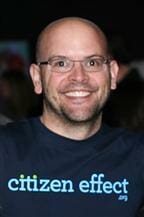
Today’s second blog for the Investing in Innovation series, is written by Dan Morrison, founder and CEO of Citizen Effect.
The Investing in Innovation blog series highlights world-changing ideas and startups and is made possible by the Civic Accelerator, a Points of Light and Village Capital venture. If you would like to have your civic-focused startup considered for inclusion, please inquire here.
The Investing in Innovation blog series highlights world-changing ideas and startups and is made possible by the Civic Accelerator, a Points of Light and Village Capital venture. If you would like to have your civic-focused startup considered for inclusion, please inquire here.
There are businesses you start because you see a hole in the market and a chance to make a buck. Then there are nonprofits you start because there is a social problem you need to solve. With Citizen Effect, it was both. I guess that is why they call us a “social enterprise.”
Starting an organization from scratch is like being a chef without your own recipe. You have your own ideas but are constantly Googling and talking to others about ideas and examples of how to make it work. The issue in the new and booming social enterprises space is that there are not the tried and true success stories everyone can follow. You have to beg, borrow and “steal” from aspects that worked across different organizations. Being a nonprofit has its advantages and disadvantages. We were never able to go out and raise a large first round of investment to cover start-ups costs. But living in a bootstrap environment forced us to operate efficiently and experiment along the way.
Which leads me to the point of this post. There are two things I always say about Citizen Effect. First, Citizen Effect does the exact same thing today as it did back in December 2006 when I came up with the idea. Second, the key to Citizen Effect’s success has been modifying it based on new and better ideas from team members and the random person on the street. Those two points sound contradictory. They’re not. Here’s why.
When you strip away all the messaging and branding we use to market Citizen Effect, the nuts and bolts of what we do are the same. We find community-based projects that need money to get done. We find a passionate person to step up and lead and fundraise for the project. We give the person the tools and help they need to market and promote the project to their friends, family and social network. We did that at the beginning. We do that now. Nothing has changed.
However, the real question and challenge is HOW we deliver that mission. That is where all the innovation and tweaking comes in, and there have been three major tweaks as Citizen Effect adapted over the years.
Tweak 1: The original name of Citizen Effect was 1Well. I fundraised for a well in India – our first project – and saw the impact one well could have on a community. The second project we did was an irrigation project. It wasn’t a well, but we thought 1Well spoke to broader issues and how everyone was connected. Then Charity Water came along. We found ourselves competing against someone we didn’t see as a competitor and this gave us the excuse to rebrand as Citizen Effect and signal we were about empowering citizen leaders, not just about raising money for water projects. It was a critical move for us internally and externally. Internally, we realized the passionate citizen who was fundraising was at the center of our business, not the cause or project. Externally, it signaled that we were not a water- or cause-focused organization but a citizen-focused organization. We were more of a movement than a cause.
Tweak 2: At the beginning, we were very hands on. Our original website was a glorified online brochure with a donate button. It had static content that we would make look dynamic by updating it often through Expression Engine. We did a lot of one-on-one recruiting of users, phone calls to help people who had never fundraised develop their fundraising strategy, and event appearances when we could. Clearly not a scalable model. But the human touch became part of our DNA. As we developed a more robust technology platform, we didn’t expect technology to do it all. We knew that community development and fundraising was personal and it was our personal touch that became our differentiator. While other models focus on high volume, Citizen Effect focuses on high quality. We screen all of our fundraisers (or Citizen Philanthropists as we call them) and work with them because we want to make sure they complete their goals and become better community leaders through the process.
Tweak 3: We have always been seen as an international organization, both internally and externally. Our first partner was the Self Employed Women’s Association (SEWA) in India. The second was Coprodeli in Peru. We then partnered with groups across Africa and Asia. We developed a few partnerships in the U.S., but they were never the focus. Then the John L. and James S. Knight Foundation asked us to bring our model to the U.S. We are running Detroit4Detroit and Philly4Philly, initiatives that will connect 150 passionate citizens to 150 critical projects in each city. Our domestic portfolio will account for more than 80 percent of our projects and donations this year. And we are looking to expand to other cities across the country. That is a huge change for us.
Many ask if the domestic work is the right decision. I go back to the two things I know are true about Citizen Effect and any start-up. What we do in the U.S. and do internationally is exactly the same – empower passionate citizens to complete critical community projects – no matter where they are. Our operations and how we manage those users are exactly the same. And for Citizen Effect to survive and thrive, we need to adapt. Don’t get me wrong, you can adapt your way out of your business model and that is death. But you need to adapt within your model. Everyone at Citizen Effect knows who we are and what we do. But we are still learning how to do it better. And that will never change.
Check Your Ego at the Door
Today’s guest post, first of the Investing in Innovation series, is written by TJ Muehleman, co-founder and CTO of We&Co.
The Investing in Innovation blog series highlights world-changing ideas and startups and is made possible by the Civic Accelerator, a Points of Light and Village Capital venture. If you would like to have your civic-focused startup considered for inclusion, please inquire here.
As a graduate of Atlanta Village Capital and a soon-to-be-graduate of Georgia Tech’s Flashpoint, We&Co has the unique perspective of having gone through two different accelerators. So, I didn’t hesitate when I was asked to offer up my thoughts on what to keep in mind when doing an accelerator program.
For a young start-up, having the guidance, networking and opportunities that a program like this provides is invaluable. It’s also an opportunity to check your ego at the door. It’s staggering the sheer number of times we’re challenged on what we’re doing, asked difficult questions about our business model or told we’re this side of crazy for pursuing what we’re doing. Participating in an accelerator can also be maddening, frustrating and make you want to pull your hair out. So yeah, you get the best of both of worlds.
With that short intro out of the way, here are five things to keep in mind before entering an accelerator:
Prepare for brutally honest feedback. Yup, if you’re looking for kumbaya moments and unicorns, an accelerator ain’t the place for you. The role of an accelerator is to get you to challenge your assumptions, test them against the market and dump anything that is not working. And do that very quickly. The programs we’ve been part of have done a darn fine job of telling us how crappy our ideas are. How stinky our hypotheses are. How difficult it’s going to be to turn this “experiment” into a real business. They’re not telling you these things because they don’t like you; rather, they’re telling you because you need to hear it. Prepare yourself.
Move fast. Real fast. See number one above. You will not have time to marinate over decisions, give yourself three months to build the coolest new feature or six months to let the market mature. You have a very limited window of time to see if the market “pulls” you in a certain direction. So figure out how you can break your tests down into discrete parts that can be validated (or most likely invalidated) in a few days, or a week at most. Look at your development calendar in day- and week-long sprints to see if you can push smaller features out.
Take advantage of mentors and don’t be afraid to ask for help. Entrepreneurs are a proud bunch. They think they have all the answers and can solve every problem on their own. This is definitely something that plagued us early on (well, all the time). We didn’t ask for enough help. The beauty of an accelerator program is you’re surrounded by smart, capable people who have gone through this before. Ask for help. Get them to set up meetings for you. Tell them exactly which problems you’re encountering and ask for feedback. If they weren’t interested in helping, they wouldn’t be there, right?
Don’t forget who you are. This is something I’ve seen time and time again. Your job is to find a problem and fix it with your company. Your job is not to let every piece of advice sway you this way or that. This is a dilemma few if any really talk about when it comes to start-ups: everyone and their mother will tell you which way to go. Pivot here, pivot there, pivot everywhere. But your internal compass is the most important thing you need to listen to. Find a few key advisors you know and trust and listen to them. Everyone else, politely take their feedback and weigh with a grain of salt. Because, ultimately, it’s up to you to make your company work.
Have fun. Running your own gig is a blast – don’t forget that. You will have crappy days where everyone tells you your idea stinks. Customers will turn you down. You’ll lose a big contract. A few months back, we were having a really tough time and it showed. One of our biggest champions told us pretty plainly, “you guys are a bunch of downers. Get your s**t together boys.” And he was right. We’d stopped having fun and it showed. Remember: things will suck, but stick with it. Keep a positive attitude and do things that are fun.
More than 150 social entrepreneurs, impact investors and community partners came together as part of a Community Innovation Breakfast on June 19, hosted by Starbucks, to celebrate a new strategic partnership and the call to action for supporters of the Civic Accelerator, a new Points of Light and Village Capital venture.
Leadership from partner and investor Starbucks was on hand to share the news and provided a challenge for other funders to step up to match their extraordinary gift.
The Civic Accelerator is the first national startup accelerator focused on civic ventures – for-profit and nonprofit ventures that create social good and inspire, equip and mobilize individuals as part of the solution. The 12-week program will apply tools from for-profit accelerators to build an ecosystem of social entrepreneurs, impact investors and stakeholders to increase the likelihood of success for civic ventures and create real change in our communities. Social entrepreneurs accepted into this competitive program will benefit from mentoring, entrepreneur education, peer support and networking in addition to investments made across the cohort and larger seed investments for two of the most promising solutions selected by the entrepreneurs themselves.
The team shared plans to identify other partners and funders over the summer months to prepare to launch an initial cohort of 10 teams from around the country by the end of the year.
Economic Opportunity at National Conference on Volunteering and Service
When you attend the sessions featured in our economic opportunity track at this year’s
, you will learn how to manage your family’s finances and taxes, how to create economic opportunity for immigrants, how nonprofits can help with financial sustainability and much more. Check out some of the sessions focused on economic opportunity listed here:
In this session, participants will learn how Upwardly Global creates economic opportunity for new Americans. Volunteers help underemployed refugees and immigrants learn to navigate the U.S. professional job search while building their own cross-cultural communication skills.
What are the key components of an effective job readiness program? How can we sustain these programs while remaining true to the needs of our communities? This workshop will foster strategic skills in sustainability.
The National Endowment for Financial Education is committed to continual development of money tools and resources for volunteers, and would like to introduce the entire suite of money resources for their use and use of their clients.
Speaker(s):
For aspiring families and students, tax time is ideal to discuss making college a reality by accessing financial aid. Learn how FAFSA preparation compliments your mission of promoting financial security for all.
Speaker(s):
Explore D2D’s award-winning online video games that teach financial concepts. Learn how to use the games as a volunteer training resource and as a tool for volunteers to use with the community to teach hard-to-reach audiences.
The Van Buren Intermediate School District has been recognized locally and nationally for their innovative tax and service learning programs. Learn how the VBISD is using intergenerational partnerships and technology to transform their community.
Speaker(s):
Nonprofits, governments, foundations and companies want to serve their communities.
social innovators have new ways to help people channel creativity for economic and social good. Join Chase to see how economic empowerment runs across sectors and how a shared vision can be an economic driver.
Speaker(s):
for the National Conference on Volunteering and Service now to learn from the best.
News Flash: A Billion + Change Reaches 100-Company Milestone
A Billion + Change, a growing national campaign to mobilize billions of dollars of pro bono and skills-based volunteer services from corporate America, announced today that 100 companies have pledged to create or expand a skills-based volunteer program in their workplace.
In just six months, these companies have pledged a combined total of $1.7 billion and at least 11.5 million hours of time and talent to nonprofits, taking the campaign a one-fifth of the way toward its goal of recruiting 500 companies by 2013.
“We believe that building the capacity of businesses to more effectively engage the time and skills of their employees in service is central to meeting the critical needs in our communities,” said Michelle Nunn, CEO of Points of Light, which houses and manages A Billion + Change.
Pledge companies – including Allstate Insurance Company, IBM and The Ritz-Carlton Hotel Company – work to support many aspects of community needs, from workforce development, health care and the needs of veterans and military families, to creating empowering opportunities for women and girls. For nonprofits and communities, the value of skilled support in areas such as general operations, technology and professional services can be 500 percent greater than the value of traditional volunteering.
A Billion + Change is a national campaign to mobilize billions of dollars of pro bono and skills-based volunteer services by 2013. It was launched by the Corporation for National and Community Service in 2008 and continues as an initiative of the federal agency. Reinvigorated in 2011 with expanded leadership under the honorary chairmanship of Sen. Mark Warner, it is now housed and managed by Points of Light, the world’s leading volunteer organization that is dedicated to inspiring, equipping and mobilizing people to take action that changes the world.
The initiative is powered by the support of Deloitte, HP, the Case Foundation and IBM with additional founding support from State Farm, McKenna Long & Aldridge LLP and Morgan Stanley.
A list of pledge companies, and information about how to take the pledge, is available at www.abillionpluschange.org.
From A Thousand Points of Light Toward New Innovations in National Service and Social Impact
Today’s guest post is written by Jackie Norris, the Executive Director at the Points of Light Corporate Institute, an Iowan by way of NY, Mom to 3 Boys, Previous Chief of Staff to Michelle Obama. You can find her on twitter: @MsJackieNorris
When President George H. W. Bush invoked a thousand points of light in 1989, he set off a movement of individuals, nonprofits and corporations working together to create positive change in our communities through volunteer service. He was also the catalyst for launching Points of Light, which is today the nation’s leading volunteer organization dedicated to inspiring, equipping and mobilizing people to take action to change the world.
More than 20 years later, the need for volunteer service is greater than ever before. Every sector of our society is facing serious challenges, from our uncertain path toward economic recovery and social unrest at home and abroad, to the cultural and demographic forces shaping our society and workplaces. But as the decades have brought more complex challenges, they have also brought innovations in service and deep commitments from the private sector to take a greater role in creating a more sustainable world.
A Billion + Change is a great example of the kind of innovation and of the growing scale of commitments taking place in the nonprofit, business and service sector. A Billion + Change is a national campaign to mobilize billions of dollars of pro bono and skills-based services by 2013. It is challenging and inspiring companies to lend their most valuable assets—their talent and their human capital—to help nonprofits achieve more with scarce resources, so they can be effective agents of change.
The scale of corporate commitments to this campaign so far has been significant. In November 2011, 50 companies had pledged more than $1 billion worth of skills-based volunteer services to build nonprofit capacity. Today, on International Corporate Philanthropy Day, the campaign will announce progress toward its overall goal of having 500 companies pledge to create or expand a pro bono program. Together, these companies are stepping up to inspire the largest commitment of corporate pro bono service in history.
There is also a lot to be said about encouraging companies and employees to lend their professional skills to build nonprofit capacity. For nonprofits, the value of skilled support in areas such as general operations, technology and professional services can be 400% greater than the value of traditional volunteering. So in a real sense, A Billion + Change is redefining what it means to help.
Morgan Stanley, whose annual Strategy Challenge is an excellent example of the value skills-based volunteering can have on nonprofits. Since it began in 2009, this initiative has used the financial analysis and business strategy expertise of its talented professionals to deliver more than 14,500 hours of skills-based volunteer services to nonprofits. These services are worth approximately $2.2 million, and have been contributed to 36 nonprofits across the nation. A team of Morgan Stanley employees participating in the Strategy Challenge was able to save New York-based New York Cares $30,000 annually by recommending improvements to its volunteer on-boarding process in 2009.
Pledge companies are delivering high-impact volunteer services like this daily to address every aspect of community needs, from education and healthcare to economic and community development programs and programs helping victims of domestic abuse.
I ask you to ask yourselves: have you, as an employee, an employer or as a civic leader, thought about how you or your company can contribute your skills, knowledge and talent to join the growing pro bono movement? To learn more, visit A Billion + Change online, and take part.
Civic Entrepreneurship: Doing Well by Doing Good
Today’s guest post is written by Benjamin Kotey, the Venture and New Program Development intern in the Civic Incubator at Points of Light. He provides research support in new program developments and analysis of the social enterprise arena. He holds a BBA in Risk Management and Insurance, and a graduate degree in Economics from Georgia State University.
When I first read about Jon Bon Jovi’s Soul Kitchen Community Restaurant in N.J., I couldn’t help but to think of the phrase civic entrepreneurship. A phrase I got very well used to mentioning as an intern with the Civic Incubator unit here at Points of Light
Bon Jovi’s Soul Kitchen Community Restaurant on the prima facie is just like any restaurant except there are no prices attached to the menu. The model is simple: 1) Eat the meal of your choice and pay an amount equivalent to what you think the food is worth, of course above a certain minimum; 2) Volunteer in the kitchen and enjoy a free meal; or 3) Volunteer somewhere else and earn a voucher with which you can eat free food from the restaurant. In short, if you are financially stable, pay for the food you eat. If you don’t have enough money, you can do some volunteer service and we will feed you. So, in essence, we have here a clear picture of a solution to a hunger problem, and at the same time a mechanism to encourage community involvement. This I would call a multi-platform approach to tackling social problems.
Civic entrepreneurship has been around for some time now, but the phrase is only catching on as more and more people are seeking ways and means to do well by doing good. The phrase civic entrepreneur is often extensively used to describe people who are employing innovative approaches and the power of community involvement to tackle social problems.
Let us look at another civic entrepreneur: Charles Best, the founder of DonorsChoose.org. He also offers a clear example of how individuals can tap into the power of innovative and creative thinking to solving social problems. As a Social Studies teacher at Wings Academy (a public high school in the Bronx), Mr. Best realized his class wasn’t able to carry out certain projects due to lack of adequate funds. This problem and his search for a solution led to the creation of DonorsChoose.org, a website that allows teachers all over the country to post classroom projects in order to receive funding through the power of crowd sourcing. Since its inception in 2000, more than $106 million has been raised and nearly 6.2 million students have been helped. Again, we have a clear picture of an innovative solution to a persisting social problem.
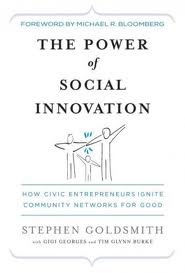
“To us, civic entrepreneurship represents both the spirit of change and the spirit of community.”-Stephen Goldsmith, author of The Power of Social Innovation
Past and present civic entrepreneurs provide us with examples of how we can view our communities as solution–driven rather than problem-driven. This statement consists of two ideas. One (problem-driven) is the idea of looking around and seeing only problems, then sitting back and hoping that it’ll all change soon. The second (solution-driven) is the idea of using creative and innovative thinking to tackle our present social problems through a hands-on approach. The second part, I believe, submerges the effect of the first. That is, solution-driven communities in the long run can lead to problem-free communities. Just like Jon Bon Jovi and Charles Best, everyone has the power to make a difference; everyone is a change agent and a civic entrepreneur in one way or the other.
Leaders from HandsOn Network’s 10 Innovation Hubs recently came together for a five-day summit near Atlanta to share creative ideas, develop new strategies to engage volunteers and create cutting-edge community engagement models that can be replicated across the network.
“The summit was an intentional and strategic deep dive into innovation and how it is applied to community challenges in a rapidly changing world,” said Tara Smith, executive director of Seattle Works. “I think it ignited a conversation that would have otherwise not happened and will yield powerful results for our role in community transformation across the country.”
The summit included presentations by Alison Fine, co-author of the bestselling “The Networked Nonprofit,” Rick Smyre, president of the Center for Communities of the Future, and Michael Margolis, founder of Get Storied, who helped drive and enhance the ideation process. It was facilitated by Michelle James, founder and CEO of the Center for Creative Emergence.
Now back at their respective offices, each Innovation Hub is working to develop strategies and plans based on the themes that emerged during the summit including:
How might we modernize and reinvent “done in a day” projects? While HandsOn Network revolutionized this work 20 years ago, we are searching for ways to build on our success, while at the same time developing strategies attuned to changing local conditions and delivering a demonstrable social impact.
What are new forms of ongoing projects we should create and develop? For instance, creating meet-ups to develop online guides for communities or developing a community-wide contest to preserve green spaces.
How can we create a civic tipping point? How could a HandsOn Network affiliate address one specific service area like education, environment, economy or emergency preparedness, and create measurable change?
HandsOn Network’s first group of Innovation Hubs – Boston Cares, Chicago Cares, HandsOn Central Ohio, HandsOn Greater Portland, HandsOn Twin Cities, New York Cares, Seattle Works, Volunteer Center of Bergen County, Inc., Volunteer Center of Santa Cruz County and Volunteer Marin/Center for Volunteer and Nonprofit Leadership – were chosen for their potential to innovate and their desire to advance the collective mission of HandsOn Network, Points of Light’s network of local volunteer action centers.
This strategic investment supports the Innovation Hubs in becoming learning labs for community engagement , experimenting and testing new ideas, programs and strategies to meet the needs of 21st century volunteers and communities and replicating promising practices across the country.
“To me, acting like a network is moving the best ideas freely between us all to help us all be better, faster and more successful,” said Smith.
Hatching An Idea Into A Civic Venture
Today’s guest post is written by Benjamn Kotey, the Venture and New Program Development intern in the Civic Incubator at Points of Light. He provides research support in new program developments and analysis of the social enterprise arena. He holds a BBA in Risk Management and Insurance, and a graduate degree in Economics from Georgia State University.
About a year ago, I heard this song by Diana DeGarmo entitled “Dreams.” It starts with something like “dreams are just dreams when they are stuck inside your head…” and the lyrics go on from there. This song struck a chord with me because I’ve always been fascinated by how something as abstract as an idea of a social venture, can be turned into something tangible to be witnessed by other people, and even have a real social impact. If you are a social entrepreneur trying to start a new venture, the question of how to turn an idea into a real solution is easy to answer when you have the necessary resources at your disposal. On the other hand, this is a difficult question to answer when you don’t have those resources at hand.
With the latter scenario, how then do you move from point A to point B? At this point, building a solid business plan or a model with which you can convince funders to support your venture and solicit help from potential partners can help. For startup non-profit and for-profit civic enterprises, the process of building a business model is essential because not only does it help you define your value proposition, vision and mission, but by tackling some of the difficult questions such as the four Ws (what, why, where, who), you the civic entrepreneur, becomes better equipped with a plan of action and a solid sense of direction than before.
I spent the last three months at Georgia Tech Flashpoint with the Civic Incubator team from Points of a Light going through the process of building a business model for a new program that we were working on. Judging from where we started to where we are now, I would say that it paid off, given the amount of time that we spent pondering over some difficult questions, writing and rewriting our value proposition. Now we have a clear sense of what this program is about and a clear sense of direction as to what steps to take next. I am proud to say that the idea is no more stuck in the head.
Once you have your ideas written down and tested the next step is action. Fortunately for for-profit startups out there, there are over 200 accelerator programs like Flashpoint in the country that are providing mentoring, seed funding, office space and networking opportunities to help entrepreneurs bring their ideas to life. On January 10, 2012, Flashpoint held its Atlanta Demo Day and it was incredible to see how some of the teams have grown, having been there to observe some of the pitch practices. Hundreds of startups are graduating from these programs each year and they are making effective contributions to the economic growth and development of their localities. The majority of these accelerator programs are focused on technology and for-profit startups. But with more than 50,000 nonprofit organizations popping up each year, coupled with the benefits that come with increased civic engagements and community building activities, it looks like startup civic enterprises can use some accelerator programs here. Check out what Points of Light is doing in this space. After all, we can’t have great positive ideas just stuck in our heads.








 Today’s guest post is written by Jackie Norris, the Executive Director at the Points of Light Corporate Institute, an Iowan by way of NY, Mom to 3 Boys, Previous Chief of Staff to Michelle Obama. You can find her on twitter:
  Today’s guest post is written by Benjamin Kotey, the Venture and New Program Development intern in the
 Past and present civic entrepreneurs provide us with examples of how we can view our communities as solution–driven rather than problem-driven. This statement consists of two ideas. One (problem-driven) is the idea of looking around and seeing only problems, then sitting back and hoping that it’ll all change soon. The second (solution-driven) is the idea of using creative and innovative thinking to tackle our present social problems through a hands-on approach. The second part, I believe, submerges the effect of the first. That is, solution-driven communities in the long run can lead to problem-free communities. Just like Jon Bon Jovi and Charles Best, everyone has the power to make a difference; everyone is a change agent and a civic entrepreneur in one way or the other.
 Today’s guest post is written by Benjamn Kotey, the Venture and New Program Development intern in the
  With the latter scenario, how then do you move from point A to point B? At this point, building a solid business plan or a model with which you can convince funders to support your venture and solicit help from potential partners can help. For startup non-profit and for-profit civic enterprises, the process of building a business model is essential because not only does it help you define your value proposition, vision and mission, but by tackling some of the difficult questions such as the four Ws (what, why, where, who), you the civic entrepreneur, becomes better equipped with a plan of action and a solid sense of direction than before.