With Unique Employee Programming, Arconic Connects Corporate Values with Meaningful Community Engagement
Companies of all sizes are seeking strategies to engage diverse employees and advance inclusive values. Arconic, a global leader in lightweight metals manufacturing and engineering, is on the cutting edge of diversity and inclusion initiatives. Leveraging three unique programs to engage its more than 41,500 employees worldwide, Arconic links organizational goals and values with opportunities to make a meaningful difference in the communities where its employees live and work.
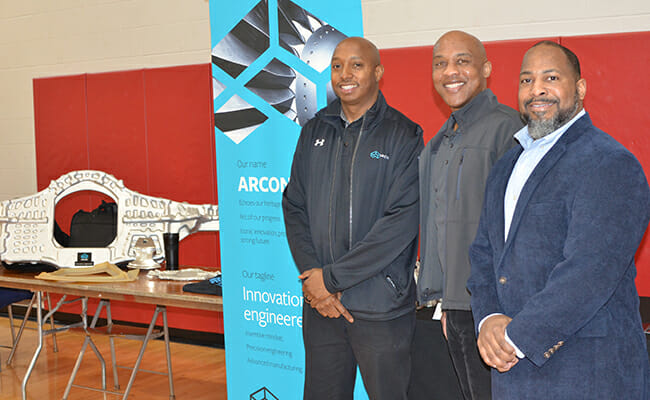
Employee Resource Groups have a proactive role in inclusion and diversity efforts, as critical drivers of employee engagement; recruitment and retention; and brand building through community engagement. There are six ERGs available to Arconic employees, representing women, people of African heritage, Hispanics, LGBTQ, early-career employees and veterans. One of the longstanding ERGs, the Arconic African Heritage Network, has made community engagement a cornerstone of its mission. The group partners with the National Society of Black Engineers on several initiatives, including activities for middle school and college students. For example, Howard University students get hands-on manufacturing exposure through touring Arconic’s facility in Lancaster, Pennsylvania, and interacting with plant personnel. And in Davenport, Iowa, employees sponsor and train a local robotics team with grant support from the Arconic Foundation, which provides funding for STEM and workforce development initiatives in communities where Arconic facilities are located.
Arconic’s ERGs have played a major role in leading volunteerism for the company; in fact, nearly 50 percent of the more than 200 volunteer events Arconic has participated in to date in 2018 have been led by ERGs – many of them supporting engineering and technical skills training at colleges and technical schools, and creating access to STEM education opportunities for members of under-represented communities. By connecting the ERGs to available nonprofit support through the Arconic Foundation, the company is able to build the narrative of manufacturing as an exciting profession and career option.
“As chair of the Arconic African Heritage Network and a director of Arconic Foundation, I am sensitive to and proud that our ERGs and foundation work together to expand and multiply our impact in communities where we work and live,” said Bruce Thompson, who also serves as vice president, internal audit, at Arconic. “Their collective work has been tremendous and all employees should be proud of it.”
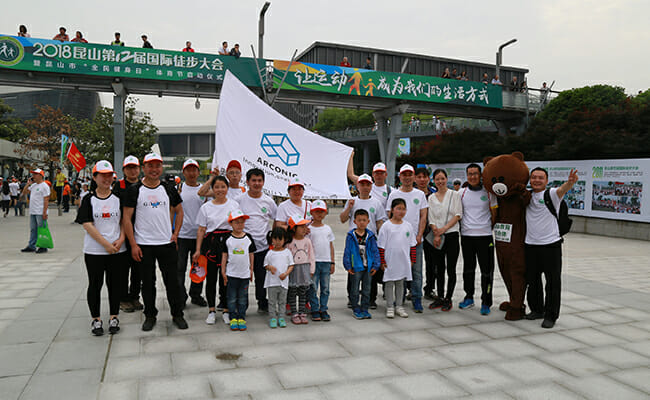
Arconics in Motion promotes wellness and physical fitness through charity. AIM encourages employees, as well as their friends and families, to participate in marathons, walks, rides and other fitness events that benefit cause-based community organizations. The program offers a way to make an impact, encourages teamwork and builds camaraderie amongst employees.
Arconics Coming Together in Our Neighborhoods supports employees volunteering their time, energy and skills for service projects that directly address community needs. ACTION projects are as diverse as the communities they serve and are not prescribed by foundation or corporate leadership. Projects range from skills-based volunteering in STEM camps and school robotics programs, to hands-on community clean-ups, packing meals for charitable meal delivery, and rebuilding homes for veterans.
To maximize impact, project participation carries a minimum of 16 hours, where at least four employees engage for four hours. Opportunities are deployed through ERGs, employee-led community advisory boards or a single point of contact at each Arconic location, with a focus on diverse projects that employees care about and that foster a direct connection to communities.
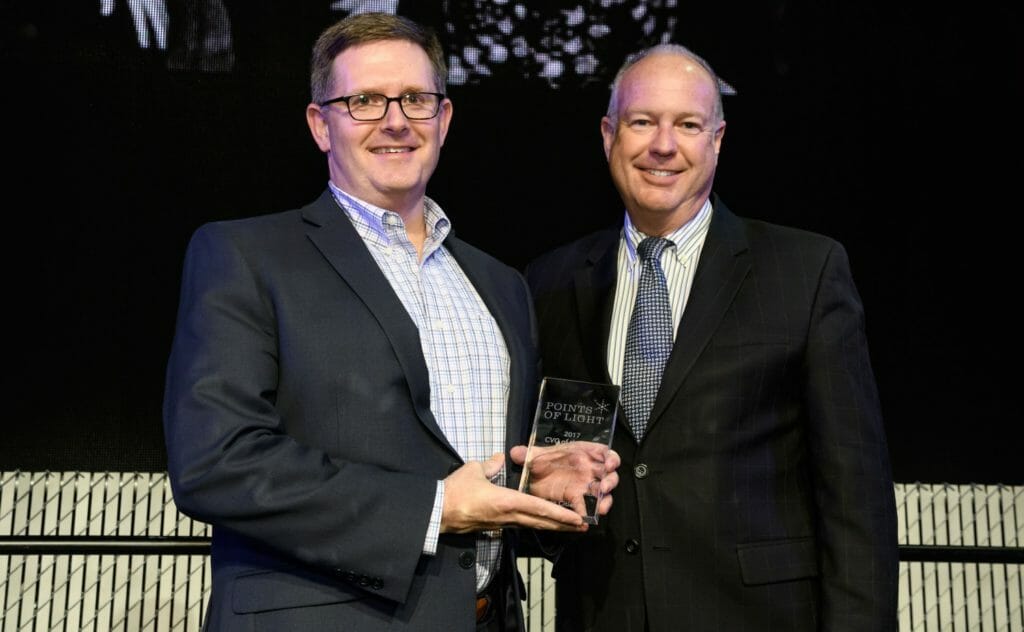
Recognition of employee volunteerism efforts and community commitment is a key part of Arconic’s culture. Through partnerships with DonorsChoose.org and GlobalGiving, all volunteers are awarded charitable gift cards, enabling them to donate to causes they care about. Throughout the year, employee teams receive recognition by company leaders and through employee media channels and social media. And each October, Arconic holds a company-wide Month of Recognition and an Arconic Foundation-sponsored contest where the best volunteer initiatives are acknowledged with a trophy and $10,000 grants are awarded to the nonprofits with whom they volunteered.
Arconic is a member company in the Points of Light Corporate Service Council, which provides networking opportunities, best practices and new ideas that catalyze high-impact social change initiatives. To learn more about how your company could benefit from membership, connect with us at [email protected].
CSAA Insurance Group: Supporting Community Safety During Disaster
By Roger Hancock, Manager of Community Affairs, CSAA Insurance Group, a AAA Insurer.
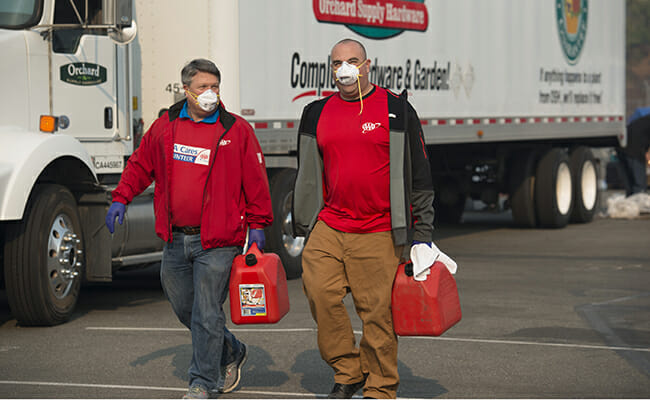
This year’s Northern California wildfires burned more than 600,000 acres – the largest wildfire in California history. The fires were devastating, resulting in the destruction of numerous structures, the displacement of thousands of residents, and several fatalities. While first responders met the wildfires head-on, volunteers also played an important role, providing comfort and counsel for those at risk of losing everything.
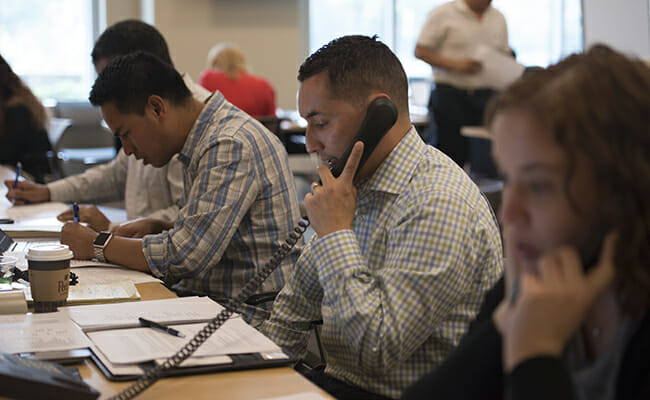
CSAA Insurance Group’s award-winning corporate volunteer program, AAA Volunteers, empowers and motivates employees to address diverse community needs through volunteer service. In response to the wildfires, employees volunteered to take time from their normal job duties and daily routines to contact impacted customers. These calls helped confirm that those who were forced to evacuate or prepare for displacement were safe and had the information they needed to provide for themselves and their families. Within a single week, more than 4,000 calls were made to individuals impacted by the fires.
While our employees are always looking for ways to give back, it is in times of urgent need that we often receive an overwhelming number of requests from our staff to help out. Any one of us could need help in an emergency, so we all want to be there for those who do.
In addition to the phone bank, employees volunteered to provide on-the-ground assistance at evacuation shelters and local assistance centers. While customers await news about their home and family members, AAA Volunteers are often there to provide a cup of coffee, share a stuffed animal for a child, or offer a sympathetic ear. These simple gestures of kindness can have a profound effect.
In anticipation of catastrophe-related needs, employees who deploy for emergencies receive up to 80 hours of paid time off to volunteer, and help position skilled labor, supplies and other critical resources before disaster strikes. In addition, training on personal preparedness, including courses in First Aid and CPR, is also available.
As demonstrated during the recent wildfires, as well as during other natural disasters, anyone can be impacted by catastrophic events. AAA Volunteers play a critical role in response and recovery, and provide for the safety and stability of our communities.
Last year, 99 percent of the employees at CSAA Insurance Group volunteered, largely because service is the cornerstone of the company’s community involvement efforts, and all of the company’s outreach programs are built around employee volunteerism.
Our employees tell us they choose to give back because they find the experience meaningful and rewarding. AAA Volunteers provides each of them with the opportunity to find ways to make a lasting difference, and know that they are contributing to something important.
Roger Hancock is a volunteer manager with more than 30 years of leadership experience creating and managing award-winning national corporate volunteer programs. He has managed the “AAA Volunteers” program since 2003, is a past-president of the Volunteer Centers of California, and has served under two governors on California’s Volunteer Service Commission.
Committed to serving AAA members for more than 100 years, CSAA Insurance Group offers AAA-branded automobile and homeowners insurance in 23 states and the District of Columbia
How DTE Energy is Reviving the Skilled Trades in Detroit
By Bill Blaul, Writer, Corporate Communications, DTE Energy
Generations of skilled tradespeople built the Motor City, put the world on wheels, and created the American middle class. In recent decades though, interest in skilled trades careers has diminished among youth and young adults nationwide along with vocational education options.
Investment has returned to Detroit and skilled trades jobs are in high demand. But, more than half of Detroit’s youth and adults are unemployed and outside the workforce while the Detroit Free Press reports redevelopment projects are hindered by a shortage of skilled trades workers.
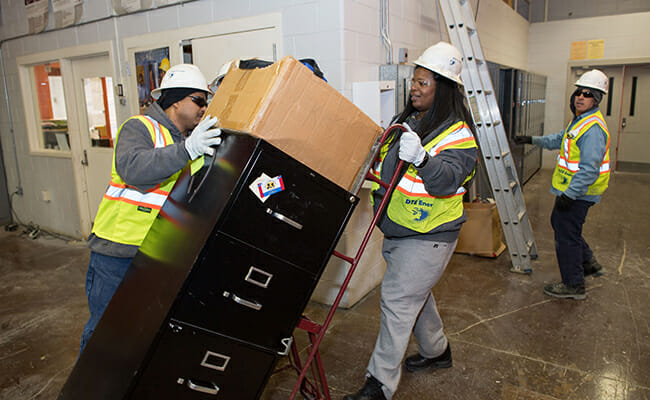
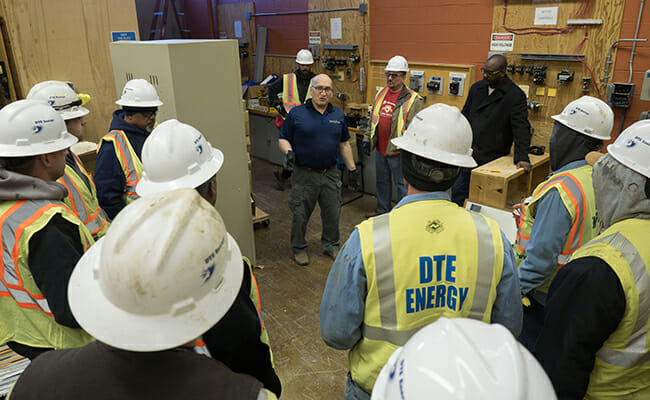
Leaders at Detroit-based DTE Energy saw these challenges unfolding. DTE, Michigan’s largest energy company, is also experiencing a workforce changeover with 50 percent of its 10,000 employees eligible to retire over the next five years. So the company joined public and private partners, including the Detroit Mayor’s Workforce Development Board and the Detroit Public Schools Community District, to tackle the related challenges of unfilled skilled trades jobs and gaps in education and training. At DTE, our focus is on helping revive Detroit’s trade schools, placing high school students in paid summer work experiences and launching a skilled trades program at Henry Ford College in nearby Dearborn.
In 2016, the Randolph Career Technical Center, a city high school, had only 100 students. Closure was looming. “The building was in rough shape, equipment was outdated and there was inadequate funding,” said David Meador, vice chairman and chief administrative officer of DTE Energy. “In carpentry classes, students built projects then disassembled them because there wasn’t money for new nails and wood. We saw the potential of the students. We met dedicated instructors and staff. It was clear Randolph was worth saving.”
The DTE Energy Foundation provided $500,000 to refurbish Randolph and relaunch its skilled trades curriculum. The seed funding spurred community partner contributions totaling $10 million. Enrollment at Randolph tripled in 2017 to more than 300 students. An additional 250 adults began taking evening classes. Admissions are increasing again this fall.
Ronald Wood recently graduated from Randolph, earning certificates in Masonry and Marketing & Entrepreneurship. “After the renovations, it was a much more comfortable and better work environment,” he said. “We need a lot of young talent to work in the trades, and Randolph is key to making that happen.” Ronald was among 14 Randolph students participating in paid internships at DTE this summer.
Roger Bonds graduated from Randolph in Computer Aided Drafting and Design. “Randolph is very important for those looking to start a career right away,” he said. “I am very grateful for such a great opportunity.”
Building on the Randolph success, DTE joined a similar effort a few miles away at the Breithaupt Career Technical Center. The DTE Energy Foundation provided $500,000 to help update Breithaupt with workplace-modeled classrooms. Painting, flooring, and lighting work followed. DTE is also providing full-time construction and curriculum project management at Breithaupt. Our employee volunteers have helped with demolition, construction and landscaping, and DTE is donating equipment and supplies to create an industry-recognized instruction and learning environment.
DTE strengthened the training pipeline through $600,000 from the DTE Energy Foundation to establish the Henry Ford College Power and Trades Pathways Program. The first students in the program started classes and training a year ago and 12 are pursuing energy careers or additional studies.
DuJuan Stewart is entering his senior year at Randolph’s HVAC program. “The teachers push you to do your best. Randolph is important among Detroit schools because the trades they teach are in high demand,” he said. “I want to get my HVAC certificate, go to Henry Ford College and become an overhead line worker at DTE.”
“There are more career opportunities available to Detroiters than there have been in decades, so it’s important to ensure the next generation has the skills they need to get good, quality jobs,” said David Meador, who also co-chairs the Mayor’s Workforce Development Board. “We are honored to help bring new life to Breithaupt through private and public partnerships, as we did for Randolph.”
Clif Bar & Company: Sustaining the Environment Through Service
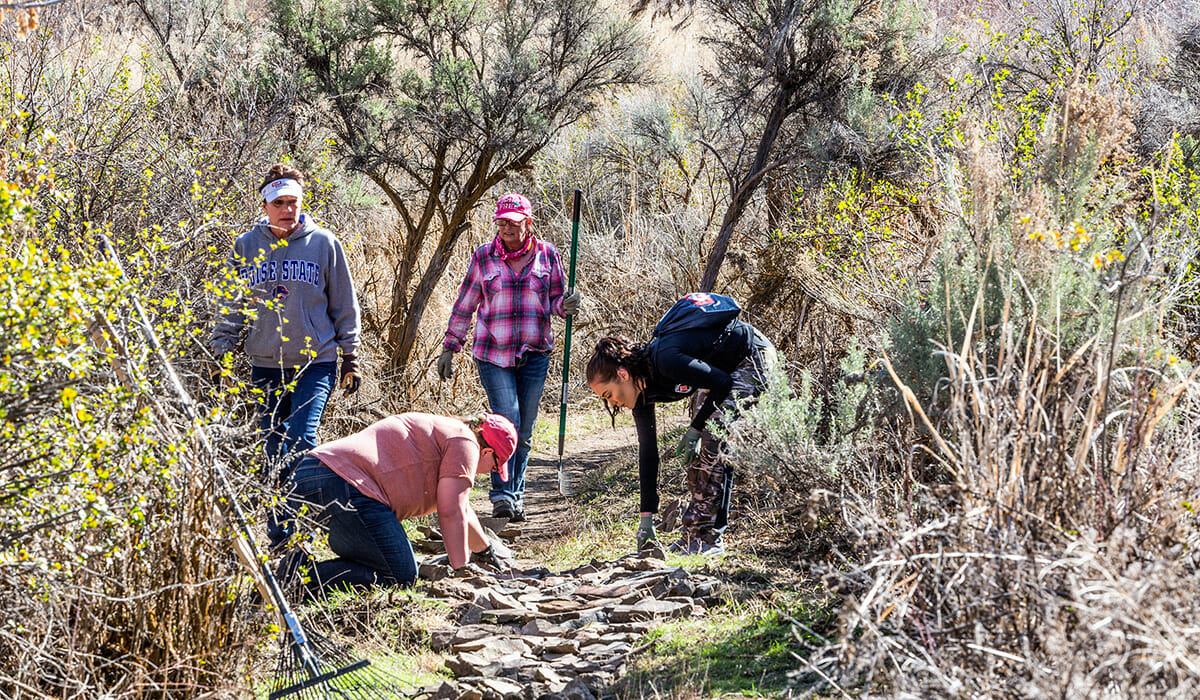
Clif Bar employees in Twin Falls, Idaho, rebuilding trails and picking up trash during the Companywide Service Day at Centennial Park.
By Cassie Cyphers, Community Programs Manager, Clif Bar & Company
, and our volunteer efforts largely focus on giving back in ways that help the planet. That’s probably not surprising, since we’re a company that relies on a clean and healthy environment to grow the ingredients we use in our food, and on the outdoors as a treasured place for us and our adventure-loving consumers to play.
Whatever your company’s volunteer focus, the benefits of community service are numerous. “Through the simple act of extending a hand, not just once in a while but as a regular part of life, we are changed as individuals and as a company,” said Kit Crawford, Clif Bar’s co-owner and co-chief visionary officer.
Kit and her husband, Gary Erickson, Clif Bar founder, co-owner and co-chief visionary officer, have built community service into everything we do. Clif Bar’s business model is comprised of five bottom lines, or Aspirations, as we call them – sustaining our business, brands, people, community and the planet.
CLIF® CORPS, our employee giving and engagement program, enables our employees to support communities in three ways, via service, funding and food. We encourage employees to volunteer in the community on company time — and do they ever, with a participation rate of more than 98 percent and nearly 117,000 hours volunteered since the program began in 2001. In 2017 alone, our 1,200 employees volunteered nearly nearly 20,000 hours.
Given our commitment to food and the outdoors, nearly 40 percent of employee community service is devoted to environmental causes. Pick a day at our California headquarters, or one of our two bakeries in Idaho and Indiana, and you’re likely to find a few employees or an entire department volunteering in the community, often on behalf of the planet. They might be restoring community gardens, clearing trails in a public park, planting trees, cleaning up beaches or building birdhouses.
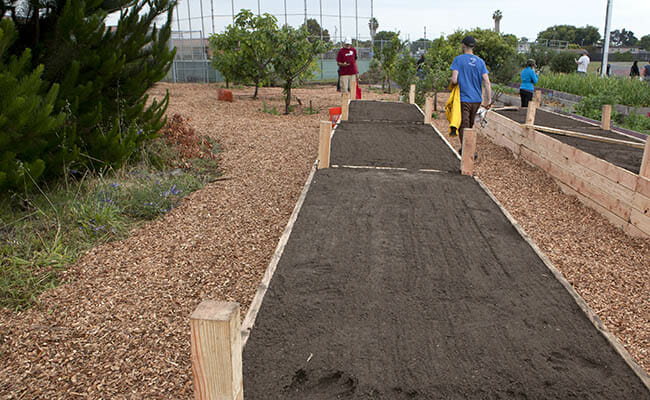
Once a year, we shut our doors and send everyone off on a day of service. A few years ago, our headquarters employees — then more than 300 strong — spent the day volunteering at two local urban gardens to benefit Urban Tilth, a nonprofit that cultivates agriculture in West Contra Costa County. “Clifsters” weeded, planted and built raised garden beds, picnic tables and a pollinator habitat.
We’re happy to share our recipe for community service because we think it can work for a lot of companies, no matter what your cause or focus. Build it authentically into your company’s DNA, encourage employees to take part, make it easy for them to participate, and let them choose the causes that interest them.
While we’ve won awards for our community service, that’s not what drives us. It’s doing the right thing for us, for others and for the planet, which is under siege and deserves a special nod here in April (and beyond), home of Earth Day, Earth Week and Earth Month. And the best part is hearing from the people we touch with our service — people like Brandy, a grandmother in Twin Falls, Idaho, who recently sent us this note via Facebook:
“Huge Rave – With the weather so nice today I decided to take my 2 grandsons walking (the trail at Centennial Park). There was a huge mass of Clif Bar employees working down there clearing the trails, picking up trash, trimming bushes and fixing the bridges. Not to mention the shopping carts and other trash they loaded onto a boat and hauled off. Everyone we passed was so polite and kind. I just wanted to say THANK YOU, not only for what you did for our community but for being awesome examples to my grandchildren.”
Now that is reward enough!
An advocate for community service and environmental conservation, Clif Bar & Company is just one example of the corporate citizens that make up the Points of Light Corporate Service Council. Does your company exemplify corporate citizenship, have an incredible team of employee volunteers or make a strong impact in the community?
, hunger — an often unseen issue — affects individuals of all ages, demographics, and backgrounds, and is often tied with other issues of poverty and economic insecurity.
Two members of the Points of Light
, Food Lion and General Mills, are going above and beyond to address hunger and food security in the communities where they do business. With ambitious goals to improve situations of hunger in the United States and around the world, both companies are working to strengthen food security through employee talents, industry leadership and corporate resources.
Food Lion
As a leading grocery store chain in the United States,
is certainly familiar with the ordering, processing and selling of food. However, in 2014 the company realized that in the area of hunger and food security, it could be doing more.
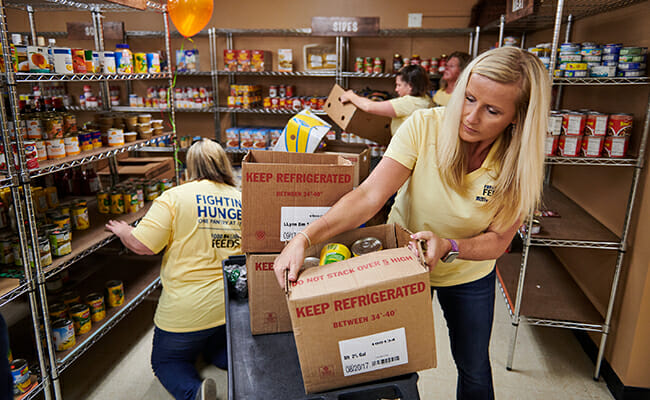
was born — a philanthropic platform powered by Food Lion and operated in partnership with 30 Feeding America food banks across 10 states. Through this initiative, Food Lion works to feed those who are hungry by leveraging its unique position to provide food, product donations, equipment and volunteers to food banks and nonprofits, supporting mobile food pantries to increase access to meal services, and increasing awareness about an issue that often lives closer to home than most are aware. To celebrate its 60th anniversary, Food Lion hosted
and rebuilt and restocked 60 individual food pantries. The volunteer-fueled initiative resulted in more than 2.5 million meals donated and 2,000 volunteer hours for Food Lion associates.
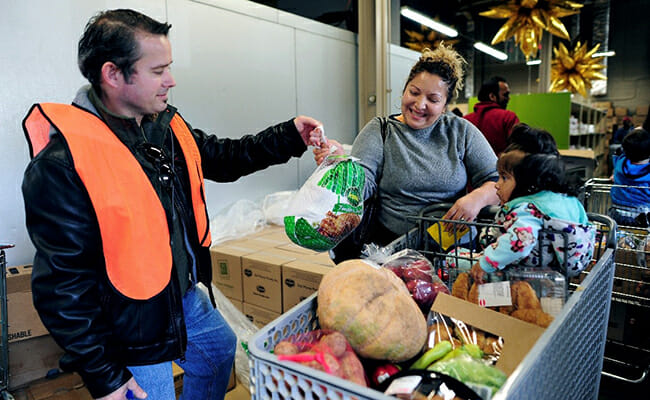
Food Lion is also using its presence in communities and online to raise awareness about hunger and food insecurity. Food Lion encourages its wide range of stakeholders – employees, customers, community members, and more – to take action by volunteering, giving spare change, or donating the extra canned goods in one’s pantry to collaboratively solve this widespread issue.
Thanks to the support of this network, and the company’s strong commitment to the cause, Food Lion has donated more than 370 million meals since 2014 and is its way to donating 500 million meals by 2020.
General Mills
If you’ve ever snacked on Chex Mix or treated yourself to Häagen-Dazs, you’re familiar with the
in the countries where they do business. As experts in food production and processing, the company has taken advantage of these unique strengths to spearhead initiatives around the world aimed at strengthening food security. Since 2010, General Mills has enabled the donation of more than 200 million meals to people in need.
Working with Feeding America, General Mills has also focused on another important food-related issue: waste. MealConnect™, an online platform enabled through this partnership, allows food providers to catalogue their excess food, which is then donated to food banks and local nonprofits, and in turn distributed to people in need. Thanks to the company’s support, MealConnect has
.
General Mills is also dedicated to ensuring all students are on the path to success. Because youth are often affected by issues of food insecurity to an even higher degree, the company works to increase access to nutritious meals for students around the world. Working with the
in India, General Mills is both increasing access to school lunch and making these meals more nutritious. And in partnership with the Food Research and Action Center, it has helped increase breakfast access for students who qualify for free and reduced lunch – a habit that has been shown to
Food Lion and General Mills are just two examples of corporations that share a commitment to ending hunger in our world and ensuring communities have the resources they need to be healthier and more resilient. Does your company exemplify corporate citizenship, have an incredible team of employee volunteers or make a strong impact in the community? Consider joining the Corporate Service Council today.
Top 5 Reasons for Businesses to Attend the Service Unites Conference
By Roger Hancock, Manager of Community Affairs, CSAA Insurance Group, a AAA Insurer
As communities around the world face continuous societal shifts, including, diverse political, economic and social challenges, companies are stepping up as leaders and advocates in social action, policy and community-building. Participants in the Business Path at Service Unites will leave inspired and equipped to amplify corporate values through employee engagement and position their businesses as a force for good.
My first “volunteer conference” was on the college campus of Southern Methodist University in Dallas in 1986. This year, my decades-long journey across America to attend Points of Light’s annual conference on volunteering and service – now called Service Unites – continues in Atlanta, June 18-20. I hope to see you there.
Yes, the original national volunteer conferences were held during the summertime on college campuses, when 500–600 community leaders from corporate America and nonprofit organizations would sleep in empty dorm rooms at Yale, Stanford, SMU and my alma mater, the University of Southern California. We would attend volunteer workshops in available classrooms and lecture halls during the day and we would network in the evening.
In the many years I’ve spent attending the Points of Light’s conference, I’ve seen a lot. I’ve met presidents and first ladies, the son and brother of a president (here’s looking at you, Neil Bush!), members of Congress, entertainers and athletes – and Jon Bon Jovi.
More importantly, I’ve met people like you who I have learned from, networked with, enjoyed a beer with, and who have helped me be a leader in the field of corporate volunteer management.
And, after more than two decades, I eagerly keep coming back to the Service Unites conference, just like Parrotheads annually migrate to Jimmy Buffett concerts. I registered for the June 2018 conference in Atlanta, paid my ridiculously cheap conference fees, booked my flight and reserved my hotel … all at the end of last year.
If you have attended the conference, you know why you need to go and why you want to go. But if you have not attended the conference before, here are five reasons why you should join me in Atlanta in June.
1. It’s a Bargain
The conference registration fee runs from $350 to $550. It’s a real bargain for a three-day conference filled with incredible, inspiring, and gifted speakers and presenters. Geez, there are some other corporate social responsibility conferences that cost $2,500 for two days of meetings. And rarely are there old guys like me at the podium. Service Unites speakers are diverse, vibrant and inclusive. Heck, I brought my daughter (who was in high school and then college at the time) to three conferences in Washington, D.C., Chicago, and San Francisco – she had a blast meeting and engaging with other service-minded students at these conferences. Today, this mighty millennial proudly works in our field.
2. One Nugget
Every year I walk away from the conference with at least one huge nugget of information that is a game-changer for how I do my job and lead my company in the community. Examples of recent “one nugget a year” learnings include: the launch of the Civic 50, as thought up by former New York City Mayor Michael Bloomberg; the release of the UN Sustainable Development Goals; United HealthCare’s study about the wellness benefits of volunteering; that “Volun-told-ism” is definitely acceptable (thanks Bea Boccalandro!); and that Bon Jovi’s acoustic rendition of “Livin’ on a Prayer” echoes in my ears louder when whispered solo on a simple acoustic guitar. (Jon Bon Jovi has meaningfully presented at two Points of Light conferences!)
3. Workshops, Plenaries and More
Service Unites. It sure does. Nothing like 3,500 people in a ballroom riveted to an inspiring and informative plenary speaker. And, sometimes that incredible featured special guest speaker is only 12 years old! And, the workshops – there is so much to choose from in your area or field of interest: business, nonprofit, government, faith, national service, higher education, youth and more. Pick your path and run down it. It’s your time to learn and share with like-minded colleagues.
4. The Hotel Lobby
Everything I wanted to learn about volunteer management … With 3,500 attendees, it can be a bit challenging to develop a relationship or build a network in a large plenary or at the workshops. Thus, the hotel lobby (and the bar) is the mecca to meet people from across the country and the entire globe to simply chat. I wear my conference name badge with company name and geographic location. The relationships and the network I have built from simply talking with a small group of folks in the hotel lobby from an array of cities, states and countries has allowed me to engage in conversations that provide insights on how I can do my job better. And, I have built a network that I can call on later when I am stumped or struggling with a community issue.
5. Baseball!
Father’s Day, Sunday, June 17, it’s Padres at the Braves! Hats off to Points of Light and the conference planning committee. These folks always book the conference in pretty cool baseball towns when the local team is on the field. Highlights have included the Chicago Cubs, Chicago White Sox, New York Yankees, New York Mets, Kansas City Royals, San Francisco Giants, Philadelphia Phillies, Seattle Mariners, Washington Nationals, Atlanta Braves and Detroit Tigers. I have been to all of these baseball stadiums (“cathedrals”) while attending Service Unites.
That’s it. Five reasons to attend Service Unites. I hope to see you in Atlanta in June! Come to the conference for three days of engagement and learning how you and your organization can best serve others. Yes, Service Unites!
“Take my hand and we’ll make it, I swear. Whoa, livin’ on a prayer.” – Jon Bon Jovi
Make a New Year’s Resolution Your Company Can Keep in 2018
For most, the beginning of the year means one thing: New Year’s resolutions. Every new year brings a chance for improvement, a chance to better oneself not just in January, but throughout the entire year.
While many of us abandon our ambitious gym goals after just a few days, improving upon your corporate citizenship initiatives is an objective well within reach. The Civic 50, an initiative of Points of Light, annually recognizes and honors the 50 most community-minded companies in the nation. How? Through a quantitative annual survey that looks at four dimensions of corporate community engagement programs: investment, integration, institutionalization, and impact. In other terms:
Investment: How extensively and strategically does the company apply its resources to community engagement in the United States, including employee time and skills, cash, in-kind giving and leadership?
Integration: How does the company integrate its U.S. community engagement programs into key business functions, including employee engagement, marketing/PR, diversity and inclusion, recruiting, stakeholder relations and skill development?
Institutionalization: How does the company support community engagement in the United States through organizational policies, systems and incentives?
Impact: How does the company measure the social and business impact of its U.S. community engagement program?
While we can’t promise that every company that takes the Civic 50 survey will be recognized as an honoree, there is one thing we can guarantee: applying to the Civic 50 will help you and your team evaluate your community engagement program as related to these four dimensions, while also providing you with a personalized scorecard that ranks your company against the other applicants. Every company that takes the Civic 50 survey receives a benchmark to gauge organizational progress against a core group of leading organizations – true peers.
Time and time again, we hear from Civic 50 companies that the survey is an annual exercise for its corporate citizenship team to scrutinize their community engagement program’s impact, investment tactics, and overall integration and institutionalization into business strategy. The Civic 50 not only is a means to celebrate the great work companies are doing to strengthen the communities where they do business – it’s also a way to strengthen their programs through extensive analysis and inspiration from fellow applicants and honorees.
The evaluation doesn’t stop once the survey is submitted: companies receive scorecards from survey partner True Impact in the spring of 2018. These scorecards summarize how your company scored on the survey, ranked in each dimension, and more. The three options for the scorecard include:
Individual Scorecard | Free of charge: This one-page scorecard includes your company’s score, ranking as compared to all Civic 50 participants, and tier for each of the four dimensions.
Sector Scorecard | $1,500: In addition to all the content included with the individual scorecard, this enhanced scorecard includes sector-specific rankings and tier categorizations to quantify your performance as compared to your peers, and the additional percentage needed to be in top performance tiers for each dimension.
Comprehensive Scorecard | $3,500: The comprehensive scorecard builds upon the content of the individual and sector scorecards, adding question-specific rankings and benchmarks, information on score distribution across all companies and where your company falls, and more.
These scorecards help you take a deep dive into your corporate responsibility initiatives and provide a springboard for improvement in 2018 and beyond. Learn more about the different scorecards.
The Civic 50 sets the standard for excellence in corporate citizenship. Make 2018 your year to set yourself up for continuous improvement and distinction in community engagement. Get started.
The Civic 50 survey, powered by True Impact, is open to all private and public companies with annual revenue of $1 billion or more and operations in the United States. Learn more at www.civic50.org.
Mobilizing Corporate and Community Volunteers to Improve Veterans’ Lives, One Home Repair at a Time
Providing support for the men and women who have served in the armed forces is a priority for many social organizations across the United States. Among the critical needs being addressed by these groups, such as providing access to healthcare, education and employment, is the need to help veterans find and maintain safe, sustainable housing. HandsOn Greater Phoenix, a Points of Light affiliate, has stepped up to this challenge, leveraging the power of corporate partnerships and volunteers to have an impact on the local veteran community.
The organization has been serving the Phoenix metro area for almost 25 years, connecting volunteers with opportunities to serve where they are needed most. Founded as Make A Difference in 1993, the organization set out to meet critical community needs, with a special focus on creating opportunities for working people to serve.
“There were a group of busy professionals that just liked the idea of plugging into multiple issue areas and using groups of colleagues and friends and networks to do good things in the community,” said Rhonda Oliver, president and CEO of HandsOn Greater Phoenix.
After 15 years of rapid growth, the organization re-established itself as HandsOn Greater Phoenix in 2008. Today, it functions as a traditional volunteer center, engaging all types of volunteers in more than 60 high-impact, one-time community service projects each month. But, Rhonda said, corporate volunteers are still a centerpiece of their programming.
Through a long-standing partnership with Home Depot, HandsOn Greater Phoenix mobilizes teams of community and employee volunteers for its Veteran Home Improvement Program – supporting local veterans by providing needs-based home repairs and upgrades for weatherization, code violations or other modifications.
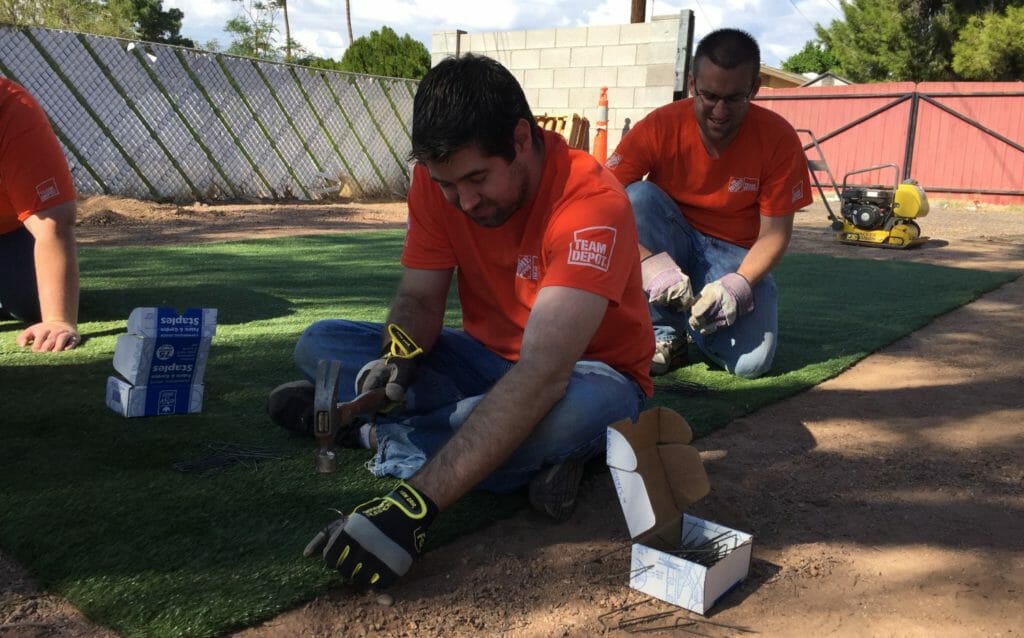
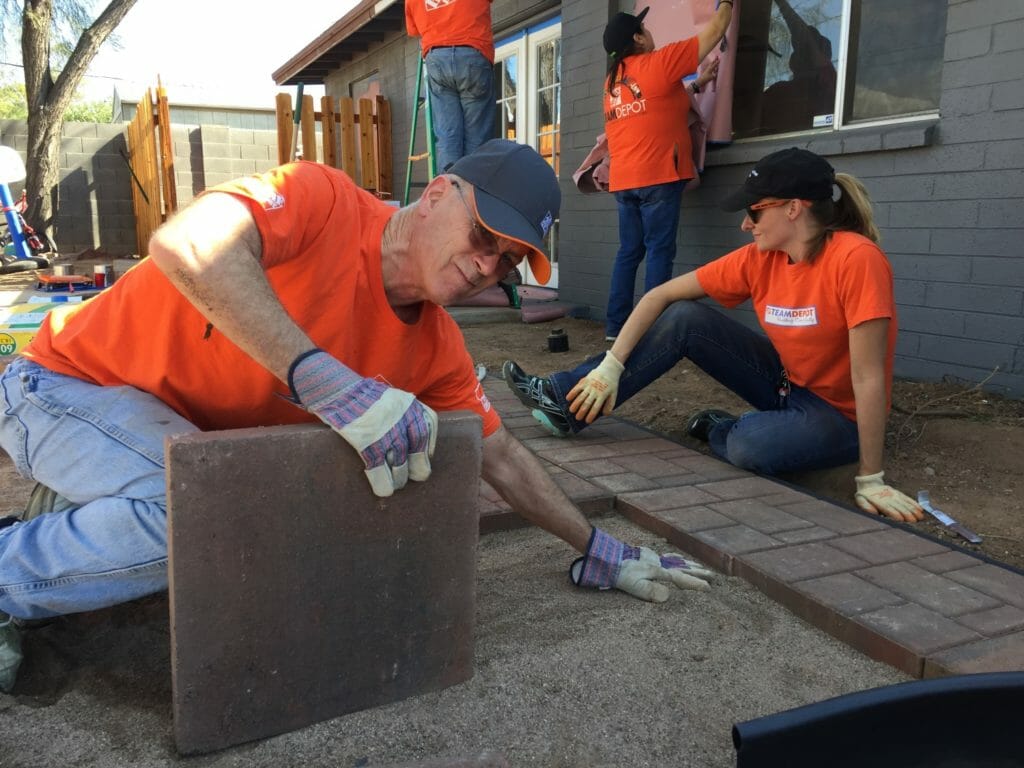
Four “Team Depot Captains” – representing the 39 Home Depot stores in the Greater Phoenix market – each conduct site visits, work with HandsOn Greater Phoenix to identify the improvements each home needs, and connect with local vendors that donate the necessary materials. Projects cover a range of activities, including painting, installing turf yards or even tree removal. Some of the most common projects are exterior paint jobs. HandsOn Greater Phoenix recruits community volunteers for these kinds of projects, as well as calling upon employee volunteers from other local businesses – among which, employees from companies like Wells Fargo, Intel and Cox are all regular contributors.
For more complex or large-scale projects, such as building ramps for disabled veterans, installing windows or walls, or other major modifications, Home Depot employees or volunteers from the vendor that donated the materials will offer up their time and skills to do the work.
“Some of our team captains have employees within their stores that have contracting-level experience,” said Steve Woodhams, a project manager at HandsOn Greater Phoenix. In one case, a Home Depot employee with experience as a contractor helped complete a renovation project that added a door in the shared wall between a veteran’s bedroom and her bathroom, giving her some added privacy as she prepared to welcome a foster child into her home. For projects like energy efficient window upgrades, where product warranties are important, employees from the window company often volunteer their time to complete the installation.
Veterans apply for the program through the HandsOn Greater Phoenix website, but they are also identified in a number of other ways, including through word of mouth and through the municipalities they live in, as cities and communities identify homes that are not up to code. The participating Home Depot stores will also identify veteran customers who would benefit from the program.
In addition to veterans, HandsOn Greater Phoenix programs support many causes. Through a youth mentorship program called Your Experience Counts, adults with daytime availability are put in classrooms to work alongside teachers and help ensure students’ academic success. The organization also has an AmeriCorps VISTA program that engages 19 VISTA members as volunteer or program coordinators serving with nonprofit partners across Phoenix, building infrastructure and providing the necessary tools for the nonprofits to more effectively manage their resources. Annual events like Serve-A-Thon, Make A Difference Day, Martin Luther King Jr. Day and 9/11 Week of Service and Remembrance also provide opportunities for volunteers to get involved.
This year for 9/11 Day of Service, HandsOn Phoenix is planning several projects, including a letter-writing campaign for active-duty service members and a curb address painting project to help first responders identify houses when answering emergency calls. The organization is also planning a veteran home makeover through the Veteran Home Improvement Program. Volunteers will help weatherize the home of WWII veteran Maxine and her daughter, who is her caretaker. The project, which is open to general volunteer sign-ups, will provide energy-efficiency updates and bring the exterior of the home up to city code compliance.
Since its founding, HandsOn Greater Phoenix has mobilized approximately 400,000 volunteers through its programs, events and initiatives. Its partnerships with both local companies and nonprofits make it one example of the many ways that Points of Light network affiliates are using local resources to meet community needs and putting volunteers to work where they are needed most.
Corporate Volunteer Councils are local networks that businesses join to share best practices and address community needs through workplace volunteering. The Corporate Volunteer Council of the Year Award recognizes councils that have a clear purpose, meaningful educational activities, and measurements for success. All entries are reviewed and a winner is selected by an awards committee comprised of national Corporate Volunteer Council leaders and supporters convened by Points of Light.
The Corporate Volunteerism Council – Twin Cities was presented the award by Points of Light board member Jeff Hoffman during the conference’s Civic 50 Gala. Scott Cummings, Minneapolis market development director for Accenture and 2016 CVC-TC president, accepted the award on the organization’s behalf.
The CVC-TC connects members to local issues, volunteerism best practices, and community and national trends through networking, programming, and promoting significant events such as National Volunteer Week. Since its founding in 1980, it has provided corporate members with opportunities to increase their skills through ongoing engagement – balancing networking events and an annual awards celebration with content-rich programs that dually meet the needs of members with sophisticated CSR programs and those who have recently started their corporate volunteer efforts.
Their membership structure provides for strong community connections by including one nonprofit member for every four corporate members. This offers members a strong local network and direct access to volunteer opportunities. Cross-sector collaboration is woven into how the CVC-TC operates; businesses and nonprofits regularly work together to best meet the needs of the Twin Cities community. One shining example of this is the award-winning Twin Cities Corporate Giving Garden Network, with 20+ CVC-TC members growing fresh produce on their corporate campuses to help stock local food shelves and feed hungry neighbors. More than 40,000 pounds of fresh produce has been grown and donated in the last 8 years.
“We are so fortunate in the Twin Cities to have a culture that values volunteerism as a powerful tool in making our community thrive,” said Jenny Moe, manager of corporate social responsibility for Target. “We are even luckier that we have the Corporate Volunteerism Council – Twin Cities to help support this culture through facilitating nonprofit and corporate collaboration, learning and networking opportunities.”
CVC-TC members also volunteer their own time to help educate and bring along newer members. The annual CVC-TC Pro Bono Consulting Project provides resources to new members who are looking to both benchmark and improve their volunteer programs. The CVC-TC has also launched an innovative Twitter book club (#CVCTCbookclub) to increase online engagement with CVC-TC and support the professional development of its members.
Sarah Richter, senior manager of community relations at Ameriprise Financial, shared: “The Corporate Volunteerism Council – Twin Cities has been so valuable for Ameriprise Financial. From networking, to learning and sharing best practices, I know I can benchmark my peers whenever I have a question. As a community rooted in philanthropy, this group continues to elevate and demonstrate that volunteerism is good for business and community.”
Aligning Service with Corporate Values to More Effectively Manage Employee Volunteer Programs
With the increasing importance of employee volunteer programs comes an increasing demand by companies for external support and infrastructure to help align event programming with company values. While companies see value in providing opportunities for employees to give back, the logistics and resources required to run successful employee volunteer programs can be an obstacle for companies that are just getting started. Volunteer centers are powerful tools in this sphere, and
, a Points of Light global affiliate, has emerged as a leader in helping companies build their employee volunteer programs.
Hands On Manila, established in 2001, was the first international member of the HandsOn Network. Founder Gianna Montinola saw value in the organizational model of HandsOn Network volunteer centers, particularly the ability to engage average citizens with minimal free time in convenient opportunities to serve their communities.
Since its founding, Hands On Manila has connected more than 26,000 groups and individuals with high-impact service projects across 270 NGOs, earning its reputation as a comprehensive central hub of volunteer opportunities in the Philippines.
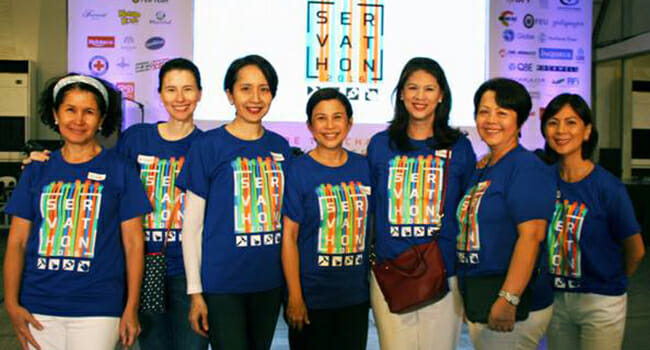
The organization does this in two ways. Hands On Manila manages volunteer recruitment for programs such as Galing Mo Kid, which pairs mentors with high-achieving 4th-, 5th- and 6th-grade students in Metro Manila public schools. The organization also manages corporate activation events like the annual Servathon, during which companies engage their employees to support and improve communities. In 2016, Hands on Manila partnered with 30 companies for Servathon, engaging 1,170 volunteers who served a combined total of 8,020 hours assembling “eco bags” that contained slippers, mosquito traps, solar light bulbs and citronella candles, to be distributed to disadvantaged citizens in Manila.
, a global leader in customer management, is one of 70 companies that have partnered with Hands On Manila for employee volunteer initiatives. Interested in engaging its Filipino employees in service to support the company’s commitment to the
, Convergys turned to Hands On Manila – the goal being to develop a program that would improve access to lifelong learning and employment opportunities for Filipino citizens.
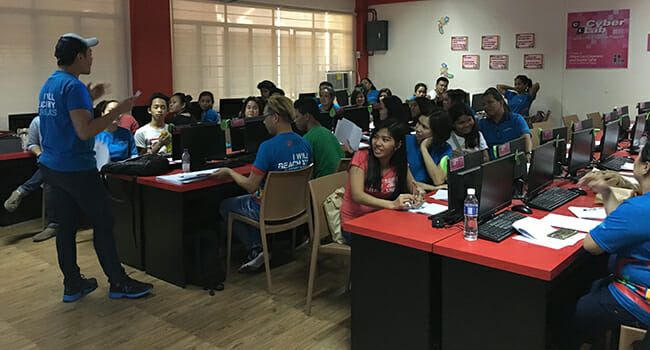
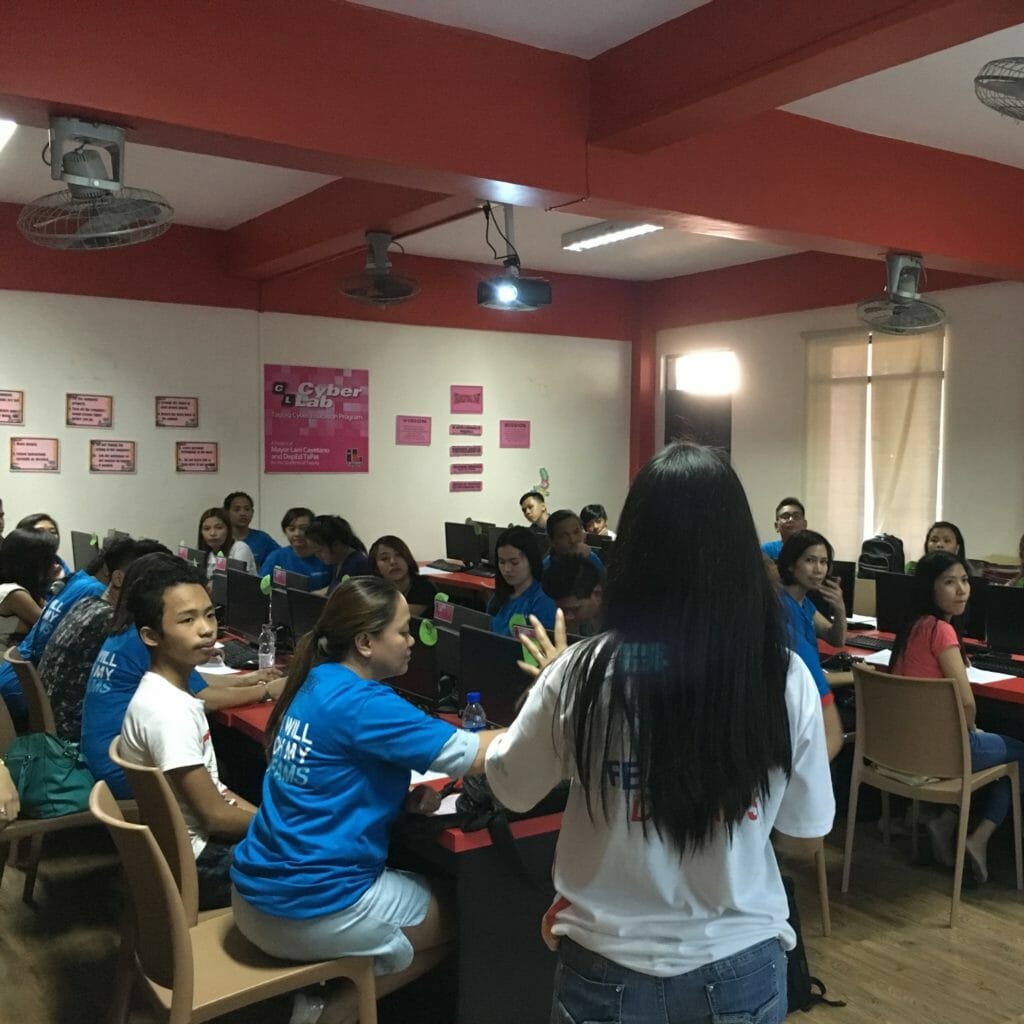
To coordinate this, Hands On Manila connected Convergys with opportunities to support the Department of Education’s Alternative Learning System by tutoring out-of-school youth and adults. The ALS provides pre-requisite courses and accreditation exams so that students can receive diplomas and get back on-track with their education or seek employment opportunities.
Public school education is a major focus of both Hands On Manila and the general population of the Philippines.
“I firmly believe that education in whatever form it is, may it be ALS or formal education – it’s really a great equalizer,” Gianna said. She added that in a developing country like the Philippines, there is great value placed on the private sector stepping in to provide support in areas where the government has difficulty keeping up.
Convergys employees volunteer as tutors and mentors to the students, teaching them English and the basics of Microsoft Office and mentoring them in employment-focused skillsets, like job interviews. Hands On Manila coordinates the tutoring and mentoring sessions, finding spaces for volunteer and student to meet and managing the volunteers’ schedules.
Hands On Manila is an ideal partner for Convergys because its connections to available service opportunities and resources allow the organization to customize the volunteer experience to meet the company’s requirements and manage any logistical challenges that may arise.
“Hands On Manila sort of has developed a niche in the Philippines because we customize the volunteer activities depending on what the corporations want,” said Gianna. In the case of Convergys, the focus was education; Hands On Manila customized the experience by finding students at schools in convenient locations for Convergys’ employees.
The partnership between Hands On Manila and Convergys is featured in a recent Points of Light report, “
,” as one example of the ways companies can work with community partners to develop critical measures for success, including finding an appropriate match for employee interests. Success, in this case, can be gleaned from the responses of the employee volunteers who were able to feel the immediate impact of their efforts.
“As both a tutor and mentor, I helped less-privileged students meet their goals,” said volunteer Ruter Agali, a Convergys support associate. “Who knows, I might be mentoring Convergys’ workforce of the future.”
Hands On Manila and Convergys are two of many organizations worldwide that are forming partnerships to help bolster and more effectively leverage employee volunteer programs. Their relationship illuminates the impact that intentional collaborations between private companies and NGOs can have when organizations work toward shared goals.




 As communities around the world face continuous societal shifts, including, diverse political, economic and social challenges, companies are stepping up as leaders and advocates in social action, policy and community-building. Participants in the Business Path at Service Unites will leave inspired and equipped to amplify corporate values through employee engagement and position their businesses as a force for good.