This post is by Jackie Norris, executive director, and Sarah Boison, marketing manager, of the Points of Light Corporate Institute. It is part three in a seven-part blogCSRWireseries exploring the community engagement practices of winning companies in The Civic 50, an initiative launched in 2012 by Points of Light, the National Conference on Citizenship and Bloomberg. The Civic 50 identifies the top 50 community-minded S&P 500 corporations that best use their time, talent and resources to improve the quality of life in the communities where they do business.
Olivia Zanfardino
After years at various jobs, a stint in the military and volunteer experiences all over the country Olivia Zanfardino, like many young people, often asked herself, “What do I want to do with my life?”
“Throughout my years, my goal has been to live a life I truly believe in and can wake up happy to,” says 29-year-old Zanfardino, who is now a business student at University of Phoenix, a subsidiary of Apollo Education Group. “Now that I’ve settled in one city, I’m still doing that. I recently quit my job to focus on finding a career that I enjoy.”
Zanfardino, of Pasadena, Calif., credits Roadtrip Nation for helping her get to this critical point.
Roadtrip Nation, a California-based nonprofit career exploration organization and a series on PBS, believes that students can learn about different career opportunities, lifestyles and philosophies through road trips. The organization captures the stories of young adults as they embark on cross-country self-discovery journeys in a green RV.
The “roadtrippers” stop in various cities to interview professionals in different fields who have turned their passions into careers. By learning from those who have gone before them, the roadtrippers are inspired to take the next steps in their own lives to pursue their ambitions.
A New Way of Learning
Since 2010, the University of Phoenix Foundation, founded by Apollo Education Group, and Roadtrip Nation have worked together to serve nontraditional students with learning experiences that can help link interests and studies to real-world careers. A nontraditional student may be someone who delayed enrollment, attends school part time, works full time, has dependents, did not finish high school or has a GED instead of a high school diploma.
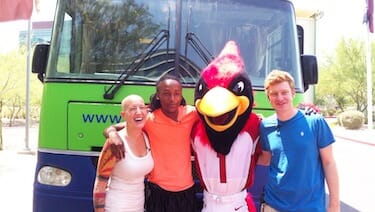
From left, Olivia Zanfardino and “Roadtrip Nation” castmates, Tele’jon Quinn and Ed Whittle pose with the University of Phoenix mascot on campus.
“We started Roadtrip Nation because we didn’t feel like there were any resources in school that could truly empower students to explore what was possible for their future,” says co-founder Mike Marriner. “That was the genesis of our first road trip, to get outside our comfort zones and connect with leaders to learn how they got to where they are today.”
Now it’s time for the next step.
The advice leaders share during the road trips will be featured in a curriculum developed by Roadtrip Nation and made available to University of Phoenix students and nearly a million alumni. The goal is to encourage adults to engage in a new way of learning that utilizes self-reflection exercises and real-world exposure through Roadtrip Nation’s vast interview archive. With this help, individuals may identify their interests and discover compatible educational and career pathways.
“Roadtrip Nation is all about career exploration and we’re all about education to careers, so what better way to have a partnership than to marry our interests and illustrate pathways to careers?” says Pat Gottfried, vice president of corporate social responsibility for Apollo Education Group.
The curriculum will explore themes relevant to adults, such as single parenting, drug addiction and recovery, veteran integration and more. The curriculum will also enable students to share their own “Roadtrips” to success and share the map they used to get there.
“We get to ask leaders … how they got to where they are and what inspires them to be where they are now,” says Zanfardino, who appeared on season 11 of the “Roadtrip Nation” PBS series. She hopes the wisdom of leaders will guide her in making decisions that reflect her values and goals.
Roadtrip Nation programs already have a proven track record of improving student behavior and performance. According to a 2012 study conducted by the Educational Policy Improvement Center, Roadtrip Nation students demonstrated marked improvement in self-efficacy and increased their GPAs at twice the rate of non-Roadtrip Nation students over a nine-month period.
Commitment to Career Readiness
Through strategic grant making, scholarships and volunteerism, Apollo Education Group continues to work to expand access to education by supporting nonprofit partners focused on areas such as lifelong education and career readiness. Their commitment to organizations like Roadtrip Nation is one of the reasons why Apollo Education Group was ranked #1 in Strategic Investment from The Civic 50, a ranking of America’s most community-minded companies.
The strategic investment dimension evaluates how a company leverages resources from other institutions and provides skills-based or pro bono volunteer support and strategic grant making for maximum benefit to nonprofits. In the past year, for example, Apollo Education Group provided resources to organizations such as the Boys & Girls Clubs of America, the American Red Cross, Clean Tech Open, Junior Achievement, National Park Foundation, Jobs for the Future, America’s Promise Alliance, Jobs for America’s Graduates and DonorsChoose.org.
Additionally, every employee at Apollo Education Group is provided with two paid days per year that they can use to volunteer at charities of their choice. And the numbers have been spectacular.
In 2013, employees donated more than 67,000 hours of service, valued at $1.2 million; the majority supported education-related causes. Even University of Phoenix students and alumni got involved by identifying companies and individuals across the country for road-trippers to consider.
By bringing the real world into the classroom and helping students match their personal interests to potential careers, the University of Phoenix Foundation and Roadtrip Nation hope to increase the relevance of students’ studies and keep young people engaged in their futures.
Making the connection is critical. As Gottfried puts it, “This experience will help provide invaluable tools, resources and inspiration for young adults out there still struggling to understand how to turn their passions and interests into a meaningful career.”
More Kids Have Books to Read Because of What This Company Did
This post is by Jackie Norris, executive director, and Yvonne Siu Turner, senior manager, corporate resources and programs, of the Points of Light Corporate Institute. It is part two in a seven-part blogCSRWireseries exploring the community engagement practices of winning companies in The Civic 50, an initiative launched in 2012 by Points of Light, the National Conference on Citizenship and Bloomberg. The Civic 50 identifies the top 50 community-minded S&P 500 corporations that best use their time, talent and resources to improve the quality of life in the communities where they do business.
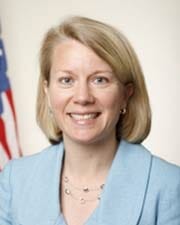
Jackie Norris
Do you remember your favorite children’s book? Was it “Goodnight Moon,” “Where the Wild Things Are” or “James and the Giant Peach”? For many of us, being read to by our parents is a fond childhood memory, and something that also got us on the right track for success later in life.
In many parts of the country, however, millions of children in low-income families have no access to books. They haven’t been exposed to reading aloud. And when they start kindergarten, they’re not on the same playing field as the other kids in their class.
A Literacy Crisis
Addressing this literacy crisis is something Bring Me A Book is dedicated to solving. By creating age-appropriate school libraries and organizing workshops, the California-based nonprofit provides access to new books to underserved schools, and helps parents and teachers understand the importance of reading aloud to children every day.
But as is often debated scale is critical for nonprofit initiatives to thrive and maximize their impact, which is where the private sector can step in and help. Bring Me A Book is no exception, and recently welcomed support from Morgan Stanley to think strategically about how they could reach more children – but the financial services company didn’t just write a check.
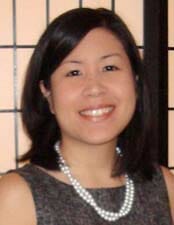
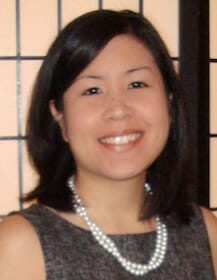
Yvonne Siu
In their latest Strategy Challenge pro bono volunteer competition, a team of finance and legal professionals from Morgan Stanley worked with Bring Me A Book to provide recommendations for an ambitious expansion of its programs through digital media using new technology and training for parents and caregivers.
“Bring Me A Book is walking away from this experience with a blueprint for our future work that we believe is game changing in the field of early literacy. We now have an actionable plan that has all of the components for success: an understanding of our market, potential partners and a resourcing model that will immediately allow us to offer increased book access programs to support our preschool families in California,” said Mialisa Bonta, executive director of Bring Me A Book.
The Strategy Challenge wasn’t only a game-changer for Bring Me A Book, it was also a transformative experience for Morgan Stanley’s volunteers.
As Meryl Craig, an associate with Morgan Stanley who participated on the team providing pro bono strategic consulting to Bring Me A Book, put it, “Strategy Challenge was an incredible opportunity to collaborate with an inspiring organization. Bring Me A Book now has additional tools to help them combat early childhood illiteracy, and they have implemented our final recommendation to pursue the use of digital media. Seeing the continued impact of Morgan Stanley’s work in the local community is truly rewarding.”
Over the past five years, Morgan Stanley’s Strategy Challenge has delivered more than 32,500 hours, valued at about $4.9 million, to 61 nonprofit organizations.
“Morgan Stanley employees value the Strategy Challenge because it’s a special opportunity to give back to their community while leveraging their own talent and expertise. We work together with the nonprofit participants to navigate significant programmatic issues like scalability, geographic expansion and organizational optimization,” said Joan Steinberg, head of Morgan Stanley Community Affairs and president of the Morgan Stanley Foundation.
Recognizing Morgan Stanley’s Organizational Commitment to Community
That is just one reason why Morgan Stanley was ranked #1 in Organizational Commitment from The Civic 50, a ranking of America’s most community-minded companies. The Organizational Commitment dimension evaluates the scope of a company’s community engagement program, such as how broad-based employee involvement; community investment, advocacy and leadership are in the program.
At Morgan Stanley, community engagement is seen as much more than traditional philanthropy. A critical and integrated part of leadership development for the firm, engagement is about using distinctive competencies to increase the impact of nonprofits.
Even more critically, the firm focuses on long-term partnerships, creating year over year value: Morgan Stanley doesn’t just want to help charities; it wants to make them stronger. To do so, the firm has created a broad continuum of programming from high volume projects like Global Volunteer Month, to high impact initiatives like Strategy Challenge and its Nonprofit Leaders Program, which trains its most senior officers to be better nonprofit board members.
Like the firm’s support of the New York-Presbyterian Hospital Morgan Stanley Children’s Hospital. The hospital was founded in 2003 with employees raising $62 million for its Building Campaign – an unprecedented effort in New York City. Nearly 1,000 employees volunteer at MSCH throughout the year, collecting books or entertaining children at the annual carnival or pirate costume party.
Late last year, Morgan Stanley also organized a five-week celebration of the hospital’s 10th anniversary as one of the top children’s hospitals in the U.S. The firm hosted a speaker series with leading physicians and invited employees to volunteer with child life specialists to visit and entertain children at the hospital.
“Morgan Stanley Children’s Hospital is a cornerstone of the firm’s global commitment to children’s health,” says Steinberg. “The 10th anniversary celebration was an opportunity to better understand and appreciate what the Hospital does for thousands of families in the community, including our own, and what the firm’s 40-year-long relationship with New York-Presbyterian will mean for future generations.”
What We Have Learned From Businesses That Help Their Communities
This post by Jackie Norris, executive director of the Points of Light Corporate Institute, is part one in a seven-part blog CSRWire series exploring the community engagement practices of winning companies in The Civic 50, an initiative launched in 2012 by Points of Light, the National Conference on Citizenship and Bloomberg. The Civic 50 identifies the top 50 community-minded S&P 500 corporations that best use their time, talent and resources to improve the quality of life in the communities where they do business.
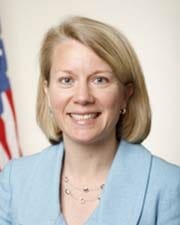
Jackie Norris
Companies across America have been taking note that the key to sustaining a successful business goes beyond interactions with consumers and stakeholders. It’s about playing a part in the communities where they live and work as well.
Accordingly, corporate civic engagement in America is on the rise – showing up in annual shareholder reports, in boardroom discussions and holding increasingly more weight in employee engagement strategies. The Civic 50 was introduced two years ago to recognize the top S&P 500 companies that are fostering and promoting community leadership as an integral part of their corporate culture. Take a look at last year’s results as published by Bloomberg.
In 2013, Civic 50 applicants were evaluated based on several criteria including:
The amount of financial and human resources applied to civic improvement
Whether internal and external resources are used to maximize community impact
How a company’s community engagement activities align with its business interests
How broadly community engagement is supported and institutionalized within a company’s policies, systems and incentives
How a company measures the social and business value of its community engagement programs.
As engagement programs mature and begin to align more with business strategy, recognizing that corporate civic engagement is an emerging field. The survey has also continued to evolve. These changes help create more opportunities to understand participating business’ civic engagement practices across a range of variants like size, sophistication, industry and length of operation.
Some Highlights from the 2013 Survey
Commitment to community is being institutionalized as a top priority throughout companies. Ninety-two percent of The Civic 50 can describe board, executive or senior leadership resolutions or directives that institutionalize corporate policies and practices related to community engagement.
The majority of The Civic 50 companies, 96 percent, evaluate the business impact of civic engagement on at least one aspect of their bottom line, such as increased sales, brand loyalty or employee recruitment. HP demonstrated that its community engagement programs increased sales by 9 percent. Rigorous quasi-experimental design third-party research is conducted approximately every two years including the effect that each of the community engagement programs has on sales. The last third-party study, conducted in 2011, found that all of HP’s key community engagement programs increased sales by at least 6 percent.
Businesses believe that community engagement programs make employees more valuable – employee skill sets have expanded as a result of employee volunteering.
Over the next few weeks, staff members of the Points of Light Corporate Institute will examine best practices and highlight the top scoring companies in each of the five dimensions for 2013’s Civic 50 here on Talkback. Follow along to learn more about how companies are making socially responsible practices and community leadership a part of their corporate culture, including inspirational stories about:
Morgan Stanley’s organizational commitment with their Children’s Hospital
Apollo Education Group’s meritorious strategic investment with Roadtrip Nation
If you’ve got professional skills you can share to help people in your community, pro bono volunteering may be for you.
Jackie Norris
Investor’s Business Daily recently highlighted the practice by telling the story of Rebecca Fayed, associate general counsel and privacy officer at the Washington, D.C.-based Advisory Board Company, a consulting firm. The company offers its employees 10 hours of paid time a month to volunteer at local nonprofits.
Reporter Amy Alexander writes: “Fayed sharpened her planning smarts while doing pro bono work at Wonders Child Care, a nonprofit day care serving D.C. and Maryland. She crunched a corporate vision statement for Wonders. She studied the kiddie care competition. She floated ideas for new offerings. Then she joined the tots as they played with water.”
Alexander quotes Jackie Norris, the head of the Points of Light Corporate Institute, who explains why pro bono volunteering benefits employees and companies alike: “Norris tells about designers who volunteered at a disability association, then returned to work and cranked out a revolutionary refrigerator. `Their whole design was different,’ she said. `They asked questions like: If you are in a wheelchair, can you access the ice maker?’”
For tips on “how you can leverage good works at your firm,” read the Investor’s Business Daily article here.
Interested in having your company pledge pro bono service to make life better for others in your community? Check out A Billion + Change, a national campaign managed by Points of Light that is inspiring the largest commitment of pro bono service in history.
And if you have your own great example of pro bono volunteering, tell us your story at [email protected].
Digging Out of Debt With Help From Volunteer Financial Coaches
Even with a full-time job, Cat struggled with her finances. She had amassed significant student loan and credit card debt and was having trouble managing her money.
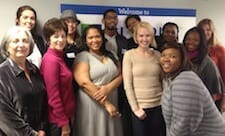
Financial Opportunity Corps members Caroline Ezzo (back
row, left) and Thomas Revelle (back row, third from left) join
with volunteer financial coaches and their clients at Clarifi.
But thanks to a financial coach who came to her through the Financial Opportunity Corps, Cat recently created a budget and identified places where she can cut spending and move toward a debt-free future.
“I think one of the benefits of this program is having a person who is not judgmental and not as emotionally connected to my money and spending as I am,” says Cat, a social worker.
The Financial Opportunity Corps recruits and trains volunteers as financial coaches who then help people from low- and moderate-income households achieve financial stability. The program is a partnership between Points of Light, Bank of America and the Corporation for National and Community Service.
The corps is made up of 20 AmeriCorps VISTA members working from nonprofits in 10 cities across the country. In Philadelphia, where Cat lives, Financial Opportunity Corps members Caroline Ezzo and Thomas Revelle have spent the past six months helping the staff of a local nonprofit establish a financial coaching program fueled by volunteers. The 47-year-old nonprofit, Clarifi, offers financial counseling and education to 15,000 clients each year.
So far Ezzo and Revelle have recruited, trained and activated 21 coaching pairs. In such pairings, a coach is matched with a client based on logistics, personality and complexity of the financial goal. Ezzo and Revelle plan to add up to 10 more coaching pairs every month.
The effort is paying off for dozens of clients – including Cat, who has been able to reduce her monthly student loan payment from $500 to $200. She says her financial coach has been instrumental in helping her become more financially secure.
“It’s hard for me to set concrete steps to achieve my financial goals, because it’s hard to see the big financial picture,” Cat says. “My coach helps me to look at my finances with a new perspective and helps me to set small, achievable goals to help me build confidence in my ability to manage my money.”
When Schools and Businesses Collaborate, Students Win
This post is by Gayle Villani, vice president of programs for PENCIL, a New York-based organization that since 1995 has created innovative models of collaboration between businesses and public schools.
Gayle Villani
One of the most important trends in education this year will be how the business community continues to act on its desire to support our public schools.
Like most trends, this one has been building for some time: last year, during his State of the Union address, President Obama focused on Pathways in Technology Early College High School (P-Tech) – a collaboration between the Department of Education and IBM – as a model for the future. That model is being replicated well beyond New York state, where it started – in Chicago, for example, they launched four schools built on a similar model.
The P-Tech model is an intensive one, and while it’s inspiring that IBM has invested so heavily in this particular model, not all companies have the resources to create brand new schools. The good news is that there are other models that enable businesses across the spectrum to have a deep impact on schools in their community.
Since 1995, PENCIL has been working at the intersection of school need and business expertise to foster stronger school cultures, engage families in their school communities and prepare students for college and career success: Last year, 9 of 10 principals engaged in our program said their PENCIL partnerships helped improve school culture, student performance or both.
But it takes much more than the willingness to volunteer to make a difference. Any school and business can take steps toward helping students reach their potential if they follow these best practices:
Align volunteer skills with school needs – Before partners begin to work together, they need to best understand how to align the business volunteer’s skills and good intentions with a school’s needs. In these cases, the business volunteer might offer a service that the school doesn’t really need. To avoid this situation, intermediary organizations must strategically match business volunteers’ expertise with specific school needs in the key areas that are proven levers for improvement in school and student performance.
Set clear expectations and realistic goals – Similarly, principals shouldn’t expect – and volunteers shouldn’t promise – more than they can offer. Both schools and businesses should commit to what they really can do – not what they wish they could do. These realistic goals make everyone feel successful, keep everyone engaged and motivated and, over time, lead to those dramatic, inspiring results everyone is hoping for.
Measure impact – Measurements abound in school and in business – firms ask themselves if they’re providing their customers with the level of service that they demand, and schools track student learning throughout the year. But when volunteers and schools come together, too often they forget about taking meaningful measurements.
Maintain ongoing and open communication – When volunteers join a school community, it’s the creation of a relationship. Both parties need to commit to maintaining regular and honest communication with each other, whether by email, phone or in person. When the program isn’t working, communication is about being open to the truth and determining what changes should be made.
Provide comprehensive support – While school-business partners who adhere to the above guidelines can produce great results, the reality is that schools and businesses are two very different worlds. Having an expert intermediary “translate” the realities of each and help both partners understand each other’s challenges – and the ways to address them – is an asset that maximizes school-business collaborations and their impact.
When you take those steps, you can make a tremendous difference. Watch this video to see the impact Morgan Stanley made at the Business of Sports School, where the company worked with school leadership and teachers to mentor students in college and career readiness skills.
By working together in a targeted, strategic and supported way, schools and businesses can find innovative new ways to invest private sector insight and intellectual capital in our students, and in our future.
A Storyteller Uses Her Skills to Help the Hungry and More
Jasmine Youssefzadeh had a passion for storytelling, and she knew she wanted to incorporate that passion into a business that was dedicated to creating social good.
Looking for inspiration, she went to the HUB LA, a business accelerator and support group for the Los Angeles startup scene, and met Matthew Manos, the founder of verynice, a design consultancy that gives half of its work away pro bono to nonprofits. When Youssefzadeh heard about the social impact Manos was having with his unique approach to business and social causes, she knew she had found her inspiration and the business model for her social venture.
A year after that initial meeting, Youssefzadeh founded filmanthropos, a creative agency that specializes in digital media storytelling for causes, nonprofits and corporate social responsibility programs. Through stories, the company humanizes social issues and develops cause marketing that builds awareness. Even as a new startup, filmanthropos’ clients include the Boys & Girls Club of Santa Monica, the Children’s Bureau of Southern California and the Zimmer Children’s Museum.
To meet the goal of giving half of her organization’s work away for free, Youssefzadeh doubles filmanthropos’ workload and taps into a network of local volunteers to staff pro bono projects. In the company’s first year, Youssefzadeh was able to recruit 16 pro bono volunteers and take on 15 pro bono projects to meet local needs.
More than that — Youssefzadeh and her team place heavy emphasis on creative initiatives. For Pro Bono Week 2013, they completed their first pro bono “ProduceAthon.” A work-around-the-clock creative blitz, the “ProduceAthon” helped a nonprofit tell its story, highlighting the organization’s impact, in a short film produced entirely over 24 hours. The outcome of the event was a 60-second motion-graphic video created for Swipes for the Homeless, a nonprofit focused on alleviating hunger.
“Our volunteers pitched in and helped with scripting, storyboarding, shooting, animation, audio production, editing and more,” says Youssefzadeh.
And Dasha Orlova, filmanthropos’ creative director, recalls: “My favorite memory of the project was when we were doing a stop-motion scene outside, moving fruit a half-inch at a time. Everybody who walked by wanted to know what we were doing.”
For filmanthropos’ staff, the pro bono project was not only an opportunity to lend their professional skills to a good cause; it was also a fun team-building experience. “The most gratifying part was the bonding experience,” says Orlova. “You get to know other volunteers very well when you’re all together for 24 hours straight and your one goal is to produce a video.”
The pro bono marathon also generated media coverage for filmanthropos and helped the company develop its client base.
For Rachel Sumekh, executive director of Swipes for the Homeless, a program that enables college students to donate their excess meal points to buy food for those in need, the ProduceAthon was a huge boon.
“The video helps us communicate the impact of our work, makes our organization look edgier and has already helped drive more traffic to our website” says Sumekh, Swipes for the Homeless’ sole staff person. “We often don’t qualify for services from larger foundations or companies, but with filmanthropos’ focus on smaller nonprofits, we could.”
Watch the video that filmanthropos created for Swipes on YouTube. Interested in applying for filmanthropos’ next “ProduceAthon” in March? Email [email protected].
Helping Kids They’ve Never Met
As Hilton Bogotá volunteers planted pine trees, repaired a basketball court, painted picnic tables and more at the nonprofit school Fundación Colegio Nueva Granada during a school day, they had an eager audience.
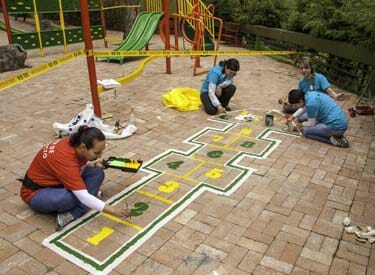
Hilton Bogotá paint a hopscotch grid on Fundación Colegio
Nueva Granada’s playground.
“A major impact of the project was the fact that the children were watching the volunteers, people they had never seen in their lives, work so hard throughout the entire day,” says Marcela Campos, project manager with HandsOn Bogotá, a HandsOn Network affiliate that facilitated the volunteer project. “I think it gave them a sense of belonging, a sense of, ‘Wow, we matter and look at these amazing people doing something for us.’”
The activities, which took place during Hilton Worldwide’s Global Week of Service in October, show how the leading global hospitality company brings their employees together to serve the communities in which they live, work and raise their families.
During that one week alone – just part of Hilton’s year-round efforts – Hilton employees participated in more than 2,400 service projects, making a difference in more than 730 communities in 72 countries, and bringing to life what hospitality is all about.
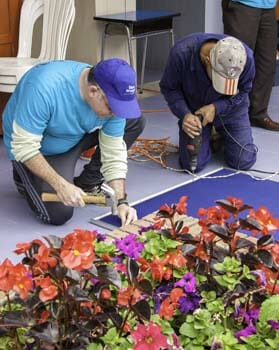
Hilton Bogotá volunteers help with a project
at Fundación Colegio Nueva Granada.
For the Bogotá project, beyond planting trees, fixing the basketball court and painting picnic tables, Hilton volunteers also painted a hopscotch course on the playground, created a vegetable garden and installed corkboards in hallways and classrooms throughout the school.
“I loved seeing the smiles on the little kids’ faces after we went to improve their school,” says Felipe Godoy, one of the 48 Hilton Bogotá volunteers. “The fact that I was able to help other people – especially kids that are less fortunate – was inspiring.”
HandsOn Bogotá also partnered with HandsOn Broward for an artwork exchange involving the Hilton volunteers. After their shift at the school, the volunteers traced their hands and painted and cut out the tracings to be arranged on a canvass. Volunteers associated with HandsOn Broward will do the same, and the two nonprofits will display each other’s artwork.
The school volunteer project with Hilton was HandsOn Botogá’s first major endeavor with a corporate sponsor. The nonprofit anticipates similar collaborations in the future.
“We hope this project will give us more exposure and help us reach out to more companies,” says Campos. “I think it shows that we really can be well-organized, cover every detail and help people see the beauty of volunteering.”
Here’s What Happens When Companies Make Community Service Business as Usual
Nearly three years after Michael Porter and Mark Kramer published “Creating Shared Value” in the Harvard Business Review calling on businesses to create economic value in a way that also creates social value, we are now seeing a growing number of companies step up to turn that vision into reality.
While Porter and Kramer’s article bemoaned the fact that “most companies remain stuck in a ‘social responsibility’ mindset in which societal issues are at the periphery, not the core,” many companies have recently showed that they are increasingly integrating social issues into the core of their business strategies.
We can see this clearly in this year’s The Civic 50 survey, issued by Points of Light and the National Conference on Citizenship. The Civic 50 was created to measure corporate civic engagement and to recognize top S&P companies that make socially responsible practices and community leadership part of their corporate culture. Businesses recognized as The Civic 50 set the standard for how a company’s time, talent and resources can best be used to improve quality of life in the communities where they do business.
A few findings from the survey show how companies are connecting the dots between their community work and their business bottom line:
Businesses believe that community engagement programs make employees more valuable–employee skill sets have expanded as a result of employee volunteering.
Employees are being evaluated on both business performance and their participation in community work.
Businesses are seeing that a strong, strategic community program has bottom line benefits – improving a company’s brand, recruitment and sales.
Best Practices for Shared Value
Indeed, with companies like those in the Civic 50 stepping up to improve the communities in which they live and work in a serious way that drives business success, we are starting to see a framework and best practices for how companies can achieve real shared value.
“We are encouraged by the results of The Civic 50 survey, which show that increasingly community engagement is recognized as being core to business success,” said Neil Bush, chair of the Points of Light Board of Directors, and Michael Weiser, board chair, National Conference on Citizenship, in a joint statement. “We hope the best practices of The Civic 50 will serve as a valuable resource for other companies that want to transform their business, make a greater commitment to their communities, and change lives.”
Those best practices include:
Institutionalizing corporate policies and practices related to civic engagement.
Tracking the impact of corporate civic engagement on sales, recruitment, retention and skills development.
Incentivizing community involvement throughout the organization – and holding employees and leadership accountable for success. Increasingly, more companies are adding community work to employee reviews.
Volunteering in companies is on the rise and more companies are donating expertise through pro bono support and skills-based volunteering.
Helping their small business and local enterprise counterparts succeed and providing them with the necessary resources to do so.
Institutionalizing corporate policies and practices: At IBM, the Corporate Responsibility Executive Committee includes representation from Community, Legal, HR, Supply Chain, Environment, and Government Relations. The day-to-day work is carried out by a Corporate Responsibility Working Group drawn from all these areas of the company and with global membership. The Working Group convened more than 20 times in 2012.
Corporate civic engagement and the business bottom-line: GE demonstrated many ways community engagement can enhance business drivers. For example, when GE’s corporate audit staff met in Miami for leadership development training, they also carried out a Junior Achievement volunteer project. More than 600 employees participated in the project, and they said that it improved their teamwork, project management, negotiation and presentation skills.
GE also mounted a quick and effective response to Superstorm Sandy. When New York’s Bellevue Hospital Center lost backup power during the storm, service teams from GE Healthcare helped doctors and nurses evacuate and transfer patients and equipment. Elsewhere, GE employees worked long hours to help utilities restore power and volunteered to clear out flooded homes and businesses. In total, the GE Foundation donated $5.8 million in support of Superstorm Sandy relief-and-recovery efforts.
Additionally, as part of its Developing Futures in Education program, the GE Foundation has been advocating for businesses and communities to support the implementation of the Common Core State Standards (CCSS) scheduled to go into effect in 2014 in 46 states. GE sponsored a two-day meeting with business leaders and public officials to explain the impact the CCSS will have on the future workforce. These events occurred in nine cities reaching almost 900 business leaders.
Holding employees and leadership accountable for success: Thirty percent of all employee evaluations at Western Union are based on the “WU Behaviors,” reflecting a strong value of ethics, integrity and community engagement. Responsible behavior includes community engagement and shared value, based on criteria including developing shared value products, leading local fundraising events, volunteering for the Western Union Foundation or in the community. As part of their performance objectives – which are the basis for professional evaluations and bonuses – all Western Union employees are asked to create a “Social Ventures” objective, aimed at reinforcing each individual employee’s commitment to using business assets to deliver business and social results.
Volunteering in companies is on the rise: Members of Capital One’s Brand team developed a pro bono National Brand Campaign for Give an Hour (GAH), a nonprofit dedicated to meeting the mental health needs of returning military troops from Iraq and Afghanistan. For the far-reaching campaign, team members developed television and print PSAs that appeared in Time Square and in Time Magazine, Newsweek, O Magazine, Men’s Fitness and the GAH website. The pro bono brand team’s efforts resulted in an 80 percent increase in volunteers from 2,000 to 10,000 within a four-month time period.
Helping small businesses and local enterprises succeed: Hershey runs a program that sends agricultural and social text messages to rural Ghanian farmers via mobile technology to educate them on up-to-date agricultural practices to help them maximize their yields and incomes. Outcomes are significant, including cocoa yield increases of more than 40 percent, income increases of more than 50 percent and school attendance increases of more than 25 percent.
With all of these inspiring examples of companies stepping up to meet the needs of their communities through their community involvement programs, we are beginning to see how many in the business community are moving away from a “social responsibility” mindset where social issues are at the periphery of business, to one where they are closer to the core of business strategy. What will we see with 2014’s Civic 50 list?
Who Made the List?
This post is by Tracy Hoover, president of Points of Light.
The Civic 50 sets the standard for corporate civic engagement nationwide and creates a roadmap for S&P 500 companies seeking to best use their time, talent and resources to improve the quality of life in the communities where they do business.
Please take a moment to celebrate these companies for their great and continued efforts. And as the holidays approach, I hope you’ll put your money where your values are and use your purchasing power to support all the companies that are doing great work in their communities.