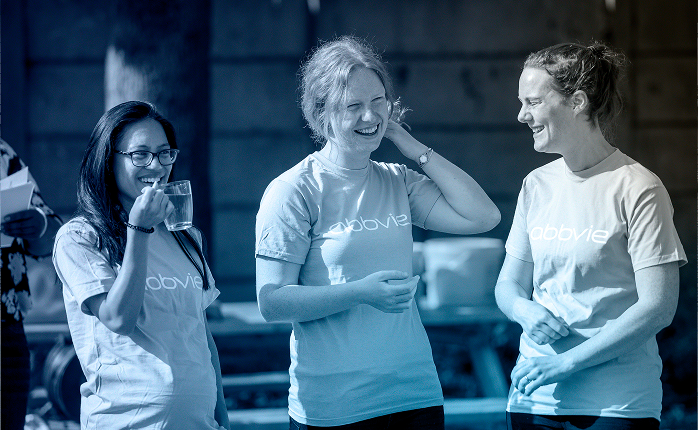
Last month, during the Hilton Hotel’s Global Week of Service, employees from Hilton’s Shanghai office were determined to support the Shanghai Healing Home, a project that provides pre- and post-surgical care to abandoned babies suffering from surgically correctable medical conditions like cleft palates.
Hilton employees were motivated to do more than just painting a wall or spending time with children. They wanted to develop a transformational project that could truly impact Shanghai Healing Home and the assisted children; however, they did not have the necessary funds.
Julia Zhu, a corporate volunteer leader, didn’t let that stop them. She motivated her colleagues to bring items to be auctioned at the office – they raised 70,000 RMB or $10,000 though the silent auction of more than 100 items.
This money was used to build a “House of Light & Warmth”, a special room for newborns at Shanghai Healing Home. When the construction was complete, almost 60 Hilton employee volunteers assembled furniture and decorated the new room.
The Cream Rises to the Top
Today’s post is written by Natalie Smith, Director of Corporate Relations at Points of Light. Natalie works with companies to help them build and sustain successful employee engagement programs.
Have you ever heard that expression? As a child, my mother would always say this to me when encouraging me to do my best. I would nod my head as if I understood what she meant, even when I didn’t. Later in life I would understand exactly what she meant – the best of the best eventually rise to the top and get acknowledged for their work. This sparked a competitive edge in me and fueled my desire to reach for the top.
Recognizing this, I’m always excited to read rankings for anything. Rankings for the best schools, the best places to live and even the best burger to eat. This week, I was excited to see the results of a new list which ranks America’s most community-minded companies in The Civic 50 survey – the first comprehensive ranking of S&P 500 corporations that best use their time, talent, and resources to improve the quality of life in the communities where they do business. The Civic 50 was released and it revealed a new sort of list—one that I hope many companies will strive to be a part of.
As a professional that supports companies with their employee engagement and volunteerism efforts, I was thrilled to find several of the companies that I work with on our Corporate Service Council recognized for things that I already knew about them—they are leading the way when it comes to community engagement. The Corporate Service Council is the premier national platform for advancing corporate volunteerism. I want to congratulate my colleagues at the following companies: IBM, Citi, AT&T, Morgan Stanley, General Electric, Hasbro, FedEx, Bank of America, Microsoft, Target, UnitedHealth Group, HP, Altria and Starbucks. The unique quality about these companies is that they believe in their collective power to transform communities using the core competencies of their businesses. I have the terrific opportunity to witness competitors become collaborators in addressing some of the most pressing issues facing our society.
No matter whether your company ranked as a part of The Civic 50 or if your company didn’t rank at all, I challenge each of you to continue expanding your community engagement efforts and seeking opportunities to collaborate with other companies who are making similar strides. I think competition is healthy for a thriving marketplace and I can think of no better area for businesses to compete over than vying to be the best at improving our communities.
KPMG Supports Family Volunteering with Family for Literacy
Today’s guest post is written by Abby Fennewald, on the Corporate Institute team at Points of Light.
KPMG’s Family for Literacy program began in the same way Harry Potter did – scribbles on a napkin. Just like bestselling author J.K. Rowling, the idea for one of KPMG’s signature volunteer programs came to Beth Veihmeyer, spouse of KPMG’s current chairman and CEO, and her friend, Susan Flynn, spouse of then-chairman and CEO Timothy Flynn, as they brainstormed one afternoon in 2007. Today, KPMG’s family volunteering program is five years old and operating all around the globe.
The Family for Literacy program is largely run by spouses of employees with support from KPMG staff. Using KPMG donations, First Book, a national nonprofit focused on eradicating illiteracy, provides new books to schools serving low-income families who otherwise might not have the opportunity to own their own books. Then, KPMG volunteers take time out of their day to read with the kids.
“As a spouse, there were a couple of programs that had been floating around that I would have loved to participate in,” Veihmeyer said of the KPMG CSR programs that were already in place. “The [Family for Literacy] program began to take shape from the thought that, if you harness the energy, passion, resourcefulness and talent that are in the extended KPMG family, you can oil the engine even more.”
KPMG has become a stronger company because they have connected the support and interest of their “extended family” to their volunteer programs. Traditionally, they have always been part of the firm but, through this program, they have taken on a new role that has given them direct ties to the company and allowed them to invest their entire family more fully. “Don’t lose that talent because it’s not getting a paycheck,” Veihmeyer said. “Make it work. The strength of volunteerism is beyond money.”
The other, perhaps more obvious, benefit of such an expansive program that draws on all of a corporation’s resources, is the social change it can bring. In KPMG’s literacy program, children and teenagers who volunteer can make an especially big impact. When a KPMG intern took the time to read with a young boy in a school in Washington, D.C., he was able to get through to him in a way that none of his teachers had been able to, Veihmeyer said. “He had taken the time, the connection had been made.”
That kind of connection can have huge benefits for employees’ children, as well as the cause they are supporting. Studies have shown that children that start volunteering at a young age are more likely to continue giving back to their communities as they grow older. Volunteering as a family can be a great way for parents to teach their kids about their values. Corporations can do their part by providing opportunities for employees’ entire families to engage with their community service efforts.
Disney, the sponsor of this year’s Family Volunteering Day, has also taken huge steps to get families with kids involved in volunteering through their Disney Friends for Change program. They have played a huge role in making this annual event possible and also run a great volunteering program for kids year-round. The wide variety in their work showcases the fact that families and children can get involved in all kinds of causes when given the opportunity.
This is why creating a volunteer program that will be engaging for employees, their families, even interns and retirees, hinges simply on finding a cause that everyone cares about and wants to support. Literacy was the cause that stood out to KPMG, but the possibilities are endless, as are the rewards that come from engaging whole families. “There is no reason [other companies] can’t engage their families in some way,” Veihmeyer said. “It’s just mind-boggling where those resources can take a company.”
Civic 50 Award Shines Light on AT&T Community Engagement
Today’s post is reposted from the AT&T Consumer blog published on Nov. 8, 2012.
It’s been quite a week, hasn’t it? With Hurricane Sandy still fresh in our minds and recovery crews and volunteers feverishly at work, current events remind us of the importance of community. I’m continually inspired by the passion AT&T employees bring to efforts like these.
That’s why I’m humbled to share that AT&T has earned the No. 3 spot in The Civic 50, an inaugural list of America’s most community-minded companies. Sponsored by the National Conference on Citizenship, Points of Light, and Bloomberg, LP, the survey ranked S&P 500 companies committed to using their time, talent, and resources to empower the communities they serve.
TheCivic 50 – featured in this week’s edition of Bloomberg Businessweek – measures how a corporation’s policies, activities, and employees affect the civic and social fabric of a community. With the help of our customers, AT&T is making measurable impacts through initiatives like It Can Wait by promoting responsible use of our technology, and spreading the message that no text is worth dying for. Aspire Mentoring Academy is tackling the high school dropout crisis with the goal of our employees providing 1 million hours of mentoring. And Do One Thing reminds all of our employees to think about the little things we can each do to foster more sustainable communities.
Along the way, AT&T employees and retirees poured their hearts into more than 6 million volunteer hours last year alone, supporting more than 18,000 worthy organizations. These investments in time and money not only strengthen our communities, but they bolster our company as well. They are the reason we can be among the first to respond when disasters like Hurricane Sandy strike.
We’re looking forward to a full – and fulfilling – 2013. But it’s worth taking a moment to say thank you – to Civic 50 organizers for the incredible recognition, to our customers who power our technology, and to our committed employees, 241,000 strong, who are truly deserving of this honor. THANK YOU.
Jackie Norris: Creating a Standard for Doing Well by Doing Good
Today’s blog is republished from the Ideas Lab on Nov. 9, 2012.
The executive director of the Points of Light Corporate Institute highlights the ‘Civic 50’ a yearly list of companies that improve their communities alongside their business.
Ben Franklin knew – without the aid of economic modeling, PR professionals, public opinion polls or the 24-hour news cycle – that companies could succeed by doing good. Today we have the benefit of all of these things to confirm Ben Franklin’s intuition.
According to a 2010 CSR Perception Survey conducted by Penn Schoen and Berland, 75 percent of consumers say good corporate behavior is important to them. More importantly, as it pertains to consumer behavior, respondents reported a greater likelihood to purchase products or services from a company after reading its responsibility agenda.
The practice holds benefits for employees and corporate recruitment efforts as well. A Cone study found nearly eight of 10 employees born in 1980 and after, want to work for a company that contributes to society, while more than half say they would refuse to work for an “irresponsible corporation.”
Recognizing this trend, the National Conference on Citizenship and Points of Light launched The Civic 50 to identify civic-minded business. We are proud to have had so many S&P 500 companies participate in the survey.
For decades, NCoC and Points of Light have promoted the idea that companies wanting to stand out in today’s competitive environment and do the right thing should devote resources to building a corporate infrastructure that promotes responsible business practices. But how do we get there and what is the best, most impactful approach?
The Civic 50, with its unique scoring methodology and focus on seven dimensions, is our initial attempt to answer that question. You see, NCoC and Points of Light believe that “responsibility” has the most meaning when companies use their core competencies to create lasting change in communities.
The Civic 50 illustrates how companies are using their time, talent and financial resources to empower and improve the communities in which they do business. From employee volunteering to community nonprofit partnerships, the range of activities are broad and they are making a difference in health, education, child enrichment, poverty reduction and disaster relief to name a few.
The Civic 50 recognizes companies making lasting impacts in their communities, but perhaps more importantly, it encourages companies to make these practices a part of their corporate DNA. Check out the list of the top companies. We congratulate the companies awarded today and salute them for their achievement.
Jackie Norris is the executive director of the Points of Light Corporate Institute and leads the corporate strategy and employee engagement programs.
From Charitable Giving to Strategic Philanthropy – The Advisory Board Makes An Impact
Today’s post is written by Yvonne Siu, marketing manager, A Billion + Change.
Imagine receiving a new brand identity your nonprofit could use to launch a rebranding of your organization – for free. Or imagine engaging a team of your best and brightest employees to research and create a pitch presentation for a high-performing charter school – with 24-hours notice.
These are just two examples of the creative ways that The Advisory Board Company, a global research, consulting and technology firm, has found to engage its employee base in skills-based volunteering during its Week of Service this October. From Oct. 1-5, the company is mobilizing almost 2,000 employees to volunteer approximately 3,500 hours across the country and around the world. Activities include traditional volunteer work, like partnering with Meals on Wheels to feed the elderly and working with Montopolis Preserve on clean-up efforts, to doing marathon sessions of strategic pro bono projects for Achievement Prep, a top-rated charter school, and New Futures, a nonprofit that offers financial and mentoring support to low-income youth in Washington, D.C.
“We’re proud that we can utilize the unique talents and skills of our employees – many of whom are passionate about social issues – to drive high-impact change in the education and healthcare sectors,” said Graham McLaughlin, senior director of the Advisory’ Board’s Community Impact Program.
On the third day of the company’s Week of Service, a young and energetic marketing team presented a new logo and tagline they had developed for New Futures during its “Branding Blitz.” Their creativity and passion were evident, and were matched by the surprise and excitement of the nonprofits in the room.
“Once again, we are amazed at the talent and enthusiasm the Advisory Board brings to their philanthropic work. The Branding Blitz was an incredible experience for New Futures. Each of the logos is absolutely beautiful. I have no idea how we’ll ever choose just one. ” said Liz Daley, director of development at New Futures. It comes as such a welcome contribution, as funders generally want to funnel their support directly to our programmatic work, which can’t support our marketing and operational needs.”
Another project in the firm’s “Branding Blitz” was a pitch presentation and brand identity guidelines created for Suited for Change, a nonprofit that provides professional clothing and ongoing career education to low-income women. “We were so overwhelmed by the depth of the Advisory Board team’s understanding in under an hour of the challenges we have been facing, words fail us… but not them,” said a representative from Suited for Change.
The Advisory Board, A Billion + Change pledge company, is one of hundreds of businesses nationwide that are having this kind of impact. One by one, companies are undertaking a strategic shift from charitable giving and “hands-on” volunteering to more skills-based, pro bono support for the social sector. Support like this is exactly what nonprofits need the most right now, as research shows that the value of pro bono projects in areas such as general operations and professional services can be 500 percent greater than the value of traditional volunteering. Skills-based volunteering is also becoming a strategic talent management and talent development tool for many businesses looking to recruit and retain the best employees.
At A Billion + Change, we encourage businesses of every size and across every sector to ask themselves: How can we lead change through service? How can we give back to our communities in meaningful ways? If you’d like to learn more about what others are doing, visit A Billion + Change’s website and consider taking the A Billion + Change pledge. You can, like the Advisory Board, engage your employees and make a deep impact on the social sector through the power of pro bono.
Let’s Flip This Inside Out: The Impact of Corporate Responsibility on the Bottom Line
A company has goals, responsibilities and a duty to their stakeholders. There are a set of products and services to be developed, marketed and sold to the masses. A brand created, a mission established and a group of people hired to devote a 24-7 schedule to its success. Now, there is also an overwhelming demand for companies to act as civically engaged citizens.
In the recent article, “Corporate Social Responsibility: Distinction or Distraction,” Steve McKee takes this topic head on. He expresses the importance of considering the implications of a company’s objectives and its alignment (or lack thereof) with a social mission. He continues by expressing that perhaps the most socially responsible thing a company can do is “making a profit – creating jobs, increasing wealth, enhancing the health of the economy.” What, then, if we find out doing good will ultimately lead to a company’s ability to do well?
In reading this, we drew a direct parallel to the Civic 100, our partnership with Bloomberg News and National Conference on Citizenship. Yes, it’s another survey – but rather than a typical CSR survey, measuring WHAT a company does, the Civic 100 measures HOW S&P 500 companies are acting responsibly while thinking about its impact on their businesses. Its results have the potential to turn the “doing good while doing well” concept inside out. Perhaps we have reached a point in corporate America where doing good is not a just a demand from socially conscious consumers, but a key to financial success.
Take a moment to let us know what you think about this topic and to learn more about Civic 100 visit www.civic100.org.
“Give With Target” Back-To-School Initiative Launches
On July 26, Target launched a back-to-school education giving program, called Give With Target® in New York City with Disney Channel actress and Hollywood Records recording artist Bridgit Mendler. The program runs through Sept. 8, 2012 and is part of Target’s plans to give $1 billion for education by 2015.
Target will donate up to $5 million to schools nationwide, with $2.5 million in the form of $25,000 grants to 100 in-need schools. Target will surprise one lucky school a week over a four-week period starting on Aug. 9. Be sure to visit A Bullseye View throughout the program to learn more about Give With Target and to track the Bullseye Bus.
The second part of the program will give $2.5 million in Target GiftCards® to local schools who receive votes via the Give With Target Facebook application. Your school can receive up to $10,000 for books or needed school supplies. All you need to do is vote for your school each week until Sept. 8 and share with your network using the hashtag #GiveWithTarget. For every 25 votes your school receives, Target will send a $25 gift card. Find out more and vote at Facebook.com/Target.
Envisioning Pro Bono as the Future of Corporate Service
Today’s post is republished from the Billion + Change blog on July 19, 2012. This post was contributed by Michelle Nunn, CEO of Points of Light, and includes her reflections on A Billion + Change’s Forum at the White House on June 27, 2012.
Can you imagine a future where 500 companies decide to collectively lead social change and tackle the most pressing challenges of the 21st century through skills-based volunteer service (SBV)? This is the future that A Billion + Change discussed recently at a national forum at the White House, “A Billion + Change in Action: Connecting to the Future of Corporate Service.” I was honored to join with leaders like Valerie Jarrett, Senator Mark Warner and Jean Case at this forum, where A Billion + Change announced that 200 companies across the country have pledged an estimated $1.8 billion worth of skills-based services to help build nonprofit capacity.
This event was a turning point in our national service movement, in that it challenged each pledge company to look ahead at the powerful and transformational impact that 500 companies can one day have on society through skills-based volunteering. It also created a huge sense of enthusiasm and support for A Billiion + Change, and for scaling collaborative efforts to address social challenges through pro bono service.
There was a consensus among policymakers like Gene Sperling, Thomas Kalil, Racquel Russell, Jonathan Greenblatt and Wendy Spencer, as well as among CEOs from large, global corporations and small businesses that corporate skills-based volunteer programs have a critical role to play in our nation’s economic recovery. By helping nonprofit organizations become more sustainable and successful, corporate America is injecting valuable support to community-based organizations that are working every day to help veterans transition to civilian life, implement workforce development and job creation programs, improve education, and promote global development abroad.
Throughout the day, the recurring themes that business, civic and policy leaders kept echoing were: 1) How they could scale the impact of their service programs through collaboration, 2) How they could deepen and improve the quality of their nonprofit partnerships and 3) The importance of A Billion + Change as a national movement to inspire, connect and catalyze successes at the local level.
Inspiring pro bono success stories abound. Joe Echevarria, CEO of Deloitte, shared a personal example of growing up in the South Bronx and working his way up the corporate ladder at Deloitte. Today, he shares his life experiences with students during Deloitte’s Impact Days, and encourages underserved youth to believe in their ability to succeed. Deloitte recently announced that its commitment to pro bono services would rise to $110 million by 2015.
Hervé Humler, President & COO of The Ritz-Carlton Hotel Company, shared his company’s “Succeed Through Service” program, which has partnered with America’s Promise Alliance to stem the school drop-out crisis by engaging and inspiring at-risk middle school students. Since the program was launched in 2009, Succeed Through Service has improved the lives of 9,000 children around the world.
“By harnessing the skills, knowledge and experience of our employees to inspire and engage at-risk youth we are supporting schools in their mission to see young students flourish and remain in school – and we are mobilizing our workforce to give back to their local community. Joining A Billion + Change has helped us intensify our Succeed Through Service youth engagement efforts and challenged us to look at how we can expand the reach of our pro-bono efforts to make a greater impact,” he said.
Gregory Cotton, CEO of Cotton 7 Global Enterprises, discussed how he has instilled his passion for service, picked up from his days in the U.S. Army, into his own IT and secruity consulting business. Today, Cotton 7 engages its employees in volunteer service to improve environmental security abroad, such as improving access to clean water in Sudan, and strenthening workforce readiness among youth by working with nonprofits like Junior Achievement.
We have now set our signts on having A Billion + Change continue to tell the narrative of these successes to inspire others to improve their communities through service, and to catalyze change at scale by supporting regional and national collaborations. Civic Consulting Alliance, a Chicago-based organization that creates pro bono teams of government leaders and business experts to make cities more livable, affordable and globally competitive, is an example of how we can achieve impact at scale through collaboration. More opportunities also exist through national initiatives, such as Strong Cities, Strong Communitis and Grand Challenges.
How do we create a future where 500 companeis lead social change through pro bono service? How do we mobilize communities to tap into the skills and talents of businesses to address social needs? How do we inspire employees to grow professionally while championing causes they believe in? I invite you to join us in the months ahead as A Billion + Change continues to grow in energy and size as it catalyzes new partnerships and programs, and as it inspires the largest commitement of pro bono service in history.
In Service,
Michelle Nunn
CEO, Points of Light
The Employee Volunteer Program – Putting the CSR Puzzle Together
Today’s guest post is written by Cristina Andoni, ATLAS Corps Fellowfrom Republic of Moldova, serving at Points of Light as Corporate Institute coordinator. If you’re interested in contacting her for more information, please e-mail [email protected]
It’s not surprising that employee volunteer programs (EVPs) benefit businesses in a variety of ways. Companies with engaged employees experience 26 percent higher revenue per employee, a 50 percent higher market premium and 3.9 times the earnings per share growth rate compared to organizations with lower engagement (Gallup). Engaged employees feel more connected to their organizations and communities, and have overall higher productivity, ROI and job satisfaction rates. Add in the societal benefits and the return on investment is even greater.
With a proven business case for employee volunteerism, businesses today seek to maximize EVP efforts and get the most of their investment in corporate social responsibility activities. Although there is not a single recipe for the success for an EVP it is certain that impact is amplified when employee engagement actions are planned and aligned strategically to the company’s values, vision and culture. According to the latest Trends of Excellence Report: Employee Volunteer Activities, several trends around EVP practices have emerged:
Going green
Environmental causes and sustainability is on everyone’s agenda these days, including companies. Consumers are more concerned about a brand’s moral value than before, and brand loyalty is built upon a proven record of green practices. Companies such as Timberland went even further with the development of a GREEN Service Standard in which each volunteering event minimizes waste and supports the company’s environmental agenda, while others, such as Caesars Entertainment which collects soap when cleaning hotel rooms, which is then sterilized and distributed to underprivileged families globally to help prevent disease.
Infuse non-traditional engagement
Employee volunteering is expanding to correspond to the ever changing demographics, expectations and needs of the workforce. Take millennials for example, in just 10 years they will represent the biggest group in the workforce. At the same time, millennials who frequently participate in their company’s employee volunteer activities are more likely to be very proud to work for their company (55 percent vs. 36 percent who do not volunteer), and are twice as likely to be very satisfied with the progression of their career (37 percent vs. 21 percent) and their employer (51 percent vs. 32 percent) (2011 Deloitte Volunteer IMPACT Survey). Driven by impact and values, it is not a surprise that millennials find non-traditional volunteering appealing. It is now up to companies to make their offers appealing to millenials.
An integrated approach to volunteering
Cooperation, rather than and competition is taking over. Research shows that companies have learned that by joining forces they gain much more, both financially and in value. Excellent EVPs engage customers, business partners and other stakeholders to participate in volunteering activities. Other excellent EVPs increase employee participation in volunteer activities while enhancing employee work-life by incorporating volunteering into everyday workplace experience.
Cbeyond involves customers in its Week of Service, while 41 percent of volunteers at Timberland’s 2011 Serv-a-palooza day of service were business partners, vendors, consumers, partners, family and friends of employees.
Tailor volunteering
Not only do employees want more impactful volunteering and corporate involvement, but they are looking for opportunities which would best address their own development goals and interests. Companies which focus their EVPs around their employees’ areas of interest achieve greater success in attracting and retaining volunteers. Skills-based volunteering is a great way to build upon existing skill sets and develop new skills. It is also almost three times more cost-effective in comparison to regular training.
In the 10 months that I’ve worked with Points of Light, I have been amazed at how EVPs have evolved and how fast new research and trends in employee engagement have mushroomed. Companies have become more creative with matching business priorities to employee desires and community needs. EVP managers work more tightly with human resources and corporate CSR policy becomes more holistic. The path towards impact and success is paved with creative volunteer offering and innovative service practices. It is up to each company to decide which ones would bring competitive advantage and work best for business.
The article included data from the 2012 Points of Light Trends of Excellence Series, 2011 Deloitte Impact Study, Gallup, CECP’s Giving in Numbers 2011 survey.
Click here to download your Trends of Excellence Report.