For many of us, September feels like the beginning of a new year – the start of school, back to work, the change of seasons. Because Points of Light works within an annual cycle that ends Sept. 30 and “begins” on Oct. 1, this sense of fall as a time for new beginnings is accentuated.
We also dedicated time to strategic planning – plotting our work for the coming years. We consulted with literally hundreds of stakeholders and looked back on our own work over the last few years.
As we begin to share our vision for the future, we want to first share our accomplishments and mine the lessons from the previous three years.
Our previous strategic plan took us from October 2009 through September 2011, and included a number of initiatives that addressed two key pillars – driving impact and innovation across the service sector and building organizational excellence within Points of Light Institute.
Over the course of three years, we exceeded a number of our strategic goals including:
Engaging 8.8 million Americans to serve through our network
Recognizing and honoring 1.2 million volunteers for their contribution to communities
Generating $116 million for nonprofits by enabling people to use their purchasing power for good
Mobilizing 37 million people through innovative technology
We fell short of our aggressive goals to provide 10 million people with tools and resources, and we feel like we are just beginning to approach our goal to engage hundreds of thousands of volunteer leaders in self-organized projects. We have applied the lessons we’ve learned in these areas to our updated strategic plan and we are excited about the possibilities.
As the nation faces increasing challenges and limited resources, we believe it is incumbent upon us to think creatively and embrace risk, and even failure, in pursuit of transformation. We will try to embrace big goals in the hope of creating big impact at a time when we really need it. We will strive to make service central to meeting the critical issues of our time.
We are grateful for the extraordinary partnerships and support that made the work of our last three year plan possible and we look forward to sharing our new strategic plan in the coming weeks.
Yours in service,
Michelle Nunn
CEO, Points of Light Institute
Change Notes: 50 Years of Global Impact
Friends,
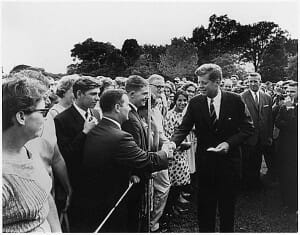
On Sept. 22, 1961, Congress approved legislation creating the Peace Corps. This organization was born not of politics, but rather the enthusiasm and idealism of students responding to a speech by President John F. Kennedy that lasted less than five minutes. These students gathered signatures on a petition expressing support for President Kennedy’s idea and, buoyed by this response, the president went on to create his signature service program.
The Peace Corps has shaped the sensibility of our nation and it has become an iconic representation of our nation’s idealism. It has had a profound impact in shaping our relationship with the world, creating change on the ground in developing nations, and cultivating a leadership corps of Peace Corps Alums who have shaped our nation and its global interactions. Yet, it still stands at only 8,000 annual volunteers versus President Kennedy’s dream of 100,000 volunteers serving around the world.
As we mark the triumphs and continued aspirations of the program, it gives us an opportunity to think about the larger trends around international service and the opportunities before us.
On a personal note, when I graduated from college 20-plus years ago, I applied to the Peace Corps. I knew I wanted to be involved in service and I was committed to doing something internationally. While I waited for my Peace Corps application, I met a group of individuals who were starting an effort to mobilize volunteers in Atlanta and I became the first glorified, part-time executive director of a nascent effort called Hands On Atlanta. By the time I was accepted into the Peace Corps, I had found that I loved my domestic service work and deferred, focusing on building Hands On Atlanta and later HandsOn Network, which now has combined to form Points of Light Institute – with more than 250 HandsOn affiliates and a presence in 40 international cities.
I share this story because I think it helps illustrate the changing landscape of international service and three salient trend lines.
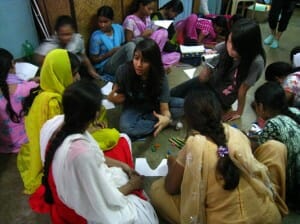
Twenty years ago, there was a fairly well-defined choice – serve domestically or serve internationally. Today, the lines are more blurred. Increasingly, young people are operating as global citizens. One of our Daily Point of Light award winners, Sejal Hathi, illustrates this trend. Sejal was a 15-year-old in a suburb of San Francisco who decided her mission was to empower girls in developing countries. She founded Girls Helping Girls (GHG), an international nonprofit that partners girls in the U.S. with girls in schools and communities in developing countries. The American and local girls jointly identify problems in those countries and develop programs to create positive change.
Today, those GHG volunteers have worked with 5,000 girls in 15 countries. They have also raised $40,000 to provide basic necessities to impoverished girls around the world. Sejal, who is now in college, continues to create change. She has amplified GHG into the Sisters 4 Peace Network, a social change forum that mentors and provides resources to girls who want to create their own destinies. I think we will increasingly see people participating seamlessly in both domestic and international service.
The second trend is the role that the private sector is playing in international engagement and development. The interactions of private sector marketplaces and charities are increasingly complex and interesting. I am participating in the Clinton Global Initiative this week in New York and the entire forum is a testament to the fact that efforts to tackle complex global problems necessitate a high degree of collaboration across all sectors.
We are also starting to see the blurring of the lines between sectors as forces for international development. Social enterprise and the creation of new “B Corps,” or hybrids doing social good through private sector and markets, will increasingly change the nature of international service. A new generation of social entrepreneurs and international service leaders are choosing to support global development through the private marketplace. This will inevitably shape the future of international service as we have traditionally known it.
International service is increasingly being dominated not by well-intentioned generalists like I was when I volunteered for the Peace Corps 20 years ago, but well-intentioned business specialists – engineers, medical technicians, scientists, agricultural economists who are lending their technical expertise to the social and economic development work being done by members of local communities – all hearkening back to President Kennedy’s call 50 years ago. NGOs and the Peace Corps are looking for skilled volunteers.
And international service is now being adopted by businesses in creative new ways. Corporations like IBM, Dow and Pfizer are deploying their most capable professionals in focused projects across the globe to create transformational impact. IBM’s Corporate Service Corps, for example, has deployed 1,000 skilled volunteers over the last year to implement extraordinary projects in countries around the world, and has become a model for other businesses that seek to replicate and expand their own efforts. Points of Light Institute’s Corporate Service Council and many of our partners – Brookings Institute, Clinton Global Initiative, the U.S. Chamber of Commerce’s Business Civic Leadership Center – are exploring ways to effectively scale these corporate models for international engagement.
Corporations are empowering not only their employees to give back, but also their customers. MissionFish, an initiative that started with Points of Light Institute and now is fully incorporated and run by eBay, allows individuals to contribute a portion of their purchase or sale to the charity of their choice. In eight years, it has raised close to more than $241 million dollars for international charities.
So people are now able to leverage their time, their skills, their philanthropic dollars and their purchasing power to create change in the international arena – and they are doing it as volunteers, as social entrepreneurs, as employees and as customers.
Finally, my third point is that what Tom Friedman has famously called our “flat world” has created international service that is increasingly reciprocal and circular.
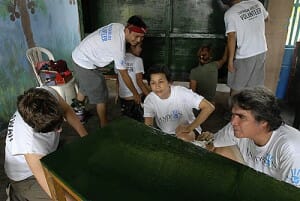
Gianna Montinola, the founder of HandsOn Manila, is a terrific example. Gianna volunteered with HandsOn Phoenix until she moved back to her native Philippines. There she recognized the need to start a similar organization. HandsOn Manila builds on the local concept of bayanihan, the local term for getting together to help someone in need. But it applies this value to a model of flexible volunteering borrowed from the United States. In the last 10 years, it has grown to engage 8,500 volunteers.
HandsOn Manila has hosted international teams around disaster relief, has brought back innovations that have been modeled by our domestic affiliates, such as creating CDs to raise money and partnering with corporations like Accenture, Chevron, InterContinental Hotels and Starbucks. It has launched a HandsOn Vacation program, hosting international volunteers to work on ecological, heritage and disaster response efforts.
Gianna started as a HandsOn Phoenix volunteer, moved home and created a program in Manila. She now engages volunteers from HandsOn Phoenix and across the U.S. in international service projects that mix international and domestic volunteers. The volunteers at HandsOn Phoenix participate in projects at home that have been inspired by volunteers in Manila. It is a flat world indeed.
There is, again, a blurring of lines. With the strengthened volunteer and civic infrastructure in countries around the world, so-called international volunteers will increasingly be working side by side with indigenous volunteers. A program like Atlas Corps is now bringing rising leaders from around the world to the U.S. to serve for a year with U.S.-based nonprofit organizations.
With this change comes a change in mindset. No longer will we think in terms of helping people in need “over there,” but rather we will think in terms of how we work together to build a better, more sustainable world for us all. This example also illustrates the importance of building the capacity of local organizations to effectively use the time and talents of volunteers from overseas. Points of Light Institute is equipping a growing number of social entrepreneurs around the world with the resources and tools they need to launch volunteer-mobilizing organizations that also strengthen how local NGOs are leveraging volunteer talent.
I think these trends around international service are hopeful and can create new ways of creating scale and impact globally. So many things have changed in the last 50 years, but one constant is that we still need the idealism and creative energy of people to create change in the world.
One day I hope to return to my deferred dream to join the Peace Corps. Perhaps when I retire, I will be one of a hundred thousand inter-generational volunteers serving around the globe, changing our nation, the world and ourselves in the process.
To learn more about ServiceWorld, an initiative to help us achieve President Kennedy’s vision of 100,000 volunteers serving abroad each year and usher in new thresholds of global service, go to www.ourserviceworld.org.
Yours in service,
Michelle Nunn
CEO, Points of Light Institute
Personal Reflection on the Day of Service and Remembrance and 9/12
Michelle Nunn, CEO of Points of Light Institute and Co-Founder of HandsOn Network personally reflects on the 9/11 National Day of Service and Remembrance and the day that followed.
On Sept. 11, 2001, when Glenn Winuk, a lawyer and volunteer fire fighter, ran into the burning buildings instead of running for safety, he did something both unexpected and also, evidently, completely in character. He did not follow his fear instinct; he followed his instinct to help. He was willing to sacrifice his own safety and, ultimately, his life, to ensure the safety of others.
Glenn’s brother, Jay, responded to the tragedy of 9/11 and the death of his brother in an improbable way as well. In grappling with his brother’s death, he decided he wanted to commemorate this terrible loss each year by asking us all to act upon our own instinct to help. He and his friend, David Paine, created an organization called MyGoodDeed. They worked against many odds and obstacles over the last decade to commemorate 9/11 as a Day of Service and Remembrance.
This unexpected response now seems entirely fitting. It helps us recapture the spirit that united our nation as we grappled with the tragedy of the 9/11 attacks. Ten years ago, on 9/12, people across the country and around the world responded with empathy and compassion. They reached out to support friends and family – and total strangers. The world embraced our nation with a spirit of solidarity, and the nation embraced the victims and their families with a generosity that took the form of uniting, giving and acting.
Ten years later, that unity seems to have been fleeting. But I believe it was recaptured, in some measure, over the last weekend in hundreds of thousands of acts of service. Points of Light Institute and our 250 HandsOn Network affiliates had the privilege of partnering with MyGoodDeed and a coalition of other organizations to activate one million people to pay tribute through service in commemorating 9/11.
Hundreds of thousands of people joined hands to give back, honor the memory of those victims and heroes that were lost and assert the nation’s resiliency and compassion. More than 12,000 people volunteered with HandsOn Greater DC Cares, an almost 80 percent increase year over year. HandsOn Bay area kicked off a documentary film series, “What It Means to Be an American in a Post-9/11 World” that will run throughout the month of September, bringing together hundreds to learn, discuss and address multiculturalism and look for solutions. Volunteers with Boston Cares planted 3,000 American flags in complete silence to honor the lives lost on 9/11.
White House Chief of Staff Bill Daley, Director of the Domestic Policy Council Melody Barnes, Sen. Kirsten Gillibrand, Rep. Jerry Nadler, California Lt. Governor Gavin Newsom, Boston Mayor Thomas Menino, San Francisco Mayor Edwin Lee, and NBA Legends were just a few of the dignitaries and leaders who joined hands to serve with our affiliates.
All of this was made possible with private sector support. American Express inspired thousands of employees and customers to act and remember with the launch of their I WILL VOLUNTEER Facebook application and were the signature sponsor of the effort. National contributors included Chase, the events mobilization partner who focused on military families and veterans; Best Buy whose support enabled thousands to upload stories and post tributes on 911day.org; and GlaxoSmithKline, whose investment provided more than one million teachers with lesson plans and age-appropriate service projects.
This Day of Service and Remembrance was a reminder that, at our best, our nation addresses challenges and tragedy with compassion, generosity and service. This is a tribute to Glenn and Jay and the family, victims and heroes of 9/11 and those who have served our country in its aftermath.
On the night of the 9/11 anniversary, twin shafts of light illuminated Ground Zero in tribute. And throughout the day, a living memorial, a million volunteers, illuminated the nation through their acts of service.
Change Notes: Four Year Anniversary Reflections on Points of Light Institute
Anniversaries are always a good time to reflect upon the past – what we have learned and also what we want for the future. This month marks the four-year anniversary of the merger of Points of Light Foundation and HandsOn Network. I thought it would be a good time to share some of our achievements, lessons learned and plans for the future.
In August 2007, HandsOn Network merged with Points of Light Foundation to become Points of Light Institute. Our hope was to create an integrated, dynamic force in the volunteer sector. Both organizations entered the merger with unique histories, champions and assets – including, uniquely a Presidential legacy. As with any merger, there were both high aspirations and anxiety. Could we make our combined efforts create more impact than our singular efforts? What would we give up and what would be gained?
We believe we have answered these questions in the affirmative. We have broadened our impact, increased efficiencies and done more than either organization could have done alone. At this time of constrained resources, when nonprofits are being asked to do more with less, and organizations are looking at new forms of partnership and even mergers, we thought it would be helpful to share some of the things we have learned and achieved in our merger.
Our Accomplishments
Over four years, Points of Light Institute has grown, learned, innovated and found new ways to inspire, equip and mobilize volunteers. While this journey has had its challenges, we have emerged stronger.
Organizational Gains
We have found new models for fundraising and investment and we are no longer dependant on federal funding to sustain our operations. We have expanded and diversified our funding base to include investments from America’s leading companies, created innovative cause-marketing campaigns, and mounted a successful social enterprise and $30 million legacy campaign that was fueled largely by individual investors. This campaign was a terrific tribute to the enthusiasm that President George H.W. Bush has inspired with his call to a Thousand Points of Light and his own servant and civic leadership.
We have relocated our office headquarters to Atlanta, shaved millions off our expenses and made thoughtful choices around personnel consolidation. We have strong, diverse and dedicated board and staff teams made up of leaders in our sector who work effectively together.
Since its inception we have generated more than $241 million for the nonprofit sector through MissionFish, enabling people to designate portions of online purchases and sales to charities. We successfully spun this venture off to eBay in 2011, allowing for continued growth and dollars for the sector.
Programmatic Gains
We have implemented a comprehensive evaluation system with our HandsOn Network affiliates where none existed before. That measurement tells us that, from 2008 to 2010, we increased our annual volunteer engagement by 1.5 million people, and added more than 6,000 new partners and 21,000 Volunteer Leaders to implement high impact service projects for communities in need.
We have continued to grow important corporate partners, including executing exciting volunteer mobilization efforts like Disney’s “Give A Day, Get a Disney Day” with one million people activated, and Starbucks’ “I’m In” campaign that contributed more than one million service hours in communities around the country. We have strengthened our Corporate Service Council, a group of more than 50 corporations that are leading the way in volunteerism and employee engagement. This group is defining new models of global service, skill-based volunteering and shared corporate standards to measure the impact of employee volunteer service. We are also poised to take on a new threshold of leadership with our new Corporate Institute, designed to bring together and harness the power of companies. The Corporate Institute will provide a forum for businesses, create and share vital resources and consulting services and support on-the-ground employee volunteer activation around the world.
We merged the strong assets of three powerful youth service organizations – Children for Children, the League and Learning to Give – into generationOn, our new youth activation division that has the national scale to put kids, tweens and teens at the center of change. We have established a $5 million partnership with Hasbro, and have been building strong partnerships with organizations like Parade Magazine to fuel our work with youth. An example of the collective impact of generationOn and our Hasbro partnership was our 2010 Toys for Tots campaign where, within a week during the holiday season, more than 115,000 kids pledged an act of service in 2011 through the generationOn website and Hasbro donated a toy for each pledge to underserved children across the country.
The Points of Light Institute Civic Incubator has been established and laid a foundation for leadership around mergers and acquisitions and incubating promising ventures. The Civic Incubator completed the mergers that resulted in generationOn, and supported the post-merger integration, and program and website development to formally launch generationOn. AmeriCorps Alums is another incubating unit with new focus and strategy developed to take this unit to scale. Two critical ventures – global service and the Corporate Institute – have been launched and seeded with accomplished leaders. Finally, a new model of incubating early stage ventures by civic entrepreneurs was piloted with the launch of Fuse Corps – a fellowship program putting young executive talent at the center of community initiatives across the country.
Creating a Culture of Service
Our national days of service are providing a strong foundation and national leadership for volunteer mobilization across the country and throughout the year. The 9/11 Day of Service and Remembrance, Make A Difference Day, Martin Luther King Jr. Day of Service and National Volunteer Week mobilize more than four million Americans annually to find ways to address the challenges in their communities. Each of these days provides a moment in time for the entire sector to inspire both long-time volunteers and new audiences.
We have solidified and expanded our recognition programs, including Daily Point of Light Award, installed 13 medallions in the past four years in the Extra Mile monument in Washington, D.C., and distributed nearly 550,000 Presidential Volunteer Service Awards over the past four years. We have truly lifted up service and millions of Points of Light – with the nationally televised “All Together Now” celebration of service and tribute to President George H. W. Bush earlier this year, the Presidential Forum on Service with President Barack Obama at Texas A&M University in 2009, and a White House reception honoring President Bush’s leadership in volunteerism, among other national platforms. President Bush’s original vision for Points of Light continues to inspire and guide our work.
We helped support and lead a coalition of organizations to imagine and pass the Edward M. Kennedy Serve America Act – the largest extension of the federal investment in service since President Franklin Delano Roosevelt. Points of Light helped formulate several new dimensions of the Act including the Volunteer Generation Fund.
Finally, the National Conference on Volunteering and Service has become the marquee event for the service sector. The annual conference has grown to include more than 4,500 thought leaders bringing together grassroots, national and global nonprofit organizations, corporations, educators, youth leaders, faith organizations, national service members, community volunteers and national leaders including Presidents George H. W. Bush and Jimmy Carter, First Lady Michelle Obama, former California First Lady and journalist Maria Shriver, actress and activist Ruby Dee, civil rights icons John Lewis and Andrew Young, musician Jon Bon Jovi, comedian John Oliver, and media personalities such as James Carville, Mary Matalin, Soledad O’Brien, Robin Roberts, Arianna Huffington, David Gergen and Joe Scarborough.
Lessons Learned
We have learned many lessons, a few of them painful. We have learned that while there is universal acclaim for consolidation, there are few funders or resources that are focused on the effort. It is important to get some up-front funding to support integration and that gives a runway to the merger efforts. It is critical to have expertise to assist on an often tricky path – we were lucky to have merger consulting support from Accenture, legal support from McKenna Long & Aldridge, and consulting around restructuring our finances from Deloitte – all of this was pro bono and we could not have done the work without these resources. With our subsequent mergers and acquisition efforts, The Kellogg Foundation was a valuable partner and funder to make the emergence of generationOn possible.
We learned that however long you think it will take, it will likely take longer to realize full integration, and that while there are long-term efficiencies, there are also up-front costs. We also learned that culture is extraordinarily important and creating shared agreements around values and direction is critical to minimize disruption down the line.
Our Plans for the Future
As a sector, as we face increasing challenges and limited resources, I think it is incumbent upon all of us to think creatively and embrace risk and even failure in pursuit of transformation. We are excited about the future of the organization and are at the end of a strategic planning process to chart out our next three years. We look forward to sharing our plans in the coming months. As we have been looking forward in our planning, we have also been looking back and reflecting upon our lessons and the many champions who have been a part of our work. We are grateful to all the essential partners and stakeholders who have helped us on this journey and we look forward to working together to make service central to meeting the critical issues of our time in the coming years.
Yours in service,
CEO, Points of Light Institute
Change Notes: Parade All-American Service Team
Friends,
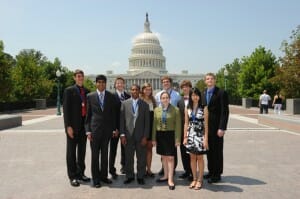
From aiding Haitian earthquake survivors to feeding the hungry in local communities to educating peers about environmental issues, young people across the country are helping shape their communities through service. Fifteen of these young heroes have been named to PARADE’s 2011 All-America High School Service Team, selected in partnership with Points of Light Institute’s generationOn.
For the second year, PARADE Magazine is lifting up the stories of inspiring high school students who are changing the world. The PARADE All-America High School Service Team showcases the entrepreneurial spirit of these young people and shows how individuals – regardless of age, resources or experience – can create real change. You can read more about these young people and their impact in this Sunday’s PARADE Magazine that will reach 47 million people.
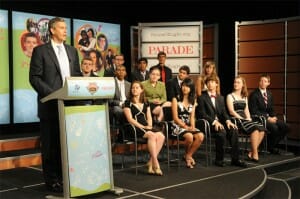
On Aug. 9 in Washington, D.C., these extraordinary young people were honored in special ceremony hosted by PARADE and generationOn, the youth service division of Points of Light Institute. Each honoree had the opportunity to tell the story of how they are marking their mark on the world and each energized those in attendance with their enthusiasm, passion and drive.
During the ceremony, U.S. Secretary of Education Arne Duncan encapsulated the honorees’ impact, saying, “By helping solve problems and meet needs in communities near and far, these students enrich their own lives, strengthen our country and improve conditions all over the world.”
Joining the celebration were a wide range of leaders including former Sen. Harris Wofford, former Washington Redskins player James Thrash, Steve Culbertson, president and CEO of Youth Service America, president and CEO of Parade Publications Jack Hare and Maggie Murphy, editor of PARADE Magazine.
The students were nominated in five categories: community, economics, education, environment and health. All the winners will be showcased on www.parade.com.
Community: Joe Burgum, 18, of Fargo, N.D., believes that no one should ever go hungry. For four years, he has worked on the city’s annual Fill the Dome food drive. The effort has brought together students from local schools to collect 300 tons of food and $225,000 in donations for North Dakotans.
Economics: After learning there were 29,000 homeless youth in Indiana who do not have basic necessities including food, clothing, and shelter, Amber Kriech, 16, of Carmel, Ind., managed the construction of a spiritual life center for Outreach, Inc. which works with 600 homeless youth each year.
Education: Seeing horrifying footage of the aftermath of the Sichuan earthquake inspired Grace Li, 16, of Pearland, Texas, to offer assistance. She co-founded We Care Act, through which students and teachers at 80 schools have given funds, supplies and comfort to young survivors of disasters.
Environment: Benjamin McMullen, 17, from Chesterland, Ohio, knows it is critically important to actively preserve his community’s natural environment. To sustain it for the long term, he started two local groups that have taught kids about area wetlands, created outdoor classrooms at three schools, built nesting platforms for ospreys and planting 1,000 trees.
Health: Born with a facial birthmark, Evan Ducker, 17, of Kingston, N.Y., wrote a book centered on a character who also has one. He has helped organize an annual read-along – 6,000 students took part in May – to increase tolerance.
The awards ceremony was followed by a forward-looking discussion with the PARADE All-America High School Service Team about the critical role of youth service as a force for changing the world. The discussion, facilitated by Juan Williams of Fox News, proposed ideas to inform a set of policies and priorities to support service in schools and empower youth as change agents.
These young people remind us of the power of idealism, passion and seeing the possibilities before us rather than just the obstacles.
When adults told Mary Grace Reeves, 16, of Pensacola, Fla., there were no resource, no money and nobody to create reading programs for young girls in the Gulf Coast, she responded simply, “I will do it.” And she did. She started American Girl book clubs that have touched 900 girls. She and the other 14 award winners remind us that we all can answer challenges of our day – we simply have to respond “Yes, I will do it.”
Points of Light Institute, along with its volunteer activation division HandsOn Network, is focused on inspiring, equipping and mobilizing people to use their time, talent, voice and money to create change in their communities. This year’s report shows that despite economic pressures felt across the nation, 62.8 million citizens joined hands to make a difference.
The report shows that volunteers and nonprofit organizations have stepped in when needs arise, providing a powerful economic and social benefit to their communities. The value of this service is nearly $173 billion according to Independent Sector’s estimate of the dollar value of volunteer time. By focusing on our critical areas of needs – education, environment, economic development and emergency response – volunteers are filling gaps created by tighter budgets and fewer resources.
Notably, Generation X volunteers (born 1965 to 1981) devoted more time to service in 2010 than ever before, giving more than 2.3 billion hours. This demonstrates a shift researchers are seeing across the “volunteer lifecycle” – the arc of civic involvement that tends to increase as citizens feel a deeper connection to their community through personal networks, their workplace and their children’s schools, according to the report.
The future of service is also strong with teen volunteer rates staying consistently high, likely reflecting the spread of service learning in schools across the country, the influence of parental volunteering and the rise of technology making it easier to find volunteer opportunities. Organizations like generationOn, Points of Light Institute’s youth activation division, are helping to fuel this growth by partnering with teachers, parents, schools, community organizations and businesses, to give kids the opportunity to see firsthand the issues in their communities and the tools and resources they need to respond and become part of the solution. Since 1989, these types of efforts have caused the number of youth volunteering to double.
While the national volunteer rate has dropped slightly, those who serve are giving more time. The proportion of volunteers who serve 100 hours or more increased between 2009 and 2010 from 33.2 percent to 33.8 percent. The median number of hours served per volunteer appears to have increased from 50 to 52 per year. We believe this shows that Americans are identifying problems and taking it upon themselves to create solutions and make their communities stronger.
As volunteers fill critical voids in their communities’ infrastructure, state and local leaders increasingly recognize the key role volunteers play in addressing economic and social challenges at a time of fiscal constraint. Government leaders are looking to nonprofit organizations – like HandsOn Network affiliates – to meet a range of needs.
Three strong HandsOn Network affiliate cities had the strongest volunteer rates in the country. For the fifth year in a row, the Minneapolis-St. Paul area, served by HandsOn Twin Cities, ranked number one for volunteering among large cities with a 37.1 percent volunteer rate. It is followed by Portland, served by Hands On Greater Portland, in second with 36.2 percent; Seattle, served by Seattle Works and United Way of King County Vounteer Center, ranked fourth with 33.9 percent.
“The population explosion in the Portland region has resulted in a volunteer explosion,” said Andy Nelson, executive director of Hands On Greater Portland. “While other regions have experienced similar booms, unique to Portland is that so many newcomers want to get involved. Hands On Greater Portland taps into this desire by providing volunteers with meaningful projects that get them in touch with their community. We know volunteers want to do good, they want to connect, to have a purpose and feel part of the community – that’s what we give them”
Each of these three cities is also part of HandsOn Networks’ Innovation Hubs initiative, designed to keep affiliates on the cutting edge of innovation, creating new ways to connect with individuals and create change. Each will be a learning lab for community engagement and will be supported through grants to drive innovation, build strong leadership and advance the mission of HandsOn Network through acquired skills and knowledge.
At the end of three years, the practices and learning emerging from the Innovation Hubs Initiative will form the blueprint for evolving the model of engagement across our network to meet 21st century needs of both volunteers and the communities in which they engage.
CNCS produces the annual Volunteering in America research to provide elected officials and nonprofit leaders with in-depth information on volunteering trends and demographics to help them develop strategies to mobilize more Americans to address local needs through service. The engagement of our citizens has never been more important and the CNCS study shows us that we have a strong foundation to build upon and that there is yet more to do.
Yours in service,
Michelle Nunn
CEO, Points of Light Institute
Change Notes: Help Us Save Service
Friends,
In a few terrifying moments on April 27 in Tuscaloosa, Ala., and on May 23 in Joplin, Mo., life forever changed. Devastating tornadoes struck both communities, leaving behind lives lost, homes destroyed and communities permanently changed.
Within hours and over the following hard days, local citizens joined forces with
and VISTA members, RSVP volunteers and thousands of compassionate Americans to begin the recovery and rebuilding efforts. Volunteers and national service members delivered clean water. They transported the injured and the elderly to medical facilities. They managed call centers that logged thousands of daily inquiries, guiding those who needed assistance to social services and assigning volunteers to specific projects.
John Gomperts
, director of AmeriCorps, wrote an account of his visit to Joplin. The
showcases the extraordinary volunteer response to the May 22 tornado and the key volunteer management role played by AmeriCorps in the wake of natural disasters.
The framework for this kind of rapid and professional volunteer response to disaster is supported through the
and its critical programs including AmeriCorps, Senior Corps and the Volunteer Generation Fund. These programs are particularly important at a time of national austerity and challenge because they call upon our most important and renewable resource – our citizenry – to meet the critical needs of our communities.
Since the Great Depression, the United States has offered willing Americans a chance to be a part of national volunteer programs that have immediate and lasting impacts in communities across the nation. We see that impact in the three billion trees planted by the Civilian Conservation Corps between 1933 and 1942, and we see it now in the rising test scores of students in the classrooms of Teach For America AmeriCorps teachers.
We must convey to Congress that now is the time to redouble these efforts. We saw in both Joplin and Tuscaloosa an unprecedented numbers of spontaneous, unaffiliated volunteers – at one point in Joplin the number was in excess of 15,000. Resources like the Volunteer Generation Fund are desperately needed to screen, train, deploy and manage community volunteers to meet critical needs.
I hope that many of you will join the Save Service efforts on August 10 to meet with members of Congress while they are in their home districts to tell them your stories of volunteer service. A call-in day will be held on September 15 to reinforce our message. Urge them to support the Corporation for National and Community Service and the full range of service and volunteer programs that make a difference every day in American communities, both in response to natural disasters and in addressing the day-to-day challenges we face in education, in economic opportunity and in environmental stewardship.
At the National Conference on Service and Volunteering in New Orleans last month,
Gov. Haley Barbour
recalled the waves of volunteers who came to Mississippi after Hurricane Katrina to help. Over the course of four years following the hurricane, 400,000 volunteers made the journey south to the Gulf coast, many of them returning two and three times with their families to be a part of the region’s revival. He has seen and he knows the power of service.
“In our country,” said Gov. Barbour, “there are tens of millions of people who want to be your ally, who want to help, who want to get the chance.”
Let’s make sure we tell Congress we want our country to continue to offer that chance to those who want to serve by maintaining strong levels of federal funding for AmeriCorps, the Volunteer Generation Fund and all national and community service programs.
Yours in service,
CEO, Points of Light Institute
Change Notes: 9/11 Day of Service and Remembrance
Friends,
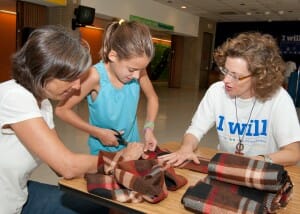
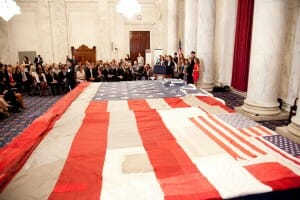
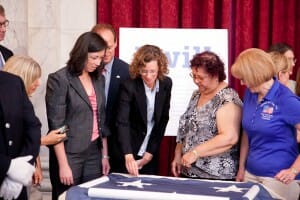
Last week, I had the honor of attending an extraordinary event in Washington, D.C., to launch the national campaign to inspire one million acts of service on the 9/11 National Day of Service and Remembrance. I joined 9/11 families, first responders, military and members of Congress to stitch the National 9/11 Flag, damaged in the collapse of the World Trade Center. It was a moving and emotional event, and the perfect way to give the anniversary of the attacks a positive meaning.
The goal of the 9/11 Day initiative is to rekindle the spirit of unity that existed immediately after
Sept. 11, and honor the victims, heroes and all those who rose in service in response to the attacks that forever changed our nation. We put aside politics and gathered more than 40 Democratic and Republican leaders of Congress – including Rep. Peter King, Sen. Charles Schumer and Rep. Nancy Pelosi – to jointly participate in a unique ceremony that embodied the American spirit of hope, resilience and strength.
Jeff Parness, founder of the New York Says Thank You Foundation and a leader in the effort to restore the flag, told the assembled audience that this is “what America is all about.” He said this flag “tells the story of 9/11, but also of 9/12,” a nation able to come together and rebuild from tragedy.
Ten years ago, in the aftermath of the Sept. 11 attacks, we were mourning those lost and trying to make sense of a senseless tragedy. Through collective grief, scores of Americans acted on our innate nature to serve and sought out ways to lend a hand, offer comfort and, ultimately, create positive change in our communities.
The number of volunteers spiked and reached an all-time national high in the immediate aftermath of September 11th – a manifestation of the impulse we all felt to unite and mend the wounds of the nation.
As we mark the 10th anniversary of Sept. 11, 2001, we have the opportunity to create a permanent and positive legacy that rekindles the spirit of unity that existed immediately after that day, and honor the victims, heroes and all those who rose in service in response to the terrorist attacks that changed our nation.
The 9/11 Day of Service and Remembrance – formally designated by Congress in association with the Edward M. Kennedy Serve America Act passed in 2009 – is the day we remember and give tribute by doing something from our hearts that benefits and enriches someone else. We do something meaningful in memory of others. It is an important national milestone that brings us together through the powerful and unifying force of service.
The 9/11 Day initiative is led by MyGoodDeed.org and Points of Light Institute‘s volunteer activation division HandsOn Network. MyGoodDeed was founded by David Paine and Jay Winuk, who lost his brother Glenn in the collapse of the World Trade Center. Glenn was a lawyer and a volunteer firefighter who ran into the South Tower to help. Glenn’s heroism and devotion to community service inspired Jay to work with other family members to create MyGoodDeed and work to establish 9/11 as the National Day of Service and Remembrance.
MyGoodDeed and Points of Light’s Hands On Network will work in partnership with the 9/11 Memorial, Business Civic Leadership Center, AARP and The Mission Continues and thousands of other organizations to promote the observance of 9/11 through service. This effort is generously supported by American Express Company Foundation, GlaxoSmithKline, JPMorgan Chase and Best Buy.
As the activation partner, HandsOn Network is creating opportunities throughout the country to create one million acts of service and build an enduring movement and legacy event to annually pay tribute to our national spirit of giving.
We will partner with our local HandsOn Network affiliates to host leadership events in Boston, New York City, San Francisco and Washington, D.C., that will collectively engage more than 20,000 volunteers. These service projects will range from revitalizing local schools to supporting military veterans and their families, driving local emergency preparedness to engaging individuals in making long-term pledges to serve. Signature events will be driven by 20 additional HandsOn Network affiliates across the country, and countless organizations, communities and individuals will use 9/11 as a moment in time to take on the challenges they face.
A new “I Will” campaign will reach and inspire millions to participate in 9/11 Day. The campaign, which will include television, radio, digital and print messages running from Aug. 11 through Sept. 11, was designed by a powerful collaboration of creative organizations and will encourage all Americans to take part in the day.
9/11 is an extraordinarily powerful motivator for civic engagement. Independent research commissioned in 2010 by MyGoodDeed found that more than 60 percent of Americans today – and 84 percent of those between the ages of 21 and 35 – are ready to commemorate 9/11 through acts of charitable service or volunteerism.
Sen. Schumer told the crowd that there is “no greater thing for our country than to do a day of service.” There is “no more fitting memorial,” he said. To see news coverage of the event, click here.
To learn about service opportunities or find resources to give back, visit www.911day.org.
Yours in service,
CEO, Points of Light Institute
Change Notes: Honoring the Next Generation of Service Leaders
Friends,
Last night, six extraordinary young people from across the United States were honored as Hasbro Community Action Heroes. These young leaders, ranging in age from 7 to 17, were recognized for their achievements in volunteer service and their contributions to their communities and the world.
The Hasbro Community Action Hero Awards are presented annually in partnership with generationOn, the youth service division of Points of Light Institute, to recognize youth leaders committed to community service and volunteering. Each of the Hasbro Community Action Hero Award winners embodies generationOn’s mission to inspire, equip and mobilize youth to take action that changes the world and themselves through service.
These young service leaders have turned their concern for the welfare of others into actions that have touched the lives of thousands, and we hope their accomplishments inspire other young people to discover their own passion for service. This remarkable group shows us that we are never too young to be part of the solution to the problems that face our communities. Indeed, it is often the compassion and determination of our youngest change agents that remind us just how much is possible when we are committed to building a better world.
The 2011 Hasbro Community Action Hero Award winners are:
§ Riley Hebbard (age 7), Mechanicsburg, Penn. – Inspired by a news report about children in a Darfur refugee camp, Riley formed her own nonprofit called Riley’s Toys Foundation, which has created 10 donation centers and shipped more than 18,000 toys to children in Africa.
§ Nicholas Lowinger (age 13), Cranston, R.I. – When a pair of his old boots didn’t quite fit the boy at the homeless shelter who received them, Nicholas founded Gotta Have Sole, an organization that donates new shoes, sneakers and boots to children in Rhode Island homeless shelters.
§ Jessica Markowitz (age 15), Seattle, Wash. – A tireless advocate for global education and social justice, Jessica founded Richard’s Rwanda-IMPUHWE when she was 11 years old to support educational opportunities for young girls in the rural area of Nyamata, Rwanda.
§ Shannon McNamara (age 17), Basking Ridge, N.J. – Inspired by her personal motto of “today a reader, tomorrow a leader,” Shannon created SHARE, an organization designed to empower African girls through education to overcome cultural bias that discourages female literacy.
§ Cameron Payne (age 11), Winston Salem, N.C. – With a goal of inspiring young people to develop a lifelong love for reading, Cameron founded The Children’s Book Legacy, which has collected more than 3,000 new and gently used children’s books for his neighborhood library.
§ Max Wallack (age 14), Natick, Mass. – Max founded a national movement called PuzzlesToRemember that has distributed some 7,000 puzzles to approximately 700 facilitates that care for Alzheimer patients across America.
More information about each of this year’s Hasbro Community Action Hero Award winners is available at www.generationOn.org.
The Hasbro Community Action Hero Awards are an integral part of Hasbro’s ongoing partnership with generationOn. As its founding partner, Hasbro supports generationOn by lending its expertise through a multi-year, $5 million investment by the Hasbro Children’s Fund. This critical support helps generationOn provide kids of all ages with the tools and hands-on opportunities to understand the issues in their communities – and become part of the solution.
GenerationOn works to empower kids and provide parents, teachers and community leaders with the tools they need to help youth become compassionate leaders and community activists. If you are interested in learning more about how to introduce service learning to the children in your community, please visit generationOn.org for information about service projects, curricula, guidelines and other recommendations for children and teens.
We hope young people everywhere will take the pledge and become part of generationOn, the global youth service movement igniting the power of all kids to make their mark on the world.
Yours in Service,
CEO, Points of Light Institute
Co-Founder, HandsOn Network
Change Notes: NCVS Set to Inspire, Equip and Mobilize Service Leaders
Friends,
As we watch the swollen Mississippi River flow through to Louisiana, we are reminded how much this region has endured over the last years. We are also prompted to think about the extraordinary lessons the people of Louisiana and the Gulf region have to teach us about disaster response and the important role service and civic innovation can play in recovery and growth.
At Points of Light Institute and the Corporation for National and Community Service, we are making final preparations for the National Conference on Volunteering and Service, June 6-8, in New Orleans. We will hear from “service champions” from the region like civil rights heroine Ruby Bridges, who integrated the New Orleans schools, and famous Louisiana musicians like Branford Marsalis. ABC News correspondent Deborah Roberts will moderate a discussion between political commentators Mary Matalin and James Carville on one of the things they can agree on – the importance of service in New Orleans’ recovery from Hurricane Katrina.
We also have some of the most interesting leaders from all three sectors – nonprofit, government and corporate – joining us to inspire and equip participants with new ideas for civic impact and innovation. Darell Hammond, whose book “KaBoom!: How One Man Build a Movement to Save Play” is currently number four on the New York Times best seller list, will share lessons from his journey as a social entrepreneur. Other innovators like Teach For America founder Wendy Kopp, Max Stier, president and CEO of the Partnership for Public Service, and Bob Woodson, a recipient of the Presidential Citizens Medal for his establishment of the Center for Neighborhood Enterprise, will share their lessons learned.
We will also hear from private sector leaders including Cliff Burrows, president of Starbucks Coffee U.S., Ken Sternad, president of the UPS Foundation, Robert Pease, president and CEO of Motiva Enterprises,and a long list of others. Leading thinkers like Peter Sims, author of “Little Bets: How Breakthrough Ideas Emerge from Small Discoveries,” will showcase how to take risks and fail “smartly,” while Wes Moore, whose best-selling book “The Other Wes Moore: One Name, Two Fates” chronicles two similar boys on vastly different paths, will talk about how young people can redirect their lives.
Finally, we will hear from public leaders like Mississippi Governor Haley Barbour and retired U.S. Coast Guard Admiral Thad Allen, both of whom will be welcomed by our hosts, New Orleans Mayor Mitch Landrieu and his wife Cheryl.
To complement our themes of celebration, entertainment and inspiration, we have a stellar line up of performances including legendary Rock and Roll Hall of Fame inductee Percy Sledge; Grammy Award-winning musician Chris Thomas King; actor and activist Rosario Dawson and appearances by nationally recognized actors, chefs and media personalities. Our closing session, “New Orleans – and a Nation – Say Thank You,” will honor the individuals, organizations and programs that are proving that service solves problems, will be hosted by comedian John Oliver from “The Daily Show with Jon Stewart.”
On top of all of the learning and entertainment opportunities, we will also be giving back to New Orleans and its communities through the Road to the Gulf, sponsored by HandsOn Network and University of Phoenix. We will use the time, talent and resources of up to 700 NCVS participants and local volunteers to revitalize 25 parks and recreation centers across the city of New Orleans in the days surrounding the conference. Additionally, our Immersion Learning Sessions will allow attendees to visit amazing locations throughout the city where civic innovation is creating change.
We hope you will join Points of Light Institute and the Corporation for National and Community Service for this exciting, educational and inspiring event. If you have not yet registered take 200$ off by using code DISC22011! Please visit www.VolunteeringandService.org for more information.
Yours in Service,
CEO, Points of Light Institute
Co-Founder, HandsOn Network




 Friends,

 The Peace Corps has shaped the sensibility of our nation and it has become an iconic representation of our nation’s idealism. It has had a profound impact in shaping our relationship with the world, creating change on the ground in developing nations, and cultivating a leadership corps of Peace Corps Alums who have shaped our nation and its global interactions. Yet, it still stands at only 8,000 annual volunteers versus President Kennedy’s dream of 100,000 volunteers serving around the world.
 Today, those GHG volunteers have worked with 5,000 girls in 15 countries. They have also raised $40,000 to provide basic necessities to impoverished girls around the world. Sejal, who is now in college, continues to create change. She has amplified GHG into the
  HandsOn Manila has hosted international teams around disaster relief, has brought back innovations that have been modeled by our domestic affiliates, such as creating CDs to raise money and partnering with corporations like Accenture, Chevron, InterContinental Hotels and Starbucks. It has launched a HandsOn Vacation program, hosting international volunteers to work on ecological, heritage and disaster response efforts.
 Michelle Nunn, CEO of
  During the ceremony, U.S. Secretary of Education Arne Duncan encapsulated the honorees’ impact, saying, “By helping solve problems and meet needs in communities near and far, these students enrich their own lives, strengthen our country and improve conditions all over the world.”
 The awards ceremony was followed by a forward-looking discussion with the PARADE All-America High School Service Team about the critical role of youth service as a force for changing the world. The discussion, facilitated by Juan Williams of Fox News, proposed ideas to inform a set of policies and priorities to support service in schools and empower youth as change agents.
 The goal of the 9/11 Day initiative is to rekindle the spirit of unity that existed immediately after
 The 9/11 Day initiative is led by
  These young service leaders have turned their concern for the welfare of others into actions that have touched the lives of thousands, and we hope their accomplishments inspire other young people to discover their own passion for service. This remarkable group shows us that we are never too young to be part of the solution to the problems that face our communities. Indeed, it is often the compassion and determination of our youngest change agents that remind us just how much is possible when we are committed to building a better world.