The Critical Role of Volunteers in Hurricane-Affected Communities
On Oct. 29, 2012, vast numbers of Long Island communities suffered overwhelming devastation as Superstorm Sandy truly brought the region to its knees. But out of that loss and despair came hope, as neighbors helped neighbors, and local organizations and volunteers stepped up to assist with the immediate response and to embark on the long road to recovery.
“If I had to pick my one word for the response, it would be
community
, how we unselfishly came together to help those in deep distress by pooling our strength and sharing the work and the responsibility,” said Diana O’Neill, executive director of the
, a Points of Light affiliate. “I have never witnessed or experienced anything like it — manifestations of true camaraderie and genuine human-kindness. It was the greatest privilege of my life to have a front row seat at our Volunteer Recovery Center, seeing the myriad organizations easing human suffering together on such a grand scale.”
As other communities face the aftermath of devastating storms, Diana shares her reflections on recovery and how volunteers can help in disaster-affected areas today.
How did Superstorm Sandy impact your organization?
Being involved in such essential disaster work was made possible by public/private partnerships which gave us a roof over our heads, lift to our programming, and full logistics support for disaster groups. We were an all-volunteer organization and did not have in-house disaster expertise. As part of the
, the Long Island Volunteer Center opened the Volunteer Recovery Center in donated former office and warehouse space of Sleepy’s in 2012 and operated it through 2013 with the assistance of AmeriCorps St. Louis ERT and the Points of Light network disaster response team, which supported us with help from Boston Cares, North Dallas Volunteer Center, Volunteer Fairfax, Howard County Volunteer Center, Western New York Volunteer Center, Hands On Atlanta, and New York Cares. Also funding via American Red Cross, Major League Baseball Players Trust, Bessemer Trust, GE Foundation, The Nunn Family Foundation, and Allstate Foundation was secured through Points of Light. We are forever in their debt. I cannot speak more highly of the dedication and professionalism of the LIVC disaster team, which was assembled along the way and who led by example — such gifted professionals paved the way for a coordinated response.
What role did volunteers play in supporting Long Island and your organization after Superstorm Sandy, both in the immediate response and long-term recovery?
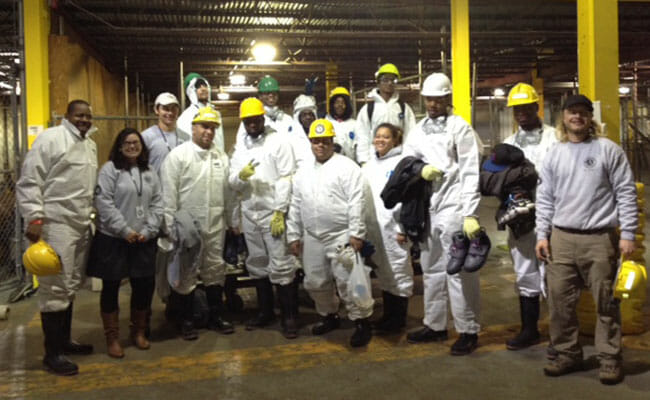
In the volunteer industry, being invited to the human condition is a gift, the most noble of causes. And those of us who responded to the call to action from Superstorm Sandy will never be the same. The VRC became more than a facility, it also was the symbol of recovery for the region. It was hard and dirty work that could have easily overwhelmed but the indomitable spirit of the volunteers and the resiliency of those they served inspired and informed all efforts.
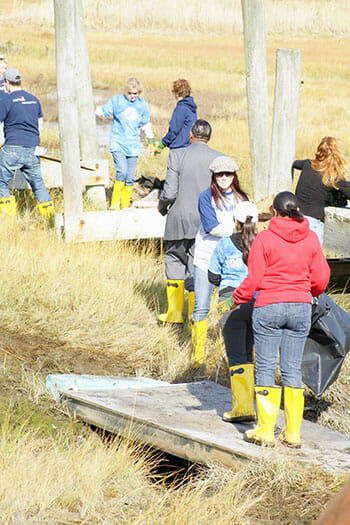
Volunteers led the way supporting the immediate response with food/water distribution, staffing human and pet shelters, assisting with family support and household needs like debris removal and clean-up, environmental clean-ups and mitigation projects, and then full-scale hands-on rebuilding efforts. In the end, 51,662 volunteers served 521,829 hours from November 2012 through June 2016.*
We have endured as a region, with neighborliness and shared kindnesses enduring as well. Some of those helped along the way have expressed their gratitude but just the knowledge that lives have been lifted up is thanks enough since, as we know, volunteering is its own reward. Each person touched in the process certainly brought out the best in each of us.
What do you wish volunteers who want to support communities impacted by Hurricane Harvey, Irma and Maria knew?
Volunteers need to be patient and wait until official announcements are made about volunteering and donations so that the regions won’t be overwhelmed. Please resist holding donation drives unless there has been a stated need in the affected community and a designated place to send the items to avoid waste and not over-extend community resources. Disaster groups need time to become ready to receive both supplies and volunteers, in order to put them to work with proper supervision, instruction, and personal protective equipment to ensure safety.
What are some lessons learned, for your organization, and advice for other volunteer management organizations who face similar situations?
Prepare before disaster strikes. All organizations need to invest in creating for themselves a Continuity of Operations Plan to be at the ready to roll out in the event of a disaster. Participation in VOAD is necessary to ensure cooperative efforts of community-based organizations and disaster groups that come on scene, and coordination with local government/OEM/FEMA.
Volunteers need to be kept informed on a regular basis and have disaster trainings offered as appropriate to keep them engaged. Different permits need to be researched before disaster groups can do their work. A warehouse or large storage area is helpful to support the volunteer recovery efforts. Aligning partner organizations to the volunteer online platform pre-disaster is a good way to get things organized and running in the immediate aftermath to meet recruitment/referral needs.
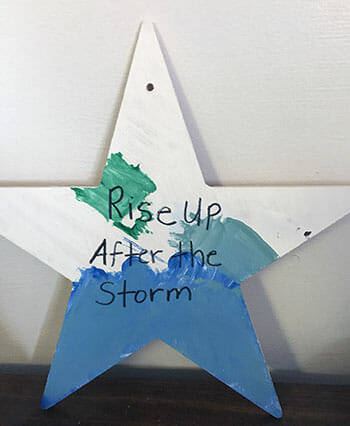
As we approach the 5th anniversary of Superstorm Sandy, I just want to share that we all need to have faith in the process, love in our hearts, and always keep hope at the forefront of any thought and planned activity.
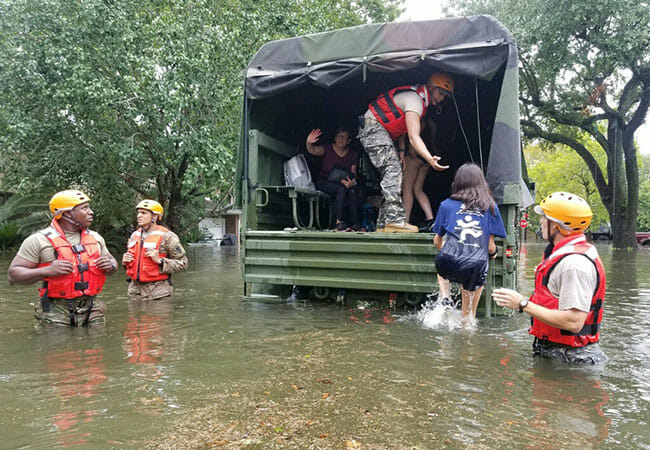
Texas National Guard soldiers arrive in Houston to aid citizens in heavily flooded areas from the storms of Hurricane Harvey.
Hurricane Harvey is the first Category 4 storm to strike the United States since Hurricane Charley in 2004, and the first major hurricane since the record-breaking 2005 Atlantic hurricane season, which saw such devastating storms as Katrina and Wilma. The slow-moving system is virtually unprecedented, forecasted to maintain tropical storm strength for five days as it moves along the Texas coast. While Harvey’s winds have weakened following landfall on Friday night, catastrophic flooding and life-threatening hazards continue to arise. In this current situation, with tropical storm Harvey still producing a lot of rain over the Gulf Coast, safety is our top concern. At this time, it is critical that people who want to volunteer, especially those outside of the immediate area, do not self-deploy.
Points of Light is currently supporting first responder organizations, like FEMA and the American Red Cross, connecting with Voluntary Organizations Active in Disaster chapters across the United States to assess the situation, and coordinating with our affiliates and partner organizations in the affected areas. All disasters are local; the members of the Points of Light HandsOn network are the local experts in volunteer management, and are often the lead organization in managing spontaneous unaffiliated volunteers throughout the response and recovery effort.
Texas is still in response mode and, until the storm has stopped, we will not have a clear sense of the damage or when it will be safe to begin recovery efforts. If you would like to support the recovery effort, here’s what you can do now to help:
Please don’t:
Don’t self-deploy at this time. The situation is still critical, highways and secondary roads are underwater, and travel is extremely difficult or unsafe throughout much of the affected area.
Don’t bring supplies or donations to fire stations, police departments, etc. First responders need to focus on immediate needs and emergency situations.
Please do:
Make a donation to help Points of Light and our affiliates support the mobilization of volunteers in ongoing response and recovery efforts.
If you are in the Houston area, volunteers are encouraged to contact Volunteer Houston, a Points of Light HandsOn Network affiliate, for opportunities to get involved. Nonprofits requesting assistance from volunteers can register their needs with the Volunteer Houston Virtual Volunteer Reception Center.
It’s been remarkable as a Houstonian to see the uprising of benevolent, kind-hearted points of light in our community that are trying to help each other, neighbor helping neighbor…it’s amazing to see this community come together to help people in their greatest time of need.
Points of Light is communicating and coordinating a humanitarian response with our affiliates and corporate partners. As the storm dissipates and a more clear assessment of the crisis and need is available, we will provide updates on how to get involved.
For the latest, please sign up for Points of Light email news and announcements, follow us on Twitter and check out our updates on Facebook.
The Power of Volunteers: Rebuilding Flint
The Points of Lights Disaster Services team has been on the ground in Flint, Michigan, meeting with volunteers, and contributing our expertise in volunteer mobilization and management. In their own words, many of the volunteers shared with us stories of neighbor helping neighbor, and the resiliency and determination of the Flint community in the aftermath of the lead water crisis. Here are just a few of the voices from the frontlines.
Rachel Wenzlick, Director of the Volunteer Reception Center, United Way of Genesee County
As director of the Volunteer Reception Center at the United Way of Genesee County, an affiliate of the Points of Light HandsOn Network, Rachel Wenzlick works alongside the American Red Cross and AmeriCorps NCCC to process hundreds of volunteers each week.
“I like to see the volunteers who are behind the water distribution, the recycling effort, and who are out there helping the community,” says Rachel.
Giving back also requires many sacrifices from the volunteers. Rachel reports that some of the biggest challenges the volunteers coming through the Volunteer Reception Center have faced thus far are cold weather, snow and overall weather conditions.
Jeff, Cookie, and Malcolm Harper, Calvary Methodist Church, Flint, Michigan
Like many of their neighbors in Flint, Jeff, Cookie and their son Malcolm started experiencing headaches, skin breakouts and stomach problems after drinking the city’s water. They believed they had the flu until a youth minister told them their symptoms might be caused by lead in their water. The family was able to get bottled water from a local food bank but realized that many of their neighbors lacked the information to do the same. In response, Malcolm developed better signage for the site to attract more residents. Soon after, the family decided to help when they saw the resulting spike in foot traffic.
Remarking upon his family’s creativity in helping the site where they were first clients, Malcolm says: “Crisis causes innovation and light will shine on the darkest issues. But Flint always bounces back.”
Today, the family volunteers weekly at their local food bank to deliver 40 pallets of safe drinking water to the local community.
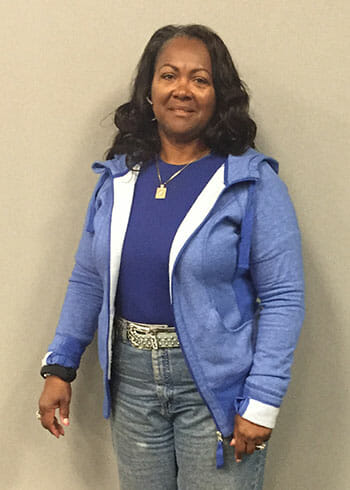
Sandra Jones, the Greater Holy Temple, Flint, Michigan
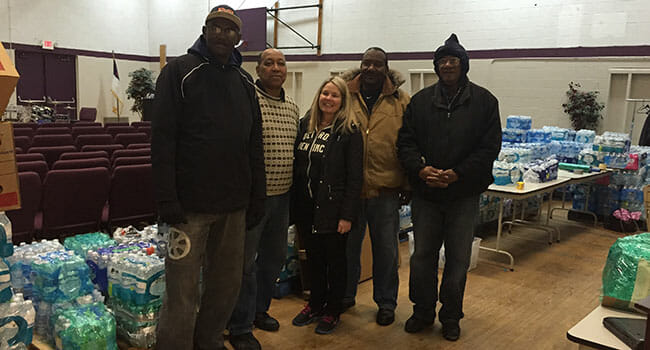
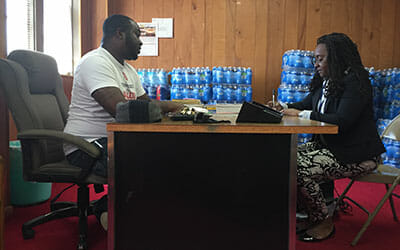
Sandra Jones and her husband, Roger Jones, Bishop of the Greater Holy Temple in Flint, oversee a state-managed water distribution for community residents through their church. The Convoy of Hope initially contacted them to request their help with distributing donated water to parishioners. Soon after, more people from around the country made more donations. Sandra and Roger report that residents come to them daily – 250-300 cars may drive up for water. Already, they have distributed more than 15 million bottles of water.
“I was never a server but I was a giver. This crisis has made me both. Spend a week volunteering with us and your heart and passion for the community will change,” says Sandra. “Don’t give up on Flint. I’ve seem more comradery come out of people since the water crisis has hit then I’ve seen in the past 15 years.”
In addition to water, the couple have also started distributing lead mitigating foods and personal hygiene items like diapers and toiletries. Sandra marvels that she has learned how to drive a forklift truck to move items around and provide work for volunteers.
“Well, it needed to get done,” she says.
Residents are relying on these services and are counting on Sandra and Roger. The distribution center is open six days per week, no matter the weather.
“There are a lot of trust issues in this community and folks have to decide if you are with them or against them before they will open their doors,” says Sandra.
Sandra has been fighting for Flint for years but in this most recent battle she had the support of a powerful ally, President Obama. In advance of the President’s visit in early May, the White House sent Domestic Policy Council Director Cecilia Muñoz to meet with Sandra and Roger. She knows that Ms. Muñoz listened because the concerns she shared on behalf of her community found their way into the President’s remarks.
Sandra and Roger say that resources are beginning to dry up and donations of water are slowing down, but they have personally contributed to purchasing equipment and providing food to volunteers to keep the operation going.
James Greer, Outreach Coordinator of North Central Church, Flint, Michigan
The congregation of North Central Church and the surrounding neighborhood are elders or retired, so James Greer and a few younger church members give out water five days a week. James, the church’s outreach coordinator, calls his volunteer work at the church “Labor of Love 2016,” but he’s been in love with Flint for as long as he can remember.
Greer went away to boot camp five days before his 19th birthday in 2004. He came home once a year and each year he noticed more and more of Flint disappearing. All of the schools that shaped his childhood are boarded up.
“To me, it is devastating,” Greer says.
Greer and a few members of the church started with just 20 pallets of water. Sixteen semi-truckloads later, he continues to lead volunteers to give away water. He remains committed to distribution efforts, despite working full-time on the 2nd shift – sometimes even pulling double shifts – because his community needs fresh water.
Once while loading water to a few cars he noticed that some folks were trying cover up how much they had been given. When he asked them why, he learned that a few distribution sites limit the amount of water per household. Greer told them to spread the word that anyone can get as much water as they need at North Central Church. Now, when people come to get free water in the church parking lot, they pick up for themselves and for their neighbors.
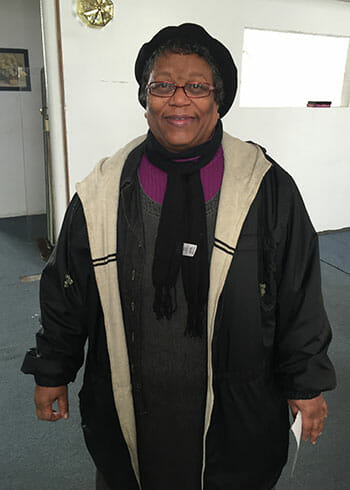
Moving back to Flint has been an adjustment for Gladis Sheron, who returned in 2012 to help care for her sick brother.
“It’s been a culture shock, the conditions of the city have changed dramatically—empty houses, torn down houses and houses without doors,” she says. “But that’s what we are here for. I really enjoy helping people.”
Gladis runs the Calgary Praise Church, serving a small community of parishioners. She worries about the limitations on water for bathing, cooking, drinking. Some residents stand in line for water and only get two bottles for water for the whole family. She believes that families should be given water on a weekly basis.
Volunteering is also a family affair for her.
“My cousin from Richmond, Indiana, came up with two truckloads full of water all collected from Richmond residents,” she says.
The Points of Light Disaster Services program activates volunteer efforts around the world to provide disaster relief. We partner with local and national organizations to establish Long Term Recovery Groups and mobilize volunteers as part of the ongoing effort to build more resilient communities. For more information, contact [email protected].
Before the Next Storm Hits, Register to Help Your Neighbors
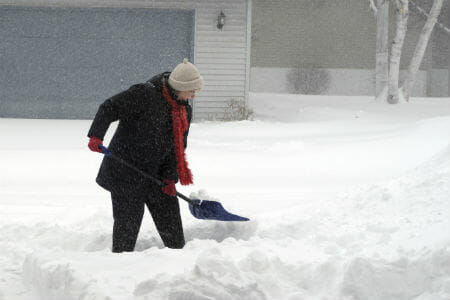
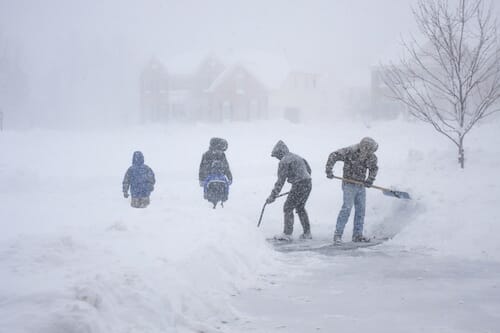
Snow can paralyze communities, causing food shortages, traffic accidents and exposing vulnerable populations to extreme cold.
Winter Storm Jonas caused havoc in cities and rural communities – affecting 102.8 million people and covering about 434,000 square miles in 26 states, according to the National Oceanic and Atmospheric Administration. And, as CBS News reported, preliminary estimates say the economic impact of the storm may top $850 million.
While snow can be devastating, our world is more connected to community resilience resources. Points of Light’s HandsOn Network affiliates activated their communities to come to the rescue. Among them:
Long Island Volunteer Center (with support from disaster buddy Volunteer Knoxville) created a Jonas page to register volunteers in partnership with local disaster response officials to respond to immediate needs.
Volunteer Alexandria, in the D.C. area, had 28 “snow buddies” assisting 67 local residents. Each volunteer contributed approximately three hours during the storm. One grateful resident said, “I’m 92, and I was so scared about how I would get out. You are like angels.”
If you don’t have a HandsOn Network affiliate in your area, consider registering with other emergency disaster snow groups. SnowCrew.org provides a platform to connect community members with volunteers who shovel snow.
Neighbor-to-neighbor assistance supports local residents and taps into the American spirit. Before the next storm hits, register to help today!
How You Can Help During Winter Storm Jonas
Winter Storm Jonas is expected to deliver up to 30 inches of snow to parts of the East Coast. If you live in the storm area, check on your neighbors, especially the elderly and disabled.
Forty-six percent of residents expect to rely on their neighbors for support during the first 72 hours after an emergency. Be ready to lend a hand.
Points of Light is coordinating with HandsOn Network affiliates in the affected areas and connecting with Voluntary Organizations Active in Disaster chapters across the U.S. to assess the situation and offer support.
HandsOn Network is the local expert in volunteer engagement and often the lead in managing spontaneous unaffiliated volunteers throughout the response and recovery effort.
If you would like to support the recovery effort, here’s what you can do to help:
Please don’t:
Don’t self-deploy at this time. The situation is still critical and travel is extremely difficult or impossible throughout much of the affected area.
Don’t bring supplies or donations to fire stations, police departments, etc. First responders need to focus on immediate needs and emergency situations.
Please do:
Dodonate to help Points of Light and HandsOn Network affiliates support the mobilization of volunteers in ongoing response and recovery efforts.
Do be prepared! Please take steps now to help your family and community recover more quickly from disasters. Visit www.goodandready.org to download an emergency preparedness checklist and create a disaster readiness plan for your family.
For the latest, please follow us on Twitter and check out our updates on Facebook.
Would You Know What to Do in a Disaster? We Can Help You Get Prepared
Summer officially starts this weekend, which means we can look forward to some warm and sunny weather across the country. It also means that hurricane season is in full swing in the mid-Atlantic region; tornado season is rolling across the plains states and the Midwest; and the West coast is bracing itself for wildfires.
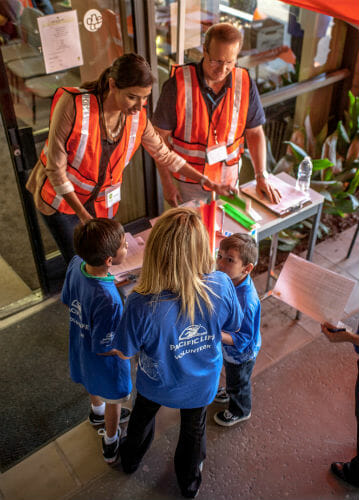
Eight-year-old Cash, center, learns about disaster preparedness from an Allstate volunteer in Cincinnati. He later said, “I got a backpack of tools to keep my sisters safe!”
Since 1980, weather-related disasters have more than doubled. Yet, research shows that 85 percent of Americans are not prepared for disaster.
Are you?
Education and preparation are essential in helping to prevent unnecessary loss of life and property. To help people across the country get prepared, The Allstate Foundation and Points of Light have launched a 14-city disaster preparedness and education tour. Throughout the tour, tens of thousands of people will have the chance to put together their own disaster preparedness kits – including hand-crank flashlights, first aid kits and other essentials – and to learn strategies they can use to stay safe.
This weekend, the tour stops in Seattle and Reston, Virginia. In Seattle, we’ll team up with local Allstate agents and volunteers from Seattle Works at the Fremont Fair from 10 a.m to 2 p.m. on Saturday. And in Reston, just outside Washington, D.C., we’ll join local Allstate agents and Volunteer Fairfax at the Taste of Reston from noon to 4 p.m.
A sample disaster preparedness starter kit
Both events will give members of the community a chance to learn valuable information about disaster risks in their areas and to take home a disaster kit of their own.
So far the tour has stopped in Oklahoma City; Springfield, Missouri; Houston; West Palm Beach, Florida; and Cincinnati. Future stops include New Orleans; Bergen County, New Jersey; Boston; Charleston, South Carolina; Coney Island, New York; Oakland, California; and Chicago.
Can’t Attend an Event? Here’s What You Can Do to Get Prepared
One of the most effective ways to stay safe in the aftermath of a disaster is to have a plan and supplies in place. Getting ready is a matter of three simple steps:
Build a disaster preparedness kit. Our starter kits (see photo above) include a first aid kit, hand-crank flashlight, blanket, water bottle, rain poncho, whistle, dust mask, hand sanitizer and a trash bag. Start there, then add to it until you have everything you need.
Create a household emergency plan. Make sure it includes a designated family meeting place in your neighborhood.
Help your community get ready for a disaster. Spread the word of disaster preparedness and consider participating in an official disaster training. Visit goodandready.org/trainings for more information.
It doesn’t matter where you live, disasters can strike anywhere, at any time. Don’t wait. Get Good & Ready today!
Here’s How We Prepared Communities for Disaster and How You Can Get Prepared, Too
America’s PrepareAthon! – a grassroots campaign to get more people prepared for disaster – urges all of us to take action to keep ourselves, our neighbors and our families safe. To support the campaign, throughout April Points of Light informed and equipped local communities to be able to more quickly respond to and recover from disaster.
Community members in Orange County, California, take part in a disaster simulation as part of OneOC’s America’s PrepareAthon! activities.
Members of Points of Light’s Community Emergency Preparedness Corps organized service projects and informational fairs to distribute preparedness information.
With the help of corps members, thousands of disaster preparedness kits were assembled and distributed in diverse locations, such as food pantries and senior centers, and preparedness scavenger hunts were conducted to engage youth in how to become better prepared.
Affiliates of Points of Light’s HandsOn Network participated in various ways. Here are some highlights:
The AmeriCorps member at OneOC distributed preparedness material during a beach cleanup in Orange County, California, and organized a mock disaster in the community.
AmeriCorps members at Metro Volunteers in Denver canvassed four apartment complexes over six days, distributing more than 560 information packets to senior, low-income and immigrant residents.
The Allstate Foundation, which is currently supporting a 14-city disaster preparedness tour with Points of Light, printed more than 100,000 preparedness brochures and information sheets to support the AmeriCorps members’ efforts.
To learn how to better prepare yourself and your family and to take the preparedness pledge, visit www.goodandready.org.
Prepare Your Family for Disaster and You Could Win a Prize
Disasters affect every community. Are you Good & Ready should something happen to yours?
Young participants of a winter safety/home fire preparedness workshop ham it up for the camera at Ironbound Community Corporation Family Success Center in Newark, N.J.
Make a commitment to yourself and those you care about – pledge to be prepared. Let us know what you plan to do to get prepared, and share your pledge with others, encouraging them to take action, too.
Good & Ready, a Points of Light program, offers a host of resources that can help you get started. Here are some ideas:
Connect with local alerts and warning. There are several apps that provide weather notifications and emergency alerts. The American Red Cross has a series of apps for mobile devices that are hazards specific and provide real time updates during a disaster. To see what Red Cross apps are available for hazards specific to your area, visit www.redcross.org.
You’ll find the Good & Ready pledge form here. Good & Ready, a Points of Light program, offers a host of resources for getting prepared for disasters and emergencies.
If you take the pledge in April, you’ll automatically be entered in drawings for prizes. Daily winners each will receive a $5 Target gift card. Weekly winners each will receive a hand-cranked flashlight radio. All who pledge in April will be eligible for one of five LG Nexus 5 phones.
Join Us Online to Learn the Best Ways to Serve After a Disaster
Have you ever wanted to help after a disaster? There are many ways to get involved – whether you have just one day to volunteer or can commit to a longer stint of service.
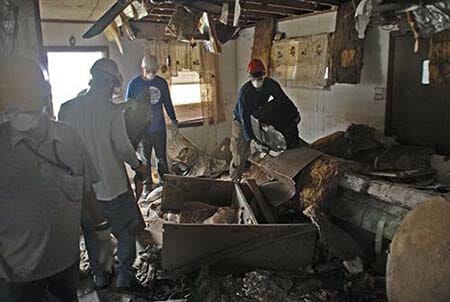
Volunteers remove debris from a house in New Orleans after Hurricane Katrina. (FEMA photo)
In 2005, Hurricane Katrina devastated coastal towns throughout the United States and caused mass evacuations. After the cameras left, residents were still picking up the pieces and reorganizing their lives.
In 2007, Cameron Lewis supported long-term recovery efforts by joining AmeriCorps NCCC (National Civilian Community Corps) for a 10-month term of service. During that time he traveled throughout the Gulf Coast region to support local recovery groups, rebuilding homes and providing education through the Red Cross Masters of Disaster program.
“This experience taught me the importance of becoming affiliated with an organization after a disaster and working through coordinated channels to rebuild communities,” said Lewis, now a program manager for disaster response and recovery at Points of Light.
Join us Tuesday, March 17, from 11 a.m. to noon Eastern, for a special discussion on Twitter about disaster volunteerism: #GoodandReady: Disaster Response and Recovery. Points of Light, HandsOn Network and national partners will answer your questions and share professional volunteer tips.
Follow along at #goodandready. Encourage your friends and families to join the conversation by sharing this message: “I’m joining #goodandready 3/17 at 11am ET to learn more about supporting disaster volunteer programs and so should you!” We look forward to chatting with you.
Don’t Get Stuck in the Cold – Get Good & Ready
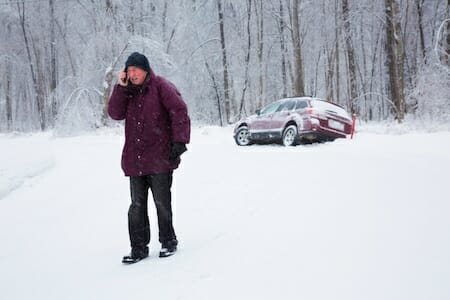
Would you be prepared if your car got stuck in the snow in the middle of nowhere? If your power got knocked out in the freezing cold, would you know what to do?
Record-low temperatures and snowstorms have punished many parts of the country. It’s a good time to start thinking about how to prepare your family in case of emergency or disaster.
For help, check out Good & Ready, which offers a host of resources that will help you:
Create a family emergency plan
Assemble an emergency preparedness kit
Find local emergency preparedness training
If you want to help others get prepared, Good & Ready suggests ways to lead a preparedness project at your local volunteer center.
Feel inspired? Join the nearly 40,000 people who have taken the Good & Ready pledge to get prepared – and get started!




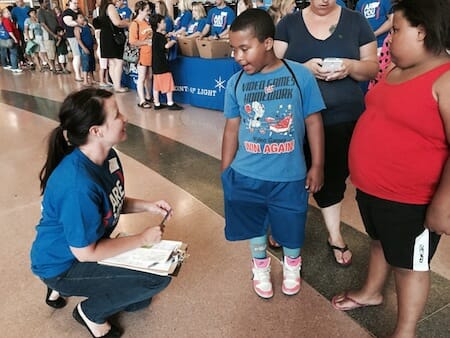 Eight-year-old Cash, center, learns about disaster preparedness from an Allstate volunteer in Cincinnati. He later said, “I got a backpack of tools to keep my sisters safe!”
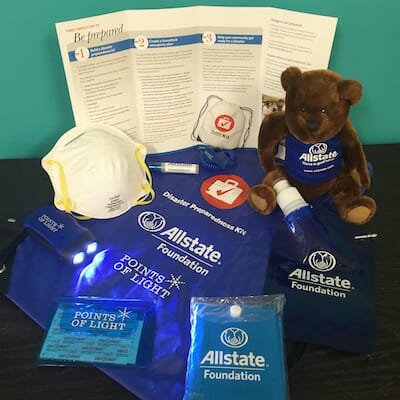 A sample disaster preparedness starter kit