With Unique Employee Programming, Arconic Connects Corporate Values with Meaningful Community Engagement
Companies of all sizes are seeking strategies to engage diverse employees and advance inclusive values. Arconic, a global leader in lightweight metals manufacturing and engineering, is on the cutting edge of diversity and inclusion initiatives. Leveraging three unique programs to engage its more than 41,500 employees worldwide, Arconic links organizational goals and values with opportunities to make a meaningful difference in the communities where its employees live and work.
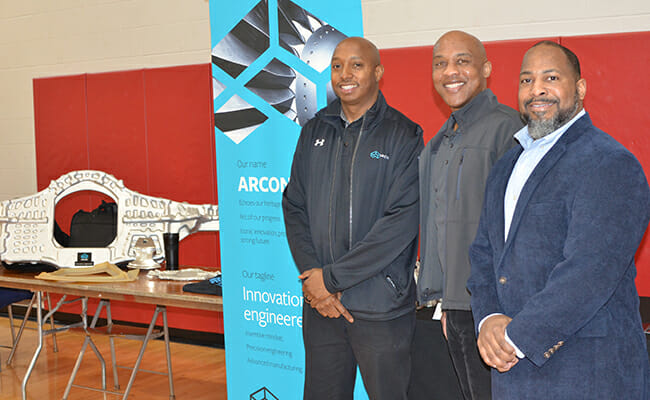
Employee Resource Groups have a proactive role in inclusion and diversity efforts, as critical drivers of employee engagement; recruitment and retention; and brand building through community engagement. There are six ERGs available to Arconic employees, representing women, people of African heritage, Hispanics, LGBTQ, early-career employees and veterans. One of the longstanding ERGs, the Arconic African Heritage Network, has made community engagement a cornerstone of its mission. The group partners with the National Society of Black Engineers on several initiatives, including activities for middle school and college students. For example, Howard University students get hands-on manufacturing exposure through touring Arconic’s facility in Lancaster, Pennsylvania, and interacting with plant personnel. And in Davenport, Iowa, employees sponsor and train a local robotics team with grant support from the Arconic Foundation, which provides funding for STEM and workforce development initiatives in communities where Arconic facilities are located.
Arconic’s ERGs have played a major role in leading volunteerism for the company; in fact, nearly 50 percent of the more than 200 volunteer events Arconic has participated in to date in 2018 have been led by ERGs – many of them supporting engineering and technical skills training at colleges and technical schools, and creating access to STEM education opportunities for members of under-represented communities. By connecting the ERGs to available nonprofit support through the Arconic Foundation, the company is able to build the narrative of manufacturing as an exciting profession and career option.
“As chair of the Arconic African Heritage Network and a director of Arconic Foundation, I am sensitive to and proud that our ERGs and foundation work together to expand and multiply our impact in communities where we work and live,” said Bruce Thompson, who also serves as vice president, internal audit, at Arconic. “Their collective work has been tremendous and all employees should be proud of it.”
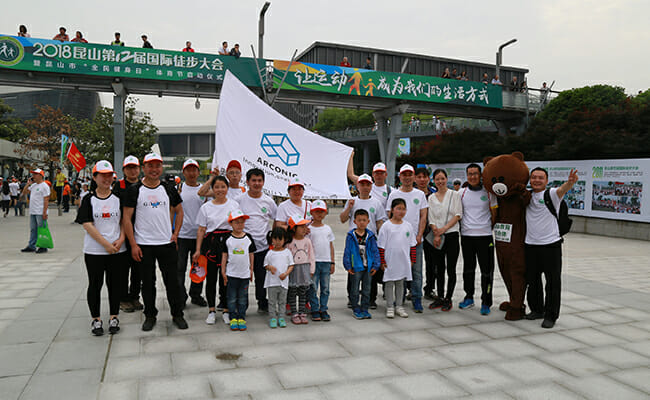
Arconics in Motion promotes wellness and physical fitness through charity. AIM encourages employees, as well as their friends and families, to participate in marathons, walks, rides and other fitness events that benefit cause-based community organizations. The program offers a way to make an impact, encourages teamwork and builds camaraderie amongst employees.
Arconics Coming Together in Our Neighborhoods supports employees volunteering their time, energy and skills for service projects that directly address community needs. ACTION projects are as diverse as the communities they serve and are not prescribed by foundation or corporate leadership. Projects range from skills-based volunteering in STEM camps and school robotics programs, to hands-on community clean-ups, packing meals for charitable meal delivery, and rebuilding homes for veterans.
To maximize impact, project participation carries a minimum of 16 hours, where at least four employees engage for four hours. Opportunities are deployed through ERGs, employee-led community advisory boards or a single point of contact at each Arconic location, with a focus on diverse projects that employees care about and that foster a direct connection to communities.
Recognition of employee volunteerism efforts and community commitment is a key part of Arconic’s culture. Through partnerships with DonorsChoose.org and GlobalGiving, all volunteers are awarded charitable gift cards, enabling them to donate to causes they care about. Throughout the year, employee teams receive recognition by company leaders and through employee media channels and social media. And each October, Arconic holds a company-wide Month of Recognition and an Arconic Foundation-sponsored contest where the best volunteer initiatives are acknowledged with a trophy and $10,000 grants are awarded to the nonprofits with whom they volunteered.
Arconic is a member company in the Points of Light Corporate Service Council, which provides networking opportunities, best practices and new ideas that catalyze high-impact social change initiatives. To learn more about how your company could benefit from membership, connect with us at [email protected].
CSAA Insurance Group: Supporting Community Safety During Disaster
By Roger Hancock, Manager of Community Affairs, CSAA Insurance Group, a AAA Insurer.
This year’s Northern California wildfires burned more than 600,000 acres – the largest wildfire in California history. The fires were devastating, resulting in the destruction of numerous structures, the displacement of thousands of residents, and several fatalities. While first responders met the wildfires head-on, volunteers also played an important role, providing comfort and counsel for those at risk of losing everything.
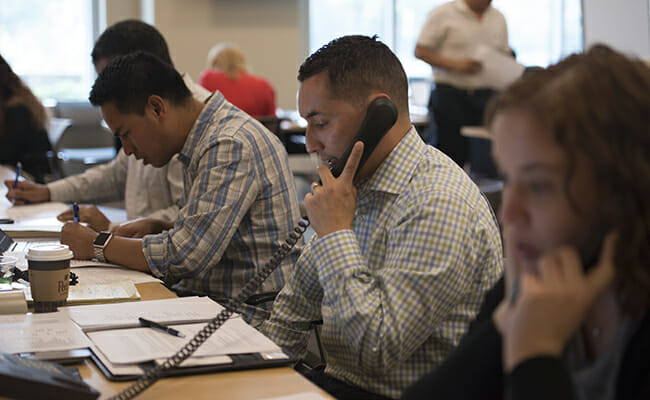
CSAA Insurance Group’s award-winning corporate volunteer program, AAA Volunteers, empowers and motivates employees to address diverse community needs through volunteer service. In response to the wildfires, employees volunteered to take time from their normal job duties and daily routines to contact impacted customers. These calls helped confirm that those who were forced to evacuate or prepare for displacement were safe and had the information they needed to provide for themselves and their families. Within a single week, more than 4,000 calls were made to individuals impacted by the fires.
While our employees are always looking for ways to give back, it is in times of urgent need that we often receive an overwhelming number of requests from our staff to help out. Any one of us could need help in an emergency, so we all want to be there for those who do.
In addition to the phone bank, employees volunteered to provide on-the-ground assistance at evacuation shelters and local assistance centers. While customers await news about their home and family members, AAA Volunteers are often there to provide a cup of coffee, share a stuffed animal for a child, or offer a sympathetic ear. These simple gestures of kindness can have a profound effect.
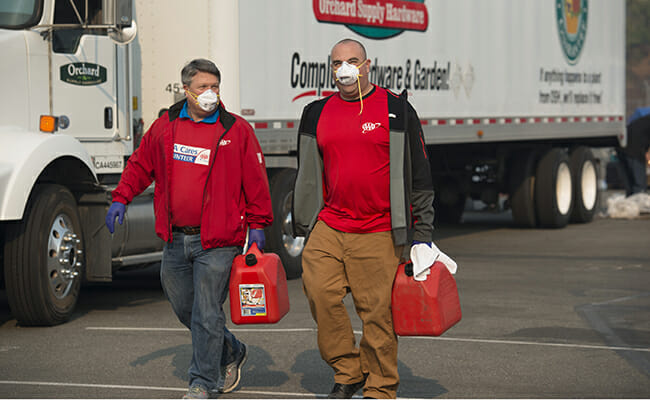
In anticipation of catastrophe-related needs, employees who deploy for emergencies receive up to 80 hours of paid time off to volunteer, and help position skilled labor, supplies and other critical resources before disaster strikes. In addition, training on personal preparedness, including courses in First Aid and CPR, is also available.
As demonstrated during the recent wildfires, as well as during other natural disasters, anyone can be impacted by catastrophic events. AAA Volunteers play a critical role in response and recovery, and provide for the safety and stability of our communities.
Last year, 99 percent of the employees at CSAA Insurance Group volunteered, largely because service is the cornerstone of the company’s community involvement efforts, and all of the company’s outreach programs are built around employee volunteerism.
Our employees tell us they choose to give back because they find the experience meaningful and rewarding. AAA Volunteers provides each of them with the opportunity to find ways to make a lasting difference, and know that they are contributing to something important.
Roger Hancock is a volunteer manager with more than 30 years of leadership experience creating and managing award-winning national corporate volunteer programs. He has managed the “AAA Volunteers” program since 2003, is a past-president of the Volunteer Centers of California, and has served under two governors on California’s Volunteer Service Commission.
Committed to serving AAA members for more than 100 years, CSAA Insurance Group offers AAA-branded automobile and homeowners insurance in 23 states and the District of Columbia
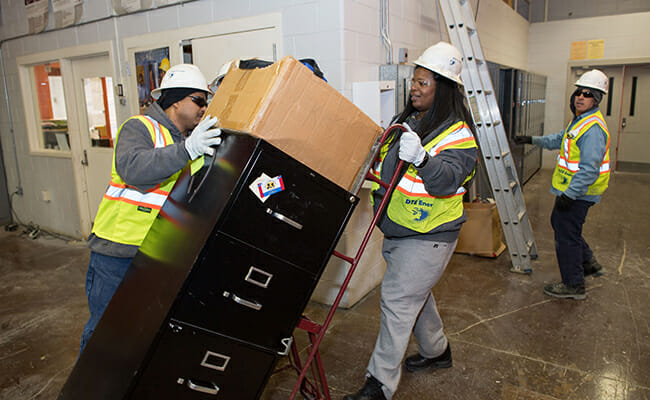
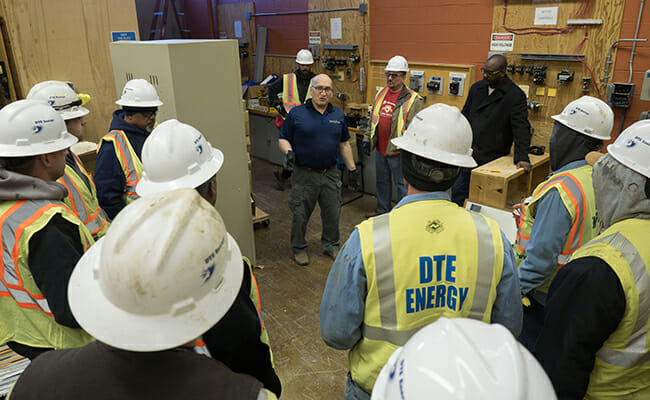
How DTE Energy is Reviving the Skilled Trades in Detroit
By Bill Blaul, Writer, Corporate Communications, DTE Energy
Generations of skilled tradespeople built the Motor City, put the world on wheels, and created the American middle class. In recent decades though, interest in skilled trades careers has diminished among youth and young adults nationwide along with vocational education options.
Investment has returned to Detroit and skilled trades jobs are in high demand. But, more than half of Detroit’s youth and adults are unemployed and outside the workforce while the Detroit Free Press reports redevelopment projects are hindered by a shortage of skilled trades workers.
Leaders at Detroit-based DTE Energy saw these challenges unfolding. DTE, Michigan’s largest energy company, is also experiencing a workforce changeover with 50 percent of its 10,000 employees eligible to retire over the next five years. So the company joined public and private partners, including the Detroit Mayor’s Workforce Development Board and the Detroit Public Schools Community District, to tackle the related challenges of unfilled skilled trades jobs and gaps in education and training. At DTE, our focus is on helping revive Detroit’s trade schools, placing high school students in paid summer work experiences and launching a skilled trades program at Henry Ford College in nearby Dearborn.
In 2016, the Randolph Career Technical Center, a city high school, had only 100 students. Closure was looming. “The building was in rough shape, equipment was outdated and there was inadequate funding,” said David Meador, vice chairman and chief administrative officer of DTE Energy. “In carpentry classes, students built projects then disassembled them because there wasn’t money for new nails and wood. We saw the potential of the students. We met dedicated instructors and staff. It was clear Randolph was worth saving.”
The DTE Energy Foundation provided $500,000 to refurbish Randolph and relaunch its skilled trades curriculum. The seed funding spurred community partner contributions totaling $10 million. Enrollment at Randolph tripled in 2017 to more than 300 students. An additional 250 adults began taking evening classes. Admissions are increasing again this fall.
Ronald Wood recently graduated from Randolph, earning certificates in Masonry and Marketing & Entrepreneurship. “After the renovations, it was a much more comfortable and better work environment,” he said. “We need a lot of young talent to work in the trades, and Randolph is key to making that happen.” Ronald was among 14 Randolph students participating in paid internships at DTE this summer.
Roger Bonds graduated from Randolph in Computer Aided Drafting and Design. “Randolph is very important for those looking to start a career right away,” he said. “I am very grateful for such a great opportunity.”
Building on the Randolph success, DTE joined a similar effort a few miles away at the Breithaupt Career Technical Center. The DTE Energy Foundation provided $500,000 to help update Breithaupt with workplace-modeled classrooms. Painting, flooring, and lighting work followed. DTE is also providing full-time construction and curriculum project management at Breithaupt. Our employee volunteers have helped with demolition, construction and landscaping, and DTE is donating equipment and supplies to create an industry-recognized instruction and learning environment.
DTE strengthened the training pipeline through $600,000 from the DTE Energy Foundation to establish the Henry Ford College Power and Trades Pathways Program. The first students in the program started classes and training a year ago and 12 are pursuing energy careers or additional studies.
DuJuan Stewart is entering his senior year at Randolph’s HVAC program. “The teachers push you to do your best. Randolph is important among Detroit schools because the trades they teach are in high demand,” he said. “I want to get my HVAC certificate, go to Henry Ford College and become an overhead line worker at DTE.”
“There are more career opportunities available to Detroiters than there have been in decades, so it’s important to ensure the next generation has the skills they need to get good, quality jobs,” said David Meador, who also co-chairs the Mayor’s Workforce Development Board. “We are honored to help bring new life to Breithaupt through private and public partnerships, as we did for Randolph.”
Clif Bar & Company: Sustaining the Environment Through Service
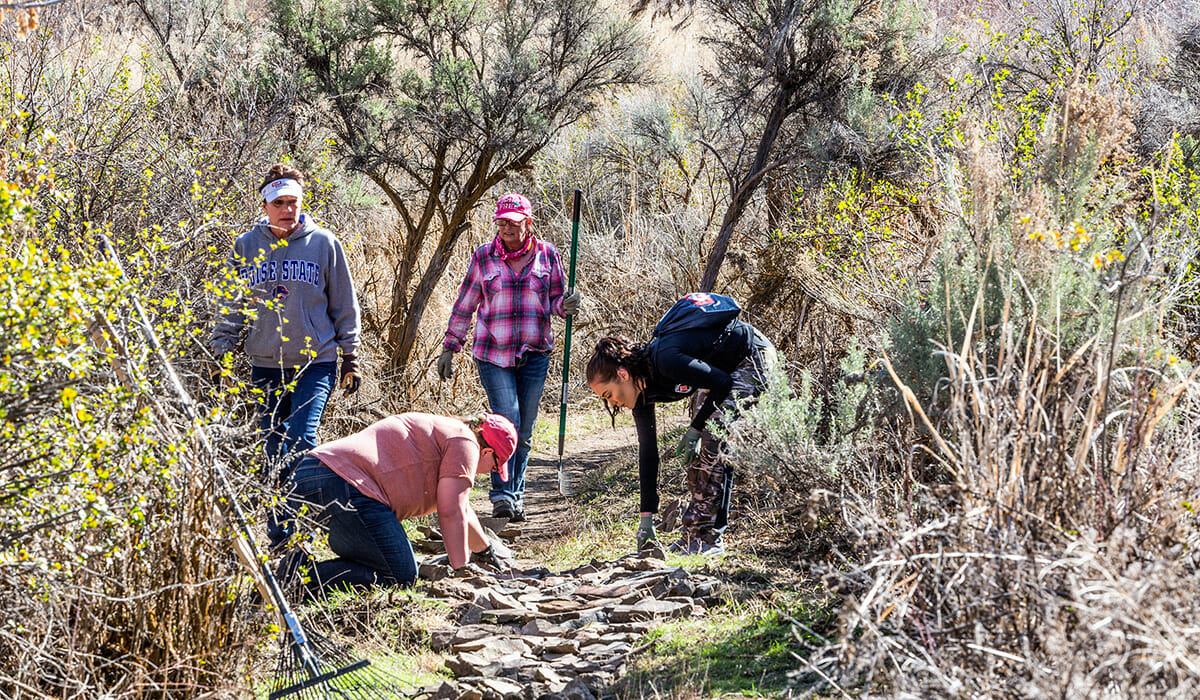
Clif Bar employees in Twin Falls, Idaho, rebuilding trails and picking up trash during the Companywide Service Day at Centennial Park.
By Cassie Cyphers, Community Programs Manager, Clif Bar & Company
, and our volunteer efforts largely focus on giving back in ways that help the planet. That’s probably not surprising, since we’re a company that relies on a clean and healthy environment to grow the ingredients we use in our food, and on the outdoors as a treasured place for us and our adventure-loving consumers to play.
Whatever your company’s volunteer focus, the benefits of community service are numerous. “Through the simple act of extending a hand, not just once in a while but as a regular part of life, we are changed as individuals and as a company,” said Kit Crawford, Clif Bar’s co-owner and co-chief visionary officer.
Kit and her husband, Gary Erickson, Clif Bar founder, co-owner and co-chief visionary officer, have built community service into everything we do. Clif Bar’s business model is comprised of five bottom lines, or Aspirations, as we call them – sustaining our business, brands, people, community and the planet.
CLIF® CORPS, our employee giving and engagement program, enables our employees to support communities in three ways, via service, funding and food. We encourage employees to volunteer in the community on company time — and do they ever, with a participation rate of more than 98 percent and nearly 117,000 hours volunteered since the program began in 2001. In 2017 alone, our 1,200 employees volunteered nearly nearly 20,000 hours.
Given our commitment to food and the outdoors, nearly 40 percent of employee community service is devoted to environmental causes. Pick a day at our California headquarters, or one of our two bakeries in Idaho and Indiana, and you’re likely to find a few employees or an entire department volunteering in the community, often on behalf of the planet. They might be restoring community gardens, clearing trails in a public park, planting trees, cleaning up beaches or building birdhouses.
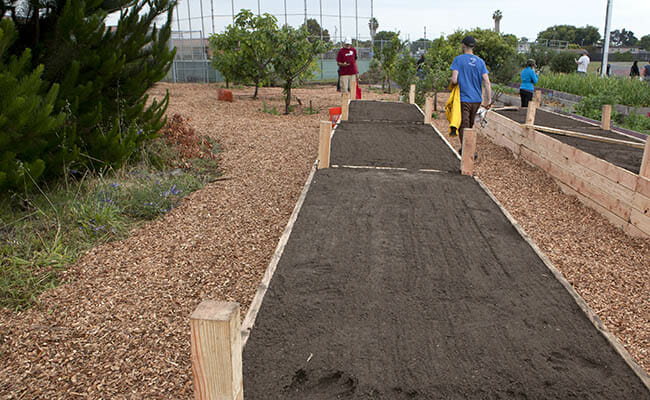
Once a year, we shut our doors and send everyone off on a day of service. A few years ago, our headquarters employees — then more than 300 strong — spent the day volunteering at two local urban gardens to benefit Urban Tilth, a nonprofit that cultivates agriculture in West Contra Costa County. “Clifsters” weeded, planted and built raised garden beds, picnic tables and a pollinator habitat.
We’re happy to share our recipe for community service because we think it can work for a lot of companies, no matter what your cause or focus. Build it authentically into your company’s DNA, encourage employees to take part, make it easy for them to participate, and let them choose the causes that interest them.
While we’ve won awards for our community service, that’s not what drives us. It’s doing the right thing for us, for others and for the planet, which is under siege and deserves a special nod here in April (and beyond), home of Earth Day, Earth Week and Earth Month. And the best part is hearing from the people we touch with our service — people like Brandy, a grandmother in Twin Falls, Idaho, who recently sent us this note via Facebook:
“Huge Rave – With the weather so nice today I decided to take my 2 grandsons walking (the trail at Centennial Park). There was a huge mass of Clif Bar employees working down there clearing the trails, picking up trash, trimming bushes and fixing the bridges. Not to mention the shopping carts and other trash they loaded onto a boat and hauled off. Everyone we passed was so polite and kind. I just wanted to say THANK YOU, not only for what you did for our community but for being awesome examples to my grandchildren.”
Now that is reward enough!
An advocate for community service and environmental conservation, Clif Bar & Company is just one example of the corporate citizens that make up the Points of Light Corporate Service Council. Does your company exemplify corporate citizenship, have an incredible team of employee volunteers or make a strong impact in the community?
Mobilizing Corporate and Community Volunteers to Improve Veterans’ Lives, One Home Repair at a Time
Providing support for the men and women who have served in the armed forces is a priority for many social organizations across the United States. Among the critical needs being addressed by these groups, such as providing access to healthcare, education and employment, is the need to help veterans find and maintain safe, sustainable housing. HandsOn Greater Phoenix, a Points of Light affiliate, has stepped up to this challenge, leveraging the power of corporate partnerships and volunteers to have an impact on the local veteran community.
The organization has been serving the Phoenix metro area for almost 25 years, connecting volunteers with opportunities to serve where they are needed most. Founded as Make A Difference in 1993, the organization set out to meet critical community needs, with a special focus on creating opportunities for working people to serve.
“There were a group of busy professionals that just liked the idea of plugging into multiple issue areas and using groups of colleagues and friends and networks to do good things in the community,” said Rhonda Oliver, president and CEO of HandsOn Greater Phoenix.
After 15 years of rapid growth, the organization re-established itself as HandsOn Greater Phoenix in 2008. Today, it functions as a traditional volunteer center, engaging all types of volunteers in more than 60 high-impact, one-time community service projects each month. But, Rhonda said, corporate volunteers are still a centerpiece of their programming.
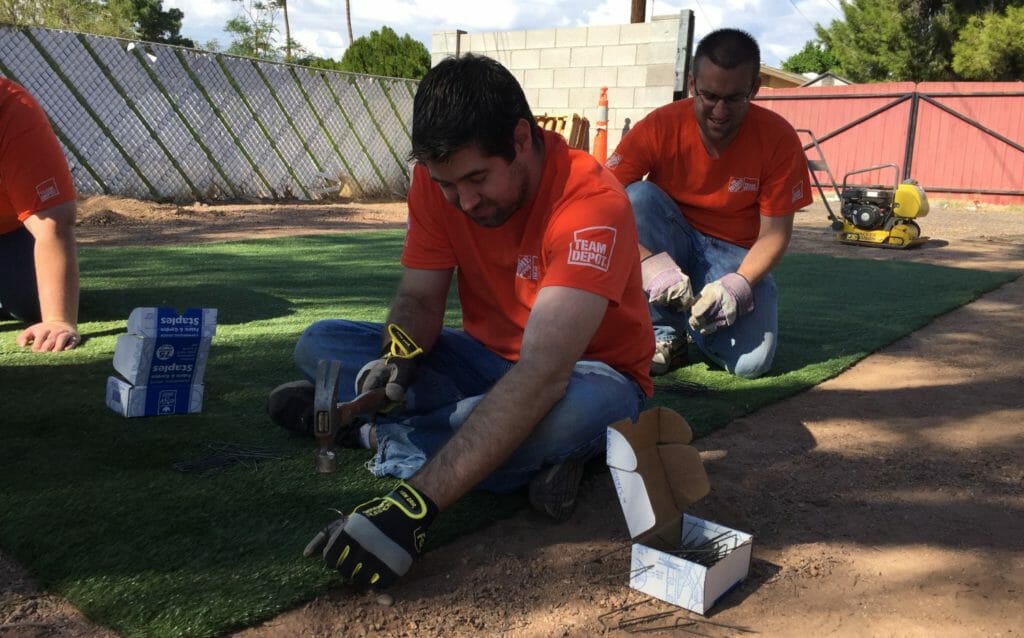
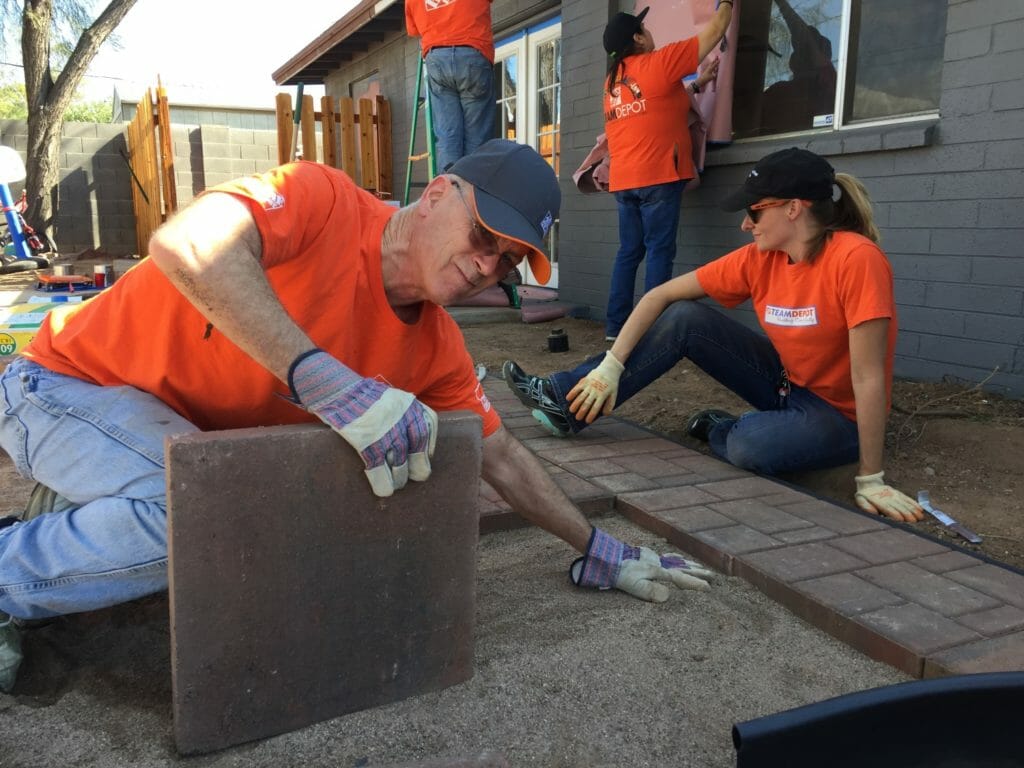
Through a long-standing partnership with Home Depot, HandsOn Greater Phoenix mobilizes teams of community and employee volunteers for its Veteran Home Improvement Program – supporting local veterans by providing needs-based home repairs and upgrades for weatherization, code violations or other modifications.
Four “Team Depot Captains” – representing the 39 Home Depot stores in the Greater Phoenix market – each conduct site visits, work with HandsOn Greater Phoenix to identify the improvements each home needs, and connect with local vendors that donate the necessary materials. Projects cover a range of activities, including painting, installing turf yards or even tree removal. Some of the most common projects are exterior paint jobs. HandsOn Greater Phoenix recruits community volunteers for these kinds of projects, as well as calling upon employee volunteers from other local businesses – among which, employees from companies like Wells Fargo, Intel and Cox are all regular contributors.
For more complex or large-scale projects, such as building ramps for disabled veterans, installing windows or walls, or other major modifications, Home Depot employees or volunteers from the vendor that donated the materials will offer up their time and skills to do the work.
“Some of our team captains have employees within their stores that have contracting-level experience,” said Steve Woodhams, a project manager at HandsOn Greater Phoenix. In one case, a Home Depot employee with experience as a contractor helped complete a renovation project that added a door in the shared wall between a veteran’s bedroom and her bathroom, giving her some added privacy as she prepared to welcome a foster child into her home. For projects like energy efficient window upgrades, where product warranties are important, employees from the window company often volunteer their time to complete the installation.
Veterans apply for the program through the HandsOn Greater Phoenix website, but they are also identified in a number of other ways, including through word of mouth and through the municipalities they live in, as cities and communities identify homes that are not up to code. The participating Home Depot stores will also identify veteran customers who would benefit from the program.
In addition to veterans, HandsOn Greater Phoenix programs support many causes. Through a youth mentorship program called Your Experience Counts, adults with daytime availability are put in classrooms to work alongside teachers and help ensure students’ academic success. The organization also has an AmeriCorps VISTA program that engages 19 VISTA members as volunteer or program coordinators serving with nonprofit partners across Phoenix, building infrastructure and providing the necessary tools for the nonprofits to more effectively manage their resources. Annual events like Serve-A-Thon, Make A Difference Day, Martin Luther King Jr. Day and 9/11 Week of Service and Remembrance also provide opportunities for volunteers to get involved.
This year for 9/11 Day of Service, HandsOn Phoenix is planning several projects, including a letter-writing campaign for active-duty service members and a curb address painting project to help first responders identify houses when answering emergency calls. The organization is also planning a veteran home makeover through the Veteran Home Improvement Program. Volunteers will help weatherize the home of WWII veteran Maxine and her daughter, who is her caretaker. The project, which is open to general volunteer sign-ups, will provide energy-efficiency updates and bring the exterior of the home up to city code compliance.
Since its founding, HandsOn Greater Phoenix has mobilized approximately 400,000 volunteers through its programs, events and initiatives. Its partnerships with both local companies and nonprofits make it one example of the many ways that Points of Light network affiliates are using local resources to meet community needs and putting volunteers to work where they are needed most.
Making the Business Case for Employee Volunteering
For companies, building a culture that connects volunteering to a broader organizational mission can require an intentional and sustained effort to engage stakeholders, creating a strong business case and adopting policies and programs supportive of service. Increasingly, leaders in corporate citizenship are building the skill set and experience to translate the importance of engaging employees in service to the vernacular of an executive boardroom. To provide some best practices for companies trying to build volunteer programs, Jenny Lawson, president of networks at Points of Light, and Hannah Christie, environmental, social and governance project manager EMEA at Bank of America Merrill Lynch, lay out some of the foundational facts that employee volunteer leaders can use to strengthen their case.
Engagement
Jenny:
Whether it’s cleaning up community parks or mentoring a student online; giving pro bono time to a nonprofit in need or hands-on hours to a food bank; volunteering for an hour in your hometown or for a multi-week assignment cross-border, volunteering is a great way to engage individuals of all ages, interests and backgrounds to unite around a common goal. At the same time, we’ve also seen that companies with volunteer programs realize more than $2,400 of value per volunteer resulting from decreased turnover and improved performance, and that different motivations drive employees to volunteer. How is that happening at Bank of America Merrill Lynch?
Hannah:
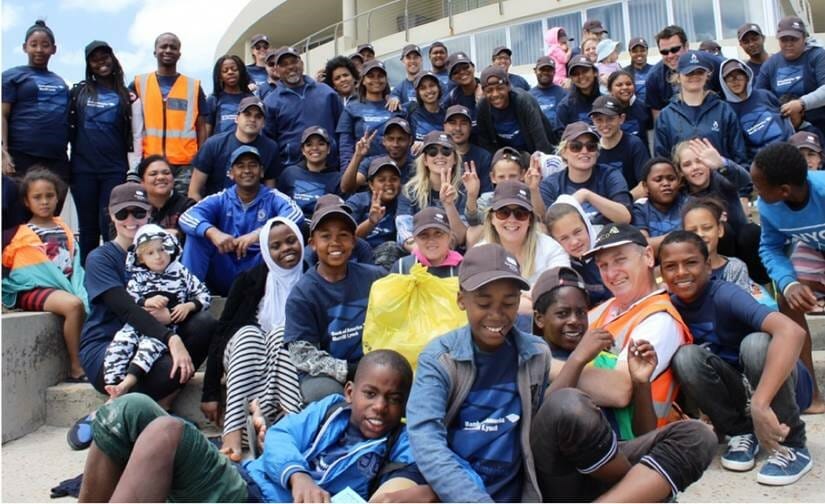
At Bank of America Merrill Lynch, we generate value for the community by matching capital investment from the Bank of America Charitable Foundation with the investment of our time and expertise. We’ve learned that creating value for the community, in turn, helps create value for the business. For example, our International Coastal Cleanup, Habitat for Humanity Global Build Week and World Food Day initiatives give employees the opportunity to build their networks, have fun with colleagues and make a positive impact on their local community. Our professional skill share programs bring a different aspect of engagement as they give our employees the opportunity to view their professional skills through a new social lens, making a long-term and often wide-ranging positive impact. Throughout all parts of our volunteer program, we seek to generate engagement by helping employees expand their networks, build skills and feel good about giving back to the community.
Leadership Skills
Jenny:
A culture that supports volunteering can also help a company develop leaders from within, as research has shown. From organizing peers, working across internal silos, building external relationships, managing projects and more – participating in corporate volunteering can build important skills and relationships. How do you build that value in your programs?
Hannah:
This is a great example of how an employee volunteering program brings benefits to everyone involved. In a highly competitive hiring environment, connecting to purpose and volunteering can increase employee retention and productivity which reduces costs associated with turnover. We work closely with HR to develop and integrate our charity skill share program with the bank’s learning and development offerings to employees. From our summer interns through to senior management, sharing time and skills plays a key role in career progression. For example, in December 2016 we launched Inspiring Governance in the U.K. with our partner charity, Education and Employers, giving employees the opportunity to build their leadership experience, influencing and negotiation skills.
Connecting and Recognizing Colleagues
Jenny:
Every workplace is looking at the latest science on health and employee well-being. In fact, research on
. This emotional win-win further connects people to community and co-workers. As a global enterprise, how do you build that camaraderie and sense of shared experience?
Hannah:
Working at a global company, the employee volunteer program is a great way to connect our approximately 200,000 employees who work with clients and stakeholders in 90 countries around the world. In April each year, we hold Global Service Month as a way to connect employees around the world and celebrate the impact of volunteering in the community. This year, you will see a lot of them sharing their stories on social media through
. Additionally, we run our internal Global Volunteer Awards to celebrate teammates who go above and beyond in their support of the community. We also run a Volunteer Grants program in support of our colleague’s volunteer efforts. By recognizing our people’s achievements with community partners, we are able to double the ‘feel good’ effect of volunteering and the engagement it brings.
For more information on the business case for employee volunteering, register for the Conference on Employee Volunteer Engagement in Paris, France, on April 25, 2017, and explore the Points of Light Corporate Institute’s online resources. You can also join Points of Light, Bank of America, and other nonprofit, corporate, and government changemakers at the Conference on Volunteering and Service in Seattle from June 19-21. For more information on Bank of America Merrill Lynch’s environmental, social and governance efforts – visit their ESG webpage.
What’s Working for Employee Volunteering in Asia?
This post was written by Yvonne Siu Turner, senior manager for corporate resources and programs at the Points of Light Corporate Institute and editor of “What’s Working: Effective Employee Volunteering in Asia, a Framework for Corporate Volunteer Leaders.”
With growing dialogue around purpose in the workplace and the increasing number of community-minded brands in the market, consumer and employee engagement trends in the United States are fueling the rise of corporate citizenship. Similar trends are also emerging in Asia.
To address these global trends, Points of Light has published a new report that harnesses the insights of our corporate partners and global network of innovative volunteer organizations. The report, titled “What’s Working: Effective Employee Volunteering in Asia, A Framework for Corporate Volunteer Leaders,” features a framework to equip corporate volunteer leaders to build effective employee volunteer programs in Asia, highlighting examples of what’s working for more than 25 global and regional brands.
Unique in the market, it showcases a wealth of practitioner insights on critical elements needed to start and scale employee volunteering in Asia. These elements include getting employees in local offices excited about service, celebrating success, equipping and empowering volunteer leaders, offering a wide variety of volunteer opportunities to meet employees where they are, and more. Here are a few best practices featured in the report, which reveal what’s working for effective employee volunteer programs in Asia:
Offer a wide variety of volunteer opportunities that meet employees where they are, especially considering regional differences in employee interests, societal expectations and NGO capacity. While industry research shows that in Asia, 71 percent of companies offer pro bono programs, other research suggests that hands-on volunteering is more popular in China due to nonprofit capacity constraints and employee interests. In Singapore, the receptivity of the nonprofit sector to training opportunities has allowed State Street, in partnership with CLSA, Credit Suisse, Macquarie and Nomura, to create a Not-for-Profit Director Program to equip staff for board service.
Empower volunteer leaders at all levels within the company. Ichiro Takeuchi, an account manager in PIMCO’s Tokyo office, was so passionate about service that he recruited a planning committee that became Japan Volunteers, which was able to respond when the 2011 Tohoku earthquake and tsunami hit Japan. Today, Ichiro is an executive vice president at PIMCO and champions corporate volunteering at every turn.
Celebrate small wins to help gain the respect of employees and volunteers in the Asia Pacific region. “While Groupon’s Asian offices have often been the last to roll out different HR or pilot programs, I’ve found that including their volunteer successes in global EVP messaging and announcements has generated a great amount of excitement and pride from our Asian colleagues,” said Alicia Koch, who manages Groupon’s employee volunteer program. Employee participation in Groupon’s APAC volunteer program increased from 6 percent in 2015 to 74 percent in 2016, with offices in Bangalore and Tokyo achieving 100 percent employee participation.
Provide resources, training and supportive policies to mobilize and equip employees to serve. Mitsubishi Corporation provides volunteer training courses at work and five days of volunteer leave each year to enable employees to serve the community – especially through its Dream as One initiative, which supports the company’s deep societal commitment to people with disabilities. Mitsubishi employees have volunteered to help with everything from building a field for the Japan Para Wheelchair Rugby Championships and coaching a soccer class for children with cerebral palsy, to serving as members of the governing board of the Japanese Paralympic committee.
The more than 25 featured case studies represent a wide variety of industries and organizations dedicated to global corporate citizenship in various stages of building out their employee volunteer programs around the world.
We encourage corporate volunteer leaders to use the framework, examples and stories as inspiration to develop practices that work for their organizations, along with Points of Light webinars, training and consulting services for a greater understanding of best practices for employee volunteerism.
As you start and scale volunteering in Asia and around the world, please share your thoughts and reflections on these resources. Tell us what’s working for you, so we can continue to answer this question: What’s working for employee volunteering in Asia?
Through Strategic Volunteer Engagement, KPMG and Freeport-McMoRan Promote Youth Education
There are a variety of ways companies support education initiatives across the country, from philanthropic investments and fundraising to employee engagement activities and skills-based volunteering. For 2016 Civic 50 sector leaders KPMG and Freeport-McMoRan, investment in education translates to a firm-wide commitment and strategic business opportunity. Not satisfied with one-and-done service opportunities, these companies are using strategic corporate citizenship initiatives to ensure maximum impact for students in the communities where they do business.
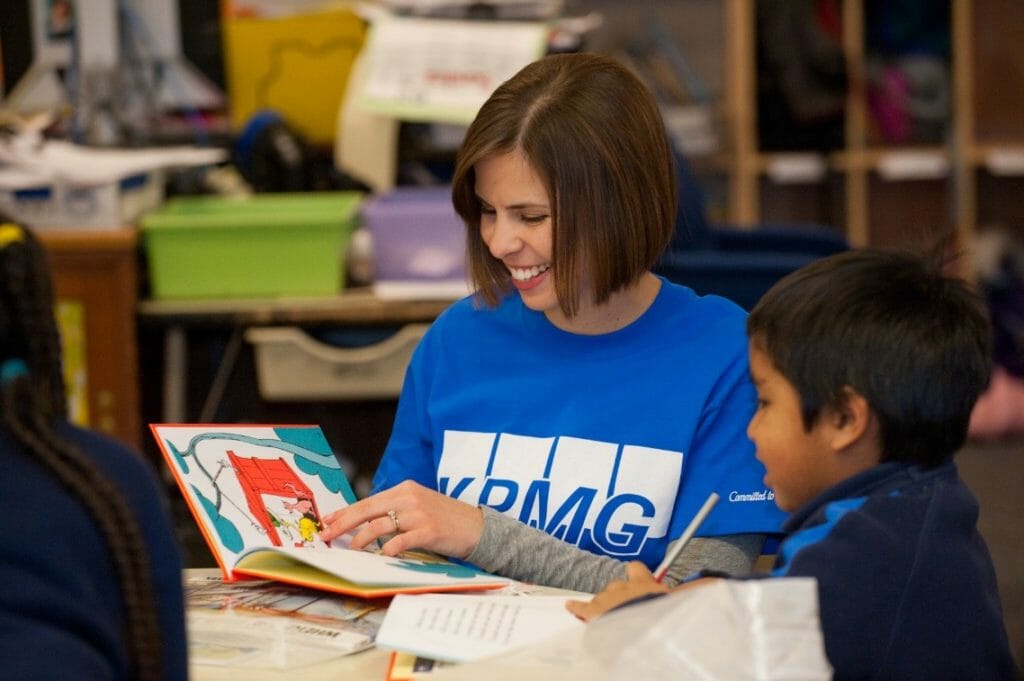
For KPMG, Civic 50 industrials sector leader, an emphasis on youth and education has always been a focus of their philanthropic and foundational work. In an effort to improve reading levels across the country, KPMG established its signature community involvement program, Family for Literacy, which provides families and children from low-income areas with books. Since 2007, the program has engaged employees across all levels of KPMG – interns, its partners and professionals alike – to donate books to local schools and education centers. KPMG also finds ways to engage key stakeholders – including clients, alumni, and family members – in their community involvement initiatives. At KPMG, supporting learning and literacy is more than just providing books. For example, after realizing a lack of diverse representation in children’s books, KPMG worked with an outside publisher to create a children’s book about a disabled man in Ghana. Through its work in education, KPMG is striving to ensure all children grow up with a love of reading.
Freeport-McMoRan saw a different opportunity to strategically align philanthropy efforts with the needs of educators and students. After identifying a recruitment gap, the Civic 50 materials sector leader decided to work with universities around the country through their University Teams program. The company sent representatives from key business areas to eight universities with strong mining engineering, metallurgy and geology programs to create high-impact partnerships. This mutually beneficial program helps the company identify and cultivate a new talent pool and also gives the University Teams a chance to work hand-in-hand with schools to identify opportunities for grants, educational programs, scholarship needs, and more. The program also ingrains a strong culture of service at Freeport-McMoRan by offering employees an opportunity to be key players in the recruitment process and see first-hand how investments are helping students across the country.
By investing time, money and other resources in education programs, and connecting community engagement initiatives to key business functions, KPMG and Freeport-McMoRan demonstrate a strategic commitment to students across the United States. As sector leaders of The Civic 50, they scored highest in their industries in the annual Civic 50 survey, a benchmarking effort to recognize and honor the 50 most community-minded companies in the nation.
Do you work with a company that excels in community involvement and exemplifies the ideals of The Civic 50? The Civic 50 is currently looking for the next cohort of community-minded champions to take the 2017 Civic 50 survey, the deadline for which has been extended to 11:59 PM EST on March 13. The entirely quantitative survey looks at four dimensions of community engagement: impact, investment, institutionalization and integration. Any company with operations in the United States and an annual revenue of $1 billion or more is eligible to apply. For more information – including a best practices report, resources for survey-takers, and a full list of the 2016 Civic 50 honorees – visit www.civic50.org. For further updates and insights, follow The Civic 50 on LinkedIn or Twitter.
Waste Management Crisis Meets the Full Power of Employee Volunteerism
The 2016 GE Global Month of Service connects employees worldwide around a commitment to serve, with thousands of GE employees volunteering their time and talent to build stronger communities where they live and work. This month of service, in partnership with Points of Light, demonstrates the power that individuals have to impact their communities.
Nigeria is one of the fastest growing countries in the world. According to recent UN predictions, its population will reach 397 million in 2050, making it the fourth most populous nation in the world. Even now its cities are feeling the pressure – Lagos, the most populous city in the country, is home to 20 million people and is expected to double in population over the next 35 years.
As with all rapidly growing and industrializing areas, Nigerian cities are now challenged to bolster their infrastructure to support the needs of their expanding populace. In addition to concerns about education and health care, Nigerian communities are facing serious waste management concerns.
A city as big as Lagos can produce 10,000 metric tons of waste in a day, only 40 percent of which is collected by the strained municipal government. In addition, only 13 percent of recyclable material avoids the landfill, making the trash problem even worse. Over the coming years, Nigeria’s growing pains will only get worse as it looks for ways to support its rapidly growing populace.
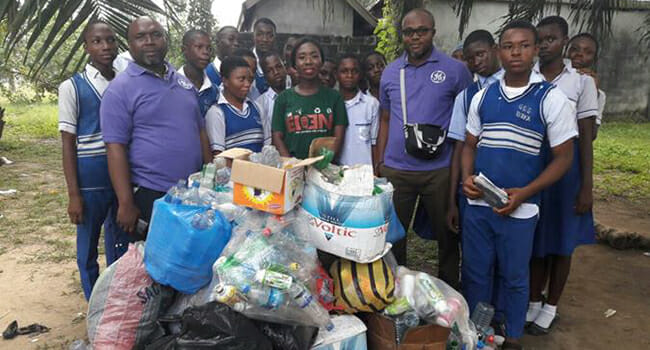
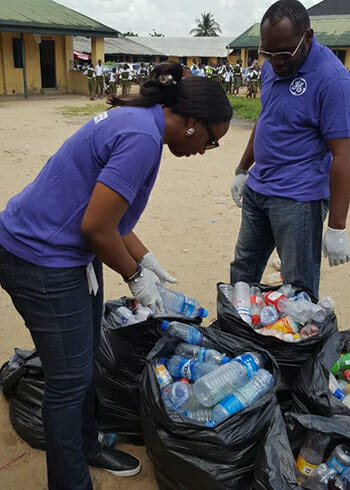
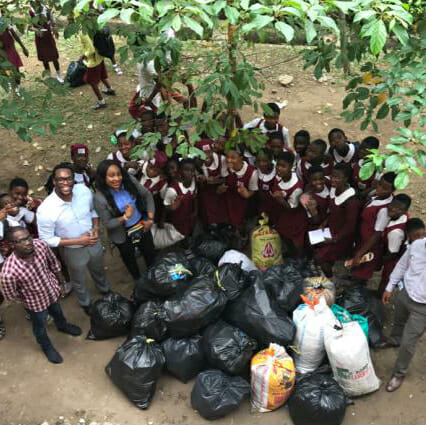
GE is demonstrating how service can be a powerful solution to this problem. On Dec. 2, GE volunteers in two Nigerian cities, Lagos and Rivers, teamed up with more than 5,400 students in 10 secondary schools on a community recycling project. The volunteers worked with students, explaining the importance of recycling and helping them develop plans for a Recycle and Win game.
The children collected recyclable items that could be donated to Recycle Points, a Nigeria-based nonprofit that awards points to people who collect and turn in recyclable material. The children earned points determined by the number and type of recyclables they collected; the points can be redeemed for prizes ranging from basic school supplies to laptop computers. As an added incentive, GE awarded 20 laptops to the school that collected the most recyclables.
In putting together a service project to address urban sanitation, GE volunteers are leveraging the full potential employee volunteerism and using it to address the most pressing needs where they live – teaching children the value of sustainable practices. As a result of this program, these students will return to their neighborhoods and encourage their friends and family to recycle, creating a trend that will hopefully have a marked impact on Nigeria’s waste management crisis.
Spreading Holiday Joy to Veterans and Active-Duty Military Through Service
The 2016GEGlobal Month of Service connects employees worldwide around a commitment to serve, with thousands of GE employees volunteering their time and talent to build stronger communities where they live and work. This month of service, in partnership with Points of Light, demonstrates the power that individuals have to impact their communities.
With the holidays fast approaching, individuals and organizations alike are looking for ways to give back and support those in need. This year, to bring holiday cheer to hospitalized veterans, GE volunteers in Milwaukee came together for the second year in a row to decorate the Clement J. Zablocki Veterans Medical Center.
Veterans receiving treatment at the Zablocki Medical Center, a regional VA hospital, come from as far away as Hawaii. For many families with loved ones in long-term care, it’s difficult to stay in Milwaukee due to the costs associated with travel and housing. As a result, many of these veterans will be alone during the holiday season.
On Dec. 2, more than 100 GE volunteers decorated the entire hospital for the holidays, visited with patients and distributed more than 500 stockings stuffed with healthy snacks. While the decorations brought holiday cheer to the hospital, the volunteers’ primary purpose was to offer hope and let the veterans know they are not alone.
“Veterans hold a very special place [at] GE. Over 10,000 veterans work across [GE] and over 2,000 within our GE Healthcare business. This event is one of many that GE volunteers lead to celebrate our veterans during the holidays and recognize their devotion and commitment to our country,” said Rob Reilly, vice president and general manager of U.S. and Canada services for GE, who co-sponsored the event with Laura O’Donnell, vice president and general counsel for GE Healthcare.
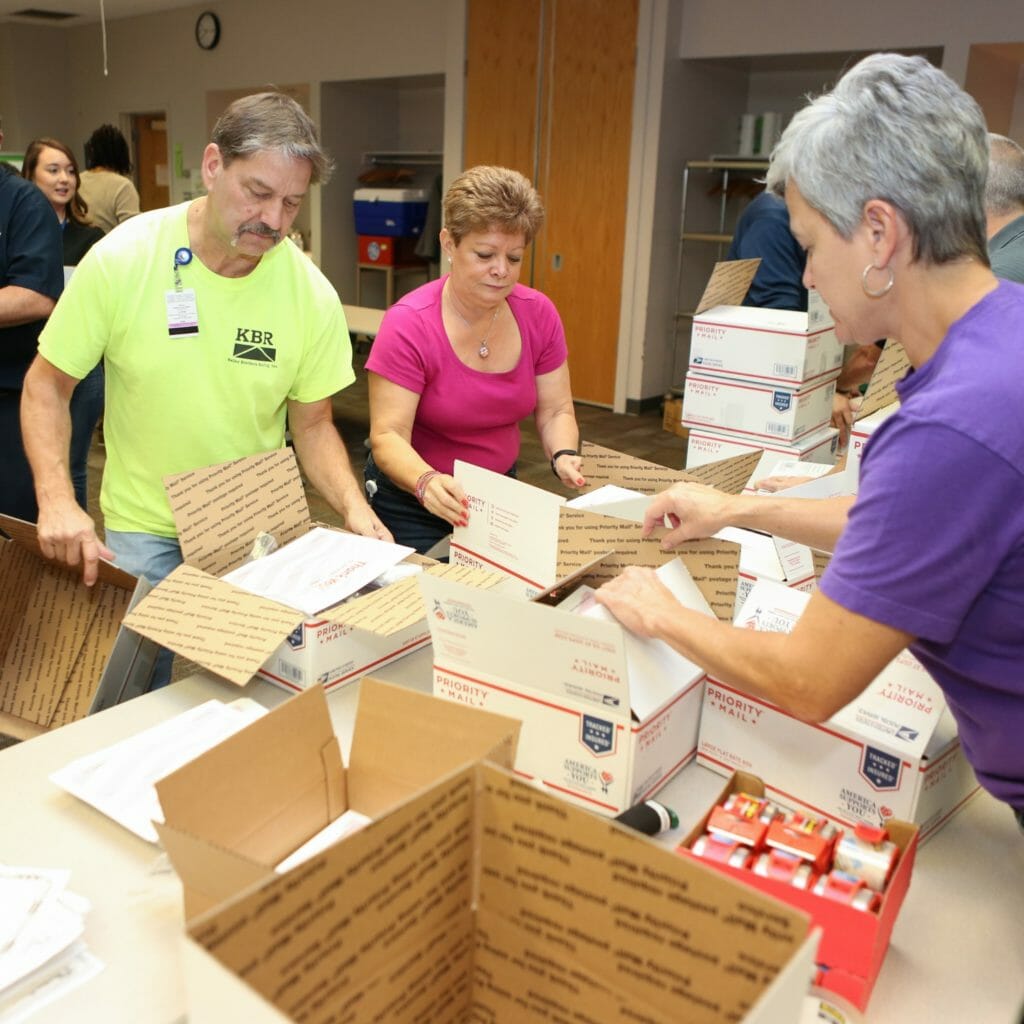
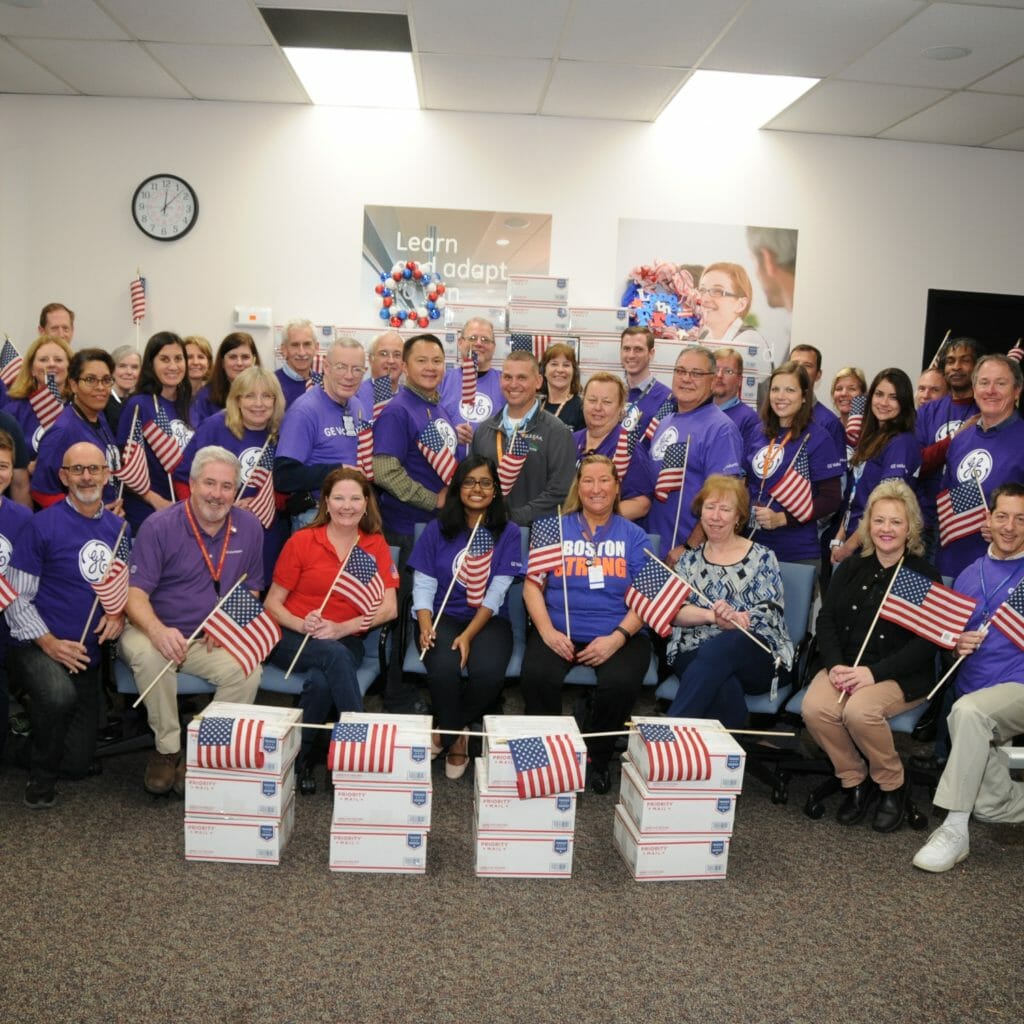
In addition to the Zablocki Medical Center project, GE hosted several military care packaging projects throughout its Global Month of Service to benefit deployed service members. Five projects in Lynn, Massachusetts; Peebles, Ohio; Evandale, Ohio; Dayton, Ohio; and Milwaukee engaged 142 volunteers in 496 hours of service, packing more than 720 care packages.
“These care packages mean so much to the military [members] that receive them! For some it means a chance to brush their teeth or take a shower — some of the little things that we may take for granted each day,” said Penny Louf, the project lead with GE Aviation in Lynn.
Each care package contained nearly 30 items, including socks, toiletries, cookies and padded shoe inserts. Some of the items were included by special request from GE volunteer leads who had served — items that the leads themselves had missed while deployed.
GE sends the care packages directly to the troops using a running list of APO addresses – the GE veterans’ network sites maintain lists of deployed GE employees, friends and family of employees, and others through word of mouth. This enables some GE locations, like Lynn, to host care package events throughout the year, with employees donating most of the goods.
These projects are just some of the ways that GE volunteers are giving back to communities around the world during the company’s Global Month of Service. Through this work, GE employees are demonstrating the true impact that individuals can make when they volunteer their time and talent to improve their communities.