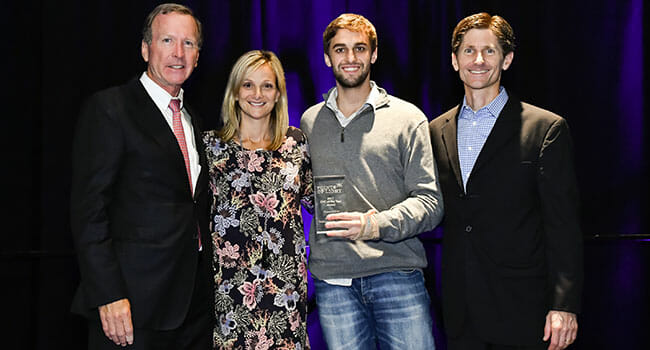
Atados Wins George W. Romney Award for Volunteer Program Supporting Refugees in Brazil
In difficult times, we often look to humanitarian groups to support those in need. Since the onset of the refugee crisis, this has certainly been the case in Brazil – where the number of refugees has doubled each year since 2011.
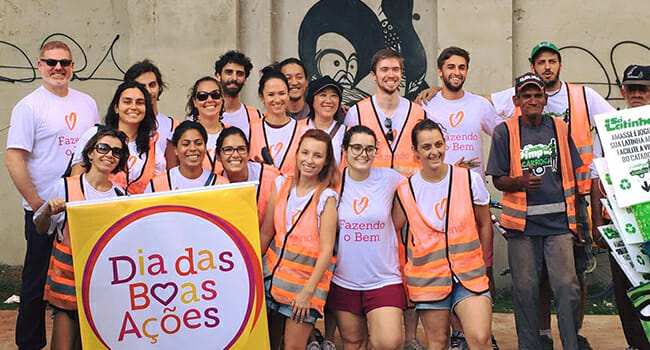
, the winner of Points of Light’s 2017 George W. Romney Award, adapted its successful volunteer engagement model to respond to the global refugee crisis and provide aid to the people taking refuge in Brazil.
The Romney Award, presented annually at the
to an affiliate from Points of Light’s global network, aligns with core strategies impacting volunteering and service and celebrates the extraordinary work taking place around the world in local communities. In the past, awards have focused on collaboration, innovation, collective impact and mobilizing local changemakers.
This year’s award, inspired by Points of Light’s resilient communities framework and aligned with the UN’s
, recognizes an affiliate’s contribution to healthy, vibrant, thriving communities by leveraging the contributions of neighbors, networks and nonprofits. Points of Light created the resilient communities framework based on the four domains of community resiliency as recognized by the
, highlighting the critical role that volunteerism plays in education, neighborhood/built environment, economic stability and overall health. Our approach to building resiliency is grounded in three core components: partnerships, programs and people. The framework provides opportunities for Points of Light to lean into cross-sector partnerships that align with local community needs to make an impact and drive change.
Scaling programs that work is essential to how we drive community change. Equally as important is ensuring people and nonprofits in the community have the leadership and capacity building opportunities to sustain this change. Atados, recognized for their work inspiring volunteers and building engaged communities across Brazil, identified a need and developed a program that engaged the community in solving the challenge. In 2014, as Brazil hosted the FIFA World Cup, there was an influx of refugees into the country. In response to the challenges that often accompany the transition to a new cultural environment, Atados created opportunities for volunteers to train refugees for employment as language teachers. What started with a small team and many volunteers has evolved into
– a language school that has trained and created opportunities for more than 60 refugees, who teach the language and culture of their native countries to more than 2,000 students in Rio de Janeiro and Sao Paulo. The program is a shining example of the role that networks, neighborhoods and nonprofits play in engaging community members, both as participants and beneficiaries of programs.
“Cities are only as resilient as their residents. A community’s ability to adapt and progress is dependent on the strength of its local networks. Too often the human infrastructure to create viable, locally-driven, sustainable solutions does not exist,” said Gared Jones, senior vice president of global at Points of Light. “Atados’ work demonstrates how our network is mobilizing and equipping volunteers to create local solutions to some of the world’s more pressing challenges. Innovative solutions like Abraço Cultural are what Points of Light’s network is scaling and replicating around the world.”
The George W. Romney Excellence Award was established in 1996 to honor
Gov. Romney
and his personal commitment to volunteer service. Romney was chairman and CEO of American Motors, a three-term governor of Michigan and U.S. Secretary of Housing and Urban Development. He was also founding chairman of the National Volunteer Center and a founding member of the board of directors of Points of Light.
In Greece, Nonprofits Come Together to Coordinate Volunteer Response to Refugee Crisis
Since the beginning of the Syrian civil war in March 2011, thousands of Syrian citizens have arrived on the shores of Greece in search of refuge. Today, more than 62,000 refugees still reside in Greece and roughly half of them are women and children, according to the International Rescue Committee. Volunteers from around the world are providing assistance – helping refugees arriving by boat make it safely to land, providing support at refugee camps and packing care packages with essential supplies. Even with all of this assistance, however, the influx of immigrants has put great pressure on the Mediterranean nation to equitably distribute continually limited accommodations and resources amongst so many in need.
In times of crisis, while nonprofits and other aid organizations are frequently depended upon, they can also experience difficulty managing resources and delivering aid to people in need. In Greece, NGOs have had difficulty managing the influx of volunteers and donations that began to pour in as news of the refugee crisis spread around the world.
“Almost every NGO in Greece gets donations from people that just want to help, but don’t know what to do,” said Alkisti Macrynikola, director of partnerships and programs at Ethelon, a Points of Light global affiliate. “So when every NGO has donations, they have to cooperate with other ones to see where they have to send the donation, at which point, at what time – so at first there was a lack of communication.”
With Athens being the unofficial hub of volunteer response activities and no set system to manage donations, it was also difficult to distribute volunteers to help the right NGOs at the right time, Alkisti explained. So Ethelon stepped in as a coordinator.
The organization’s database of volunteer opportunities provided a centralized location where volunteers could search for refugee aid projects based on the type of service they were interested in doing, and identify NGOs providing opportunities that matched. Ethelon also offered seminars to train organizations on how to be effective leaders in times of crisis, the importance of cooperation among NGOs and how to maximize impact with existing resources.
Ethelon is uniquely suited to provide this kind of leadership among NGO partners. Ethelon, which means “I want to volunteer” in Greek, was founded through a 2016 merger between Volunteer4Greece and Glovo, two nonprofits dedicated to mobilizing volunteers in Greece. The new organization’s vision is “to make volunteering an everyday thing for the Greek people,” said Alkisti. “It’s to provide a volunteering culture in everyday life, and to make volunteering available for all people from all ages.”
Though Ethelon has been successful in achieving this mission since the merger, the organization initially faced several of the same challenges that many Greek NGOs encountered when coming together in response to the refugee crisis.
“It’s very hard for people to work together when they have been working apart for many years,” Alkisti explained, noting the different – but ultimately complementary – approaches to volunteerism that each organization had specialized in prior to the merger.
Glovo was originally founded by three students in 2012 and focused almost exclusively on recruiting groups of volunteers for small events that they organized. Volunteer4Greece, while also small in size, focused more broadly on connecting volunteers to NGOs for long-term projects. Though the way these organizations organized volunteers was different, the causes they focused on were very similar – they felt that together they could have an even greater impact on their community.
Despite the initial challenge of unifying two organizations under one roof, allocating resources and focusing efforts appropriately to match organizational objectives, Alkisti said the experience turned out to be a unique advantage. Having successfully navigated their merger, Ethelon now had first-hand experience connecting and incorporating like-minded individuals to offer other NGOs looking to coordinate and collaborate to increase impact.
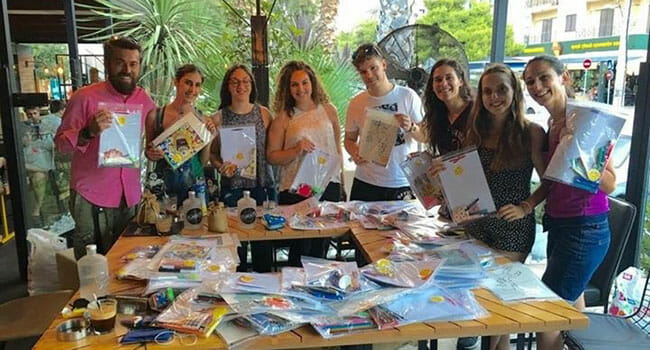
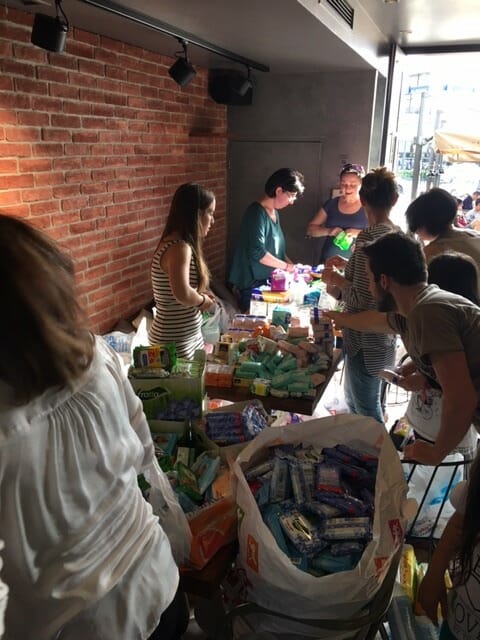
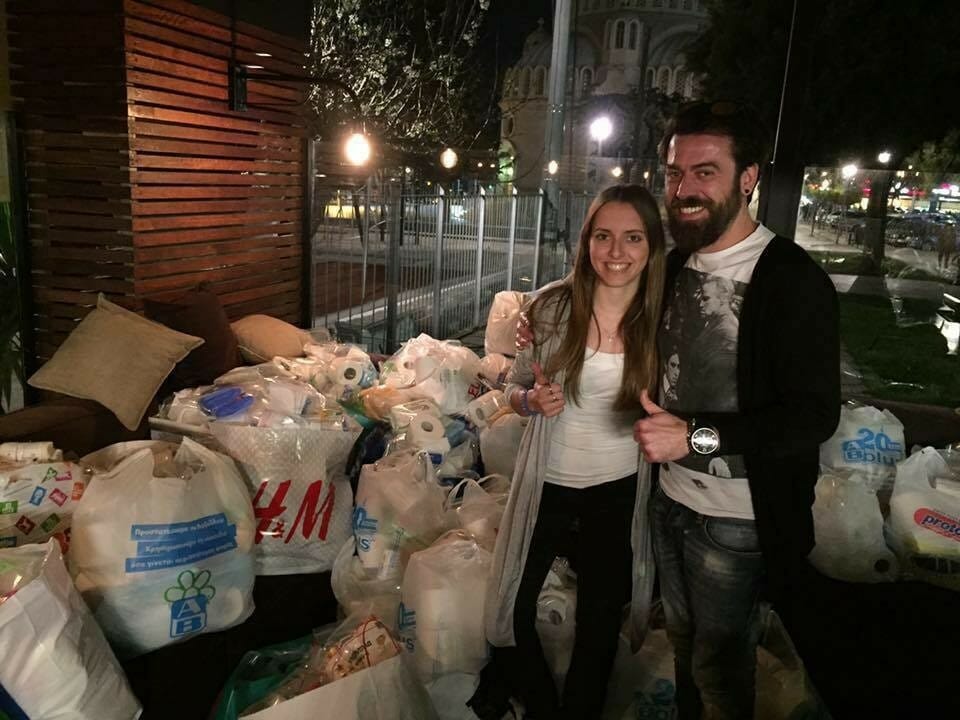
Through this alignment process, Ethelon helped plan and manage several volunteer projects in support of the refugee crisis. Popular projects included making hygiene kits with soap, toothpaste and other essential items; assembling entertainment kits for refugee children to keep them busy and take some of the strain off of refugee parents; and accepting and sorting food donations. The kits and food donations were then sent to refugee camps all across Greece.
For Ethelon, it’s been a rewarding experience to organize volunteers in pursuit of their organization’s mission – allowing volunteers to engage in small-scale projects that would not consume all of their free time – while also serving an important cause.
Because she balances her time between working as a dentist and serving with Ethelon, Alkisiti is one volunteer who especially appreciates the opportunity to give back in her limited free time. Over the last 5 years, she says, volunteering has been a part of her everyday life and she is dedicated to creating projects to get other Greeks involved in similar ways. In fact, the hygiene kit project was her idea.
Ethelon held several events to pack hygiene kits, each engaging more than 40 volunteers. Alkisti explained that the main result of these events was seeing how people can be engaged in simple ways.
“The payoff I think was actually giving the opportunity to people, to neighborhoods, to contribute to the refugee crisis in very simple ways, such as donating supplies or just coming for an hour, or half an hour, to make the kits,” said Alkisti.
Innovative Volunteer Engagement Program Helps Address Refugee Crisis in Brazil
In difficult times, we often look to humanitarian groups to support those in need. Since the onset of the refugee crisis, this has certainly been the case in Brazil. To supplement governmental support, which can be quickly overwhelmed by an influx of immigrants, Atados used a project model that revolutionizes the way volunteers become involved in solving social crises.
Atados’ three-pillar model works to 1) awaken people’s interest in social causes, 2) connect them to nonprofits and, 3) develop projects with high potential. They have used this program to support a variety of quick-action campaigns and engage a large number of volunteers, especially in traditionally non-engaged communities. One of these campaigns was Feminicidade, which promoted gender equality and women’s empowerment, and engaged more than 500 volunteers in 2016. Atados also organized the first Good Deeds Day celebration in Brazil, which activated more than 10,000 volunteers across 40 Brazilian cities last year.
With its successful track record in volunteer engagement, Atados readily adapted its model to respond to the global refugee crisis and provide aid to the people who had already taken refuge in Brazil.
Since 2011, the number of refugees in Brazil has doubled each year. In 2013, Atados began connecting with these refugees through Adus, a nonprofit that offers free Portuguese lessons and helps resolve legal, medical and work issues, playing a critical role in helping refugees integrate into Brazilian culture.
“The number of refugees was increasing a lot in Brazil, but many people had prejudices on the matter,” said André Cervi, cofounder of Atados. “Therefore, we decided to focus on the first pillar [awakening people to social causes].”
In 2014, Adus and Atados collaborated to organize the first World Cup of Refugees, scheduled to take place around the same time as the official World Cup in Brazil. In addition to uniting 150 volunteers, 150 refugees and an audience of more than 200 people, the event was also broadcast by several outlets, which helped bring attention to the struggles of refugees in Brazil.
After shedding light on the cause, Atados moved on to the second pillar of its program – connecting people to nonprofits. From teaching Portuguese to organizing volunteer events, Atados has connected nearly 300 volunteers with service opportunities at Adus.
All of this culminated in the development of a project with a high potential for impact. Focusing on one of the most overwhelming difficulties that refugees face – finding a job – Atados and Adus looked to refugees’ cultural and language diversity. Together, the organizations opened Abraço Cultural, which translates to “cultural hug.”
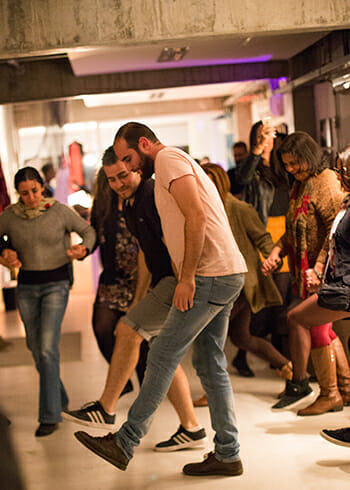
This school, which employs refugees to teach about the culture and language of their native countries, hired 15 refugees to teach 120 paying students in its first year. Abraço also engaged more than 80 volunteers to help get the school off the ground through communications support, teacher training, administrative functions and cultural activity implementation.
Using these three interconnected pillars, Atados is able to support a wide range of causes, engaging volunteers at a high capacity to accomplish major projects that achieve sustainable results.
“Abraço Cultural has already reached it ́s break-even point,” André said. “Once it ́s profitable, [it will] donate the surplus to Adus.”
With their eyes on creating future projects, Atados plans to build a new program called Creator of Acts. This program will help nonprofits identify and scope innovative volunteering opportunities that will continue to engage previously non-engaged citizens in inventive solutions to the problems that their communities face.
How Volunteers Are Helping Refugees – And What You Can Do
In central Rome, a former cultural center has found new life as a temporary home for hundreds of refugees. Without formal leadership or organizational structure, citizens have transformed the Baobab center into a safe haven where refugees can arrive at any hour and find food, shelter and someone who is willing to help.
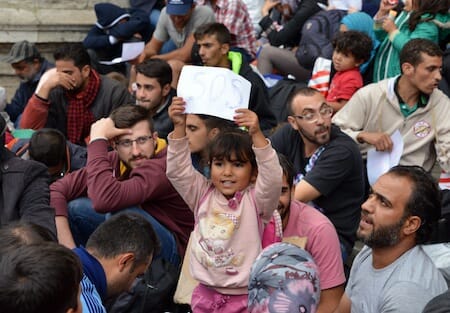
Refugees gather at Budapest Keleti railway station in Hungary.
Volunteers provide meals, hand out clothes and work a small first aid station, all made possible by donations and cash contributions from the people of Rome – including the Pope, who recently donated medical supplies to the center. As migrants prepare to move north, volunteers provide travel packs containing bottled water, a sandwich, a basic dictionary, a map of Europe and often a train ticket.
“Baobab represents a symbol of hope, of ordinary citizens not closing their eyes in front of need. It is a real example of people realizing their potential to make a difference,” says Mauro Cipparone, president of
.
RomAltruista, inspired by the actions of these “ordinary citizens,” has joined the effort, too. In addition to lending a hand at the center, the organization is promoting volunteer opportunities to help fill additional needs.
The Baobab center is not alone. The outpouring of volunteers is a common theme in places where refugee numbers are the highest, where citizens are desperate to help and official direction is lagging or non-responsive. And the refugee crisis has only accelerated in recent months.
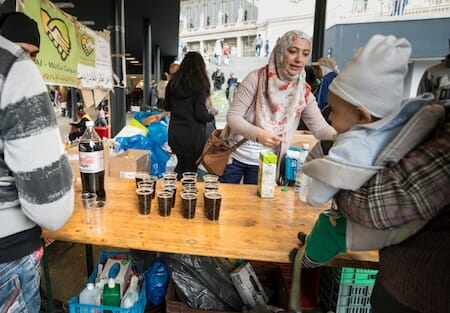
A volunteer serves beverages to refugees near Budapest Keleti train station in Hungary.
Following a spike in refugee populations in 2014, the number of migrants arriving in Europe has already doubled in 2015. The unprecedented movement of people around the world has created the highest number of displaced persons – many fleeing civil war in Syria – since World War II.
More than half of the nearly 400,000 registered refugees are children and youth. Upon arrival, refugees must stay in detention camps or reception centers until they either begin to travel to another country or find a way to stay in the nation in which they arrive.
However, many nations lack the infrastructure to respond, given the current influx of refugees. Volunteers are playing a key role in helping solve this problem.
Like the volunteers at the Baobab center, many Hungarians are helping refugees however they can. Points of Light partner
sees citizens donating their time at nearby railway stations to pass out food and water, collect trash and help refugees bridge language barriers.
One group set up a projector to entertain kids with their favorite cartoons, right in the middle of Budapest’s central train station. Corporations have also stepped up. Telekom, the country’s leading telecommunications company, is providing free wi-fi at rail stations – which not only allows refugees to connect with loved ones, but supports volunteer groups that are organizing via social media.
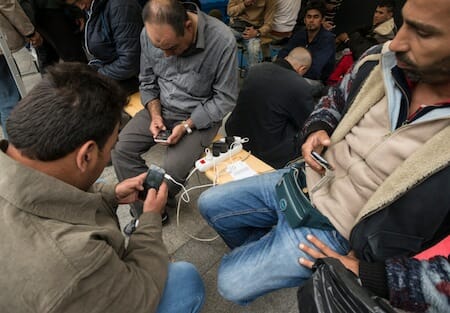
Refugees use donated mobile phones to keep in touch with their families near Budapest Keleti train station in Hungary.
is working with nongovernmental organizations (NGOs) to help coordinate the volunteer response. The group’s website has become a virtual corkboard where organizations can post requests for specific volunteering services, as well as a repository for educational materials and tools for NGOs – a precursor to an upcoming seminar on the best practices of volunteer management during times of crisis.
And, while Greek citizens are eager to help, the country’s geography makes an effort like the one at the Baobab center more challenging. Most refugees passing through Greece end up on one of its many islands, where volunteers are doing their best to keep up with limited resources.
Costs for volunteer travel and the shipment of donated goods can be prohibitive. Volunteer4Greece is working to connect NGOs with private companies willing to support these efforts.
Farther north, in countries that are more removed from the crisis than their Mediterranean neighbors, volunteer efforts are just beginning to take shape. However, Points of Light network members such as
are taking steps to respond. The group will donate warm clothing collected at its annual Wrap Up London coat drive in November.
The outpouring of volunteers across Europe is inspiring, and we will surely see more stories like these emerge as volunteer centers are able to develop sustainable plans to support these efforts. Points of Light provides programmatic support to our global affiliates and encourages our domestic affiliates to host donation drives to support local response entities.
What can you do?
Many organizations have been overwhelmed with donated goods that have created logistical challenges in storage and transportation. Cash donations are the fastest and most efficient way to reach vulnerable populations.
Such donations allow relief organizations to respond to changing needs throughout the region’s response and long-term recovery. You can also host a fundraising event to increase your community’s collective impact.
Volunteer domestically with the International Rescue Committee to mentor refugee families, develop job skills and maintain a
. Consider volunteering with your local HandsOn Network volunteer center, and keep up to date on our response by following the HandsOn Network Facebook page.
For more about how to help, check out this article from The Guardian and this notice from the UK government.