Service as a Family Tradition – Four Generations Strong
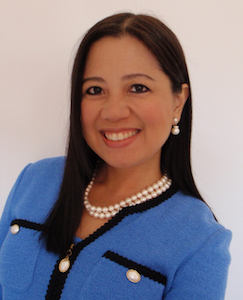
This post is by Joyce Yamaato, vice president with Wells Fargo’s Strategic Philanthropy and Partnerships Group. Her service in AmeriCorps led her to pursue a philanthropic career spanning 20 years.
Joyce Yamaato
Service starts with family. Family in my culture is basically everyone. I remember growing up and having lots of “aunts and cousins.” It wasn’t until I got older that I realized that we weren’t necessarily related!
Both my mom, Joylyn, and my grandmother, Alice, were very involved in the community. “Service” to them meant volunteering at church, making meals for those going through hard times and giving charitably. I work to pass on these same community values to my own children.
My mom and grandmother also gave back through teaching. My mom taught English overseas. At the time, she was the only female department head in the late 1960s and early ’70s.
My grandmother taught sign language here in the United States. She received her master of arts in speech language pathology from the University of Alabama in the mid-1960s.
I’ve always thought of her as an adventurous woman. She went back to school to get her master’s degree after her six children became adults. Her teaching career spanned 35 years.
My grandmother passed away last year at the age of 92. The photo you see below was the last one that I took with her during the holidays. I believe that her time teaching students of diverse abilities was one that she cherished the most.
Joyce Yamaato, far right, with her daughter, mother and grandmother
It was also an experience that resonated with me when I decided to serve in AmeriCorps.
I remember how excited my mom and grandmother were when I first got accepted into the Literacy AmeriCorps New Orleans program. I taught English as a second language to immigrants and refugees, and they were extremely supportive of me throughout my year of service.
I found that they listened and asked questions a lot, mostly about my students and how I responded to their needs. I thought they would have been more prescriptive given their expertise in teaching! Instead, they generously – and gently – guided me as I figured out my own style of teaching and how to surface solutions on my own.
As a mom, I see my 12-year old daughter growing up to be community minded. I remember driving her and my son to volunteer at an emergency event simulation. I watched as they learned to set up a tent and how it can quickly become a shelter, an urgent health care center and a place to eat a nutritious meal in the aftermath of a disaster.
We talked about what it might be like for displaced children and refugees living in other countries.
Today, I see my daughter continue to develop as a local and global citizen, and a great role model for her younger brother. She’s passionate about volunteering to support the rights of children and is also currently participating in a global classroom activity focused on access to clean water.
As my daughter grows up, I think how amazing it is to see the influence and community values of generations of women in my family reflected in her. I’m also inspired as I think about the collective impact we can make together in our communities.
I’m thankful for my mom and grandmother for setting me on a path toward servant-leadership, and AmeriCorps for giving me a chance to keep following it.
Growing up, it didn’t take long for me to learn that I felt most fulfilled when giving my time to others.
I first learned the true meaning of empathy and saw my life in a greater context in high school. I took an elective course in hospice (The Harley Hospice Corps) that taught me how to take care of people at the peak of their vulnerability right before death.
I remember one patient in particular whom I bonded with. In only a few short weeks, I watched her physically and emotionally deteriorate beyond recognition. It was such a surreal experience for me.
It was also a brutal lesson: Life’s miseries don’t discriminate. None of us are safe from them, and all we can do is deeply cherish and respect one another while we can.
This newfound sense of civic responsibility was heightened when I studied sociology in college. I focused on exploring the areas of poverty and social inequality. During school, I volunteered with several organizations, including The House of Mercy, a homeless shelter in my hometown of Rochester, New York.
I became so enthralled with that community and felt so much joy building relationships with its residents and staff. But, volunteering there also made me sad.
The most painful to see were those newly seeking refuge in the shelter as they had run out of options, yet were inconsolable that this was what their lives had resorted to. It was hard not to feel the powerlessness and desolation that they experienced.
By the time I graduated college, I was frustrated. I didn’t feel like my direct-service work did more than put a Band-Aid over a festering wound. I was eager to start applying my skills to help create effective change, but I wasn’t ready to jump into a career.
I needed to find an opportunity that would let me build upon what I knew while simultaneously giving me the confidence to safely test my personal boundaries to see what I was capable of.
Children’s Home Society of Florida is the state’s largest, private nonprofit serving children and families. With 15 divisions and over 90 offices, it has programs in all 67 Florida counties and works tirelessly to provide healing and protection to abused children, while working to equip parents and guardians with the necessary tools to strengthen and rebuild their families.
The majority of my time is spent at Joshua House, a residential facility for abused, abandoned and neglected children, where I handle volunteer recruitment, coordinating activities and securing in-kind donations.
Initially, I had no direct experience with any of those roles. Now, everything comes so naturally. I love giving tours and making community presentations, and I cherish all the community partnerships I’m building for my organization.
Most important, I love that the work I am doing is sustainable, not temporary. In May, I will begin my second year with Children’s Home Society of Florida, and I look forward to the new adventures that lie ahead.
If I were to give any advice to new VISTAs it would be this: Trust in yourself, be patient, don’t be afraid to experiment and don’t be afraid to make mistakes. But most importantly, revel in every little victory!
My love story with AmeriCorps didn’t start in a movie theater or a restaurant, but on a farm in rural Appalachia. We first met while repairing homes with Bethlehem Farm.
Caitlin Morneau (Photo by Smith Center for Healing and the Arts)
We got serious when I served as a caseworker at a homeless shelter through Catholic Charities’ Project SERVE. We went on wild adventures to college campuses across the country recruiting for Catholic Volunteer Network. And we walk side by side each day in my journey as a proud AmeriCorps alum.
This ongoing relationship has impacted my career, deepened my faith in God and enhanced my understanding of the world around me.
No, this is not a story about how I met my husband through AmeriCorps. This is a story about how AmeriCorps taught my husband and me to serve each other in marriage. Furthermore, it is about how making service a priority in our home has challenged us to be better stewards to our family, friends and community.
In each of my AmeriCorps experiences, I lived with others in intentional community.
When I grew frustrated with myself because I knew absolutely nothing about home repair, when I broke down in tears after a difficult day at the shelter, when I felt completely lost for a sense of direction in my life, they held me up, they helped me process and they got me through.
I did not begin to understand how these community relationships would inform my marriage until September 2013. Two months after our wedding, my husband Aaron accepted a job, teaching band at a Title 1 middle school.
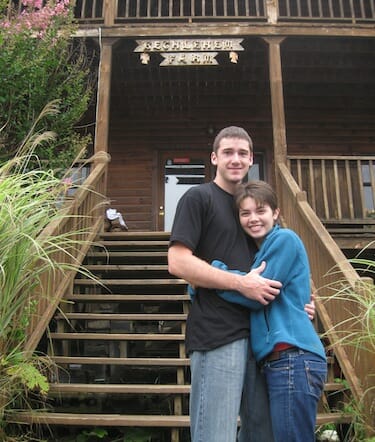
Caitlin Morneau and her husband, Aaron, visit Bethlehem Farm, the first place Caitlin first served through AmeriCorps.
Watching Aaron struggle with limited resources and the ups and downs of teaching a disadvantaged population, I was reminded of my own struggles while serving.
When he grew frustrated with his students’ lack of discipline in the classroom, I recalled my frustration with a client who refused to attend the parenting classes that I knew would benefit her and her son. When he rejoiced with his students for an “Excellent” score at their band competition, I remembered rejoicing the day that I moved my first client into permanent housing.
Each day that was taxing, I envisioned the light of hope that came when someone offered me the encouragement to keep going. I offered that same support to my husband, and in turn, he shared it with the students he served.
Striving to put the other person’s needs before our own is how we approach our marriage, family and community life. For us, valuing service also means rescuing our dog from a shelter and participating in Martin Luther King, Jr. Day of Service activities together. It means setting a portion of our income aside to donate to our churches and beloved charities and planting a garden in our backyard to reduce our carbon footprint.
I am truly grateful for the ways that AmeriCorps has taught me to be not only a worker for justice and peace, but also a better wife, daughter, sister, aunt, friend and citizen of the world.
This post is by Mona Mowafi, who served as an AmeriCorps health educator with the Latin American Youth Center in Washington D.C., and is now president of RISE Egypt.
Think Big. Dig Deep. Make Change.
This motto defines our outlook at RISE Egypt, an organization that I co-founded and lead that connects Egyptian social entrepreneurs to a global ecosystem of support to enable, catalyze and scale development in Egypt.
Mona Mowafi
It defines how we envision a more expansive tomorrow and work toward it. As I look back on the past 15 years since I graduated college and served in AmeriCorps, I realize that it has also served as an inner mantra for many years.
Think big. Many of us stumble upon the world of social entrepreneurship, rarely having planned for it. Indeed, if you asked me if I were a social entrepreneur ten years ago, I probably would have shook my head in wonder at the inquiry. I’ve come to believe that social entrepreneurship is less a “field,” and more a title to characterize a group of dreamers and relentless doers across a variety sectors.
The titles don’t matter – if you find yourself a person who thinks big about the possibilities for systemic and sustainable change and feels the passion and urge to pursue those big ideas relentlessly, go for it. Join the amazing group of change makers doing exactly that in the world. Your life will be more enriched for it.
One of the biggest pieces of advice I can give to this end is to give yourself space to think creatively and openly about how to solve the world’s challenges. Once you’ve approached a goal, have another on the horizon.
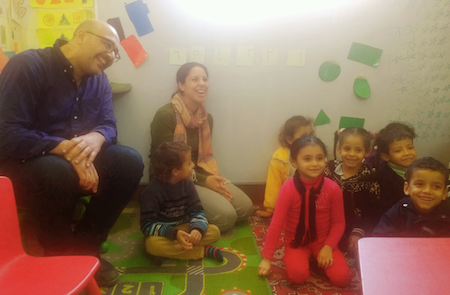
Mona Mowafi, center, visits an innovative early education social enterprise in an underserved area on the outskirts of Cairo.
Surround yourself with other action-oriented dreamers. Collaborate, cross-pollinate, inspire and support one another. Turn off social media for a minute and form meaningful relationships with real life human beings as well. It will pay off magically.
Dig deep. Enacting a better tomorrow requires not just a dream, but also the character, deep-seated values and grit to feed the persistence required to meet the enormous challenges before us.
This will take investments at a very intimate level. Know your personal weaknesses and tackle those as seriously as you would any social problem. When I graduated university, it was a job boom.
More important than money at that stage in my life, though, I believed I needed to connect with real people in communities to understand their everyday lives, and I needed to test my patience and personal endurance to see if I would be able to work in development for the long term.
I was focused less on the financial return, more on the ability for life experience to test my assumptions, challenge my will, and help me define and deepen a set of values that would stick with me over time. It’s what led me to do AmeriCorps.
Since then, I have dotted my career with regular opportunities for experiential learning which have paid off enormously in keeping me grounded even when addressing challenges through channels that can feel distancing, such as policy and research.
In light of what I know it has done for me until now, my biggest piece of advice to anyone interested in the world of social entrepreneurship is to make sure you invest as much in yourself as you do in your cause. You and your cause will be better for it.
Make change. The world is forever moving. The question is: In which direction will it go? Be a part of meaningful, positive change in the world by thinking big, digging deep and passionately pursuing your dreams. You will find yourself surrounded by magnificent people, and you will hopefully be able to make an impact by utilizing your knowledge and skills in pursuit of a better tomorrow. Good luck in all of your endeavors, and remember to always:
This post is by Joyce Yamaato, a vice president with Wells Fargo’s Strategic Philanthropy and Partnerships Group. Her experience with AmeriCorps sparked a career in philanthropy spanning 20 years.
Joyce Yamaato
I will never forget my first day teaching English as a Second Language to adult immigrants and refugees in New Orleans as a new AmeriCorps volunteer in the fall of 1995.
It was a very humid, hot and muggy day, and I was in a small classroom with many students of different ages from different countries. Many were working two to three part-time jobs mostly in the service industry – some had worked the late-night shift and still made it to class.
I was nervous standing in front of them as a 23-year-old, thinking, I better do a really good job because I didn’t want to let them down. They were counting on me.
It was early on when I learned that in order to be an effective teacher, I had to move beyond teaching English grammar, sentence structure and spelling. I needed to serve as a coach about day-to-day life in America.
This included things like going to the grocery store to help them figure out the layout of the store, how to navigate public transportation, how to read letters or bills that would come in the mail, how to talk to their children’s teachers during parent-teacher conferences and how to build a budget.
I realized that every time I added value based on their terms, not my terms, that no matter how small a gesture it was, it all added up to make a difference. Small efforts add up to huge results.
That year with AmeriCorps changed my life. Ultimately I chose a career in strategic philanthropy with Wells Fargo.
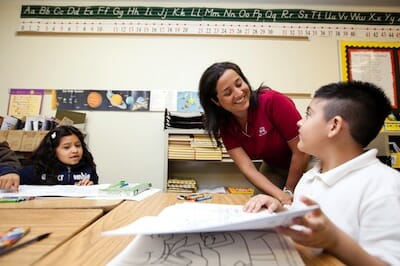
A Wells Fargo volunteer connects with students.
I am so lucky to work for a company like Wells Fargo. If you’re an AmeriCorps member pursuing a career after your service year, you also can find socially responsible and community-focused organizations like Wells Fargo.
My journey started with AmeriCorps and then led me to graduate school at Carnegie Mellon University’s H. John Heinz III School of Public Policy and Management. My career has been a combination of diverse experiences in banking, foundation, government, nonprofit and private sectors.
The combination of serving as an AmeriCorps volunteer along with my background in various sectors has helped me connect the dots in my day-to-day work.
As a strategist, I get to see the impact of our philanthropy come alive every day. In our communities, Wells Fargo is valued not just as a funder, but as a community leader. We too have a culture of service. More than 55,600 of our team members logged 1.69 million volunteer hours last year.
Wells Fargo is very supportive of pro-bono and skills-based volunteer opportunities as they increase the skills set of our team member volunteers as well as build the capacity of the nonprofit organizations where our team members serve.
A few examples include our Wells Fargo Global Fellows program, Hands On Banking® program and the pro bono community services provided by a number of our team members.
Wells Fargo’s Global Fellows program is a paid volunteer leave program. Those selected for the program work on-site in Colombia or India, or consult virtually, with microfinance or social enterprise organizations.
We have bankers provide financial education courses through our Hands On Banking program throughout the year, with special focus on the American Bankers Association’s Teach Children to Save and Get Smart About Credit annual campaigns.
Many of our departments also apply their talents to skills-based volunteering. Our legal department team members provide pro-bono services individually in their local communities.
The Digital Channels Group recently concluded a team meeting by inviting a small number of nonprofit organizations to provide design and scoping consultation for their web presence. We have communications consultants serving in board positions who help organizations with their public relations and communications plans.
Regardless of where you choose to get engaged, your pro bono service and volunteerism, however small, has the potential to make a huge impact.
Similarly, the record of the past 20 years of AmeriCorps service tells us that you can make a difference by volunteering. AmeriCorps also has a long tradition in this country of helping others to get things done for America.
This post also ran on the AmeriCorps Alums blog. AmeriCorps Alums is the only national network connecting the nearly 1 million AmeriCorps alumni to the people, ideas and resources that support their commitment to a lifetime of service.
Are You #GivingTuesday?
Today is #GivingTuesday – and it’s your chance to put down your wallet from holiday shopping and find ways to give without spending.
As an international day for giving back, #GivingTuesday is a movement to support your local nonprofits and favorite
.
Take part by pledging to volunteer on All for Good in celebration of #GivingTuesday. It’s a chance to be generous without spending a cent, and it’s easy.
ServiceWorks is a groundbreaking national program that uses community engagement and volunteer service as the primary strategies to help 25,000 underserved young adults in 10 cities develop the skills they need to prepare for college and careers.
National Journal correspondent Fawn Johnson writes:
Citi Foundation COO Brandee McHale calls ServiceWorks a jobs program in disguise. A joint project with AmeriCorps and Points of Light, the program uses volunteer service as a way to transition low-income young adults into jobs. “How do we really help prepare young people for the 21st-century workforce? The road map to success looks very different from prior generations,” she said. “In civic-engagement projects, you build leadership skills, you build workplace skills.”
ServiceWorks, which launched in September, has partnered with local civic organizations in 10 cities. Those organizations are recruiting high-school-age kids who will develop their own community projects, present those ideas to community leaders, and implement them. Sticking with a project from start to finish will help participants develop entrepreneurial leadership skills that employers often seek in job candidates, McHale says. Moreover, the kids will realize they actually have the power to make a tangible change in their own communities.
ServiceWorks is up and running in Boston, Chicago, Dallas, Los Angeles, Miami, New York, Newark, San Francisco, St. Louis and Washington, D.C. To find out more about local nonprofit partners, click here.
To find out more about how young adults, ages 18-24, can enroll and how adults can volunteer as “success coaches,” contact LaRhonda Jackson, [email protected].
Cyber Monday, Black Friday, Giving Tuesday – Start the Conversation Around Giving Back This Holiday Season
With Giving Tuesday coming up on Dec. 2, now’s a great time to make it easy to collect pledges of time and money for your cause this holiday season.
The #GivingTuesday movement started three years ago as an initiative to promote charitable giving during the holidays. This year, Points of Light is partnering with Giving Tuesday to make it easy for volunteers to pledge their time in addition to giving money to support a nonprofit – via the All for Good Volunteer Facebook App.
If you haven’t had a chance to check it out yet, the All for Good Volunteer Facebook App allows any organization currently posting projects to either All for Good or a local Points of Light Affiliate to showcase their projects right on their Facebook pages. It’s free. It’s simple. And it takes less than five minutes to install. Click here to get started.
Once you sign up, the new Giving Tuesday Pledge banner will appear automatically on your Volunteer app on Oct. 28, making it easy for volunteers to pledge to serve with an organization of their choice and search for volunteer projects – all in the same place. You always have the option to manage the app and view stats via your admin settings panel.
Facebook and Points of Light will be conducting a webinar at 2 p.m. EST on Oct. 28 to talk about ways nonprofits can maximize the value of Giving Tuesday with social media tools like the All for Good Volunteer App. Click here to register.
Volunteering Can Lead to Greater Economic Opportunity for Youth
A new report released this week by Opportunity Nation, with support from the Citi Foundation, provides fresh and compelling evidence that certain types of civic engagement predict positive outcomes for at-risk and low income youth and the economic health of states.
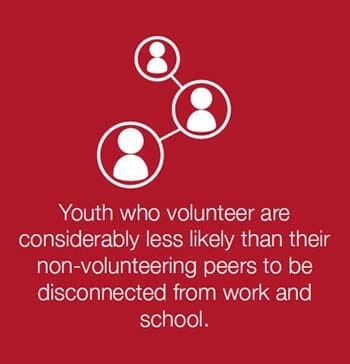
The chance that a young adult is disconnected from work or school drops in half, from 11.1 percent to 5.7 percent, if he or she volunteers.
Civic engagement – specifically volunteering and participation in a civic or service organization – is a significant predictor of economic opportunity across states.
In places with higher rates of volunteerism, income inequality tends to be lower.
The report highlights how civic engagement may help youth – particularly low-income teens and young adults ages 16-24 – build social capital and skills that can help them find meaningful education and career pathways.
The analysis also found that two forms of civic engagement – volunteering and membership in a civic or service organization – are significant predictors of economic opportunity across states.
“We hope our findings serve as a rallying cry for increased attention and support for civic engagement initiatives,” said Russell Krumnow, managing director of Opportunity Nation. “Volunteering or joining in a charitable cause are not just feel-good activities, but powerful ways to increase economic opportunity at a time when Americans are searching for as many tools as possible to improve their prospects and provide for their families.”
“Today 5.8 million young people – about one in seven Americans between the ages of 16 and 24 – are neither working nor in school,” said Kristen Lewis, co-director of Measure of America. “Finding ways to connect them to mainstream opportunities is vital to their futures.”
The report’s findings support specific calls to action, including:
The expansion of volunteering opportunities for low-income youth
Increased membership in civic and service organizations for Americans of all ages
More employer-led volunteer programs and civic projects to ensure professionals interact with youth one-on-one with a goal of helping more young Americans build the skills, confidence and networks they need to succeed in today’s workforce
In March 2014, the Citi Foundation launched Pathways to Progress, a $50 million commitment to jumpstart economic opportunities for 100,000 low-income young people in 10 major U.S. cities. A key component of this initiative is ServiceWorks, the largest corporate-sponsored AmeriCorps VISTA program – funded by the Citi Foundation and launched in partnership with Points of Light in July. Through ServiceWorks, AmeriCorps VISTA members engage young people in civic engagement and volunteerism activities.
“As the needs of employers continue to evolve, it is crucial that young people are prepared with the workplace skills and leadership experience necessary to compete in a 21st Century economy,” said Brandee McHale, chief operating officer of the Citi Foundation. “The findings of this report by Opportunity Nation confirm that civic engagement and volunteerism activities – like those happening through ServiceWorks – can be an effective onramp for helping young people move towards college and career success.”
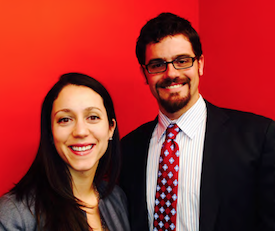
This post is by Mary Bruce and Ben Duda, co-executive directors of AmeriCorps Alums, the only national network that connects the nearly 900,000 alumni of all AmeriCorps programs to the people, ideas and resources that support their commitment to a lifetime of service.
Mary Bruce and Ben Duda
Do you know any ruthless optimists? You know, the friends who just won’t take no for an answer and instead organize the best food drive you’ve ever seen? Know any rugged idealists, who can make a fundraiser out of nothing in no time to support disaster relief efforts? It’s always more than just “something,” it’s fabulous, and the local paper features them as “everyday heroes” because they made it look so easy.
If you know folks like these, you probably know humble, hard-working AmeriCorps alums.
Today, at the White House and in all 50 states, the nation will celebrate the 20th anniversary of AmeriCorps. Since 1994, nearly 900,000 individuals have joined AmeriCorps, providing more than 1.2 billion hours of service that’s done what it was designed to do: “make our people safer, smarter, and healthier.”
AmeriCorps members don’t take the easy road. We break tradition, and our parents’ expectations, by taking a year on (it’s not a year off). We serve, even if it’s not the cool thing to do. We serve when it’s hard – probably because it’s hard.
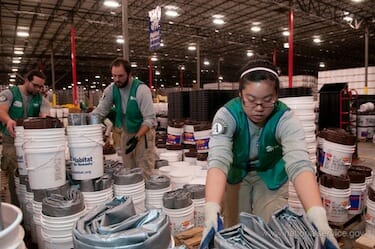
AmeriCorps members pack supplies bound for Haiti after the earthquake there.
We help kids get back on track to graduate. We organize community days of service. We set up data systems for small nonprofits. We log sweaty hours in the California back-country doing forest fire remediation and we will be among the first responders when the next tornado or hurricane strikes.
AmeriCorps members don’t stop serving when our year’s up. When we joined AmeriCorps, we promised “to get things done for America… this year and beyond.” We were made in AmeriCorps and nearly all of us still find ways to serve every day.
Kyle Kimball served with AmeriCorps in 1994 doing AIDS Outreach in Birmingham, Alabama. Now 42, he’s the president of the New York City Economic Development Corporation. Responsible for one of the largest public development entities in the country, Kyle says, “AmeriCorps was a critical training ground for me, making it possible for me to succeed in this work.”
Dayna Long also served in 1994. Her year as a peer health educator inspired her to become a pediatrician at UCSF Benioff Children’s Hospital. “I am still trying to tackle poverty and inequity in our youth,” she says, “just like I did in AmeriCorps.”
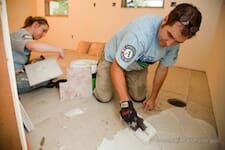
AmeriCorps members work on a Habitat for Humanity home in Milwaukee.
This week, we’re sharing some of AmeriCorps Alums’ most powerful stories because we know that while service changes lives and communities, it also catalyzes careers with impact. Like Kyle and Dayna, two-thirds of all AmeriCorps alums go on to careers in nonprofit and government roles. A health educator turned global social entrepreneur. A literacy tutor turned corporate philanthropist. A legal aid worker turned gubernatorial appointee.
AmeriCorps represents the best of America – hard work, opportunity, bipartisanship. Launched by President Clinton in 1994, AmeriCorps was expanded by President George W. Bush after 9/11. In 2009, the Serve America Act, heralded by Senators Hatch and Kennedy, called for a massive expansion of national service opportunities.
Sadly, that didn’t happen. The number of AmeriCorps positions now lags well behind goals authorized by the Serve America Act. That’s why we’re working closely with the Aspen Institute’s Franklin Project, which “envisions a future in which a year of full-time national service — a service year — is a cultural expectation [and] a common opportunity.” We’re also working to ensure that all AmeriCorps members and alums are connected with the people, ideas and resources that support their commitment to a lifetime of service.
AmeriCorps alums are the ruthless optimists and rugged idealists who serve at the highest levels of business, government and nonprofits. We vote. We serve on boards. We show up for the creek cleanup. We’ve even been known to empty the dishwasher at work and refill the coffee maker. Why? Because we’re AmeriCorps alums; we get things done.
We have an opportunity, and an obligation, to grow and strengthen national service opportunities and life beyond them. Failing to do so is a disservice not just those who want to serve and have served, but to our country, which so desperately needs more civic leaders.