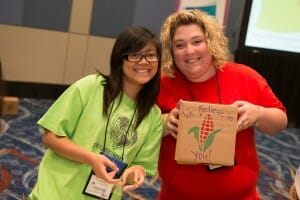
Chicago is a truly inspiring city. With its sprawling parklands, extensive public transportation and historical landmarks, Points of Light could not have selected a more dynamic and inspiring backdrop for this year’s Conference. We were amazed by the variety of public figures, members of government, community leaders and celebrities who joined in this years’ Conference to create new ideas for service, discuss challenges and work together to create solutions through the power of people. Secretary Arne Duncan highlighted the importance of convening and learning together by saying, “Everyone should be teaching and be taught at the same time.”
Our take-aways from the Conference were plentiful. We were inspired by the theme of programs vs. impact. It’s not about the number of programs you offer within your organization, it’s about how those programs impact your community and affect change. Programs are the avenue of impact for nonprofits, where passion, people, purpose, principles, preparation and planning intersect with programs for positive change. We were also drawn to the sessions revolving around education. “It is often said that the only way to fix education is to fix poverty, when actually it’s the other way around; the only way to fix poverty is to fix education,” stated Secretary Duncan during the session on How Citizen Service Strengthens Communities. We’re particularly passionate about education as we’re currently working with HandsOn Network to develop a program focused on youth leadership and service learning. The story of Laura Ling also during How Citizen Service Strengthens Communities session was all about hope. While she was being held captive in North Korea, she never gave up hope. “Get to know you enemies,” she said during her session, “You have more in common than you think.” Her words remind us to practice gratefulness and gratitude each day.
Change Notes: National Conference on Volunteering and Service Creates Turning Point
Friends,
Points of Light convened the 2012 National Conference on Volunteering and Service recently in Chicago, bringing together more than 5,000 civic leaders to gather, share stories and best practices, and be inspired to create greater impact. Our theme this year was “Turning Point” and we believe there were real moments of transformation for individual participants and for our larger service movement.
Twenty years ago, Points of Light convened its first conference in Chicago. It was a gathering of individuals, organizations and corporations that came together to spur volunteer and civic action. In the time since, we have made phenomenal progress. Today, 25 million more Americans are volunteering in their communities than when President George H. W. Bush made his call to service in 1989. We have young people volunteering at a higher rate than ever before and we have a generation of citizens equipped with new ways of creating scale and impact.
The arc of the past 20 years has been lifted ever upward through critical leadership at pivotal moments from ordinary American looking to create healthier, stronger communities and address the challenges they faced. These moments are not just individual successes; they are turning points for the entire service movement.
I believe three critical turning points have brought us to this moment and will shape our future. Here are just a few of the examples of change agents that are driving these turning points.
First, we must look at the impact of service. In 2003, Audrey Suker started the Minnesota Reading Corps with 250 children. Today, the Corps engages 1,000 AmeriCorps members to serve 20,000 children, 80 percent of who achieve more than a year’s worth of progress, dramatically exceeding state and national averages. More importantly, these kids are dramatically improving their chances of succeeding in school and in life.
The Corps’ work in Minnesota schools is just one of hundreds of examples of ways we have learned to demonstrate measurable progress against seemingly intractable social problems.
I see impact all over the work of civic innovators like Jennifer Pahlka at Code for America and Ben Rigby at Sparked, who have created organizations that are harnessing the expertise of citizens. Jennifer has created what she calls a Peace Corps for Geeks that is changing how cities work through technology and public service. Sparked is creating opportunities for people, through micro-assignments, to apply their gifts to nonprofit needs.
Leaders like Jean Case and Senator Mark Warner are taking these efforts to the next level with the creation of a pro bono marketplace. Re-launched this past fall within Points of Light and with the support of Deloitte, A Billion + Change has generated commitments from 208 companies for more than $1.8 billion dollars in pro bono services to the nonprofit sector.
We’ve turned a second corner with our work on citizen-centered solutions. We’re putting people at the center of change, meeting people where they are, embracing each person’s unique talents and passions.
In the aftermath of the Haiti earthquake, Jake Wood realized that the skills he cultivated as a soldier on the battlefield – emergency medicine, risk assessment, and teamwork – would be invaluable in the face of natural disasters. Since then, his Team Rubicon has mobilized veterans in the aftermath of disasters from Texas to Mozambique.
Jake is putting veterans at the center of change. He is demonstrating the alignment between community service and military service. He is creating a united front of citizens who stand ready to safeguard and support our nation.
Leaders like Lester Strong with AARP Experience Corps and Maya Enista Smith of Mobilize are putting new generations at the center of change – both baby boomers, who are using their experience in encore careers devoted to service, and millennials, who are acting with an unprecedented scale and nimbleness. They are discovering new ways of activating the idealism and experience of our citizens over a lifetime.
The third turning point is all about innovation and service going global. We are accomplishing things we couldn’t have imagined just a few years ago.
When Sargent Shriver and Harris Wofford started the Peace Corps, they believed it would be truly serious when 100,000 members served around the world. Today our government supports just 9,000 Peace Corps members, but through innovation and multi-sector collaboration, we have a tapestry of business, nonprofit and governmental organizations that are activating more than a million volunteers internationally each year.
Corporate leaders like Diane Melley have spearheaded the creation of IBM’s Corporate Service Corps, which sends teams of employees around the world on long-term assignments to create social enterprises and economic development projects. Social entrepreneurs like Scott Beale have created an inverse Peace Corps where global innovators spend a year helping U.S.-based nonprofits.
Our service boundaries are no longer circumscribed by nation or exclusive to the nonprofit sector, but are limited only by our imagination to act on a global stage across all sectors.
The Conference gave the service sector the opportunity to come together. To join forces to tell our story – the story of how we the people can solve the problems of our time.
If you were able to join us in Chicago, I hope you left feeling energized and empowered. If not, I encourage you to visit the Conference website and watch some of the sessions available on video – they are truly inspiring. An extraordinary cross-section of leaders joined together – from the opening plenary with Chicago Mayor Rahm Emanuel, Dr. Jill Biden, Barbara Bush, Kevin Bacon and J.R. Martinez, to Target’s education-focused plenary with Secretary of Education Arne Duncan, to the closing plenary that brought the audience to its feet with inspiration and a closing ritual to reimagine our citizenship.
Conference attendees also left their mark on the city of Chicago through Seeds for Change, which built three new community gardens in areas considered “food deserts” and assembled 500 “Seeds of Change: Community Garden Kits” containing seed packets, seedlings, implementation guides, service learning materials and gardening supplies that went to schools throughout the city.
All this was made possible through the generous support of presenting sponsors Chase and Target, leadership sponsor University of Phoenix, platinum sponsors ITT Exelis and Toyota and more than a dozen other corporate partners.
By embracing our turning point we can achieve the promise staked at the Conference – share, celebrate, learn, strategize and challenge each other to move our service work forward, to be more purposeful, more focused, more coordinated and more creative.
We can do this – for ourselves, for all those in need, for our nation and our world – if we do it together. We look forward to coming together next year in Washington, D.C., June 19-22.
In service,
Michelle Nunn
CEO, Points of Light
Momentous 2012 Conference and 2013 Location Revealed
More than 5,000 leaders from the service sector came together to create new ideas for service, discuss challenges and work together to create solutions through the power of people during the 2012 National Conference on Volunteering and Service. Thank you to everyone who joined us in Chicago!
In case you missed it, please see the following highlights and resources available to all.
Conference attendees were tweeting up a storm; we were even trending in Chicago. Take a look at the top tweets and twitpics.
To download or print materials from session presenters, log into your registration record. If the sessions you’ve registered for have materials for downloading, you’ll see a link the top of your record that says “New Content is available. Session handouts are available for download.”
If you didn’t register for Conference, or are looking for materials from sessions that you weren’t registered for, go to our session locator system and search for individual sessions. Click on “session details” and there will be a link to download if presenters have made materials available.
Building on the turning point created in Chicago, we announced the 2013 Conference will be held in Washington, D.C., at the Walter E. Washington Convention Center. At a time when so much divides us, service is common ground. It is a uniting force that can pull us together in common cause and in pursuit of the ideals upon which this nation was founded and toward which citizens continue to strive.
The Conference on Volunteering and Service is on point with the evolving civic landscape. There is no better time to bring together the brightest and most cutting-edge entrepreneurs for social change. Make plans to join us in June, 2013.
My Turning Point Was Hockey
Brian Leftwich is the Senior Manager of NICE for HandsOn Network. He is also a CrossFit coach, heirloom gardener, Colorado State Muay Thai champion and he loves the smell of sawdust in the morning.
I grew up in a small Canadian suburb called North Dakota. Like most kids my age I fell in love with the game of hockey. Every year, for the first six years of my budding sports career, I looked not to the stands to find my father, but to the bench, where he stood as coach. You may be thinking, “Big deal Brian, lots of dads volunteer to coach their sons.” True, but the odd thing about my dad is he never played a second of hockey in his life. My dad never learned how to skate, tape a stick or shoot a puck. He grew up on a farm literally just outside of Canada, and was one of four students in his senior class. Everything he knew about hockey was what he read in books and learned from watching the game. Still he was there for me every season, coaching, teaching and inspiring kids. His motto: “Every kid deserves a chance to play because win or lose, I am proud of you for playing.” My dad did not coach to create successful athletes; he wanted to create successful young men.
My dad’s passion for volunteering did not stop at hockey and he would often bring the whole family with him to service projects. Whether it was manning a booth at a free carnival, building a playground with the Optimist Club, delivering Thanksgiving meals, coaching Special Olympics or wrapping presents at the mall, service was woven into the fabric of my family. It mattered very little what the project was, if we had the right skills, or the necessary experience. We showed up, smiled and got to work.
When I left home to attend college, I realized what a profound lesson my father had taught me about service as I began my own personal journey of volunteering.
I realized that:
I will never know what it is like to grow up without a father, but I can be your friend when high school becomes overwhelming.
I will never know what it is like to be 67 and lose everything to Hurricane Katrina, but I can show up afterwards and help you build your first home.
I will never know what it is like to spend your entire childhood in a garbage dump outside of Juarez Mexico, but I can be your Caballito for an impromptu game of fútbol.
I will never know what it is like to walk six miles to school over a mountain pass in Nepal, but I can make you smile by pantomiming animals and being your jungle gym.
I will never know what it is like to grow up in Haiti, lose your entire family and use of your leg to a devastating earthquake, but I can wipe the tears from you eyes when physical therapy hurts too much.
My turning point was when I discovered that I will never have all the answers, skills and experience to be a perfect volunteer, but I can have the heart to show up and do what I can, with what I have, to be a turning point for someone else.
A Twitter Recap on the National Conference on Volunteering and Service
Inspiration I Took Away From the National Conference on Volunteering and Service
Today’s post is written by Chelsea Murphy, Communications Coordinator at Points of Light.
We are back from Chicago with a renewed and revitalized outlook on volunteering. This year’s conference was inspiring and thought-provoking and has left me with new ideas for making lasting change and positive measurable impact in our communities.
I continue to relive all the amazing information I’ve heard these past couple of days over and over again in my mind. I can’t wait to do it again in a year in D.C.
Below I’ve compiled some uplifting and inspirational quotes from our speakers over the past 3 days – Please share your favorite quote or “AHA” moment you walked away with from this year’s National Conference on Volunteering and Service in our comments.
“No matter your background, your platform, your economic status, everyone can pitch in to make our world better.” –Israel Donijie
“When we volunteer & serve, we become healthier, happier, & more purposeful.” –Eric Liu
“You must be able to see worlds that have not yet been created as if they have already been created.” –Rev. Otis Moss, III
“All people want is an opportunity” – J.R. Martinez
“Service is center and indispensable to tackle the challenges that we face.” –Wendy Spencer
“Programs where neighbors are helping neighbors are the essence of the American spirit” –Barbara Bush
“One of the key successes to finding fulfillment in life is giving to others without expecting anything in return” –Pierce Bush
“We’re all better off when we’re all better off” –Eric Liu
“People of common ground can make huge change if we put the dignity of our youth above all else” –Alberto Carvalho
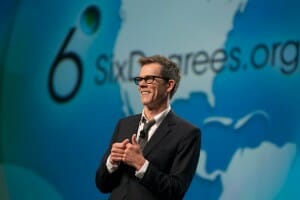
“The actions we take affect our neighbors down the block and on the other side of the world. We are all connected.” –Kevin Bacon
“Serve. Serve. Serve. For in the end it will be the Servants who save us all.” –Mark Shriver
As a national multi-sector coalition dedicated to increasing social impact through effective volunteer engagement, Reimagining Service continues to focus its efforts on increasing the adoption of effective practices, gathering new insights via research and encouraging funding investment to effectively leverage volunteer talent to address true community needs.
We continue to develop our nonprofit service enterprise model. Research conducted by the TCC Group demonstrates that organizations that strategically leverage volunteers outperform peer organizations on all measures of organizational capacity and have greater impact.
These organizations, known as service enterprises, often deliver these results with fewer financial resources than peer organizations. In fact, a $1 investment in volunteer capacity can deliver up to $6 in return.
Service enterprises fundamentally leverage volunteers and their skills to successfully deliver on the social mission of the organization. Such organizations employ strong volunteer management practices that enable them to provide significantly more services with fewer monetary resources, thereby enabling them to accomplish their mission and strategic objectives and have greater impact in their community.
And yet, despite this compelling data, less than 15 percent of nonprofits nationwide demonstrate the characteristics of a nonprofit service enterprise.
As a result, we continue to build resources to help nonprofit organizations who are interested in becoming a service enterprise think about this work. Our nonprofit service enterprise quiz provides a simple set of questions that helps organizations think about their existing volunteer engagement practices and directs them to research and other tools and resources to begin the journey of becoming a service enterprise.
Further, we are excited to be partnering with CaliforniaVolunteers and Points of Light to develop and deliver nonprofit service enterprise training. Leadership and funding for this initiative is provided by CaliforniaVolunteers, via a Volunteer Generation Fund grant from the Corporation for National and Community Service. We believe this initiative will be groundbreaking – a pilot group of HandsOn Network affiliates in California will provide assessment, training and additional supportive services to assist nonprofit organizations in their regions become service enterprises. Learnings from the roll out of this initiative this fall will be leveraged for a national roll out in 2013.
Our nonprofit research efforts will continue to document the value that effectively engaged volunteers provide to a nonprofit organization. As we move forward, we’ll be able to identify pathways that organizations can take to maximize the value of volunteers serving with their organizations.
As a multi-sector coalition, we recognize the importance of cross-sector collaboration. We continue to encourage businesses to consider how the alignment of their employee engagement and giving practices can multiply impact in the community. Examples of this work continue to increase and we have recently launched our Reimagining Service Endorsement Process as a way to highlight initiatives that focus on effective corporate practices. Our first set of endorsements include: A Billion + Change, Civic 100, True Impact’s Volunteer ROI Tracker and the Taproot Foundation’s Powered by Pro Bono initiative.
And finally, we continue to believe that increased investment in this work is critical to ensure its success. As a result, we are encouraging the funding community to view investment in volunteer infrastructure (a key to effective volunteer engagement) not as a program investment, but as a cost-effective strategy to increase the impact of initiatives they already invest in.
We are excited about the progress that we are making, and invite you to join us in our work by signing on in support of the Reimagining Service principles and sharing our work with those you partner with.
Action Heroes Needed
Photo from the 2012 National Conference on Volunteering and Service Youth Summit
Join forces to do good this summer. Your community needs you.
This summer, generationOn is mobilizing kids, teens and parents to pledge to make service a priority in one of the following areas: animals, environment, homelessness, hunger, literacy, health, military and disaster preparation. Participants will be provided with project ideas and instructions, but will also be encouraged to use their imaginations and creativity to come up with a project entirely their own.
We look forward to stories, photos and videos of the positive change being created across the country from our nation’s youth. Register with generationOn for updates on this exciting campaign launching June 25.
Civic Accelerator Celebrates Partnership
More than 150 social entrepreneurs, impact investors and community partners came together as part of a Community Innovation Breakfast on June 19, hosted by Starbucks, to celebrate a new strategic partnership and the call to action for supporters of the Civic Accelerator, a new Points of Light and Village Capital venture.
Leadership from partner and investor Starbucks was on hand to share the news and provided a challenge for other funders to step up to match their extraordinary gift.
The Civic Accelerator is the first national startup accelerator focused on civic ventures – for-profit and nonprofit ventures that create social good and inspire, equip and mobilize individuals as part of the solution. The 12-week program will apply tools from for-profit accelerators to build an ecosystem of social entrepreneurs, impact investors and stakeholders to increase the likelihood of success for civic ventures and create real change in our communities. Social entrepreneurs accepted into this competitive program will benefit from mentoring, entrepreneur education, peer support and networking in addition to investments made across the cohort and larger seed investments for two of the most promising solutions selected by the entrepreneurs themselves.
The team shared plans to identify other partners and funders over the summer months to prepare to launch an initial cohort of 10 teams from around the country by the end of the year.
Join Points of Light’s Corporate Institute
Now, more than ever, businesses and corporations are embracing service programs, lending their most valuable assets – the time, talent, skills and enthusiasm of their employees – to help the nonprofit sector make a difference in their communities. Yet even as many companies expand their community engagement, many don’t have the tools necessary to formalize a program.
Last fall, Points of Light brought its business-oriented services under one roof and launched the Corporate Institute as the go-to destination for companies of all sizes that want to engage their employees and customers in service to their communities.
The Corporate Institute offers a range of services to provide companies with tailored help to develop and implement innovative programming in their communities. Services involve training and consulting, mobilizing employees and customers to serve in the community, managing projects, developing recognition opportunities, technology portals and evaluating results.
The Corporate Institute also manages nationally recognized platforms and key initiatives with partners to advance services opportunities:
Center for Employee Volunteerism (formerly the Business Membership Program): the premier membership program for employee volunteer management professionals
Corporate Service Council (CSC): comprised of leaders from the nation’s largest and most successful companies committed to increasing civic impact through volunteers
The Civic 100: partnership with the National Conference on Citizenship and Bloomberg News, a nationwide survey to rank and recognize corporations that demonstrate leadership and investment in civic engagement
A Billion + Change: national campaign to mobilize billions of dollars of skills-based volunteer services from corporate America
For more information, come to the many business track offerings here in Chicago, or contact us at 404-979-2900 or [email protected].




 Today’s post is written by Linda Davis, chief executive officer of the Center for Volunteer and Nonprofit Leadership.
 Our take-aways from the Conference were plentiful. We were inspired by the theme of programs vs. impact. It’s not about the number of programs you offer within your organization, it’s about how those programs impact your community and affect change. Programs are the avenue of impact for nonprofits, where passion, people, purpose, principles, preparation and planning intersect with programs for positive change. We were also drawn to the sessions revolving around education. “It is often said that the only way to fix education is to fix poverty, when actually it’s the other way around; the only way to fix poverty is to fix education,” stated Secretary Duncan during the session on How Citizen Service Strengthens Communities. We’re particularly passionate about education as we’re currently working with HandsOn Network to develop a program focused on youth leadership and service learning. The story of Laura Ling also during How Citizen Service Strengthens Communities session was all about hope. While she was being held captive in North Korea, she never gave up hope. “Get to know you enemies,” she said during her session, “You have more in common than you think.” Her words remind us to practice gratefulness and gratitude each day.
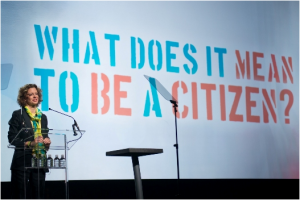 Twenty years ago, Points of Light convened its first conference in Chicago. It was a gathering of individuals, organizations and corporations that came together to spur volunteer and civic action. In the time since, we have made phenomenal progress. Today, 25 million more Americans are volunteering in their communities than when President George H. W. Bush made his call to service in 1989. We have young people volunteering at a higher rate than ever before and we have a generation of citizens equipped with new ways of creating scale and impact.
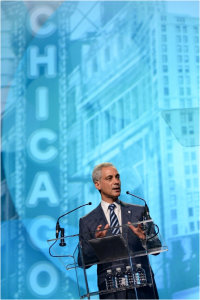 I see impact all over the work of civic innovators like Jennifer Pahlka at
 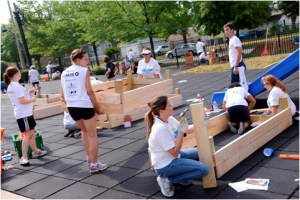 Conference attendees also left their mark on the city of Chicago through Seeds for Change, which built three new community gardens in areas considered “food deserts” and assembled 500 “Seeds of Change: Community Garden Kits” containing seed packets, seedlings, implementation guides, service learning materials and gardening supplies that went to schools throughout the city.

 Building on the turning point created in Chicago, we announced the 2013 Conference will be held in Washington, D.C., at the Walter E. Washington Convention Center. At a time when so much divides us, service is common ground. It is a uniting force that can pull us together in common cause and in pursuit of the ideals upon which this nation was founded and toward which citizens continue to strive.
The Conference on Volunteering and Service is on point with the evolving civic landscape. There is no better time to bring together the brightest and most cutting-edge entrepreneurs for social change. Make plans to join us in June, 2013.
Building on the turning point created in Chicago, we announced the 2013 Conference will be held in Washington, D.C., at the Walter E. Washington Convention Center. At a time when so much divides us, service is common ground. It is a uniting force that can pull us together in common cause and in pursuit of the ideals upon which this nation was founded and toward which citizens continue to strive.
The Conference on Volunteering and Service is on point with the evolving civic landscape. There is no better time to bring together the brightest and most cutting-edge entrepreneurs for social change. Make plans to join us in June, 2013. Brian Leftwich is the Senior Manager of NICE for HandsOn Network. He is also a CrossFit coach, heirloom gardener, Colorado State Muay Thai champion and he loves the smell of sawdust in the morning.
  Today’s post is written by Chelsea Murphy, Communications Coordinator at Points of Light.
 I continue to relive all the amazing information I’ve heard these past couple of days over and over again in my mind. I can’t wait to do it again in a year in D.C.
 As a national multi-sector coalition dedicated to increasing social impact through effective volunteer engagement,