These sessions will be great resources for both nonprofit organizations and volunteers. The Faith and Neighborhoods track will be divided into four sessions.
Check out all the sessions focused on
Faith and Neighborhoods
at this year’s Conference.
Authentic Resident Engagement: Engaging Those You Serve
Monday, June 18, 2012
Time: 1 – 2:30 p.m.
Session ID: 2649
Residents are catalysts for social change. Learn how asset-based community development and neighboring can help agencies empower the communities they serve. Learn about work in Chicago, where engaged residents are taking back their communities.
Speaker(s):
Faith-Based Community Service: Collaboration and Communication
Tuesday, June 19, 2012
Time: 8:30 – 10 a.m.
Session ID: 2511
How do you build bridges between a faith community and businesses? Or with the un-churched? United Methodist Communications will share how Rethink Church has built a successful model producing positive impact on communities around the globe.
Speaker(s):
Faith and Neighborhoods in Action: Addressing Problems with Tangible Solutions
Tuesday, June 19, 2012
Time: 2:30 – 4 p.m.
Session ID: 2758
Join the White House Office of Faith-Based and Neighborhood Partnerships and engage key administration reps to discuss forming partnerships between the federal government and faith-based and neighborhood groups to effectively serve Americans in need.
Speaker(s):
The Place for Interfaith Cooperation in Higher Education: Developing 21st Century Leaders and Fostering Global Citizenry
Wednesday, June 20, 2012
Time: 8:30 – 10 a.m.
Session ID: 2456
Effective leadership in the 21st century involves working across differences, including religious differences. Interfaith cooperation has the ability to foster global citizens. Join us in exploring ways to engage universities in interfaith cooperation.
Speaker(s):
Twitter Hashtag: #INCampusCompact
The National Conference on Volunteering and Service is just days away. Are you excited? These sessions will be great resources for both nonprofit organizations and volunteers. The Faith and Neighborhoods track will be divided into four sessions.
Check out all the sessions focused on faith and neighborhoods at this year’s Conference.
Sitting Down Led this Teen to Take a Stand
Today’s Turning Point comes from guest writer, Charlotte Bilski a senior at Horace Greeley High School in Chappaqua, N.Y. She is the co-president of her school’s community service club, SHARE and co-founder of her school’s AFYA club.
Sitting among the remnants of a house that had been destroyed by Hurricane Katrina, in Saint Bernard Parish, La., I gently ran my fingers across the worn tile floor. The jagged tiles, all different hues of red, were the only pieces of the house to remain intact. The house had been stripped of its roof, its walls, and its steps; however, an undeniable presence of its spirit remained. This house used to be a home, I thought. I could feel it.
Now trembling, I continued to run my fingers alongside the edges of the tiles. An overpowering surge of energy shook my core as a profusion of ambiguous memories, of this family’s past, flooded my mind. Like a tragic apparition, I could feel what this family had lost: everything. I started to cry. Prior to this moment in my 12-year-old life, I had never witnessed something so real and so scary. This could happen to anyone, I thought. This could happen to me. Nobody is safe from a natural disaster.
As it was unrealistic to expect everyone in my comfortable, Northeastern suburb to understand the dire need to rebuild after natural disasters, I knew that I had a big job ahead of me: to advocate for victims of natural disasters worldwide.
Fast-forward four years: I started volunteering at the AFYA Foundation. AFYA, meaning good health in Swahili, sends unused medical supplies to the clinics of lesser-developed countries. Much of AFYA’s work has been focused on helping victims of Haiti’s 2010 earthquake. By creating an AFYA club at my high school I have helped to collect hundreds of crutches, walkers, and blankets to health clinics in Haiti. Our club also sends groups of students to the AFYA warehouse in Yonkers, New York to help sort the donated supplies from the various hospitals. Recently, during our school’s midterms week, we hosted a school-wide pen drive where the pens were donated to doctors in Haitian medical clinics. During that single week, we collected approximately 1,000 pens.
Since my first humanitarian trip to Louisiana, I have returned twice to help rebuild the communities and hear the stories of the Gulf Coast. I never cease to be amazed by the extraordinary optimism possessed by people who tirelessly work to rebuild their communities and their lives. They are my constant reminder to never lose hope and never stop helping others.
There is very little in life of which we are in control. We cannot control time, we cannot control the physical world, and we cannot control the actions of others, but we can control our actions to make the world a better place than when we entered it and our outlooks on life. Thanks to the people of the Gulf Coast, I know the potential that each human being possesses to transform his or her reality.
Charlotte is also a co-chair of J-Teen Leadership, a Jewish, teen-led, community service and advocacy organization. Charlotteis a member of the 2011 PARADE All-America High School Service Team, an award recognizing outstanding young service leaders presented by Parade Magazinein partnership withgenerationOn, the global youth enterprise of Points of Light.
Economic Opportunity at National Conference on Volunteering and Service
When you attend the sessions featured in our economic opportunity track at this year’s
, you will learn how to manage your family’s finances and taxes, how to create economic opportunity for immigrants, how nonprofits can help with financial sustainability and much more. Check out some of the sessions focused on economic opportunity listed here:
In this session, participants will learn how Upwardly Global creates economic opportunity for new Americans. Volunteers help underemployed refugees and immigrants learn to navigate the U.S. professional job search while building their own cross-cultural communication skills.
What are the key components of an effective job readiness program? How can we sustain these programs while remaining true to the needs of our communities? This workshop will foster strategic skills in sustainability.
The National Endowment for Financial Education is committed to continual development of money tools and resources for volunteers, and would like to introduce the entire suite of money resources for their use and use of their clients.
Speaker(s):
For aspiring families and students, tax time is ideal to discuss making college a reality by accessing financial aid. Learn how FAFSA preparation compliments your mission of promoting financial security for all.
Speaker(s):
Explore D2D’s award-winning online video games that teach financial concepts. Learn how to use the games as a volunteer training resource and as a tool for volunteers to use with the community to teach hard-to-reach audiences.
The Van Buren Intermediate School District has been recognized locally and nationally for their innovative tax and service learning programs. Learn how the VBISD is using intergenerational partnerships and technology to transform their community.
Speaker(s):
Nonprofits, governments, foundations and companies want to serve their communities.
social innovators have new ways to help people channel creativity for economic and social good. Join Chase to see how economic empowerment runs across sectors and how a shared vision can be an economic driver.
Speaker(s):
for the National Conference on Volunteering and Service now to learn from the best.
Chicago Eats on a Conference Budget
Today’s post comes from Michael Nealis, Interactive Strategy Coordinator at Points of Light.
I love going to conferences. It’s a great experience meeting my peers, learning from them, and sharing what I know with them. One of the hardest things for me, though, is finding out where to eat in a town I’ve never been to and don’t know what’s good and what should be avoided.
Thankfully, there’s a lot of great ways to find out what’s good in a city you’re going to. So, how do you find out what’s good in Chicago?
is a local deal program that’s active across the country. I’ve used them to find places to eat in L.A., Atlanta and Washington, D.C. It’s especially useful because their mobile app tells you what deals are local to your location, so you don’t have to go too far out of your way to find a great deal on a place to eat. Check out
for iPhone, Android or Blackberry!
You’ve probably heard of
Groupon,
but have you used them for when you’re going to a new city? It’s a great way to save a few bucks on a meal. The Groupon mobile app lets you know what deals are near you, too! Buying the groupon through the app is easy and the app helps you manage the groupons you’ve managed. No more printing out the groupon and losing it.
can be great for helping you to find a restaurant nearby with the type of food you’re looking for and the price range you’re looking for. I’m a big fan of the Monocle, you really need to check it out!
If you’re looking for some great restaurant reviews, check out
. It’s a great place to discover some Chicago restaurants; both mainstream and off the beaten path. And if the reviews aren’t enough to get you interested in trying out a meal, the pictures are awesome.
about some of the city’s food trucks, and reach out to them on Facebook and Twitter, they might just swing by McCormick place and share something tasty!
My Turning Point Happened After Visiting Homeless Shelters
Today’s Turning Point comes from guest writer, Nicholas Lowinger, 14, a 2011 Hasbro Community Action Hero, an award recognizing outstanding young service leaders presented by Hasbro in partnership with generationOn, the global youth service division of Points of Light.
“I’m sorry, honey. You can’t go to school today. It’s your brother’s turn to wear the sneakers and we don’t have another pair for you.”
It is unfathomable that this quote could come from someone in the United States. In fact, it is from a mother whose family was staying at a homeless shelter in Rhode Island, after losing their own home. The ongoing economic downturn and mortgage crisis across the country has forced many families to seek shelter assistance. Often, they arrive with nothing but the clothes on their backs. Most have lost everything while attempting to save their homes.
My first turning point came when I was 5 years old when I started visiting homeless shelters. I met children who laughed and played like I did but didn’t have shoes, or had shoes that were falling apart. Sharing footwear with a family member was common and some children couldn’t go to school because it wasn’t their turn to wear the shoes that day. There I was wearing my new light-up sneakers, feeling horrible that I had them when these kids had nothing. I desperately wanted to help.
Because I was so young, the only thing I could do at the time was to donate my gently used footwear, which I did for several years. I knew this helped some of the kids, but it didn’t help all of them. I was frustrated that I didn’t have enough shoes for all of the children and hoped that someday I could provide homeless children with the properly sized shoes that they deserved.
Seven years after I realized that I could not stand by without helping homeless children in my community, I had a second transformative experience. I was turning 12 and I needed to identify a community service project for my Bar Mitzvah. I still remember my eyes lighting up when I told my parents that I wanted to fulfill my dream of donating brand-new footwear to children in homeless shelters! I had learned about nonprofits and wanted to start one of my own so that I could keep it going after my Bar Mitzvah was over. I drew a logo, and named the organization, Gotta Have Sole Foundation, Inc., which is now a 501(c)(3) public charity.
My Bar Mitzvah was in 2010 and I continue this important program today and plan to do so throughout my lifetime. To date, I have donated new footwear to almost 2,000 children in homeless shelters across the United States. Children need proper footwear to go to school, to be able to play sports and to participate in social activities with their peers. My goal is to make sure all children, living in homeless shelters in the United States, have the footwear they need so that they can have the same opportunities as other kids. I also hope that by providing children with new footwear, that it will give parents one less thing to worry about so they can concentrate on finding a home instead.
A storm of biblical proportions wiped so much off of the map. We watched TV in disbelief. Our country – the United States of America – no longer looked like an international leader of the free world. Hurricane Katrina left us dumbfounded. City after city up and down the Gulf of Mexico looked like a developing country in a war zone. The sick, the poor and the elderly were left behind. We watched one young girl go into diabetic shock on live television, while a relative screamed out, begging in vain for a shot of insulin. We were outraged. Incredulous. TV viewers across America were yelling, “Why isn’t the government doing anything?” On the third day, as people lay dying in the streets, one young woman looked into the camera crying, “Forget about FEMA and the National Guard, WHERE IS OUR CONVOY OF CONCERNED CITIZENS?!” She was talking to me. She was talking to all of us. That was my turning point.
Thousands of miles away in a small town called Waukee, Iowa, I logged onto the Internet. I was going to find a way to help somehow. There were countless message boards offering help and asking for help. In those early days, there were even terrifying messages purporting to be sent from Blackberries and cell phones of people trapped on the top floor of their house or building, still awaiting rescue. Some were real, some were later deemed to be a hoax. I found myself drowning in a sea of need. I heard people sobbing on the television, as I Googled shelters in the area to find out what I could do to help. It was overwhelming. There were thousands, if not millions, of people flooding the Internet, wanting to help, but getting frustrated. Not knowing if they’re going to get taken by a con artist, or if the need had already been met. It was a mess.
Inspiration struck. I decided to rally kids to the rescue. I put up a website to rally our youth across the country to trick-or-treat for hurricane relief. Two weeks later, I read in our newspaper that a 10-year-old girl named Talia Leman had the same idea. Her goal was to get enough kids to join in this effort that together they could raise $1 million for hurricane relief charities. I called her up and quickly Talia, her mom Dana and I joined forces.
I showed up at their house with a map, push pins, Halloween decorations and chocolate. Talia dubbed her parent’s office “T.L.C. Headquarters.” T.L.C. stood for “Trick or Treat for the Levee Catastrophe,” and sometimes it stood for “Trick or Treat for Loose Change.” When you’re a kid, you can do that. You can just change the meaning of an acronym to suit your whim. The children I began working with inspired me. One group of kids found the words “I Can” inside the word hurricane. I held those words deep in my heart as I plunged forward into helping kids rebuild the gulf.
Bringing messages of hope and gifts of comfort from children in Iowa to children in the shelters so soon after the disaster fueled my passion, and indeed the nations’, to help Talia reach her goal working with kids across the U.S. to raise $1 million for hurricane relief. After the nation’s army of children dressed in costume fanned out across the country on one special night, everyone wanted to know how much they had raised. Talia, her mom Dana and I struggled with this one. The truth is, the number was growing daily, and it wasn’t just from trick-or-treating. There were as many creative ideas on how to help as there were compassionate kids. One boy sold his 4-H sheep and gave the money to the Red Cross. One school raised more than $1,500 in loose change in their “Drops in a Bucket” campaign. Kids in Hawaii sold Mardi Gras beads. Some gave to Habitat for Humanity, others to a specific school. They gave where their hearts led them. We couldn’t just announce a number, implying that it was over. These kids weren’t finished.
On Dec. 1, 2005, a kid and two moms held a national conference call with representative kids across the nation. Each child had an opportunity to share their story: How they helped, how much they raised and who they chose to benefit from their work. It was time to tally the collective power of kids. We had a blank check, and filled it in backwards, from the cents to the dollars, because these kids worked so hard for every coin.
Talia’s mom Dana asked Tracy, the accountant, for the first number.
“Eight! That’s someone’s nickel and someone’s three pennies!” Dana cheered as she wrote it up on the board. Then it was 88 cents. Then $5 and 88 cents. We got up to the $200,000 plus mark, and Dana asked if there was a “one” in the million dollar slot.
“No,” said Tracy.
“Two million?”
“No”
“Is it three?”
“No.” At that point, everyone started screaming and cheering in amazement. Nobody thought it would go this high. Only later did Talia admit to us that she was very worried. She thought that maybe we didn’t even make it to one million, and that this would get mighty embarrassing if we keep trying to go up when there’s nothing there.
“FOUR MILLION?!!”
“No.”
“FIVE MILLION DOLLARS?!!”
“Yes!”
In just two-and-a-half months, kids from more than 4,000 school districts across the U.S. collected $5,234,735.88 for hurricane relief. And then we made our announcement. Reports of kids helping were still coming in. These kids inspired the creation of RandomKid (www.randomkid.org), a nonprofit that helps kids help others. We believe any random kid has the power to solve real world problems, and we help kids do just that. Talia, age 10, was our new CEO. We were going to carry the tally forward, and continue to count the power of children. A year after Katrina, kids collected more than $10 million. ABC News reported that these kids ranked with the giving power of the top U.S. corporations that gave to hurricane relief. Coca-Cola, Wal-Mart, Exxon and… children!
A friend of mine saw a picture of me with teenage hurricane survivors a year after Katrina and jokingly asked what age-defying regimen I was using – because at first he thought I was one of the kids. Nearing the 40-year threshold, my regimen was re-learning how to approach problems with the faith of a child. Kids don’t have the foresight for potential obstacles. They plow forward with unbridled enthusiasm. If something gets in their way, they just go another way because they’re having fun and in this case, they’re doing something important. Each day I help a child help others, I am recharged with their energy and optimism.
I ultimately shut down my successful recruiting business so that I could devote my time to getting RandomKid off the ground. RandomKid has now worked with more than 12 million youth across 20 countries bringing aid to four continents. My new full-time job is that of a youth minister guiding young people to put their faith into action. I have learned from children, but even more than that, I have internalized their spirit – and with that, the “IM” from “impossible” has just fallen away.
Katrina destroyed much of the Gulf Coast, all but drowning the spirit of a nation, but America’s children, who know no boundaries, proved that hope actually… floats.
When Anne’s not daydreaming with kids on how to make the world a better place, she’s working on her book, “Anonymous Daughter”, about her 8-year anonymous correspondance with her alcoholic birth father in prison for bank robbery; finding beauty in the ugliness.
An Earthquake, Thousands of Miles Away, Shook Me to My Core
Today’s guest post is written by Sharon Li, a freshman at Glenda Dawson High School in Pearland, Texas. She is the co-founder of We Care Act, which helps school children recover from disasters and engages youth around the world to help others in need. Sharon has been a strong supporter of generationOn, the youth service enterprise of Points of Light, since 2011.
When I was younger, I thought that everything that happened was under my parents’ control. If not my mom or dad’s then the President, someone had to be giving orders somewhere or somehow. May 12, 2008 was when I realized that there are some things that aren’t in anyone’s power to stop.
I was only nine, when the Sichuan Earthquake hit China. Up until that moment, I had existed inside a world where the only things I wanted were batteries for my ever-dying Tamagotchi or new clothes for my Polly Pockets. I had yet to grasp the meaning of maturity and hard work. But after another uneventful day at school, I was surprised to see my mother waiting for me by the television. When she called my sister, brother, and I over and requested that we watch, I happily obliged until I realized it was the news channel, at which I desperately tried to pull away, but ended up reluctantly agreeing after a stern look from my mother.
Bits and pieces of information flew across the screen faster than I could take them in:
8.0 magnitude earthquake…lasted about 2.5 minutes…300,000 casualties and counting …epicenter 80 kilometers west-northwest of Chengdu, the capital of Sichuan. That was the day my little bubble of security popped and I stopped believing that my parents were the creators of the universe. Clearly, this disaster was something that no one could stop.
Later that day, my siblings and I were sitting on the hard-tiled floor of our living room and hastily gluing construction paper on tissue boxes. Bright colored words scrawled across the paper reading “Sichuan Earthquake Fund.” The following morning we crowded around the computers and made a quick newsletter called “Earthquake Act.” At the time, it was something very temporary. It was funds that we would collect for a week or two, then ship off to some big organization, then stop and resume our normal lives. Nothing permanent.
Our neatly printed newsletter was filled with interesting tidbits and we took copies, along with the tissue-box donation collector boxes, and began walking around the neighborhood, ringing doorbells, in the sweltering Texas heat. Some were very generous and kind, asking questions and telling us we had their support, others wouldn’t even open the door, but instead talk to us through glass of the window with little attention.
All in all, the final amount was astounding – $84.26 in two hours, and it was only the first day! My small 9-year-old self was ecstatic, and couldn’t wait for another round. In a couple months’ time the number of donations blossomed to $4,500 and kept climbing! By then, however, I realized that I had been wrong. This project was no longer temporary. It had become a way of life, something I would like to hold on to forever, not start and stop then forget about. My brother and sister realized it too, and my mother and the rest of us sat down to brainstorm. We ended up forming a 501(c)3 nonprofit organization called We Care Act, official legal papers and a stamp to prove it. Engaging about 23,000 kids from 17 different countries in community services, recruiting more than 100 others and aiding them in their own projects, helping more than 14,000 victims recover from six natural disasters and ending with a little more than $70,000.
But those are just numbers. That day in the sun, going from door to door and totally oblivious of how the next couple of hours would provide a turning point for the rest of my life. That day was a time that let me see the worst in nature, but best in humanity.
We Can’t Predict the Future, but We Can Plan for It!
Today’s guest post is written by Susan Danish, Executive Director of the Association of Junior Leagues International, Inc and speaker at our National Conference of Volunteering and Service in Chicago.
Are you ready for the year 2031?
We’re just getting used to what 2012 is serving up and 2031 is five presidential cycles away, with more ups and downs inevitably occurring in the economy and with who knows what shifts coming in consumer behavior, technology and popular culture.
So you’re allowed to say “No…I have no idea what’s going to happen in 2031!”
But, as a leader of a nonprofit organization, you do need to think about the question. What problems will your organization face in 2031? How will they challenge your mission? And will it even be the same mission?
Is 2031 too far away to worry about? How about 2015? Or 2018? Moving the timeline forward leaves us with the same issue – it’s hard to plan for what hasn’t happened yet.
Enter
, a tool for planning for the future by understanding the impact of larger trends like demographic, economic, cultural that are driving change in our world today.
Sound too complex? Just think of it as storytelling. Humans have been telling each other stories for thousands of years. Children’s stories are often compelling precisely because they are based on uncertainty, change and often danger. The reader is presented with a dilemma, the reader learns to think about how they would deal with that dilemma and a “solution” to the dilemma is realized. My favorite ending is:
“And they all lived happily ever after!”
Scenario planning is a great tool for nonprofits, and one that
has used successfully (at least, so far) as we plan for a future that will inevitably be very different from our organization’s first 111 years. And while it doesn’t replace the development of a strategic plan, it’s a useful first step and a valuable check and balance to your strategic planning process.
By thinking about multiple futures, scenario planning is a useful technique when your organization is:
Dealing with a strategic issue and the solution is unclear
Doing work that is interdependent on multiple organizations inside and outside the nonprofit sector
Addressing interdependent and complex issues
Recognizing the importance of external trends
Looking to address diverse points of view and needs
Dealing with complex stakeholder relationships
Because The Junior League, with its more than 155,000 members, is a volunteer-driven organization, our scenario planning involved four “stories.”
“It’s a Wonderful Life” – renewal; a world in which the prevailing mindset is “our community’s wellbeing is up to us.”
“Fusion 2027” – global change; a world in which the prevailing mindset is “our world’s survival is up to us.”
“Home Alone” – survival; a world in which the prevailing mindset is “my survival is up to me.”
“1CLK4U” – complacency; a world in which the prevailing mindset is “our well-being is up to someone else.”
We prefer the first two scenarios, but need to prepare for the others just the same.
Susan Danish will speak at (2427) How Scenario Planning Can Help Prepare for the Future in a Changing World. Association of Junior Leagues International, Inc. is the 91-year old umbrella organization for the 293 Junior Leagues in four countries whose Mission is to promote voluntarism, develop the potential of women and improve communities through the effective action and leadership of trained volunteers.
My Turning Point Happened After Being Diagnosed With Breast Cancer
Today’s story is written by Johnna Switzer, retired RN and Nursing Instructor at Mesa Community College.
Service to others has always been a part of my life, from collecting toys and food boxes in Girl Scouts to being a member of the honorary women’s service organization at the college I attended. I have participated on boards and in doing service projects as an adult but after my “turning point” I have stepped up my efforts.
The “turning point” in my life in regards to volunteering, probably came after I was diagnosed with breast cancer. That journey really gave me a time to pause and look back at my life reflecting on how fortunate I have been and all that had been given to me by my family, friends and community through opportunities and a strong education. It was then that I truly realized how important it is to give back and, in small ways, help others receive the same open doors and windows that I have received. I think many times we are given challenges in order to more fully open our eyes and look within ourselves as well as looking at the world from a different perspective. Service is to care.
In Johnna’s spare time she enjoys reading,crafting and volunteering with the House of Refuge Board of Directors as the board liaison to the staff and residents, and volunteering with the Gilbert Fire Department providing program support and as a member of their Community Emergency Response Team (CERT).
The Power of Volunteerism
Today’s guest post is written by Betty Stallings, speaker at our National Conference of Volunteering and Service in Chicago. Betty Stallings, MSW,is a highly regarded international trainer, keynote speaker, consultant and author specializing in volunteer management, fundraising, leadership and board development.
In the mid-1970s, I was looking for a significant volunteer position while at home raising my two small children. That futile effort led me to establish “The Volunteer Connection” so that community members could easily find volunteer opportunities and organizations could enhance their mission through volunteer engagement. I had no idea there were a number of “Volunteer Bureaus” across the country at that time. With a big vision, lots of energy and very few resources I engaged some volunteers who, together with me, started the Valley Volunteer Center in Pleasanton, Calif.
At its peak it had a staff of 13, and hundreds of volunteers serving its mission. We established a corporate council (early 80s), a “Borrow an Expert” program (now would be a skills-bank or pro bono program) and internship programs for re-entry women and high risk youth. We also did research on the “new volunteer”(of the 80s) and published a book entitled, “At the Heart.”
During my 14 years of experience as executive director of this creative platform in our community, I eventually connected with Volunteer: The National Center which was followed by Points of Light and then the merger with Hands On Network. I believe this is my 30th year attending the National Conference on Volunteering and Service. Initially, I focused on learning everything I could from the fabulous trainers and practitioners in attendance and then for 25 years I served as a trainer myself and had the opportunity to share all that I have experienced and learned over the years about the POWER of volunteerism. What a journey this has been.
I am just as excited to be a part of this year’s Conference as I was the first year I attended. I look forward to seeing many friends and colleagues at the
Stallings teaches at universities, provides training for state, national and international conferences and consults with many non-profit organizations, public programs, hospitals and foundations. Participants in her audiences and seminars note her vitality, inspiring message, engaging humor, practical presentations and valuable resources. Her website is www.bettystallings.com where she gives out free training resources and carries some of the best books and resources supporting volunteerism and fund development





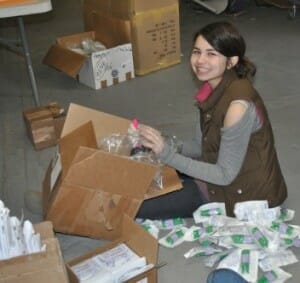 Today’s Turning Point comes from guest writer, Charlotte Bilski a senior at Horace Greeley High School in Chappaqua, N.Y. She is the co-president of her school’s community service club, SHARE and co-founder of her school’s AFYA club.
 Today’s post comes from Michael Nealis, Interactive Strategy Coordinator at
 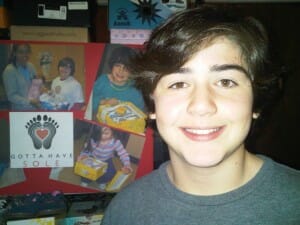 Today’s Turning Point comes from guest writer, Nicholas Lowinger, 14, a 2011 Hasbro Community Action Hero, an award recognizing outstanding young service leaders presented by
  Today’s turning point story is written by Anne Royse Ginther, a founder of
 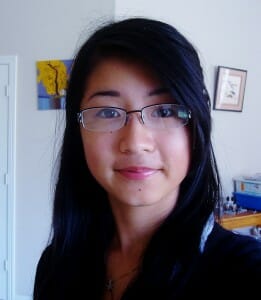 Today’s guest post is written by Sharon Li, a freshman at Glenda Dawson High School in Pearland, Texas. She is the co-founder of We Care Act, which helps school children recover from disasters and engages youth around the world to help others in need. Sharon has been a strong supporter of
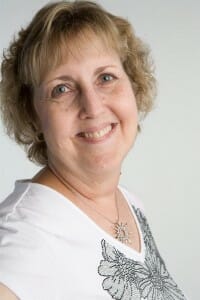 Today’s story is written by Johnna Switzer, retired RN and Nursing Instructor at Mesa Community College.