Today’s turning point post is written by Vivian Greentree, Ph.D., who is the director of research and policy for Blue Star Families. In Vivian’s spare time, she volunteers as a member of the Board of Directors for the USO of Hampton Roads and Central Virginia. She also enjoys uncovering the nuances of LEGO building from her two sons. She is a Daily Point of Light recipient for March 20, 2012.
I grew up in a very community-oriented household. My earliest memories include going to vote with my uncle, who was a U.S. Congressman. By the third grade, I was the president of “Kids for Ben Jones,” the club we started in my neighborhood to raise money to donate to his campaign. He was a strong advocate for educational spending and promised to help us get more books for our school library. I know now our donations, pooled allowance money, probably didn’t end up buying us the books that ended up in our library shelves, but his letting us believe we had a place in the process was a lesson in and of itself. And, it got me hooked. There is no doubt that my family’s strong influence started me on the path of community involvement that has led me to where I am now.
In college I majored in public relations and political science. While my friends were hunting for Fortune 500 companies to work for, I was looking for a political candidate that I believed in to work with. I found that person in Gov. Roy Barnes. I worked in his press office and was there the day the Georgia Assembly voted to change our state flag to remove the “stars and bars.” The Governor had used some major political capital to push the initiative through and I saw firsthand how ordinary people, working together, can effect positive change. While I was working in the Governor’s office, another opportunity to serve presented itself to me and I was accepted into Officer Candidate School for the U.S. Navy.
I served in the Navy on both active duty and in the reserves. My husband is still active duty and has deployed four times in our marriage, most recently to Iraq. There are challenges that come with that, especially with regard to our children. However, I’m thankful they are growing up in a culture of service, that they see their dad and other service members giving of themselves for their country. I believe everyone should give back to our society – be it with the military or community service. We owe it to those who came before us and helped us to get where we are in life. We also owe it to the future generations who depend on us to keep adding to our country’s foundation. I contribute to several print and online military family outlets as a writer. I enjoy writing about the immense pride and honor I feel as part of a military family, as well as the challenges associated with supporting a military member.
Through my involvement with Blue Star Families, I have also met and worked with some phenomenal military spouses. Our leadership team, small but efficient, is full of women who I am honored to know and who have each taught me life lessons by their examples. Their ability to navigate and push an agenda for military families, while providing support to our team and their own families, has been awe-inspiring. I also work with spouses across the country, virtually, who I have never met in person, but who I trust implicitly and who have provided support to me when I needed it most. Together, we can see we are making a difference; all the while juggling deployed spouses, children, jobs, etc.
Assisting in developing Blue Star Families with a group of seven women into a national organization with more than 35,000 members is something I am very proud of. One specific idea I had, early on in the development of Blue Star Families, was to introduce our program Operation: Appreciation, a program where we collect cards of support for military family members – spouses, parents of service members and children (as well as veterans) from the civilian community and pass them out to our members. There are a lot of programs aimed at sending packages and letters to service members, but not so much their families. I came up with the idea while my own husband was deployed and one of my friends gave my oldest son a card, which just said something like “Good Job!” for being so good while his dad was gone. It’s a simple concept but we have been able to grow the program over time and now it is one of our most popular requests from community groups and private sector partners. And, I still love posting individual cards that we get on our Facebook page. To think it grew out of a few of us sorting cards in my living room with small donations for postage (or our paying for it ourselves) to what we have now, with governors, Hollywood celebrities and other high-profile companies participating, is just awesome.
We can all contribute to the national dialogue on what it means to serve by continuing to discuss our personal roles in encouraging the public service ethic and cultivating the valuation of national and community service and civic participation within our own personal spheres of influence. Civic engagement and volunteerism should go beyond voting and complaining about elected officials. Volunteerism is what sustains this country and allows us to see past our differences to our commonalities as human beings. Through volunteerism we continue to learn, grow and give back to the communities that have given us all so much.
The Worm Selling, $4.25 an Hour Lessons that Changed My Life
Today’s turning point post is written by ShawnAnderson, best-selling author national speaker on “maximizing potential and going the extra mile.” Shawn is also the Founder of ExtraMileAmerica.org, a non-profit that led the charge in encouraging 228 U.S. mayors in all 50 states to declare November 1, 2011, as Extra Mile Day…a day to acknowledge the capacity we each have to create positive change in our families, organizations and world.
At my core, I’ve always been an entrepreneur. At age 10, I started my first business selling nightcrawlers (you know, those jumbo-sized worms) to fishermen. I would flood my Reno, Nev., backyard during the day, and later when the worms would rise to the surface, I would pluck them up one after another. Then on Saturdays and Sundays, I would rise before dawn, sit in my front yard, and sell those worms by the dozens to fisherman who would respond to an ad I had run in the local paper.
That’s where it began. That’s where I learned that an idea combined with action could buy a whole bunch of baseball cards.
Since then, the “dream it…then do it” attitude has served as the core foundation for everything I have accomplished. From starting a seven-figure business to publishing five books (soon a sixth), the basic realization that I have the power to create has been one of the two biggest turning points in my life. It is that action-oriented mentality that has continually allowed me to get back up, even after life has thrown a few body blows my direction.
But if you noticed, I said it was one of two turning points. And although that experience shaped my understanding that I can translate thoughts into something concrete, the second experience shaped my attitude and carved a mark into my very being.
After graduating from U.C. Berkeley, I had big-time trouble getting a job. I temporarily fell into financial survival mode and after four years of studying, I forgot about the whole “entrepreneurial thing.” My situation back then was not pretty. I had moved to San Diego with less than $300 in the bank. I had no car and quickly learned the bus routes all over town. Because I had little money, I could only afford to live in a one-bedroom apartment with two other guys and one million cockroaches. But while I was looking to find my “perfect” job, I was forced to work full-time at a corner 7-11 from 11:00 p.m. until 7:00 a.m. for $4.25 an hour. That allowed me the chance to buy dozens of packs of Top Ramen noodles, and interview during the day for a job more appealing to my pride.
With few customers coming in, it was during that midnight and early morning shift that I started reading every motivational book and biography I could find. And it was there in the quiet of the store that I truly cemented into my brain the power of what having a positive mental attitude can do for elevating one to a higher level of accomplishment. I learned the power of really believing “I Can!” I learned what it meant to never give up. I discovered the secret of going the extra mile. It was all right there in the books written by people whom I never met, but who became guiding lights to enable me to discover myself and my potential.
Those two experiences – the early worm biz and those long, late hours reading at 7-11- have served me in leading a life dedicated to producing results and making things happen. They are the columns in which my now deep-seated confidence began to rise. More importantly, those two experiences have afforded me the luxury to live my passion everyday and dedicate myself to pursuing my personal life mission: To empower 1,000,000 people to lead a more passionate and purposeful existence.
And once you learn a couple of cool secrets about how to create a life you’ll love, you definitely want to share them. Right?
I Was Lucky To Come From A Family Of Volunteers
Today’s turning point post from guest writer, Peggy Flynn, a Project Director at ETR Associates, who is her spare time is on the Board of The Volunteer Center of Santa Cruz County (CA), and through them a volunteer literacy tutor. She also volunteers with United Way of Santa Cruz County and with Planned Parenthood Mar Monte.
I am very fortunate to have come from a family where I saw both parents volunteer in our community, mostly in church activities, but also with sports. It’s especially admirable that both of my parents had the energy to do much besides raising seven children! Of course I didn’t fully appreciate all the work and management that it took to raise, feed, and nurture us until I was an adult and had step-children. My mind still boggles at how my mother planned, shopped and prepared three meals a day for nine people. They also made time to read to us, help us with our homework and finish all the school projects that we left to the last minute. “Good Gravy!” as my mother used to say. How did they do it all?
But even with this great modeling as a child, I was a young adult before I became involved in a meaningful way in my community. I was lucky that I also come from a family of readers; in fact, reading was one of the ways we could escape from each other—living with eight other people can sometimes be confining. I majored in journalism at George Washington University and was surrounded by people who were voracious readers and interested in all aspects of life: politics, economics, culture, etc. We all read. In fact, I didn’t know anyone who couldn’t or didn’t read. Reading meant understanding, exploring and led to intellectual, emotional and even psychological attainment as new ideas were explored or different perspectives pondered. I couldn’t imagine not reading, not being able to read.
A few years after undergraduate school I saw an ad for volunteer literacy tutors for our local Vietnamese and Cambodian community. I signed up, received some training and started meeting with families. Their children were learning English in school, but the parents and other adult family members weren’t. It opened my eyes to so many things, like the difficulties of learning a new language as an adult, the stress of having to rely on children as interpreters and the isolation of being in a new culture without the language skills to negotiate it. I also wasn’t prepared for how I would be treated. In one family there was only one chair, and they insisted I sit on it, even though I would have been more comfortable sitting on pillows on the floor with everyone else. “No, no,” they all cried, “teacher gets chair.” It was another insight for me into how much education and teachers were revered within their culture. It was also humbling for me because in my eyes I was “just a volunteer” coming to their homes a few hours a week, but to them I was the conduit to information and skills that they needed and wanted. I was humbled and thrilled to share their successes, like the first time a young mother was able to call school and report that her child would be absent: in English and all by herself.
I’ve been involved in many other volunteer activities since, but 30 years later, I am still a volunteer literacy tutor, working through my local volunteer center in Santa Cruz County, Calif. I still am thrilled when I see someone gain language skills, knowing that it means they are on the road to experience so much. Once you can read, the world opens up to you in so many ways; you don’t have to rely on others for translations or interpretations and you can participate in the larger community around you.
My Turning Point: Service As A Lifestyle
Today’s turning point story is written by Shannon Zoet, Assistant Director at Michigan Campus Compact, an affiliate of the Michigan Nonprofit Association. Shannon is also a Membership Co-chair for the Young Nonprofit Professionals Network in Grand Rapids.
As long as I can remember, my family has instilled a spirit of service in me. Though nobody ever used that phrase, looking back, I know that is what I was learning. My parents and grandparents have always modeled a lifestyle that showed me that service is not just about those flashy one-day events we all love, but rather, it’s an ongoing process of supporting others with your time and talents.
I always knew that this type of ever-present service would be a part of my life, but it wasn’t until I was an adult that I realized I could make a career of it. My personal turning point came several months after I graduated from college. I had a degree in communications and went to work at a publishing house where I was asked to promote books that had no meaning to my life. I knew I would not last in a job that didn’t play to my personal passions, so I left that position to join AmeriCorps.
After two years of service as an AmeriCorps VISTA, I knew I was on the right path. I knew that a career in the nonprofit sector – inspiring others to serve and supporting the infrastructure for widespread service – was how I wanted and needed to spend my energy. I earned an advanced degree in nonprofit leadership, and I now work for Michigan Campus Compact (part of the Michigan Nonprofit Association), supporting colleges and universities to promote public and community service and develop students’ citizenship skills. I am proud to be part of an organization that is helping cultivate current and future leaders of service.
I have not only chosen to make a career in the service sector, but I continue to exercise the spirit of service my family instilled in me as a child. Rather than focus my time on one or two volunteer opportunities by dedicating myself to a particular cause or passion, I have chosen, for now, to spread my energy as wide as possible. I look for small opportunities to serve others in everyday life; I serve on the board of my local Young Nonprofit Professionals Network to encourage the growth and success of the service sector in my community; I ask how I can serve the people and organizations I care about, and then I show up wherever and whenever I can.
My Turning Point – Encouraging Others to Make Positive Life Changes Benefits the Whole Community
Today’s turning point story is written by JoAnna Phillips, a student at the University of Southern Indiana, and an AmeriCorps member who works with Counseling For Change.
Growing up in a very rural community out in the country, in an “old fashioned” household, I was always taught to be a hard worker, self sufficient and care about the needs of those in my community. Everyone knew each other and we did things for each other. I was raised to serve others and to respect the dignity and worth of everyone, no matter what their race, culture, gender or economic status was. However, as I grew up in this small southern Illinois community, population 1,800, I realized there was no diversity in my community and our area was also plagued by drugs and alcohol. This was my “turning point.”
This observation encouraged me to expand my horizons, go to college and try everything I could to gain the tools needed to help addicts and to broaden my horizons as well. As a single mother, I am currently going to the University of Southern Indiana, about an hour drive from my hometown. I am a social work major. When AmeriCorps was offered at our university, I jumped at the chance to join something that would give me the opportunity to help and serve others, but also broaden my perspectives and encourage my educational growth.
I was placed into an outpatient drug and alcohol treatment facility, with the main job of GED tutoring for their clients in recovery. I absolutely love the interaction I get with the clients, and I love encouraging others to make positive life changes. Also, as an AmeriCorps member, we have served at the local homeless shelter, and we had a Martin Luther King service day at a local school where we taught the children lessons about serving others, just as Martin Luther King did. Joining AmeriCorps has been life changing for me, and I encourage anyone that has an opportunity to join AmeriCorps, do so. I promise, it will be a major turning point for you and for all of those people you will help and serve!
A 2nd Grade Service-Learning Project Was My Turning Point
Laura Saldivar pictured on the right at the 2011 National Conference on Volunteering and Service
To highlight the end of AmeriCorps Week we are featuring a high school senior who strives to be an AmeriCorps member in the future. Today’s Turning Point story is written by Laura Saldivar, a member of the Corporation for National and Community Service’s Youth Council. She is in her senior year of high school and is looking forward to attending the University of Illinois and major in community leadership and civic engagement.
Second grade was a huge turning point in my life. I had the unique opportunity to participate in a service-learning project with local high school students in my area. Jacobs High School in Algonquin, Ill., had a service-learning club that was funded through Learn and Serve America. After completing a meaningful service project, I knew when I grew up I wanted to be a member of that group. Throughout school I began volunteering and tagging along with the Jacobs High School Service-Learning Team. When I was in seventh grade, the club invited me to attend the National Service-Learning Conference with them.
At the conference, we attended a plethora of sessions and discovered a new program called Project Ignition. Project Ignition is a teen safe-driving campaign that is a youth-led effort in high schools around the country. Teens educate their peers on the importance of safe driving through service-learning. On the plane ride home, my fellow peers and myself started mapping out our very own safe driving program.
This experience has caused me to dedicate my life to service-learning. Most of my projects focus on education and healthy futures. I have completed different summer camps to bridge the achievement gap for local elementary students in the summer and have established more than 50 different safe- driving campaigns at my high school.
Later on in my freshman year of high school, I had the honor of joining Learn and Serve America’s Youth Speakers Bureau. This board was made up of youth leaders around the country that were Learn and Serve grantees. This board gave me the knowledge and confidence to speak to others about the importance of service-learning.
Learn and Serve America has given me the keys to success with service-learning. I have served on a plethora of youth boards including: National Youth Leadership Council’s Youth Advisory Board, National Organizations for Youth Safety’s Teen Distracted Driving Prevention Team, Youth Service America’s Youth Council, IL SADD Student Advisory Board, National Safety Council’s IL Coalition and more! These boards have taught me self-confidence, public speaking, grant writing and much more.
Currently, I am in my senior year of high school. My experiences with service-learning have caused me to dedicate my live to paying it forward. In the fall I hope to attend the University of Illinois and major in community leadership and civic engagement. I hope to one day work for the White House Youth Engagement Center, AmeriCorps and the US Department of Transportation. Service-learning really has transformed my life.
This is my turning point. What’s yours?
My Turning Point Happened When I Signed Up To Be A Big Sister
The theme for this year’s National Conference on Volunteering and Service is “Turning Point.” At Points of Light, we are highlighting turning point stories – stories about the moment or moments that inspired your service. Today’s Turning Point comes from guest writer, Lizzy Seymour, manager, Conference Operations for the National Conference on Volunteering and Service convened by Points of Light. Lizzy leads the Conference registration system and is involved in event planning for several Points of Light initiatives throughout the year.
When I was 5 years old, my parents gave me the nickname Little Miss Helpful – based on the “Little Miss” characters in the children’s books by Roger Hargraves – because I was always eager and willing to help with chores, volunteer at church and with my Girl Scout troop. I liked the feeling of “doing good” and it was fun being part of the community.
As I grew older, my desire to help led to a desire to help others. In high school, I dreamed of being a physical therapist and helping people recover from injuries. But after enrolling in anatomy and a physical therapy introductory class at a local college, I quickly realized my talent did not lie in the medical field and that a career as a physical therapist wasn’t for me.
In college, I joined a sorority and became active on campus. Being “Greek” meant completing community service hours, and while some of my sorority sisters complained about the required volunteering, it hit me: this is how I can use my talents to help others! With an eye for details, I joined a committee on campus that planned a year-long fundraiser for St. Jude Children’s Research Hospital in Memphis, Tenn. It was at this point in my life that I realized I could use my event planning skills and education to help people.
After college, I took a position at the Arby’s Foundation where I planned fundraising events to support local Big Brothers Big Sisters agencies. Since I was working so closely with Big Brothers Big Sisters professionally, I was driven to apply to volunteer my personal time to become a Big Sister. That’s when I met Ali – a 9-year-old girl who needed a friend and mentor – and now we have been matched for four years.
Ali loves art and music, singing, dancing, painting and playing the viola. Ali and I have done all sorts of things together, but our favorite activity was spending time helping others by volunteering. This year, Ali and I participated in the Martin Luther King, Jr. Day of Service and joined a HandsOn Atlanta service project at a local Boys and Girls Club. Ali painted murals for the club’s gym. After six hours of volunteering on our day off from work/school, she looked at me and said, “This was one of the most fun things we’ve done together. When can we do it again?” At that moment, SHE realized she could put her talents and passion for art to good use, by volunteering and helping people.
I’ve been volunteering my whole life, but my Turning Point didn’t come until I became a Big Sister and could see the impact my time was making on Ali’s life. Ali and I plan to volunteer together at least four times a year so we can continue to use our talents to help people.
If you like helping, I encourage you to try all types of volunteering because I know that one day, you too will experience your turning point.
Five years ago, the only thing I knew about volunteering came from papers published in academic journals. I was an ivory tower academic studying social networks and people’s perceptions of volunteering.
When I left grad school it was tough finding a job. I heard about AmeriCorps and figured it would be a great way to learn more about how volunteering actually works for when I would be in my PhD program.
My interview with Volunteer Maryland was terrifying, but that was nothing compared to how I felt after two weeks of training. This group of people were dedicated to the causes they worked with and passionate about the power of volunteering to change communities.
As if the interview and training process wasn’t frightening enough, my first day serving at the Maryland Department of the Environment was even scarier. I met the Secretary of the Environment who was an alumna of the program that I was serving in, and found out the only resources they had to support their idea was a volunteer waiver form.
No big deal, right? Build a volunteer program from nothing, compare yourself to dedicated and passionate people, and have a cabinet-level politician be invested in the work that you’re doing? No problem.
I took a little bit of time to freak out and then got to work. After a few months, there was a fairly strong program that used a small group of volunteers to manage large amounts of information efficiently. So, I decided to take a week out of the office to test if my program could run on its own and help a fellow AmeriCorps member with a project they were working on.
I spent a week working with 2,000 other people to rebuild a community playground that had been destroyed by arson. I thought I was going to swing a hammer for a week, but I got assigned to work in a tool shed.
I thought it was going to be boring. It turns out it was one of the best jobs on the site.
You see, everyone who showed up needed to come by the tool shed for something, so I ended up talking to just about everyone who showed up. I got to hear their stories about why volunteering is important to them and hear why they came back to rebuild the playground they’d originally worked on. It was a great experience getting to know complete strangers who were working for some idea of what is good—of how their world ought to be rather than simply accepting how their world was.
I volunteered for five days in a row. On the sixth day, I got a lot of phone calls asking me how to do things or how to fix some of the power tools. It was the first time that I realized that I was valued not just as a volunteer, but as a volunteer with a specific skill set that was beneficial to the project I was working on.
The people I worked with changed how I thought about community.
Before I worked on the playground, I thought your community was just the place you lived. I learned that community is the place that you care about, and that you care about making better. I learned that volunteers are valuable, not only for the work that they do, but for all of the skills that they bring with them to an organization. It’s something that I always knew, but finally began to really understand.
Working on the project made me realize that I wanted to keep working with volunteers. It was my turning point that made me realize how volunteers were a powerful force in their communities, and a big part of why I signed up for a second year in AmeriCorps with Volunteer Maryland, and why I’m still supporting the work that volunteers do across the country.
My Turning Point: How Americorps Worked for Me…
Today’s post is written by Ken Tran, the current External Relations Coordinator with AmeriCorps Alums. He served as a National Direct AmeriCorps member with the Get HandsOn Campaign in 2010-2011 at Points of Light. He fancies volunteerism, hashtags, strong coffee, and of course, Beyonce.
AmeriCorps members go through plenty of “aha!” moments (as dubbed by Oprah), during our service years. Those situations are when the imaginary light bulb finally lights up and we realize that what we’re doing has purpose and direction. That our actions are positively impacting those around us and that the effects of our service will be felt long after we have left.
I signed up for a National Direct AmeriCorps position with the Get HandsOn Campaign in Oct 2010, not really knowing what I was going to get myself into. Like most recent college graduates in our economy, I took one of the first opportunities offered to me. I got my BA at UC Irvine in June 2010 without a job lined up and moving across the country to Atlanta, Ga. with my friends sounded like a great opportunity. I could dive right into the real world, while increasing my chances of hanging with my girl, NeNe Leakes. The latter has yet to happen, but my Turning Point has!
During my AmeriCorps term, as a way to fulfill my 1,700 hours, I helped one of my peers with a school-based tutoring program through HandsOn Atlanta. Initially, I saw my AmeriCorps position as a job and didn’t see the impacts of my actions contributing to the greater benefit of my local community. I wasn’t doing the “traditional” volunteer service that most members would commit to during their AmeriCorps year, so it was nice to get out of the office and serve in my community. It wasn’t until I met the students at this school that I realized that my service could mean the world to one community.
The school that the weekend tutoring program was held at was incredibly diverse, with students representing more than 35 countries. Most were South Asian refugees, as that county of metro-Atlanta has a huge refugee population. On my first day at the program, I immediately got noticed by most of the students, as I looked a lot like most of them. With a majority black/ white dichotomy, most of the students had never seen an Asian-American, let alone one that was older than their elementary peers. One student, a 1st generation Vietnamese student with an adorable bowl cut, we’ll call him “Tommy”, stared at me for a bit, before coming up and saying, “You look like the same language as me!” Though technically incorrect, that quote has stayed with me since, as I realized the impact of my service as a minority in AmeriCorps and working directly in a minority population.
Volunteering at that school twice a month throughout my service year helped lay the foundation for the type of work that I want to continue on as an AmeriCorps Alum. As a citizen of color, born in the U.S., I want to help be a role model for younger generations, as they are learning to find their place in our national community. I want to keep service an integral part of my life, because at every step, I want to be able to be an example to those “Tommy’s” and other students, that they can keep pushing forward and be successful when the odds seem difficult. I want them to see how “AmeriCorps Works” in my life and continues to shape the intentions behind my actions.
I invite you all to join AmeriCorps Alums as we celebrate AmeriCorps Week, March 10-18. This year’s theme of AmeriCorps Works resonates with the mission of AmeriCorps Alums as we celebrate how our service has helped get us to where we are today. Join or register a local AmeriCorps Week event in your community and find out more ways to connect with Alums in your area.
My Turning Point: An All-American Vantage-Point
Todays’ turning point is written by Keith Lee, the Points of Light volunteer of the week. We are highlighting his story for the upcoming Americorps Week. Keith is an Americorps member currently at West Suburban PADS (Maywood, IL) & Chicago Cares. He is a physician in training, dancer and traveler hobbyist.
I have lived in the three largest cities in the United States: New York City, Los Angeles, and Chicago and have spent countless summers in the South. Although each city is uniquely diverse in resources, citizens, and geography – the hearts of the American people are filled with compassion to serve one another. It was in my home town of Joliet, Ill., that I learned the importance of community and more importantly community involvement.
My mother was a single mother working hard to support and raise her children. However, there was never a moment were I felt like I was raised only by my mother. The community surrounded my family and helped out where needed with excellent effort and compassionate hearts. This example would make a lasting impression on me causing a contagious servant heart.
Years later while still in high school, I remember riding a bus filled with eager community members to the state capital to join a protest and lobby for change in the school system addressing achievement gaps, resource allocation, and the list rolls on. After rolling 600 miles, long days, and a lot frustration, nothing happened. Yes, I understood and was constantly told that change was gradual, but there was work to be done. So, at the age of 16 I began to tutor at an after school program to elementary and middle school students in the areas of math, science, and reading. I became a peer mentor to youth at a community center and spent a couple days a week playing basketball and talking with the kids. I went to soup kitchens cooked food and cleaned. My community provided clothes to the disadvantaged and computer and technology training to the community at large. I was also a volunteer videographer filming community events and broadcasting on local community television.
This lifestyle of volunteering continued as I lived, traveled, and studied across America. In 2008, I made a personal pledge to consciously volunteer 72 hours a month to my community: local, state, country. Three years later, my pledge became a lifestyle as I serve as an Americorps member at West Suburban PADS in Maywood, Ill. By sharing talents and time unselfishly the community becomes strong and is able to function better. As a result, a student does not struggle in math class, a homeless family is fed and given shelter, a garden is planted, and a computer is repaired. Service unites a community, fills the gap when there’s no budget, and inspires others to serve. Points of Lights embodies community service and a collaboration of government, corporations, and citizens that will no longer stand and watch but take action. I am a point of light.

 Today’s turning point post is written by Vivian Greentree, Ph.D., who is the director of research and policy for Blue Star Families. In Vivian’s spare time, she volunteers as a member of the Board of Directors for the USO of Hampton Roads and Central Virginia. She also enjoys uncovering the nuances of LEGO building from her two sons. She is a Daily Point of Light recipient for March 20, 2012.
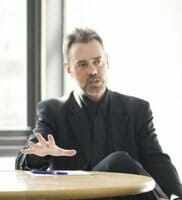 Today’s turning point post is written by
 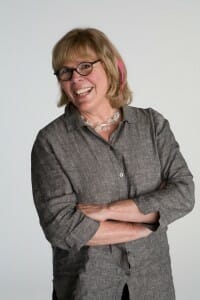 Today’s turning point post from guest writer, Peggy Flynn, a Project Director at ETR Associates, who is her spare time is on the Board of The Volunteer Center of Santa Cruz County (CA), and through them a volunteer literacy tutor. She also volunteers with United Way of Santa Cruz County and with Planned Parenthood Mar Monte.
 Today’s turning point story is written by Shannon Zoet, Assistant Director at Michigan Campus Compact, an affiliate of the Michigan Nonprofit Association. Shannon is also a Membership Co-chair for the Young Nonprofit Professionals Network in Grand Rapids.
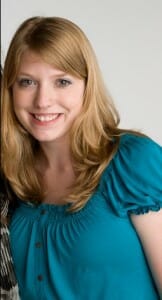 Today’s turning point story is written by JoAnna Phillips, a student at the University of Southern Indiana, and an AmeriCorps member who works with
 The theme for this year’s
  Since we are highlighting Turning Point posts for our
  I spent a week working with 2,000 other people to rebuild a community playground that had been destroyed by arson. I thought I was going to swing a hammer for a week, but I got assigned to work in a tool shed.
 Today’s post is written by Ken Tran, the current External Relations Coordinator with
  Todays’ turning point is written by Keith Lee, the