My Turning Point Came When I Realized that the Having the Ability to Help Meant Also Having Responsibility to Help
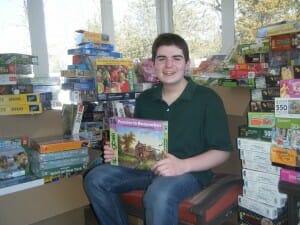
Today’s Turning Point comes from guest writer, Max Wallack, 15, a 2011 Hasbro Community Action Hero, an award recognizing outstanding young service leaders presented by Hasbro in partnership with generationOn, the global youth service division of Points of Light. Today is the last day to submit nominations for the 2012 Hasbro Community Action Heroes, nominate a youth by 5pm EST!
I have sometimes been asked when the moment first happened that I realized I couldn’t just stand by and watch the needs of others go unmet. For me, this moment came when I was very young. At 5 years old, I was named a Davidson Young Scholar and invited to a conference in Nevada. At that point, being a Davidson Young Scholar meant, to me, only that I was smart, but I had pretty much figured that out on my own during the parent/teacher conference that ensued when I got into big trouble in nursery school for reading my classmates’ confidential records (out loud when the teacher was out of the room). I didn’t realize that in only a few months, in Nevada, I would have an experience that would help me define who I am.
That summer, I traveled to Nevada with my parents, where I met about 20 other Davidson Young Scholars, as well as Jan Davidson, the founder of the organization. Jan and her husband, Bob, had become very wealthy as the developers of a children’s educational software company, and they had decided to invest their money into an organization to support the needs of gifted students. I attended a presentation given by Jan, where she said that the reason they were investing in these students is that they felt that, if these students were encouraged, they would be the ones most capable of contributing positively to society.
To this day, I remember Jan saying she believes that “anyone who has the ability to help another person, has the responsibility to help them.” Interestingly, no one else remembers Jan saying exactly those words, not my parents, not my Davidson counselor, not anyone that was there. Apparently, that’s just the way my 5-year-old mind understood what Jan was saying. Nevertheless, it was at that moment I understood that it was my responsibility to do whatever I could to help others and make the world a better place.
Ever since then, I have made it a point of being observant of those around me and “filing away” in my mind whenever I notice a need being unmet. When I was 6, I noticed my great-grandmother was having trouble getting into our minivan, so I built her a special step, The Great Granny Booster Step, with a handle attached. The next year, the special step won a prize and I was invited to Chicago. While there, I saw many homeless people living in the underground highway system under the Million Dollar Mile shopping district. At my acceptance speech, I remember saying that it was my responsibility to do something to help these homeless people. Five years, I later I invented the Home Dome, a shelter for homeless people and victims of disaster, that won first prize in the Intel/BKFK Trash to Treasure contest.
Many similar scenarios have been repeated, continuing to my current project, PuzzlesToRemember, which distributes puzzles to more than 700 facilitates that care for Alzheimer patients across North America in an effort to ameliorate the affects of memory loss, and my work as an Alzheimer’s Research Intern, but it all boils down to a few elements. First, I realized at age 5 that everyone has the responsibility to do what he/she can to help others. Next, that to identify a need, one has to be observant. Third, that microphilanthropy, doing just some little thing that helps, is a very powerful force. If everyone would do just some little thing that they recognize as helpful to others, the world would be a much better place.
My Turning Point Occurred With The Death of My Father
 Today’s turning point story is written by Pilar Pinel, founder of Embracing Latina Leadership Alliances (ELLAS). ELLAS is dedicated to the educational, professional and political advancement of underserved Latina youth. She is also a L’Oréal Paris 2011 Women of Worth honoree.
Throughout my young life, I found pleasure in helping others. It wasn’t until I was in my 20s that I embraced the thought that everyone was born with a unique purpose and that time would lead me to realize what mine would be. For me, giving to others was not because I was wealthy, but because it was the right thing to do. As a Latina, I felt a responsibility to step up to the plate at such a historical turn in our nation’s history for women, in particular for Latinas who lacked role models in their environments and the resources to reach their full potential.
My father passed away when I was 24, the following year a brother passed away as a firefighter and one month later my brother-in-law died while driving in Mexico. Each left this world tragically and unexpectedly, but not without a lifelong footprint of their humanitarian contributions to their family, friends and community. During this time I felt abandoned in an emotional fog of – why? Little did I know that these experiences would make me who I am today, and how I would gain my wisdom and strength.
A year later, unexpectedly divorced and raising our 3-year-old son alone on limited income, I went to college while working nights and weekends. Navigating through the post-secondary process alone, without role models or support, was extremely tough. There were times when my son was in class with me at 6 a.m., because I had no one to take care of him and quitting was not an option. Finishing my studies, I worked for two community college districts and later the legislative department. The political awakening I’d gained greatly influenced my founding “ELLAS” in 2003. When my son was young he would call me “Zina” (a princess warrior), because he said “I could overcome any difficult challenges thrown my way.. My name (Pilar) refers to “column/strength”— for me, each day is about faith, love and being grateful for those who committed their lives to our country’s freedom and strength.
My “turning point” was the synergy of my life experiences linked to timing and opportunity and seeing so many young Latinas reminding me of me at their age. However, if asked to put one experience at the top, it would be my father’s death. It opened my eyes to how fragile life is, and the window of opportunity we all have to contribute to positive change and the importance of setting one’s moral compass to assist others in their challenges regardless of our own challenges. To recognize the monumental power each of us possess when we give of ourselves selflessly in kindness and empathy. My passion possibly would not have been realized if not for someone seeing the potential in my vision and investing in the mission. A dear friend once said that “positive energy is only as good as it is shared.” SHARE! After all, we take nothing with us when we depart this world.
My Turning Point Was During My Dad’s Deployment
 Simone A. Bernstein is a sophomore at St. Bonaventure University in Olean, N.Y. Simone and her brother, Jake, created a website http://www.stlouisvolunteen.com, and will soon launch http://www.volunTEENnation.org, a resource for youth throughout the nation to find volunteer opportunities in their communities.
Over my winter breaks from college, I often stock up on old movies and watch them curled up on the couch. I recently rented the 1970s movie, Turning Point. Anne Bancroft and Shirley McLaine, the lead actresses, reflect and ponder on how difficult and complex decisions impacted and altered their lives. Fortunately, as a college sophomore, I have not yet had to face such difficult life choices as these actresses in the movie. Yet, each of us has our own turning points that mark and highlight the beginning of a new and positive change in our lives.
My turning point was during my dad’s deployment. As a military dependent, it was difficult and challenging for my mom to maintain a sense of normalcy with three young children. Yet the outpouring of support our family received from the community: from volunteers bringing meals, neighbors helping my mom with childcare and errands, and even strangers mowing our lawn, sparked my siblings’ and my desire to get involved and help others. I immediately called the local USO to see how we could all sign up to volunteer. Although they appreciated our interest, due to safety and security concerns, volunteers had to be 18 years old to volunteer onsite. It was tough for my brother and I to find nonprofit organizations allowing youth onsite. We were active with scouts and our religious youth groups, but we wanted to do more.
Though word of mouth, we discovered a few local volunteer opportunities available for youth. We volunteered at the local library, at an emergency shelter for children and, as we got older, the VA Hospital. We were hooked. We met with nonprofit agencies, religious institutions and schools to find ways for local nonprofit organizations to include youth. We created a simple website for youth and nonprofit organizations to connect within the community. The positive feedback in the community from the site led my brother and me to organize the first St. Louis Youth and Family Volunteer Fair. The Volunteer Fair is now an annual spring event. Thirty-five youth- and family-friendly volunteer nonprofit organizations recruit students and families with young children. More than 1,500 youth and families attended the fairs.
We wanted to create more opportunities that offered youth flexible options. My brother and I organized events to engage youth in volunteer service from offering free tennis and basketball clinics for youth with special needs to a youth and family park clean-up. Youth are interested in volunteering service when they are offered interesting, fun and rewarding volunteer opportunities. More than 5,000 youth have found volunteer opportunities though our website, organized volunteer projects, Twitter postings, Facebook notices and text messages. The care and concern we received from the community from our dad’s military service commitment was the turning point for my siblings and me to pay it forward and give back to our community.
To find more resources/tools for military families check out the Community Blueprint Network for best practice sharing and more effective delivery of services among organizations that serve military personnel and their families. To find youth volunteer resources check out generationon.org.
29 Things To Do In Chigago for the National Conference on Volunteering and Service
In honor of Leap Year, today we are highlighting 29 things to do while you are in Chicago for the 2012 National Conference on Volunteering and Service, June 18-20.
- Create new ideas for service with old friends, colleagues and new contacts who believe in the power of people to create change.
- Explore Chicago’s lush Millennium Park, home to the famous Cloud Gate or “Bean” sculpture and the Crown Fountain that spouts water from its digital faces.
- Hear about first lady Barbara Bush’s personal commitment to service and how she is encouraging multi-generational service leaders and social commitments.
- Deep dish pizza – need I say more?
- Tour the exhibit hall and meet 80 vendors from nonprofit, government, corporate and merchandising sectors as they demonstrate the impact and results of their programs and services.
- Roar with the lions at one of the nation’s last free zoos. Offering an unforgettable wildlife experience amid a stunning skyline, the Lincoln Park Zoo is open to the public for free every day of the year.
- Join our first-ever Solution Centers for a casual conversation with experts in various issue areas. Experts include: the Corporation for National and Community Service, Team Rubicon and University of Phoenix.
- Meet one of the 50 most influential people in the nonprofit sector, California Association of Nonprofits’ Executive Director Jan Masaoka.
- Check out one of the workshops offered in the Youth Leadership track to see what the kids (and those who work with them) are doing these days.
- Tour McCormick Place West (your Conference convention center) to see one of the largest collections of public artwork in Illinois. The breath-taking displays feature paintings, sculptures murals and more.
- Tweet with hashtag #NCVS and let people know what you’ve experienced.
- Walk down the Magnificent Mile, Chicago’s famous Michigan Avenue with world-class shopping, dining and architecture. Bring your walking shoes and your wallet!
- Party at the Welcome to Chicago Celebration featuring mini-service events, sponsor booths, activities, regional bands and famous Chicago cuisine.
- Check out the News Desk outside the exhibit hall on the third floor of the convention center for the daily newsletter, the latest Conference hot topics, media interviews and more.
- Hear from former U.S. Army Chief of Staff Gen. George W. Casey about how a lifetime of service – both military and community – influenced his viewpoints on leadership, vision, organizational culture and leading transformational change.
- Ford the Chicago River by boat tour and explore the city’s architectural wonders on the only river in the world that flows backwards. The reversal of the Chicago River was a massive public works effort that saved the Chicago region from waterborne diseases in the early 1900s.
- Volunteer at the Conference. It’s what we do!
- Visit the tallest building in North America – the Willis Tower – and step out onto the Ledge, a suspended glass box at Skydeck Chicago that is more than 1,000 feet in the sky.
- Participate in the Sunday Supper, an opportunity for people of diverse backgrounds to come together to share a meal, discuss the challenges our nation faces and take action.
- Meet up with Lil Sis, have dinner, convince her to move home. Wait … This isn’t my personal to-do list.
- Share your Turning Point story to inspire others to find their passion.
- Check out a Civic Fellows session, intimate dialogues with sector leaders like Susan Ellis, Michael Carter, Isabel Wilkerson.
- Experience our nation’s leader singing “Sweet Home Chicago” or check out the local music scene whether your genre is jazz, blues or eclectic festivals.
- Hone your professional speaking skills to make better pitches to funders, improve your presentations and feel more comfortable in the limelight. Be sure to check out session 2299, Professional Speaking Training with Bill Hoogterp.
- Watch the fireworks, visit the beer garden and ride the ferris wheel (not necessarily in that order) at the Navy Pier.
- Meet the wonderful staff from the Chicago Convention and Tourism Bureau on the first floor of the convention center. They have everything you need to plan meals, outings, transportation and anything else you can’t even think of to make this your best trip to Chicago ever.
- Join a conversation about innovative thinking, entrepreneurship and leading change with Brad Keywell, Lightbank and Groupon co-founder.
- Upload your Conference photos to NCVS on Flickr.
- Relax, have fun, meet some new people and go home re-energized for your community!
Evaluate Your Surroundings, Then Take Action
 Today’s Turning Point story is written by Dallisa Hocking, Director of Sustainability and Community at The Cosmopolitan of Las Vegas. Dallisa is on the Advisory Council for Communities in Schools and an officer for the Las Vegas Business Academy. In her spare time she enjoys cooking and traveling with her grandma Eloise.
“Even when opportunity knocks, a man still has to get up off his seat and open the door.” – Anonymous
I’ve been an outgoing person since childhood – from taking center stage in my school performance of “Little Red Riding Hood” to convincing neighbors why buying rocks was a good investment. As I grew into my teen years, I took my talents and targeted them towards the greater good of my community.
How can you take your energy and create change? Simply stated: Evaluate your surroundings and then take action. In other words, look at the world around you and determine what could use some extra care and attention.
Putting this theory into practice started in high school – I kept hearing about the dangers of cigarette smoking. For me, not smoking myself wasn’t enough. I began going to elementary schools and teaching children the dangers associated with cigarettes. Then a few years later in college, people I knew were affected by date rape drugs. So, I put my voice to good use and began facilitating sessions in college classrooms about the warning signs and signals to watch for. And, about four years ago, my brother was a Marine stationed in Iraq. Through our regular communication, he told me that many of his fellow soldiers didn’t receive packages and letters from home, and again I knew something had to be done. At work, I started a program called “Operation Camo Care,” rallied employees and created hundreds of care packages that were shipped to soldiers around the world.
These are a few of the ways I’ve taken inventory and then taken action. It doesn’t always have to be a grand gesture that helps many. It could be a small act of kindness that changes the life of one person, even if it is just for a moment.
So, keep your eyes open to the possibility of today and what you can contribute to the greater good. You may be surprised to see how far your good deed will go.
My Turning Point Was Influenced By Strong Female Role Models
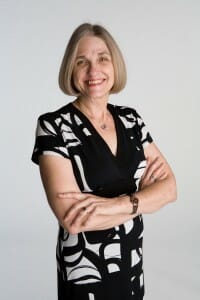 Today’s Turning Point story is written by Eileen Bostwick, Director of the Foster Grandparent and Senior Companion Programs in northern California. In Eileen’s spare time she enjoys traveling, spending time with her 6 grandchildren, and volunteering at their school fund-development events. She also serves on the National Association Foster Grandparent Program Directors Board and on numerous local non-profit boards and committees.
My mother and the experiences I had growing up as a flower child of the 1960’s greatly influenced the person I grew into.
Issues surrounding aging have been part of my life since my early childhood. I never realized that my interest in aging was unique or different than that of my peers, to me it was normal. My mother was an amazing woman who adopted me late in her life. She had a rich fabric of friends who had achieved success in their chosen fields. These strong, educated, caring women mentored me from my birth. Each of them made a tremendous difference during a time when women weren’t recognized for such contributions.
Mildred was a social worker with the Native Americans of the Southwest. A graduate of U.C. Berkeley her accomplishments are more remarkable due to her physical limitations. She had Multiple Sclerosis and was wheelchair bound most of her years. Jenny was a revolutionary and was instrumental in establishing Unions to protect the workers of our country. Evelyn was a poet, writer and dreamer and recorded history as it unfolded. These women along with others shaped my beliefs, nurtured my interests and raised my social consciousness and showed me the tremendous wisdom of older adults.
While in Community College in Marin County, CA I helped to raise cash and collect clothing to support Cesar Chavez, co founder of the National Farm Workers. With 3 other students we drove to Delano and marched on the picket line to boycott grapes. We met Cesar Chavez, and had the honor of eating dinner with him. This experience showed me a reality that I previously had no knowledge. It provided the impetus to be community-minded and volunteer my services, something I have done most of my adult life.
Since 1990 I have recruited older adult men and women as volunteer tutors and mentors for special needs children in the Foster Grandparent Program (FGP). In 1999 I implemented a Senior Companion Program (SCP) by recruiting older adult volunteers to assist frail elders to remain living independently at home. Annually, over 85,000 hours of service provided by these dedicated FGP volunteers result in children attaining grade level and being able to promote to the next grade, at grade level. Senior Companions assist older adults to “age in place, at home” rather than moving to assisted living or nursing homes for care.
Working with these programs has reinforced my understanding of the incredible need in rural communities for services for frail elders as well as the lack of access to existing services. Too many older adults are unable to access medical care, nutrition programs, housing and recreational activities. Isolation, elder abuse, alienation, depression, malnutrition and transportation are very real problems for the majority of older adults in the area. I have worked to provide meaningful roles for older members of the community. I would like to help society develop a better understanding of aging and change the stereotype of ageism that is prevalent today. I would like to become a mentor to others as I was given mentors as a child.
My Turning Point Occured in the East Harlem Subway
 Today’s Turning Point story is written by Gina Keatley, Founder/Director of Nourishing NYC, a community food program that feeds, educates, and advocates for tens-of-thousands of in need families annually. Gina is an award-winning chef, nutritionist, and humanitarian who has been chosen as a 2011 CNN Hero and a L’oreal Women of Worth.
In 2003, I had moved to New York City like many young, wide-eyed hopefuls with 900 bucks in my pocket and a ready-to-take-on-the-city attitude. I attended culinary school in NoHo followed by NYU for nutrition in the Village, but as I said I moved here with very little resources and found myself living in East Harlem across from the city projects. I had experienced poverty as a child, so I was not shocked or surprised by how these low-income people where living, I was, however, shocked that within a few block radius as the checkbooks got bigger, the waist lines got smaller. There is an invisible divide on the cross streets on 96th Street and Lexington near where I lived. Below the street line, the financial demographics include some of the highest income brackets, the streets filled with fresh vegetables stands, little outdoor restaurants, and parks. In contrast, right above the line are the lowest income brackets and the streets are filled with liquor stores and fast food takeout stands.
My turning point was when I was walking to the subway in East Harlem and had to walk over a man lying on the floor with an amputation. Was this man a veteran or in a horrific accident? No, this man was a victim of diabetes! I was shocked to see that here in America, mere blocks from smoothie shops and gourmet grocery stores, we had Americans starving for nutrition. East Harlem has the highest rate of diabetes and obesity in all of Manhattan. As a trained chef and nutritionist, I had to do something.
Nourishing NYC/USA was the answer to the problem that I was seeing in my community. At Nourishing NYC, our direct service arm, we feed through our urban produce program thatdistributed more than 25,000 pounds of fresh produce on the streets on Harlem to in-need clients in 2011. We educate through our award-winning junior chef programs where we teach children culinary and nutritional skills for themselves and family. We advocate for a healthy environment through seasonal eating and workshops. Nourishing NYC has been so successful that we decided in late 2011 to expand nationwide with Nourishing USA, our nationwide advocacy arm.
Through Nourishing USA, Americans who are interested in helping their community can offer “nutrition for all” by ordering a free anti-hunger advocacy kit and grow, gather and give right in their community. To continue the programs, we are in need of donations and encourage anyone that feels these programs are worthy to please donate online at www.NourishingNYC.org or www.NourishingUSA.org. I am proud to have founded an organization that is reaching so many in-need clients. At Nourishing, I try and teach clients to be chefs both in the kitchen and out of the kitchen. As my grandma once said, “to eat is to enjoy, but to teach how to eat is to love.”
Teaching Was My Turning Point Into Service
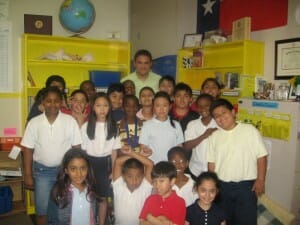 The theme for this year’s National Conference on Volunteering and Service is “Turning Point.” At Points of Light we are highlighting turning point stories – stories about the moment or moments that inspired your service. Today’s Turning Point story comes from Mark Moravits, director of strategic partnerships at generationOn – the youth service enterprise of Points of Light. Mark is a proud Texan transplanted to New York City who travels extensively supporting generationOn’s work around the nation–so maybe you’ll cross paths one day. He also makes a mean guacamole.
The people I admire most in my life are teachers. But not just any teachers–really effective, really “do everything it takes” type teachers who are turning the tables through innovation combined with old-fashioned dedication. These teachers know that all children deserve a top-quality education regardless of their circumstances at home or where they were born.
I think education is the common denominator among social challenges in our nation. It’s the one social issue that has the potential to push other social issues to decline – poverty, crime, hunger and the list goes on. I’ll never forget managing a corporate volunteer project at Roger Williams Middle School in Providence, R.I.. On the wall of this 80-year-old school was a quote by recording artist Lauryn Hill,
“In my travels all over the world, I have come to realize that what distinguishes one child from another is not ability, but access. Access to education, access to opportunity, access to love.”
In college, I worked hard academically and was en route to a consulting job. However, my heart was in my extracurricular activities. For two consecutive terms, I led the University of Oklahoma’s Big Event – one of the largest student-run service programs in the nation bringing more than 5,000 students together to volunteer on one day. I put significantly more time and energy into this than I did into my course work.
I had the “social good” bug and I had it bad. Sitting in an office all day? PowerPoints? Audits? No way. Enter Teach For America. In the back (and front) of my mind I had doubts that I’d be accepted into the program. The letter arrived. The envelope was regular size. It was clearly one page. A rejection letter – it had to be. It wasn’t. For the next two years of my life, I’d be teaching English as a Second Language to third graders in Houston, Texas.
I was in Houston, now responsible for the education of 22 students in a school greatly impacted by poverty, immigration issues and crime. Did my students have access to everything they needed to grow up healthy and strong and educated? No. Did they have the same opportunity as their middle class peers? Absolutely not. Did they deserve equal access and opportunity? They did – they do – and I say this with every shred of assurance I can muster.
Perhaps you’re asking yourself, “If you think education is so important, then why did you leave the classroom?” Education extends far beyond the classroom – to the home, to the community and beyond. More than ever, we need to engage children in becoming global citizens. I’m so proud of the work we’re doing at generationOn and Points of Light to inspire, equip and mobilize youth (and the caring adults in their lives) to take action that changes the world through service and volunteerism. We’re helping communities come together – schools, nonprofits, families and companies – to give kids the access they need and the opportunities they deserve. The work is exhilarating and the results make me thankful to have the job I do. I could’ve been somewhere very different right now.
Forty-four third graders were my turning point. Have you reached your turning point yet?
My Turning Point: 76 Days of Life That Changed Mine Forever
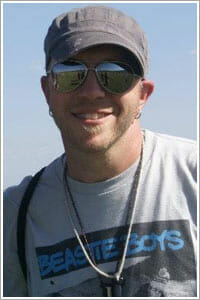 The theme for this years National Conference on Volunteering and Service is “Turning Point.” On the blog we are continuing to highlight turning point stories – the stories of when someone recognized they could no longer stand by and watch the needs of their communities go unmet. The moment when they stepped in and took action. Today’s Turning Point comes from guest writer, Tymm Hoffman, Senior Designer at Points of Light. Want to share your turning point story and have it published on our blog? Email stories to: Listen [at] pointsoflight.org
Burying a child is never easy.
Burying a child amidst some of the worst poverty you could ever imagine was not only hard – it was life changing. It redefined our purpose and sent our family down a very different path while changing what the word “community” meant to me.
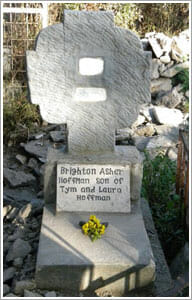 In 2008, Brighton, our son that we were adopting, passed away in an orphanage in Ethiopia. That year was a benchmark year for me personally and for my family as a whole. As we stood in an overcrowded cemetery looking at his headstone we realized just how incredibly blessed we were. We realized just how incredibly much we have.
And we realized how incredibly much we have to give.
Upon returning from Ethiopia that year – we knew our hearts and minds had been reset. I immediately got busy with leaving my job and was intentional about finding employment with an organization that was doing good through the service of others. I landed at Points of Light.
But we didn’t stop there. My wife and I started serving in our local community through our church as volunteers as well as mentors to college students. At this point we had a daughter home and we were determined to raise her in a setting where serving others was as natural as playing with others was.
2 years after his death we founded a nonprofit organization called Brighton Their World that focuses on the dire needs (mainly nutritional) of children in orphanages in 3rd world countries. Our main focus is on Ethiopia where we have created a partnership with an orphanage in the capital city there that we have shipped over 44,000 bottles worth of formula to so far. We recently received our 501.c.3 approval from the government and are excited to not only be providing for the children in need at our partner orphanage but also creating a way for people to serve alongside us.
I also lead several teams a year to Africa to work in orphanages and to visit the children – and though it is always difficult leaving family – I am positive that my absence and what I am doing will have an immeasurable impact on my girls (we have 2 daughters now) as they grow.
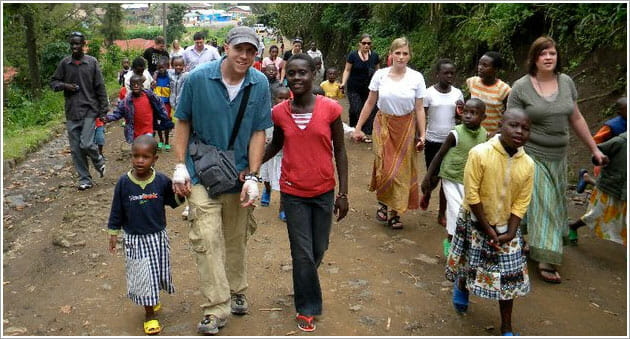
Of course I wish Brighton was with us today to play and run and laugh and serve with his sisters. But his spirit is with us every day. He is there every single time we stop to talk to a homeless person or help feed the hungry or mentor a student or step foot in an orphanage in Africa. Especially in Africa.
Serving others. It’s what we were built to do. It doesn’t always take the death of a child at 76 days old to help you see clearly. But sometimes it does.
This spring we hope you’ll join us at Points of Light in talking about your turning point – the moment or moments that inspired your service. For Tymm, it was a distinct moment in time. A moment that redefined his life and pointed it down a road of service. We know you have a story too. To share it with us and/or on this blog, send your story to: Listen [at] pointsoflight.org
My Turning Point: Life As An Army Brat
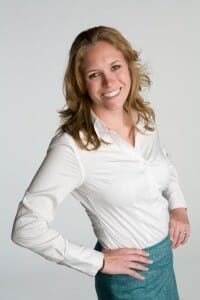 The theme for this years National Conference on Volunteering and Service is “Turning Point.” At Points of Light we will be highlighting turning point stories – the stories of when someone recognized they could no longer stand by and watch the needs of their communities go unmet. The moment when they stepped in and took action. Today’s Turning Point comes from guest writer, Saxon Seay, Points of Light’s Manager of Marketing. Want to share your turning point story and have it published on our blog? Email stories to: Listen [at] pointsoflight.org
My family and the experiences I had growing up as an “Army brat” is one of the single largest drivers of who I am. Oftentimes when people learn that I am a “brat” they comment on how difficult a lifestyle it must have been, but I cannot think of a better way to have grown up. My diversity of experiences as a child taught me several important lessons but the most important lesson was about living life in service to others.
When I was younger I saw that my father did not have the luxury of working regular hours in safe conditions. Giving back to our community and country was an inherent part of his profession and both he and my mother taught us to live our lives with the same enduring spirit and dedication to others that they demonstrated every day.
For me, there isn’t one experience that stands out as my turning point – there is my parent’s legacy of turning our minds and hearts toward others day after day.
As a result, I started volunteering at a young age. Now I continue to give back to my undergraduate institution by engaging millennial-aged alumni with the school as a member of the Berry College Young Alumni Board and acting as a mentor for students interested in marketing or nonprofit management. I truly enjoy working with university-aged students and have spent hundreds of hours serving this demographic through Passion conferences/Passion City Church, a faith-based organization that engages students to meet the world’s greatest social needs through Do Something Now.
I’m also forever indebted to the army family who stood by our side during my dad’s 27-year-career as an Army aviator and look for ways to give back to that community. That’s why I’m so excited to see Points of Light increasingly support active-duty military, veterans and their families through our work on Community Blueprint, an initiative led by the Points of Light designed to provide a “blueprint” for community leaders to take action and serve with and for the military community.
This spring we hope you’ll join us at Points of Light in talking about your turning point – the moment or moments that inspired your service. For Saxon, it wasn’t just a moment. It was years witnessing her parents living a life of service to others and their country. We know you have a story too. To share it with us and/or on this blog, send your story to: Listen [at] pointsoflight.org



