Fulfilling a Childhood Dream, Volunteer Uses His Life Savings to Transform a Community
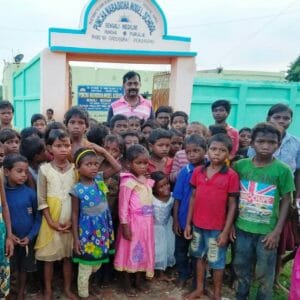
There are few people in the world who would willingly use their entire savings to help those in need, but Arup Kumar did so eagerly. In 2011, the Purulia, West Bengal, India native used all of his financial resources to create Puncha Nabadisha Model School for children of the Sabari tribe. Over the course of a few years, the school has grown tremendously, providing educational resources to more than 120 tribal children. What started off as a group of 20 has transformed into a source of hope and opportunity for an entire community.
Arup not only created the Puncha Nabadisha Model School for fostering education, but to also offer children clothes, toiletries, decent meals and contribute to a reduction in crime rates in his neighborhood. Through his generous investment, Arup gives children a chance at a life full of stability, hope and encouragement.
When Arup was a child, his grandfather told him that the Sabar tribe was blamed for local theft crimes. When he asked his grandfather why this was a reality, Arup was told that many people were poor, uneducated and unemployed.
“I told my grandfather that we would make a school for them and work for the livelihood of their generations to come,” said Arup. When he started his first job, he immediately began saving his money. After ten years of work, and the generosity of friends and family, he had enough to apply for a loan.
Finally, Arup’s childhood dream and promise to his grandfather came true, and he purchased a school building. He eagerly began to enroll the children of parents who were i
Arup Kumar spends his day at the Puncha Nabadisha Model School, a community-oriented educational resource he created for children in 2011.
nvolved in theft and crime in their community. “The Sabar tribes now call me ‘Police baba’ and ‘Sabar’s father,’” Arup said. “The Sabar tribes of the Purulia districts love me, and I want to help them in any possible way I can.”
According to Arup, all communities deserve quality education. Additionally, he believes that people should have food and shelter, but “education makes us better humans and helps the livelihoods of generations to come.” Education has the power to encourage others to do more for society. He wants to inspire everyone to stand with the motive needed to make positive changes and show the world that anyone can do what they set their mind to, even if you originally believe you are alone.
Arup never imagined winning awards for his service, but he has received more than 60 awards and honors from various organizations, including Points of Light Global Network affiliate
, which recognizes individuals who celebrate, reward and promote volunteering across India. Arup continues to embody the excellence in individuals that are transforming the lives of communities across his nation.
Arup wants others to learn that instead of solely focusing on wanting your children to become doctors or engineers, families can teach them to be humans first. He believes that if we teach our youth to be genuine human beings with emotions and motivation to help others, more tribes similar to Sabar will find support.
“Helping others is beyond an experience,” said Arup. “I want to do this as long as I’m alive.”
In light of COVID-19, nonprofits, companies and individuals are adapting the ways in which they serve their communities. Visit
to find creative ways to make a difference and be a #LocalLight in your community during Global Volunteer Month.
Glasswing International and Hands On Atlanta Help Students Dream of a Brighter Future
Without access to affordable after-school activities, students who already come from a cycle of poverty or violence often only know of that world and could be led to spend their after-school hours wandering with the wrong crowd.
have both worked tirelessly to provide after-school or weekend programs to help students in their communities stay in school and empower them to dream of a brighter future.
Glasswing International
Glasswing International was founded in 2007 by Celina de Sola, her brother Diego and husband, Ken Baker in San Salvador, El Salvador, with a simple goal to “foster change by investing in a community’s existing strengths and resources – its infrastructure and its people.”
With a number of offices across Latin America, Glasswing helps reform public schools throughout the region with initiatives such as after-school programs, mental health committees, and extreme makeovers.
On a weekly basis, hundreds of young volunteers will donate their time to lead clubs such as glee, debate, English, science, sports, and more at more than 1,000 after-school programs across 6 countries.
“For the young people we work with, who come from some of the most dangerous neighborhoods in Central America, after-school programming is far more than a convenience,” de Sola said. “In these communities, educational programs can transform lives.”
, a 15-year-old from El Salvador, her father meant everything to her. So when he was taken to jail four years ago, she became depressed. Her grades started to plummet and her family started having financial problems at home.
“Everything was spiraling downward, including my self-esteem,” she said. “I felt everybody was judging me for my father’s mistakes.”
But then she decided to enroll in the Girls Club provided by Glasswing and her perspective slowly began to change.
“I will never forget the topic I liked to learn about the most – it was to value myself,” Gabriela said. “It was a way of realizing that I was more than my family problems… and I had to keep fighting to create my own life.”
Today, her grades have improved and she credits Glasswing for helping her through her hardest time.
Hands On Atlanta
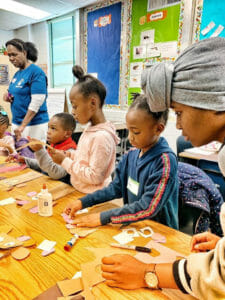
From science experiments to fitness games, students are able to get a variety of fun learning experiences through Hands On Atlanta’s Discovery program.
Saturday mornings in Atlanta bring a special group of youth and volunteers together. Hands On Atlanta provides an enrichment program for over 800 students from kindergarten to fifth grade.
, partners with 11 schools in the metro-Atlanta area that have been deemed title 1 schools, which means at least 40% of the students come from low-income families.
From robotics and coding, to art and fitness, students are able to learn a variety of educational lessons from volunteer mentors on two Saturdays a month throughout the school year.
The lessons go beyond just the typical science and math lessons, however. Students are able to learn how to deal with their emotions, cultivate strong relationships and show initiative in taking responsibility.
“Discovery provides a way for students to connect to education without the pressure of grades and performance,” said Candice White, program manager of Discovery. “The students are able to engage with mentors, individuals in the community that truly want to see them grow.”
For these students who come from disadvantaged backgrounds, programs like Discovery enable them to dream bigger than what their current situation allows. And all of this wouldn’t happen without the nearly 2,000 volunteers who dedicated more than 9,500 hours last school year.
For nonprofit organizations, like Glasswing and Hands On Atlanta, de Sola said, “volunteers are truly the “motor” that keep the entire operation running.”
If you’re considering whether or not to volunteer this Global Volunteer Month, maybe White’s favorite quote will motivate you: “A candle loses nothing by lighting another candle,” by James Keller.
“That’s something everyone should remember when it comes to serving,” White said. “Not only is it self-gratifying, but it is something that makes our whole entire community better.”
In light of COVID-19, nonprofits, companies and individuals are adapting the ways in which they serve their communities. Visit
to find creative ways to make a difference and be a #LocalLight in your community during Global Volunteer Month.
How Volunteers Supported Wildfire Response and Long-Term Recovery Efforts in Northern California
Over the past few decades, several major disasters have tragically shaken communities across the United States. From natural disasters like hurricanes, tornadoes and wildfires, to man-made disasters like the Flint water crisis, these events test the unity, strength and resilience of our communities. The path to recovery and rebuilding is long, often continuing for years after a disaster strikes – and this work is most successful as a collaborative, cross-sector effort that includes the ongoing support of volunteers. Disasters can be scary and unpredictable, but the incredible individuals who step up to help represent the great humanitarian spirit that we see rise up, time and time again, in moments of need. As local experts in volunteer management, Points of Light Global Network affiliate often play a critical role in managing volunteers throughout response and recovery efforts.
North Bay Wildfires, Fall 2017
Wildfires are incredibly powerful and can gain speed rapidly, quickly devastating entire neighborhoods. The North Bay Wildfires caused thousands of families across Northern California to lose their homes and businesses, and brought more than 8,000 firefighters in to battle against raging flames.
In Napa, Marin, and Sonoma counties, the
serves as an emergency volunteer center, overseeing spontaneous volunteers and donations in the aftermath of a disaster. We spoke with CEO Linda Jacobs and Elaine Tokolahi, director of volunteer services, to learn more about their disaster preparedness, response and recovery efforts – and the critical role played by volunteers.
How did the North Bay Wildfires impact your community or region, and what was your organization’s role in the disaster response and recovery efforts?
In the last four years, CVNL has stood up an emergency volunteer center multiple times due to fires and earthquakes. The most recent disaster that struck our region was the North Bay Fires, which started on Oct. 9, 2017. We operated two EVCs simultaneously in two different counties. In Napa, we managed more than 2,000 volunteers who staffed three evacuation centers and shelters, and in Marin we managed nearly 1,000 volunteers who staffed one large evacuation center and shelter. Following the fires, we partnered with Redwood Credit Union to distribute $1.621 million to people impacted by the fires. We also distributed grants to nonprofits that provided direct services to people and animals impacted by the fires. CVNL is still involved in Napa’s long-term recovery by recruiting and managing volunteers for Napa’s Long-Term Recovery Group, comprised of nonprofit and government agencies dedicated to the whole community’s recovery.
How did this disaster impact your community?
In Napa County, more than 600 families lost their homes in the fire, many more people lost their jobs because businesses burned down, and thousands more residents suffered financially due to the weakened economy. Nonprofits saw a significant increase in the number of clients and in the severity of client needs.
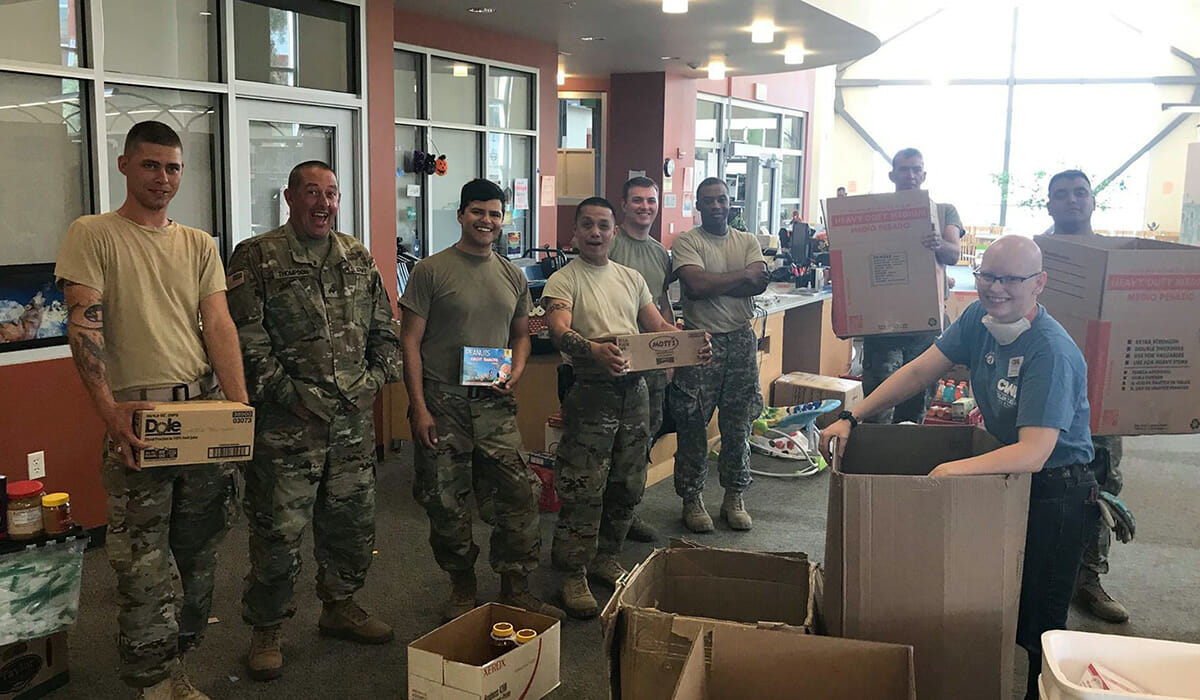
National Guard members from Travis Air Force Base visit the American Canyon shelter to help sort donations.
What role did volunteers play in supporting your organization and the community, both in the immediate response and long-term recovery?
During the fires, volunteers stepped up to fill nearly every role in the shelters and evacuation centers. They cooked and served food, set up cots, took care of animals, interpreted between Spanish and English, and sorted mountains of in-kind donations. Volunteers with professional affiliations provided medical care and childcare. AmeriCorps members filled volunteer lead positions. After the fires, volunteers continue to help. They rebuild homes and schools, plant trees, hold donation drives, and rally their coworkers to volunteers alongside them.
What do you want eager disaster-relief volunteers to know before they begin serving affected communities?
Registering in advance through the organization that manages the emergency volunteer center guarantees that you will be used if there is a need. Just showing up often gets in the way of the first- and/or second-responders. We recommend getting training ahead of time, as knowing what the roles are and how the process works in advance makes service smooth and more supportive during a chaotic time.
What lessons has your organization learned, and what advice do you have for other volunteer management organizations that may face a similar situation in the aftermath of a disaster?
As the old adage says, “practice makes perfect.” Dedicate time to practice your emergency plans and continuity of operations plans. Learn how to serve as an emergency volunteer center by practicing at least once a year. Work with your local government agencies so that they know how to integrate volunteers into their own plans. Ultimately, you will be staffing the response efforts that they lead, so show them that volunteers can be assets during disaster response. Government agencies often fear that spontaneous disaster volunteers will become liabilities, but when we strategically plan ahead for volunteer involvement in response, those fears go away and volunteers can significantly contribute to disaster response efforts.
Is there one particular moment or memory that stands out to you as you think back to this period of response and recovery?
Disaster volunteers come from all walks of life, yet share the same goal: alleviate suffering. One particular memory comes to mind. The local Islamic Center learned of our need for shelter volunteers, so three teenage sisters who worship there signed up for an evening shift at a shelter. They said they finished their homework and came right over, with their parents’ permission. On the second night, they volunteered again and brought their cousins to help. On the third night they brought their parents, too. By the last evening shift, the original group of three sisters had grown into a group of 12 volunteers, who stepped in to feed people, help the elderly walk around at night, gave water to sleepy children, signed-in new fire evacuees, and did anything else needed to make the shelter a warm and welcoming place.
In the event of a disaster, Points of Light supports first-responder organizations, like FEMA and the American Red Cross, connects with Voluntary Organizations Active in Disaster chapters across the United States to assess the situation, and coordinates with our Points of Light Global Network affiliates and partner organizations in the affected areas. Remember – in the immediate aftermath of a disaster, it is critical that people who want to volunteer, especially those outside of the immediate area, do not self-deploy. Connect with local organizations responding to the disaster to find out the best way to get involved.
A Dozen Things to Do in St. Paul During the Points of Light Conference
The Points of Light Conference offers incredible opportunities to take in the Twin Cities rich culture. From museums, theater and dining to sports, music and historic districts, there’s something new to experience for every attendee.
Network with people from around the world and your own backyard.
Recharge your enthusiasm for volunteerism and gain new insights to take back home.
With more shoreline on the Mississippi River than any other city in the U.S., cruise on a river boat, take a leisurely walk or ride a bike by the river and take it all in.
Mall of America is an easy train ride away. With over 520 stores to choose from, it will be easy to shop till you drop.
Nerd out at the Minnesota Science Museum, located across the street from the Points of Light Conference and listed as one of National Geographic’s Top 10 Science Museums in the U.S.
See a show at one of the many historic theaters and show houses located in St. Paul or Minneapolis.
The Twin Cities metropolitan area is a foodie destination. With cuisine from all around the world, from hotdish to pad thai, we have it all.
St. Paul used to be known as a mobster’s paradise during Prohibition. Re-live history while exploring Wabasha Caves or the hidden secrets and hideouts around St. Paul.
Visit elegant Summit Avenue, the longest preserved Victorian avenue in the U.S. In addition to being home to the governor’s residence, authors F. Scott Fitzgerald and Sinclair Lewis both lived on Summit Avenue at the same time.
Grab a bite to eat at the iconic Mickey’s Diner, a local favorite that has been featured in three movies including “The Mighty Ducks,” “Jingle All the Way” and “A Prairie Home Companion.”
Weather not to your liking? No problem. Take the skyway instead! The city’s 5-mile long continuous skyway system is one of the longest in the U.S., second only to her twin’s skyway network in Minneapolis.
Look up and be amazed inside the Minnesota State Capitol, home to the second largest unsupported marble dome in the world. If you must know, the first is St. Peter’s Basilica in Rome with the Taj Mahal in India at third.
, content partner of the Points of Light Conference.
Co-hosted with HandsOn Twin Cities, the 2019 Points of Light Conference will offer unique opportunities for networking and exploring the Twin Cities and its rich history of volunteerism. View the agenda, featured speakers, special events, and register today at
Is there something special about the Twin Cities? Yep. You betcha. It’s the volunteers
In two weeks, the 2019 Points of Light Conference will kick-off in St. Paul, Minnesota. Our state is known for our 10,000 lakes, snowy and cold winters and his royal purpleness, Prince. But in the past few years, we’ve also hosted a Super Bowl, a men’s basketball Final Four, and countless events and national conferences.
Visitors to our region are often surprised by the fantastic food scene, bountiful cultural and natural attractions, and the giant Mall of America (with no sales tax on clothing or shoes!). But, just as often, are met with the feeling of being warmly welcomed by the volunteers who work at the events they’ve come to Minneapolis/St. Paul to attend.
Year after year, the Twin Cities is ranked the No. 1 metro area for volunteering. People here value service to others, stewardship of our community and participation in our common good. We are typically shy about bragging about our state, but one area we love telling people about is our willingness to spend time helping each other out. It’s no surprise HandsOn Twin Cities is the oldest volunteer center in the nation. And this year, we’re celebrating 100 years of supporting service and volunteerism.
We are home to a high number of Fortune 500 headquarters, an amazing tech and med-tech startup scene, and small businesses galore. We have a spirit of innovation and industry that comes from our fantastic education system, and a cornerstone of our corporate and educational culture is service. It is hard to understate the commitment of our business sector to volunteerism and civic participation.
When you land at MSP International Airport, we invite you to experience the lakes, the theaters, the restaurants and some meaningful professional development at the Points of Light Conference, which HandsOn Twin Cities is excited to co-host this year. But we also invite you to get to know what makes the Twin Cities such a fertile place for volunteerism. Talk to the conference volunteers and find out how many different organizations they serve with. Ask the people at your hotel how their company supports volunteer time off. Keep your eyes peeled when you go by any park, field or playground, and we bet you will see people volunteering.
So, we uncharacteristically boast about our No. 1 ranking in volunteerism. Is there something special about the Twin Cities? Yep. You betcha. It’s the volunteers.
Tracy Nielsen is executive director of HandsOn Twin Cities, a member of the Points of Light Global Network. She co-authored this blog with Andy Goldman-Gray, who serves as chairman of the HandsOn Twin Cities board of directors.
Co-hosted with HandsOn Twin Cities, the 2019 Points of Light Conference will offer unique opportunities for networking and exploring the Twin Cities and its rich history of volunteerism. View the agenda, featured speakers, special events, and register today at www.pointsoflightconference.org.
Improving Lives Through Technology and Mentorship, Volunteer Supports Rural Education and STEM Initiatives for Youth in India
Naveen Prathapeneni is committed to changing the world in small, impactful ways. A lifelong volunteer from Hyderabad, Telangana, in India, who began giving back to others at an early age, he focuses on skills-based volunteering and works with multiple organizations to support rural education and STEM workshops for students.
Naveen believes that education is a fundamental right for everyone, and that a person’s background should not affect access to quality, affordable education. Outside of his job as a cloud solution architect with
, he helps nonprofits and organizations scale their operations through technology, mentors high school and college students and has developed a mobile application to help small-scale farming businesses.
Reaching more than 10,000 students annually, Naveen is devoted to improving lives through education, mentorship and technology. He believes in the power of people, and understands that it is the actions of individuals that have the power to change the world.
In recognition of his dedication to service, Naveen received the “Volunteer Hero” award from
a Points of Light Global Network affiliate in India that brings together volunteers and organizations to share time, skills and passion to promote social development. We spoke with Naveen to learn more about his work in rural development and education.
What inspires you to volunteer?
I come from a rural background where most of my schooling was done at rural schools that had minimal access to information and less exposed to career opportunities. After schooling, I could not choose a career path to align with my interests and passion. I had to face several challenges in positioning myself in the market in align to my interests. This experience had motivated me to focus on rural education and helping students.
Tell us about the organizations you volunteer with, and how you are involved
.
I work with several nonprofits and schools. I have been working with Nirmaan since 2011, helping them scale up their operations with technology adoption. I adopted one primary school and work with 12 rural high schools, one junior college and one degree college in Andhra Pradesh, Telangana.
Nirmann Education Helpline: I am considered a social ambassador, and motivate rural students and connect corporations. I have participated in several initiatives and flagship programs and have mobilized volunteers and conducted train-the-trainer workshops.
Remote Volunteering: I have been a service lead and remote mentor at a college in the Khammam, Telangana, district. I initiated remote mentoring programs and conducted career workshops, code camps and spoken English classes.
Old Alumni Alum Lead: I Initiated alumni setup at 12 high schools located in Mamidikuduru Mandal, East Godavari, Andhra Pradesh. I worked to improve rural schools, conducted career counseling, led train-the-trainer workshops, science fairs, science and engineering workshops and STEM sessions.
How did you become interested in education and sustainable agriculture? Why are these causes so important to you?
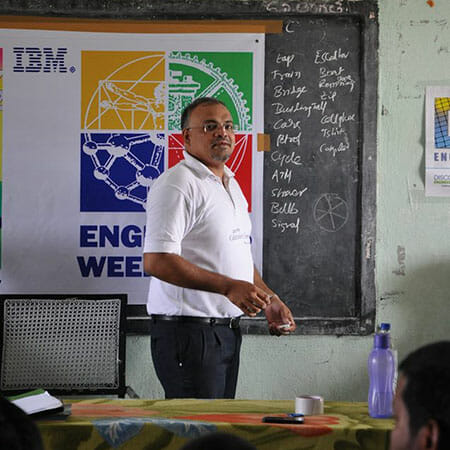
Naveen is devoted to improving lives through education, mentorship and technology, and works with multiple organizations to support rural education and STEM workshops for students.
My primary work areas are focused on rural education, improving schools and livelihood support. I also worked extensively in sustainable agriculture, promoting STEM careers, disaster management support and supporting people with disabilities.
Education is a fundamental right and everyone in society needs to have access to quality and affordable education to fulfill their aspirations
I strongly believe that a “do2Learn” orientation works better for students in rural areas, hence I focus on STEM education and conduct STEM workshops and prepare reusable kits. Every year I conduct STEM works workshops for 500+ students, and so far I have addressed more than 10,000 students.
I got an opportunity to work with nonprofits focusing on rural development while working with rural schools. This has created interest to explore the agriculture field. Voluntarily, I have developed a platform and mobile application to help small business and small-scale farmers to connect supply and demand, and access advisory support with minimal cost.
Tell us about the mobile application you developed, and how it helps users.
I proposed and initiated the development of the mobile/kiosk based app to help the Nirmaan Education Helpline to scale up their operations in disseminating career information to students, teachers and even counsellors with minimal effort.
This kiosk is touch-based and allows students to connect to the Education Helpline through a toll-free number. Student can register and complete the pre-assessment form and choose two careers choice of interest. The system asks a few questions – a psychometric test – and based on certain parameters, suggests a preferred career. Student can browse the careers and see videos related to the career, know about the path to achieve that career and other information like availability of hostel, total cost of the course, scholarships, etc., including list of colleges and entrance exams.
I was responsible for architecting, designing the solutions, training interns, day-to-day interactions with the development team, and conducting the pilot. I also made further enhancements to add cognitive features like a chat bot to answer career-related queries.
How are you involved with iVolunteer?
I participated in mentoring workshops conducted by iVolunteer and worked closely with the iVolunteer team in conducting STEM workshops as part of a STEM campaign organized by my organization.
What has been the most rewarding part of your volunteer work? Do you have a favorite memory or story to share?
Of course, there are many. In one incident, one student who studied in a rural school contacted me two years ago to express her gratitude for motivating her to pursue engineering, and mentoring her to overcome her career challenges. She updated me that she joined in a start-up company in Gujarat.
What have you learned from your experience as a volunteer?
Volunteering is not just a giving process or just giving. As I mentioned, it is both giving and receiving. I have learned how to face social issues, challenges, and some solutions and how technology can help in solving some of those. Lastly, often people tend to change the world, but my experiences made me stay focused on one of two areas where I can work long-term and see the benefit and impact that I can bring,rather than trying to address every problem of the world. This approach has given me an opportunity to apply my skills in specific societal problems and work at a grassroot level.
Why do you think it is important for others to volunteer in their community?
Enjoy in giving back to society, you will get a lot in return, like satisfaction, network, new learnings, new skills, new people, new relations, new stories, different dimensions in thinking … a lot.
What do you want people to learn from your story?
Always do what you like and like what you do. Choose your area of interest and stay focused.
Honestly, what you are going to gain will be more than what you give.
Time management and work-life-balance used to be a big challenge. I started involving my family members in my activities, and they started enjoying the work. I tried to pair some of my field activities with family trips so that they are also engaged and feel the difference.
What’s next for you as a volunteer?
Continuing my focus on education in rural areas, my key projects are:
Study Circle at Government Degree College Khammam: I will strengthen the study circle by strengthening alumni and motivate them to be part of this initiative and help more than 600 students to achieve their dreams and goals. I will also help empower them with livelihood skills and work-readiness aspects. When I started working with this college, 80 percent of the students expressed fear, lack of guidance and moral support as major challenges.
Extend classroom at Government Primary School, Pochammabasti: This school is operating in 2.5 class rooms with 140 children from first to fifth grade. There are several proposals to government officials but, no progress. I am planning to crowdsource funds along with my contributions to set up temporary classrooms by the beginning of next academic year in 2020.
Operational Efficiency at Nirman Vidya Helpline: Continuing my support to Nirman Educaiton Helpline, I plan to enhance the mobile application with psychometric tests and cognitive capabilities. This will help counselors to quickly access information and learn the processes at call centers, and students can access information by asking queries in natural language.
Developing Future Civic Leaders, One Neighborhood at a Time
Points of Light was founded on the simple yet profound belief that individuals play an important role in solving community challenges, and that the innovation and dedication of ordinary citizens can accomplish extraordinary things. Starbucks has a similar commitment, reflected in its mission statement:
“to inspire and nurture the human spirit – one person, one cup and one neighborhood at a time.
”
Through a grant from the Starbucks Foundation, Points of Light created a groundbreaking program inspired by national service that provides Starbucks retail employees an opportunity to lend their hearts, hands and minds to local organizations that leverage volunteers to meet their mission. The
invests in local nonprofits through the power of human capital, serving as an amazing example of the power of public-private partnerships, and the importance of elevating and investing in service.
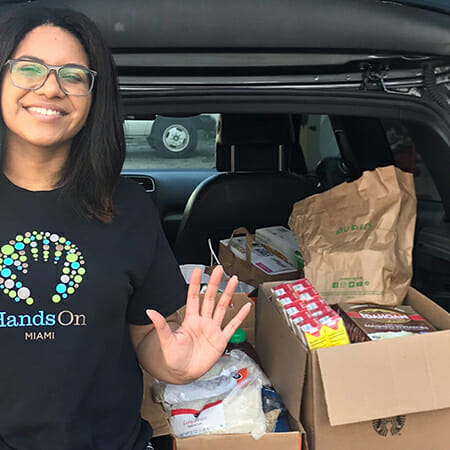
HandsOn Miami Service Fellow Cindy Ariza dedicated her time to recruiting and training community emergency response teams in Miami.
Points of Light’s commitment to leveraging service as a solution for organizational and community needs is based on the belief that cross-sector partnerships are a critical element of effectively informing and impacting social and community issues. Our partnership with Starbucks is an innovative approach to strengthening networks and nonprofits that complements other products and services in our capacity building portfolio. Our shared commitment to volunteerism and impactful community engagement served as inspiration for the initial vision for this program, which was to create a revolutionary model of catalytic citizenship.
For six months, Points of Light and 13 members of our
engaged 36 Starbucks Retail Partners (part-time employees) as Service Fellows, providing them with a robust experience that included civic education, community engagement and sector building. This pilot program provided Points of Light, our Global Network members and Starbucks a rare opportunity to co-create an experience that was responsive to the needs of networks and nonprofits while simultaneously developing future civic leaders.
Fellows not only made a difference in their communities, collectively providing more than 17,000 hours of volunteer service, but inspired others to do the same. This partnership will continue to drive catalytic changes to the existing volunteer infrastructure, while also significantly enhancing the capacity of nonprofit organizations to effectively engage volunteers and fellows within their workforce. We look forward to leveraging the lessons learned and impact achieved to explore future phases of the program.
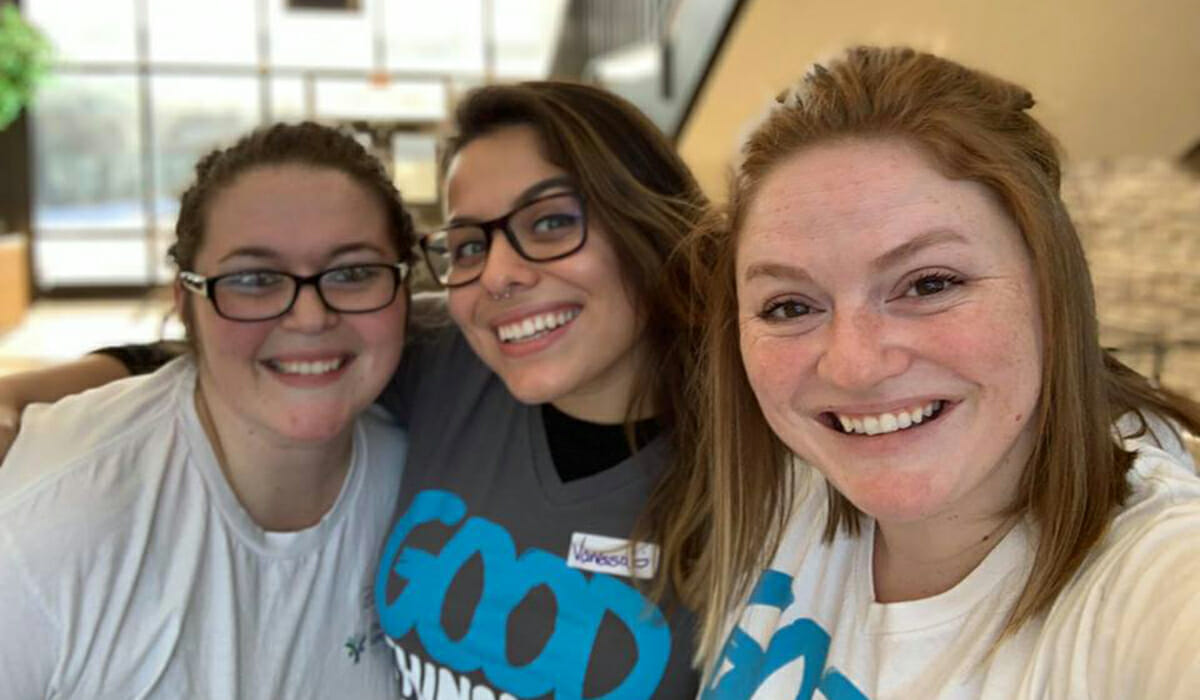
Shannon Galford, Starbucks global responsibility program manager (right), with Chicago Cares Service Fellows Zoe Pace and Vanessa Higueros.
Read stories from Points of Light Global Network members that hosted Starbucks Service Fellows during the pilot program:
Alison Doerfler is the senior vice president of capacity building at Points of Light.
Creating a More Vibrant Canada Through National Leadership on Volunteer Engagement
American Express Canada employee volunteers plant trees with Ontario Streams, a nonprofit dedicated to environmental conservation. In communities across the country, Volunteer Canada convenes and collaborates with volunteer centers, nonprofits, businesses, governments and educational institutions to create powerful tools for citizen engagement.
Volunteer Canada is at the forefront of providing nationwide leadership centered on volunteer engagement and is a member of the
. It convenes and collaborates with volunteer centers, nonprofits, businesses, governments and educational institutions to create powerful tools for citizen engagement. In the midst of an ever-changing world and political shifts, the organization works to increase the participation, quality and diversity of volunteer experiences that build strong and connected communities.
Since its founding in 1977,
, has provided national leadership and expertise for organizations and volunteers alike. It identifies common community issues, and seamlessly mobilizes the knowledge of experts to produce learning tools that help build stronger communities. With a network of 220 local volunteer centers, the organization helps promote volunteering, connect people with opportunities to volunteer, build organizational capacity and provides leadership around relevant issues.
With a deep focus on research and policy, Volunteer Canada has conducted several studies centered on volunteerism and the constantly evolving volunteer landscape. Its
study addresses a growing gap between what volunteers look for and the opportunities organizations offer. The organization understands what motivates today’s volunteers: they’re mobile, have goals, are driven by results, self-directed, have multiple interests and often seek short-term opportunities that use their skills.
To better understand these motivations and emerging trends, the organization has also worked alongside Statistics Canada to give insights into the state of volunteering in Canada. Their latest
found that Canadians volunteer an average of 154 hours per year, and that 82 percent of Canadians volunteer informally, helping people directly without the involvement of an organization or group. Youth are more engaged than past years, with 66 percent volunteering an average of 110 hours per year, and 38 percent of adults aged 55 and up continue to volunteer the most hours – 220 a year on average – out of any demographic.
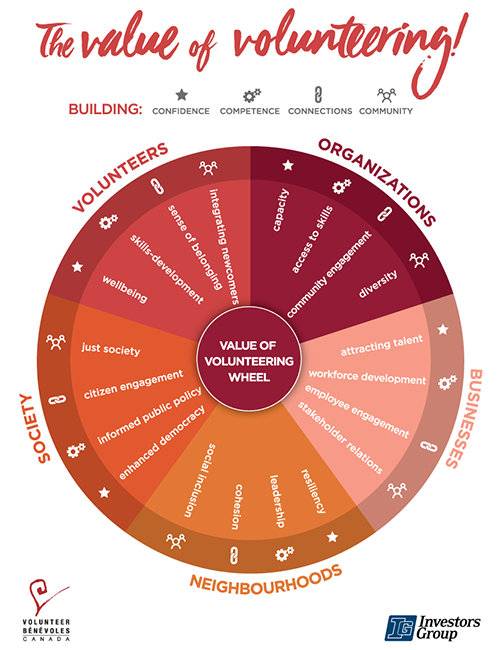
In order to portray the social and economic value of volunteering to organizations, businesses and individuals, Volunteer Canada created the
This tool illustrates the many benefits of volunteering, including building confidence, competence, connections and community.
The Value of Volunteering Wheel illustrates the many benefits of volunteering, including building confidence, competence, connections and community.
By developing its wide network of partners and resources, the organization has seen volunteer centers evolve in their leadership roles, which has led to increased volunteer involvement across Canada.
“I see volunteering as a form of social inclusion and participation in neighborhoods, communities and society, so that the places we live reflect our values,” said Paula Speevak, president and CEO of Volunteer Canada.
The organization also looks for ways to make an impact beyond its national borders. It has adopted the
to mobilize global efforts to improve social, economic and environmental conditions around the world. The organization is looking at the degree to which Canadian volunteers are already contributing to the SGDs, and what volunteer contributions may look like in the future.
Volunteer Canada also provides a variety of resources, services and supports to help companies adopt gold standard corporate community engagement programs.
report, for example, summarizes key findings from the largest survey of Canadian employees to date on the connection between their levels of engagement with their workplace and their employer’s commitments to community.
The organization organizes the country’s National Volunteer Week each year in April, a weeklong celebration to thank and recognize volunteers and celebrate the impact of volunteer service. This year’s theme was
, highlighting the exponential impact of volunteers and the ways they lift communities.
“Volunteering is such a beautiful, free spirited act of generosity,” said Paula. “There’s a component of giving to the community, however I see volunteering as shaping the community you live in. It’s having your voice and having your space.”
5 Reasons Nonprofits Can’t Afford to Skip the Points of Light Conference
Brian Dean, left, with Jersey Cares staff at the 2018 Points of Light Conference in Atlanta.
I don’t have time to go to St. Paul in June. That’s a busy time of year inside and outside of the office, and as the head of a nonprofit, I can find a lot of other things to do with the money I would spend on that trip. Our budget is definitely more tiny house than McMansion.
But I am going to go to St. Paul, and I’m going to make the investment to send other members of our team as well. The choice was easy, in spite of all of the reasons we have not to go. The
in St. Paul will be filled with remarkable people making a difference, and the chance to join with them to build a better world is a once-a-year, not-to-be-missed opportunity.
If you’re wondering how you would find the time or why you should find the money to attend the Points of Light Conference, I can offer you five reasons why you’ll want to do both and enjoy St. Paul in June:
Discover new ideas to transform old paradigms.
Challenge your existing mechanisms and spark new thought by spending a few days immersed in the company of smart people who ponder the same issues that you do. The 2018 conference sent me home with pages of ideas that have inspired new ways of thinking, elevated my organization’s work and brought people together in new ways.
Get inspired by new friends who are passionate about the same work that gets you out of bed in the morning.
The Points of Light Conference grants you the opportunity to share in the enthusiasm of inspired and inspiring people who remind you why you began this journey. You’ll return home ready to leap out of bed with the energy you’ve found among your new worldwide network.
Know the name and face to call when your local partner wants to work globally.
Meeting the great people who love making the world a better place is only part of the benefit. Expanding your local partnerships by assisting the people, organizations and companies critical to your work with their national and international efforts helps you improve your place in your corporate partners’ CSR portfolios and elevate your voice in local changemaking.
Break out of your personnel and financial audits mindset to spend quality time with your big picture.
The Points of Light Conference brightens and broadens your vision while redirecting your focus when the daily details are all you can see. Set your sights on the bigger and better, and be the bigger, better leader your community needs.
Share in the excitement of Points of Light’s new energy under the leadership of Natalye Paquin.
Points of Light’s re-commitment to local organizations and volunteers as central to our collective work in changing the world is your opportunity to reach beyond your service area and grow a global movement. This moment is your invaluable chance to imprint your passion, purpose and plans onto a global effort and accelerate your local work into a cultural transformation.
If you’ve never attended a Points of Light Conference, take a chance and see for yourself how a few days can propel your personal mission. If you haven’t attended for a while, come and see how a new direction and a new commitment to you can advance your work. And if you came last year, you probably already have your ticket. Whatever your history, hopefully your future includes joining new friends to share your story and shape the way you, and we collectively, are changing the world.
Brian Dean is the president and CEO of Jersey Cares, a Points of Light Global Network affiliate located in Livingston, New Jersey. This will be his 16th year attending a conference with Points of Light.
5 Reasons Why Nonprofits Leaders Around the World Should Attend the 2019 Points of Light Conference
Kostapanos Miliaresis (center) of Ethelon participates in a panel discussion on global changemaking at the 2017 Points of Light Conference in Seattle, with Daniel Morais (left) of Atados and Sue Toomey of HandsOn Hong Kong.
in Greece, one of the biggest benefits of my role is connecting with people from all over the world who are trying to make this world a better place. The highlight of this is having the chance to meet those people in person, and there is no better place to do that than the annual
I will never forget the first moments at the 2017 Points of Light Conference in Seattle when, even before the opening of the conference, people from all over the world were hugging one another like they were relatives coming together for Christmas. That was the first time I understood that the global Points of Light Network is something more than the emails, the internal group and the common projects. It is your international family, a place where you feel welcomed, beloved and safe to get out of your comfort zone.
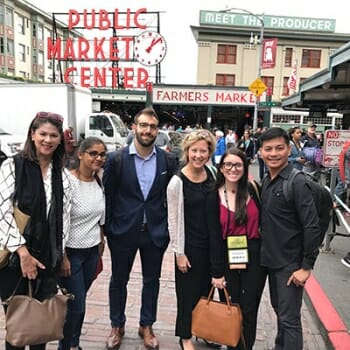
At the 2017 Points of Light Conference in Seattle, Kostapanos (center) visits Pike Place Market with Maria Feliza Cojuangco (left) of Hands On Manila, Neha Shrivastava of iVolunteer, Sue Toomey of HandsOn Hong Kong, Ana Cristina Perez of Voluntarios de Panama, and Dondon Marquez (right) of Hands On Manila.
2. The Conference Outside the Conference
We are all well aware that at these types of events… content is the king! The difference is that the Points of Light team makes sure each participant makes the most out of it, even outside the core agenda. Parallel events, private venues, activities, and a cultural tour around the city are only a few of my top memories from the 2018 conference in Atlanta.
3. All-Star Team
Imagine if you could select individuals from different organizations, each with their unique added value, and combine them all together. In the NBA, they call it the All-Star Game; in civil society, we call it the Points of Light Conference.
For three days, you have the chance to listen to amazing case studies from all over the world, from organizations that are leading their sector. The best thing? It’s up to you to select who you want to hear from and what you want to learn, thanks to the flexible DIY conference agenda.
4. What If… Why Not Me?
During the sessions or the breaks, and especially while you are traveling back home, you get this feeling. “What if I could also do that?” “Could it be me and my organization presenting next year?”
The motivation and out-of-the-box new ideas that you take back with you give you what you need to feel ready to create change in your community, knowing that other folks around the world have already made it!
5. The Power of Connections
The Points of Light Conference lasts less than a week, but its impact lasts forever. The real magic starts through all the new collaborations that are being created with the amazing people you met at the conference. It’s there that you understand that if you connect your powers, nothing can stop you!
I could write so much more, but the truth is — it cannot be fully understood, until you experience it. Greetings from Greece, and hope to see you all in St. Paul!
Kostapanos is the general director of Ethelon, a Points of Light Network affiliate located in Marousi, Greece. The 2019 Points of Light Conference will be his third.