Call of a Global Movement: Helping Millennials Build Community Through Volunteerism
Across the globe, volunteers use their time, talent and resources to tackle tough challenges and build stronger, more vibrant communities. With our global network of more than 200 affiliates, Points of Light will celebrate International Volunteer Day on December 5, recognizing volunteers in communities around the world who answer the call to serve, every day and especially in times of need.
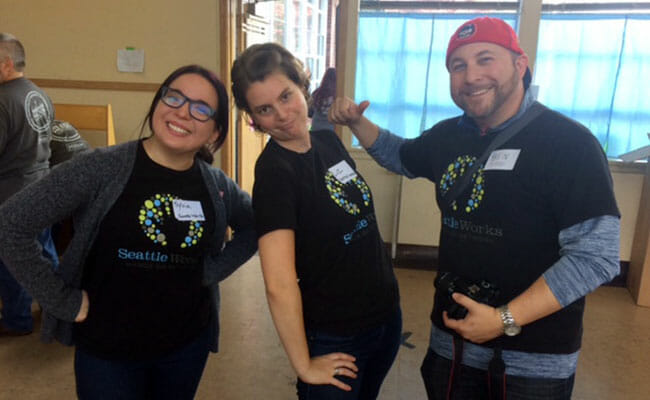
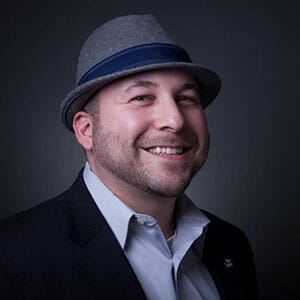
As part of this celebration, we are spotlighting a few of our affiliate leaders to share the story of their work and how their volunteers are making a difference locally. In Seattle, Ben Reuler – executive director of our affiliate Seattle Works – is committed to helping millennials who are new to the city build community through volunteering. After nearly a decade as a direct service provider at a teen shelter and as a home visitor, Ben returned to school to earn his graduate degree in social work. He became a licensed social worker and moved into nonprofit management, serving six years as executive director of LIFT-Chicago, an innovative organization helping families lift themselves out of poverty, before joining Seattle Works in 2015.
We spoke with Ben to learn more about what inspires him, how Seattle Works is shaping the future of volunteering locally, and why he is excited about “trust-based volunteerism.”
As the executive director of Seattle Works, what inspires and drives you?
I am inspired by the potential of our city. Seattle has a rich culture of philanthropy, volunteerism and compassion. At the same time, Seattle is changing very, very rapidly and I am driven by the role that Seattle Works is playing in helping to shape the future of this region. Seattle Works is in the business of creating love matches between people, companies, causes and organizations; Sitting at the center of this Venn diagram and helping to mold our city drives me every day.
How did you get started in the volunteer space, and what brought you to Seattle Works?
My parents indoctrinated in me that volunteerism is a responsibility. In high school, I was the “volunteer guy.” In college, I was the “volunteer guy.” All of these experiences drew me to the field of social work and imbedded in me a desire to serve my community in a professional capacity. Seattle Works drew me in because of its mission to connect volunteers, develop leaders and build community. But it was really the people at this organization who sealed the deal for me – a truly remarkable staff and board of directors. For example, after bearing witness to how the board led such a thoughtful executive director hiring process, I was like “I want to work with these peeps!”
The theme of International Volunteer Day this year is “Volunteers Act First. Here. Everywhere.” In your community, how do volunteers act first?
We often talk about volunteerism as project based. What I want to highlight is the role that nonprofit boards play in acting first. Board members are the unsung heroes of our communities. Every nonprofit in our region has a board of directors; it is these dedicated volunteer leaders who are helping act first by strategizing, fundraising, approving budgets, advocating and advancing each of our organizations’ missions in so many ways. Board members enable the rest of us to act.
How do you draw volunteers’ attention to real problems in their communities and equip them to be changemakers themselves?
Seattle is booming with millennials; they are flocking here in droves. They often come to Seattle with no networks, no roots, and end up fighting the Seattle Freeze (look it up!). They crave connection, and have an unwavering motivation to do good – yet they need help plugging in. That’s where Seattle Works comes in. One of our core values is that we have fun, and we focus on community-building amongst volunteers. Whether people connect with us via their employer for a volunteer project, or through an 8-hour leadership training about nonprofit board service, we meet volunteers where they are and provide an opportunity to connect. And at every volunteer project, the volunteers get to hear from the experts at the nonprofits, parks, and schools about why this work matters, and how it connects to larger issues facing our community. This context is crucial.
What advice do you give to individuals who want to get involved, but don’t think they can make a difference?
It’s a privilege to think that we can’t make a difference. There is simply too much need and inequity in our communities for anyone to have the luxury of letting themselves off the hook by thinking they cannot make a difference – we all have a responsibility to at least try. My advice is to do something, anything. Take a step, any step, have an open mind, get after it, and be okay with failure, just learn from it.
What has been the biggest benefit of being part of Points of Light’s affiliate network?
To know that Seattle Works is a point of light in an international movement to connect volunteers and unlock the potential of individuals and communities.
What emerging trend in volunteerism are you most excited about?
“Trust-based volunteerism.” Just like there’s a trend toward trust-based philanthropy, I am very excited by the trend of trust-based volunteerism. This means that we must trust local communities and local nonprofit organizations to identify what their needs are, and to inform how the rest of us can help. This should always be a non-negotiable when volunteering – listen, listen, listen to the experts on the front lines, and follow their lead.
Call of a Global Movement: Engaging Citizens as Changemakers in France
Across the globe, volunteers use their time, talent and resources to tackle tough challenges and build stronger, more vibrant communities. With our global network of more than 200 affiliates, Points of Light will celebrate International Volunteer Day on December 5, recognizing volunteers in communities around the world who answer the call to serve, every day and especially in times of need.
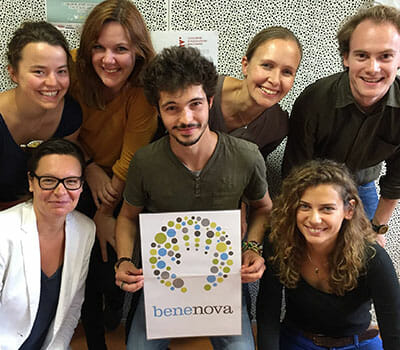
As part of this celebration, we are spotlighting a few of our affiliate leaders to share the story of their work and how their volunteers are making a difference locally. In Paris, France, Stéphanie Andrieux – founder and president of our affiliate Benenova – is motivated by people. Inspired by her experience as a volunteer and board member of HandsOn Bay Area, our affiliate in San Francisco, Stéphanie launched Benenova in 2013 with a mission to make it easier for citizens to take action to change the world around them. The organization, which derives its name from the French words bénévolat (volunteering) and nouveau (new), offers innovative and flexible ways to be engaged. Benenova currently mobilizes a growing community of 6,000 volunteers and hundreds of community and corporate partners in three major French cities: Paris, Nantes and Lille.
We spoke with Stéphanie to learn more about what drives her, how Benenova inspires and mobilized volunteers locally, and what she envisions for the future of global volunteerism.
As the president of Benenova, what inspires and drives you?
People. The amazing people I meet every day. And the deep belief that we (as humans) are the ones who can make the world better – and that we’d better get to work!
How did you get started in the volunteer space, and what led you to create Benenova?
I have been a volunteer since I was a teenager, initially helping kids with school work. I met such wonderful people and saw so much great and essential work done by volunteers that it became obvious to me that I should support the development of engagement. As to what led me to create Benenova, it is a mix of the incredible experience I had with HandsOn Bay Area when I lived in San Francisco, and the realization that a more practical and flexible approach of volunteering was needed in France.
How do you draw volunteers’ attention to real problems in their communities and equip them to be changemakers themselves?
We led an impact study last year, which showed that 83 percent of volunteers who have participated in at least one of our calendar projects view issues in a different way after they have met nonprofits, beneficiaries and citizens who deal with these issues directly. I believe that getting people out in the field and having them “get their hands dirty” is a very effective way to draw people’s attention to real problems. Equipping people is both a matter of logistics (bringing people to take on tasks that fit their expectations and skills while answering real needs) and inspiration (helping citizen realize they CAN be changemakers and inspire them to DREAM about being changemakers).
What advice do you give to individuals who want to get involved, but don’t think they can make a difference?
TRY!! Give it a try, sign up for a project and you’ll be amazed about how you will feel and how much you will have helped … and there is a good chance you’ll get addicted.
The amazing and inspiring changemakers in the network, the common passion we share, and our openness and desire to support each other in bringing more people out to volunteer.
What emerging trend in volunteerism are you most excited about?
I really love the fact that citizens are realizing they can make a difference every day, in many different ways, by choosing what food they eat, what products they buy, whether they bike or drive, etc. I am hoping this will continue to evolve and that volunteering – as in sharing some of your time to help further an initiative for the greater good – will simply become an obvious part of daily life.
Building a Stronger Community by Connecting Residents with Meaningful Volunteer Opportunities
Organizations around the country do incredible work. They focus on a variety of causes and important mission work. And while they use volunteers to achieve their mission, the mission is the main focus. Hands On Orlando, a Points of Light affiliate, does incredible work in their community, but they have an additional goal – to provide the highest quality volunteer experience possible.
The organization’s founder, Executive Director Chris Allen, was a TV news journalist covering human interest stories when he realized that while he got the inside access to the events, people in the community weren’t able to connect and take part in these wonderful opportunities. He founded Hands On Orlando as a way to engage local people in volunteer service.
“We started from nothing and now we are one of the leaders in the community for volunteer engagement,” said Kyle Trager, corporate citizenship manager. “We are just constantly figuring out how we can help the community and find opportunities to make it easier for people to find meaningful work.”
In the past few years, Hands On Orlando has activated volunteers in the face of both natural and man-made disasters. In preparing for Hurricane Irma, they drew on past experiences to make sure their volunteers were ready and informed.
“Preparation and communication is key,” Kyle said. “We work with the three lead agencies for hurricane response in a support function, pre-registering and managing unskilled volunteers who want to assist. We send an email blast in advance of the storm, and then stay in regular communication with volunteers throughout the immediate aftermath and weeks to come. Nothing turns a volunteer off more than an organization going silent, so we just keep sharing updates.”
While Hurricane Irma’s path shifted and the Orlando area received less impact than anticipated, Hands On Orlando still worked around the clock. Setting up an emergency operation center in Kyle’s kitchen, they did critical outreach to local nonprofits to see what was needed, and called upon volunteers to fill spots.
“We found out there was a lack of doctors and nurses at special-needs shelters during the storm,” said Kyle. “Hands On Orlando contacted the volunteers we knew of, as well as state government, to help coordinate response and support at these shelters.”
They’re also now focusing on helping people affected by Hurricane Maria, especially because central Florida has the second largest population of Puerto Ricans on the main land United States, and it’s growing every day.
“There are a lot of middle class people coming to the main land, and we’re trying to figure out how to best support those communities, both in terms of rebuilding their lives and helping to integrate them and introduce the idea of volunteering,” said Kyle. “We’re also trying to figure out how we can work with them to support their families back in Puerto Rico. It’s definitely going to be a mid-to-long-term recovery.”
And while Hands On Orlando works year round to prepare for natural events like hurricanes, there are unanticipated events they can never account for. When the mass shooting occurred at PULSE night club in June 2016, Hands On Orlando had to figure out how to take action under unprecedented circumstances.
“We learned that the difference between a natural disaster and a manmade disaster is that the manmade footprint is much smaller, but the emotional footprint is huge,” Kyle said. “It’s frustrating because people want to do something, but there’s often nothing to do. We wanted to create an outlet for people’s feelings and have some sort of an impact and community therapy through service.”
Hands On Orlando first created a large scroll of paper near the memorial for people to sign, share memories and write messages. They also did 49 service projects in memory of the 49 people who lost their lives, starting each project with a moment of silent for the victim. Since then, Hands On Orlando has reached out to Points of Light affiliates in London and Las Vegas, sharing the idea as a way of healing as each community dealt with their own respective tragedies.
Kyle says they pride themselves on being innovative, especially in the face of the unknown and great challenges. “I say we’re like a startup that just turned 18 years old. You just have to learn from everything and move on.”
Their constant growth and learning are evident. As one of the network leaders in corporate engagement, they are constantly working on projects that both benefit the community and provide amazing volunteer experiences.
One project that is special to the area is STEM Park – a 13.5-acre area of lake-front property owned by Hands On Orlando that is a perfect spot for team building. Since purchasing this land, volunteers have removed 22,000 pounds of debris, removed invasive species, planted natural plants, and worked to return the land to its natural state. The goal is to turn it into a learning space, so people can take part in STEM classes and understand the natural Floridian landscape.
“STEM Park provides us amazing opportunities to engage volunteers,” Kyle said. “It’s so unique, and really helps build community.”
At the end of the day, that’s Hands On Orlando’s goal – to build community.
“Every day is a new challenge, but it’s so rewarding when someone calls and I’m able to help them get involved,” Kyle said. “We don’t know who is going to call us. We don’t know what door is going to open. We are just always trying to figure out how we can best help the community.”
The Critical Role of Volunteers in Hurricane-Affected Communities
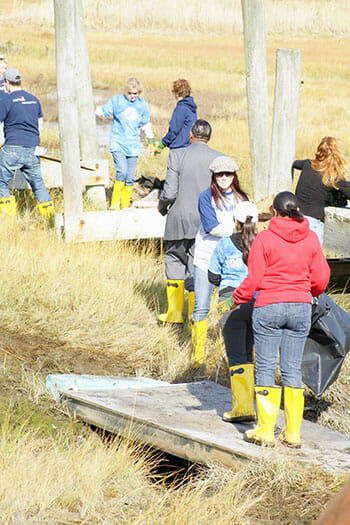
On Oct. 29, 2012, vast numbers of Long Island communities suffered overwhelming devastation as Superstorm Sandy truly brought the region to its knees. But out of that loss and despair came hope, as neighbors helped neighbors, and local organizations and volunteers stepped up to assist with the immediate response and to embark on the long road to recovery.
“If I had to pick my one word for the response, it would be
community
, how we unselfishly came together to help those in deep distress by pooling our strength and sharing the work and the responsibility,” said Diana O’Neill, executive director of the
, a Points of Light affiliate. “I have never witnessed or experienced anything like it — manifestations of true camaraderie and genuine human-kindness. It was the greatest privilege of my life to have a front row seat at our Volunteer Recovery Center, seeing the myriad organizations easing human suffering together on such a grand scale.”
As other communities face the aftermath of devastating storms, Diana shares her reflections on recovery and how volunteers can help in disaster-affected areas today.
How did Superstorm Sandy impact your organization?
Being involved in such essential disaster work was made possible by public/private partnerships which gave us a roof over our heads, lift to our programming, and full logistics support for disaster groups. We were an all-volunteer organization and did not have in-house disaster expertise. As part of the
, the Long Island Volunteer Center opened the Volunteer Recovery Center in donated former office and warehouse space of Sleepy’s in 2012 and operated it through 2013 with the assistance of AmeriCorps St. Louis ERT and the Points of Light network disaster response team, which supported us with help from Boston Cares, North Dallas Volunteer Center, Volunteer Fairfax, Howard County Volunteer Center, Western New York Volunteer Center, Hands On Atlanta, and New York Cares. Also funding via American Red Cross, Major League Baseball Players Trust, Bessemer Trust, GE Foundation, The Nunn Family Foundation, and Allstate Foundation was secured through Points of Light. We are forever in their debt. I cannot speak more highly of the dedication and professionalism of the LIVC disaster team, which was assembled along the way and who led by example — such gifted professionals paved the way for a coordinated response.
What role did volunteers play in supporting Long Island and your organization after Superstorm Sandy, both in the immediate response and long-term recovery?
In the volunteer industry, being invited to the human condition is a gift, the most noble of causes. And those of us who responded to the call to action from Superstorm Sandy will never be the same. The VRC became more than a facility, it also was the symbol of recovery for the region. It was hard and dirty work that could have easily overwhelmed but the indomitable spirit of the volunteers and the resiliency of those they served inspired and informed all efforts.
Volunteers led the way supporting the immediate response with food/water distribution, staffing human and pet shelters, assisting with family support and household needs like debris removal and clean-up, environmental clean-ups and mitigation projects, and then full-scale hands-on rebuilding efforts. In the end, 51,662 volunteers served 521,829 hours from November 2012 through June 2016.*
We have endured as a region, with neighborliness and shared kindnesses enduring as well. Some of those helped along the way have expressed their gratitude but just the knowledge that lives have been lifted up is thanks enough since, as we know, volunteering is its own reward. Each person touched in the process certainly brought out the best in each of us.
What do you wish volunteers who want to support communities impacted by Hurricane Harvey, Irma and Maria knew?
Volunteers need to be patient and wait until official announcements are made about volunteering and donations so that the regions won’t be overwhelmed. Please resist holding donation drives unless there has been a stated need in the affected community and a designated place to send the items to avoid waste and not over-extend community resources. Disaster groups need time to become ready to receive both supplies and volunteers, in order to put them to work with proper supervision, instruction, and personal protective equipment to ensure safety.
What are some lessons learned, for your organization, and advice for other volunteer management organizations who face similar situations?
Prepare before disaster strikes. All organizations need to invest in creating for themselves a Continuity of Operations Plan to be at the ready to roll out in the event of a disaster. Participation in VOAD is necessary to ensure cooperative efforts of community-based organizations and disaster groups that come on scene, and coordination with local government/OEM/FEMA.
Volunteers need to be kept informed on a regular basis and have disaster trainings offered as appropriate to keep them engaged. Different permits need to be researched before disaster groups can do their work. A warehouse or large storage area is helpful to support the volunteer recovery efforts. Aligning partner organizations to the volunteer online platform pre-disaster is a good way to get things organized and running in the immediate aftermath to meet recruitment/referral needs.
As we approach the 5th anniversary of Superstorm Sandy, I just want to share that we all need to have faith in the process, love in our hearts, and always keep hope at the forefront of any thought and planned activity.
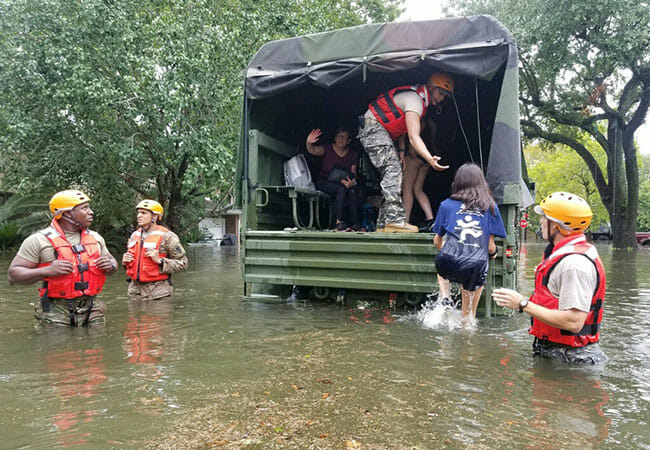
Texas National Guard soldiers arrive in Houston to aid citizens in heavily flooded areas from the storms of Hurricane Harvey.
Hurricane Harvey is the first Category 4 storm to strike the United States since Hurricane Charley in 2004, and the first major hurricane since the record-breaking 2005 Atlantic hurricane season, which saw such devastating storms as Katrina and Wilma. The slow-moving system is virtually unprecedented, forecasted to maintain tropical storm strength for five days as it moves along the Texas coast. While Harvey’s winds have weakened following landfall on Friday night, catastrophic flooding and life-threatening hazards continue to arise. In this current situation, with tropical storm Harvey still producing a lot of rain over the Gulf Coast, safety is our top concern. At this time, it is critical that people who want to volunteer, especially those outside of the immediate area, do not self-deploy.
Points of Light is currently supporting first responder organizations, like FEMA and the American Red Cross, connecting with Voluntary Organizations Active in Disaster chapters across the United States to assess the situation, and coordinating with our affiliates and partner organizations in the affected areas. All disasters are local; the members of the Points of Light HandsOn network are the local experts in volunteer management, and are often the lead organization in managing spontaneous unaffiliated volunteers throughout the response and recovery effort.
Texas is still in response mode and, until the storm has stopped, we will not have a clear sense of the damage or when it will be safe to begin recovery efforts. If you would like to support the recovery effort, here’s what you can do now to help:
Please don’t:
Don’t self-deploy at this time. The situation is still critical, highways and secondary roads are underwater, and travel is extremely difficult or unsafe throughout much of the affected area.
Don’t bring supplies or donations to fire stations, police departments, etc. First responders need to focus on immediate needs and emergency situations.
Please do:
Make a donation to help Points of Light and our affiliates support the mobilization of volunteers in ongoing response and recovery efforts.
If you are in the Houston area, volunteers are encouraged to contact Volunteer Houston, a Points of Light HandsOn Network affiliate, for opportunities to get involved. Nonprofits requesting assistance from volunteers can register their needs with the Volunteer Houston Virtual Volunteer Reception Center.
It’s been remarkable as a Houstonian to see the uprising of benevolent, kind-hearted points of light in our community that are trying to help each other, neighbor helping neighbor…it’s amazing to see this community come together to help people in their greatest time of need.
Points of Light is communicating and coordinating a humanitarian response with our affiliates and corporate partners. As the storm dissipates and a more clear assessment of the crisis and need is available, we will provide updates on how to get involved.
For the latest, please sign up for Points of Light email news and announcements, follow us on Twitter and check out our updates on Facebook.
Mobilizing Corporate and Community Volunteers to Improve Veterans’ Lives, One Home Repair at a Time
Providing support for the men and women who have served in the armed forces is a priority for many social organizations across the United States. Among the critical needs being addressed by these groups, such as providing access to healthcare, education and employment, is the need to help veterans find and maintain safe, sustainable housing. HandsOn Greater Phoenix, a Points of Light affiliate, has stepped up to this challenge, leveraging the power of corporate partnerships and volunteers to have an impact on the local veteran community.
The organization has been serving the Phoenix metro area for almost 25 years, connecting volunteers with opportunities to serve where they are needed most. Founded as Make A Difference in 1993, the organization set out to meet critical community needs, with a special focus on creating opportunities for working people to serve.
“There were a group of busy professionals that just liked the idea of plugging into multiple issue areas and using groups of colleagues and friends and networks to do good things in the community,” said Rhonda Oliver, president and CEO of HandsOn Greater Phoenix.
After 15 years of rapid growth, the organization re-established itself as HandsOn Greater Phoenix in 2008. Today, it functions as a traditional volunteer center, engaging all types of volunteers in more than 60 high-impact, one-time community service projects each month. But, Rhonda said, corporate volunteers are still a centerpiece of their programming.
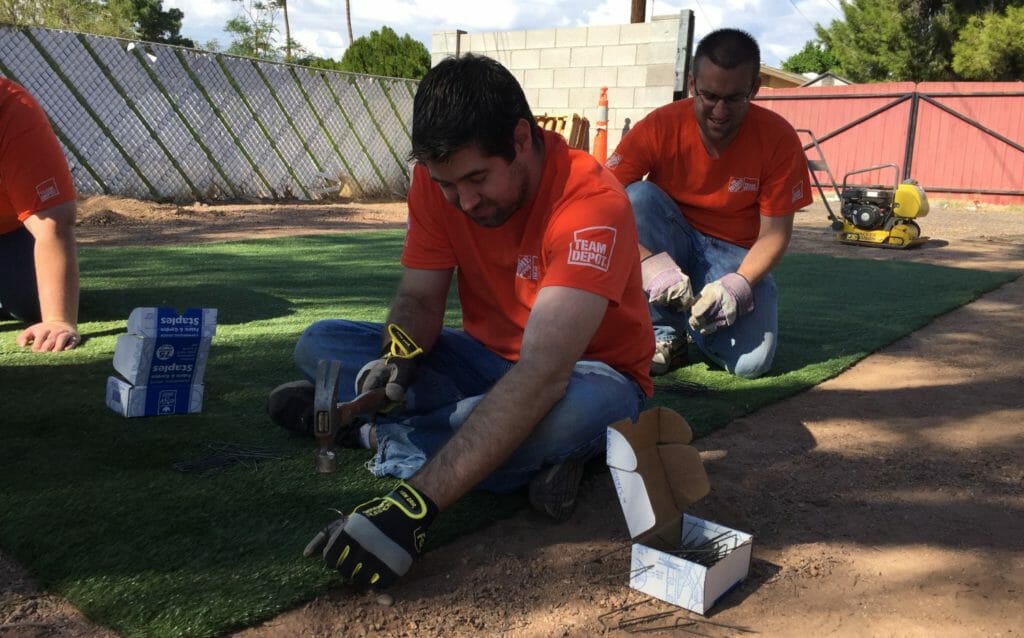
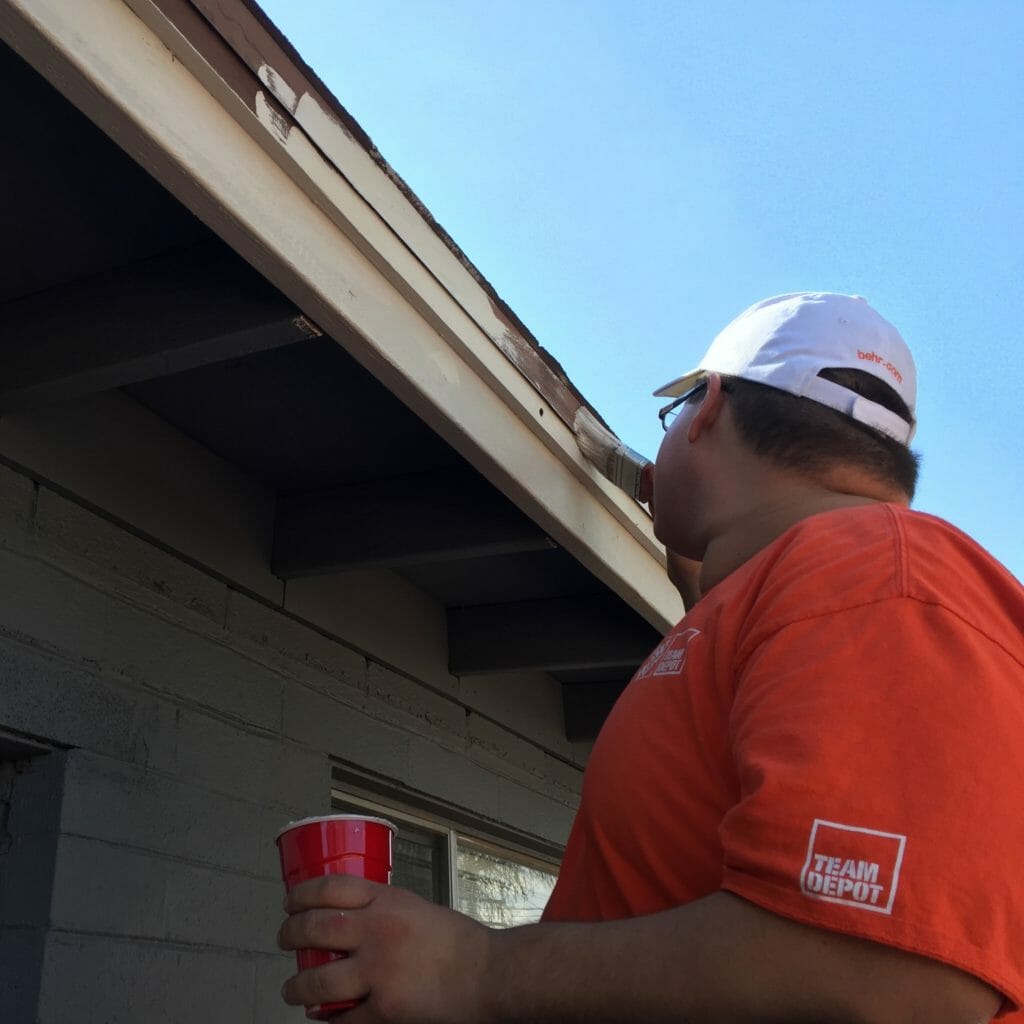
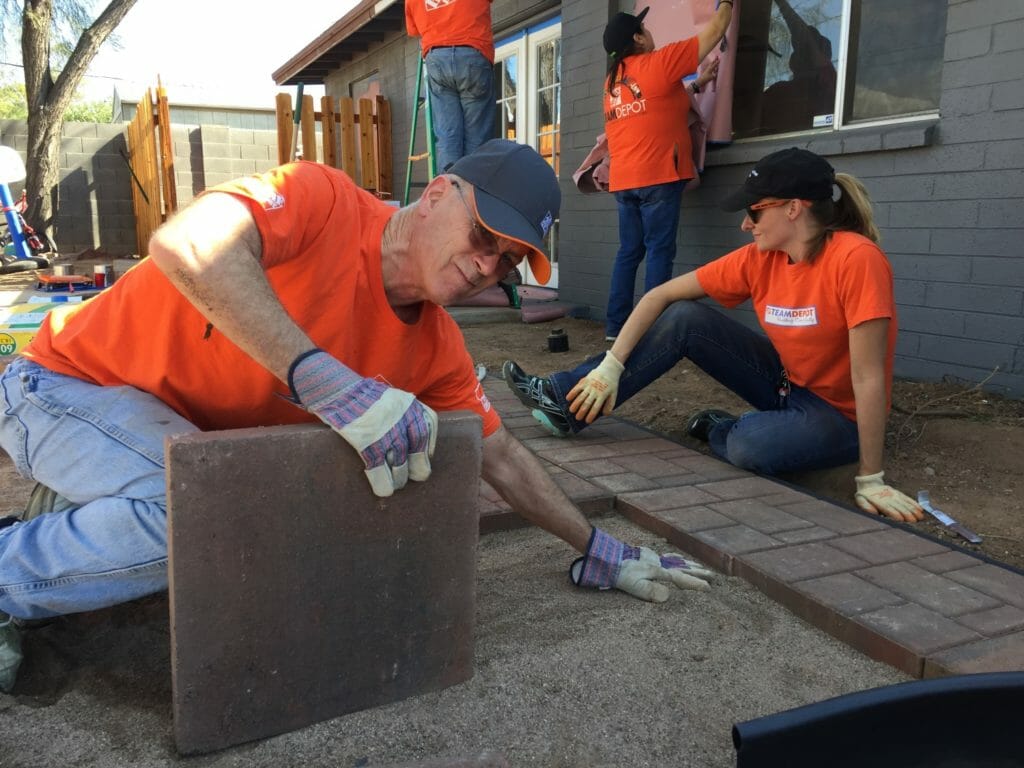
Through a long-standing partnership with Home Depot, HandsOn Greater Phoenix mobilizes teams of community and employee volunteers for its Veteran Home Improvement Program – supporting local veterans by providing needs-based home repairs and upgrades for weatherization, code violations or other modifications.
Four “Team Depot Captains” – representing the 39 Home Depot stores in the Greater Phoenix market – each conduct site visits, work with HandsOn Greater Phoenix to identify the improvements each home needs, and connect with local vendors that donate the necessary materials. Projects cover a range of activities, including painting, installing turf yards or even tree removal. Some of the most common projects are exterior paint jobs. HandsOn Greater Phoenix recruits community volunteers for these kinds of projects, as well as calling upon employee volunteers from other local businesses – among which, employees from companies like Wells Fargo, Intel and Cox are all regular contributors.
For more complex or large-scale projects, such as building ramps for disabled veterans, installing windows or walls, or other major modifications, Home Depot employees or volunteers from the vendor that donated the materials will offer up their time and skills to do the work.
“Some of our team captains have employees within their stores that have contracting-level experience,” said Steve Woodhams, a project manager at HandsOn Greater Phoenix. In one case, a Home Depot employee with experience as a contractor helped complete a renovation project that added a door in the shared wall between a veteran’s bedroom and her bathroom, giving her some added privacy as she prepared to welcome a foster child into her home. For projects like energy efficient window upgrades, where product warranties are important, employees from the window company often volunteer their time to complete the installation.
Veterans apply for the program through the HandsOn Greater Phoenix website, but they are also identified in a number of other ways, including through word of mouth and through the municipalities they live in, as cities and communities identify homes that are not up to code. The participating Home Depot stores will also identify veteran customers who would benefit from the program.
In addition to veterans, HandsOn Greater Phoenix programs support many causes. Through a youth mentorship program called Your Experience Counts, adults with daytime availability are put in classrooms to work alongside teachers and help ensure students’ academic success. The organization also has an AmeriCorps VISTA program that engages 19 VISTA members as volunteer or program coordinators serving with nonprofit partners across Phoenix, building infrastructure and providing the necessary tools for the nonprofits to more effectively manage their resources. Annual events like Serve-A-Thon, Make A Difference Day, Martin Luther King Jr. Day and 9/11 Week of Service and Remembrance also provide opportunities for volunteers to get involved.
This year for 9/11 Day of Service, HandsOn Phoenix is planning several projects, including a letter-writing campaign for active-duty service members and a curb address painting project to help first responders identify houses when answering emergency calls. The organization is also planning a veteran home makeover through the Veteran Home Improvement Program. Volunteers will help weatherize the home of WWII veteran Maxine and her daughter, who is her caretaker. The project, which is open to general volunteer sign-ups, will provide energy-efficiency updates and bring the exterior of the home up to city code compliance.
Since its founding, HandsOn Greater Phoenix has mobilized approximately 400,000 volunteers through its programs, events and initiatives. Its partnerships with both local companies and nonprofits make it one example of the many ways that Points of Light network affiliates are using local resources to meet community needs and putting volunteers to work where they are needed most.
Providing Opportunities for Central American Youth to Rise Above Violence and Unrest to Create Positive Change
A legacy of civil war and unrest has left the Central American region known as the Northern Triangle – El Salvador, Guatemala and Honduras – plagued with violence and fragile institutions. In fact, recent developments in Guatemala increasingly suggest the potential for a “Central American spring” as protestors, tired of corruption and violence, come forth to denounce their governments and demand accountability from leaders, according to the Council on Foreign Relations. In the meantime, the high rates of violence have caused many citizens, including youth, to flee their countries in search of a better life elsewhere.
The result has been a greater push by social organizations in these countries and bordering nations to support youth and, ideally, equip them to spark change and improve their communities – rather than leave them. Glasswing International is one such organization.
Glasswing International, a Points of Light affiliate founded in 2007, has helped more than 800,000 people through education, health, employment and entrepreneurship, community empowerment and other special initiatives. The organization has made it a priority to provide opportunities for young people to succeed. Over the last 10 years, an estimated 254,000 children have benefited from their education programs. The hope is that by providing kids with resources and opportunities, the youth they engage will grow to become leaders in their own communities, paying forward the support they received.
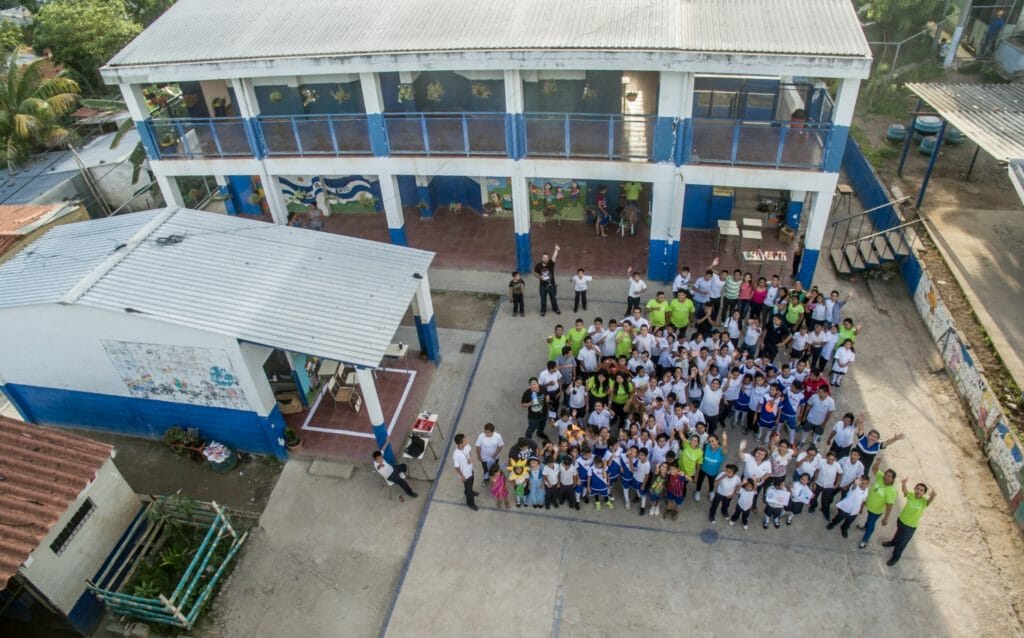
Founded in El Salvador, Glasswing has since expanded to have offices in seven other countries – Honduras, Guatemala, Costa Rica, the United States, the Dominican Republic, Nicaragua and Panama – and programs in a total of 16 countries. Glasswing uses an assets-based rather than needs-based approach, investing in a community’s existing strengths and resources – including its infrastructure and its people.
This approach can be seen in Glasswing’s Community Schools initiative, which aims to provide students with a supportive and enriching educational environment.
“We turn public schools into Community Schools,” said Ken Baker, CEO of Glasswing. “Kids in the region go to school for four hours a day and after that, the schools are empty. What we do is offer volunteer-led after-school programs to expand the school day, keeping children and youth off the streets, away from violence, and enabling them to thrive.”
Volunteers are central to operating these programs. Glasswing recruits volunteers from local businesses and organizations, as well as parents and other community members, to facilitate programs, spend time with students, expose them to new things, act as role models and encourage them to be involved in their school and their community. In addition to providing valuable support to the children, Community Schools also help build stronger communities by engaging citizens in the advancement of local youth and stressing the importance of education.
Following the assets-based model, Glasswing tailors these programs to meet the specific needs of each community. Youth are engaged not only as participants, but also as volunteers and peer leaders – and their experiences help inform the process.
“By encouraging young people’s participation in all aspects of our operating structure, we encourage sustainability and empower them to become more active members of their community,” said Alejandra Romero, regional communications fellow at Glasswing.
In the fall of 2016, Glasswing organized a two-day youth festival and concert with the goal of uniting youth from El Salvador, Honduras, Guatemala and Nicaragua, encouraging them to interact and engage with each other in a safe space and discover their power to create change. The youth festival and concert, called Generation Now, featured big-name artists like David Guetta as well as local artists and motivational speakers.
In conjunction with the festival, Glasswing also hosted a Regional Youth Forum to provide youth attending Gen Now an opportunity to connect and participate in discussions about leadership, perseverance, identity and a range of other social issues plaguing their countries. Through these discussions, youth identified ways to become part of the solution.
With a focus on having fun, Gen Now also provided an urban art space, where participants could practice artistic pursuits like DJing and break dancing that, in El Salvador, have traditionally been associated with malicious behavior or gang activity.
Alejandra explained that the concert provided youth with “a space to interact with each other – that is, a safe space where they don’t have to worry about the violence that, unfortunately, many of these kids face in the communities they live in.”
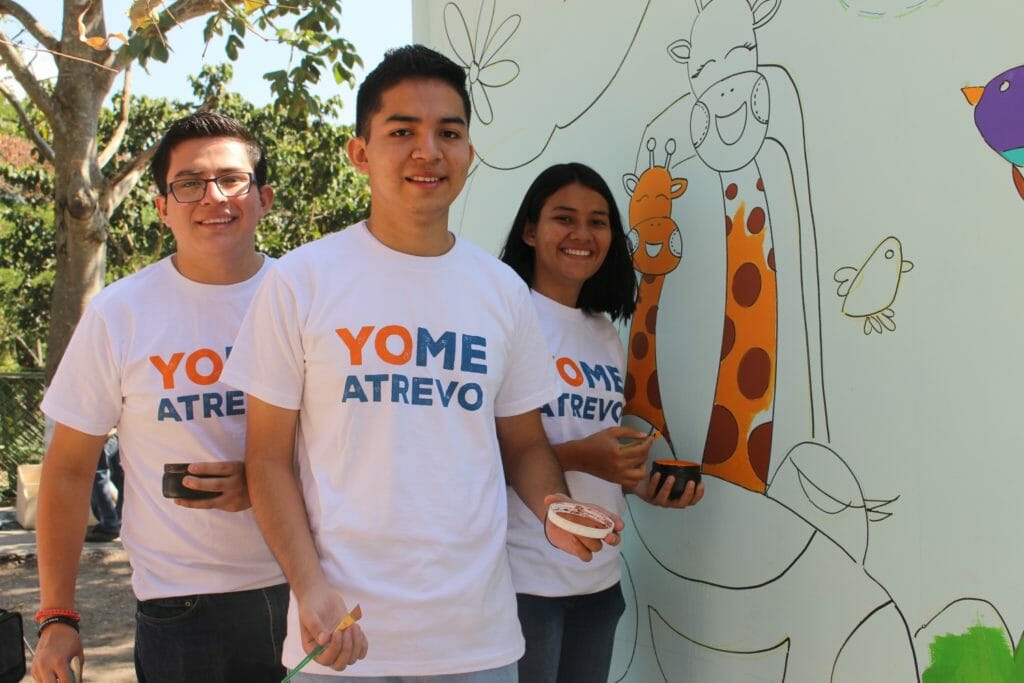
The whole event centered on the idea of “yo me atrevo,” meaning I dare to – according to Alejandra, the organization hopes to use this concept to turn Gen Now into a movement, something that youth are thinking about year-round.
Five months after the Gen Now concert, Glasswing held its first Yo Me Atrevo Contest, which brought together groups of four to five youth to develop proposals for a project to improve their communities. With assistance from adult volunteers from their communities, more than 150 teams from Guatemala, Honduras and El Salvador submitted proposals to a panel of judges. In each country, the top three projects were awarded grants that ranged from $4,000 to $8,000 to help put their proposal into action.
The contest gave young changemakers the necessary tools to improve their communities and encouraged them to “dare” to make a difference. The winning proposal in El Salvador was the Centro Cultural Cristo Redentor – a project that will help improve an at-risk community by expanding the services provided by a community center dedicated to strengthening the arts, hosting sports and other engaging events, and fostering peace by creating a space where people can interact in a positive and meaningful way.
Through programs like these, Glasswing hopes to continue engaging youth and providing them with the resources to create change around them. And they have already seen some promising results – students who have graduated from their community schools program have returned as volunteers for their youth-focused programs and continue to come back school year after school year.
Volunteering Summer Camp Offers Hands-On Service, Leadership Experience to Bay Area Youth
Every summer, parents and high-school-aged students across the United States look for opportunities to help young people stay engaged and active throughout the season. Summer camps are a common solution, offering programs which are similarly structured to school, but with a more relaxed curriculum that allows for a wider array of learning opportunities.
, a leadership and volunteering day camp for high school students in the San Francisco Bay Area.
HandsOn Bay Area was founded through a merger between Hands On San Francisco and Community Impact – two organizations started by college students as a solution to help people interested in giving back locally find opportunities to do so. Since the 2004 merger, the organization has continued to grow and thrive with the goal of making volunteering a valuable resource to their community. Last year, HandsOn Bay Area engaged more than 20,000 volunteers in service across thousands of projects, in conjunction with 273 nonprofit partners in the Bay Area.
The organization enlists volunteers primarily through a community events calendar that lists more than 100 projects every month, giving individuals the opportunity to sign up for any number of low-commitment volunteer projects alone or with family or friends.
“It takes a lot of the fear out of it,” explained Lou Reda, executive director of HandsOn Bay Area. “All of them are done-in-a-day projects, so the commitment level is just for the project itself and then after that, you’re done.”
The organization has also responded to Bay Area companies looking for simple, low-commitment ways to get their employees involved in service to the community. Working with more than 50 companies of varying size, HandsOn Bay Area matches each with a nonprofit partner that fits the community goals of the company – such as hunger, homelessness, youth development or the environment. Then, they coordinate everything from project planning and supplies to logistics and providing project leadership.
Wanting to engage more young people in service, the organization launched the HandsOn Tomorrow program in 2015 to helps youth learn to be the change they wish to see in the world and to organize together to become community leaders in the Bay Area and beyond.
The annual summer program enlists several cohorts with a maximum of 20 volunteers each. Through the innovative
, Points of Light’s youth service division, the camp’s participants develop leadership skills through fun, hands-on activities, while also exploring and addressing specific challenges facing their communities.
Since the program started, HandsOn Tomorrow has engaged more than 50 youth volunteers. This year the camp is taking place at the end of July, and two of the three cohorts have already been filled.
During the two-week session, each cohort serves a different nonprofit every day. The mornings focus on hands-on leadership building activities, exposing youth to the background and mission of their host organization. After lunch, they get their hands dirty working on a project supporting that mission.
While the program allows youth to make a big difference in a short period of time, Lou explains that one of the most impactful parts of the program is the capstone project that takes place at the end of the two weeks.
“The biggest moments are when the youth lead their family and friends in volunteer activities during the capstone project,” said Lou. “They are the volunteer leaders of that project … and it’s just amazing to see how powerful it is for our youth to be in charge.”
In addition to earning 55 volunteer hours and gaining leadership skills, participants learn what it takes to make a difference in the community, and how to engage their peers, family and community in meaningful service and function in a team-based environment.
Every year, the youth who most excel in the HandsOn Tomorrow program are nominated by the camp leaders, and five are selected to join HandsOn Bay Area’s
service event – a mini-mural design project – to help beautify a local school.
Along with the opportunity to plan projects, members of the Youth Advisory Council get continued leadership advancement training, which in turn helps the organization build up its leadership pipeline.
“The plan is to move people along the leadership spectrum of engagement,” said Lou. “We’ve discovered it’s a pretty powerful program.”
Connecting Nonprofits and Volunteers to Create a Culture of Service in India
Team Balika, a group of community volunteers who support a grassroots intiative called Educate Girls, won the Leader in Volunteer Engagement Award during the 4th edition of the iVolunteer Awards for their work to reduce the gender gap in education by spreading awareness for the importance of educating young girls in their village.
With seven offices in India and 350 nonprofit partners,
is one of the largest affiliates in Points of Light’s global network. Last year alone, the organization engaged more than 10,000 volunteers in service across 25 cities. However, it wasn’t always that way.
iVolunteer was established as a solution to the challenges faced by Indian nonprofits in recruiting volunteers to serve their causes. Shalabh Sahai, co-founder and director of iVolunteer, explained that when the organization was founded in 2001, nonprofits worked in silos and, as a result, had trouble engaging volunteers – particularly middle-class citizens who had the resources to give back, but for whom volunteering was not a part of their culture.
“In the beginning, the idea was to found something which got people to volunteer, that would allow people to work with the nonprofits to lend a hand in all the good work they were doing,” said Shalabh.
The result was the iVolunteer platform, which is the organization’s online database of service opportunities that allows volunteers to search by keyword and pick projects that fit their interests.
“Over a period of time, we realized that simply putting together a platform would not work because volunteering itself was in a very infant stage and people did not understand NGO culture and NGOs did not understand how to engage the upcoming middle class,” explained Shalabh.
To address these issues, iVolunteer put together a number of programs that would both help nonprofits appeal to volunteers and help volunteers understand the value and importance of giving back.
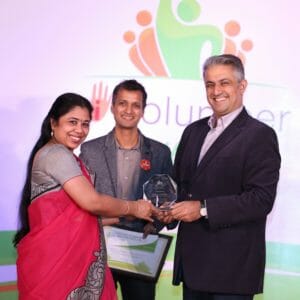
Archana Raghuram (left), senior director and global head of corporate social responsibility at Cognizant Technology Solutions, accepts the Leader in Employee Engagement Award during the 4th Edition of the iVolunteer Awards on behalf of Outreach, Cognizant’s corporate volunteering arm that promotes technology education in Indian Communities.
Cognizant Outreach, the corporate volunteering arm of Cognizant Technology Solutions, received the Leader in Employee Engagement Award during the 4th edition of the iVolunteer Awards for its program that promotes technology education in Indian communities. Left to right: Archana Raghuram of Cognizant Technology Solutions; Shalabh Sahai of iVolunteer; Dr. Akhil Shahani of the Shahani Group.
Though this type of programming is common among the members of the Points of Light network, iVolunteer is unique because it operates as a social enterprise rather than a nonprofit. Social enterprises apply commercial strategies to improving communities – making profits is as essential to their success as making an impact.
For iVolunteer, Shalabh explained, this structure was necessary because limited funding made scaling its services to support such a large community difficult.
“A lot of the work that we were doing was restricted by the funds that were available,” said Shalabh. In responding to the recruitment difficulties that nonprofits faced and with “the ambitions we had as an organization, we could not be bound or limited by the funds that were made available.”
Though the organization has come a long way in making volunteerism a part of Indian culture, when taking stock of their accomplishments in 2011 – one decade into their work – they found there was still a distinct lack of understanding among Indian citizens about why volunteer service is important.
Shalabh explained that, for example, taking time off from work to give back was often not permitted by employers. Furthermore, there was little to no recognition for the good work being done by volunteers across the country.
“If someone wants to volunteer today, none of their peers understand or appreciate that work, nor would their employer understand or appreciate that work,” said Shalabh.
Indiability, an organization that helps change attitudes towards people with disabilities and empowers them to lead full, independent lives, received the Leader in Volunteer Engagement Award during the 3rd edition of the iVolunteer Awards.
In 2012, the organization instituted the iVolunteer Awards with the objective of spreading recognition and appreciation for the work that both volunteers and nonprofits were doing across the country and internationally (in partnership with VSO International, iVolunteer sends volunteers all around the world to participate in service projects).
With categories that recognize nonprofits, youth, employees and corporate volunteer programs, the iVolunteer Awards seeks to honor all types of volunteers. One award in particular, the Volunteer Hero Award, lifts up the recipients as heroes, helping to not only raise awareness for the work of the individual volunteers, but also reposition volunteerism as the pinnacle of community development in India.
The awards program has accomplished two things for iVolunteer. The first is identifying new benchmarks established by volunteers and nonprofits that others can use to measure their impact. The second is shedding light on new volunteer models and projects that are making an impact in a unique way.
One example is the Indiability Foundation, recognized with an iVolunteer Award for their initiative in which disabled people teach life skills to non-disabled people in rural communities. This program completely challenges pre-conceived ideas of “the haves helping the have-nots,” said Shalabh, additionally bringing pride to the families of the disabled persons and the individuals themselves.
Through robust programming and innovative initiatives, iVolunteer has uniquely adapted to the needs of volunteers and nonprofits in their community using a trial and error approach, while maintaining focus on the organization’s central objective – engaging more individuals in service to their communities. This adaptability was central to its early function and development and, today, makes iVolunteer an invaluable asset to Indian nonprofits and volunteers alike.
Revealing the Secrets to Corporate Volunteering Success
In San Jose, California, a playground rises from the concrete in a single day. Across the country, a rundown library in North Chicago, Illinois, is transformed to reflect its city’s brightening future. And thousands of miles away, the wish lists of community centers in Brazil and Ireland are fulfilled.
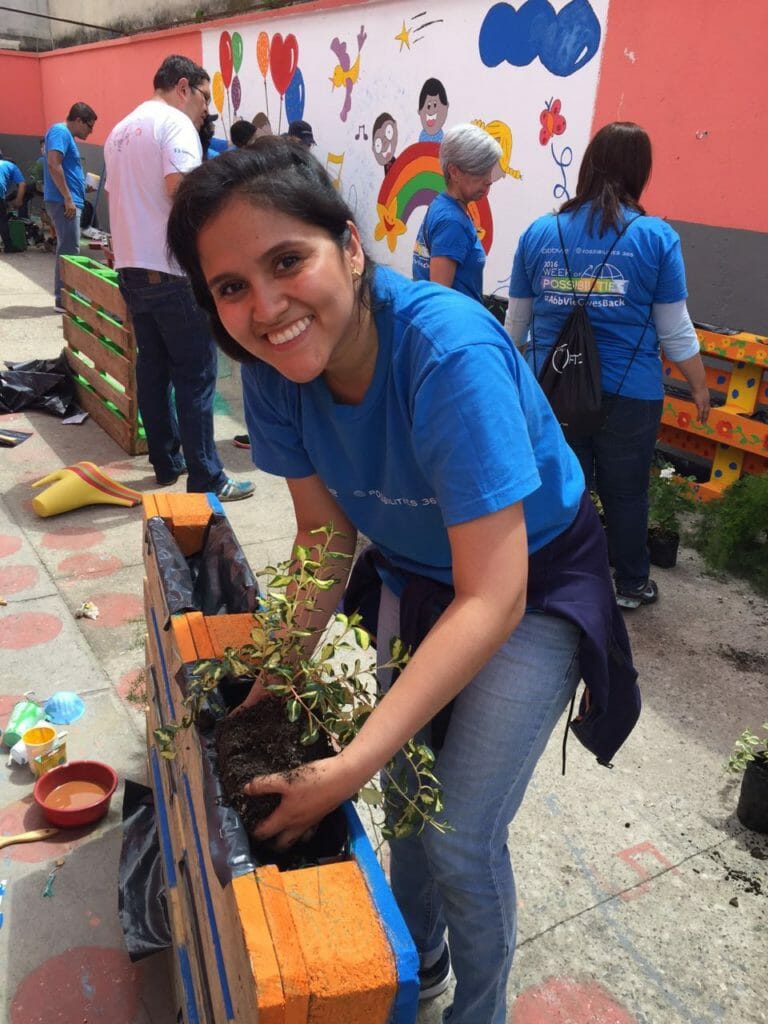
Every year, during the Week of Possibilities, AbbVie employees from around the globe offer up their talents and time to enrich the communities where they live and work, assisted by financial support by the AbbVie Foundation. But it’s the organizations behind the scenes that truly make it possible to bring more than 6,000 employees in more than 50 countries together for one common goal.
We spoke with leaders from these nonprofit organizations to get a peek behind the curtain, discovering the secrets to successful corporate volunteerism. Jill Hardy Heath, president & CEO of Heart of America Foundation; Gared Jones, senior vice president, global at Points of Light; and James Siegal, CEO, KaBOOM!, share their experience and insight below.
Q: What are the typical ways your organization works with corporate partners?
James Siegal, KaBOOM! (JS): We believe that great things happen when people come together with a common purpose to get things done in their communities. That’s why we build playgrounds the way we do, and that begins with the kids in the community. The kids are asked to draw their dream playgrounds and bring all their creativity and spirit to it. Over the span of a few months, we then work with the community to get them ready to build a playground in one day, with a team of about 200 volunteers from our corporate partner and the community.
Gared Jones, Points of Light (GJ): We’re trying to help companies create innovative, inspiring, meaningful impact in their communities through their employee giving as part of advancing our broader mission, by offering end-to-end solutions that include program design, local project implementation, storytelling that deepens a company’s culture of volunteering and impact reporting. We work with companies all around the world to create days, weeks or months of service; with others, we do year-round employee volunteering.
Jill Heath, Heart of America (JH): We help our corporate partners transform spaces into modern learning environments. This means refurbishing libraries, tech labs and educational spaces, and making sure children have books and technology that inspires learning, like computers, 3-D printers, tablets, interactive whiteboards and more.
Q: How does your organization prepare for a large, international employee volunteer program, like Week of Possibilities?
GJ: Week of Possibilities is one of the biggest and farthest-reaching programs we work with – especially because we’re working in so many places. We support activities directly in 15-20 countries and touching AbbVie program leaders in as many as 50-55 countries. We have a global network of volunteer local organizations led by social entrepreneurs, and we work closely with them to identify the types of needs a company wants to serve in the community. We really want the employees to be able to create the greatest impact. A key part of our approach is focusing on what’s meaningful in those communities, and the only way to do that is our relationship with those local non-governmental organizations (or NGOs).
Q: Have you observed any new trends in corporate volunteerism? How do you think the practice will change in the coming years?
JS: We’re seeing a renewed sense of urgency because people are more disconnected and divided than ever, and there are very few opportunities for people to feel they can make a real, tangible difference. We are all seeking an alternative to what feels like a sense of hopelessness, feeling like nothing is going to change. True, authentic corporate volunteerism with powerful corporate citizens is, I think, an antidote to those things.
JH: In the past few decades, corporate volunteerism has gone from a “nice thing to do” to the cost of doing business, to being an absolute must. Many new hires and the generations graduating from college are looking for an employer that gives back to the community where they live and supports causes in the focus areas that matter to them individually.
GJ: One trend we’re seeing is that with the announcement of the United Nations 2015 Sustainable Development Goals, there are a growing number of companies thinking about their volunteer impact relating to these goals. And companies are using these programs as a way to build culture, corporate identity and to better connect with employees.
Q: Do corporate partners ever unintentionally offend the communities they are trying to serve, and if so, how do you navigate this?
JS: Sometimes it’s the little decisions that people don’t think about that really matter. At all of our playground builds, we serve lunch, and it’s the responsibility of the community to make sure there’s lunch for all the volunteers. A potluck may not be the first choice for a corporate event, but if it provides an opportunity for the community –and these are often people who don’t have significant means –to contribute and showcase their talents and their culture, then it’s the right thing to do. We try and help our corporate partners see why decisions like that matter to the community when the first instinct may be, “let’s make sure everyone has really delicious food from the local restaurant,” as opposed to “this is an opportunity for the community to shine.”
JH: At times, corporate partners are very focused on brand visibility. Brand placement within education and learning environments can be distracting, so whenever we go into a community or a school district, we listen and learn what is appropriate. Then we can guide how to best and authentically design learning spaces that simultaneously honor and recognize the “brand” of a benefactor/corporate partner, while accomplishing what is needed for the beneficiaries.
Q: In your opinion, what makes a “good” corporate partner?
JH: Listening … building community support and giving both what is truly needed for the community and for the business. Remaining thoughtful on how the corporation uses their resources for good, how they build, structure and evolve their giving program and devote their team members’ time and talent in the right places.
GJ: Authentic leaders. The more that the culture resonates with the desire to impact communities and give back, and the more the company’s leaders are espousing those values, the easier it is to do really cool things. Also, it’s great to have clarity on what the program goals are, what’s driving it – is it employee engagement? Is it impacting education? And lastly, we love when partners come with a spirit of partnership and adaptability – a willingness to flex based on what a company is learning in the process.
JS: If the partner is interested first and foremost in how its brand will show up, that can lead to challenges. But if the partner comes to the table saying we’re here to make a difference in a community where our employees work or our stakeholders live, that really is the key to success. The best corporate partners are driven by authentic engagement and the desire to make a real, tangible difference.
Q: What is the one thing you wish corporate partners knew that could make your partnerships more effective?
GJ: That it’s important to start with a spirit of co-creation and engage in a dialogue about what’s most meaningful in a particular community. Last year, we were working with AbbVie in Brazil for Week of Possibilities, rebuilding a youth center. But the community said what they really needed was staff for this center. So we worked with AbbVie to hire someone to develop a curriculum and had AbbVie employees volunteer to teach. Shaping volunteer activities based on what communities really need allows companies to have the greatest impact.
JS: We work in some of the most challenged communities in this country – communities dealing with extreme adversity. You can only imagine what it’s like growing up in a community like that. And I think we have to go the extra mile and push ourselves out of our comfort zone to make a difference in their lives, and that can feel uncomfortable. Sometimes corporate partners can be risk adverse in that sense. But when they step up, it makes a difference – your employees know it, your stakeholders know it, and when it does happen, it’s magical.