Atados Wins George W. Romney Award for Volunteer Program Supporting Refugees in Brazil
In difficult times, we often look to humanitarian groups to support those in need. Since the onset of the refugee crisis, this has certainly been the case in Brazil – where the number of refugees has doubled each year since 2011.
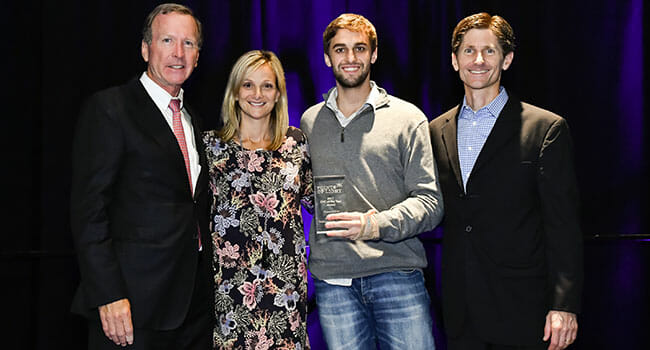
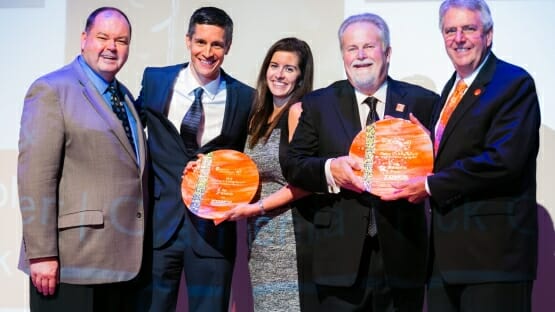
, the winner of Points of Light’s 2017 George W. Romney Award, adapted its successful volunteer engagement model to respond to the global refugee crisis and provide aid to the people taking refuge in Brazil.
The Romney Award, presented annually at the
to an affiliate from Points of Light’s global network, aligns with core strategies impacting volunteering and service and celebrates the extraordinary work taking place around the world in local communities. In the past, awards have focused on collaboration, innovation, collective impact and mobilizing local changemakers.
This year’s award, inspired by Points of Light’s resilient communities framework and aligned with the UN’s
, recognizes an affiliate’s contribution to healthy, vibrant, thriving communities by leveraging the contributions of neighbors, networks and nonprofits. Points of Light created the resilient communities framework based on the four domains of community resiliency as recognized by the
, highlighting the critical role that volunteerism plays in education, neighborhood/built environment, economic stability and overall health. Our approach to building resiliency is grounded in three core components: partnerships, programs and people. The framework provides opportunities for Points of Light to lean into cross-sector partnerships that align with local community needs to make an impact and drive change.
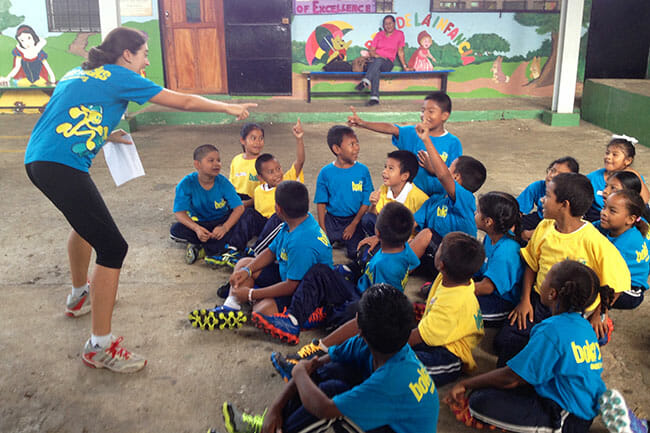
Scaling programs that work is essential to how we drive community change. Equally as important is ensuring people and nonprofits in the community have the leadership and capacity building opportunities to sustain this change. Atados, recognized for their work inspiring volunteers and building engaged communities across Brazil, identified a need and developed a program that engaged the community in solving the challenge. In 2014, as Brazil hosted the FIFA World Cup, there was an influx of refugees into the country. In response to the challenges that often accompany the transition to a new cultural environment, Atados created opportunities for volunteers to train refugees for employment as language teachers. What started with a small team and many volunteers has evolved into
– a language school that has trained and created opportunities for more than 60 refugees, who teach the language and culture of their native countries to more than 2,000 students in Rio de Janeiro and Sao Paulo. The program is a shining example of the role that networks, neighborhoods and nonprofits play in engaging community members, both as participants and beneficiaries of programs.
“Cities are only as resilient as their residents. A community’s ability to adapt and progress is dependent on the strength of its local networks. Too often the human infrastructure to create viable, locally-driven, sustainable solutions does not exist,” said Gared Jones, senior vice president of global at Points of Light. “Atados’ work demonstrates how our network is mobilizing and equipping volunteers to create local solutions to some of the world’s more pressing challenges. Innovative solutions like Abraço Cultural are what Points of Light’s network is scaling and replicating around the world.”
The George W. Romney Excellence Award was established in 1996 to honor
Gov. Romney
and his personal commitment to volunteer service. Romney was chairman and CEO of American Motors, a three-term governor of Michigan and U.S. Secretary of Housing and Urban Development. He was also founding chairman of the National Volunteer Center and a founding member of the board of directors of Points of Light.
In Greece, Nonprofits Come Together to Coordinate Volunteer Response to Refugee Crisis
Since the beginning of the Syrian civil war in March 2011, thousands of Syrian citizens have arrived on the shores of Greece in search of refuge. Today, more than 62,000 refugees still reside in Greece and roughly half of them are women and children, according to the International Rescue Committee. Volunteers from around the world are providing assistance – helping refugees arriving by boat make it safely to land, providing support at refugee camps and packing care packages with essential supplies. Even with all of this assistance, however, the influx of immigrants has put great pressure on the Mediterranean nation to equitably distribute continually limited accommodations and resources amongst so many in need.
In times of crisis, while nonprofits and other aid organizations are frequently depended upon, they can also experience difficulty managing resources and delivering aid to people in need. In Greece, NGOs have had difficulty managing the influx of volunteers and donations that began to pour in as news of the refugee crisis spread around the world.
“Almost every NGO in Greece gets donations from people that just want to help, but don’t know what to do,” said Alkisti Macrynikola, director of partnerships and programs at Ethelon, a Points of Light global affiliate. “So when every NGO has donations, they have to cooperate with other ones to see where they have to send the donation, at which point, at what time – so at first there was a lack of communication.”
With Athens being the unofficial hub of volunteer response activities and no set system to manage donations, it was also difficult to distribute volunteers to help the right NGOs at the right time, Alkisti explained. So Ethelon stepped in as a coordinator.
The organization’s database of volunteer opportunities provided a centralized location where volunteers could search for refugee aid projects based on the type of service they were interested in doing, and identify NGOs providing opportunities that matched. Ethelon also offered seminars to train organizations on how to be effective leaders in times of crisis, the importance of cooperation among NGOs and how to maximize impact with existing resources.
Ethelon is uniquely suited to provide this kind of leadership among NGO partners. Ethelon, which means “I want to volunteer” in Greek, was founded through a 2016 merger between Volunteer4Greece and Glovo, two nonprofits dedicated to mobilizing volunteers in Greece. The new organization’s vision is “to make volunteering an everyday thing for the Greek people,” said Alkisti. “It’s to provide a volunteering culture in everyday life, and to make volunteering available for all people from all ages.”
Though Ethelon has been successful in achieving this mission since the merger, the organization initially faced several of the same challenges that many Greek NGOs encountered when coming together in response to the refugee crisis.
“It’s very hard for people to work together when they have been working apart for many years,” Alkisti explained, noting the different – but ultimately complementary – approaches to volunteerism that each organization had specialized in prior to the merger.
Glovo was originally founded by three students in 2012 and focused almost exclusively on recruiting groups of volunteers for small events that they organized. Volunteer4Greece, while also small in size, focused more broadly on connecting volunteers to NGOs for long-term projects. Though the way these organizations organized volunteers was different, the causes they focused on were very similar – they felt that together they could have an even greater impact on their community.
Despite the initial challenge of unifying two organizations under one roof, allocating resources and focusing efforts appropriately to match organizational objectives, Alkisti said the experience turned out to be a unique advantage. Having successfully navigated their merger, Ethelon now had first-hand experience connecting and incorporating like-minded individuals to offer other NGOs looking to coordinate and collaborate to increase impact.
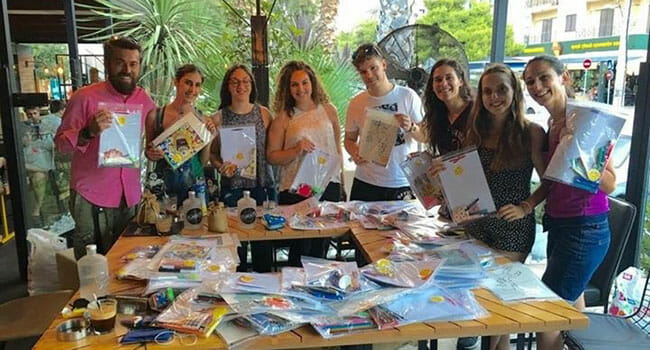
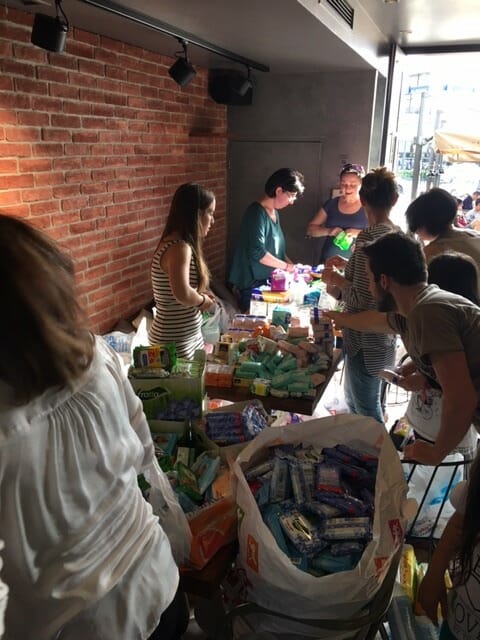
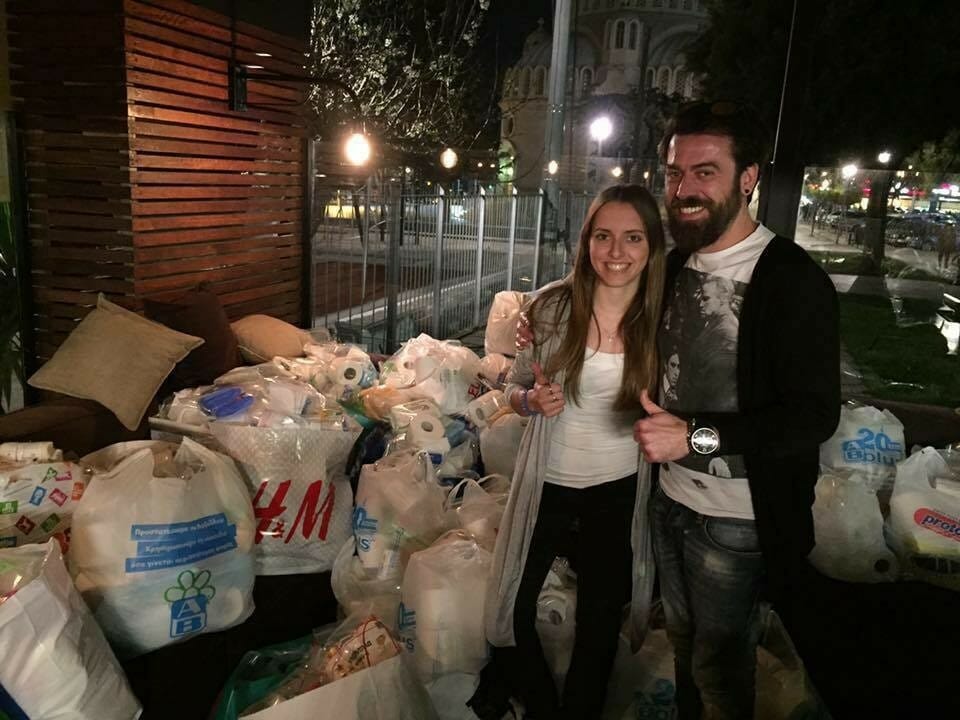
Through this alignment process, Ethelon helped plan and manage several volunteer projects in support of the refugee crisis. Popular projects included making hygiene kits with soap, toothpaste and other essential items; assembling entertainment kits for refugee children to keep them busy and take some of the strain off of refugee parents; and accepting and sorting food donations. The kits and food donations were then sent to refugee camps all across Greece.
For Ethelon, it’s been a rewarding experience to organize volunteers in pursuit of their organization’s mission – allowing volunteers to engage in small-scale projects that would not consume all of their free time – while also serving an important cause.
Because she balances her time between working as a dentist and serving with Ethelon, Alkisiti is one volunteer who especially appreciates the opportunity to give back in her limited free time. Over the last 5 years, she says, volunteering has been a part of her everyday life and she is dedicated to creating projects to get other Greeks involved in similar ways. In fact, the hygiene kit project was her idea.
Ethelon held several events to pack hygiene kits, each engaging more than 40 volunteers. Alkisti explained that the main result of these events was seeing how people can be engaged in simple ways.
“The payoff I think was actually giving the opportunity to people, to neighborhoods, to contribute to the refugee crisis in very simple ways, such as donating supplies or just coming for an hour, or half an hour, to make the kits,” said Alkisti.
Seattle Nonprofits Will Unite Against Childhood Hunger at Conference on Volunteering and Service
During the annual Conference on Volunteering and Service, thousands of nonprofit, government, business and civic leaders gather to discuss the future of volunteerism, and to showcase the true power and impact of putting people at the center of change. And each year, Points of Light organizes a service project that supports the local community and addresses a pressing need. In 2017, the Conference will take place in Seattle – a unique city for Points of Light, with two HandsOn Network affiliates: Seattle Works and United Way of King County.
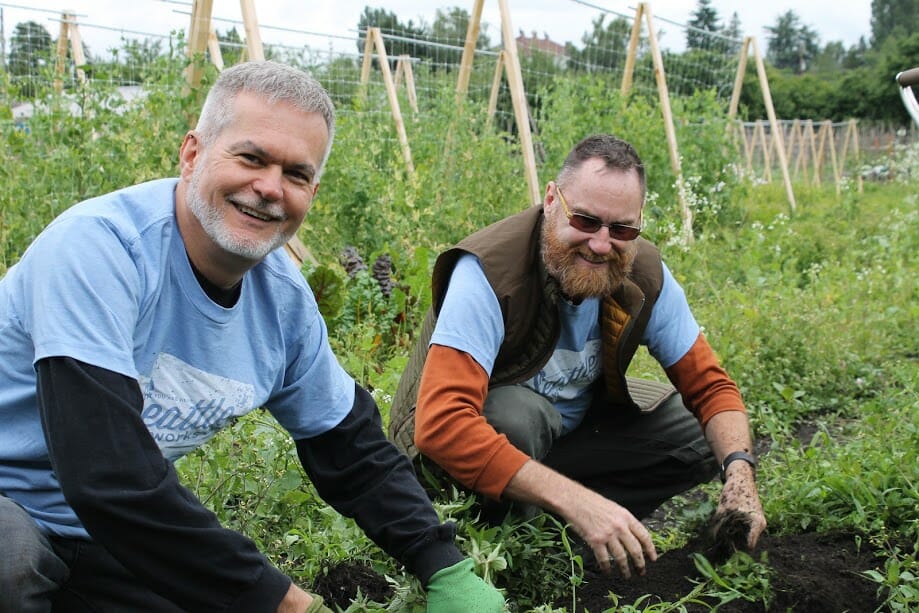
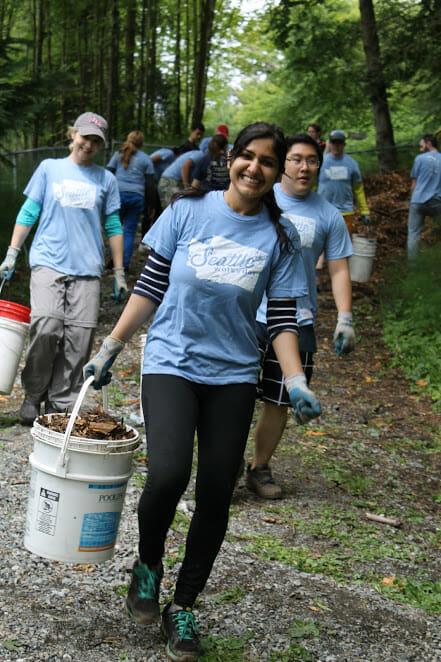
On June 17, attendees can kick-off their Conference experience by participating in a service project collaboration – “Fuel Up For Kids” – with our local affiliates. United Way’s Fuel Your Future program connects kids to nutritious food year-round, and Seattle Works Day is an annual day of service that supports more than 60 local nonprofits and engages thousands of volunteers. This project is the perfect mashup between our Seattle affiliates and enables Conference attendees to have a direct impact on the local community.
In King County, 1 in 5 kids regularly goes hungry. Many of these children eat free lunch at school; however, many families do not know free lunches are available throughout the summer in many city parks. To raise awareness of these summer programs before school lets out, Conference volunteers will join the United Way and Seattle Works to host a free lunch giveaway and party in a city park.
“It is a perfect example of the way two organizations can come together for the greater good,” said Chloe De Wolf, development and communications manager for Seattle Works.
Founded in 1989, Seattle Works’ main objective is to harness the altruistic and philanthropic tendencies of Seattle’s young adults. Beyond Seattle Works Day, the organization focuses its efforts on generating mutually beneficial relationships between nonprofits and volunteers, promoting a fun and social atmosphere.
Chloe explained that “at our core, we believe that volunteering should be impactful and fun.” To that end, the organization designs volunteer programs with an emphasis on social connection in addition to community service.
Team Works, one of the organization’s signature programs, achieves this outcome. The team-based nonprofit support initiative takes place over a 4-month period, once in the spring and again in the fall, and engages teams of volunteers in four projects organized by Seattle Works and a nonprofit partner. After each project, teams are encouraged to take part in some form of family-friendly social activity – visiting one of Seattle’s many local breweries is a popular option.
Since launching the program in 2010, Seattle Works has engaged 4,054 volunteers through Team Works and has already activated 138 volunteers in 2017.
Like Seattle Works, United Way of King County focuses on making volunteering easy and fun, whether they are organizing an individual project or a company-wide day of service. And with so many local children going without the food they need, many of their events and days of service focus on childhood hunger.
“United Way has been involved in ending childhood hunger since 2009, when we developed a response to the recession,” said Lauren McGowan, senior director of ending homelessness and poverty for United Way of King County. “Today our Fuel Your Future program is a key strategy in our work to make sure families are financially stable.”
The Fuel Your Future program is a major voice for advocacy in the region, both helping schools arrange the necessary staffing and resources to provide children with food, and raising awareness of the hunger initiatives and resources available to local schools and families.
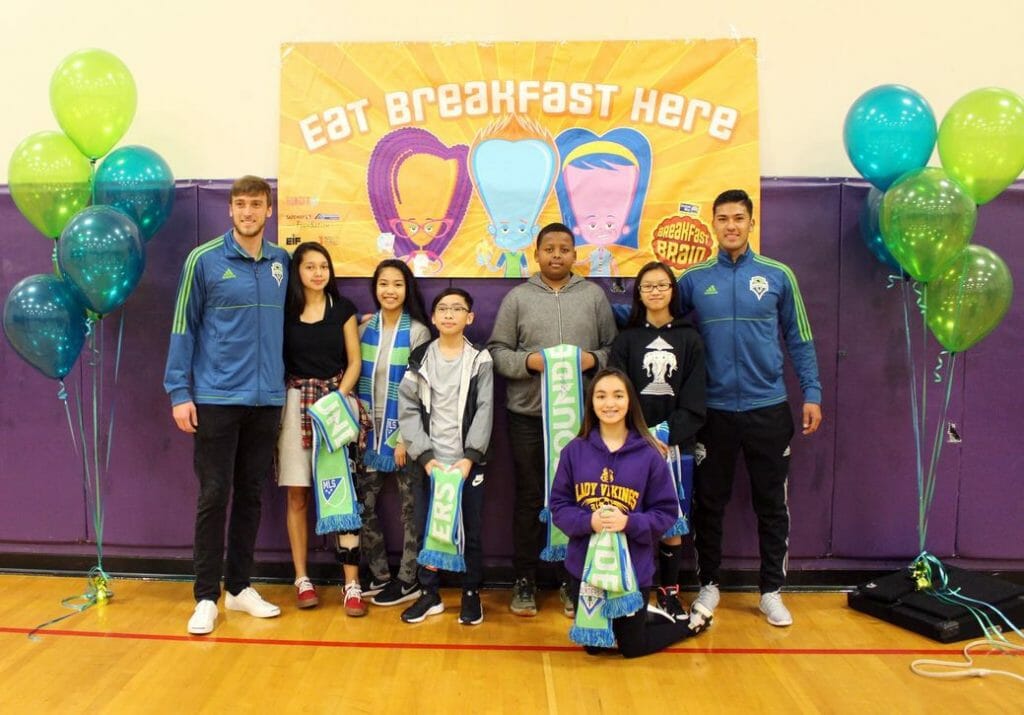
With the help of corporate partners, United Way provides incentives for King County schools to deliver quality nutrition to their students. One example is the Breakfast Challenge, which operates with the support of the Seattle Sounders, a professional soccer team. The program creates friendly competition between school districts, encouraging them to feed more children by reducing barriers – like fighting the stigma that surrounds accepting free meals, or reminding parents to get their children to school on time. Schools can also compete based on the availability and thoroughness of their nutrition education programs. Winners receive a trophy and a special visit from the Sounders.
Since the initiative started in the fall of 2015, 1,000 additional students are eating breakfast every day, 3,000 more students are getting nutrition education, and an additional 1,000 students are eating meals after school. Other events, like the Summer Food Invasion program, where families come to eat, partake in sports activities and literacy programming, and learn more about Fuel Your Future, help increase the program’s reach and impact in the community.
Both organizations are excited about the potential impact that their collaboration will have on hunger and the overall welfare of the greater King County region.
“We are thrilled to be partnering with Seattle Works and Points of Light to launch our 2017 Summer Food Invasion campaign,” Lauren said of the upcoming Conference service project collaboration. “This partnership will help raise awareness about the issue of summer hunger and that free meals are available all summer long.”
The Call of a Global Movement: Laying the Groundwork for the Future of Changemaking Around the World
This post is by Gared Jones, senior vice president of global at Points of Light.
From the time I lived in South Africa in the late 1990s, I’ve had this idea of a “future memory.” It’s an experience you know as clearly as a recollection from your past – say, jumping off a rope swing into a mountain lake as a child – but it hasn’t happened yet. It’s more than a premonition. It’s something you can visit over and over in your mind. You just haven’t lived it.
I stepped into my first future memory as I sat on a park bench in the middle of winter in Johannesburg and watched a black housekeeper walk by. In that moment, I sat in an experience I’d known from five years before. What I have learned since is that they are quite rare. A bit like sightings of the pileated woodpeckers that haunt the woods around my house. I’ve only seen a handful, though I frequently hear their calls.
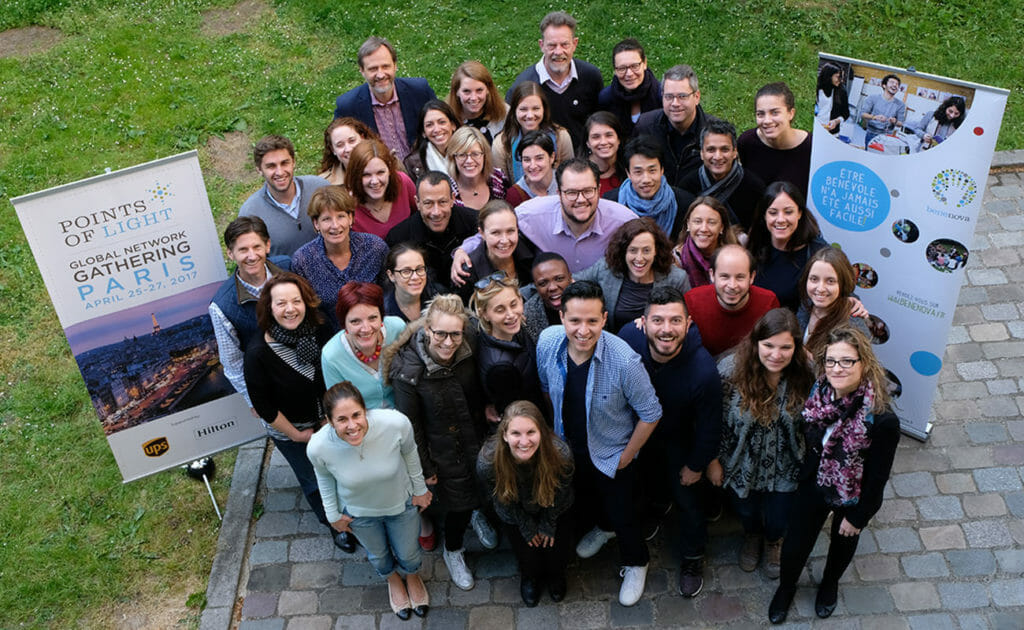
Two weeks ago I stepped into another. I was standing in the hall of a crowded arts center in Paris with hundreds of stakeholders of Points of Light’s French affiliate,
. Through the dim light I watched our Brazilian leader share a story in English to a bunch of French-speakers about a Haitian refugee who was now teaching French in a language program his organization had launched; the refugee would soon be rebuilding a school for her village back in Haiti. In that moment I experienced the arrival of a future that we had seen in only a glimmer – a fleeting sighting of the pileated woodpecker – six years before.
Points of Light is currently witnessing the emergence of a global changemaking movement. In the arts hall that night and during our global network meeting over the following two days, we had more than 50 leaders from 27 countries talking about the future of changemaking – 15 to 20 years out – and how we are innovating engagement strategies, storytelling, and community impact approaches (around refugees, the elderly, disenfranchised youth, environmental stewardship) to both anticipate and build that future.
We recognized a profound shift taking place in each of our countries. It is one from volunteering (our starting point) to changemaking. We know that meaningful entry points that allow individuals to experience empathy and take action through volunteer experiences remain as important as ever. However, cycle times for today’s citizens to move from showing up at an activity in which they give their time to conducting social problem solving with their full repertoire of talent, skills, voice, resources and connections, have dramatically reduced. And, individuals today are increasingly going off road – building solutions to social needs in the spaces that exist between nonprofits, community organizations and companies.
Over the past 7 years, Points of Light has been laying groundwork for our corner of this global movement with a network of capital “C” Changemakers – social entrepreneurs, now in 37 countries, who through their pioneering work are multiplying the numbers and impact of volunteers in their communities. We have also been fortunate to do so with a number of like-minded companies willing to take this journey with us – UPS, Hilton, Disney, Bank of America Merrill Lynch, and AbbVie to name a few.
We find ourselves now at an especially interesting moment in time. An inflection point. One in which we are stepping into “what’s next.”
As part of this we’ll be heading to Seattle in a few weeks for our
. It’s a gathering of more than 3,000 of the world’s most inspiring changemakers – our people. It’s where the movement foments; where we make our connections and touch on the big ideas that will shape our collective journey over the next year.
It’s where we will hear from folks like Celina de Sola in sessions like, “
, is building communities and transforming lives of tens of thousands of young people through the work of volunteers across Central America. Or leaders like
.
We understand that the woods of the Pacific Northwest are home to pileated woodpeckers. We are expecting to hear their calls! We hope you’ll be able to
Empowering Youth to Discover Their Potential to Create Change
In recent years, national leaders and community groups alike have called upon volunteers to help break down the income inequality gap by supporting disadvantaged youth and young adults. In response, organizations like
, a community program designed to help young people grow, develop, and succeed.
United Way of Greater St. Louis is also a host site for ServiceWorks, a national program that engages youth in finding solutions to some of their community’s most pressing issues. Powered by the
uses structured volunteer service as the primary strategy to help low-income youth and young adults – called service scholars – in 13 cities across the United States develop the skills they need to prepare for college and careers.
Since becoming a host site for the ServiceWorks program in July 2014, United Way has engaged more than 690 young adults in service to their community.
Through service, participants in the program see that they are able to effect change in their communities, explained Mary Pryse, volunteer center manager at United Way. “The projects that we’ve done with them allow them to see that they can always give back – that they can always help other people.”
In St. Louis, ServiceWorks is operated through partnerships with various local high schools and community colleges, as well as local youth development organizations like the St. Louis Science Center’s Youth Exploring Science program, a STEM program that also has a life skills and service learning component. The partners provide the space for the program and United Way provides the programming and staffing.
While there are many factors to consider when building a program that works with such a diversity of partners, if you ask Mary, she would say the most important thing is flexibility.
“I think our success has come in our flexibility of allowing the program to meld to the needs of the different partners and allowing it to fit within what they’re already doing or what they want to do,” she said. In some cases, this has also meant adapting the program to be appropriate for older and younger audiences.
Nationwide, organizations that host the ServiceWorks program adapt the model to fit the specific needs of their community. In St. Louis, United Way focuses on five impact areas: financial stability, education, health, strong communities and basic needs, such as food and shelter.
Though the organization hosts events that support all of these causes, the adaptability of ServiceWorks has provided a more direct path for United Way to support community needs by helping prepare youth and young adults – the next generation of changemakers – for college, their careers and their lives.
Host sites implement the ServiceWorks program with the help of AmeriCorps VISTA members and volunteers, who help lead workshops and facilitate the planning of service projects that are carried out by the service scholars. At the United Way of Greater St. Louis, programming is managed by AmeriCorps VISTA Lisa Cohn.
Recently, Lisa coordinated a project at Lift for Life Academy in St. Louis where the service scholars, frustrated by the underrepresentation of African Americans in popular children’s books, decided to make a change. Using a website called
, they wrote their own books featuring African American protagonists and communicating important messages they found missing in existing children’s literature.
The scholars took their books to a local elementary school and read aloud to the students there. By sharing their creativity and using artistic expression as a response to exclusion, they saw first-hand their power to effect change.
“Not only are we teaching youth stuff, but we’re also empowering them to become leaders in their communities – showing them that they have skills that are necessary for the world,” said Lisa.
The focus of each service project is up to the scholars, allowing them to address community needs in a variety of ways. The ServiceWorks program demonstrates the power of service as a strategy to empower youth and young adults, helping them develop skills to become changemakers and realize their full potential.
“Our mission as an organization is to help people live their best possible lives and we believe that there are many different ways to do that,” said Mary. “ServiceWorks has allowed us to continue to help people in a more direct way by bringing this programming to some of our agencies, but also our community partners and the community as a whole.”
Aligning Service with Corporate Values to More Effectively Manage Employee Volunteer Programs
With the increasing importance of employee volunteer programs comes an increasing demand by companies for external support and infrastructure to help align event programming with company values. While companies see value in providing opportunities for employees to give back, the logistics and resources required to run successful employee volunteer programs can be an obstacle for companies that are just getting started. Volunteer centers are powerful tools in this sphere, and
, a Points of Light global affiliate, has emerged as a leader in helping companies build their employee volunteer programs.
Hands On Manila, established in 2001, was the first international member of the HandsOn Network. Founder Gianna Montinola saw value in the organizational model of HandsOn Network volunteer centers, particularly the ability to engage average citizens with minimal free time in convenient opportunities to serve their communities.
Since its founding, Hands On Manila has connected more than 26,000 groups and individuals with high-impact service projects across 270 NGOs, earning its reputation as a comprehensive central hub of volunteer opportunities in the Philippines.
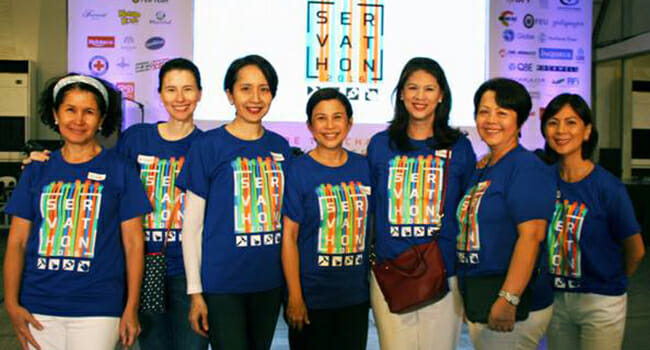
The organization does this in two ways. Hands On Manila manages volunteer recruitment for programs such as Galing Mo Kid, which pairs mentors with high-achieving 4th-, 5th- and 6th-grade students in Metro Manila public schools. The organization also manages corporate activation events like the annual Servathon, during which companies engage their employees to support and improve communities. In 2016, Hands on Manila partnered with 30 companies for Servathon, engaging 1,170 volunteers who served a combined total of 8,020 hours assembling “eco bags” that contained slippers, mosquito traps, solar light bulbs and citronella candles, to be distributed to disadvantaged citizens in Manila.
, a global leader in customer management, is one of 70 companies that have partnered with Hands On Manila for employee volunteer initiatives. Interested in engaging its Filipino employees in service to support the company’s commitment to the
, Convergys turned to Hands On Manila – the goal being to develop a program that would improve access to lifelong learning and employment opportunities for Filipino citizens.
To coordinate this, Hands On Manila connected Convergys with opportunities to support the Department of Education’s Alternative Learning System by tutoring out-of-school youth and adults. The ALS provides pre-requisite courses and accreditation exams so that students can receive diplomas and get back on-track with their education or seek employment opportunities.
Public school education is a major focus of both Hands On Manila and the general population of the Philippines.
“I firmly believe that education in whatever form it is, may it be ALS or formal education – it’s really a great equalizer,” Gianna said. She added that in a developing country like the Philippines, there is great value placed on the private sector stepping in to provide support in areas where the government has difficulty keeping up.
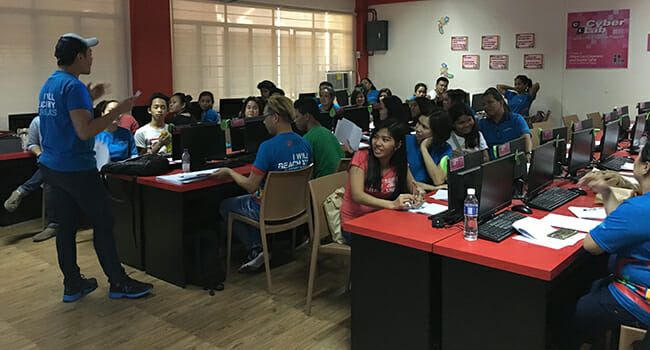
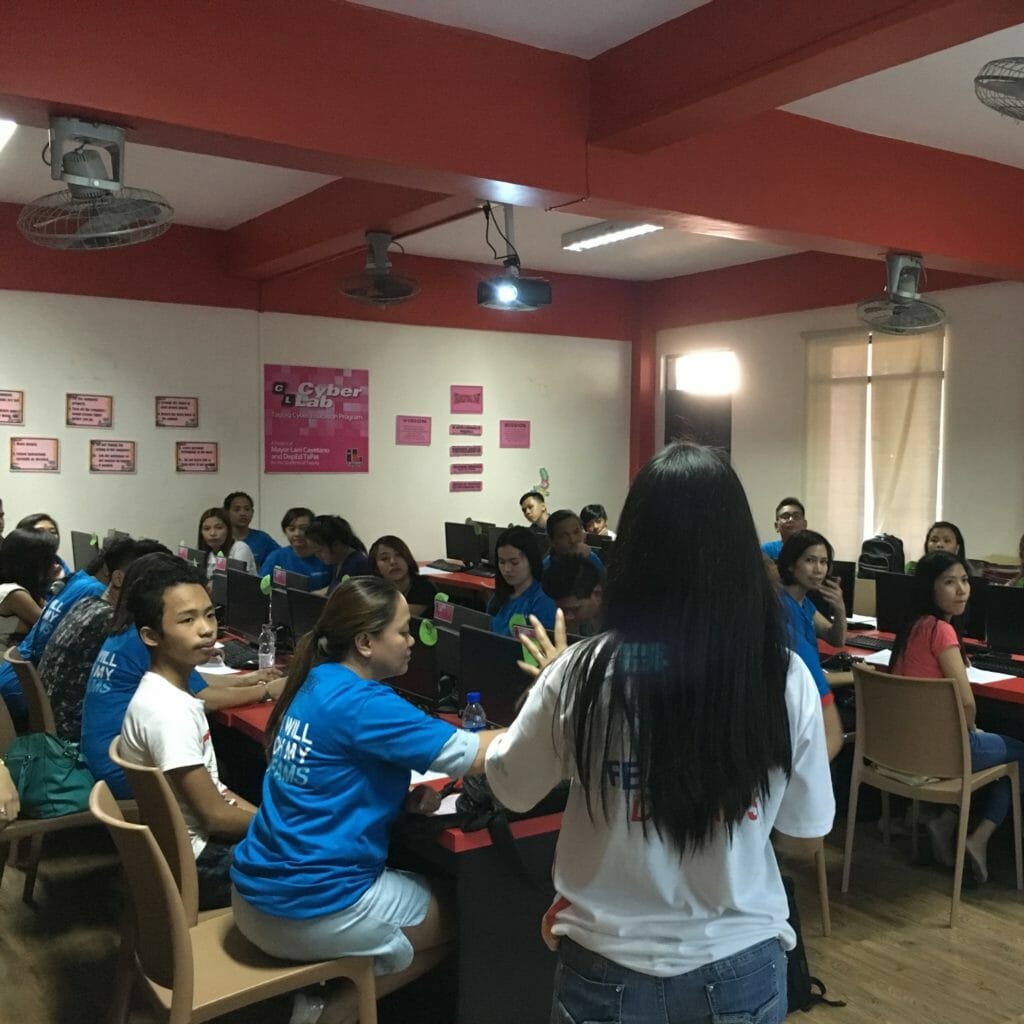
Convergys employees volunteer as tutors and mentors to the students, teaching them English and the basics of Microsoft Office and mentoring them in employment-focused skillsets, like job interviews. Hands On Manila coordinates the tutoring and mentoring sessions, finding spaces for volunteer and student to meet and managing the volunteers’ schedules.
Hands On Manila is an ideal partner for Convergys because its connections to available service opportunities and resources allow the organization to customize the volunteer experience to meet the company’s requirements and manage any logistical challenges that may arise.
“Hands On Manila sort of has developed a niche in the Philippines because we customize the volunteer activities depending on what the corporations want,” said Gianna. In the case of Convergys, the focus was education; Hands On Manila customized the experience by finding students at schools in convenient locations for Convergys’ employees.
The partnership between Hands On Manila and Convergys is featured in a recent Points of Light report, “
,” as one example of the ways companies can work with community partners to develop critical measures for success, including finding an appropriate match for employee interests. Success, in this case, can be gleaned from the responses of the employee volunteers who were able to feel the immediate impact of their efforts.
“As both a tutor and mentor, I helped less-privileged students meet their goals,” said volunteer Ruter Agali, a Convergys support associate. “Who knows, I might be mentoring Convergys’ workforce of the future.”
Hands On Manila and Convergys are two of many organizations worldwide that are forming partnerships to help bolster and more effectively leverage employee volunteer programs. Their relationship illuminates the impact that intentional collaborations between private companies and NGOs can have when organizations work toward shared goals.
Recognition Program Helps Nonprofits Thank, Inspire and Recruit Volunteers
Volunteers are vital to nonprofits, helping them keep up with the critical services they provide to their communities. According to the latest Volunteering and Civic Life in America report from the Corporation for National and Community Service, 62.6 million people in the United States volunteered in 2015, collectively donating 7.8 billion hours of their time to their communities – an estimated $184 billion worth of service.
Volunteer recognition events are a wonderful way for nonprofits to not only thank their volunteers but also to share the incredible impact of the work they do. Lifting up these stories is also a powerful tool for inspiring others to give back, promoting service as a solution to the toughest challenges facing our communities. Additionally, recognition programs help raise overall awareness of the central role volunteers play in supporting a nonprofit’s mission – a helpful narrative for recruiting new volunteers. OneOC, a Points of Light affiliate, accomplishes all of the above with the Spirit of Volunteerism Awards.
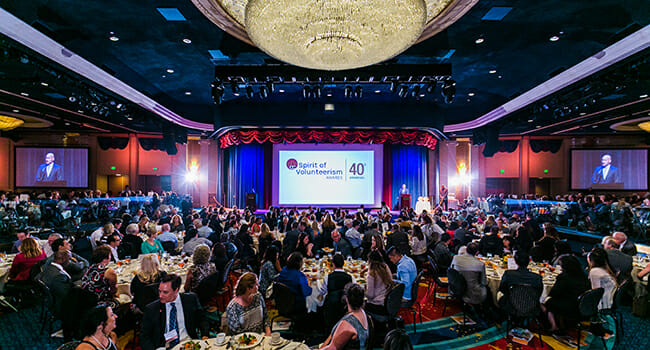
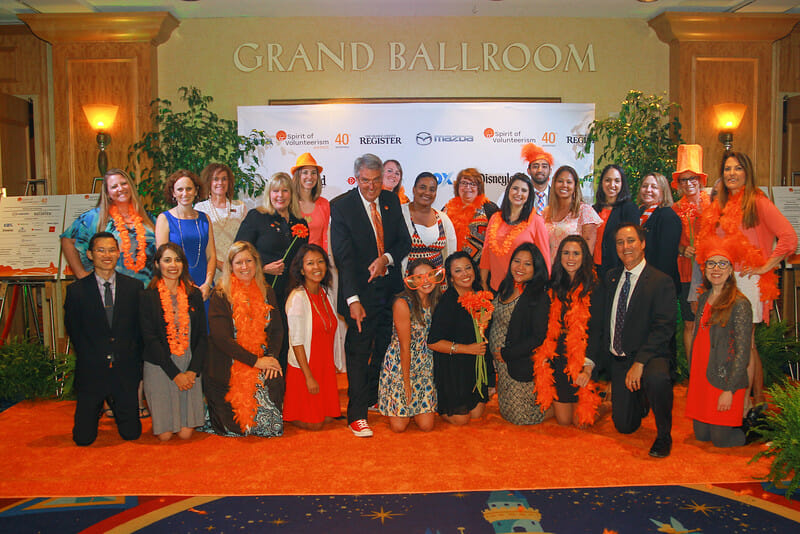
“Here’s one thing we know – volunteers are at the heart of nonprofits” is the slogan for the annual recognition program, hosted by OneOC each year in April. The event celebrates the work of the individuals, organizations, families and businesses making a difference in Orange County, California.
“Recognizing volunteers for a job well done is really important to [volunteer] retention,” said Barbara Powers, chief development officer for OneOC. “The nonprofits really value this event as a way to honor and recognize their volunteers and help retain them.”
Nonprofits across Orange County are invited to nominate volunteers to be recognized; though there’s no official limit, organizations usually nominate 1 to 5 volunteers. All nominees attend the event, are recognized with a photo and bio in the program, and receive a special honoree packet.
But recognition does not end at the event. OneOC also publishes blog features on each volunteer, which are distributed and published in local newspapers. Additionally, the nonprofits that nominate volunteers receive a social media marketing toolkit to help them share news of the awards. Barbara added, “We really want the nonprofits to feel equipped in multiple ways to honor those volunteers.”
All individuals nominated are recognized at the luncheon, but there is one honor that is determined by a panel of judges – the Giving is Living Award, which celebrates an outstanding collaboration between a nonprofit and company they partner with.
The winning partnership in 2016, a collaboration between High School Inc. and Tom’s Truck Center, developed an Automotive, Transportation and Logistics Academy at Valley High School. The mission of High School Inc. is improving the educational environment for students at Valley High School, and increasing retention rates. Students participating in this partnership program take lessons from the Tom’s Truck Center employees, shadow them at their worksite, receive mentorship, and attend industry events. The program has been very successful – with graduation rates rising from 62 percent to 95 percent.
Now in its 41st year, OneOC is expecting a crowd of more than 1,100 people for the 2017 Spirit of Volunteerism Awards Luncheon, taking place on April 24. Nine months of preparation will pay off as more than 350 volunteers are recognized and thanked for their work – and a new set of changemakers’ stories are told, inspiring others to follow in their footsteps.
For Barbara, the volunteers’ reactions are one of the most inspiring parts of the event.
“In a room full of 1,100 people you think ‘how special are [the volunteers] actually feeling?’” she said. “And when you hear from them that, even in that sea of people, each one feels special – for me, that’s what this event is about.”
How a Small Island Nation Built a Community of Volunteers from a Culture of Generosity
As a small island nation with a population of a little more than 150,000 people, it is hard to imagine that NGOs in Curaçao have ever had trouble finding volunteers to support their causes. With a strong cultural standard of generosity, the citizens of Curaçao are rarely without help in their time of need – but until recently, there was no formal infrastructure to connect volunteers looking for ways to give back and opportunities to serve.
“Seeing it’s such a small community, a lot of people depend on each other … you live very closely with your neighbor,” said Lysayé de Windt, who co-founded Curaçao Cares with Deva-Dee Siliee de Windt in 2012 to help connect engaged community members with opportunities to serve local organizations in need of volunteers.
Through a collection of signature programs, Curaçao Cares, a Points of Light global affiliate, aims to inspire, mobilize, equip and recognize volunteers:
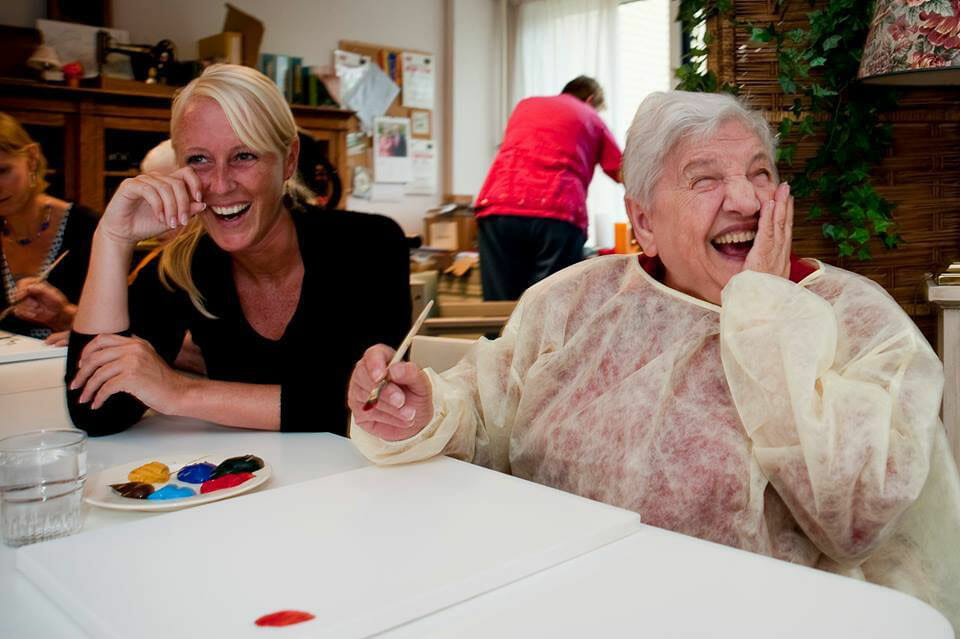
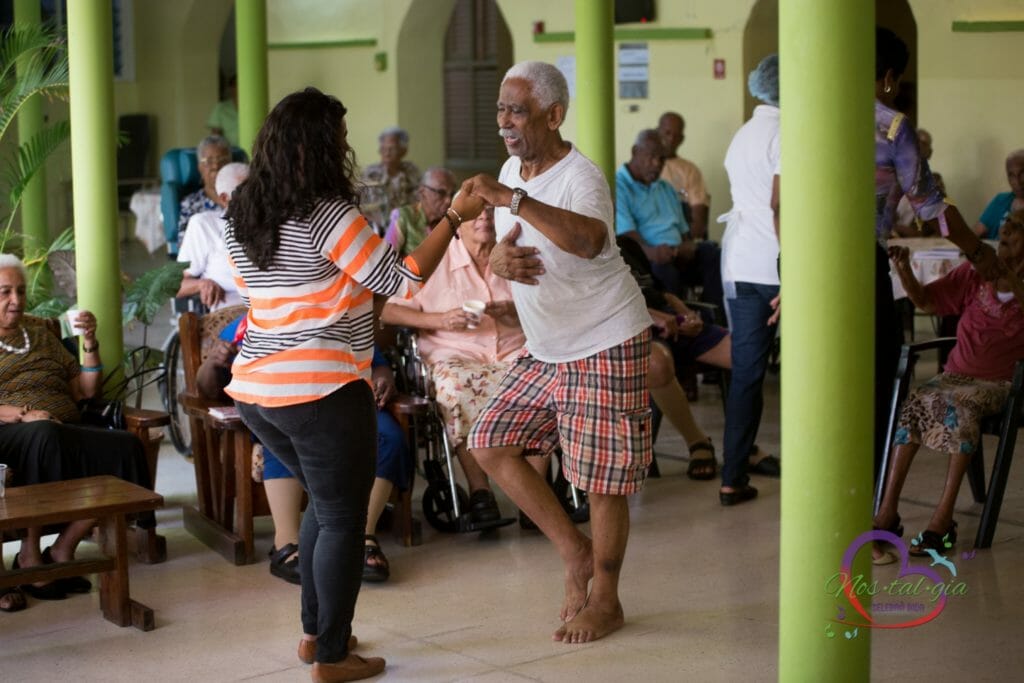
Music and Memory Curaçao is an initiative that uses music from dementia patients’ pasts to help combat their memory loss. Curaçao Cares recruits and trains volunteers to support the program as “musical detectives” – visiting nursing homes and interacting with people suffering from dementia to figure out what type of music they like.
Through Desaroyo NGO, a capacity-building program, Curaçao Cares engages pro bono volunteers to help developing NGOs with expertise and resources in a series of trainings and workshops. Through these trainings, members of these organizations enhance their nonprofit management and leadership skills so they can better manage existing resources and retain volunteers, and also improve projects through corporate collaborations.
The STAR Volunteer program, celebrated annually on International Volunteer Day, honors and recognizes volunteers who have dedicatedly served local NGOs – and inspires others to do the same.
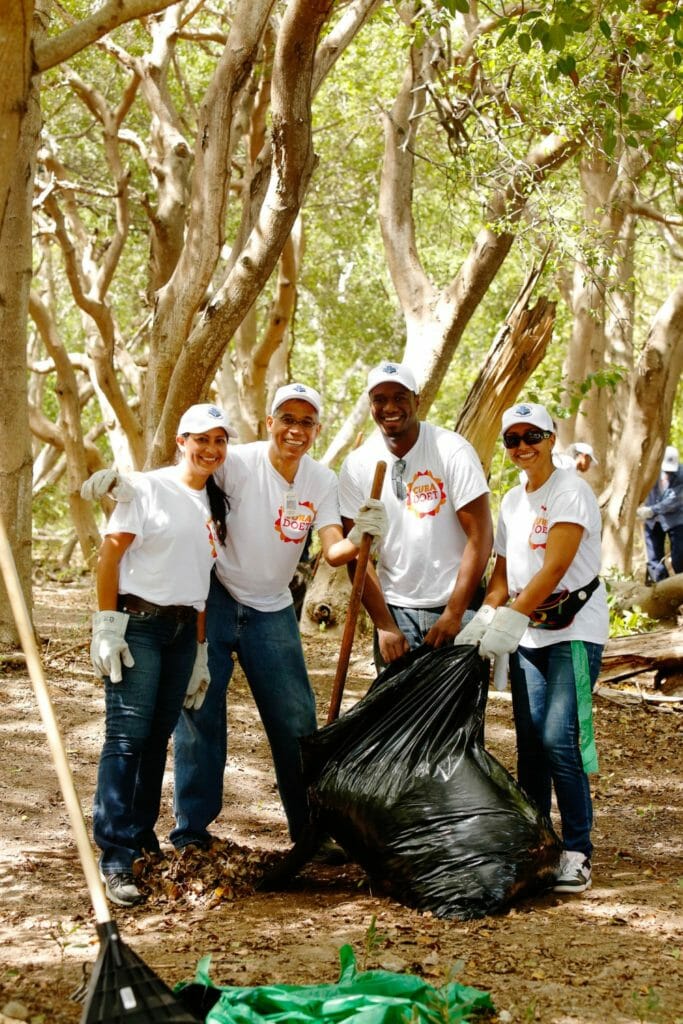
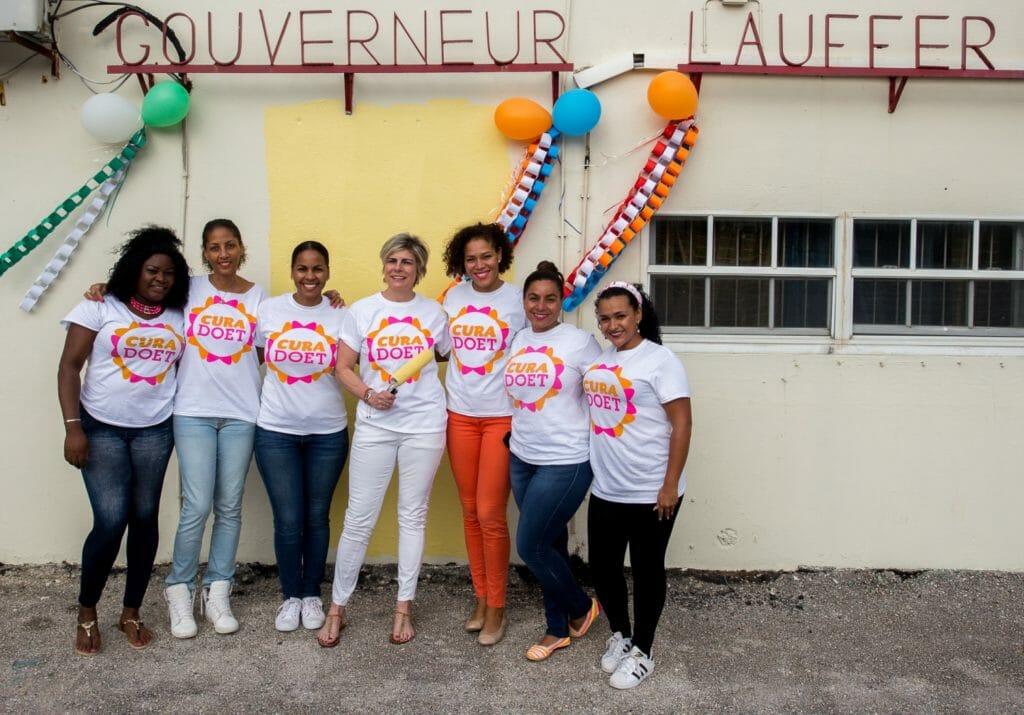
But the annual highlight for Curaçao Cares is organizing Cura Doet, the biggest volunteer effort on the island. Celebrated annually in March in the Kingdom of the Netherlands’ four constituent countries – the Netherlands, St. Maarten, Aruba and Curaçao – the Doet weekend unites people in service to their communities across cultural and geographical differences. The event consists of two national days of service, organized to encourage the communities to get out and do something to help local causes and organizations.
Since its inception in 2013, Cura Doet has engaged more than 16,000 volunteers who have collectively participated in more than 96,000 hours of service. In the past four years, the project has experienced significant growth; from 132 projects and 2,600 volunteers in year one to 217 projects and almost 5,000 volunteers.
To help with the organization of the Cura Doet, and to also support participating NGOs with organizing their projects and managing their volunteers, Curaçao Cares enlists volunteer coordinators for different regions on the island. Each volunteer coordinator works with about 10 to 15 organizations. During Cura Doet, NGOs get an opportunity to spruce up their location and grounds, parks and schools get a makeover, and elderly and people with special needs are treated to an extraordinary day.
“What makes this event unique is the fact that the whole island is wrapped into positive action for two days, with people coming together and experiencing a sense of community and unity. You see excitement and smiles everywhere, and hear people expressing the satisfaction they feel to be able to lend a helping hand,” said Deva-Dee Siliee de Windt.
“And, of course, the fact that this happens in all the countries of the Kingdom, that everyone is participating together on the same date is very special,” added Janis Vinck, project leader for Cura Doet.
Cura Doet would not be possible without the support of local fund Reda Sosial and Dutch fund Het Oranje Fonds, which initiated NLdoet in the Netherlands 10 years ago and expanded it to the Caribbean islands. Het Oranje Fonds awards a $600 grant to all NGOs participating in Cura Doet.
Since Het Oranje Fonds was established as a present to the king and queen on the occasion of their marriage, the Dutch royal family has remained quite involved with many of their activities, including the Doet activities throughout the Kingdom. During this year’s Cura Doet, Princess Laurentien rolled up her sleeves to kick-off a painting project at a local school. While she was in Curaçao, the princess also met with several Kids Councils on the island to see the amazing work they are doing. These Kids Councils were developed with the support of the Missing Chapter Foundation, started by Princess Laurentien to encourage organizations and companies to involve children in decision-making processes.
Through its various programs, Curaçao Cares engages more volunteers each year to put their do-good spirit towards helping the causes they care about. With a continued dedication to helping NGOs more skillfully leverage their volunteers, Curaçao Cares has established itself as the volunteer conduit in their country – every day striving to provide their community with an answer to one question: “What good can I do today?”
What’s Working for Employee Volunteering in Asia?
This post was written by Yvonne Siu Turner, senior manager for corporate resources and programs at the Points of Light Corporate Institute and editor of “What’s Working: Effective Employee Volunteering in Asia, a Framework for Corporate Volunteer Leaders.”
With growing dialogue around purpose in the workplace and the increasing number of community-minded brands in the market, consumer and employee engagement trends in the United States are fueling the rise of corporate citizenship. Similar trends are also emerging in Asia.
To address these global trends, Points of Light has published a new report that harnesses the insights of our corporate partners and global network of innovative volunteer organizations. The report, titled “What’s Working: Effective Employee Volunteering in Asia, A Framework for Corporate Volunteer Leaders,” features a framework to equip corporate volunteer leaders to build effective employee volunteer programs in Asia, highlighting examples of what’s working for more than 25 global and regional brands.
Unique in the market, it showcases a wealth of practitioner insights on critical elements needed to start and scale employee volunteering in Asia. These elements include getting employees in local offices excited about service, celebrating success, equipping and empowering volunteer leaders, offering a wide variety of volunteer opportunities to meet employees where they are, and more. Here are a few best practices featured in the report, which reveal what’s working for effective employee volunteer programs in Asia:
Offer a wide variety of volunteer opportunities that meet employees where they are, especially considering regional differences in employee interests, societal expectations and NGO capacity. While industry research shows that in Asia, 71 percent of companies offer pro bono programs, other research suggests that hands-on volunteering is more popular in China due to nonprofit capacity constraints and employee interests. In Singapore, the receptivity of the nonprofit sector to training opportunities has allowed State Street, in partnership with CLSA, Credit Suisse, Macquarie and Nomura, to create a Not-for-Profit Director Program to equip staff for board service.
Empower volunteer leaders at all levels within the company. Ichiro Takeuchi, an account manager in PIMCO’s Tokyo office, was so passionate about service that he recruited a planning committee that became Japan Volunteers, which was able to respond when the 2011 Tohoku earthquake and tsunami hit Japan. Today, Ichiro is an executive vice president at PIMCO and champions corporate volunteering at every turn.
Celebrate small wins to help gain the respect of employees and volunteers in the Asia Pacific region. “While Groupon’s Asian offices have often been the last to roll out different HR or pilot programs, I’ve found that including their volunteer successes in global EVP messaging and announcements has generated a great amount of excitement and pride from our Asian colleagues,” said Alicia Koch, who manages Groupon’s employee volunteer program. Employee participation in Groupon’s APAC volunteer program increased from 6 percent in 2015 to 74 percent in 2016, with offices in Bangalore and Tokyo achieving 100 percent employee participation.
Provide resources, training and supportive policies to mobilize and equip employees to serve. Mitsubishi Corporation provides volunteer training courses at work and five days of volunteer leave each year to enable employees to serve the community – especially through its Dream as One initiative, which supports the company’s deep societal commitment to people with disabilities. Mitsubishi employees have volunteered to help with everything from building a field for the Japan Para Wheelchair Rugby Championships and coaching a soccer class for children with cerebral palsy, to serving as members of the governing board of the Japanese Paralympic committee.
The more than 25 featured case studies represent a wide variety of industries and organizations dedicated to global corporate citizenship in various stages of building out their employee volunteer programs around the world.
We encourage corporate volunteer leaders to use the framework, examples and stories as inspiration to develop practices that work for their organizations, along with Points of Light webinars, training and consulting services for a greater understanding of best practices for employee volunteerism.
As you start and scale volunteering in Asia and around the world, please share your thoughts and reflections on these resources. Tell us what’s working for you, so we can continue to answer this question: What’s working for employee volunteering in Asia?
Fighting Hunger by Connecting Do-Gooders with People in Need
Across America, 48.8 million live in households that face hunger on a regular basis – 13 million of those people are children. Food insecurity can have a significant impact on the health and general well-being of the families affected by it – especially children, as limited access to nutritional food can stunt growth and critical brain development. Community organizations everywhere are taking action to find solutions to this public health crisis – Volunteer Alexandria, a Points of Light affiliate, is one of these organizations.
A 2014 report conducted by the Alexandria Childhood Obesity Action Network revealed that of the more than 139,000 residents of Alexandria, Virginia, 8.6 percent live below the poverty line. Of those residents, more than 13 percent are below the age of 18. To combat this, the Hunger Free Alexandria Coalition was formed and Volunteer Alexandria, an active member, is putting volunteers at the center of the solution.
“We believe, first of all, that we are better together,” said Marion Brunken, executive director of Volunteer Alexandria. ”We like to make connections that make sense to the community and to the group or individual seeking to get involved. In regards to the hunger issue, we support the fight against hunger by connecting people.”
The organization, positioning itself as the conduit for impassioned volunteers to connect with opportunities to address pressing causes in the Alexandria community, is doing this in a variety of ways.
Any organization, congregation, or community group can submit hunger-based projects to be posted on the Volunteer Alexandria website, where volunteers can click on the Hunger in Alexandria tab to find current opportunities. Opportunities include delivering meals and groceries to homebound people, gleaning left over products from local farmers markets, and handing out groceries at several locations throughout Alexandria. The organization has also launched a new effort that helps connect local companies that have extra food with the community in need.
When Marion heard from a community member that many students playing sports at T.C. Williams High School go home to barren cupboards, she saw an opportunity. Companies in the area could donate food and money to help make sandwiches, which the coaches would distribute to their players after practice.
Several companies have joined the cause, including a local Whole Foods that is donating food and gift cards, and Port City Brewery, which is helping to coordinate food drives at local grocery stories. And for one company, this project has been an inspiration to do even more.
For Megan Hurst, owner of The Great Harvest Bread Company, this project was an ideal opportunity to help her community. The company’s nationwide motto is “give generously to others,” and Megan’s Alexandria franchise lives up to these words by contributing 10 loafs of good quality bread per week to the Volunteer Alexandria program – enough to make about 70 to 80 sandwiches.
“It’s not an enormous expense for me to make some extra loaves of bread,” said Megan. “And if that’s a way that we can serve our community, serve kids, then that’s great.”
Megan hopes to use this program to engage more community members in volunteer service. She has reached out to church youth groups to recruit volunteers, using Volunteer Alexandria’s model of “make a sandwich for yourself, make a sandwich for a friend” approach. This fills two needs: helping feed hungry children who are not involved in the sports teams, and supporting Megan’s desire to serve more with her current resources.
There are “plenty of schools and kids in need locally, so we would like to be able to at least give them good bread,” said Megan. “I can’t do always do the rest of it, but [I can] give them good bread.”
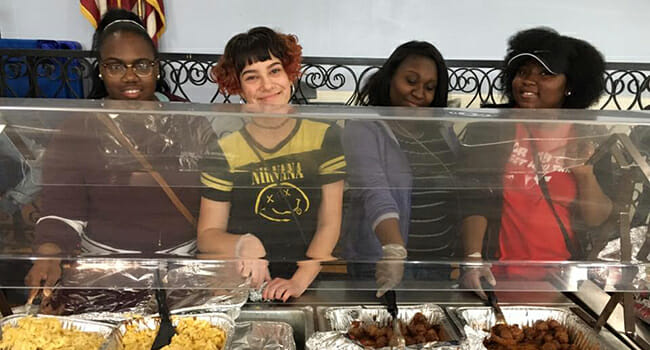
Currently, more than 60 students are fed each day by this program and, through additional community support, Volunteer Alexandria will hopefully be able to serve more students soon.
Marion hopes to engage more volunteers by using a cause-first model, spreading news of social impact opportunities in addition to one-time volunteer projects. Through this model, she hopes to mobilize more youth volunteers, including other students at the high school, in making sandwiches to support their classmates.
By putting people at the center of the solution, Volunteer Alexandria is empowering citizens to take charge of the issues plaguing their communities. The result is a more resilient community, more willing and able to address the needs of their neighbors.