In December, Points of Light and Bloomberg LP released the 2014 Civic 50—a list of the most community-minded companies in the country. The Civic 50 sets a national standard for good corporate citizenship, honoring companies that are effectively lending their time, talent and resources to improve the communities where they do business.
John Peloza, an academic panelist for The Civic 50, and associate professor of marketing at the College of Business and Economics at the University of Kentucky kicks off the five-part blog series that will examine key trends and highlights released in our first comprehensive report, The Civic 50: A Roadmap for Corporate Community Engagement.
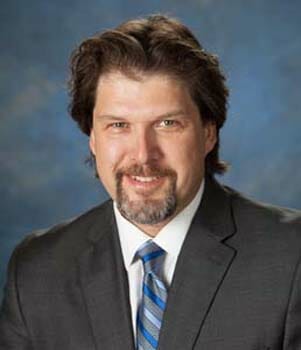
John Peloza
As a contributor on the academic panel that helped shape The Civic 50 survey, I waited for the 2014 results with great excitement. Now that the report is out, complete with profiles of the companies within this elite group, I predict two important changes will take place. Consumers will make the first change, and companies not on the list will make the second.
First, consumers who want to reward community-minded firms now have information they can use. The companies on the Civic 50 list deserve this recognition and subsequent support.
In the past, consumers’ perceptions of community engagement haven’t always aligned with reality. In an insightful report, Tenet Partners found extreme misalignment between what companies actually do and what people think they do. In some cases, companies that are very civic minded are perceived as being average, or even below average, on this dimension. And vice versa. The Civic 50 is an important data point to externally validate these companies’ efforts. I expect that, equipped with this validation, consumers will vote with their pocketbooks.
Second, I expect companies not on the Civic 50 list will work to emulate the firms that are on it, possibly because they see a clear connection between community-mindedness and the bottom line. And that’s a good thing!
The beauty of The Civic 50 is that it’s not simply a list of who is giving the most. Those lists are out there and, quite frankly, don’t do much to offer guidance to managers who invest in community engagement or the consumers who wish to support them.
Instead, the Civic 50 rates companies highly when they integrate community engagement with the business of the firm, institutionalize it with policies and incentives, and perhaps most important, carefully evaluate its impact.
I think many companies are reluctant to tie community engagement to the bottom line for fear of being seen as exploitative. Based on my own research and that of many others who study community engagement, they shouldn’t worry. Most people acknowledge that benefits to the firm should be part of the expectation from community engagement.
In fact, a 2012 study found that 76 percent of people believe “it is okay for brands to support good causes and make money at the same time,” up from 57 percent in 2008.
The companies on The Civic 50 list take steps to ensure the positive impacts they enjoy are more than just public relations from cash donations.
Companies like AT&T, with its “It Can Wait” campaign to stop texting-while-driving, are building their own platforms for community engagement, with their employees at the center of their efforts. This suggests a meaningful difference in the way these firms view community engagement and checkbook philanthropy. Programs like this provide a benefit to the community, employees and the bottom line.
And that’s the way business should be done.
To learn more about highlights and best practices from the 2014 Civic 50, download our webinar recording from the Dec. 17 event.
Who Made the List? Announcing the 50 Most Community-Minded Companies in the Nation
This post is by Tracy Hoover, Points of Light’s president.
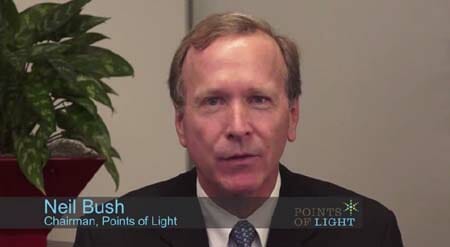
Click here to watch a short video announcement of the 2014 Civic 50 from Points of Light Chair Neil Bush.
The Civic 50 sets the standard for corporate community engagement nationwide and creates a roadmap for companies seeking to best use their time, talent and resources to improve the quality of life in the communities where they do business.
Please take a moment to celebrate these companies for their great and continued efforts. And as the holidays approach, I hope you’ll put your money where your values are and use your purchasing power to support all the companies that are doing great work in their communities.
To learn more, click here or register for our free webinar, “The Civic 50: 2014 Highlights and Best Practices,” Dec. 17 at 2 p.m. ET.
The 2014 Civic 50, in alphabetical order, are:
AbbVie
Adobe Systems Incorporated
Aetna Inc.
Alcoa
Altria Group, Inc.
Apollo Education Group
AT&T
Bank of America
Baxter International Inc.
Caesars Entertainment *Consumer Discretionary Sector Leader
Capital One
CenterPoint Energy *Utilities Sector Leader
Citi
Comcast Corporation *Communications Sector Leader
ConAgra Foods *Consumer Staples Sector Leader
CSAA Insurance Group – a AAA insurer DIRECTV
Dr Pepper Snapple Group
Eli Lilly and Company
FedEx Corporation
Freeport-McMoRan Copper & Gold
Gap Inc.
GE
General Mills
Hasbro, Inc.
Health Care Service Corporation
Hewlett-Packard *Technology Sector Leader
Intel Corporation
Intuit
KeyBank *Financials Sector Leader
Motorola Solutions, Inc.
Pacific Gas and Electric Company
Prudential Financial, Inc.
PwC
Raytheon Company
SAP
Sigma-Aldrich *Materials Sector Leader
Southwest Airlines
Sprint Corporation
State Street Corporation
Symantec Corporation
The Hershey Company
Toyota Financial Services
TSYS
UnitedHealth Group *Health Care Sector Leader
UPS *Industrials Sector Leader
Valero Energy Corporation *Energy Sector Leader
Verizon
Viacom
Western Union
Better Living Through Technology
This post is by Jackie Norris, executive director, and
Yvonne Siu Turner, senior manager, corporate resources and programs,
means creating a better future for everyone through its actions and innovations. After Haiti’s earthquake in 2010, with critical medical infrastructure in ruins, the country’s Ministry of Health asked Partners in Health (PIH), a U.S.-based health care organization, to scale up plans to build
, a community hospital just 60 kilometers north of Port-au-Prince.
“The urgency of the situation escalated plans and we confirmed our commitment to become one of the primary technology partners for the hospital,” said Paul Ellingstad, director of human progress initiatives at HP.
“PIH was a natural strategic partner for HP,” he said. “We believe in the role of technology in democratizing people’s lives and helping them live and work better. PIH’s vision is health equity for all and a belief that modern technology should be made available to support health care delivery to the poorest of the poor. We were a natural fit.”
How did HP help?
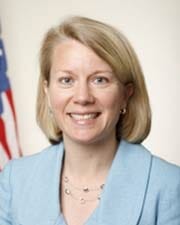
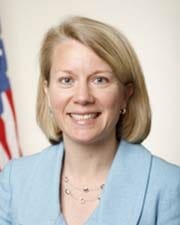
Yvonne Siu
It provided what the company knows best – technology and IT infrastructure to support all the applications needed to run a modern hospital. The hospital was fitted with a high-capacity server rack, wireless access points and VoIP phones. HP workstations were situated throughout the hospital equipped with 27-inch monitors to enable teaching opportunities in the operating rooms and optimum radiology image viewing.
Further, the electronic medical record system housed on HP servers allows hospital staff to quickly refer to and update patient records, providing clinicians with the tools they need to diagnose and treat patients.
Long-Term Commitment
In addition to providing technology and funding, HP employees contributed their time and expertise to the design, build-out and installation of the IT systems at the hospital.
Alan Nemeth, HP fellow emeritus, and Les Fox, HP distinguished technologist, both volunteered to oversee the project – and continued to volunteer after their retirements in 2012. Throughout the project they brought in experts from other areas of HP including HP Technology Services, HP Networking, HP Enterprise Services and Manufacturing.
Good For The Community, Good For The Company
HP’s commitment to global community engagement and skills-based volunteering projects like this has not only improved the health of thousands, it has also helped develop professional skills and boost morale at the company.
In fact, employees who use their professional skills when they volunteer are 38 percent more likely to have the highest level of employee morale than employees who don’t volunteer, according to
. The scorecard showcases the impact that HP’s employee volunteer programs have on everything from the nonprofits they serve to employee satisfaction.
While there has been much progress, much of the dialogue surrounding CSR and corporate citizenship today still centers on making the business case for programs that allow employees to get involved in their communities and tackle social issues, especially through volunteering. HP is at the forefront of this discussion, as it supports its business case with data. It is this discipline and commitment to measurement and evaluation that won the company accolades in the
Having data to support integration between business strategy and CSR is no small achievement – many companies are in the beginning stages of collecting data that can show a direct connection between volunteerism and bottom-line business goals like talent development and employee engagement. While many volunteer programs start out with good intentions and stem from a culture of wanting to give back, the ability to sustain and scale a program often relies on data proving that it is good for business.
“Ever since its inception in 2011, our employee community engagement program has put tools in place to track the results of key initiatives,” says Rebecca Wang, manager for HP corporate affairs.
Wang continues: “Why is measurement so important? Because we are accountable for our results just like any other area of the business. If we can’t prove our value to our business leaders, we will lose their support. And without senior management support, no corporate program can hope to last for long.
And without measuring results, you can’t determine whether a program is successful or not. It makes no sense to continue implementing programs that take valuable resources and funding if they can’t prove their worth.”
Other findings from HP’s scorecard show that volunteering is associated with higher rates of employee inspiration, motivation and loyalty. When asked what they would do if they were offered a comparable position at another company, volunteers were 12 percent more likely to say they wouldn’t leave than non-volunteers while 13 percent were more likely to recommend HP as a great place to work.
For companies like HP, this indicates a win all around: engaged employees, an engaged community and a direct way to scale its social impact.
“As we look to the future, we embrace the opportunity to apply the talents of our people and the broadest technology portfolio to deliver solutions for our customers’ and the world’s most complex challenges,” says Wang. “By working to achieve a balance of human, economic, and environmental progress, we will create a better future for everyone. One in which we are all living progress.”
What We Have Learned From Businesses That Help Their Communities
This post by Jackie Norris, executive director of the Points of Light Corporate Institute, is part one in a seven-part blog CSRWire series exploring the community engagement practices of winning companies in The Civic 50, an initiative launched in 2012 by Points of Light, the National Conference on Citizenship and Bloomberg. The Civic 50 identifies the top 50 community-minded S&P 500 corporations that best use their time, talent and resources to improve the quality of life in the communities where they do business.
Jackie Norris
Companies across America have been taking note that the key to sustaining a successful business goes beyond interactions with consumers and stakeholders. It’s about playing a part in the communities where they live and work as well.
Accordingly, corporate civic engagement in America is on the rise – showing up in annual shareholder reports, in boardroom discussions and holding increasingly more weight in employee engagement strategies. The Civic 50 was introduced two years ago to recognize the top S&P 500 companies that are fostering and promoting community leadership as an integral part of their corporate culture. Take a look at last year’s results as published by Bloomberg.
In 2013, Civic 50 applicants were evaluated based on several criteria including:
The amount of financial and human resources applied to civic improvement
Whether internal and external resources are used to maximize community impact
How a company’s community engagement activities align with its business interests
How broadly community engagement is supported and institutionalized within a company’s policies, systems and incentives
How a company measures the social and business value of its community engagement programs.
As engagement programs mature and begin to align more with business strategy, recognizing that corporate civic engagement is an emerging field. The survey has also continued to evolve. These changes help create more opportunities to understand participating business’ civic engagement practices across a range of variants like size, sophistication, industry and length of operation.
Some Highlights from the 2013 Survey
Commitment to community is being institutionalized as a top priority throughout companies. Ninety-two percent of The Civic 50 can describe board, executive or senior leadership resolutions or directives that institutionalize corporate policies and practices related to community engagement.
The majority of The Civic 50 companies, 96 percent, evaluate the business impact of civic engagement on at least one aspect of their bottom line, such as increased sales, brand loyalty or employee recruitment. HP demonstrated that its community engagement programs increased sales by 9 percent. Rigorous quasi-experimental design third-party research is conducted approximately every two years including the effect that each of the community engagement programs has on sales. The last third-party study, conducted in 2011, found that all of HP’s key community engagement programs increased sales by at least 6 percent.
Businesses believe that community engagement programs make employees more valuable – employee skill sets have expanded as a result of employee volunteering.
Over the next few weeks, staff members of the Points of Light Corporate Institute will examine best practices and highlight the top scoring companies in each of the five dimensions for 2013’s Civic 50 here on Talkback. Follow along to learn more about how companies are making socially responsible practices and community leadership a part of their corporate culture, including inspirational stories about:
Morgan Stanley’s organizational commitment with their Children’s Hospital
Apollo Education Group’s meritorious strategic investment with Roadtrip Nation
Nearly three years after Michael Porter and Mark Kramer published “Creating Shared Value” in the Harvard Business Review calling on businesses to create economic value in a way that also creates social value, we are now seeing a growing number of companies step up to turn that vision into reality.
While Porter and Kramer’s article bemoaned the fact that “most companies remain stuck in a ‘social responsibility’ mindset in which societal issues are at the periphery, not the core,” many companies have recently showed that they are increasingly integrating social issues into the core of their business strategies.
We can see this clearly in this year’s The Civic 50 survey, issued by Points of Light and the National Conference on Citizenship. The Civic 50 was created to measure corporate civic engagement and to recognize top S&P companies that make socially responsible practices and community leadership part of their corporate culture. Businesses recognized as The Civic 50 set the standard for how a company’s time, talent and resources can best be used to improve quality of life in the communities where they do business.
A few findings from the survey show how companies are connecting the dots between their community work and their business bottom line:
Businesses believe that community engagement programs make employees more valuable–employee skill sets have expanded as a result of employee volunteering.
Employees are being evaluated on both business performance and their participation in community work.
Businesses are seeing that a strong, strategic community program has bottom line benefits – improving a company’s brand, recruitment and sales.
Best Practices for Shared Value
Indeed, with companies like those in the Civic 50 stepping up to improve the communities in which they live and work in a serious way that drives business success, we are starting to see a framework and best practices for how companies can achieve real shared value.
“We are encouraged by the results of The Civic 50 survey, which show that increasingly community engagement is recognized as being core to business success,” said Neil Bush, chair of the Points of Light Board of Directors, and Michael Weiser, board chair, National Conference on Citizenship, in a joint statement. “We hope the best practices of The Civic 50 will serve as a valuable resource for other companies that want to transform their business, make a greater commitment to their communities, and change lives.”
Those best practices include:
Institutionalizing corporate policies and practices related to civic engagement.
Tracking the impact of corporate civic engagement on sales, recruitment, retention and skills development.
Incentivizing community involvement throughout the organization – and holding employees and leadership accountable for success. Increasingly, more companies are adding community work to employee reviews.
Volunteering in companies is on the rise and more companies are donating expertise through pro bono support and skills-based volunteering.
Helping their small business and local enterprise counterparts succeed and providing them with the necessary resources to do so.
Institutionalizing corporate policies and practices: At IBM, the Corporate Responsibility Executive Committee includes representation from Community, Legal, HR, Supply Chain, Environment, and Government Relations. The day-to-day work is carried out by a Corporate Responsibility Working Group drawn from all these areas of the company and with global membership. The Working Group convened more than 20 times in 2012.
Corporate civic engagement and the business bottom-line: GE demonstrated many ways community engagement can enhance business drivers. For example, when GE’s corporate audit staff met in Miami for leadership development training, they also carried out a Junior Achievement volunteer project. More than 600 employees participated in the project, and they said that it improved their teamwork, project management, negotiation and presentation skills.
GE also mounted a quick and effective response to Superstorm Sandy. When New York’s Bellevue Hospital Center lost backup power during the storm, service teams from GE Healthcare helped doctors and nurses evacuate and transfer patients and equipment. Elsewhere, GE employees worked long hours to help utilities restore power and volunteered to clear out flooded homes and businesses. In total, the GE Foundation donated $5.8 million in support of Superstorm Sandy relief-and-recovery efforts.
Additionally, as part of its Developing Futures in Education program, the GE Foundation has been advocating for businesses and communities to support the implementation of the Common Core State Standards (CCSS) scheduled to go into effect in 2014 in 46 states. GE sponsored a two-day meeting with business leaders and public officials to explain the impact the CCSS will have on the future workforce. These events occurred in nine cities reaching almost 900 business leaders.
Holding employees and leadership accountable for success: Thirty percent of all employee evaluations at Western Union are based on the “WU Behaviors,” reflecting a strong value of ethics, integrity and community engagement. Responsible behavior includes community engagement and shared value, based on criteria including developing shared value products, leading local fundraising events, volunteering for the Western Union Foundation or in the community. As part of their performance objectives – which are the basis for professional evaluations and bonuses – all Western Union employees are asked to create a “Social Ventures” objective, aimed at reinforcing each individual employee’s commitment to using business assets to deliver business and social results.
Volunteering in companies is on the rise: Members of Capital One’s Brand team developed a pro bono National Brand Campaign for Give an Hour (GAH), a nonprofit dedicated to meeting the mental health needs of returning military troops from Iraq and Afghanistan. For the far-reaching campaign, team members developed television and print PSAs that appeared in Time Square and in Time Magazine, Newsweek, O Magazine, Men’s Fitness and the GAH website. The pro bono brand team’s efforts resulted in an 80 percent increase in volunteers from 2,000 to 10,000 within a four-month time period.
Helping small businesses and local enterprises succeed: Hershey runs a program that sends agricultural and social text messages to rural Ghanian farmers via mobile technology to educate them on up-to-date agricultural practices to help them maximize their yields and incomes. Outcomes are significant, including cocoa yield increases of more than 40 percent, income increases of more than 50 percent and school attendance increases of more than 25 percent.
With all of these inspiring examples of companies stepping up to meet the needs of their communities through their community involvement programs, we are beginning to see how many in the business community are moving away from a “social responsibility” mindset where social issues are at the periphery of business, to one where they are closer to the core of business strategy. What will we see with 2014’s Civic 50 list?
Who Made the List?
This post is by Tracy Hoover, president of Points of Light.
The Civic 50 sets the standard for corporate civic engagement nationwide and creates a roadmap for S&P 500 companies seeking to best use their time, talent and resources to improve the quality of life in the communities where they do business.
Please take a moment to celebrate these companies for their great and continued efforts. And as the holidays approach, I hope you’ll put your money where your values are and use your purchasing power to support all the companies that are doing great work in their communities.
2012 Election: Implications for the Service Sector
Today’s guest post is written by Julie Murphy, vice president of government affairs and public policy at Points of Light.
On Wednesday, Nov. 7, the nation awoke to a familiar political scene: the re-election of the incumbent President and Congress still split between a Democratic Senate and a Republican House of Representatives. Here are some trends and opportunities for the service and volunteerism sector:
Cooperation, Compromise, Common Purpose
“What makes America exceptional are the bonds that hold together the most diverse nation on earth, the belief that our destiny is shared, that this country only works when we except certain obligations to one another… That’s what makes America great.” President Barack Obama on election night
At Points of Light, we share the president’s view that the greatest hope for our country lies in our impulse to honor the obligations of our citizenship through service. In the next four years, we will work with both the White House and Congress to promote policies and programs that advance and integrate volunteer strategies directed toward national needs across the public sector.
Some of these strategies may even be derived from our own in-house initiatives:
How can HandsOn Schools and generationOn inform education reform and resuscitate federal service-learning policies?
How can the work of our disaster team and our affiliates engaged in the response to Hurricane Sandy improve federal disaster response programs?
What are we learning from the Community Blueprint regarding veterans’ and military families’ services?
What does the Civic 50 tell us about the potential for greater coordination between private and public sectors and does this imply changes in such areas as tax policy?
What can the 750,000 alumni of AmeriCorps over the last 20 years tell us not just about national service but also about social policies writ large?
How has volunteering changed employment strategies in this country over the past four years and does that need to be reflected in federal economic policies?
Are there ideas from our thought leadership agenda such as converting federal student work study programs to “serve study” programs or creating a volunteer background check “fast pass” that are ripe for consideration by Congress?
Status Quo
An election that yields no substantial shifts in power means we need to renew our relationship with our bipartisan Congressional and White House allies and introduce ourselves to the newbies — quickly. Given that we have status quo, the time and energy needed to hand over the keys and unpack the boxes can now be spent by the White House and Congress on getting busy, and we need to be ready to be the voice for citizen engagement in Washington.
Fiscal Cliff
The looming budget crisis means that we will need to be aggressive and smarter in our opposition to further cuts to the Corporation for National and Community Service. We will need to gather our best stories about the impact of service and volunteering programs such as the Volunteer Generation Fund and rapid fire these into the inboxes of members of Congress.
Our AmeriCorps alumni, our affiliates and our partners will all be called to become vocal advocates for a resolution to our country’s fiscal problems, a resolution that 1) does not compromise effective volunteer and national service programs; and 2) protects the most vulnerable in our society.
Demographic Shifts
“What the world saw this week was a picture of America at its best: edgy, experimental, open-minded – and brilliantly diverse.” Fareed Zakaria, Washington Post, Nov. 9, 2012
Zakaria framed it well and we, as a sector, will need to rise to this same challenge to embrace the changes in our country’s demographics to ensure that all Americans have opportunities to serve.
Limited but Energetic Government
David Brooks said this about the 2012 election: “It’s about leaving behind the stale Big Government versus Small Government framework and figuring out how to use limited but energetic government to help people work harder and strive more.”
We, at Points of Light, believe that an energetic government’s best fuel is its people and our policy agenda for 2013 will include the smartest investment the federal government could make: identifying and replicating volunteer-driven community solutions that show proven results.
Any thoughts/ideas on what the election means to the volunteer and nonprofit sector? Share in comments.