Providing Opportunities for Central American Youth to Rise Above Violence and Unrest to Create Positive Change
A legacy of civil war and unrest has left the Central American region known as the Northern Triangle – El Salvador, Guatemala and Honduras – plagued with violence and fragile institutions. In fact, recent developments in Guatemala increasingly suggest the potential for a “Central American spring” as protestors, tired of corruption and violence, come forth to denounce their governments and demand accountability from leaders, according to the Council on Foreign Relations. In the meantime, the high rates of violence have caused many citizens, including youth, to flee their countries in search of a better life elsewhere.
The result has been a greater push by social organizations in these countries and bordering nations to support youth and, ideally, equip them to spark change and improve their communities – rather than leave them. Glasswing International is one such organization.
Glasswing International, a Points of Light affiliate founded in 2007, has helped more than 800,000 people through education, health, employment and entrepreneurship, community empowerment and other special initiatives. The organization has made it a priority to provide opportunities for young people to succeed. Over the last 10 years, an estimated 254,000 children have benefited from their education programs. The hope is that by providing kids with resources and opportunities, the youth they engage will grow to become leaders in their own communities, paying forward the support they received.
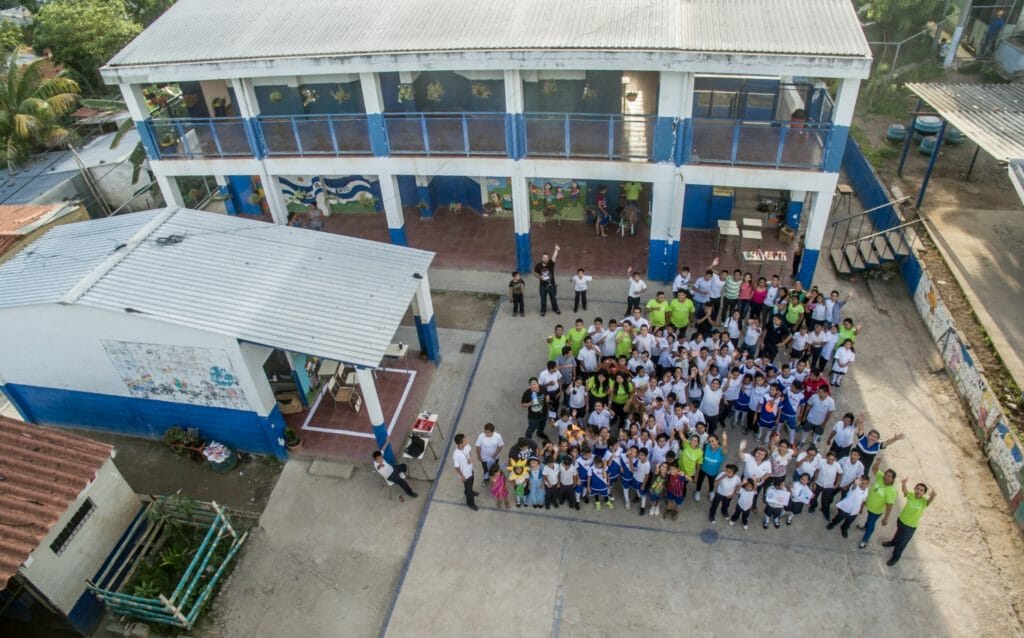
Founded in El Salvador, Glasswing has since expanded to have offices in seven other countries – Honduras, Guatemala, Costa Rica, the United States, the Dominican Republic, Nicaragua and Panama – and programs in a total of 16 countries. Glasswing uses an assets-based rather than needs-based approach, investing in a community’s existing strengths and resources – including its infrastructure and its people.
This approach can be seen in Glasswing’s Community Schools initiative, which aims to provide students with a supportive and enriching educational environment.
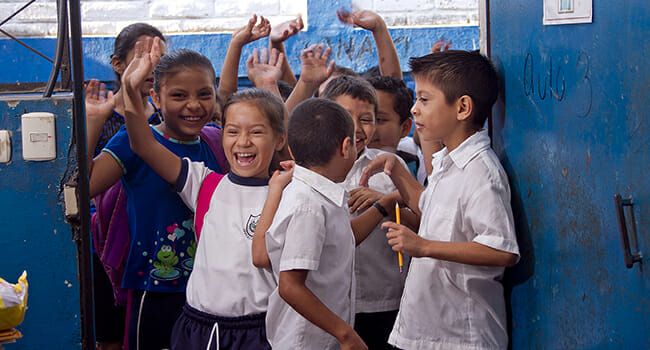
“We turn public schools into Community Schools,” said Ken Baker, CEO of Glasswing. “Kids in the region go to school for four hours a day and after that, the schools are empty. What we do is offer volunteer-led after-school programs to expand the school day, keeping children and youth off the streets, away from violence, and enabling them to thrive.”
Volunteers are central to operating these programs. Glasswing recruits volunteers from local businesses and organizations, as well as parents and other community members, to facilitate programs, spend time with students, expose them to new things, act as role models and encourage them to be involved in their school and their community. In addition to providing valuable support to the children, Community Schools also help build stronger communities by engaging citizens in the advancement of local youth and stressing the importance of education.
Following the assets-based model, Glasswing tailors these programs to meet the specific needs of each community. Youth are engaged not only as participants, but also as volunteers and peer leaders – and their experiences help inform the process.
“By encouraging young people’s participation in all aspects of our operating structure, we encourage sustainability and empower them to become more active members of their community,” said Alejandra Romero, regional communications fellow at Glasswing.
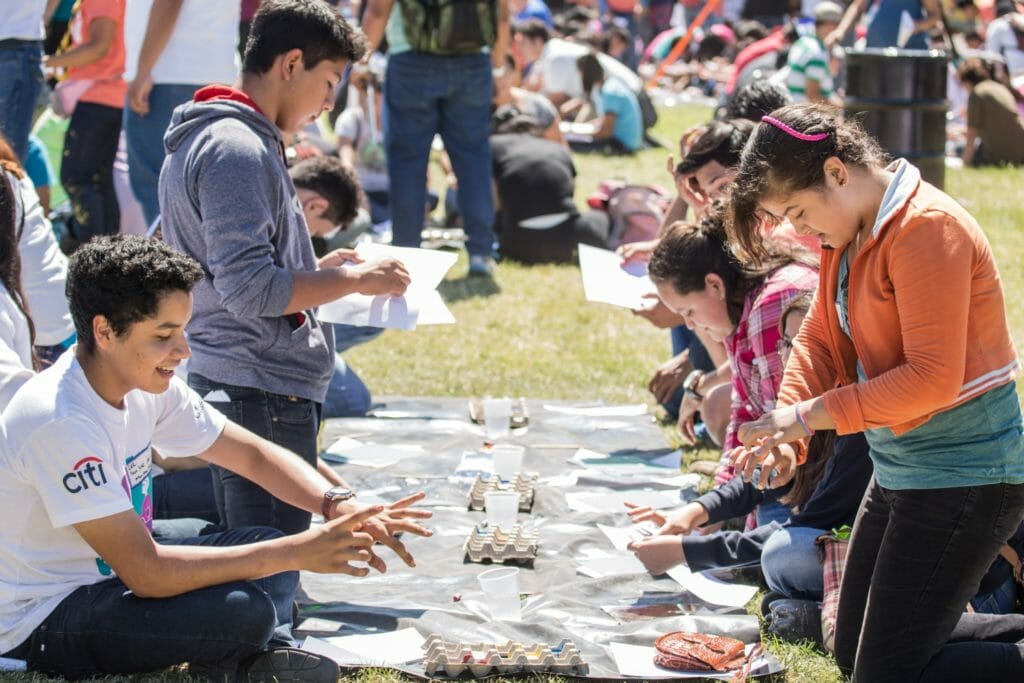
In the fall of 2016, Glasswing organized a two-day youth festival and concert with the goal of uniting youth from El Salvador, Honduras, Guatemala and Nicaragua, encouraging them to interact and engage with each other in a safe space and discover their power to create change. The youth festival and concert, called Generation Now, featured big-name artists like David Guetta as well as local artists and motivational speakers.
In conjunction with the festival, Glasswing also hosted a Regional Youth Forum to provide youth attending Gen Now an opportunity to connect and participate in discussions about leadership, perseverance, identity and a range of other social issues plaguing their countries. Through these discussions, youth identified ways to become part of the solution.
With a focus on having fun, Gen Now also provided an urban art space, where participants could practice artistic pursuits like DJing and break dancing that, in El Salvador, have traditionally been associated with malicious behavior or gang activity.
Alejandra explained that the concert provided youth with “a space to interact with each other – that is, a safe space where they don’t have to worry about the violence that, unfortunately, many of these kids face in the communities they live in.”
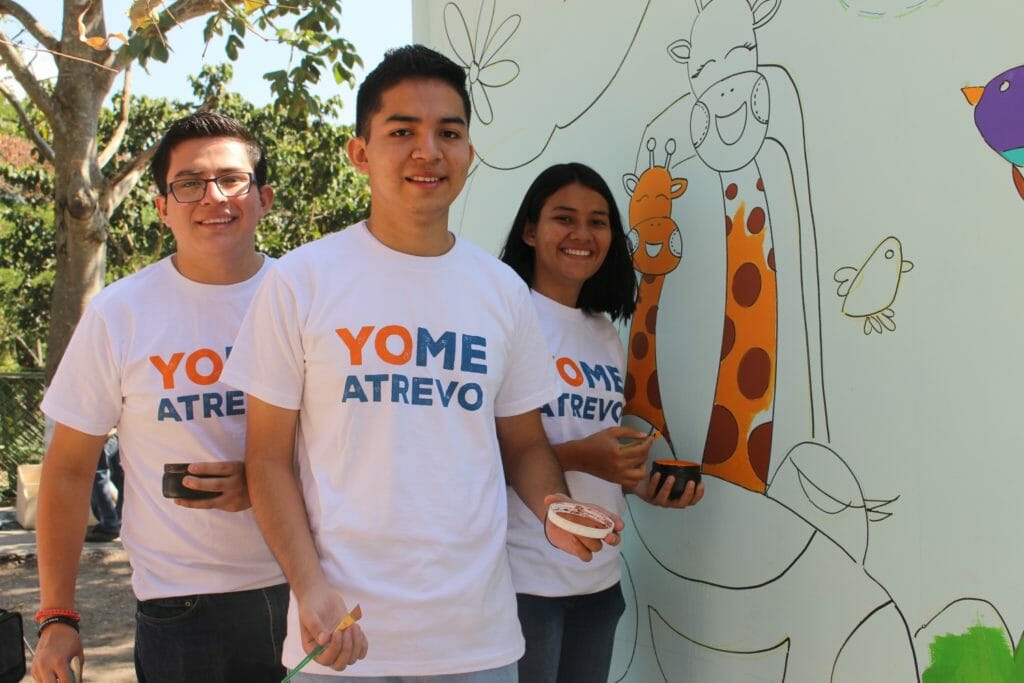
The whole event centered on the idea of “yo me atrevo,” meaning I dare to – according to Alejandra, the organization hopes to use this concept to turn Gen Now into a movement, something that youth are thinking about year-round.
Five months after the Gen Now concert, Glasswing held its first Yo Me Atrevo Contest, which brought together groups of four to five youth to develop proposals for a project to improve their communities. With assistance from adult volunteers from their communities, more than 150 teams from Guatemala, Honduras and El Salvador submitted proposals to a panel of judges. In each country, the top three projects were awarded grants that ranged from $4,000 to $8,000 to help put their proposal into action.
The contest gave young changemakers the necessary tools to improve their communities and encouraged them to “dare” to make a difference. The winning proposal in El Salvador was the Centro Cultural Cristo Redentor – a project that will help improve an at-risk community by expanding the services provided by a community center dedicated to strengthening the arts, hosting sports and other engaging events, and fostering peace by creating a space where people can interact in a positive and meaningful way.
Through programs like these, Glasswing hopes to continue engaging youth and providing them with the resources to create change around them. And they have already seen some promising results – students who have graduated from their community schools program have returned as volunteers for their youth-focused programs and continue to come back school year after school year.
Volunteering Summer Camp Offers Hands-On Service, Leadership Experience to Bay Area Youth
Every summer, parents and high-school-aged students across the United States look for opportunities to help young people stay engaged and active throughout the season. Summer camps are a common solution, offering programs which are similarly structured to school, but with a more relaxed curriculum that allows for a wider array of learning opportunities.
, a leadership and volunteering day camp for high school students in the San Francisco Bay Area.
HandsOn Bay Area was founded through a merger between Hands On San Francisco and Community Impact – two organizations started by college students as a solution to help people interested in giving back locally find opportunities to do so. Since the 2004 merger, the organization has continued to grow and thrive with the goal of making volunteering a valuable resource to their community. Last year, HandsOn Bay Area engaged more than 20,000 volunteers in service across thousands of projects, in conjunction with 273 nonprofit partners in the Bay Area.
The organization enlists volunteers primarily through a community events calendar that lists more than 100 projects every month, giving individuals the opportunity to sign up for any number of low-commitment volunteer projects alone or with family or friends.
“It takes a lot of the fear out of it,” explained Lou Reda, executive director of HandsOn Bay Area. “All of them are done-in-a-day projects, so the commitment level is just for the project itself and then after that, you’re done.”
The organization has also responded to Bay Area companies looking for simple, low-commitment ways to get their employees involved in service to the community. Working with more than 50 companies of varying size, HandsOn Bay Area matches each with a nonprofit partner that fits the community goals of the company – such as hunger, homelessness, youth development or the environment. Then, they coordinate everything from project planning and supplies to logistics and providing project leadership.
Wanting to engage more young people in service, the organization launched the HandsOn Tomorrow program in 2015 to helps youth learn to be the change they wish to see in the world and to organize together to become community leaders in the Bay Area and beyond.
The annual summer program enlists several cohorts with a maximum of 20 volunteers each. Through the innovative
, Points of Light’s youth service division, the camp’s participants develop leadership skills through fun, hands-on activities, while also exploring and addressing specific challenges facing their communities.
Since the program started, HandsOn Tomorrow has engaged more than 50 youth volunteers. This year the camp is taking place at the end of July, and two of the three cohorts have already been filled.
During the two-week session, each cohort serves a different nonprofit every day. The mornings focus on hands-on leadership building activities, exposing youth to the background and mission of their host organization. After lunch, they get their hands dirty working on a project supporting that mission.
While the program allows youth to make a big difference in a short period of time, Lou explains that one of the most impactful parts of the program is the capstone project that takes place at the end of the two weeks.
“The biggest moments are when the youth lead their family and friends in volunteer activities during the capstone project,” said Lou. “They are the volunteer leaders of that project … and it’s just amazing to see how powerful it is for our youth to be in charge.”
In addition to earning 55 volunteer hours and gaining leadership skills, participants learn what it takes to make a difference in the community, and how to engage their peers, family and community in meaningful service and function in a team-based environment.
Every year, the youth who most excel in the HandsOn Tomorrow program are nominated by the camp leaders, and five are selected to join HandsOn Bay Area’s
service event – a mini-mural design project – to help beautify a local school.
Along with the opportunity to plan projects, members of the Youth Advisory Council get continued leadership advancement training, which in turn helps the organization build up its leadership pipeline.
“The plan is to move people along the leadership spectrum of engagement,” said Lou. “We’ve discovered it’s a pretty powerful program.”
For the Youth, By the Youth
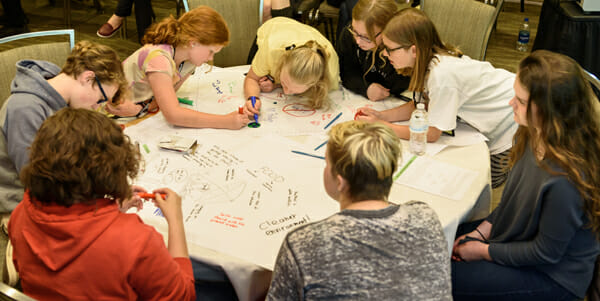
During this year’s Conference on Volunteering and Service, and with the generous support of Target, youth in and around the Seattle metropolitan area were invited to complete interactive and engaging workshops to develop a service project that positively impacts their community.
The Youth Summit featured 8 teams of young people that brainstormed ways to address a social issue important to them, develop a strong plan of action and pitch their idea to a panel of judges for a chance to win $250 to $1,000 grants to implement their project. The winners were chosen based on points received in the areas of relevance, creativity, community engagement, planned scope of work, defined outcome and sustainability.
In addition to the competition, the summit provided an opportunity for the students to network with each other and develop their collaboration skills, as well as their experiences and best practices with each other. Terra Gay, Points of Light’s senior vice president of Programs, summarized it best, “As you seek opportunities, seek out others as well.”
Empowering Youth to Discover Their Potential to Create Change
In recent years, national leaders and community groups alike have called upon volunteers to help break down the income inequality gap by supporting disadvantaged youth and young adults. In response, organizations like
, a community program designed to help young people grow, develop, and succeed.
United Way of Greater St. Louis is also a host site for ServiceWorks, a national program that engages youth in finding solutions to some of their community’s most pressing issues. Powered by the
uses structured volunteer service as the primary strategy to help low-income youth and young adults – called service scholars – in 13 cities across the United States develop the skills they need to prepare for college and careers.
Since becoming a host site for the ServiceWorks program in July 2014, United Way has engaged more than 690 young adults in service to their community.
Through service, participants in the program see that they are able to effect change in their communities, explained Mary Pryse, volunteer center manager at United Way. “The projects that we’ve done with them allow them to see that they can always give back – that they can always help other people.”
In St. Louis, ServiceWorks is operated through partnerships with various local high schools and community colleges, as well as local youth development organizations like the St. Louis Science Center’s Youth Exploring Science program, a STEM program that also has a life skills and service learning component. The partners provide the space for the program and United Way provides the programming and staffing.
While there are many factors to consider when building a program that works with such a diversity of partners, if you ask Mary, she would say the most important thing is flexibility.
“I think our success has come in our flexibility of allowing the program to meld to the needs of the different partners and allowing it to fit within what they’re already doing or what they want to do,” she said. In some cases, this has also meant adapting the program to be appropriate for older and younger audiences.
Nationwide, organizations that host the ServiceWorks program adapt the model to fit the specific needs of their community. In St. Louis, United Way focuses on five impact areas: financial stability, education, health, strong communities and basic needs, such as food and shelter.
Though the organization hosts events that support all of these causes, the adaptability of ServiceWorks has provided a more direct path for United Way to support community needs by helping prepare youth and young adults – the next generation of changemakers – for college, their careers and their lives.
Host sites implement the ServiceWorks program with the help of AmeriCorps VISTA members and volunteers, who help lead workshops and facilitate the planning of service projects that are carried out by the service scholars. At the United Way of Greater St. Louis, programming is managed by AmeriCorps VISTA Lisa Cohn.
Recently, Lisa coordinated a project at Lift for Life Academy in St. Louis where the service scholars, frustrated by the underrepresentation of African Americans in popular children’s books, decided to make a change. Using a website called
, they wrote their own books featuring African American protagonists and communicating important messages they found missing in existing children’s literature.
The scholars took their books to a local elementary school and read aloud to the students there. By sharing their creativity and using artistic expression as a response to exclusion, they saw first-hand their power to effect change.
“Not only are we teaching youth stuff, but we’re also empowering them to become leaders in their communities – showing them that they have skills that are necessary for the world,” said Lisa.
The focus of each service project is up to the scholars, allowing them to address community needs in a variety of ways. The ServiceWorks program demonstrates the power of service as a strategy to empower youth and young adults, helping them develop skills to become changemakers and realize their full potential.
“Our mission as an organization is to help people live their best possible lives and we believe that there are many different ways to do that,” said Mary. “ServiceWorks has allowed us to continue to help people in a more direct way by bringing this programming to some of our agencies, but also our community partners and the community as a whole.”
5 Ways to Engage Kids and Teens in Volunteering
Kids and teens have an exceptional view on the world, and often offer up some of the most creative solutions to problems. Because of that, engaging them in volunteer work is a great way to solve community problems in a unique way. Additionally, it also helps foster important social and emotional competencies, like empathy and compassion, and develop key 21
st
century skills like critical thinking and collaboration.
With
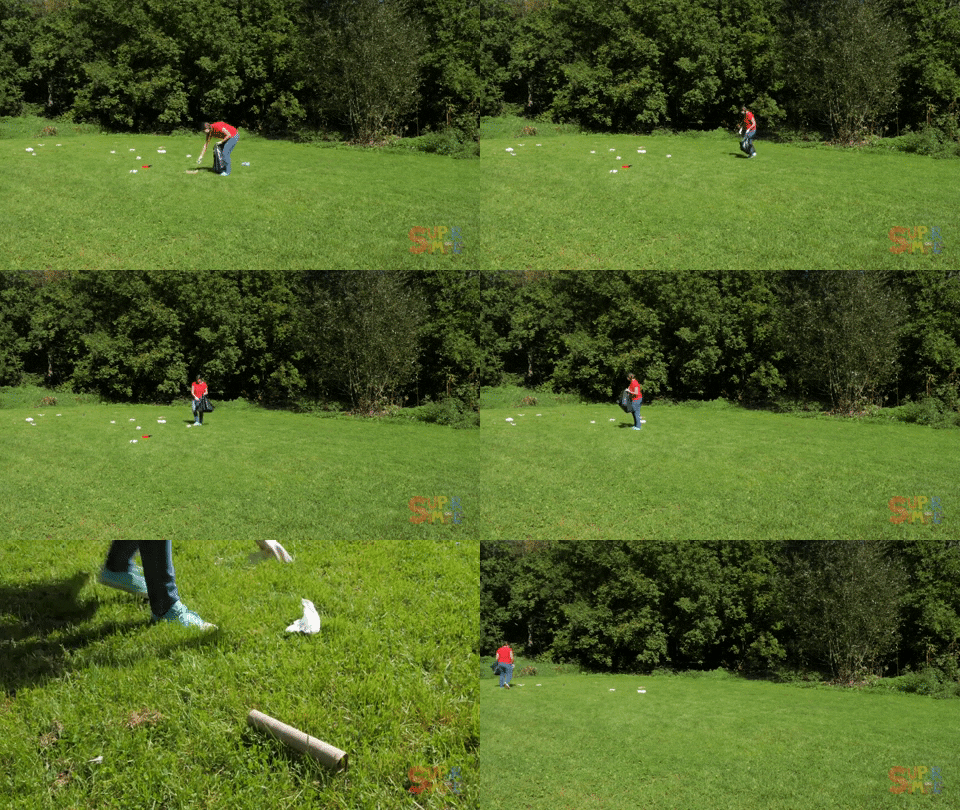
takes very few resources – mainly just trash bags and gloves – and is an activity anyone can participate in. Decide on an area to clean up, connect with the manager of the area (parks department, etc.) to pick a day, and recruit friends and family to help!
! The game night can be dedicated to a certain age group (teens helping younger kids) or to members of the community who are learning English as a second language. Games like Scrabble and Taboo can be fun, or create your own!
Youth can sometimes feel like they don’t have a voice, but that simply isn’t the case! As our nation continues to navigate through divisive times, working with youth to take action and stand together is a great way to engage and empower them. Youth can
. These clubs are led by a caring adult or teen, and engage kids in regular service around issue areas they choose! They’re free to join, and you’re provided with all the materials you need to get started.
Kids and Teens Can “Make Their Mark on Hunger” Through Innovative Service Projects
Did you know that 1 in 6 Americans face food scarcity? That includes 15 million kids under the age of 17 who are not getting the food they need.
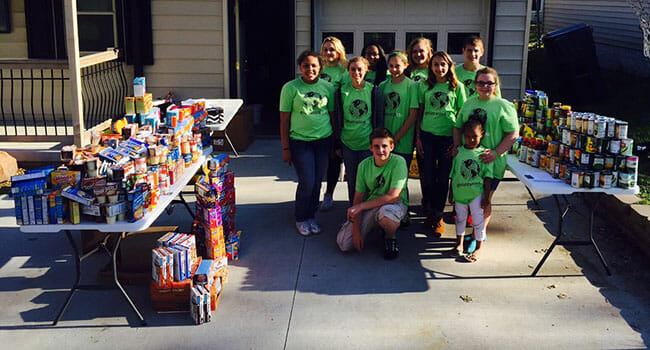
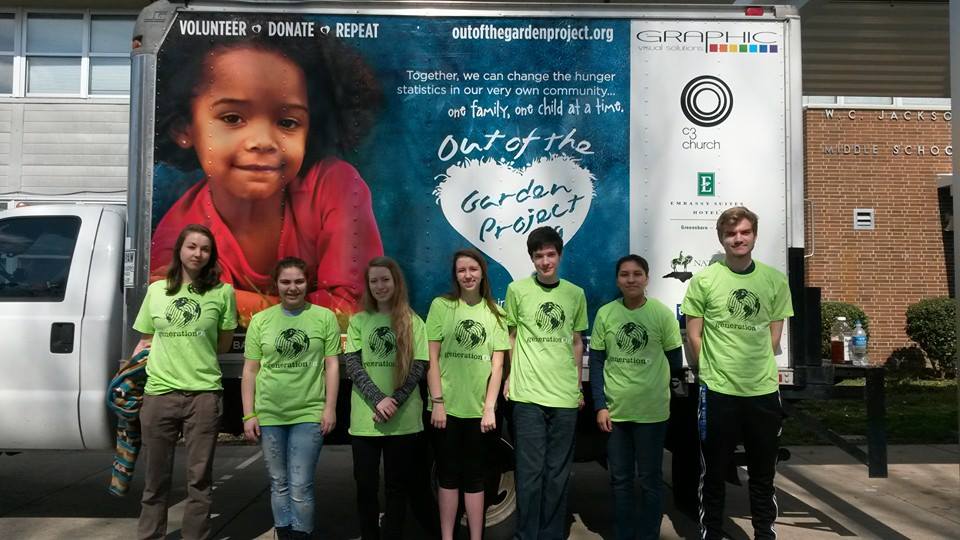
But kids and teens also have the power to provide solutions to hunger-related issues – which is why generationOn, the youth division of Points of Light, is launching the third annual Make Your Mark on Hunger campaign. Sponsored by C&S Wholesale Grocers, the campaign challenges kids and teens to fight hunger through service projects in their communities.
To support this work, 22 grants were awarded nationwide to innovative youth-led service projects that are helping to solve the real hunger-related issues our communities are facing. Here are just a few of these incredible grantees:
Kate Atschinow of Highland Park, New Jersey, runs a foundation called Cutting Out Hunger. She uses the concept of extreme couponing to purchase food for her local pantry at deeply discounted prices. To date, she’s donated more than $40,000 worth of food. She also teaches community members about couponing, helping those in need to become more self-reliant and face food insecurity with more empowerment and dignity.
Parker Romney of New Albany, Indiana, is working with 15 youth volunteers to assemble and plant indoor dirt-less aeroponic tower gardens in three local elementary schools, helping to provide fresh produce to children year round. After hosting a food drive and seeing the often low quality of donated food, Parker decided to help kids in need learn about healthy eating. Since children are often out of school when a “traditional” garden is ready for harvesting, this year-round method gives children the opportunity to learn to plant, grow, harvest and eat healthier than they are used to.
Lauryn Hinkley of Bismark, North Dakota, runs an annual peanut butter and jelly drive for her program, One Backpack at a Time, to collect food for children who rely on school-provided meals during the week and often go without food on the weekend. Peanut butter and jelly are the most expensive items in the backpack, so without donations from people like Lauryn, organizations would not be able to include them. To date, Lauryn has collected more than 15,000 pounds of peanut butter and jelly to supply meals to children in need.
There are so many ways for kids and teens to make an impact, help the hungry and learn more about the needs in their community.
The Make Your Mark on Hunger campaign runs from March 15 through April 30. Visit www.generationOn.org/hunger to sign up, download materials and share your story for a chance to win grants.
10 Young Changemakers Stand Up, Inspire Others to Be Fearless and Kind
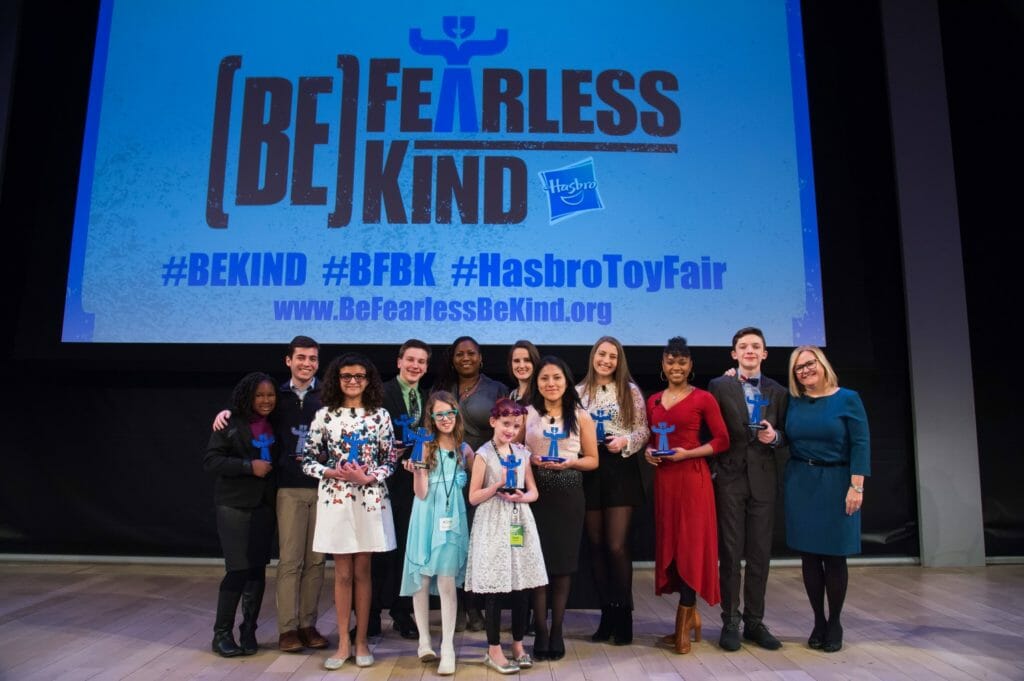
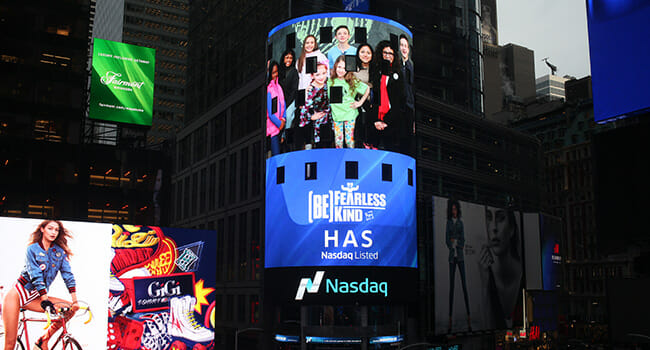
Ten young changemakers from across the country came together for three days in New York City to highlight their work, learn how to expand their impact and inspire other youth to take action. These 10 young people were recognized as Hasbro Community Action Heroes for their outstanding work in their communities and beyond by
Ranging in age from 9 to 18 years old, this incredible group shows youth and adults alike that it’s never too early to make a difference. Here are some highlights of their amazing work:
Violet Humble, age 9, Spokane, Washington: Violet rallied family and friends to help the homeless population of Spokane, assisting more than 300 homeless people a week by distributing thousands of toiletries and snack bags, and serving more than 900 full meals.
Hailey Richman, age 9, Long Island City, New York: Hailey founded Kid Caregivers, a support group for kids who are assisting their families in caring for a loved one with dementia. She is also the assistant director of Puzzles to Remember, where she distributes puzzles to seniors with dementia and spends time with them as they work on the puzzles.
Zoe Terry, age 10, Miami: At age 5, Zoe created her own organization called Zoe’s Dolls to inspire and motivate girls of color to love themselves. She promotes positive body image by holding her “Love the Skin I’m In” Creative Expressions Contest, where she encourages girls to submit a poem or video on why they love themselves.
Paloma Rabana, age 11, Tallahassee, Florida: Paloma, who is legally blind, recognized a critical gap in services for visually impaired 6-13 year olds in Florida; she lobbied the Florida legislature to approve the Children’s Program for Florida’s blind and visually impaired 6-13 year olds program, providing $1.25 million with $500,000 recurring annually.
Morgan Guess, age 14, Pudacah, Kentucky: At just 8 years old, Morgan was bullied, suffering in silence and becoming withdrawn and depressed. She started Guess Anti-Bullying to support other kids going through the same issue. She spent three years lobbying the state of Kentucky, which signed a bill into law that defines bullying in Kentucky, affects 1,233 public schools and protects some 640,000 students.
Zachary Rice, age 15, Morristown, New Jersey: After being diagnosed with a rare degenerative bone disease, Zachary realized playing video games helped distract him from pain. Now he hosts the “Action for Distraction 5K” to raise funds to donate gaming systems to children’s hospitals, raising more than $75,000 and helping more than 200,000 children in four years find comfort and normality in the hospital.
Aidan Thomas Anderson, age 16, Woodstock,Georgia: Aidan’s love of music sparked his realization that he could give back. Now he wants to teach his generation to give through his initiative, Aidan Cares. Speaking to youth from more than 30 countries, some as young as 4 years old, he helps people figure out how they can get involved and follow their passions to give back.
Angelina Zevallos, age 17, Berkley, California: Leading a community project called Youth Voice Advocate, Angelina recruited more than 30 youth team leaders to focus on outreach to ease the crisis of homelessness in the Bay Area. Working with community partners, Angelina has engaged homeless youth in revitalizing an empty lot and worked with them to create a safe space while recognizing their unique talents and contributions.
Eden Duncan Smith, age 17, Brooklyn, New York: Eden is excited to use her increasing fame as an actress to help shine a light on civil rights and being a voice for others, especially for the LGBTQ+ community and young women of color, through her Angel in the S.K.Y.E. Network. Eden has spoken out about women’s rights, including speaking at the United Nations, and engages her community members to create opportunities to continue to find ways to fight for everyone’s basic human rights.
Josh Kaplan, age 18, Phoenix: Recognizing that kids with intellectual disabilities are often isolated socially, Josh created GOALS (Giving Opportunities to All who Love Soccer), a nonprofit Unified Soccer Program for kids with and without special needs to help build a forum for positive social interaction between the groups, creating inclusive opportunities for all to feel welcome, encouraged and cared about.
Throughout their time together in New York, the Heroes worked on a joint service project packing toiletry packs for the homeless, met with author and parenting expert Dr. Michele Borba to talk more about empathy and kindness in kids, and created a pledge to use their voice to inspire other kids.
On Tuesday, they were also honored on stage at the Hasbro’s New York Toy Fair showroom. After being presented with their award by Karen Davis, senior vice president of global philanthropy and social impact for Hasbro, these 10 young ‘heroes’ shared their pledge to continue inspiring others. The kids were also treated to a tour of Hasbro’s showroom, getting to see and enjoy all of the new toys, games and entertainment coming out in 2017.
Returning to their communities, the Heroes look forward to bringing back the things they learned to help them continue to amplify their outstanding work while inspiring others to BE FEARLESS BE KIND by standing up for others, including everyone and taking action.
ServiceWorks ‘Dream Team’ Pair Demonstrates Power of Mentorship
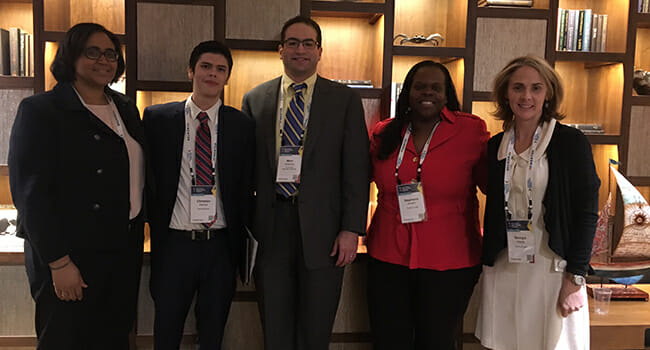
At first glance, Jersey Cares Success Coach Marc Wolensky and college student and ServiceWorks alum Christian Illescas don’t seem like two people whose paths would be likely to cross – but looks can be deceiving.
Through Points of Light’s ServiceWorks program, Marc and Christian were paired up as a success coach and mentee in 2015. Working together, they share ideas and find unique ways to help their community. Their successful relationship – Christian calls them “The Dream Team” – led them to be invited to speak at the recent MENTOR conference in Washington, D.C.
We sat down with them to talk about their relationship, how being part of ServiceWorks has affected them, and what they see for the future.
Q: Marc, what made you want to become a success coach?
MW: I wanted to be in a position to positively impact people’s lives. I love working with and helping people, especially college students, become their best selves. From what I’ve seen in my experience as a professional coach, and what I personally experienced being coached, I felt that it would greatly benefit the students in my local community.
Q: Christian, what’s something you have learned from Marc?
CI: Say yes to everything, and then figure out how to do it! Sometimes we reject opportunities because we are afraid or do not believe in ourselves, but Marc taught me how to take action and take these opportunities to a different level.
Q: What are some goals you set at the beginning of success coaching?
CI: In the beginning of coaching, my goals were to buy a car before sophomore year; to take the 2016 entry-level law enforcement examination; to graduate from college with a double major in three years; to get admitted to law school after my undergraduate degree; and to become a politician. Marc helped me figure out how to set time frames and due dates and get a very clean perspective of how to achieve these goals.
Q: How has your relationship grown?
MW: Coming into this program, I never thought that I’d make this kind of relationship with a Service Scholar. From the moment we met, I knew that Christian was special, and he was goal driven. To have been able to help him has been a pleasure. Even though our official coaching relationship ended, Christian and I have become friends and we continue to work together, helping each other to be our best selves.
CI: Marc and I have become really good friends since our official relationship as mentor and mentee ended. Marc has become like an older brother to me, he is always there to help me whenever I need him.
Q: Why do you think the ServiceWorks program is so successful?
CI: ServiceWorks has a solid structure – it’s a family working towards the same goal and people bring desire, performance and perseverance every day.
MW: It’s a great model, with great teachings, led by great people! Everybody involved with ServiceWorks has something special to add to it, and that’s part of what makes it a successful program. The lessons taught are beneficial to all, especially young people. The model allows growth to occur to everybody involved, including the trainers, coaches, Service Scholars, and the local communities they serve.
ServiceWorks, a national program powered by the Citi Foundation, AmeriCorps and Points of Light, uses structured volunteer service as the primary strategy to help 25,000 low-income youth and young adults in 10 cities develop the skills they need to prepare for college and careers.
Finding – and Spreading – Joy in 2016
This post is byTracy Hoover, Points of Light’s CEO.
It’s this time of the year when the promise of peace and goodwill seems especially precious to me. Maybe even more so this year, which has unfolded against a backdrop of divisiveness, community unrest, a negative election cycle, and growing disparity. The images and messages affect all of us, including the youngest members of our society. A report by the Southern Poverty Law Center found that “teachers have noticed increased bullying, harassment and intimidation of students.”
We know there is an antidote to this growing crisis. Volunteering gives young people the opportunity to practice putting themselves in others’ shoes, to develop empathy and compassion. According to TeenLife.com, teens who volunteer develop an increased sense of social responsibility – a global view of society and a heart for giving back and helping others. In addition, Marilyn Price Mitchell, Ph.D., says that volunteer opportunities help “young people understand how they fit into society to how they can help solve societal problems. This developmental process grows empathy and fosters children’s identities as engaged citizens.”
Youth service drives compassion and inclusion and is key to creating change and uniting communities. Our goal is to support, celebrate and be led by kids and teens who are serving and solving real world problems through volunteerism, all while developing compassion for others.
That’s why I’m so excited about the Joy Maker Challenge, and so grateful to Hasbro, Inc. for sponsoring this effort, now in its seventh year. Powered by generationOn, the youth service division of Points of Light, the campaign gives kids and teens a way to give back and spread joy during the holiday season by engaging in volunteer service and acts of kindness. Since the Joy Maker Challenge campaign started in 2010, nearly 865,000 acts of service have been completed by youth worldwide, resulting in $6 million worth of toys and games being donated to Toys for Tots by Hasbro, Inc.
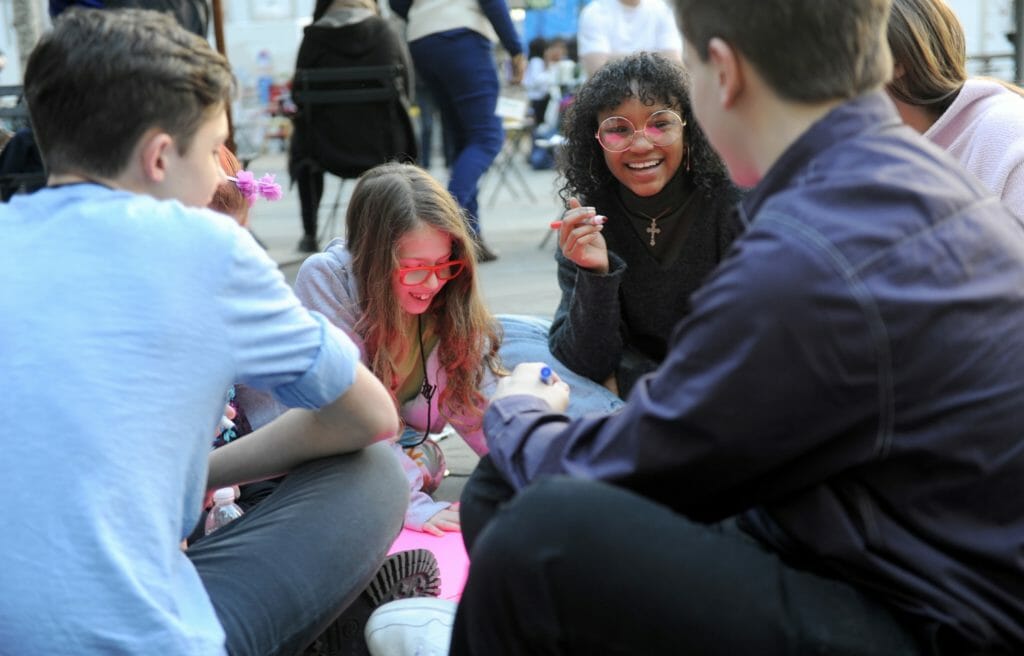
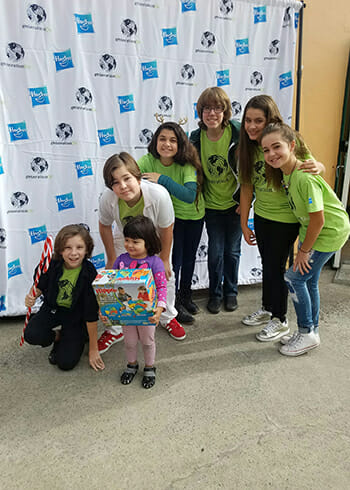
Xolo Mariduena is one of 100 Kindness Ambassadors for the Joy Maker Challenge. He recently led a joint service project in Los Angeles that brought young people together and connected them to the community. In this project, local youth from 9th Street Elementary, located in LA’s Skid Row, wrote letters and made cards for senior citizens in nursing homes to let them know someone is thinking about them during the holidays. The activity gave them the chance to see that they can make a difference. After the service project, attendees had the opportunity to pick out a toy or game, enjoy music and holiday activities.
This is just one of the many incredible examples of young people who are leading positive change every day. And this year, through the Joy Maker Challenge, our goal is to engage 100,000 kids in service. From making gift packages for patients in children’s hospitals, to making decorations for a local senior center – the Joy Maker Challenge encourages and celebrates young people’s involvement in meaningful, hands-on service in their community.
As we look toward a New Year, I am so inspired by the young volunteers making a difference. I hope they inspire others to serve, and ultimately to see past differences and band together for a more unified, peaceful world. I challenge you to join us this year and be a Joy Maker!
Take the Joy Maker Challenge and find project guides and service ideas at www.generationOn.org/joymaker. As part of the Joy Maker Challenge, for every kid and teen who engage in service, Hasbro will donate a toy or game to Toys for Tots – up to $1 million worth!