



Meet Daily Point of Light Award honoree Noreen Hosny. Read her story, and nominate an outstanding volunteer or family as a Daily Point of Light.
Noreen Hosny’s background in molecular biology and visual arts might not be the most common combination you hear of, but she’s using those skills to change the world. Fascinated by art from a young age, Noreen was always intrigued by how graphic design can influence the way we process and understand information.
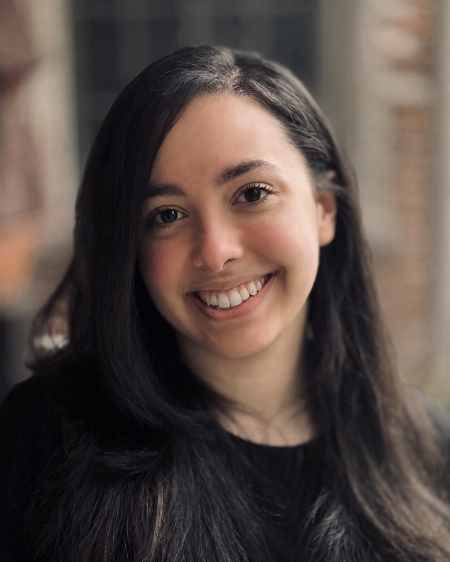
In 2019, she established a pro bono educational design initiative focused on improving health literacy by making health information easier for patients and families to understand. But it was during the COVID-19 pandemic that Noreen really started to make headway. In a period when organizations weren’t able to do the typical fundraising and live events that helped them function, Noreen stepped in to help.
She’s partnered with more than 30 clinics and nonprofits nationwide to create everything from information on hyperbaric oxygen therapy for veterans with traumatic brain injuries to cancer prevention materials for use in New Jersey free clinics. Noreen is now designing donor-facing materials and annual reports for organizations, giving them the power to successfully fundraise and make a bigger impact. Thus far, she’s saved these organizations more than $90,000 in design costs.
Looking forward, Noreen has a ton of projects in the works. She wants to teach others about graphic design, and she’d like to host more workshops where people can learn the skills. She’s already partnered with some local organizations and taught K -12 students how to make infographics. But there’s also one major endeavor in front of her: medical school. While Noreen always knew she had a sense for science and the arts, her ability to combine her skills to make an impact through volunteerism demonstrates an acute awareness of how one’s innate skills can make a difference. There’s no doubt she’ll continue this mission in her medical career, which has been vastly informed by her passion for serving others.
What inspired you to get started with this initiative?
I’ve always loved visual arts, drawing, and painting. I took a digital arts class in high school, thinking it would be something like Disney animation, and it ended up being more about graphic design. I really became fascinated by how graphic design can influence the way we process and understand information. I remembered how they carefully design things like subway signs in the city. It just made me so excited, and I really wanted to apply what I had learned.
I started the pro bono educational design initiative in 2019, shortly after I took that class, and I started working with local organizations in my town. When COVID hit, I found out that a lot of organizations couldn’t do any fundraising or events with educational outreach, so I decided to expand it nationally and support those organizations whose outreach had been disrupted.
What inspires you to volunteer?
My design initiative is focused on improving health literacy, so my goal is to make health information easier to understand. Health literacy is really important to me, and, drawing on my own experiences, I see how making health information accessible can directly shape how people understand their options and make decisions about their care. When information is too technical or confusing, it can actually become a barrier for people to access the care that they need. I really wanted to volunteer to help bridge that gap using my own skills.
Tell us about your volunteer role.
I have my website, and I usually get requests through that. I meet with organizations, and I really get to understand their needs and the community that they’re serving. Then, I start researching the relevant scientific or clinical information that they want to share. Throughout those weeks, I’ll develop a lot of drafts, and I’ll send them a lot of different options, and we go from there and keep refining until they’re happy with it. Typically, they’re used in the initial consultation and patient guides. The patients will understand the benefits and risks of a procedure, and if it’s more like a community organization, then it would be used in their educational sessions. Basically, it’s working with the organization for a very long time to really understand their needs.
What’s been the most rewarding part of your work?
Seeing the materials actually reach the people that they were created for. I spend a lot of time researching, designing, and revising. I think the most rewarding part is when the leader of the clinic or nonprofit calls me, and they tell me a patient is using this resource, they’re really able to understand their options, and we’re moving forward with screening or whatever. I think that’s the most important.
What have you learned through your experiences as a volunteer?
Education and teaching someone is not a one-size-fits-all thing. You really have to understand the community’s needs, what they already know, and what barriers they might be facing. I learned that you really have to get to know the person that you’re teaching or you’re working with. As a person who’s going into medicine, I feel that’s really important, especially with patient education, making sure people understand their options and how to make decisions about their health.
Why is it important for others to get involved with causes they care about?
It gives you a chance to connect with people and learn from their unique perspectives. It really gives you a chance to contribute to something you care about. It’s rewarding to have an impact and make a difference in people’s lives.
Any advice for people who want to start volunteering?
Do a lot of reflection. Reflect on what you’re passionate about, what your values are, and what your unique skills are. Think about how to help your community and what causes you care about, and start locally by seeing which organizations need support and how you can fit in and help with that cause.
What do you want people to learn from your story?
Everybody has their own unique skill set, and there’s always a way to contribute. With my graphic design skills, I’d say I really try to maximize how much I can help, and that’s a good lesson for people. You might not think a skill could help somebody, but if you really become creative and think of how that could make a difference in someone’s life, then that could really be the start of a greater initiative.
Do you want to make a difference in your community like Noreen? Find local volunteer opportunities.