Destini Yaden
Destini Yaden, who serves active duty in the Air Force, is no stranger to the trials and tragedies of military life. And, she’s channeled her experience into helping children cope with losing a parent.
Since 2007, Yaden, who is part of the Honor Guard that performs funerals at Arlington National Cemetery, has worked with the National Military Survivor Service and the Good Grief Camp. These initiatives, offered through the Tragedy Assistance Program for Survivors (TAPS), enabled her to help Brooke Nyren, a young girl who lost her father, navigate her grief and life after losing her father.
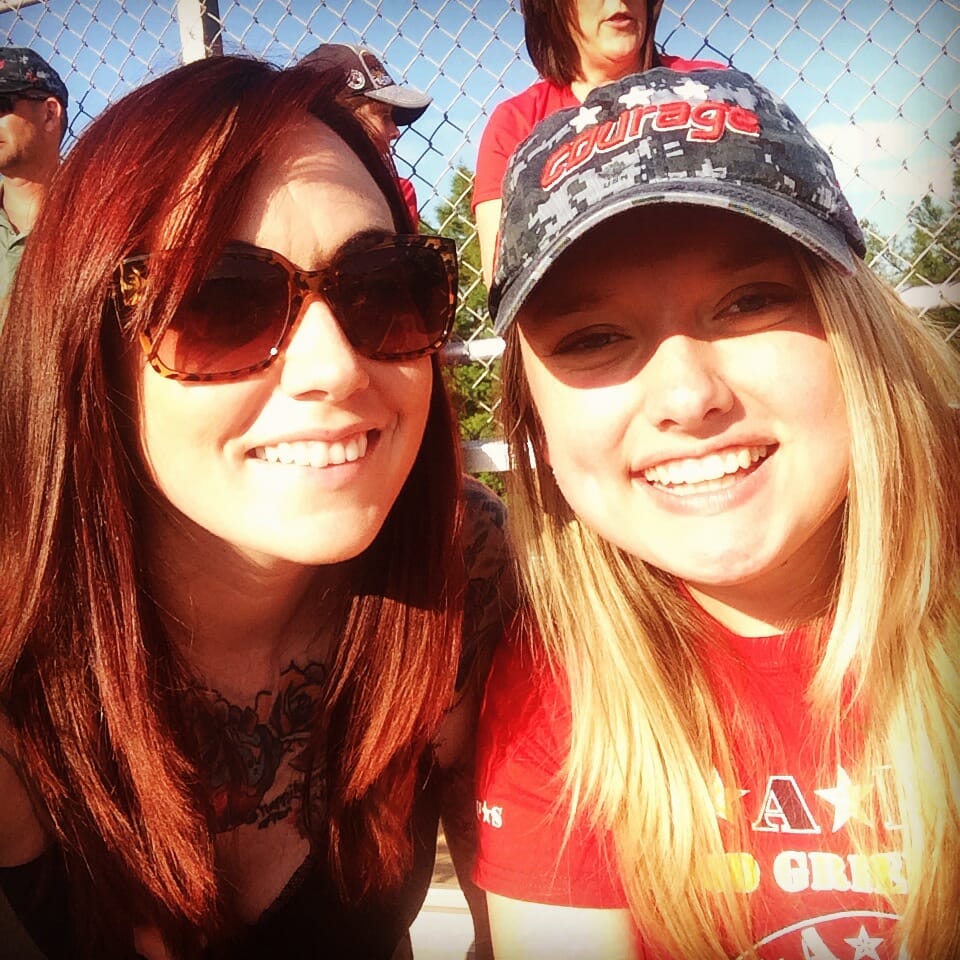 Destini, left, and Brooke
“It changed my life to sit and talk with her about her loss,” Yaden said. “The connection we have has been huge for me.”
Yaden met Brooke at a weekend Good Grief Camp. During the camp, mentors and youths play games and participate in team-building activities that foster trust. They also write letters to their loved ones to send up in a balloon release.
Mentors offer youths a 24-hour support network. So, the experience is about more than volunteering, though, she said.
“This isn’t just about a volunteer opportunity to do something good to check it off the list,” she said. “It’s a matter of spending time and being with families during a tragedy to support them.”
Throughout the first camp, Brooke and Yaden sparked a unique friendship, and the Virginia teen requested Yaden as her mentor every year thereafter. Soon, their relationship spilled beyond the camp with Yaden spending more than 700 hours with Brooke on weekends, helping her with school work and attending extracurricular functions.
Her efforts have been an example to the more than 5,000 TAPS mentors, according to her nominators. She’s been the TAPS representative on every base she’s served and has provided support to numerous families.
“The problem today is that a lot of people don’t realize why they do what they do in the military because it has become a job,” she said. “I know I’m doing my job for those who wish they could be here. Volunteering makes me passionate about everything I do every second of the day.”
If you’re interested in finding opportunities to engage in your community through service, please check out All for Good for projects near you!
Amanda Gosman
“I have always been involved in international humanitarian work. The reason why I came to the University of California at San Diego was partly to become part of Fresh Start Surgical Gifts. We’re able to bring kids from all over the United States and all over the world here and give them the gold standard of reconstructive surgical care.”
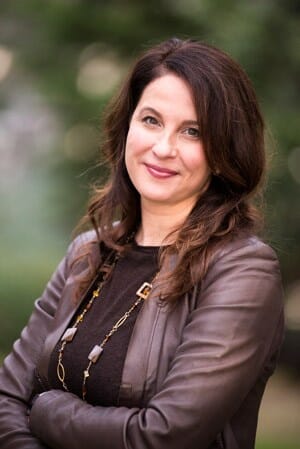 Amanda Gosman
Amanda Gosman joined Fresh Start Surgical Gifts in 2006, volunteering her time as a pediatric plastic surgeon, as well as serving as a board member and on many committees. Through this organization, she provides surgical services for children with cleft lip and palate.
Fresh Start Surgical Gifts provides surgical services to children from age 1 to 17 who have physical deformities from birth defects, accidents, abuse, or disease. Patients apply to be considered for services, and a medical committee selects those who would be best served. The organization brings together surgeons, nurses, anesthesiologists, speech therapists, and other medical volunteers. Together they, including Gosman, have donated more than 6,000 volunteer hours.
Gosman joined Fresh Start Surgical Gifts in 2006, providing free surgical care to children from underserved, rural areas of the United States, as well as international patients, who have no health insurance or money to pay for services.
She is also integral in furthering research that looks at how children with deformities feel about themselves during their development years. Existing research shows that treating these and giving them a fresh start, she says, can create a dramatic and positive effect on their self-esteem and abilities to accomplish goals.
Gosman has volunteered more than 1,500 hours of world-class medical care to children with craniofacial deformities. Through Fresh Start Surgical Gifts, Gosman provides surgical services to children with cleft lip and palate – conditions that can require 10 to 20 surgeries to correct. In 2010, Gosman launched the nonprofit ConnectMed International to work with Fresh Start Surgical Gifts to provide multidisciplinary healthcare and education, direct medical care, and educational partnerships through telemedicine. Gosman uses telemedicine technology to help international communities build sustainable healthcare programs and to educate community healthcare providers. Her telemedicine work has already made changes in Malawi, Vietnam, Mexico, and India. Fresh Start Surgical Gifts built a free-standing surgical center to provide expert care to children with cleft lip and palate and is researching how improved satisfaction with outward appearance can positively impact a child’s self-esteem and future successes.
Gosman believes this work is innovative because no other organization exists that provides free surgical services to children from both the United States and abroad. The organization brings children to San Diego to receive specialty care from an entire team of experts.
She has always been an advocate for access to healthcare, and working with Fresh Start Surgical Gifts gives her the opportunity to provide care at the level she feels patients deserve. In her opinion, it’s unacceptable to withhold surgical care simply because people are unable to pay for it. “Healthcare is a human right – especially for kids,” she says.
“My motivation to even go into medicine was very much inspired by a sense of justice and equity. I had the opportunity when I was in high school to be an exchange student in Egypt. At a very young age, I was able to see the incredible disparities that exist in the world. Everything I’ve done in my life since then has been trying to figure out how as an individual I’ll be able to share resources I have with them. That’s really what drives me – whether I’m working in another country or providing education resources for them so they can develop their own training programs – I never blink at providing care for free or giving up a weekend. It’s a privilege and an honor to have resources and be able to share them with other people. I hope to be a vehicle for change.”
Says Celene Nigro, RN, Medical Program Director, Fresh Start Surgical Gifts of Gosman, “When Amanda first started with Fresh Start almost 10 years ago, she came to us with such enthusiasm for helping the community we serve. She could see the needs that many of our more complex patients presented and dove right in to start helping these patients. Her multi-disciplinary approach assures that these patients will receive the best outcomes. Our patients love to see Amanda. She is thorough and compassionate with every patient and discusses their treatments plans in depth so that they are aware of what is ahead for them. We reply on her leadership during our Medical Program Committee meetings and depend on her to guide treatment plans. She is passionate about helping the patients who most need our services.”
If you’re interested in finding opportunities to engage in your community through service, please check out All for Good for projects near you!
Elizabeth Fowler
The importance of fund raising should never be underestimated. Whether it’s just two dollars or 2,000 dollars, every cent counts.
For over 10 years Elizabeth Fowler has been the Fund Raising Queen for the Little Country Schoolhouse. Located in Clarksville, TN, the Little Country Schoolhouse host a Trike-A-Thon each year, teaching daycare and preschoolers trike and riding safety, as well as taking donations in support of St. Jude’s Children’s Research Hospital.
It is Fowler’s commitment that keeps the St. Jude’s Trike-A-Thon thriving. As the volunteer coordinator she is responsible for planning and organizing local events. Under her guidance, the Trike-A-Thon has never been more successful.
Before Fowler’s involvement, the Trike-A-Thon would be an all-day event, raising upwards of $2,000 a year. In the past 11 years since Fowler joined the Little Country Schoolhouse, the Trike-A-Thon has turned into a week-long festivity, with fund raising efforts topping $20,000 just last year alone.
Fowler has helped transform the Trike-A-Thon into a total community affair. Whether it’s bingo night or a silent auction, Fowler helped bring a greater level of enthusiasm to the Little Country Schoolhouse and the community. This not only resulted into larger fund raising efforts, but also served as a selfless lesson for many of the young children involved.
With so many children suffering from cancer and other sicknesses, the efforts of Fowler and those like her is much needed. For all the great work St. Jude does, little will be possible if the funding was not present.
Together, Fowler and the Little Country Schoolhouse community helped raise well over $130,000 in total for St. Jude. She has shown that fund raising accompanied with a unified community, anything is possible. Whether it’s a preschooler or an adult, we all have the power to change lives one dollar at a time.
If you’re interested in finding opportunities to engage in your community through service, please check out All for Good for projects near you!
Michelle Nelson
Paws Assisting Veterans, or PAVE, is a nonprofit organization dedicated to training service dogs for veterans with mental and/or physical disabilities and to advance public knowledge of service dogs and the essential roles they play. The organization is dedicated to improving the lives of veterans through partnering veterans with trained service dogs, empowering them and their families to achieve lifelong successes and to pave their way home.
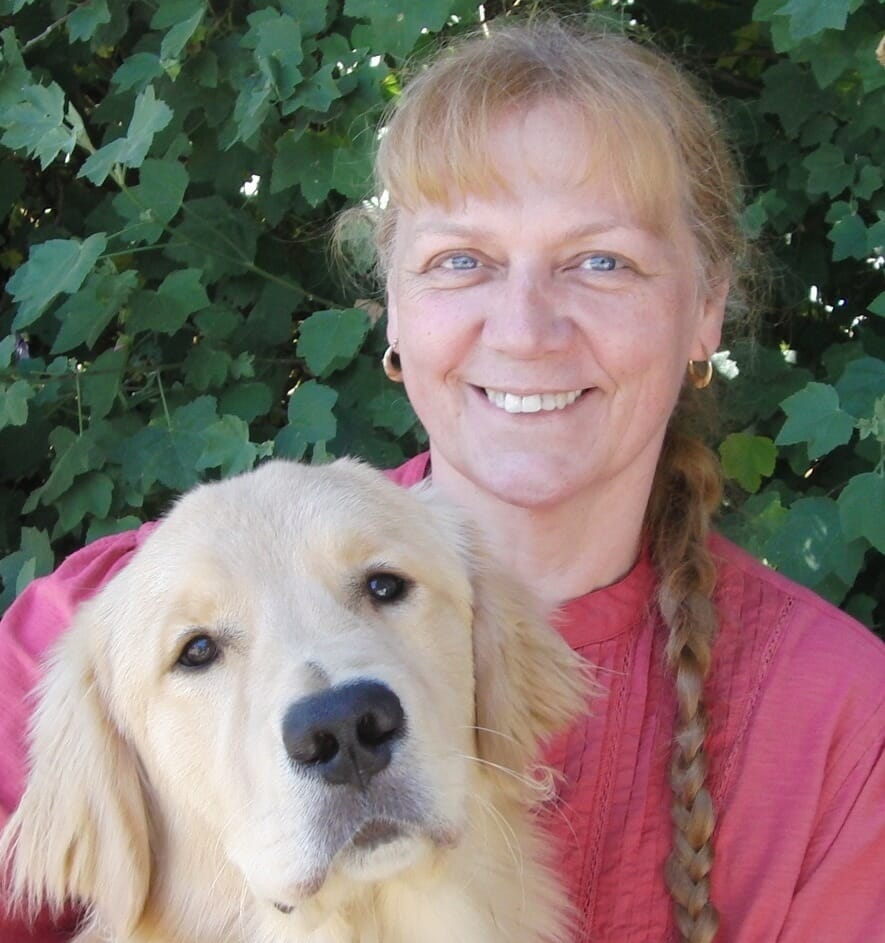 Michelle Nelson
Michelle Nelson founded PAVE after attending Bergin University of Canine Studies and working with veterans during their training camp to receive their service dogs. A lifelong dog person, Nelson saw the need for service animals to work with veterans with post-traumatic stress disorder and other needs. Veteran suicides are at an all-time high and the partnership a canine provides can bring veterans struggling with PTSD and other issues back into society and back to their families. PAVE assistance dogs have proven to be literal lifesavers for many veterans. She has run PAVE with a dedicated team of professionals and volunteers for six years, all while teaching full-time at Linfield College.
Service dogs are provided free of charge to matched veterans. PAVE is continually growing and focused mostly on Northwest placement, due to access to continued training with the veterans; placements have been made with veterans in Oregon, Washington, California, Massachusetts, Tennessee, and Texas.
Dogs are matched based on the needs, personality, and temperament of the veteran and the dog. Service dogs are chosen that would best meet those needs and circumstances. Because service dogs are given free of charge, PAVE relies on the generous donations from their supporters and an ongoing search for grant opportunities.
There are a variety of service dog organizations but those serving clients with PTSD are limited, as well as stretched thin. Currently, the need exceeds the availability of trained service dogs, and it takes on average two years and costs approximately $25,000 per dog. PAVE has also worked with some rescue dogs to become service dogs. It takes a very specific temperament and aptitude for a service dog to be successful, particularly a service dog working with a veteran with PTSD.
Nelson is a certified professional dog trainer with 10 years experience working with assistance dogs. PAVE trains the assistance dogs as well as providing extensive training and follow-up for the veterans to work with the new canine partners. These are highly trained service dogs who help their partners live their lives to their fullest potential. You can find more information and ways to help with PAVE’s important mission at www.paveusa.org.
If you are interested in learning ways to support your veteran community, check out All for Good for opportunities to serve those who have served our nation.
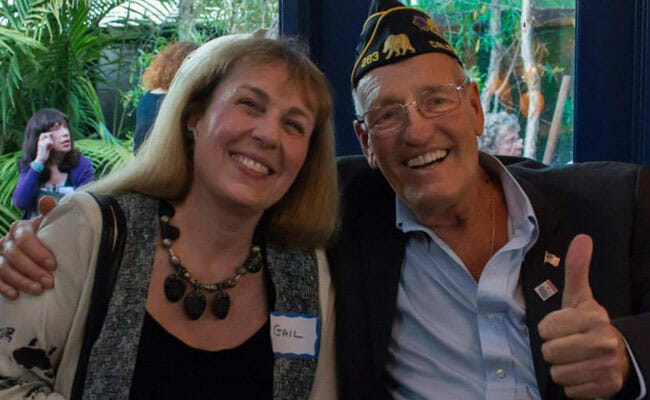
Gail Soffer
“I was appalled by the statistic of 22 veteran suicides per day in our country. With all the resources I thought were available in the U.S., how could there still be such deep suffering and despair that our veterans could find their only remedy in taking their own lives?” says Gail Soffer. “After a lifetime of nonprofit work with international humanitarian aid and peace initiatives, how could I not try to help our veterans find a place of peace here at home?”
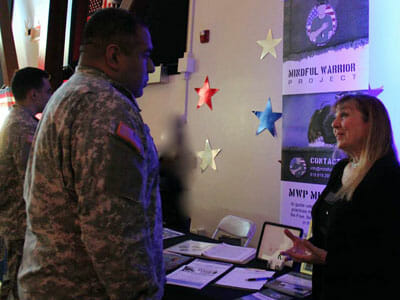
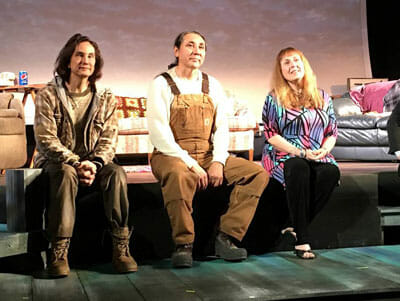
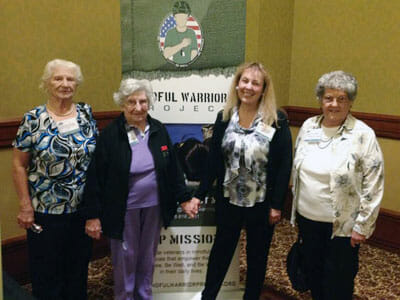
Gail Soffer is the founder and executive director of the Mindful Warrior Project. Combining vast experience in both nonprofit management and wellness modalities, she brings simple, secular mindfulness practices to veterans, as well as active duty, guard, and reserve, their family members, and their service providers to build a comprehensive community of care and support, so they can “Be Free, Be Well, and Be Whole” in their daily lives.
Soffer worked for and collaborated with a large number of organizations serving the military-connected population before launching the Mindful Warrior Project. Because of her experience, she was well aware of how much it takes to develop and maintain a sustainable and compliant nonprofit organization.
“I wasn’t sure I was equipped to venture into such a significant undertaking, especially one that would be addressing some huge challenges for those it would be serving,” says Soffer. “But I continued to witness obstacles to and gaps in service that resulted in many veterans falling through the cracks, cycling again and again through systems that just weren’t working properly, or, worst of all, giving up hope completely, with dire consequences. So, almost in spite of my better judgment, I felt compelled to go for it and offer a unique and specially customized program to those who serve and their support communities.”
Having been heartbroken that veterans who served before 9/11, those who hadn’t seen combat, those with other-than-honorable discharges, spouses/children/other family members, and others were not eligible for services with many agencies, Soffer has geared her programs and made them available to the widest possible military-connected population.
Not wanting location or transportation challenges to limit access to her programs, Soffer chose to be mobile and travel throughout Southern California. Workshops are provided in churches at vet centers, on military bases, at colleges, American Legion posts, YWCAs, and other locations convenient to veterans.
Soffer also sought to bridge the gap between the military and civilian communities by hosting events that would bring them together to break down stereotypes and barriers to respectful integration. Film screenings, preceded by short introductions to the Mindful Warrior Project’s work and followed by refreshment breaks and panel discussions have brought awareness on both sides of the divide to the history, current situations, and options of our veterans.
For the core of their work, within the safe, confidential, and military-friendly environment they create, Soffer and her team talk about what mindfulness is and isn’t. For the Mindful Warrior Project, it addresses issues all too common in the veteran population such as PTSD, depression, anxiety, TBI, problems with sleep, MST, rage, and substance abuse. They guide every group through a few simple practices so that, even after a single hour-and-a-half session, attendees walk away with a personal experience as well as tools they can practice on their own. Empowering veterans to participate in their own healing process, wellness, or simply quality of life is at the core of this work.
The relief provided by this simple yet powerful work shows up consistently as early as during someone’s first class. People suffering from anxiety, stress, and battling to fall asleep often find themselves asleep early into their first practice. Emails and calls pour in from those astonished that they could repeat the exercise on their own at home and wake up 8 hours later in the same position in which they lay down – something they haven’t enjoyed in 30 years. Another veteran reported, “Gail, because of you I’m not in jail. All those anger management classes didn’t help me; but this time I put my fist down and I walked and I breathed and I’m not in jail.”
Although Soffer’s team includes therapists, PhDs, and social workers, the primary qualifications for speaking about and guiding MWP’s mindfulness exercises are having understanding and respect for military culture and being solidly grounded in one’s own mindfulness practice.
“We are neither doing therapy – diagnosing and treating – nor teaching a spiritual/religious path or philosophy. We are speaking from our own depth of experience,” says Soffer. “My own practice goes back 39 years and has been the cornerstone of my life. Especially when veteran team members say with complete sincerity, ‘been there – done that – made it here – come join me’ it’s powerful. That’s not theory. That gives real hope. And the work delivers.”
The Mindful Warrior Project does not report to any agency and confidentiality is strictly maintained. That combined with the fact that mindfulness is about being ok to “be with what is,” exploring with openness and curiosity, and maintaining an attitude of non-judgment and openness, fosters an environment of trust, acceptance, and safety – both within oneself and with others. Workshop participants of all ages have felt comfortable sharing experiences and emotions that they have kept bottled up and express their amazing relief in the nods of understanding and absence of judgment from others. The isolation and frustration with feeling so dramatically different fade in the camaraderie of a group that “gets you,” where all are working toward a new sense of balance in the civilian world. The sense of finally making it home is priceless.
Whether it’s teaching mindfulness practices to military children via arts and crafts; training therapists, victim advocates, and case managers how to use mindfulness as self-care and with their military clients; facilitating a Cal Humanities book club focusing on “The Experience of the Warrior Across Time and Culture;” introducing complementary alternative modalities such as acupuncture and massage at Wellness Areas; or working directly with veterans on emotional intelligence and regulation through mindfulness practices, this work is healing the hidden wounds of war, restoring choice and dignity, and producing heartwarming transformations. The “What People Say” page of the Mindful Warrior Project’s website overflows with glowing praise.
Charlie Pacello, an Air Force veteran and key MWP team member, says, “The Mindful Warrior Project brings simple, effective tools to veterans to help them restore their well-being and counteract the effects of anxiety, stress, and depression. Mindfulness saved my life and I’m proud to help my fellow veterans discover and use these tools under the guidance of an organization and individual with such amazing care and integrity. Gail has been the driving force behind all this. Her determination, passion, dedication, and love for our veterans is supreme. She goes non-stop, 24-7, without any pay, as a volunteer like the rest of the team. She’s always making connections and is working on the front lines. She walks the walk and talks the talk. I’ve never seen someone work so hard for something she believes in in all my life.”
Esposas Militares Hispanas USA Armed Forces
Being part of a tight-knit community can feel supportive, but if you can’t communicate well with your neighbors, that closeness can turn quickly into isolation. That’s the daily challenge Hispanic spouses of American military service members face.
To overcome that hurdle, Janet Sanchez founded Esposas Militares Hispanos (EMH), an online organization that offers services to Hispanic military spouses nationally and internationally. The group aims to help these spouses better assimilate into military life and take full advantage of what the military community has to offer.
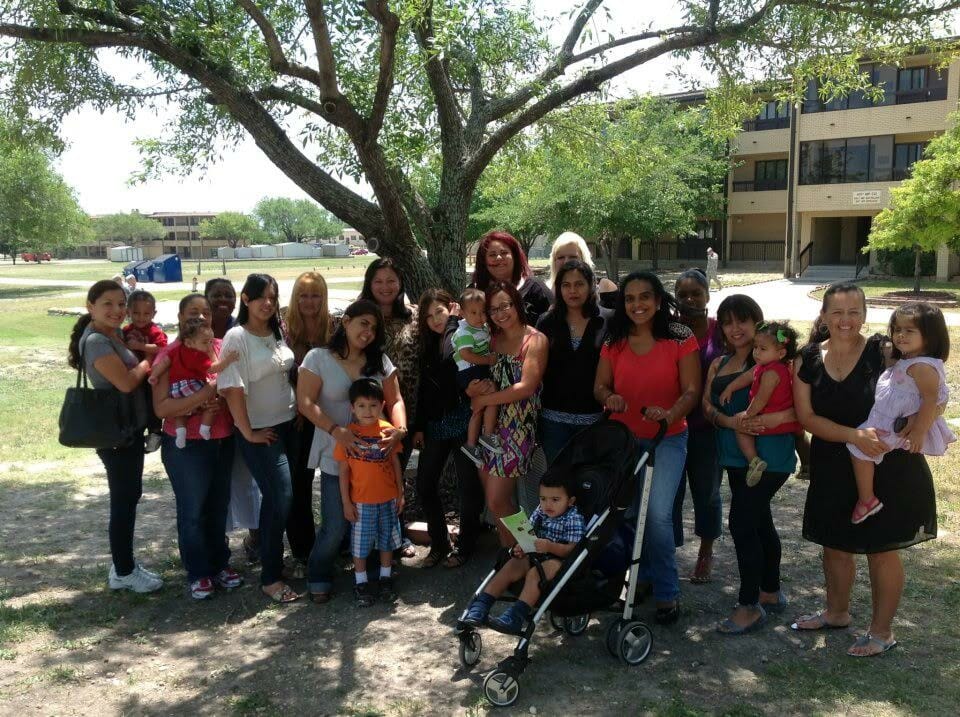 Members of Esposas Militares Hispanos
“As a Hispanic spouse, if you can’t understand the language, you feel like you’re not part of the community. The military community is very tight, and you feel retreated from the benefits and activities,” Sanchez said. “We work to help them build a sense of belonging – it’s an uplifting feeling.”
In fact, she said, many spouses have worked with EMH to completely change their lives. One women worked with volunteers to secure a Department of Defense scholarship to complete her Master in Business Administration degree, and today she is an H&R Block branch manager and an expert in military taxes. Another woman volunteered through the organization to provide career guidance with the Military Spouse Corporate Career Network (MSCCN). She was so successful in helping spouses, MSCCN hired her.
Just as many members initially face a language barrier, EMH itself started from the beginning. Launched as a Facebook page in 2007, it started with 10 members and has grown to more than 7,000 both stateside and on international bases. Members have access to free online English classes, as well as assistance to finding free local classes. Help is also available to members who face domestic violence. Volunteers, who can sign up by sending Sanchez a message via Facebook, also help with resume writing and interview skills, and they guide members through applying for scholarships to improve education. In addition, services are available to help spouses learn about and understand military traditions.
“When I started the organization, I didn’t realize how big the need was,” Sanchez said. “But, today we serve as a hub for spouses who can come to us and feel comfortable.”
If you’re interested in finding opportunities to engage in your community through service, please check out All for Good for projects near you!
Jean Pierce
When Jean Pierce began volunteering, it was simply what women did. Young wives didn’t work – they cooked, parented children, and volunteered their time. It didn’t take long, though, for service to others to become her way of life and the key to her longevity.
“When I was married, volunteering was just the thing you did. It made me feel better to help someone else,” said Pierce, who, at 90, has been volunteering the majority of her life. “There aren’t very many people my age who are volunteering. As a matter of fact, I’ve outlived most of my friends, and I think it’s one of the reasons I’ve managed to live this long.”
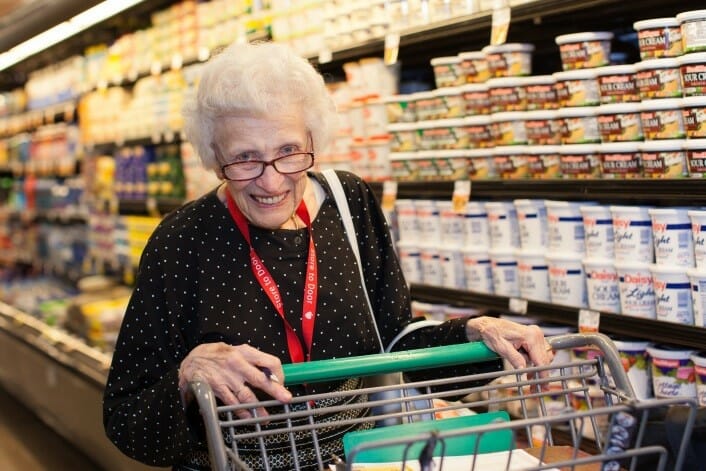 Pierce shopping at Store to Door.
Currently, Pierce spends time once or twice a week with Store to Door, a Portland-based organization that provides low-cost, volunteer-based grocery shopping and delivery for low-income and older individuals. She’s responsible for purchasing food, household items, and prescriptions for people who aren’t able to get to the store themselves.
When Store to Door launched in 1989, it served 25 clients. In 2015, it served 536 clients, delivering 8,322 grocery orders. Over the organization’s existence, it’s served 8,000 people and made roughly 140,000 deliveries. Pierce now serves on the Board of Directors, and during her tenure the number of clients and volunteers have spiked 53 percent and 42 percent, respectively.
Pierce’s dedication to volunteerism emerged before her time with Store to Door, however. She previously served on the Citizens Review Board for the Oregon Judicial Department, reviewing cases on foster care and foster children. She also gave her time to CASA, another foster children’s advocacy group.
Although she’s never worked directly with the people her donated time has helped, Pierce said volunteering is one of the most impactful things anyone can do.
“I talk to all kinds of people about volunteering because I know what it’s done for me, and I’m really sold on the idea,” she said. “I’m starting to see more and more young people are getting involved, and I really think that’s great. At the same time volunteers are helping others, they get benefits, too.”
Laura Moore
The combination of willing students and a devoted teacher is the perfect formula to evoke change. For proof of how the student-teacher relationship can impact a community, look no further than the volunteer efforts in Jackson, Tennessee.
The University School of Jackson (USJ) in Jackson, Tennessee, has found a very unique way to have scholarly achievement equate to community giveback. While you may have heard of a Walk-A-Thon , it is USJ’s Math-A-Thon that inspires the community.
Partnering with St. Jude’s Children Hospital, USJ uses their Math-A-Thon to challenge students academically as well as provide social awareness. From kindergarten up to fifth grade, these children spend an entire day playing games and solving math problems, all the while donations are made to help sick children. This biennial event is meant to bring some fun and creativity to the classroom, and at the same time raise funds for those who need it most.
It is the Laura Moores of the world that makes this all possible.
Moore, an educator for over 17 years and now Guidance Counselor at USJ, is the coordinator of the Math-A-Thon. Spending an entire career working with students, Moore knows that this one event can have a positive and lasting impact in these children’s lives.
“I think it’s an eye-opening experience for our kids,” Moore said. “It’s important to teach them to care and help others.”
While the students are working hard (and playing hard), all are welcomed to donate with proceeds going to benefit ill children at St. Jude’s. In 2013, Moore helped raise more than $66,000 – the most money in Math-A-Thon history at the time.That was exceeded just last year totaling over $78,000.
By fusing a passion for math with a passion to help others, Moore and USJ continues to positively influence so many.
Vicki Wilson and John Larsen
“I’m a sculptor and have been for 20 years — I know how to think spatially. That’s kind of a gift that I have to give. If I can look at a pile of junk and see how it goes together and make something, that’s probably what I should do,” says Vicki Wilson, who transformed a weed- and trash-strewn vacant lot from a neighborhood eyesore into an inviting garden, lush with fresh produce for the taking.
Wilson and her husband, John Larsen, both artists, live in an older area of Portland, Ore., which is rich in diversity – residents represent a wide range of income levels, ages and ethnicity. But it’s also a so-called “food desert” in that it’s short on places to buy affordable fresh fruits and vegetables. Near the end of 62nd St. and Powell Blvd., a large asphalt lot where an old gas station had long ago been razed, sat empty for years. Buried tanks made it unsuitable for development because of the high cost to remove the tanks and contaminated soil. But Wilson and Larsen saw a canvas waiting to be filled.
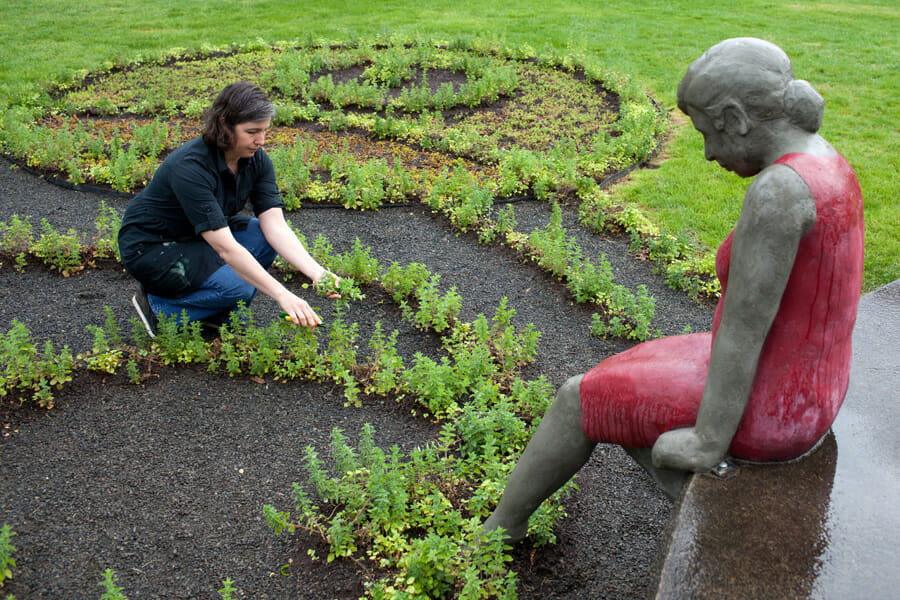
“I thought it looked like an art project in the sense that we would let people know we cared about the neighborhood,” says Wilson. The Oregon Department of Transportation, which owns the land, was wary at first of simply displaying “public art” there, but when Wilson and Larsen suggested a garden that would neither disturb the underground tanks, nor require electricity or running water, it fit well with the agency’s conservation goals. In just two years, the 62nd Ave. garden, Foster-Powell Community Garden, is producing food that is offered for free to the public, and has become a relaxing, flowery spot where neighbors can socialize.
For residents in the Foster-Powell community on Portland’s southeast side, the old vacant lot formed an unattractive entrance to their neighborhood. Located near a bus route and busy thoroughfare, the site had become an unofficial dumping ground for everything from litter to broken furniture, according to Allyson Greazel, who lives next door. “It was literally a barren wasteland and now it’s amazing,” she says. “It’s a mini eco-system,” says Greazel, who is trained as an environmental geologist. “I never saw bees in the neighborhood before. Now we have bees and butterflies. It shows that brownfields or contaminated sites don’t need to be left in the dust — they can be reused for the common good.”
The Foster-Powell Community Garden has done more for the neighborhood than improve its appearance. It’s created a joint project and social spot that’s bringing together neighbors of varied cultures and backgrounds. Apartment -dwellers with no yards of their own delight in caring for and enjoying the garden. Bicyclists and pedestrians find the nook a welcome place to stop and rest. Oregon Tradeswomen, a group that teaches teen girls how to use power tools so they can get construction jobs jumped at the chance to build a storage shed for the garden.
Wilson and Larsen want everyone in the neighborhood to feel welcome at the garden. They designed a prominent welcome sign that greets visitors in Russian, Chinese, Vietnamese, Spanish and Korean, as well as English. “Everybody wants that crossover within cultural groups,” says Wilson, “but it can be hard to make that happen.”
Greazel says the improved camaraderie has inspired her own idea to install a “Little Free Library” in her yard, where neighbors can “take a book and leave a book.”
Designed to be both visually artistic and practical, the garden consists of a series of raised beds, avoiding the need to disturb the ground. Two large cisterns collect rain for watering the plants. Rain gardens are installed next to each cistern to make good use of overflow. Some of the raised beds are rented by individuals for their own use, but the largest bed is planted with vegetables and fruit trees meant to be shared with the community. Flowers and shrubs, dominated by native species that thrive naturally and require less watering, provide color. Plenty of solar-powered lights brighten the once-dark spot.
Wilson deftly secured both grant money and donated materials to make the garden a reality. She’s good at appealing to volunteers to contribute ongoing labor. School groups sometimes show up unannounced, eager to help out.
Wilson and Larsen maintain a web site dedicated to the Foster-Powell Neighborhood garden, to which they post continuous updates and blogs. They remain active in the neighborhood association overall and have also founded the Foster Window Project, which designs and creates artworks for display in storefronts along Foster Road.
Virginia Vivian Fenton
Not long after she started a job at a prominent financial services firm, Virginia “Vivian” Fenton began volunteering for Baltimore CASH Campaign, a local nonprofit whose mission is “creating assets, savings, and hope.” Fenton wanted to share valuable lessons she learned from her parents, who emigrated from Montserrat, on the importance of building savings.
“When I got my first job, my mom asked me to give her a certain amount each week,” says Fenton. “Then after I graduated from high school, she told me she had used it to start a savings account in my name. It taught me you can do it, no matter how little you earn. My dad worked as a nurse’s aide and my mom stayed at home, occasionally doing some crocheting to bring in extra money. Yet they were able to provide a comfortable childhood for me. If I can show others how to save and do well, I am thrilled to do so.”
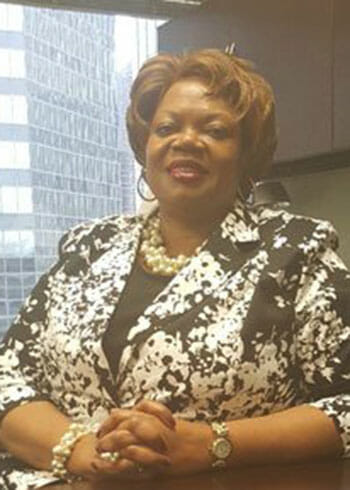
Fenton’s service to Baltimore CASH Campaign is part of the Financial Opportunity Corps, which recruits and trains volunteers as financial coaches who help people from low- and moderate-income households achieve financial stability. The program is a partnership between Points of Light, Bank of America and the Corporation for National and Community Service, and includes AmeriCorps VISTA members serving nonprofit organizations in 13 cities around the country and will expand to more cities this year. With the support of Financial Opportunity Corps members, financial coaches help participants develop strategies to reduce debt, improve credit, start saving for emergencies, access benefits and build assets for long-term financial health.
For most of her time at the nonprofit, Fenton has worked as a greeter, interacting with hundreds of people who come through the door to meet with tax preparers and financial advisors at no cost.
“I love seeing how we can help them,” she says. “I remember one client came in crying because she had gone somewhere else to get her taxes done and not only had they charged her, but they had told her she owed money to the government. She learned about Baltimore CASH and by the time she left, she had a big smile on her face because she’d learned that she actually was due a refund. I thought, this the kind of thing that makes me really want to volunteer for this organization.”
Lately, Fenton has decided she can do more — and has undergone additional training to learn how to be a coach in the organization’s six-month program dedicated to helping people who are struggling financially get back on their feet. She’s currently working with her first client, a woman in her twenties who wants to reduce her debt and start saving to buy a home.
“We meet once or twice a month, and look at her spending habits and try to pinpoint ways in which she can cut back, such as dining out a lot,” says Fenton. “Sometimes what really helps is writing down every little expense. Then, I put the ball in her court and ask her where she thinks she can make the most impact.”
Fenton also shares tips on contacting providers like credit card and cellphone companies. “People need to understand that if they roll up their sleeves and do their homework, they can usually get better interest rates or monthly packages,” she says.
In the near future, Fenton also plans to offer money-management courses to a few groups at her church. “I like the saying, ‘what we believe, we become,’” she says. “I enjoy empowering people to believe that they can become whoever they want to.”
Others looking for volunteer opportunities might ask around at work; often, as in Fenton’s case, they may find the perfect match for their skills.