Lavar Edwards
Lavar Edwards is tired of hearing about the bad things going on in Camden, New Jersey.
Edwards, 38, was born and bred in this hardscrabble town along the Delaware River, a stone’s throw from Philadelphia. “There are ambitious and proud people here, but that’s never what you hear about.”
Despite its reputation as one of the poorest and most crime-ridden cities in America, Edwards has hope to spare for the young people in his hometown. Hope that he turned into action with his founding of the Camden Clock Chasers, a city track team that welcomes kids of all ages, shapes and athletic abilities into its fold.
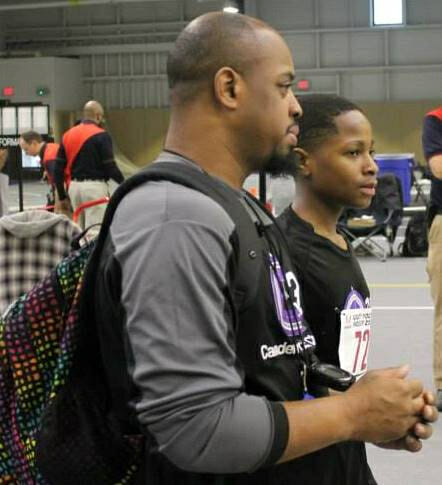 Edwards and one of his athletes, Irrian, prepping for a race.
Edwards works as a behavioral specialist with Camelot Alternative Education at Woodrow Wilson High School, where he ran track when he was a kid. “The impact that the coaches had on my life was incredible,” he recalls. Which is why he and his fellow coaches volunteer after school and on weekends to work with 120 kids, most in the 5-17 year old range, mentoring, encouraging and giving each child individual attention. “We never turn a kid away even if he isn’t fit and athletic,” Edwards says. “Our goal is to create character, to set goals and accomplish them, until the accomplishments get bigger and you start to get that snowball effect.”
The team is named the Clock Chasers because he tells his athletes that the only real competition is between them and the clock. “I don’t focus on winning, it’s all about self improvement.” But win they do – Camden Clock Chasers’ first appearance at the AAU Junior Olympic Games resulted in nine athletes finishing in the Top 20 in the nation in their respective age groups and two earning All-American status.
Edwards, who describes his kids as “a beautiful blended combination of ethnic backgrounds,” is driven to make each child feel important – “one of the most rewarding jobs on the planet.” From being sure the kids have healthy food options to listening to their problems and helping with homework, Edwards puts his heart and soul into his coaching.
The Clock Chasers don’t have any big corporate sponsors, although the community does what it can to help subsidize scholarships for the kids who can’t afford the registration fee. “Nobody gets turned away.”
The goal of creating outstanding student athletes prepared to go on to the next level of their life and education is paramount to Edwards and his fellow coaches. And it’s not always easy – sometimes the kids act out for a variety of reasons. Edwards’ mediation training often comes into play. “We say, if we don’t understand why a child is acting a certain way, their perception many not be our reality, and we can’t forget that. I believe in these kids, and they know that.”
Tess Luman
It is estimated that there are over 70 million stray cats in America. While there are outlets that exist to service these homeless pets, there just simply isn’t enough resources to satisfy such a great demand. One person attempting to tackle this issue is Tess Luman.
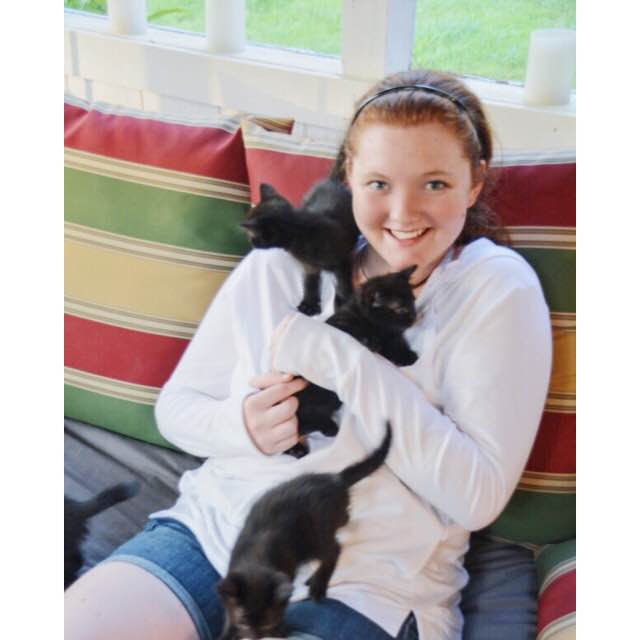 Tess with one of her kittens.
 Tess’s love for cats is obvious. For the past four years, she has given back over 600 hours of volunteer service with the Humane Society. She not only makes the frequent trips to comfort these sheltered cats, but she has opened her home to them as well. Fostering over 40 cats and kittens, Tess has cared for them as if they were her own, providing a temporary home while they wait to be adopted.
“I love fostering kittens! They are so much fun to take care of, especially when they are tiny,” said Tess. “It’s sad when they leave, but it’s also so rewarding to meet their new families.”
Tess’s love for cats has poured into her community. She spreads awareness of the issues plaguing these pets to her high school peers as well as other community members. Last year, she organized a pet food drive at her school, which accounted for more than 250 pounds of dry food and 200 can goods.
Sure Tess’s effort goes a long way with helping the local kittens, but her actions impact more than just this domestic animal. These stray cats will eventually become loving members of a family, giving off joy and happiness to a household that only a pet can provide.
“It’s great to know that I made a difference – not only for the kittens, but also for the loving families that adopt them.”
Sandra Baker-Hinton
As an artist struggling to make ends meet, Sandra Baker-Hinton isn’t in a position to retire. But the 72-year-old resident of Amelia Island, Florida’s northernmost barrier island, still makes time to volunteer. “Honestly l can’t afford the time I spend on turtle duty,” she says “But I can’t afford spiritually and emotionally not to do it. I’ve learned that you just have to make time for what you love.”
A self-described “mountain girl from northeast Tennessee,” Baker-Hinton has spent a lifetime vacationing at the beach, and finally moved to Florida with her husband in 2002. She’d always been service oriented, but in the past volunteering had revolved around her kids and church activities. “I knew I wanted to make a difference in our new home, but I wasn’t sure what I wanted to do,” she recalls.
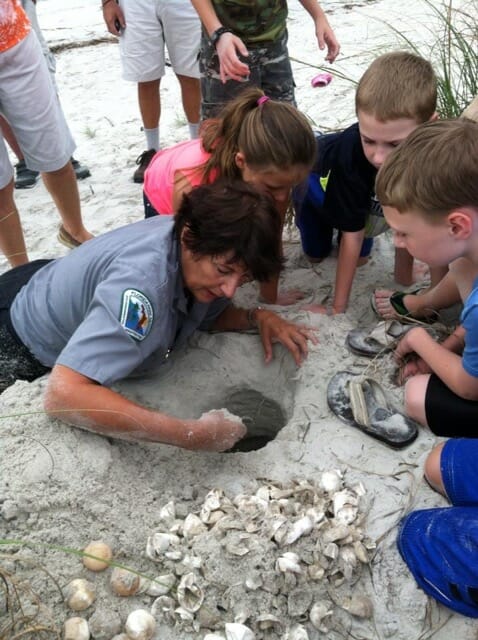 Volunteers watch and learn as Baker-Hinton excavates a nest.
 Already familiar with the pristine beauty of nearby Cumberland Island, Baker-Hinton remembered seeing one of the park rangers going on “turtle patrol” – the systematic beachfront data collecting that helps keep endangered sea turtles safe and monitored during the nesting season. “I knew that’s what I wanted to do,” she says. Through an online volunteer clearing site, she was directed to Fort Clinch State Park on Amelia Island.
“I called up and said I want to help with the sea turtle program,” she explains. “The girl really didn’t know what to say – they’d never had a volunteer before,” she recalls. “I kept calling – really nagged her until she told me to show up for training on such and such a day, so I did.”
Baker-Hinton expected to find a group of volunteers that day, but she was the only one besides the rangers. After the day of training, a ranger rode along with her once and then she was on her own.
Ever since, the beginning of turtle season in the spring of 2002, Baker-Hinton has spent an average of three mornings a week May 1 to October 31 making an eight-mile round trip by beach buggy, combing the sand at dawn for signs of turtles, hatched eggs and nests.
Using social media, and a blog she calls Diary of a Mad Beach Woman, Baker-Hinton has raised awareness about the protected loggerhead, green and leatherback turtles and their environment. She is still the only regular volunteer at Fort Clinch and now trains the Park Rangers on how to do turtle patrol – earning her the nickname “the Turtle Lady.”
“I’m happy because there are so many more turtles than there used to be,” she says. “They’re a beautiful part of the world and they deserve to be protected.”
Liz Wu
The creative arts are known for being a great outlet for bringing people together. Whether it’s music or dance people are joined together through their passions. One woman Liz Wu knows this all too well. With her passion for bringing people together, Wu has created a community of celebrating diversity and promoting kindness. She is focused on helping through education and outreach, with a focus on music, creativity and wellness.
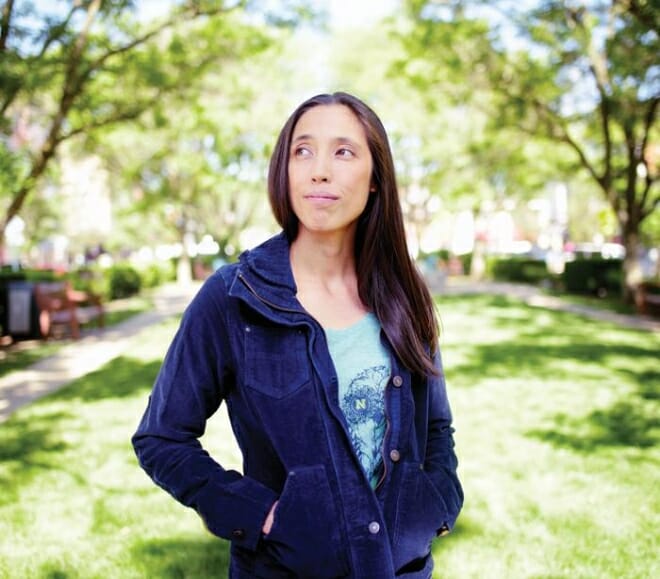 Liz Wu
 Her online community, Random Acts of Kindness, performs flash mob style activities called “Kind Flash” or flash mobs of kindness. These flash mobs perform an outreach monthly, which range from clothes and food drives, and even the distribution of healthy snacks to populations that lack easy access to fresh produce and healthy foods. During one of her projects, volunteers were able to gather and distribute more than 2000 clothing items in 10 days throughout the Greater Cincinnati neighborhoods.
The greatest advantage of Wu’s #KindFlash model is that it allows volunteers to see the immediate impact of their volunteerism. With #KindFlash, volunteers have direct one-on-one interactions and get to see the difference they make in these different individuals lives. With an easy replicable model, Wu hopes to influence and inspire others to volunteer on their own.
Everything Wu does revolves around the idea of connecting people and helping to draw out their innate strengths. She loves to create opportunities for others, while encouraging them to find and define their passions. Today many need the push and encouragement to be all that they can be, this makes Wu’s efforts all the more relevant. She truly embodies the idea that one must be the catalyst for the changes they wish to see.
Wilma Melville
Meet Daily Point of Light Award honoree Wilma Melville. Read her story and nominate an outstanding volunteer or organization as a Point of Light.
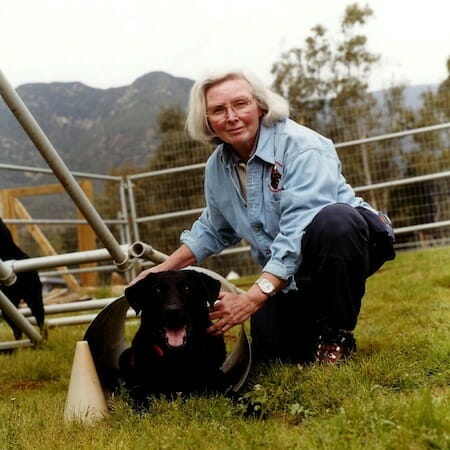 Wilma Melville and Murphy. Photo credit: Michael Weschler
 Newly retired, Wilma Melville decided to spend time training her new German shepherd puppy, Topa, “to do something special,” she says. “I chose disaster search.”
The endeavor would eventually lead Melville to found the National Disaster Search Dog Foundation, a nonprofit dedicated to pairing dogs with first responders in highly trained teams. But, just as in a rescue attempt, obstacles lined her path.
Topa, for one, turned out not to be suited for the mission.
“I learned that you can never be certain that a puppy – no matter how well it’s trained – will have the characteristics needed to do the work,” Melville, now 82, says.
When she trained her second dog, Murphy, an adult black Labrador retriever who already had the desired traits of boldness and high energy, the results were much better. But when Murphy and Melville traveled from their home in Ojai, California, to Oklahoma City in 1995 – to help rescuers search through the rubble from a bombing that left 168 dead and hundreds injured – she found more disappointment.
Task forces arrived with no dogs, or at best pet dogs. That’s because at the time there were just 15 Federal Emergency Management Agency-certified dog search teams in the entire country, despite the fact that dogs offer a fast way to find and save humans, thanks to their superb sense of smell.
“I recognized that the system we had needed to be re-evaluated, elevated, changed for the better,” she says.
She selected three adult golden retrievers for their demonstrated energy levels and brought them to a professional trainer. Meanwhile, using her life experience in raising four sons and skills garnered during a career as a physical education teacher, she drafted a curriculum for three Sacramento firefighters.
“The right handler needs to be a lot like the dog,” Melville says. “They need energy and perseverance, and they need to be in good physical shape. But they also need to realize that they are making a commitment that will last for the working life of the dog.”
For their first mission the three teams traveled in 1999 to help in a landslide rescue attempt in San Diego.
“It was a terrific success and I saw that it could be replicated,” says Melville. The costs associated with locating and training appropriate dogs and firemen was initially an obstacle (about $10,000 to $15,000), but funding for the fledgling nonprofit took off once its rescue efforts at the World Trade Center received publicity.
Since then, the National Search Dog foundation has deployed about 130 search teams to places as far as Nepal, Japan and Haiti. Most teams are based in California fire departments, but they’re also installed in Florida, Nebraska, New York, Oklahoma, Pennsylvania, Texas, Utah and Virginia.
Next up for the organization is a national training center, opening next September in Santa Paula, California. “The past twenty years have been interesting,” says Melville with a laugh. “But nothing can be as exciting to me as this!”
Johnny Means
A person’s circumstance does not always define who they are. This is especially true for those in the South Bridge area of Wilmington, DE. While it is undoubtedly difficult for children growing up amongst drugs and violence, many children have found refuge by refusing to let their hardships negatively shape their character.
Johnny Means, a teenage resident of Wilmington, is helping improve the quality of life for many children in the local community. Providing mentorship and guidance, he volunteers his time and energy to the local community center. What started out as simply giving his insight and helping children with their homework, has grown into an entirely new project. Combining his love for the game of chess, with his devotion to others, Means created a program teaching children the techniques of chess playing.
Chess, a game of skill and intellect, has a lot of positive benefits. In an attempt to combat the hardships of their circumstance, Means knows that these children need a positive distraction, and chess is just that.
“Chess is more than just a game,” said Johnny’s mother, Joann Means. “Chess helps with your academics and in life. You have to think before you move, so it helps you strategize and build patience, which is key when you’re making real life decisions.”
Working with outlets like the Neighborhood House and the Wilmington Parks & Recreation department, Means’ chess initiative has engaged hundreds of children all throughout Wilmington. Means is not just teaching a game he loves, he is helping transform a community he loves as well.
Dr. Diane Raleigh
California psychologist Diane Raleigh never expected to have five goats in a remote village in northern Tanzania. But because of her life-transforming efforts on behalf of the Maasai population there, “Mama Diane,” as she’s called, was given the goats, the ultimate gift of gratitude and respect.
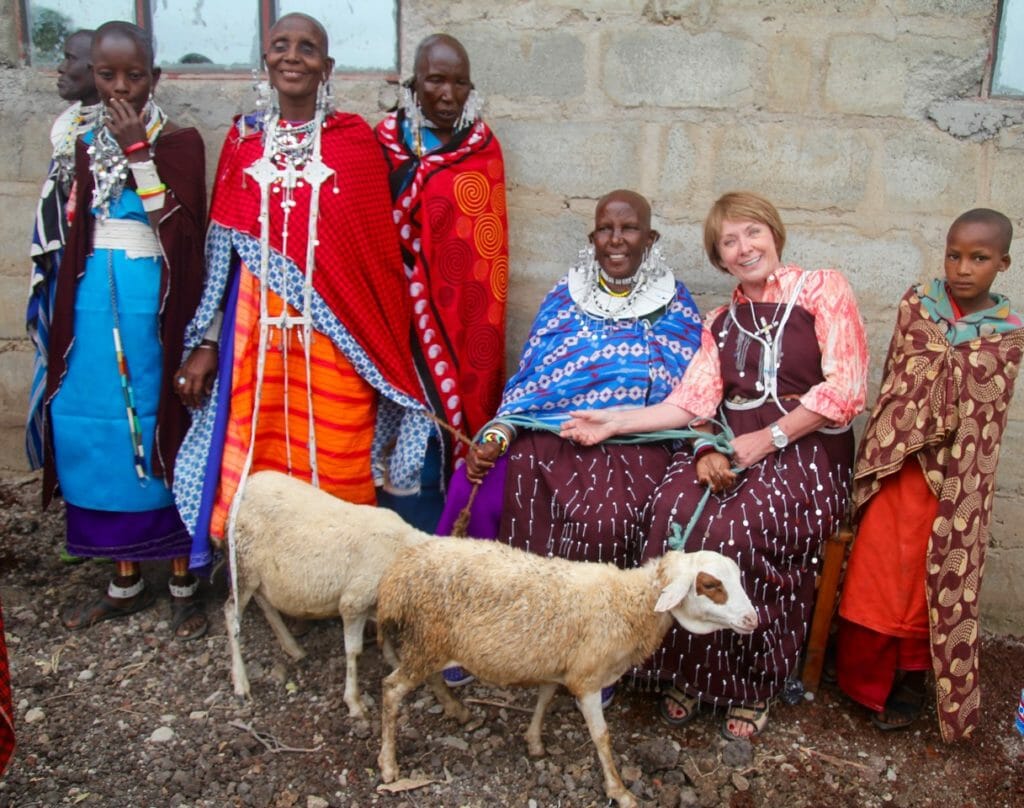 Raleigh in northern Tanzania with some of the Maasai people and her gifted goats.
 Raleigh, a 76-year-old force of nature with a seemingly endless supply of energy and determination, has rallied support in countless ways to bring the first-ever running water and health care to the isolated Olmoti community, home to about 1500 Maasai. Raleigh is the founder of the Olmoti Clinic, which besides offering basic medical care has changed countless lives with its eyecare program treating overflow crowds of Maasai for trachoma, cataracts and other debilitating vision illnesses.
The clinic’s success speaks to one of Raleigh’s greatest missions – achieving sustainability through consensus building. From the beginning, she found ways to instill a real sense of ownership of the clinic within the community. Working with a local midwife, Mama Yaya, Raleigh involved local village leaders and regional government and health officials. She instigated a community board with members selected by the Maasai themselves to voice concerns to the government and to take up projects at the clinic.
Raleigh also formed the Olmoti Trust, a board that can handle financial matters and liaison to the government. Because board members understand the Tanzanian system as well as the Maasai people and their needs, the Olmoti Clinic has thrived.
Raleigh isn’t new to service in remote areas of Africa. As one of JFK’s early crew of Peace Corps volunteers, she founded an orphanage in Owerri, Nigeria that stands to this day. “I got busy with my practice and raising my kids, but I always knew I would need to so something again,” she said.
Creating a clinic from the ground up with zero staff would overwhelm most people. Dr. Raleigh did not see it that way. She just started doing it, driving ahead, networking, pushing, questioning, persisting. What happens when an individual proceeds with that kind of drive is that doors to open, connections do materialize, action begets action
“Everybody asks me how do you do it,” she says. “All I can say is you just do it, one step at a time.”
Mark Stover
Whether it’s at a local school or the nearby hospital, blood drives in the community is helping save lives. It really can’t be overstated how important donating blood really is. It is a must as it relates to any serious injury or any surgical procedure. One person familiar with the correlation between blood drives and the drive to save lives is Mark Stover.
 Mark Stover
Stover is considered an unsung hero in Colorado. For over six years now, he has been voluntarily helping organize and coordinate blood drives within his community. Stover works closely with Bonfils Blood Center, an organization that has been a leader in blood donations throughout Colorado since 1943.
Stover’s involvement surfaces on many levels. Working with Bonfils, he meets with management to discuss their needs as well as to schedule the use of the facilities. He not only helps on the organizing end, but a lot of his efforts go towards promoting the importance of giving back blood as well. Along with scheduling the buses for the facility, Stover also disperses flyers to help spread the importance of blood donations. With at least six blood drives a year, amassing over 1,000 pints of blood, Stover is truly helping transform his community.
Donating blood is more than just a good deed; it can really be the difference between life and death. According to The Red Cross, one small donation can improve the lives up to three different people. While Stover is not a doctor, and he has not performed any life-saving surgical procedures on any patients, his actions are helping save lives time and time again.
Mikaya Warren
Having an ailment can be a huge impact on one’s self awareness and confidence. But when the same ailment that affects you daily is turned into a positive, you get people like the bold and beautiful Mikaya Warren.
First battling Sickle Cell Anemia at age 2 and then being diagnosed at age 11 with alopecia, a disease that causes grave hair loss, Mikaya has become a poster child for battling through anything. Recognizing her-self worth, despite her hair loss, Mikaya became instrumental in helping hair loss victims through the documentation of her own journey with alopecia in the modeling industry.
![mikaya_warren_picture.jpg]() Mikaya Warren
Mikaya Warren When realizing the lack of information on the disease she started My Bold Alluring Laudable Distinctiveness Is Beautiful, Inc. (My B.A.L.D Is Beautiful, Inc). Through My B.A.L.D Is Beautiful, Mikaya gives back to young girls and women in her community with support groups, inspiration and awareness. She makes it her duty to ensure that anyone in her community with hair loss has support and knows their self-worth, independent of how much hair is on their head.
The organization has participated in many activities such as donating hair to be used for the creation of new wigs for underprivileged children with hair loss. As well as makeover’s and enhancement activities designed to make all feel good about themselves.
Mikaya also travels throughout the state of Florida, where she lives with her four children and husband, speaking to women and girls, empowering them to have confidence and encouraging them to believe in themselves. She also has been featured in many FL magazines and news stories for her efforts to bring awareness to the alopecia community.
Through whatever avenue it may be, Mikaya remains true to her goal of empowering and uplifting women. Her overall mission is for women to gain, restore and maintain confidence while refining their image for successful self-presentation in any environment. She hopes to soon take her efforts global empowering more than women in her state but women across the world.
Chef Bruno Serato
Meet Daily Point of Light Award honoree Bruno Serato. Read his story and nominate an outstanding volunteer or organization as a Point of Light.
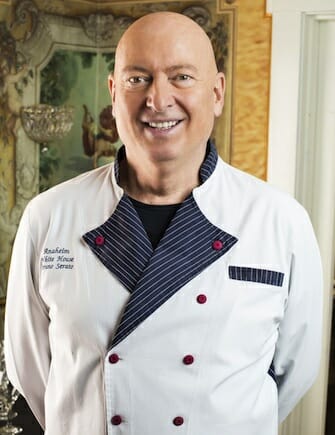 Bruno Serato
When Bruno Serato was a boy growing up in Verona, Italy, his mother, Caterina, always made sure that the family dinner table was “abbondanza,” groaning with food. After coming to California in his 20s – with just $200 in his pocket and a fervent desire to learn English – he wound up staying to embark on a career in the restaurant business.
He worked his way up from dishwasher to busboy to waiter to manager to, finally, restaurateur. Since 1987, he’s been making sure that everyone who comes to his upscale Italian steakhouse, Anaheim White House, leaves happy and plenty sated.
It took a visit from his mother, though, to help him understand that not everyone goes to bed each night with a full stomach.
“My mom had come to my restaurant for a nice lunch and we were just finishing our espresso, and she said, ‘What should we do now?’” Serato, now 59, recalls.
He knew his mother loved children, so he suggested they visit the Boys and Girls Club nearby.
“There was one kid who was eating potato chips and the director explained to us that that was probably going to be her dinner,” Serato says. “We were kind of shocked.”
Serato remembers this conversation with his mother:
“Why don’t you bring her to the restaurant for a big bowl of pasta?” she asked.
“Great idea!” he responded.
A decade later, Serato distributes close to 1,500 bowls a day to feed children at some two dozen locations throughout Orange County, California. In fact, his program – named Caterina’s Club, after his mom, who passed away last year – recently handed over a steaming plate of pasta to its 1 millionth kid.
“My mother would be the happiest woman in the universe to know that we have served so many children,” Serato says. “On the other hand, she was such a very humble woman that she would think it crazy to see that we have been featured on CNN and on Italian television.”
Three years ago, the club received nonprofit status, making it eligible to receive grant money; before that, Serato funded everything himself.
Serato, who doesn’t have children of his own, says with a laugh, “I have 1,500 children every day.” The reaction from “his” kids is his greatest reward, he says, adding, “They act like I have three Michelin stars. They are my best reviewers.”
Because many of the kids who spend time at Boys and Girls Clubs have no stable homes – often bedding down instead in a series of motels – Serato recently started another program, Welcome Home. The effort, which provides the first and last months’ rent so that households can get situated in apartments, has so far helped almost 90 families, or 500 people.
“Our children are the future of America,” says Serato. “We all need to take care of them.”



