CNA PUBLIC AFFAIRS TEAM
Throughout 2002, CNA employees across the country opened their hearts and showed their generosity by supporting a number of important causes in their communities. In addition to their time, employees also were extraordinarily generous monetarily, as the CNA Foundation Matching Gift Program matched a record amount of donations.
Between December 2 and December 13,CNA ran its annual holiday drive for employees in the corporate headquarters. The company’s headquarters is located in downtown Chicago and is home to approximately 2,500 employees.
The 2002 Holiday Drive program focus was on CNA’s Neighbors in Need (Chicago Gives Adopt-A-Family, Carole Robertson Center Holiday Angels and Skinner School Letters to Santa) and the Starlight Children’s Foundation Holi-Bear sponsorship. The program kicked off with coffee in the building’s main lobby. Several hundred names of program recipients were creatively and prominently displayed and representatives from CNA’s Public Affairs Department and partnering agencies were on hand to provide program details. Employees also garnered information from flyers, articles in the online newsletter and Holiday Drive Web site.
Once again, CNA employees met the challenge and showed their generosity. In less than two weeks, CNA employees made a record number of contributions:
- More than 43 special needs’ children from Skinner School had their letters to Santa wishes filled
- More than 20 needy families were adopted
- More than 450 children from Carole Robertson Center received holiday gifts
- 500 children received a Starlight Holi-Bear.
CNA’s has an ongoing relationship with the Carole Robertson Center, a multicultural nonprofit partnership among parents, youtha nd community that hosts a variety of child care and development programs. The relationship began in 2001, when CNA Technology employees built a playground at the Center. That same year, the Technology team provided holiday gifts for 200 of the Center’s children. In 2002, CNA extended an invitation to all employees to share their good fortune with the Center’s children and, as a result, more than doubled the previous year’s reach.
The Chicago Department of Human Services (CDHS) is the lead sponsor for the Chicago Gives program. Their Adopt-A-Family program provides employees with an opportunity to help make holiday wishes come true for families in need. In 2002, CNA employees adopted more than 20 families, ranging in size from two to 12 family members.
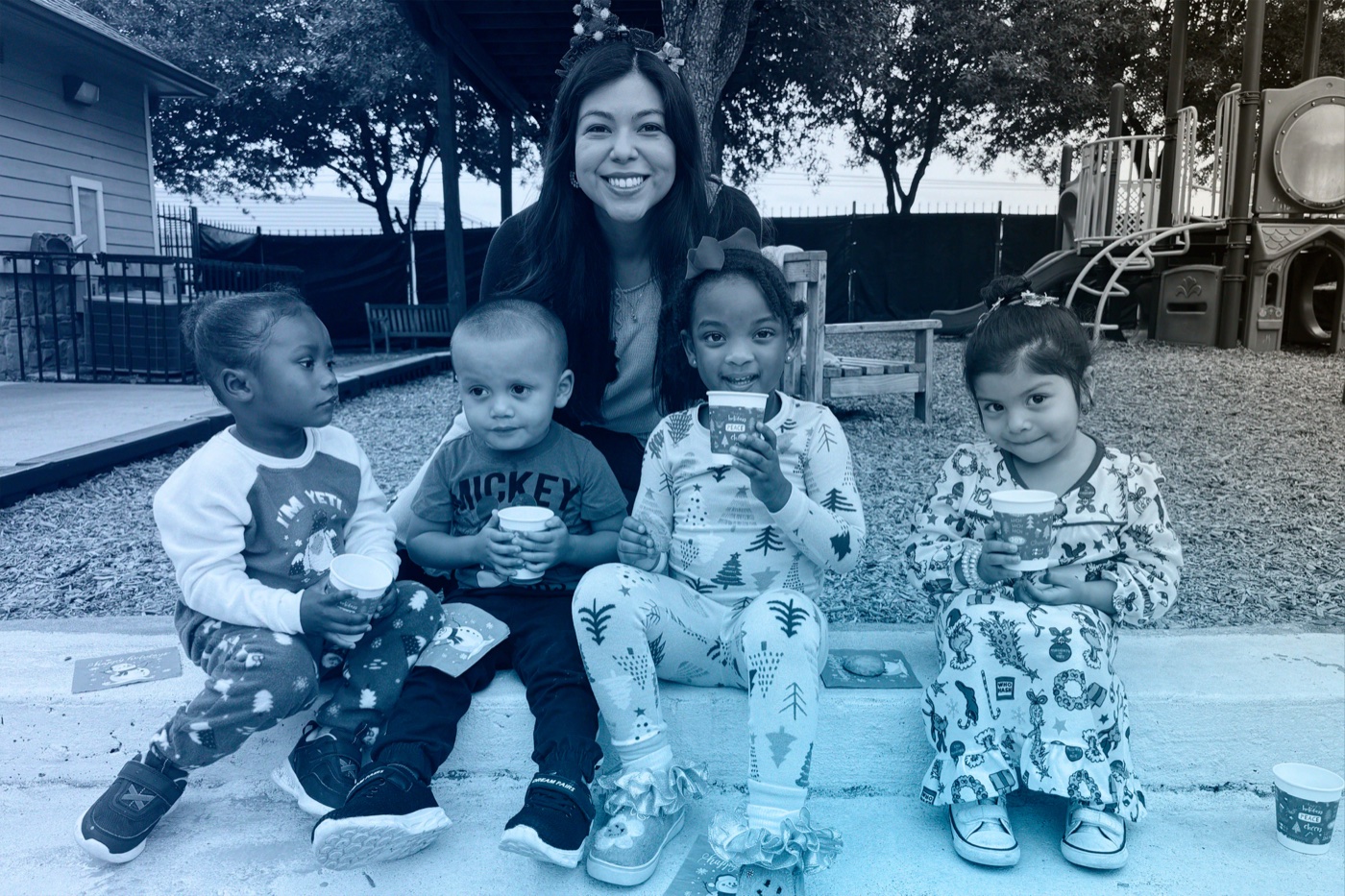
For more than two decades, CNA has partnered with Skinner School in the Chicago Public School’s Adopt-A-School program. This holiday season, employees from across the company, fulfilled the wishes of almost 50 of the school’s special needs children. And the giving didn’t stop there; CNA hosted a holiday party at the school where a dozen employees acted as gift-bearing elves and distributed the gifts to the students.
In addition 500 hospitalized children received an early holiday gift when a 12″, light brown bear arrived at their hospital bedside, thanks to the generous donations of CNA employees.
To learn about CNA and what the CNA Foundation is doing in communities across the country click here.
DR. FAITH SAMPLES SMART
Dr. Faith Smart has been an active mentor in the Mentoring Moms Program of the Volunteer Center of Bergen County since May 2000. Since July 2001, she has mentored a young single mother with two special needs children, seeing her through educational and behavioral crises with her son, a serious family illness, two moves, loss of a job, a domestic violence incident and numerous other challenges. During this same period, Dr. Smart has served as a mentor for a teenage girl through the Harlem Adolescent Pregnancy Prevention Initiative (HAPPI) at Harlem Hospital in New York City.
One of 13 children and a survivor of incest and date rape, in college, Smart found a facilitator and created a support group for women of color who had experienced incest and sexual assault. While still a student and very much in the throes of healing, she adopted a niece’s infant. Now the mother of three children aged two, six and ten, Dr. Smart holds a joint appointment in the School of Public Health and the Center for violence Research and Prevention at Columbia University. Despite her own demanding family and professional responsibilities, she has been a dependable, involved mentor.
Mentoring Moms, a program of the Volunteer Center of Bergen County, recruits, trains, screens, matches and supports volunteers who serve as friends, mentors and role models to isolated overwhelmed mothers referred by New Jersey Division of Youth and Family Services, the state child welfare agency and the welfare-to-work program. Mentors develop trusting supportive relationships with mothers experiencing serious personal and family problems. They offer support, guidance, encouragement and advocacy as well as information on resources available in the community.
Dr. Smart exemplifies the qualities of a Mentoring Moms volunteer. She helps enhance self-esteem, improve parenting and life skills and strengthen parent/child relationships. She focuses on being a supportive role model helping her mentee set and work towards her own goals and cope with the stresses and demands of being a working single mother of special-needs children. The past winter was very difficult as her mentee’s mother and major emotional support was in a coma for weeks. Dr. Smart’s mentee had to oversee care for her multiply handicapped sister, handle her mother’s affairs and cope with significant stresses in her own life, including the loss of her job. At the same time, her teenage mentee was moving back and forth from home to foster care. Dr. Smart managed to be there for both of them – including a crisis food delivery and supportive visit to her Mom’s mentee, while the teen mentee was staying at her home. Her mentee’s life rarely goes smoothly, but Dr. Smart is available for support and guidance.
Dr. Smart’s mentee is now working part-time while preparing to take her GED. She has arranged for appropriate school placements for her children and they are involved in therapy. Dr. Smart attends almost every Mentoring Moms event and has provided valuable insights and guidance to other mentors.
TANNA BAXTER
Tanna Baxter has been a major part of the Davis County 4-H program since 1978. She is a wonderful example of fulfilling the 4-H mission that is to assist youth in acquiring knowledge, building character and developing life skills in a fun learning environment that will enable them to become self-directing, productive members of society. She is a devoted wife, mother of three and foster-mother of one; however, she makes volunteer work a priority.
Baxter has worked to help every club in Davis County to become a Club of Promise initiative. That means the organizations must provide each child with a caring adult, a safe place to learn and grow, a healthy start in life for a healthy future, marketable skills and opportunities to serve and give back to the community. She has and continues to work tirelessly to improve the lives of children and strengthen service programs.
With regards to the Davis County 4-H program, Baxter has worked in varied capacities in both the local and state programs. In 2002 she was the chairperson for state leadermete that was hosted by Davis County. This is an annual program for all volunteer leaders throughout the state, and there were approximately 400 leaders in attendance. She has also served several years on leadermete planning committees.
Baxter has also served as 4-H leader council president, council member and camp director for several years during her 4-H career. Annually she also plans and serves the food to the youth from the Japanese Exchange program as a 4-H fundraiser. She also plans the food for most 4-H events.
Currently, she serves as president for the state volunteer council. She was appointed to this position as a result of many years of volunteer service working through all of the offices up to the president. She shares her time and talents mentoring and training new leaders. Baxter has a unique ability to bridge the ideas of first time leaders with the more experienced leaders, and she is encouraging; she does not make anyone feel their ideas will not work or are not important.
In addition, Baxter serves actively in the church. She currently mentors several families that are having difficulty. She not only helps the family, but she also brings their children to 4-H activities. She has impacted the lives of countless young people and was recently recognized for volunteer service through her job at JC Penney. As part of the award, she received a check for $250, which she donated to the Davis County 4-H program.
WILLIAM CULLOM
Mr. William Cullom is someone who has had a profound and lasting impact on the Greater Miami community. Mr. Cullom has been the President of the Greater Miami Chamber of Commerce and is retiring after 23 years in that role. Mr. Cullom has impacted all area’s of civic and business life. Besides growing the Greater Miami Chamber of Commerce to one of the largest membership organizations in the southeast he has reached across the community to engage many in the non-profit world. In fact, with Mr. Cullom’s strong support the Greater Miami Chamber is the first to recognize the importance of the non-profit sector by creating a board level committee at the chamber.
Among his many civic activities, Mr. Cullom has been involved with the United Way of Miami-Dade County, he currently serves on the board of trustees, is a member of the Orange Bowl Committee and was a member of an important business/ civic group called the non-group for over 18 years. Besides many other business groups in which he has served, he has also found time to serve in leadership positions with the Florida Historical association. Salvation Army and Goodwill.
He has received numerous community recognitions and awards. A graduate of Florida State University, Mr. Cullom is a past president of the schools National Alumni Association. He is a former paratrooper and past lay leader of the Kendall United Methodist Church.
Mr. William Cullom has been at the epicenter of every important business and civic decision that has been made in this community in the past quarter century.
MOLLY RENALDS
Molly Renalds has demonstrated outstanding effort in sewing and providing quilts to many people and organizations. What started out initially as a simple project for a church in Watsonville, has grown to serve multiple groups in the Bay Area. Renalds makes quilts for babies and small children – handmade quilts – that are used to wrap babies as they are carried home from the hospital, small children from needy families, and victims of accidents and emergency situations.
The first set of quilts was made in 1986. Since that time, nearly 1,000 quilts have been made by Renalds are her volunteers. She has personally sewed more than 400 quilts. Among the groups served by Renalds is the Dublin office of the California Highway Patrol, St. Patrick’s Church in Watsonville, and St. Joan of Arc Church in San Ramon. Although many of the quilts are made from simple patterns, they have love and compassion sewn into every one.
Renalds has been making quilts for more than 15 years. Many of the people who benefit from her quilts cannot afford to purchase something like this for their children. The other benefactors, accident victims, are given the quilt as a symbol of love and caring during a stressful time and are very grateful for this small act of kindness. Both of the primary communities served by Renalds’ volunteer effort are disconnected from the community – one by their economic situation and the other by special circumstances.
A very unique aspect of Renalds’ volunteer work is that she sees very few of the people who use her quilts. Other groups distribute these gifts of love to needy people and organizations. The separation between Renalds and those she makes the quilts for does not temper or slow down her efforts. Through her contacts, she learns about the gratitude of those that receive quilts and the benefit the quilts provide.
Although Renalds sometimes asks for contributions or donations of materials, she is committed to producing the quilts at any cost, even if the money comes from her own pocket. She has never sought recognition for her work – it is simply a labor of love for people she will never meet.
MIDDLEBURG YOUTH CENTER
The mission of the Middleburg Area Youth Center is to provide an effective program that integrates and involves all the domains in which a young person lives: school, community centers, the neighborhood, and the broader community. The Middleburg Area youth Center seeks to make sure that existing youth programs, along with newly created programs are carefully woven together to respond to community needs, ensuring that youth have all the components they need to grow into healthy, functioning adults.
The mission of the Center is to ensure that all Middleburg-area youth will grow up to be healthy, caring and self-sufficient adults. The Middleburg Area Youth Center is a movement, not a program. The Middleburg Area Youth Center help the community to expand access to existing resources and programs to make sure young people have the basics necessary for them to grow into productive citizens – nurturing relationships with adults and positive relationships with peers, access to safe places for living, learning and working, access to resources that promote optimal physical and mental health, access to educational and economic opportunity and access to structured activities and opportunity for community service and civic participation.
The Middleburg Youth Center operates under several fundamental values. They view children, youth and their surrounding community as assets to be cultivated rather than problems to be solved. They collaborate with community leaders and citizens, young people, congregations, nonprofit organizations, foundations, businesses, youth-serving organizations, local government and educational institutions to develop the spirit of inclusion and partnership. In addition, they do not re-create programs that already exist but work to create programs that complement and advance existing youth programming and organizations.
Both youth and adults, creating innovative cross-generational partnerships, provide leadership and direction of the Middleburg Area Youth Center. It is a central community point during school and non-school hours where children can engage in structured and unstructured activities. It is also a place that will serve as a clearinghouse for parents and caregivers to learn about youth services at the Youth Center or in the area and participate in those programs. The Center is a place where teachers and others that work with and for children can come to allow continuation of care to meet the needs of children. The Center also mobilizes and supports community organizations and systems to launch and expand youth efforts through multi-sector collaboration.
STEPHEN WOOD
There are many children in Hampden County, from single parent homes, who need positive adult attention. Many feel isolated, lonely and are having difficulty in school. They may be at risk for drugs, alcohol or gangs; and they need an adult who can be their friend, mentor and role model.
Stephen “Woody” Wood of East Longmeadow is a local hero in the community of Hampden County Massachusetts. Wood became a volunteer mentor in the Big Brothers Big Sisters program to Robert in 1992. He had the time and wanted to give back to the community. His Little Brother, Robert, who was 12 at the time, did not have his father in his life. Robert did not have a role model or an adult friend. Robert is now 20 and having a Big Brother made his life more positive. Though their match was closed when Robert turned 18, they remain close friends.
Wood is a full time United States Postal employee with a hectic work schedule. He is a former Little League baseball coach and junior high basketball coach and a new father. Besides these commitments, he was and is still committed to Robert. He has consistently spent time with him on a regular basis. Wood’s exceptional mentoring skills earned him Hampden County’s Big Brother of the Year in 1995.
After Robert’s case was closed, Wood volunteered to be matched with a new Little Brother. This 14-year-old boy was older than many of the youth in the mentoring program; however, he still needed someone to look up to. Wood fit the bill and they have spent countless hours playing sports and sharing other interests. Wood also has been matched with a 10 year of boy whose father had recently passed away. They, too, have shared the special relationship. Wood stays in contact with all his former Little Brothers and participates with them in the Bowl for Kid’s Sake. This is a Big Brothers Big Sisters annual fundraiser.
Wood has been a positive influence to his three Little Brothers as well as other volunteers in his region. They have seen the impact mentoring has had on the lives of youth in their city. The young people see that working hard and having fun is the key to a successful life.
BOSTON CHINATOWN NEIGHBORHOOD CENTER
The Boston Chinatown Neighborhood Center traces its roots to 1969, when frustrated community members wanted a say in the school the city was designing for their children in Chinatown. The neighborhood rallied to form The Quincy School Community Council and achieved what the center’s director, David Y.S. Moy, calls a major victory for Boston’s Asian-American community. In 1997, the council became the Boston Chinatown Neighborhood Center to reflect its expanding mission of strengthening families and communities. Today, its programs reach more than 4,000 children, teens, and adults each year.
The Acorn Child Care Center, a fully licensed preschool program, serves toddlers through kindergartners in two sites, and the Red Oak After School Program picks up for children ages 5-13. The Recreation and Youth Program offers a variety of activities for all ages, while the youth component provides leadership, enrichment, and academic opportunities for teens and young adults. The Adult English as a Second Language (AESL) Program is a vital resource for the Chinatown community, where roughly two-thirds of adult residents lack a high school diploma and one-third identify themselves as speaking little or no English.
In 1991, the center established the Family Child Care Program to help train and license individuals, mostly Chinese-speaking women, to run family child-care centers in their homes. “When the program began,” says Moy, “there were no licensed Chinese American family child-care providers in greater Boston.” Today, thanks to the Center, there are more than 30.
The center has ambitious plans for the future, such as establishing an endowment and, in 2002, working with a local community development corporation and a private developer to break ground for a major new housing development that will include a fully handicapped-accessible community center on site.
“We are a nexus point for our community,” says Moy. “We connect parents to kids, families to the community, and our community to other community groups and coalitions. We need to understand these connections, and we will continue to work to foster and deepen them.”
Boston Chinatown Neighborhood Center is a 2002 Honoree of Families Count, the national honors program that recognizes organizations that are making a difference in the lives of families struggling to survive in tough neighborhoods.
FATIMA FAMILY CENTER
Helen Barnett credits Fatima Family Center with more than just getting her off welfare. She traces her confidence, self-esteem, and improvements in her relationship with her son back to the day when she discovered Fatima through a work experience program offered in her Cleveland neighborhood. Little did she know that just four years later, she’d still be coming to Fatima to work – although by this time, Fatima had a new building and Barnett had become a new person. Barnett now works full-time for Fatima overseeing the after-school program. A single mother, Barnett also noticed changes in her teenage son, Christopher. Christopher also became involved at Fatima through the Maximum Youth program, which helps teenagers who hold down jobs keep up with their schoolwork.
According to Fatima Director LaJean Ray-McNair, the Barnetts are examples of how the right support and services can transform a family. Established in 1973 under the leadership of the Missionary Servents of the Most Holy Trinity as an outreach ministry of Our Lady of Fatima Church, the Family Center, now a part of Catholic Charities, serves a neighborhood known as Hough. Like many urban neighborhoods, Hough experienced great transitions during the 1970s and 1980s. Shifting populations, out-migration, unemployment, and disinvestment adversely impacted the neighborhood. Ray-McNair, who lives in Hough, says “This is an incredibly asset-rich community. We’re right across the street from League Park, where the Cleveland Indians and, historically, the Negro League, played. The city’s African-American Museum is here. The neighborhood has a long history of home ownership. There are 25 other agencies here to share resources with, to coordinate programs, and collaborate initiatives.”
The new complex offers an array of practical help and serves as a gathering spot for the neighborhood. Services include; afterschool sessions; tutoring; athletics; summer camp; college tours; emergency and transitional services; health counseling; pre-employment initiatives; and health, education, and recreational activities for older adults.
“Families told us that they had difficulty doing their banking because they did not have access to an automated teller machine (ATM),” says Ray-McNair. “We installed an ATM in the center. It’s the only one in the neighborhood.”
Reflecting on the contributions that Fatima has made to the families of Hough, LaJean Ray-McNair remembers loaning the center’s van to a mother who was taking her daughter off to college. And then there was the woman – a grandmother – who passed her GED at age 70 with help she received at Fatima. “Whether we were working out of a four-room place or a $4 million facility, there’s a spirit and an energy here that comes from the people we serve,” she says.
Helen Barnett agrees. “Fatima made a huge difference in my life,” she says. “Now I feel that I have a purpose and that I can make a difference in someone else’s life.”
Fatima Family Center is a 2002 Honoree of Families Count, the national honor program that recognizes organizations that are making a difference in the lives of families struggling to survive in tough neighborhoods.
BILL FINKELSTEIN
Bill Finkelstein and his wife, Lois, began coming to Jewish Family Service (JFS) in 2001 when their granddaughter came to live with them. They were from New York and did not know where to turn. The trio came into JFS weekly for help. Then in 2002, Lois passed away suddenly leaving Bill alone to raise his granddaughter alone.
Finkelstein was on disability but he wanted to fill his time. He chose to volunteer so he could help other people. Because of his relationship with JFS, that is where he chose to serve. He presented himself to the Our Client as a Volunteer Program and served others while also raising his own self-esteem.
Finkelstein started delivering meals to the homebound through the Kosher Home Delivered Meal Program. Most of the volunteers that work with this program deliver once a month, but that was not enough for him. Finkelstein asked to be given as many days as the agency needed help, and he was there each time.
He also began to volunteer with the “Mitzvah in Motion” program, which is a transportation service. He takes people to doctor’s appointments, to run errands, to go to the grocery store and to take care of other personal businesses. In addition to this, he helps to do odd jobs around people’s homes.
This past summer, Finkelstein also decided to serve with the Jewish Community Center’s day camp. His duties there were a handyman, children’s escort and whatever else was needed. He also donated his time to Temple B’nai B’rith. There he cooked for the kiddish, ran errands and set up for services. Finkelstein also worked with the United Hebrew Institute where he has been given the task of clipping newspaper items about the school. He has now been given the title of “Historian.”
Finkelstein fills his days with hours of service for others. He recently decided he will also paint the fence at the cemetery where his wife is buried in his spare time, and he is still asking his famous question, “What can I do for you today?”