From left, Ariel McAffrey, Ava McAffrey and Katie Prior take a break during a Blue Thumb river cleanup project.
One day, about five years ago, three Oklahoma City Girl Scouts – all avid writers – had an idea for serving their community. They thought: Why don’t we use our love of writing to help make a difference?
And so began the saga of these three young friends, who together wrote a book called, “Bob Has an Idea.”
Bob is a chipper little hedgehog the girls had created as a mascot for their fledgling writing club. And his idea was to introduce young children to a new version of the “three Rs” – reading, writing and arithmetic became reducing, reusing and recycling.
“We noticed that there weren’t many children’s books with environmental themes in our library,” says Ariel McAffrey, now 17 and the eldest of the girls.
Her sister, Ava, now 14, adds, “We love being outside and we wanted to make a positive impact on the environment. Ever since I was young, my mom has told us that it was important not to create too much waste.”
Ariel McAffrey, right, reads to children about caring for the environment as Ava McAffrey (wearing the cowboy hat) and Katie Prior act out the story.
Other parents don’t always emphasize that message, though, says Katie Prior, also 14 and who, along with Ava, drew the book’s illustrations: “A lot of people don’t really talk about it. We wanted to provide another outlet for kids to learn about the issues involved.”
The girls self-published the book and donated several copies to the public library and to the nonprofit Oklahoma City Beautiful, which included it in an environmental education kit distributed to fourth grade classrooms.
Encouraged by their success, the girls dreamed bigger.
Next, they created a survey to see whether their peers understood the mechanics of storm drains. They discovered that most people didn’t realize that when they rinse a paint brush over a drain or empty their pool water down one, the sludge eventually ends up in the city’s waterways.
“We knew we had a lot of educating to do,” Ava says, with a laugh.
So they published a second book, “Bob Has a Blue Thumb,” which tackled the complicated issue of storm water management. This time, they turned over the proceeds – some $550 – to the Oklahoma Blue Thumb Association, which supports an Oklahoma Conservation Commission program that organizes river cleanups.
More books are in the future, although the young authors haven’t yet chosen a topic. But Katie offers a hint: “We’re thinking about one that discusses the importance of different plants that live along the riverbanks.”
Women’s Intercultural Center
Today’s Daily Point of Light Award nicknamed by a volunteer as “the Google of Southern New Mexico and West Texas,” is the The Women's Intercultural Center in El Paso, Texas. The center is host to a variety of activities and resources that help address the lack of alternative education and oftentimes, depression faced by immigrants who feel isolated due to their inability to assimilate with the American culture.
From helping to translate a letter to finding someone to help with home repairs, the center is a one stop shop that also launches special programs based on the needs identified by its participants. Like a circle of giving, most participants love the center so much that they end up serving as volunteers themselves, by teaching a class, a workshop, a training and/or finding other ways to help.
The Women’s Intercultural Center educates, empowers and engages women in an eco-friendly facility made out of compacted earth and tires, constructed by center participants. A place that helps its participants overcome obstacles and attain their goals through resources and tools, the center empowers each woman to become the “author of their own life.”
Is there an organization in your community that is helping to address its citizen’s unique needs? Nominate them for a Daily Point of Light Award today!
DPOL – Narendra Sharma
After working at the World Bank for more than 30 years, Dr. Narendra Sharma was ready to retire to the sandy beaches of Hilton Head Island, SC. While at the World Bank, Sharma addressed some of the most delicate development and financial issues facing developing countries . When Sharma moved to the destination beaches of SC, he realized his expertise could be used even in a tourist hotspot like Hilton Head and Beaufort County in South Carolina.
“Locally, there are a lot of underserved neighborhoods where poverty is widespread. In some cases, they have been in poverty for generations, but for others it’s just unfortunate and lack of opportunities,” Sharma explains.
Sharma felt a calling to give these underserved individuals an opportunity. With his keen expertise in economic development and unrelenting compassion, Sharma founded Neighborhood Outreach Connection (NOC), a 501 (c) 3 organization to empower the underserved neighborhoods.
“They need opportunities and avenues through which we can empower them. And hopefully they can achieve economic and social progress,” Sharma explains.
NOC serves to help the poor achieve “The American Dream.” The three pillars that make up NOC are education, healthcare and workforce development. Their educational flagship includes one-on-one afterschool homework support and tutoring, a summer program for students in kindergarten through 8th grade, and preschool classes for prekindergarten age children. To empower the adults of these communities NOC offers evening classes focused on Basic English, public safety, budgets and personal finance. In order to address the health needs of the underserved, NOC provides regular health screenings to help identify residents with hypertension, diabetes, HIVAIDS, breast cancer, prostate cancer, dental needs, and referring them for needed services.
“We have a unique model. We have a strong presence in the neighborhoods in that we set up our programs in the neighborhoods. We bring teachers and technology into the neighborhoods. We partner with local schools and health service providers bringing them into the neighborhoods,” Sharma explains.
Given his background, Sharma believes success is driven by results and involvement of the people. NOC screened over 300 individuals last year with their health screenings. They have enrolled nearly 380 students in their after school programs, with hopes to expand to another 100 children in the next three months. After seeing the success of micro-financing through the World Bank, Sharma hopes to expand social entrepreneurship programs within NOC.
Sharma’s success was not without struggle. “One huge challenge was to develop trust and a relationship with the people. Make them part of the solution,” Sharma explains. Another challenge is to raise capital to sustain and expand NOC’s outreach programs to benefit more children and families living in poverty.
But through the challenges, Sharma has seen great reward. It’s evident in the smiling faces of the children leaving the afterschool programs. The radiating gratitude community members have for NOC continually drives Sharma and his team. Sharma and NOC will continue to serve the needs of their communities, as long as there is a need to serve.
Sharma adds, “Society has responsibility. As individuals, we have responsibility.”
If you know someone like Dr. Narendra Sharma tackling the social issues of their community, Nominate them today for the Daily Point of Light Award.
Miles Lin
Miles Lin, center, tests the water in an aquaponic food production system he helped bring to India to feed children in an orphanage there. (Photo by Cory Hill)
When Miles Lin was 3, all he could think about was fish – how much he enjoyed eating them and how he loved going fishing with his grandfather.
“He kind of has an encyclopedic brain when it comes to fish,” says Miles’ mom, Sophia Lin. “Other kids read novels and he reads things like the ‘Glossary of Fish in North America.’”
His parents taught him that when you discover your passion, you shouldn’t keep it to yourself; you should share it with the world. With help from his parents and grandfather, at 9 years old, Miles decided to use his passion for all things fish to help change the world.
It started with a dinner conversation one night when Miles’ mother told him not to throw away table scraps.
“I wanted to learn how to prevent that,” says Miles. “I saw on the Internet how we could help world hunger by using fish, and aquaponics came up.”
Miles Lin (Photo by Cory Hill)
Aquaponic food production combines raising fish with growing plants in water. The fish and plants rely on each other to thrive – the fish waste fertilizes the plants, which in turn provide oxygen for the fish. Aquaponics systems take up little space but yield big results.
Soon after that discovery, the enthusiastic and entrepreneurial 10-year-old founded I Dream of Fish, a nonprofit that works to address the lack of sufficient, nutritious food among marginalized populations through aquaponics.
In Tenali, a city in Andhra Pradesh, India, the organization helps feed 350 children who live in an orphanage. There they grow peppers, eggplant and curry leaves. Miles visited the project last year and says his favorite part was meeting the children.
I Dream of Fish is working on another project in Uganda and plans to establish projects in Haiti and Compton, California.
“Aquaponics really inspires me,” Miles says. “I can see who benefits from it and how it makes their lives better.”
Want to serve your community during National Volunteer Week and beyond? Find volunteer opportunities in your area at AllforGood.org.
Tony Heath
Tony Heath, standing, volunteers at the Better Living Center in Chester, Pennsylvania, which offers free Internet access to the community.
Tony Heath grew up watching his parents serve their community. It was a way of life. His mother involved the family in volunteer work through their church, and his father tried to help people in need whenever he could.
“They were poor,” Heath said, “but they still helped others.”
Volunteering became a way of life for him, too. He helped found the Better Living Center in Chester, a struggling city in Pennsylvania. The center – which assists low-income residents – provides food in an area with no grocery stores, helps with job searches, provides clothing, offers health education and screenings, and strives to provide individual solutions to individual challenges.
“If you come in and need help, we’ll find help,” Heath said.
The longtime volunteer and UPS employee is also actively involved with a similar program through the Chosen 300 Ministries in Philadelphia, which runs a soup kitchen and helps homeless people search for jobs.
Tony Heath brings food to people in need.
He’s also provided meals and propane and arranged for other basic comforts to homeless people living in a tent city in Camden, N.J.
As his parents did with him, Heath has involved his children with his volunteer work. His youngest daughter, at 13, particularly enjoys working in the soup kitchen and talking with the people there
“She’s been volunteering a good portion of her life,” Heath said. It is a routine his two adult children would recognize. “They all know; they all get it. It’s about respecting people that are struggling.”
Heath is working on another plan now, an expansion of work to help youth through the Better Living Center in Chester. The center’s goal is to fill the role that a YMCA would have in another community, giving youth a place where they can study and congregate safely.
“Giving back becomes contagious after your first experience,” said Heath. “When you give from your heart, the experience will always nudge you to give.”
Want to serve your community during National Volunteer Week and beyond? Find volunteer opportunities in your area at AllforGood.org.
Somy Ali
At 5 years old in her native Pakistan, Somy Ali was sexually abused by a domestic worker. Growing up, she witnessed severe domestic violence in her household. She speaks candidly about those traumatic experiences, in the hopes that others will speak out, too, unashamed.
“If you experience really bad things, there is a way out of it,” says Ali.
As an adult, Ali enjoyed a successful 10-year acting career in the Indian cinema. She moved to the U.S., settling in South Florida, and in 2006 founded No More Tears. The nonprofit, run entirely by volunteers, provides individualized assistance in South Florida to women – often immigrants – who are victims of domestic violence, and their children.
Ali says victims of abuse frequently face tremendous challenges, especially if they are not U.S. citizens, in leaving their abusers.
“Many of them feel captive because they know nothing about the U.S. and cannot speak English,” says Ali. “Because they feel helpless, it’s a situation similar to human trafficking.”
To meet the needs of South Florida’s thriving immigrant population, No More Tears offers abused women free access to immigration lawyers, rent assistance, transportation, driving instruction, child care and medical help.
Somy Ali, left, celebrates No More Tears volunteer dentist Katherine Ferguson with an award.
No More Tears also partners with organizations and private providers to offer free pediatric, dental and vision care to victims of abuse. The group regularly gives presentations at area universities and to high school classes and groups in local schools.
Ali says No More Tears has rescued 392 adults and 815 children from abusers in South Florida. Of that number, only two people, or less than 1 percent, have returned to their abusers.
Ali, who draws no salary from the nonprofit, wears every hat in the organization, from founder to fundraiser, from marketer to front-line responder when the police call for a domestic violence intervention.
She credits her volunteers and an active board for making No More Tears’ work possible. (Board Chair Dr. Laura Finley, for example, has given more than $100,000 to the nonprofit and donated her car to a rape victim.)
“I haven’t done it all by myself,” says Ali. “I’ve been fortunate to have more than 150 volunteers, particularly psychology majors from local universities. I lead every volunteer through an extensive orientation that begins with protecting themselves from suspected abusers. This is a very dangerous business. My car tires were slashed … and my cement mailbox was smashed to pieces after I testified for a child that was sexually abused by her own father.”
In recent years, No More Tears has expanded to offer new services, reaching out to the lesbian, gay bisexual and transgender community; helping children with cataracts in Pakistan receive eye surgery; offering college scholarships; and serving immigrants with severe disabilities.
“The inspiration for the disability program started when I met a couple from Pakistan who had a 5-year-old with cerebral palsy,” says Ali. “In their home village, the woman was deemed ‘demonic’ for having a disabled child.” No More Tears has been providing support for the child and developing broader outreach to immigrants with disabilities.
Ali says it takes courage to move past domestic and sexual abuse, but it’s possible. She is grateful to be able to help: “I’m very happy to know that most days I get out of bed and do something substantial and go to bed knowing that I have helped to save a life.”
Want to serve your community during National Volunteer Week and beyond? Find volunteer opportunities in your area at AllforGood.org.
Krystol Stinson
Krystol Stinson gets motorists’ attention in Bowling Green, Kentucky, during a vigil honoring veterans who committed suicide.
Transitioning from the battlefields back to civilian life is perhaps one of the toughest parts of the job for many of our service men and women.
“One of the hardest things a vet faces when they come home is the stigma of hero,” says veteran Krystol Stinson. “A guy who went to combat and saw two of his buddies blown up and he comes back whole – he doesn’t think he’s a hero. And a lot of times he doesn’t think he’s the lucky one. He may be the one who remained alive but to him, he’s not a hero.”
Those feelings are alienating, and – for the vets dealing with post-traumatic stress disorder, or PTSD – they can be terrifying. “For the individuals that come home, it’s hard for them to understand the public’s culture of hero, and that title starts getting applied to them everywhere they go,” Stinson says.
She knows what she’s talking about. During her 20 years with the U.S. Navy, she completed two tours of duty in Iraq in 1993 and 2002. Now retired from the Navy, she works with returning veterans who struggle with mental health and finding employment.
“As a veteran myself, I have seen firsthand how PTSD and mental health struggles can affect a veteran’s life,” Stinson says. “My close friend committed suicide, and it is important that veterans struggling with these problems know that there is hope and many support services available.”
On January 22, Western Kentucky University’s veteran leaders, including Stinson, hosted a vigil at Fountain Square in downtown Bowling Green, Kentucky, to recognize veterans who ended their lives. (The group hopes to organize a vigil the 22nd of every month in support of 22 Too Many.)
The vigil prompted questions from passersby. “We told them we were holding a vigil to help the public become aware that 22 vets a day commit suicide,” Stinson said. “That’s a terrible thing for a veteran to be facing when they come home. It’s that decision.”
Stinson and her fellow 22 Too Many volunteers seek to help veterans in crisis by offering support through a veterans suicide hotline and through a number of other programs that help connect veterans to other veterans and to job opportunities.
Through both 22 Too Many and her work as a Veteran Leader Corps member, Stinson strives to alter public perception.
“One of the things we try to change is that not every vet coming home has PTSD and is going to create havoc in the workplace,” Stinson says. “There are so many chances for us to educate.”
Want to serve your community during National Volunteer Week and beyond? Find volunteer opportunities in your area at AllforGood.org.
Imani Henry
Imani Henry
Imani Henry used to cry at night because she couldn’t read well.
“I had a birth defect that impaired my vision,” says Imani, who as a young girl could only see from one eye. “I thought there was something wrong with me.”
Imani got treatment for her vision, including corrective lenses and medication, but she still struggled with reading at grade level. During this time, she relied on encouragement from her brothers and her father. “They would read to me every night,” Imani says. “That really kept me going.”
With support from her brothers, father and volunteer tutors with Reading Assists, she was able to overcome her reading struggles.
Now 14, Imani is the proud CEO of 100 Men Reading, a Wilmington, Delaware-based program designed to bring positive male role models – like the men in her family – into preschools, childcare centers and elementary schools for story time and book giveaways.
A 100 Men Reading volunteer reads to students at Harlan Elementary School in Wilmington, Delaware.
Program participants each get a new book and each is paired with a reading buddy – a male role model who reads the book to the child. The volunteer reading buddies are often professional men, including doctors, lawyers and bankers.
The venture is a family affair. Imani calls her mother, Stacey Henry, her inspiration. “She was always very involved in the community,” Imani says, “and I’d always go with her.”
When Imani was 10, her mother was working with the children’s literacy nonprofit Reading is Fundamental, or RIF. The organization was looking for fresh project ideas and Imani’s mom encouraged her to come up with something to submit.
Imani suggested they do something that involves men, as a nod to her brothers and father. In 2011, RIF gave her the grant money to start 100 Men Reading.
The idea was to have 100 men go into classrooms to read to children in preschool through third grade. So far, 100 Men Reading volunteers have read to more than 15,000 children in 125 schools and childcare centers.
Now, Imani is looking to expand. She credits her Peace First Prize fellowship – an honor bestowed to young people making change in their communities – for helping her move the work forward. This month in New York, she will announce the program’s national launch, and later this year she will travel to Puerto Rico with 100 Men Reading.
Being able to serve so many children has been an honor for Imani.
“It’s just an amazing feeling,” she says. “It’s indescribable.”
Want to serve your community during National Volunteer Week and beyond? Find volunteer opportunities in your area at AllforGood.org.
Patrick Sullivan
Sullivan with a new guide puppy preparing for a day of training
After serving more than 20 years in the U.S. Navy, Patrick Sullivan of Keyport, WA, has now served for nearly 10 years as a volunteer for Guide Dogs for the Blind.
For most people, it’s hard to imagine living life without the gift of sight. But for more than 6 million people in The United States, that life is a reality. Everyday tasks, like walking to the bus stop, become daunting challenges.
Sullivan sought to help makes things a little easier and, following in his wife’s footsteps, began volunteering to train guide dogs.
Sullivan grew up around dogs, but it was through Guide Dogs for the Blind that he realized their immense potential to help others. Sullivan says, “Having been around dogs most of my childhood, I found it very interesting learning to train the dogs for guiding and realizing how different their personalities are.”
Training a guide dog entails a lot more than just walking in the park. Sullivan welcomes puppies, usually around eight-ten weeks old, into his home and starts a comprehensive training process until the puppy is 18 months old. Puppy trainers teach their dogs essential obedience skills and commands.
Sullivan has trained more than 10 service dogs for Guide Dogs for the Blind.
“As soon as we had our first puppy graduate to a certified guide, it was clear to me that I needed to do this to give the vision-impaired people this opportunity to have independence and freedom to do simple errands on their own every day,” Sullivan says.
Sullivan spends more than 20 hours a week with his guide puppy in training. When spending so much time with an animal, its hard not to grow attached. Sullivan says, “It is very hard giving up the puppies after a year plus of raising one of these dogs, but the reward of helping these people greatly out weighs sadness of giving up the puppy.”
Sullivan dedicates so much of his spare time to serving the needs of those who have had their sight taken away. Since his retirement in 2006, Sullivan hasn’t wasted a moment. After serving the needs of our country, he now helps serve the needs of the blind. He is as a reminder that we can carry a commitment to service throughout our lives. Through his volunteer efforts, Sullivan has changed the lives of so many suffering from blindness by giving them their freedom back.
If you know someone like Patrick Sullivan changing the lives of the disabled, nominate them today for the Daily Point of Light Award!
DPOL –
It was a simple question from a homeless teenager, but it gave Ginny Donohue pause. Thanks to her efforts, the young man had recently landed a spot at one of the country’s best music conservatories.
“You’ve helped me live my dream,” he said. “But, what’s your dream?”
“I wasn’t unhappy in the corporate world, but I realized I was never happier than when I was helping kids like him get into college,” Donohue recalls. “I had a unique set of experiences — I had been an inner city teacher and now I was a chief financial officer — I was 52 years old, I was ready for a change.”
That was 16 years ago and Donohue has never looked back. The nonprofit she founded, On Point for College, has enrolled some 5,500 students — generally between the ages of 17 and 29 — in hundreds of colleges. Unlike other such programs that identify at-risk but top performers in high school, On Point targets young adults who have already graduated but have given up hope on ever getting it together to apply to institutions of higher learning.
“This all started when my daughter told me about a friend who was basically homeless and couch surfing,” says Donohue. “She said ‘he’s great at computers and wants to go to college. I told him, you’d help.’” She did so, and news of her success spread. “Kids started stopping me in the grocery store. ‘Are you the lady who can help me get into college?’”
When she decided to formalize her efforts, she began by visiting local shelters and refugee sites in her hometown of Syracuse, N.Y. “I’ve never really had to motivate anyone,” she says. “It’s not that they’re not interested, it’s that they need a playbook.”
On Point has no shortage of volunteers, either. More than 200 assist with mentoring or fundraising, others drive kids back and forth to school when necessary. “People want to make a difference, and this is something they can easily do,” Donohue says. “A lot of them are ex-teachers, but entrepreneurs are supportive too because they understand the value of investing in people.”
In the end, she adds, everyone benefits. “Time in college is the best road out of poverty. And it usually ends up with someone giving back to their community.”




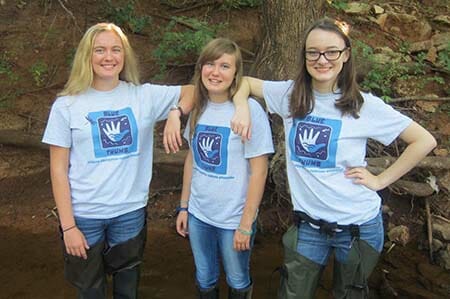 From left, Ariel McAffrey, Ava McAffrey and Katie Prior take a break during a Blue Thumb river cleanup project.
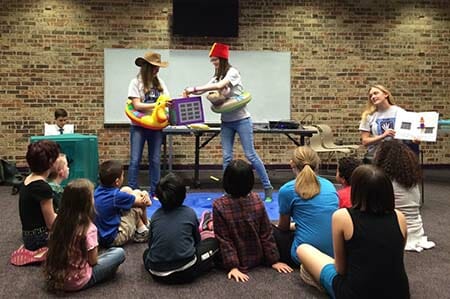 Ariel McAffrey, right, reads to children about caring for the environment as Ava McAffrey (wearing the cowboy hat) and Katie Prior act out the story.
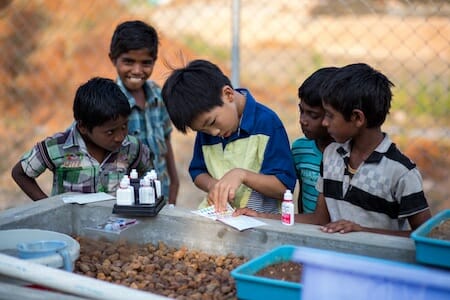 Miles Lin, center, tests the water in an aquaponic food production system he helped bring to India to feed children in an orphanage there. (Photo by Cory Hill)
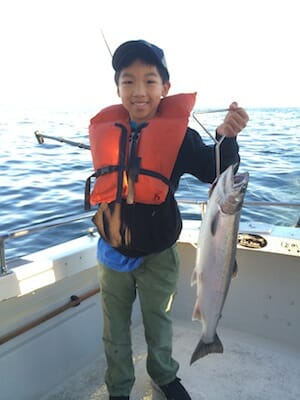 Miles Lin (Photo by Cory Hill)
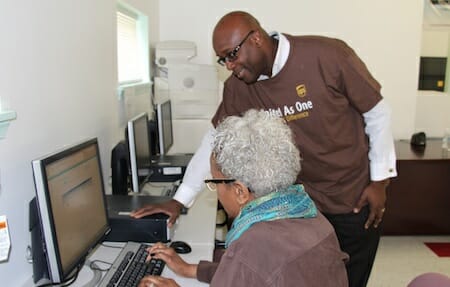 Tony Heath, standing, volunteers at the Better Living Center in Chester, Pennsylvania, which offers free Internet access to the community.
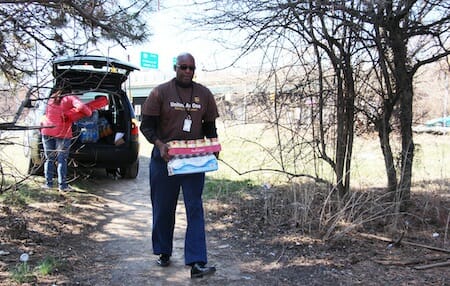 Tony Heath brings food to people in need.
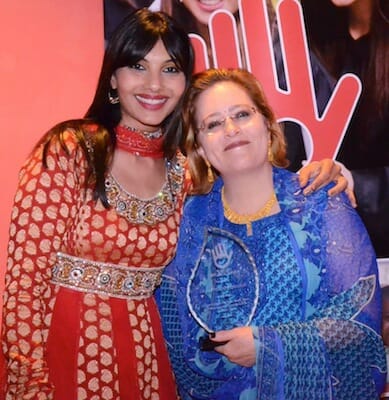 Somy Ali, left, celebrates No More Tears volunteer dentist Katherine Ferguson with an award.
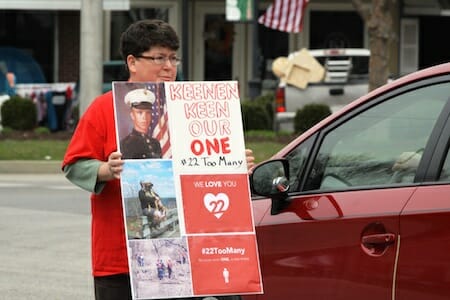 Krystol Stinson gets motorists’ attention in Bowling Green, Kentucky, during a vigil honoring veterans who committed suicide.
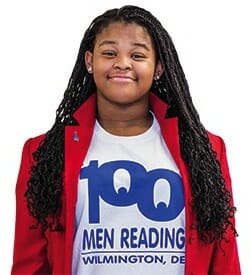 Imani Henry
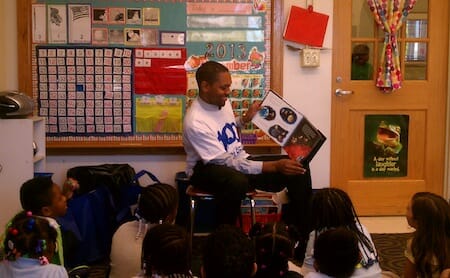 A 100 Men Reading volunteer reads to students at Harlan Elementary School in Wilmington, Delaware.