Social Venture Partners Pittsburgh
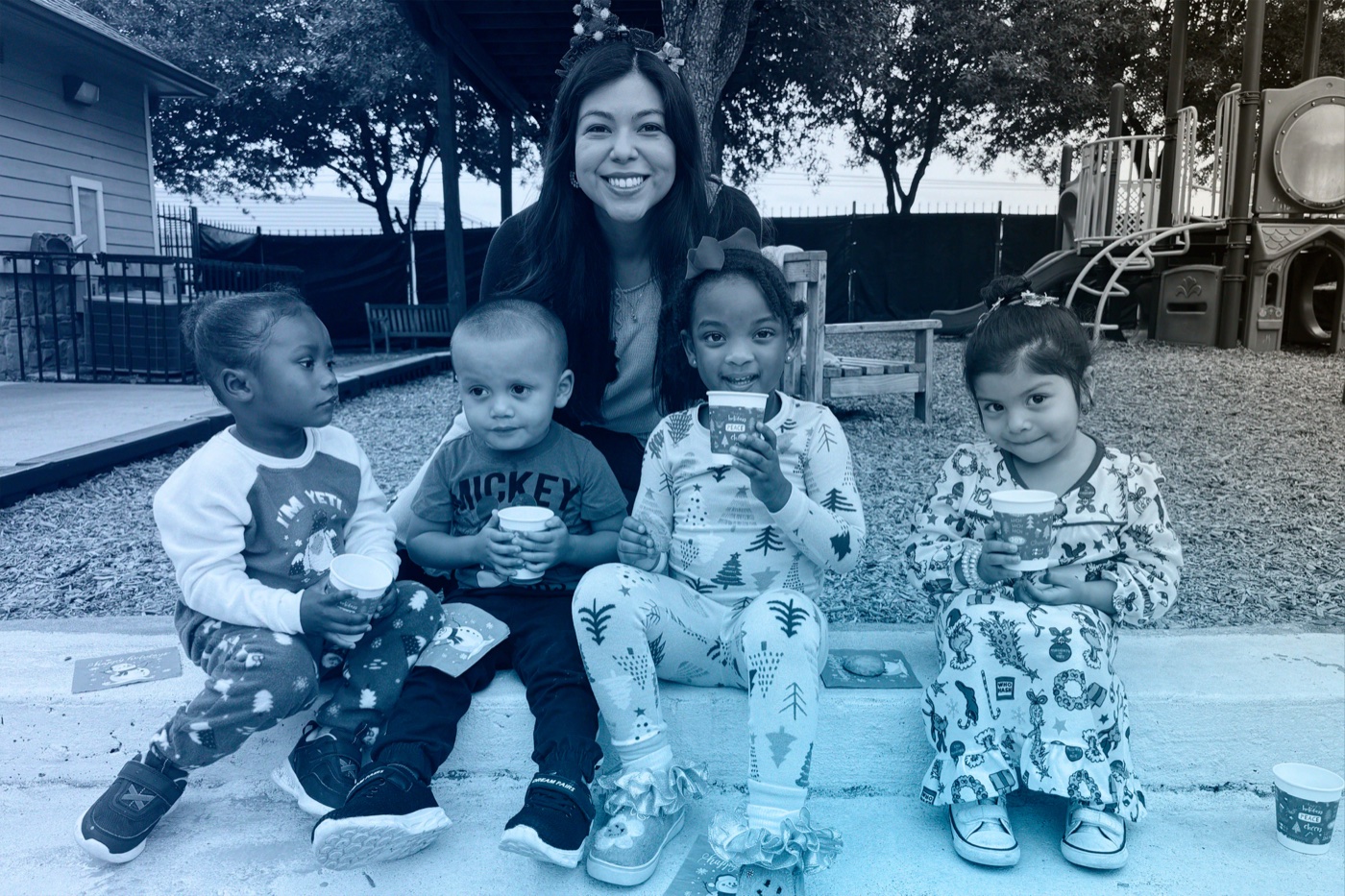
When it comes to adages, “the life that ends up changing the most is probably going to be your own” is a gold standard in a volunteer’s world. Nearly six years ago, a group of philanthropists belonging to Social Venture Partners Pittsburgh (SVP) approached an ally, Pittsburgh Cares, with a proposal to expose children to community engagement and philanthropy, jumpstarting a cycle of service to transform lives.
Pittsburgh Cares, an affiliate of the Hands On network, is the primary volunteer center for Allegheny County in Pennsylvania. The organization which runs four distinct programs, Business Cares, Community Connections, RSVP (Retired and Senior Volunteer Program) and YES—Youth Engaged in Service, is well known for their youth focused programs.
SVP Kids was born as a result of the partnership between SVP Pittsburgh and Pittsburgh Cares. “The program we developed [for SVP] engages the children in monthly service projects, with Toys for Tots representing their largest and most extensive project,” says Deb Hopkins, Executive Director of Pittsburgh Cares, “We also guide them through a mini-grant cycle. They issue Requests for Proposals from nonprofits for small projects ($250 – $500 level). The SVP Kids review the proposals and award the grants – using the knowledge they've gained through their year of service in the nonprofit community through Pittsburgh Cares.” The Pittsburgh Cares staff mentor and guide SVP Pittsburgh through that process.
The goal of the SVP Kids program is to create awareness among young people about the responsibilities and rewards of both giving time and money to nonprofits in the local community. Since the partnership began, the SVP Kids have invested 1,620 hours of their time and have awarded a total of $10,000 in grants to area nonprofits.
Pittsburgh Cares implements all this and more with a staff of seven people. They coordinate around 12,000 volunteers, averaging about 65,000 volunteer hours a year. Says Hopkins, “this year, the Toys for Tots program will distribute 70,000 toys to a couple hundred nonprofits and faith-based organizations in the area.” Toys for Tots volunteers sort through toys and help deliver them, with the belief that “every kid deserves a little joy” during the Holiday season.
Says Hopkins, “The best part of the job is that volunteers are always in a good mood. When you volunteer you do it because you want to. You’re committed to making a difference. When people walk through our doors they feel great about themselves and they’re feeling wonderful about the impact that they’re making in the community. For me I feel like I’m just surrounded by positive energy all the time.”
Pittsburgh Cares, opened its doors in 1994 and partnered with Social Venture Partners Pittsburgh in 2008. Their collaborative relationship to engage youth to serve their community has earned them today’s Daily Point of Light Award. To learn more about their work, visit www.pittsburghcares.org or www.socialventurepartners.org/pittsburgh.
J-Teen Leadership
A group of Jewish teenagers in New York is learning to do community service work with their hands. J-Teen Leadership is a community service leadership development initiative for Jewish high school students. What makes this group unique is that teens plan and lead projects.
J-Teen members provide assistance with rebuilding homes struck by Hurricane Sandy in Queens and Brooklyn, bringing 40 teens to rebuild houses each year around New York City, doing insulation, sanding, spackling, painting and other hands-on work. More than two years after this disaster, there is still a need for their help.
The teens organize rebuilding and supply and philanthropy drives prior to each trip, rounding up materials they'll need to fix up houses. And when they return from their service trips, participants speak at their high schools, inspiring their peers to help.
Alexander Pogrebniak
For some senior citizens, adjusting to life in nursing homes can bring feelings of loneliness and the sense that they have been forgotten by society. One young man in Jacksonville, FL is changing that through his involvement at a senior housing facility, improving the quality of the residents’ lives with a smile and an attentive ear.
High-schooler Alex Pogrebniak has volunteered weekly at the Taylor Manor Residences for nearly two years. He cleans the residents’ eyeglasses, reads to them, plays his French horn, encourages them to participate in group activities, helps them with arts and crafts projects, opens doors for them, talks to them … and most importantly listens to them.
Alex has set a positive example for his classmates to follow. His interactions with the people who have actually lived through the national and world events he now studies in history class provide an experience few other youths are likely getting. Stepping up to meet a need in his community, and making friendships across generations, Alex is a genuine Point of Light.
Michael Rosenberg
After moving into his North Minneapolis community, Michael Rosenberg saw many residents with children lacking an outlet for summer activities. So he organized a community Block Club, engaging residents in home safety and programs that help keep children off the streets.
An AmeriCorps alum, Michael has accumulated years of experience working with community groups. He currently works with 80 children to maintain a community garden through a program co-sponsored by the City of Minneapolis, teaching young people about healthy foods and how to grow vegetables.
His efforts have helped create one of the largest community gardens in Minneapolis.
Brady DeAngelo
What effect does being homeless have on a person's feet? One young man has walked a mile in their dilapidated shoes to uncover a need and set out to offer relief.
Brady DeAngelo is helping local homeless families around Holliston, MA combat physical health problems associated with their transient lifestyle. Homeless people spend substantial time on their feet, which can lead to medical complications. A lack of supportive footwear contributes to the problems like painful corns, calluses, athlete's foot and other infections, bunions, and vascular problems in the foot region.
The Medway Family Homeless Shelter in Massachusetts, where Brady has focused his efforts, reports many of its residents (most are children) walk for miles each day in dirty flip-flops or broken sandals.
Through Brady's program, residents at the Medway House Family Shelter get brand new supportive sneakers every year. Most residents are children, who are now able to start the school year with new shoes. They live at the shelter because they have nowhere else to go. Some have lost their homes due to tragedy or financial hardship; some never had a home; some have escaped abusive households.
In their struggle to survive, new athletic shoes that fit well would be impossible to obtain without the community's help. Since Brady started the program, shelter managers say they've been able to organize outdoor activities that boost the residents' overall health and well-being. Residents have come to rely on the sneakers to help keep their feet healthy, clean, and well-supported through the miles they walk every day. The ultimate hope is that this will also help them transition to a better, more stable lifestyle.
Brady posts to a Facebook group page called "Sneakers for the Homeless", showing readers, many of them donors, how and why their help is so essential. He has written about his project for Points of Light affiliate GenerationOn, and in a magazine called Teen Ink, to show others how to organize similar projects.
Reeder Family
Every parent’s wish is to nurture kindness in their children that equips them to contribute to their world. For Jen Reeder, a single mom raising four boys in Logan, UT, she has found the ideal outlet for her family to spend time together as they help others.
The Reeders participate in relief services for families in need, at-risk youth, the elderly and church youth throughout the year, lending their time to help with everything from childcare services and meal preparation to and financial and medical assistance, painting old buildings, shoveling snow, planting flowers and doing yardwork. They also organize youth mentorship activities and programs.
Their calendar is chock full of projects and volunteer commitments. And Jen wouldn’t have it any other way. "I grew up in a service-oriented family,” she explains. “My parents were always giving service, whether it was for neighbors, church, or strangers stranded in the snow. They always took us along and always gave that service with a willing heart and a smile."
Jen served as an AmeriCorps VISTA volunteer as well, building skills she uses now to lead her crew of boys in service – Nelson has been involved for 17 years, Allen has been involved for 15 years, Logan has been involved for 12 years, and Gavin has been involved for 8 years. Together, the Reeders help 20 community individuals through Relief Society services. They also provide educational opportunities to 60 total youth enrolled in literacy programs. They family also assists 4 households with yardwork and maintenance throughout the year.
Says Jen of her sons, "I love to watch them now, as they also look for opportunities to serve and want to take me along!"
Fan Liu
Amid a string of budget cuts that hit the public school system in Quincy, MA, lab science has become less emphasized in elementary school curriculum. But a group of high school students, bound together by their shared interest in science, mathematics, and engineering cultivated during their middle school years, is volunteering with youths to help them discover what they can learn in a laboratory.
Science Now! Program (SNP) is a student-run afterschool program that fosters interest in science, math, and engineering among Quincy Public Schools elementary school students through mentorship and hands-on experiments that help students grasp higher scientific concepts and tap into their inquisitive side. Additionally, high school students hone their leadership skills by volunteering as mentors for the children.
High school student Fan Liu is the leader of the club. Together with her peers, she is supporting the scientists and thinkers of tomorrow. Through their involvement with the program, elementary school students develop safe laboratory skills, learn to take responsibility for their research and work together in teams.
Fan recruited 15 high school students to spread their enthusiasm for science. Together, they drafted more than 20 lesson plans that were adapted and edited by science teachers. Fan also burnished her grantwriting skills by reaching out to local and national organizations for support.
In all, her work has helped steer a successful program that has educated over 40 youth in the past year at the Lincoln Hancock Elementary School in Quincy, MA. Congratulations to Fan and the Science Now! Program volunteers.
Kymanie Quarrie
Kymani Quarrie started KQ Cares in 2010 – at the tender age of 7 years old – after seeing a group of homeless sleeping on the streets of Miami. He asked his mom if they could do something, and he's been been working to help people in need ever since. Now 11 years old, Kymani continues to lead the way, garnering support from more than 200 young people in his community, as well as a long list of name-brand sponsors, to help serve the homeless and collect items needed.
His organization, KQ Cares, holds drives for items needed by local shelters that support the homeless. He and his friends have collected towels, lip balm, socks, clothes, food and hygiene items. KQ Cares also hosts a meal to serve 200 homeless men, women and children every month. The effort attracts volunteers of all ages, starting from 5 years old and up, to help prepare and serve the meal.
Through his efforts and dedication to finding ways to help, Kymani has now been invited by local shelters to aid in their efforts to help those in need. This young changemaker has a growing list of volunteers waiting for their opportunity to help serve.
Pete Frates
Meet Daily Point of Light Award honoree Pete Frates. Read his story and nominate someone you know as a Point of Light.
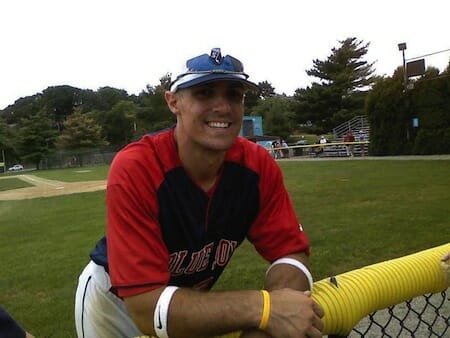 (Photo courtesy of the Frates family)
Looking back on 2014, the year brought so many compelling stories with ties to volunteerism. We confronted the perils of the Ebola virus. We watched with empathy as a community in Missouri, torn apart by racial tension, tried to heal.
And we rallied around a movement different from anything we’d ever seen – fueled largely by social media – that challenged us to help conquer a debilitating disease.
Indeed, one of the enduring memories from this year will be the millions of people across the globe – friends, celebrities, neighbors, former presidents, kids, CEOs, professional athletes, media correspondents and others – who drenched themselves in icy water as part of the ALS Ice Bucket Challenge.
The man who sparked this challenge, Pete Frates – a former baseball player at Boston College – was just 27 when he started experiencing symptoms of ALS, more commonly known as Lou Gehrig’s disease. But almost immediately after receiving the diagnosis that would alter his life, he rolled up his sleeves to fight.
Frates, now 30, was not the first person to dump a bucket of ice over his head. The stunt had been done before by professional athletes for various philanthropies. But a friend who also suffers from ALS took the challenge – the choice of donating $100 to ALS research or dumping ice water on one’s head – and passed it on to Frates via Facebook with a 24-hour deadline to respond and challenge someone else.
From there, it took off.
In the last half of 2014, the Ice Bucket Challenge raised $115 million for ALS research, a tenfold increase over the prior year. Frates was recognized by Sports Illustrated as one of the most inspiring figures of the year.
What will be the next incarnation of a social media movement that calls us to action? And who are the change-makers in your community who will lead it? Make a difference by volunteering with an organization already making a difference.
Peter Samaroo
Today, when kids have spare time they turn on their televisions, computers, smartphones or iPads. Peter Samaroo of Charlotte, North Carolina, is volunteering his time to encourage youth to disconnect their electronics to reconnect with nature, by heading outdoors.
Samaroo’s passion for animals and the environment led him to share his expertise with the younger generations of his community. Samaroo dedicates his services to Shining Hope Farms, the Carolina Raptor Center and Friendship Gardens.
“I realized how many kids were out there that actually knew nothing about being outdoors or what nature was like,” Samaroo says.
Samaroo’s realization echoes the majority of opinion concerning American youth’s time spent outdoors, or more accurately the lack of time spent outdoors. Those aged between eight and 18 years old spend an average of 7.5 hours per day using electronics, according to a 2010 study by the Kaiser Family Foundation.
This time spent staring at a screen versus staring at clouds in the sky and birds in the trees, can can potentially negativity impact children’s physical and mental health.
This is what makes Samaroo’s work and mission, to reignite kid’s appreciation of nature, all the more important.
Samaroo has experience in gardening, planting and landscaping, which has helped him to build various structures at the Carolina Raptor Center, Friendship Gardens and Shining Hope Farms. But in addition to maintenance Samaroo is able to introduce students to animals, plants and other wonders of nature.
Samaroo says the core of appreciating the outdoors is simply sitting back and observing. Samaroo says of the students he leads on nature walks, “things are going on around them, nature is alive, but if you’re talking and not paying attention you will never notice it.”
Samaroo has always appreciated nature and wants others to be able to slow down to notice their surroundings. “I always enjoyed being outdoors, walks in the woods and quiet time,” says Samaroo.
Samaroo enjoys volunteering as a break from his work. He feels the benefit from volunteering is a worthwhile pursuit and encourages others to also use their skills to give to others.
“Anybody can give money, but to actually give your time is important too,” says Samaroo. “You’re helping and and a lot of time hopefully you’re learning something.”