Kirk Platt
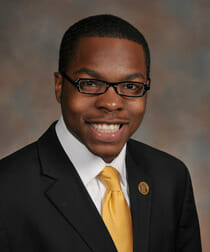
Kirk Platt of Glen Burnie, Maryland is a hardworking volunteer who changes young people’s lives and the communities in which they live for the better through scouting.
Platt, chair of the Baltimore Area Council of the Boy Scouts of America‘s civic programs committee, has been an active adult scout for the past 12 years. In 2013, the Baltimore council honored him with the Silver Beaver award, the highest distinguished service award given out at the council level to individuals who have rendered noteworthy service of exceptional character to youth.
Known for his concern and compassion in regards to meeting the needs of others, Platt spearheads numerous efforts throughout his community. Each year for the Four River’s Scouting District, he organizes the Scouting for Food campaign, the Tree-mendous Maryland tree planting, the effort to decorate cemetery plots at the Crownsville Veterans Cemetery, and the Clean Sweep community cleanup efforts.
In addition to his involvement in scouting, Platt volunteers with March of Dimes and helps individuals with special needs through Volunteers for Medical Engineering, a group of volunteers who improve adaptive equipment for disabled children.
Platt has truly affected the Glen Burnie community by his strong care and concern for people.
Ben Gray
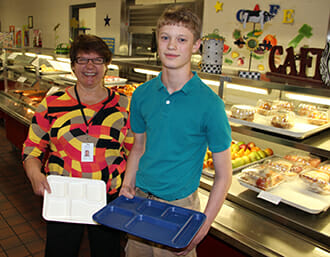
Ben Gray’s actions sparked his entire school district to eliminate the use of non-biodegradable polystyrene lunch trays. This past Earth Day, April 22, the entire Franklin Special School District in Franklin, Tennessee switched to reusable and biodegradable trays only.
Day after day during lunch, Gray, an eighth-grade student at Freedom Middle School in Franklin, noticed kids in his school throwing away the polystyrene cafeteria trays. Chloe, his fourth- grade sister, confirmed his suspicion that the same thing was happening at her elementary school and most likely at the other seven schools in the district.
As it turns out, Gray learned the school district’s cafeterias had used and disposed of roughly 220,000 trays this school year alone. The use of these trays just seemed wrong to him in an age of heightened environmental consciousness, so he decided to do something about it.
Gray felt that the use of the polystyrene trays conflicted with the other green initiatives sponsored by the school district and city. That was enough to spur Gray on his quest to find and implement an alternative way to serve school lunches. As a result, the school district began phasing out its current supply of polystyrene trays in favor of the washable and biodegradable trays. Moreover, on Earth Day, April 22, 2014, all of the school district’s meals were served on recyclable or compostable lunch trays, providing thousands of students with the same message taught in their classroom: reduce and recycle.
Ben Meyers
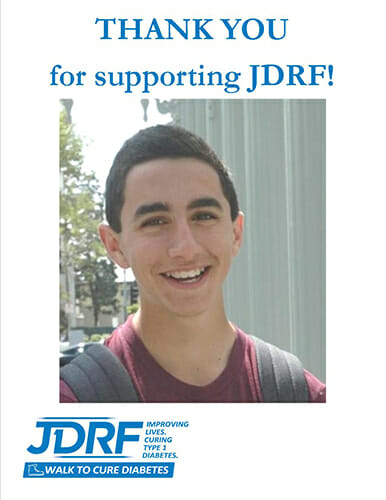
At 8 years old, Ben Meyers of Rancho Palos Verdes, California learned he had Type 1 diabetes. Now 17 years old, Meyers plays an active role in educating others about the disease as a youth ambassador and mentor for the Juvenile Diabetes Research Foundation (JDRF).
Meyers has dedicated countless hours to assisting nearby JDRF chapters with their efforts to secure and maintain funding to develop a cure for Type 1 diabetes. Additionally, Meyers has participated in public awareness campaigns and events, served as a mentor to youth newly diagnosed with the disease, and visited members of Congress to discuss Type 1 diabetes.
Meyers’s diagnosis with a potentially fatal, lifelong disease that requires daily maintenance and lifestyle modifications has never slowed him down. This past year, Meyers attended the Finding a Cure Gala hosted by the Los Angeles JDRF chapter where he shared his story with more than 600 guests.
With every speech Meyers makes, with every conversation he has with a newly diagnosed child and their family, and with every event where he puts a face to the disease, he and every other individual living with the disease comes closer to being able to say, “I once had Type 1 diabetes.”
Mongai Fankam
When Mongai Fankam of Charlotte, North Carolina was 3 years old, she began accompanying her mother to the Republic of Cameroon, a country in west central Africa. During her visits, Fankam would notice children walked miles to school carrying their books and school supplies in their hands. These children’s books were easily destroyed when it rained.
When she turned eight and entered third grade, Fankam launched the No Backpack Day Movement with the support of her elementary school. She launched this effort to raise awareness of the millions of youth around the world who do not have backpacks and have to walk to school each day carrying their school supplies in their hand. She challenged her entire school to come to school for a day without a backpack and carry their school supplies in their hands or in plastic bags. In addition, her school decided to offer additional support to the cause by donating backpacks and school supplies to kids in need.
By May 2012, eight schools had joined in this movement and donated more than 500 backpacks filled with school supplies. In the summer of 2012, Fankam, her mom, and some friends travelled to Cameroon to distribute these school bags. To date, more than 25 schools in North Carolina and Georgia have participated in this movement and they have donated more than 4,000 backpacks and school supplies to children in Cameroon and Sierra Leone.
Through this initiative, Fankam has been able to raise awareness of the more than 120 million children in the world who walk to school every day carrying their books and school supplies in their hands. In addition, her initiative has provided backpacks for children who are now able to attend school with dignity and respect along with certainty that the weather and other elements will not easily destroy their school supplies.
RAP River Run Committee
The RAP River Run is an annual 5K and 5-mile race held to help support and raise awareness for the RAP House Youth Shelter, a short-term youth shelter serving youth in Pasco County, Florida between the ages of 10-17. The committee is now in its seventh year of existence and has helped to raise more than $500,000 for the shelter.
In 2007, some core volunteer for the shelter decided to pull in some community constituents to discuss ways of raising needed dollars and awareness for the shelter. This initial group of individuals created the RAP River Run Committee in 2007 and it has been growing ever since. Currently, the race draws a little over 1,500 participants and spectators on race day, but more importantly has exposed the community to the issues faced by the youth served by the shelter, which in turn has sparked more interest and resources coming into the program.
Bonnie Avila
Bonnie Avila of Hanford, California has been volunteering at the Hacienda Rehabilitation and Health Care Center for the past thirty years rain or shine. Often, she is known to tote her guitar, banjo, or harmonic with her to play music for the residents. Avila is a caring and compassionate individual who shares her talents and gifts to alleviate some of loneliness that many elderly residents at the facility encounter.
William Winslow
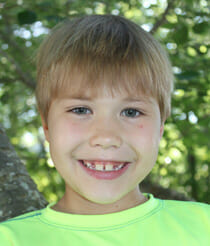
William Winslow, an eight-year old from Raleigh, North Carolina, set up a community wide food drive to collect food for BackPack Buddies, an Inter-faith Food Shuttle program providing low-income students healthy meals on the weekend. Inter-Faith Food Shuttle is an innovative hunger-relief organization serving seven counties (Wake, Durham, Orange, Chatham, Johnston, Nash, and Edgecombe) in North Carolina.
In 2013, Winslow began collecting food instead of presents for his birthday. Soon, it led to him holding his first annual food drive where he collected 1,400 pounds of food and $305. This year, he completed his second food drive collecting 3,340 pounds of food and a little over $320.
Musselman High School Watershed Environmental Team
Musselman High School Watershed Environmental Team (Wet) consists of a group of students working together on environmental projects for their high school and the community of Inwood, West Virginia.
Currently, the two issues affecting the Chesapeake Bay area are the excess quantities of nutrients from fertilizers and excess amount of sediment. An excess amount of fertilizer can give rise to algal blooms; excess quantities of sediment make water more turbid, stunting underwater plant growth. WET members work with community partners to mitigate storm water runoff through a host of environmental projects. These projects include installing a green roof, a low-mow area, a rain garden, two raised beds, and an enhanced wetland. The rain garden and enhanced wetland capture water and reduce the amount of nutrients and sediment runoff, and the raised beds both grow native and food plants.
Soroptimist International of Greater Sacramento
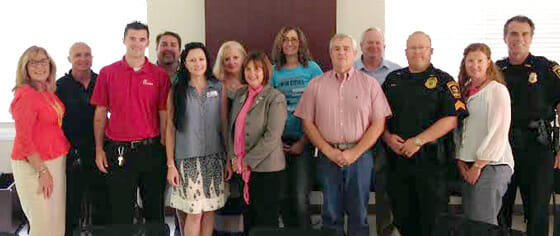
Soroptimist International of Greater Sacramento collaborates with Women’s Empowerment, a nonprofit in Sacramento, California, to serve homeless women in Sacramento County, as well as their children.
Since 2005, Soroptimist International volunteers have assisted with the Women’s Empowerment annual fundraising gala attended, including chairing the event, leading the silent auction committee, and handling event setup. They created the Hidden Support program, which provides homeless women with new undergarments so they can dress professionally. In December, they donated 40 filled stockings for the Holiday Stocking Drive for women and children. For the past two years, Soroptimist International volunteers have hosted the Women’s Empowerment annual craft party, which gives homeless women the chance to make holiday gifts with their children. .
The Soroptimists volunteers continually check in with Women’s Empowerment staff to ensure their efforts are needed and working. They continue to adapt to the organization’s changing office environment and rotate their members in various roles so that everyone in the group has experience.
Soroptimist International of Greater Sacramento was chartered in 1986 and is an organization of professional women who strive to improve the lives of other women and children both domestically and internationally through grants and community outreach programs. A group of 80 women in Oakland, California formed the first Soroptimist club in 1921. The name Soroptimist is a coined name meaning “best for women.” Soroptimist’s mission is to improve the lives of women and girls in local communities and throughout the world. Soroptimist International has 95,000 members. Soroptimist International of the Americas has 45,000 members.
Juawn Jackson
Juawn Jackson is a passionate, industrious, and visionary sophomore at Georgia College & State University in Milledgeville, Georgia. Jackson’s ultimate life goal is to make the world a better place by empowering people to find their voices and change their lives and communities for the better.
Jackson engages in many service activities. At present, Jackson is revitalizing the 4-H chapter at Georgia College. Jackson, a longtime 4-H member including serving as a state vice president while in high school, was concerned to find the Georgia College chapter defunct when he enrolled at the school.
Prior to beginning his first year at Georgia College, he started working to revitalize the club. Due to Jackson’s hard work and dedicated spirit, Georgia College’s 4 –H chapter is now active, continues to grow, and provide opportunities for students of all ages to become leaders in their community.