Harold Sterling
AARP Safe Driver instructor Harold Sterling has a question for you.
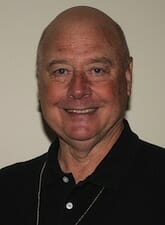 Harold Sterling
“When I speak in public, I always tell audiences that if they can answer one question correctly, they don’t need to take my course,” says Sterling, a volunteer who this year celebrated teaching his 100th driver safety course. “The question is: ‘What’s the difference between yellow lines and white lines on a highway?’”
Sterling says after a few moments someone usually says, “A solid yellow line means you can’t pass other cars.”
Wrong.
“The correct answer, which we all learned when we studied for our first driver’s license, is that yellow lines always separate lanes of cars moving in opposite directions, and white lines always separate lanes of cars moving in the same direction,” says Sterling.
According to Sterling, a former state patrolman and retired media distribution executive, this is a prime example of information drivers of any age forget after a relatively short time. While the AARP Smart Driver course is generally targeted toward drivers over 50, Sterling says most adults can benefit.
“There are older people with full safe driving skills and capacities, as well as 18-year-olds who shouldn’t be driving because of a lack of skills,” says Sterling. “But it’s nevertheless true that as we age, our cognitive and physical capacities tend to slow down, and we need to compensate for that by practicing more attentive driving skills to build a greater safety cushion around ourselves.”
Also, Sterling says, we all pick up bad driving habits. The AARP course, taught by hundreds of volunteers across the country, focuses on erasing those habits and teaching older drivers about changes in laws, automobile technology and traffic patterns, such as increased congestion.
Sterling, of Schaumburg, Ill., began as a safe driving volunteer instructor for AARP in 2007. Since then, he has increased his involvement and is now a regional coordinator, overseeing the program and 1,300 volunteers in 10 states from the Midwest to the East Coast. He estimates that he devotes 30 to 50 hours a week to the program.
He also participated actively in research-based changes to the course that were implemented this year. While he is in charge of hiring and training state coordinators, among countless other duties requiring regular travel, Sterling still finds time to teach the course locally.
Sterling also worked to build AARP Safe Driver partnerships with several Illinois state government departments and led an effort in 2012 that resulted in the Illinois governor declaring the final two weeks of March as Senior Driver Safety Awareness Weeks.
Last year, the city of Schaumburg honored Sterling with its Volunteer of the Year Award. He has also been nominated twice for AARP’s highest volunteer recognition, the Andrus Award.
“It’s very satisfying to know that you’ve had an impact on your community, and I still enjoy teaching the course,” says Sterling, who just turned 72 on May 3. “We want as many people as possible to get from point A to point B safely.”
Kellie Barrett
The “NICU” (Neonatal Intensive Care Unit) at USA Children’s and Women’s Hospital, a Children’s Miracle Network Hospital, in Mobile, Alabama is the area’s only Level III unit, offering the most advanced care for premature and critically ill newborns and the area’s only neonatal transport team. Approximately 900 babies are admitted annually; nearly 20 percent of the babies transported to USA Children’s and Women’s are from referring hospitals in the region.
As a Teen Advisory Board for the NICU at USA Children’s and Women’s Hospital, Kellie Barrett has seen the abundance of support needed to aid in the care of premature and critically ill newborns. To address this need, Barrett organizes an annual Teen Runway Fashion Show. Through this event, Barrett brings community awareness of the wonderful initiatives the local children’s hospital engages in daily to help save the lives of children. The funds collected from the fashion show assist with the continued cost of providing outstanding patient care.
Teresa Gardner
Teresa Gardner of Wise, Virginia is a caring and compassionate person who makes the needs of her patients a top priority. She has served with the Health Wagon, a free mobile health clinic, for nearly twenty years. Through the Health Wagon, Gardner provides healthcare to the financially deprived population of southwest Virginia. There exists complex interrelationship of high rates of poverty, significant health risk factors, low educational attainment and limited access to specialty care leading to exceptionally high rates of premature mortality in Gardner’s service area.
Gardner, who has been in the nursing field since 1989, currently serves as the executive director of the organization. The Health Wagon has two permanent locations and two mobile clinics. Gardner’s clinic manages over 200 patients and more than 6,000 visits annually. She has performed interviews with several international and national media correspondents speaking upon the health issues of those residing in the Appalachians. She introduced the American Breast Cancer Foundation into the Appalachian area, providing over 1,000 free mammograms to women in need in southwest Virginia.
Gardner efforts have immensely contributed to the overall well-being of residents of southwest Virginia. She works daily on multiple collaborative efforts to enhance the healthcare of the region. Many of these endeavors would not be possible without the continued leadership and guidance of Gardener.
Durham Triple Play Leagues Inc.
When Pat James found out her 14-year-old son, Lathan, wasn’t going to be able to play in a baseball league in the summer of 2009, she wouldn’t accept it.
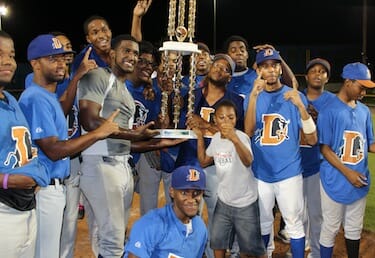 The Durham Bulls celebrate a championship win.
That year, because of budget cuts, the Durham, N.C., parks and recreation department had cut its summer baseball program for teenage boys. So James went to work to keep teen baseball alive in Durham. A single mom and longtime employee of Duke University’s Community Services Center, James approached local coaches, volunteers and businesses.
“Our first year in 2009 was difficult,” says James. “But I was able to get the old baseball uniforms for the kids, and the use of one field, from the parks and recreation department. Then I began approaching local businesses and was able to raise enough money for an end-of-season banquet and trophy. Thanks to the city, about 10 businesses and to the coaches and other volunteers, we were able to keep a baseball league of five teams going for the summer.”
In 2010, fortunes improved for the fledgling league. Minor League Baseball was in town to restore and reopen the historic Durham Athletic Park, former home of the Minor League Durham Bulls, which was featured in the 1988 hit film “Bull Durham.”
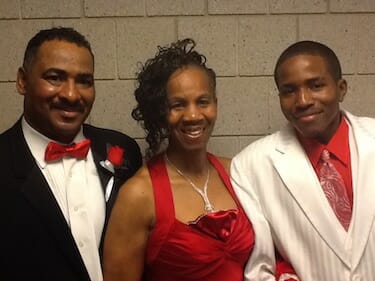 Pat James with her husband, Robert James, and son, Nathan Nobels
James appealed to the CEO of Minor League Baseball and Minor League Baseball Charities for support.
“He shared our concern that the percentage of African-Americans in professional baseball is dropping,” says James. “He agreed that if I would run the program, and we ensured our kids were staying in school, and that we expanded to eight teams, Minor League Baseball Charities would grant us use of the historic baseball park, pay for our uniforms and umpire fees, and provide us $1,000 for a banquet. It was wonderful news.”
Minor League Baseball Charities assigned the league the name “Long Ball.” James became league director and successfully expanded it to eight teams. Since 2010, the Durham Triple Play Leagues’ Long Ball Program – which was a pilot for Minor League Baseball – has enabled 120 teenage boys to participate in competitive baseball each summer. (Watch a video about the program here.)
“We wanted to give opportunities to kids who didn’t make their school team or who just needed something positive to do with their time,” says James. “Ninety percent of our kids come from the inner city, about 95 percent are African-American and 95 percent come from single-parent households. Sometimes, the coach is the only significant male figure in a player’s life.”
There are strict rules to participate. Players must stay in school and follow a dress code. No profanity or taunting of umpires, coaches or players is allowed.
James works with 24 coaches, 10 staff and about 50 other volunteers. Summer 2014 will be the sixth season of Durham Long Ball, and this year Major League Baseball will add its support to the league through its RBI program, which stands for Reviving Baseball in Inner Cities.
James says she loves volunteering for Long Ball and that she has witnessed positive results in the community from the start. Lathan, now 20, volunteers as a coach.
“My son is one of about 50 percent of Long Ball participants who, once they’ve reached the age limit of 18, come back as coaches and volunteers,” says James. “We try to teach the kids accountability and respect as well as baseball skills. Sometimes parents half-joke to me that their kids will listen to me before they’ll listen to them. It makes me feel great.”
Betty Mulligan
In 2007, Betty Mulligan of Palm City, Florida began volunteering at Caring Children, Clothing Children, which provides an opportunity for qualified youth to gain self-esteem by being able to obtain clothing similar to their peers at no cost.
While volunteering at the organization, Mulligan discovered a need for literacy skills amongst the children and parents visiting the store. Therefore, she created a literacy program within the organization, which includes a library enabling parents and children to select books according to interests and reading ability, and a stuffed animal to keep. She created bilingual pamphlets and video displays educating parents on the importance of reading aloud to their children. In addition, Mulligan recruits adult and student volunteer readers to participate in special literacy events and read aloud to children throughout the year.
For the past seven years, Mulligan has given countless hours with no reimbursement. She has enhanced the mission of Caring Children, Clothing Children by adding literacy as another focus of the charity. In addition, she has served as an active board member of the organization for the past five years.
Roger Baker
Roger Baker of Cedar Grove, Wisconsin has been an active Boy Scout leader for 17 years. His selfless and often tireless dedication has led to a high percentage of youth achieving the rank of Eagle Scout. He has spearheaded several youth oriented projects such as the annual pinewood derby; ensuring scouts have a safe and enjoyable time not just at the race, but also in the shop learning to construct their cars. Baker leads quietly, without self-promotion and is always ready to lend a hand.
Every community counts on the next generation for vitality and Cedar Grove is no different. Cedar Grove has a population of approximately 2,000 people. Scouting holds a large presence within the community. Much of that presence is due in large part to Baker’s efforts. While a small community, Cedar Grove regularly has 80 boys actively involved in scouting because Baker works hard to make these organizations vital to the community.
Baker’s leadership efforts have given Boy Scouts life within Cedar Grove. There are regular meetings, community activities, and a sense of responsibility owed to the community. The boys have gained great confidence through scouting. What started out, as a pack of a small handful of boys in 1997 has become a strong healthy pack that sustains number outpacing other communities of similar size. Always active and engaged within their community, the boys have thrived under Baker's tutelage.
Deepa Rajan and Harmonies for the Elderly
Harmonies for the Elderly, a nonprofit organization in Austin, Texas, provide companionship and music in nursing homes. Often, elderly individuals living in nursing homes are a neglected segment of society and do not get the chance to experience live music or to interact with visitors. Devastating conditions such as Alzheimer’s disease and Parkinson’s disease often exacerbate the isolation that the elderly feel; several residents lack connection with youth and other visitors. Most nursing homes do not have access to music therapy, which has the potential to alleviate symptoms of Alzheimer’s disease. These problems are especially severe in nursing homes located in low-income neighborhoods without resources to organize entertainment for the elderly. Musical involvement is often the residents’ only way of accessing childhood memories; thus, the absence of live music can be detrimental to emotional health.
Founded by Deepa Rajan, Harmonies for the Elderly consist of a group of students of all ages who play music and perform music therapy techniques at nursing homes across Austin. Rajan selects and customizes music for seniors, organizes monthly performances, and performs as the lead violinist. Rajan plays famous classical pieces and iconic music from the childhoods of the audience members. In addition to performing enjoyable music, the group uses different aspects of music therapy to alleviate the symptoms of Alzheimer’s disease. For example, they pass out percussion instruments to audience members so that they can actively participate in the creation of music. This type of active music therapy has been shown to improve cognitive abilities.
Harmonies for the Elderly rely on the passion of its members. Rajan has worked hard to educate her peers about Alzheimer’s disease and the extent to which music therapy can alleviate its symptoms. Thus, the members of Harmonies for the Elderly recognize the importance of the cause and collectively work towards implementing the solution.
W. Russell Hurd
In 2008, Russell Hurd experienced immeasurable tragedy when his daughter, Heather, was struck and killed on a Florida highway by a tractor-trailer driver who was distracted while texting on a cell phone. At the time of the accident, Heather was traveling to Walt Disney World, where she worked as an intern, to meet with her wedding planner. Heather was 26.
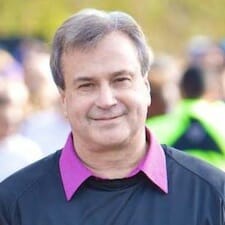 Russell Hurd
Though beset with grief, Hurd and his wife, Kim, took quick action to help save others from similar traffic hazards. Within two months of Heather’s death, the Hurds, who live in Abington, Md., testified before the Maryland General Assembly in favor of a state bill to outlaw texting while driving.
While the bill failed to pass in 2008, it was adopted and signed into law in 2009, and – because of the Hurds’ loss and aggressive advocacy – became widely known as “Heather’s Law.” After five years of work, the Hurds helped pass a similar law in Florida. In addition, a five-mile section of Florida State Highway 27, where Heather was killed, has been renamed the Heather Hurd Memorial Highway.
In 2009, the Hurds created and endowed the Remembrance Book Scholarship Fund at Harford Community College in Bel Air, Md., where Heather had been a student, and partnered with the college to create the annual Heather L. Hurd 5K Run/1 Mile Fun Walk. It has been a family affair, as the Hurds’ 24-year old son, Andrew, has been involved, too.
The event, which is now sponsored by more than 40 corporations and organizations, along with individual donors, attracts hundreds of runners each year. In its first five years the event raised enough money to award scholarships for the purchase of college textbooks to 150 deserving students.
The annual run/walk, held on the campus of Harford Community College, begins and ends with participants attending workshops on traffic safety. The Maryland State Police, along with the county sheriff’s department and many traffic safety organizations, turn out each year to give presentations that focus on the problem of distracted driving, featuring the use of distracted driving simulators, which vividly illustrate the dangers of texting and other cell phone use while driving. Many Harford students volunteer annually to help with the event.
In 2013, Russell Hurd was honored by C&S Wholesale Grocers, where he works as a quality control manager, as the company’s Volunteer of the Year for devoting more than volunteer 1,000 hours to the college, most of which involved organizing the run/walk and working to arrange sponsorships. C&S has also become a major sponsor of the event.
“I can’t believe how much we’ve grown in five years,” says Hurd. “In our first year, we raised $10,000 for scholarships. In 2013, we raised $40,000 and had a record 600 runners participate. This year we expect more than 700.”
Aside from fundraising, which he does entirely to support the scholarship fund and race expenses, Hurd has traveled throughout Maryland and to other several states, often with his wife, to testify in favor of traffic safety legislation and give educational presentations to the public. The Hurds pay all their own expenses for these efforts.
“The work has been humbling and gratifying,” says Hurd. “It can be emotionally draining at times because I’m speaking about my own daughter, but I want everyone to know how special she was and is to us. We have a day when the donors get to meet the recipients of scholarships. The kids are so grateful, and I know it would make Heather proud. I think we’ve helped to save many lives through our work.”
Dean Graber
Dean Graber shows his love for his hometown of Nashville, Tenn., in ways you can see. In the past two years he has participated in nearly 100 diverse community service projects through Hands On Nashville, logging more than 250 volunteer hours.
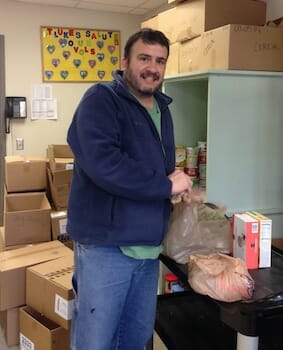 Dean Graber sorts donated food for the St. Luke’s Community House food bank.
“I’ve had the chance to experience a variety of activities through Hands On Nashville,” Graber says. “What sticks out is working on farms and gardens, maintaining trails, preparing and serving meals, distributing food at food banks and food drives, and working with people who are studying to become U.S. citizens.”
Graber goes where he’s needed. When a flood overwhelmed homeowners last summer, for example, he immediately responded to Hands On Nashville’s call for volunteers to remove debris. He has helped restore trails at Radnor Lake State Park, delivered holiday gifts to families in need and accompanied seniors from their rooms at the Blakeford at Green Hills retirement community to an activity space where they enjoy fellowship and musical performances.
Graber, born and raised in Nashville, started volunteering when he was in junior high school at an American Red Cross blood bank, packing boxes of blood and delivering them to local hospitals and to bus stations for shipping to other towns. He moved to Texas in the early 1990s for 18 years, then returned to Nashville. Along the way he worked with several nonprofits, in print journalism and public radio, and on organic farms and gardens.
Back in Nashville, Graber says it’s vital for people to give back to communities in need.
“Nashville continues to have enormous imbalances and disparities,” Graber says. “It’s important for those of us who can to do small things within our means – like giving our time – to address these imbalances.”
Volunteering led Graber to work with Dismas House of Nashville, which helps people released from prison become re-acclimated to their communities. The nonprofit has hired Graber to help the staff gather information and interviews for a book and oral history CD that explores Dismas House’s 40 years.
“I started volunteering there and it evolved into something that it is very interesting for me professionally since I’ve worked for – and volunteered with – many nonprofits in Austin and Nashville, and also worked in journalism,” Graber says. “It’s a fusion of interests.”
If you’re new to volunteering, Graber suggests picking a few different projects to get a feel of what type of service and work you would like to do. You may not find the perfect fit at first, but keep looking. Once you find your niche, find similar projects to fulfill your desire to serve your community.
To find a volunteer center near you, visit the HandsOn Network website.
Lauren Levy
A Girl Scout since third grade, Lauren Levy has grown up serving her community. So when the Nashville, Tenn., teen found out about the Hands On Nashville internship program during her sophomore year in high school, she knew it was for her.
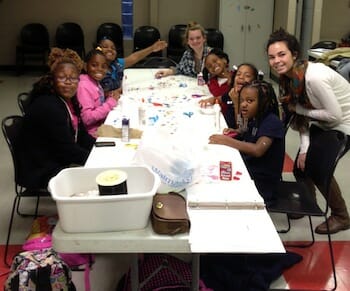 Lauren Levy, far right, smiles with her art class students at the Salvation Army.
As a Hands On Nashville intern, Levy – now a senior – leads and takes part in several community service projects and events throughout the year. Through the program, Levy has pitched in at a career fair for the unemployed; worked with the Salvation Army and the YMCA on community projects; and partnered with Starbucks for Global Youth Service Day. She also teaches a yearlong art program for 10 to 15 elementary school students as part of HandsOn Nashville’s Youth Volunteer Corps.
“I love working with the elementary school kids; it’s a great bonding opportunity,” Levy says. “It makes me feel very happy to see kids appreciate all my work I put into it.”
And Levy enjoys working with volunteers. At one of the five annual Hands On Nashville youth service events Levy worked with Starbucks partners and was put in charge of creating a butterfly garden, assigning roles to the other volunteers.
That leadership experience inspired Levy to establish the Summer Youth Leadership Program. She saw that many high school students had leadership roles during the school year on sports teams, in clubs and other activities, but during the summer leadership roles for teens were sparse.
“A lot of youth wanted to get involved with leadership during summer but they didn’t know how,” Levy says.
Levy created an application process, interviewed students and developed training and program materials to establish the youth leadership program. Each student accepted into the program tackled a different issue in their community – homelessness, the environment, hunger and others. The students then created and lead projects designed to address each issue. Levy oversaw each of the student leaders, assisted them in implementing their projects and evaluated their performance.
“A lot of teenagers can be self-centered,” says Levy, who is leaning toward majoring in a health care-related field in college. “Once you start to help others you see it makes you better as a person. If you do good then others will do good and it will make the world a better place.”