Debra Kirsh, president of the Kiwanis Club of East Meadow in New York, is dedicated to mobilizing others to volunteer. She is the epitome of a selfless volunteer. While serving as a role model for volunteerism in her own community, she helps establish a foundation of service in others by forming service clubs in nearby communities for adults, individuals with special needs, and children.
Kirsh’s primary focus in her community involves service that impacts the lives of children. As a member of the school board, she supported service-learning initiatives in East Meadow public schools. Kirsh’s volunteer efforts began through her local Parent Teacher Association (PTA) more than 12 years ago. She has been an active member of the East Meadow Kiwanis Club for a little over ten years.
WINGS for Mercy Care
The homeless, those living below the poverty level, individuals without health insurance, and Hispanic immigrants represent some of metro Atlanta’s most underserved.
In 1985, generous volunteers who wanted to serve the poor and homeless in downtown Atlanta founded Saint Joseph’s Mercy Care Services. Although Mercy Care now has more than 175 employees, volunteers such as Workers Involved in New Growth for Saint Joseph’s (WINGS), are still critical to the agency’s success. WINGS supports Mercy Care, not only through fundraisers and special events but also with vital, hands-on support.
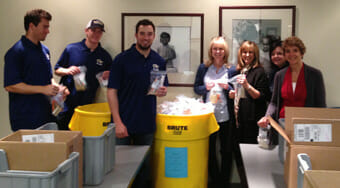
Each month, volunteers are onsite preparing hygiene kits for the homeless. The homeless are exposed to the elements, infectious diseases, violence, unsanitary conditions, malnutrition, stress and addictive substances, all of which negatively affect health. Individuals who lack insurance and/or financial resources often do not seek medical attention until an acute illness occurs. The homeless have significant oral health needs as they lack a regular place to brush their teeth and often cannot purchase and carry a toothbrush, toothpaste, floss, etc.
In addition, volunteers teach English as a second language classes for Hispanic patients because it is difficult for the linguistically isolated to be integrated into the mainstream health system, and when they do, navigation is difficult. WINGS members also coordinate annual coat and toy drives, gathering hundreds of items for those in need.
The mission of WINGS is to raise funds, make friends, and increase awareness by means of special events as a support organization for the mission of Saint Joseph’s. WINGS has taken the lead in working as a fundraiser and friend-raiser for Mercy Care and have become leading advocates for the work of Mercy Care in the community. In response to the community’s continually growing need for Mercy Care’s services, WINGS has worked to increase and diversify its volunteer activities to include additional opportunities for its members, as well as to engage new potential volunteers and donors.
Yolanda Romero
The child of Mexican immigrants, Yolanda Romero grew up in Lubbock, Texas, in the segregated South. As a child in the 1950s, she saw signs throughout the city that read, “No dogs and no Mexicans allowed.”
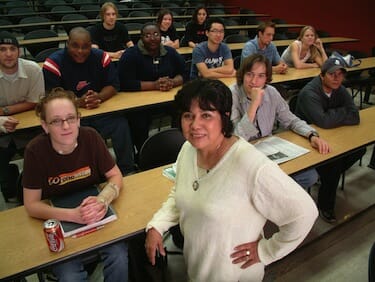
Yolanda Romero, shown above with some of her students,
says she tries to stay close to her roots and give back.
Romero’s parents stressed the importance of education, though they had little of their own. Romero was able to work her way through college, thanks in part to help from the Hispanic Scholarship Fund. She went on to become the first Mexican-American woman to earn a Ph.D. in history from a Texas institution (and the 13th in the United States).
For 24 years, as a teacher at North Lake College in Irving, Texas, Romero has spent her career, in her words, “trying to stay close to my roots and give back.” She has turned down teaching opportunities at four-year institutions to remain at North Lake, a community college with large populations of Hispanic, international and low-income students. She estimates that as an instructor and in her 18-year volunteer role as adviser to the Phi Theta Kappa Honor Society, she has helped 1,500 to 2,000 students receive scholarships to four-year colleges or associate degree programs.
Romero spends about 300 to 400 hours each year working with Phi Theta Kappa members, and since she took over as adviser, the North Lake chapter has become ranked in the top 20 by the international society, which has more than 2 million members at 1,250 institutions.
“It’s all about people,” Romero says of her career. “They’re our most important resource.”
When she learned that many North Lake students, after paying school expenses, were going hungry, Romero worked with volunteers to start a campus food bank and a community garden.
Over the years Romero has blended her commitment to community and love of history into a longstanding oral history project documenting Hispanic culture, and that of other international communities, in Irving and other parts of northern Texas. She has personally conducted close to 300 oral history interviews in the region around North Lake College. Romero has also taught her classroom students and Phi Theta Kappa members how to take oral histories and recruited many to assist her. Her students have now conducted more than 400.
“We need this resource,” says Romero. “We can’t afford to lose the history of these populations. Future scholars of urban studies in this area will want to use it, and we need to document it.”
For her rich variety of community and academic work, Romero was nominated in 2006 for the Texas Women’s Hall of Fame. For her student scholarship work, she was inducted in 2012 into the Hispanic Scholarship Alumni Hall of Fame under the category “inspirador” – the motivator.
“Teaching and Phi Theta Kappa have given me great opportunities, and I’ve never looked back,” Romero says. “I get up and love coming to work.”
Michael Lyons
Michael Lyons addresses the need of emergency medical assistance in his community through the Pleasantville Volunteer Ambulance Corps (PVAC), a group of volunteers committed to providing New York’s Pleasantville and Thornwood communities with the highest level of basic life support care available. The group provides the service free of charge, and its volunteers are available 24 hours a day, 365 days a year.
Lyons joined PVAC in August 2013 at the youngest age possible. During his volunteer shifts, Lyons responds to calls from car accidents and anyone else needing medical assistant. He uses his Corps training to save lives and help others in times of crisis.
Lyons is service minded in all that he does. When he is not volunteering at PVAC, he is supporting the Autism Speaks club he founded at his at high school, serving at the fire department, or peer tutoring.
Debra Thomas
In 2004, Debra Thomas founded New Directions Community Outreach (NDCO) to combat the growing rate of homelessness in central Florida by helping individuals and families achieve self-sufficiency through housing, financial assistance and educational programs.
Through NDOC, Thomas had held homebuyer’s seminars aimed at helping people obtain permanent residence for the first time. Additionally, the organization has established an outreach pantry that distributes soup, sack meals, baby food, hot chocolate, lemonade and other nourishing items throughout local homeless camps.
Not only does Thomas’s organization provide critical services and programs, but also she holds events that enrich the lives of the indigent, beyond simply the bare necessities like an annual Easter egg hunt, which provides children the opportunity to experience the joy of the holiday. For many, holidays are a special and joyous time spent with family and friends. However, for those who are homeless, poor, and living in poverty, holidays can be a painful and lonely time. This is why NDCO makes it a point to prepare special celebrations during the holidays.
Thomas’s passion to help the downtrodden and needy comes from her personal experience with destitution. Seventeen years ago, unfavorable circumstances befell Debra herself. Impoverished and homeless, she found herself living in different family homes with her infant daughter.
At this despondent point in time, Thomas asked for God’s blessing to make a better life for herself. She then made a solemn vow to God, in turn, to become a blessing to others once she was on her feet again and able. This promise became the essential impellent for Thomas’s purpose in life.
Thomas founded NDOC.- originally penned The Alpha Training of Seminole County- as a small means of support for those who could not support themselves. At the inception, Thomas and members of her family cooked extra food for every holiday and donated canned goods and blankets whenever possible. Before long, more friends and family became involved, and the fledgling program sprang to life.
Thomas is not only an advocate for the homeless, but also she serves as a board of member for the Golden Rule Organization and has served as the former vice president for Seminole Community Association for Progress. In addition to all this, she is actively involved in Team Resource, Project Homeless Connect and Give Kids Back Packs.
Melanie Stevenson and Christine Wright
Today, to celebrate the Martin Luther King, Jr. Day of Service, Christine Wright and her daughter, Melanie Stevenson, will continue a family tradition they’ve treasured for more than a decade – three generations volunteering together.
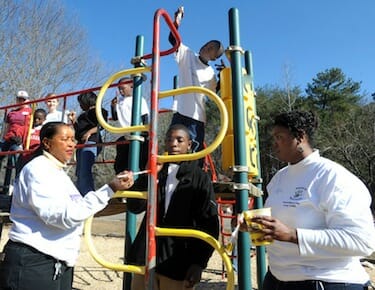
Christine Wright (left) and Melanie Stevenson (right), restore
a playground on MLK Day 2010 with Stevenson’s sons, Joel
(center), Jacob and Jonah (top). (Photo by AL.com)
“Mom and I started the tradition with my eldest son, Joel,” says Stevenson. “The twins joined in as soon as they were old enough to help.”
Saturday, during an early MLK Day event, the women and Stevenson’s 12-year-old twin sons, Jacob and Jonah, helped Habitat for Humanity build a house in Birmingham, Ala., for a family who was displaced by a tornado that struck the area three years ago. And today with the volunteer organization HandsOn Birmingham, the family plans to plant shrubs and flowers at Glen Oaks Elementary school outside Birmingham.
“Joel can’t participate this time because he’s at college, where he’s already busy doing new volunteer work,” Stevenson says. “But our project this year has a special connection to Joel because Glen Oaks Elementary is his alma mater.”
Some past MLK Days have also held personal meaning for the family. One year, they painted and planted flowers at a community center where Stevenson learned to swim as a young girl. And in 2010, the family helped repair and paint a playground at Adamsville Elementary School, where the twins were students.
Throughout the year, everyone in the family stays active in the community. Before 19-year-old Joel Stevenson left for college, he received an award for logging 1,000 hours of volunteer service during high school. The twins, who are both honor role students and active in school sports, also find time for regular community service.
“We’re a family of volunteers because we are part of the community and want the community to remain a positive environment for young people,” says Wright.
Wright and Stevenson say that though their volunteer work is a year-round commitment, they both wanted to establish a special annual day of family work and fun. MLK Day seemed a natural choice.
“Martin Luther King, Jr. was a great leader with high values and expectations,” says Wright. “His life is a good example of why we should help others. He taught that life is not all about self.”
Wright emphasizes that fun is always an important part of the family’s tradition. “This is a family day, and we all enjoy it,” she says. “It’s about service, but it’s also a celebration, and we usually finish each year’s project with a family meal.”
Stevenson adds, “I’m very proud of our family tradition. My mom was my most important influence as a volunteer because she taught by example. And now, it makes me proud to know that as a mom, I’ve raised caring children who are motivated to do right.”
Kimberly Goodloe
Kimberly Goodloe resides in Lawrenceville, Georgia and serves as an American Heart Association Ambassador, a passionate volunteer who is dedicated to educating others on the importance of heart health.
Since February 2009, Goodloe has undergone three surgeries: heart valve replacement and two pacemaker procedures. After enduring treatment, Goodloe made a decision to use her gift of service to benefit heart/stroke patients and their families by connecting them to resources and raising funds to further aid in the research geared towards heart disease.
Goodloe knows that so many families suffer in silence. She recognizes from her own experience how important it is to receive support. Therefore, Goodloe proudly volunteers for the American Heart Association’s Go Red for Women and You're The Cure programs.
Just by engaging others in the community, she has discovered that many families are unaware of the heart resources that are available to help with the recovery process. This has fueled her passion to educate others about the warning signs of heart disease, provide healthy heart resources, and give presentations on how to live a healthier lifestyle.
Mary Ramirez Cook
As owner of the A-Marika Dance Company in Cincinnati, Mary Ramirez Cook has taught ballroom dance, ballet and tap for more than 27 years. In 2007, Cook took on a new and personal teaching challenge. Inspired by her youngest son Mathew, who has Down syndrome – and who loved practicing dance moves from a young age – Cook launched a free dance class for students with Down syndrome. The course has become so popular that Cook has 40 students enrolled, from age 12 to 62, and many more on a waiting list.
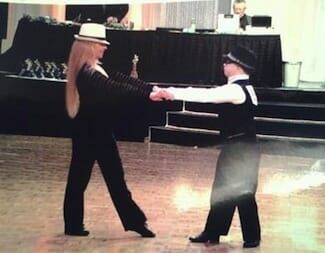
Mary Ramirez Cook and her son, Mathew, perform.
“None of this would have happened without Mathew,” says Cook, who teaches a full roster of 400 students in her standard courses. “He grew up in a dance studio, watching me teach. When he was around 4, I could already see that he enjoyed moving to the music. Soon he was copying ballroom dance moves he had seen, and it occurred to me that I should try teaching dance to Mathew and others with Down syndrome.”
Cook began with a pilot class of four students, including Mathew, who was 5 at the time.
“The students loved it,” says Cook. “Very quickly, others learned of the course by word of mouth, and soon I was teaching a regular ballroom dance class for students with Down syndrome.”
Cook says the dance program has had positive effects that go far beyond anything she expected.
“The dance experience is just the beginning,” says Cook, who plans to launch a dance competition this year for people with disabilities. “From the start I noticed that my students were also delighted to be socializing with others. After seven years of teaching the class, I think the social experience has been more valuable to them than the dance lessons. They’ve formed lasting friendships, and I’ve watched them grow in self-esteem.”
Cook says her studio has also become a bonding place for parents and other caregivers who accompany the students to class, some of whom have gone on to form support groups. The class has also inspired dozens of Cook’s other students to become volunteers.
“From the time I announced the first Down syndrome class in 2007, students from my other classes began asking if they could help,” says Cook. “I was very touched, especially as the number of student volunteers began to grow. At times, for a class of 40 students, I’ve had 30 other students volunteering to assist as dance partners. Over the years, former students have told me that they first learned community service from this experience. I think inclusion has been the greatest result since I started this.”
For her efforts, Cook has received several awards from local Down syndrome associations as well as Cincinnati’s city council.
But Cook’s greatest personal reward, she says, came just last week when Mathew, now 12, won first place in a national Dancesport competition, with Mom as his dance partner.
“I was very proud that Mathew has been able to get to this point,” says Cook. “This was a standard competition, not one for people with disabilities. His dance skills have boosted his all-around confidence in life, and his social skills are much better because of it. As a mother of a 12-year-old who can do this, I am in awe.”
Kamilah Tadlock
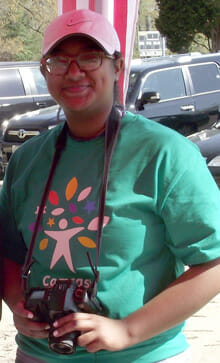
Kamilah Tadlock’s passion for the environment and youth with special needs inspires her to serve.
During the summer of 2010, Tadlock began volunteering at the Volunteer Center for Anne Arundel County in Annapolis, Maryland. She began her service as a Summer Serve Volunteer through the organization’s Youth Volunteer Corps program. Throughout the summer, Tadlock worked with special-needs youth and their able siblings. She assisted with arts and crafts, music, dance and sports activities. In addition, her summer service experience involved park clean ups and landscaping for the opening of an adaptive baseball field. Inspired by her brother who has Down syndrome, Tadlock volunteered more than 114 hours that summer assisting campers with disabilities.
In August 2011, Tadlock joined the Volunteer Center’s team as an intern. While working at the center during the day, Tadlock volunteered during her off hours on evenings and weekends at the center to write grants and lead environmental projects. Tadlock’s leadership generated excitement among her peers and many community members motivating them to volunteer with the environmental projects she led at Anne Arundel County parks. Among her volunteers, Tadlock made a special effort to encourage and engage youth with mental and physical disabilities to volunteer for the environmental projects.
Now a freshman at the University of Maryland studying engineering, Tadlock remains active in the Volunteer Center’s environmental projects when she comes home from college, as well as participates in Special Olympics and other adaptive sports activities at Anne Arundel County parks. Through her involvement with the Volunteer Center, Tadlock has engaged more than 120 youth volunteers (including youth with disabilities) in volunteer projects.
Even while attending college during the year, Tadlock continues to serve her surrounding community. As a freshman, she has already joined Terps for Change, a community service organization connecting University of Maryland students with the local community through sustained, collaborative, and meaningful community service learning. Additionally, she has become a volunteer for University of Maryland’s crisis hotline.
Latoya Bailey
Ms. Bailey serves as a mentor to the young people at the Napolean and Ada Moton Chapman Institute.
She teaches life skills, math, engineering, science, and technology to the Institute’s youth throughout the school year. During the summer, Ms. Bailey instructs the youth in building robots and playing chess.
In addition to mentoring at the Institute, Ms. Bailey serves as a mentor to young girls in her community. Through her church, she volunteers to teach eight grade girls the importance of math and science in their everyday life.
During the week, Ms. Bailey works as an engineer. She often uses her own funds to provide educational tools for the youth she mentors. Given her engineering background, she works tirelessly use her connections to solicit donations to provide math and science programs for youth.