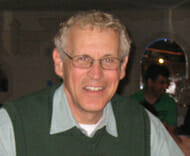
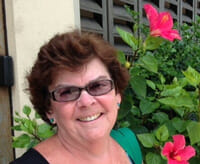
Kerry and Sarah Wood
In 1998, as a 20-year-old rookie pitcher for the Chicago Cubs, Kerry Wood became an instant baseball sensation when he tied a Major League record by hurling 20 strikeouts in a nine-inning game and was named National League Rookie of the Year. Wood matured into a two-time All Star and helped lead the Cubs to the National League Championship Series in 2003.
But with the glory came great struggle. Wood was dogged by injuries throughout his career. He missed an entire season after undergoing elbow surgery, and was placed on the disabled list a total of 14 times. For 10 years, the Cubs and the fans of Chicago stood by him as he battled back from hardship.
Today, Wood and his wife, Sarah, are working through the Wood Family Foundation to give back to the city that has meant so much to them and their children.
Founded in 2011, the foundation has already funded the construction of a playroom for children receiving cancer treatment at the newly built Ann and Robert H. Lurie Children’s Hospital (formerly Children’s Memorial Hospital). The project is near and dear to the couple. Sarah was a volunteer at Children’s Memorial when she first began dating Kerry more than 10 years ago. In the years since, the Woods have paid countless visits to children being treated there.
The broader mission of the foundation is general advocacy for the children of Chicago. The Woods fund both immediate and long-term relief projects for underprivileged kids, and work to raise awareness throughout the community of children’s needs.
The Wood Family Foundation has a particularly close relationship with the Chicago Public Schools, and has targeted four particularly needy neighborhoods within the school district for its major programs. The foundation sponsors an annual back-to-school drive to collect supplies and clothing for needy students, and a winter toy and coat drive called Warm Wishes that serves 500 kids each year. In addition to providing direct funding for these programs, the foundation has successfully rallied help from fan donors and partner organizations such as JPMorgan Chase. Kerry and Sarah maintain regular contact with school principals within the target neighborhoods so that the foundation can move quickly to mobilize individual donors and partners as specific needs arise.
The foundation’s newest project is a program that provides a full scholarship to the University of Illinois at Chicago to a graduating high school senior from one of the group’s four target neighborhoods. The foundation hopes that within five years, the program will expand to provide 10 annual scholarships.
Kerry stresses that scholarships go beyond merely “helping” kids because they can break cycles of poverty.
“A range of programs can touch a child’s life for a day, for a week, and make a difference,” says Kerry. “Sarah and I felt that with a scholarship, a true ripple effect can be felt. Our goal is to bring college opportunity to our neighborhoods. A college education can change the life of a child, their family's life, and begin to spread through their community. Our first scholar, Gaby Santoyo, is from Lawndale, one of our target neighborhoods. She is a freshman this year at UIC. We can't wait to see what she accomplishes.”
The Wood Family Foundation also sponsors an annual week-long summer baseball clinic for 300 kids, who learn not only baseball fundamentals but the importance of team work and good sportsmanship. According to Sarah, who is executive director of the foundation, the kids who participate “start by seeing Kerry as a Cubs pitcher, but by the end of the week, they see him as a role model, a mentor, and a friend.”
Sarah, who says she learned the importance of community service from her mother, now considers the Wood Family Foundation her “life’s work.”
“It’s fantastic,” she says. “We have always taught our children that just as dad was supported by Chicago through his career, it is our obligation to do the same. The act of service and giving back to our community is something we all believe in. It has helped us to connect with our community and each of our neighborhoods. And we are receiving so much love from those we are serving.”
Dr. Neiel Baronberg
Dr. Neiel Baronberg provides high-risk eye exams to homeless people in the Denver metropolitan area.
Since 2001, Dr. Baronberg has been a faithful and dedicated volunteer at Stout Street Eye Clinic. Developed by a nurse and volunteer ophthalmologist in 1999, the Stout Street Eye Clinic provides basic eye exams and referrals along with eyeglass repairs and adjustments.
Dr. Baronberg participates in planning and development of the clinic as well as acts as an advisor and eye care provider to the clinic’s homeless patients. By providing this service, Dr. Baronberg gives the clinic’s patients a chance in life and improves their ability to survive, be safe, and independent. He has preserved and enhanced sight in the most needy of patients.
Kathleen Conneen
Kathleen Conneen has volunteered at Stout Street Eye Clinic since April 2002. The eye clinic provides free eye care to homeless people in the Denver metropolitan area.
In 2012, Stout Street Eye clinic provided eye care to more than 1,500 homeless patients. Conneen is one of 60 volunteers who staff the clinic and help change lives by providing eye care. Clients, who receive glasses after not being able to see, can now read newspapers and job applications, they can cross the street safely without risk of getting hit by a car. Their quality of life is greatly improved. If you wear glasses, and imagine life without them, you can understand the impact of these services.
Conneen is an important and integral part of this eye clinic for the last 11 years. She has been an advocate in the community for our clinic. She takes the knowledge she has gained from her patients about the impact and reality of homelessness and recruits neighbors and friends to volunteer. Through her advocacy, the clinic has grown and been maintained without advertising. Each volunteer she has recruited, after working with and providing eye care to homeless people, takes back to their community and understanding of why these services are necessary.
Barbara Beach
Barbara Beach of Mountain Home, Idaho has been volunteering at Mountain Home High School for 15 years. Mountain Home is a rural community and home to Mountain Home Air Force Base. As a former military spouse, Beach understands the hardship that moving can put on military children. Beach has been an important asset to the school and children attending providing her support and wisdom every day.
Carter Jimenez Jenkins
Three years ago, Carter Jimenez Jenkins’ budding interest in photography led him to a far greater passion. While studying photo essays on the web, he was struck by photographs of entire communities without access to drinkable water.
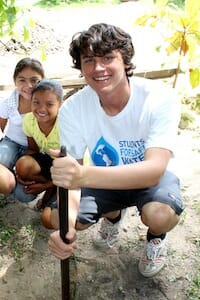
Carter, an eighth grader at the time, then learned that nearly a billion people worldwide live without clean water and that every 20 seconds, a child dies from water-related illness.
“It was hard for me to believe the problem could be as big as it was, and I wanted to help,” recalls Carter, of San Juan Capistrano, Calif. “I remembered my favorite anonymous quote: ‘I wondered why somebody didn’t do something, and then I realized I am somebody.’ That’s when I decided to start Students for Safe Water.”
Since 2010, Carter has built Students for Safe Water into a thriving nonprofit organization that has attracted more than 100 regular volunteers and raised $60,000. The group has paid to build latrines, potable water systems and hand-washing stations in Nicaragua and the digging of a well in Honduras.
Carter, now 16 and a junior in high school, says he was optimistic from the start about his organization because of the support he received from his middle school, St. John’s Episcopal in Rancho Santa Margarita. School administrators encouraged Carter to speak to the student body about the issue of clean water and allowed him to start his first fundraising campaign: collecting spare change from students by placing empty water cooler jugs in the school.
In 2012, Students for Safe Water funded its first project – the construction of a well in Sabo, Honduras, providing clean water to 400 villagers. Major donors – including Pepsi, Disney and Hasbro – came forward with contributions for future work.
That summer, Students for Safe Water funded the construction of 22 latrines in Petaquila, Nicaragua, a village of 350. Carter, his mother and a volunteer traveled to the village to assist with the project. Carter and family members returned a year later when Students for Safe Water paid to install of taps delivering potable water to 78 homes.
On the same trip, Carter traveled to Achuapa, Nicaragua, to help build a hand-washing station and four latrines at a local school, another Students for Safe Water project. The organization is planning another mission to Nicaragua in 2014.
Carter, who has given a TEDx talk about the global water crisis, emphasizes that while corporate support has been invaluable, it often comes in the form of matching funds, and that his organization’s most important financial support comes from individual donors, schools, churches and civic organizations in his community.
“We’d be nothing without our local donors,” says Carter. “And we’ve reached those donors through the work of our committed volunteers.”
Students for Safe Water volunteers have worked regularly to raise public awareness of the water crisis by sponsoring an ongoing recycling drive and a 5K run. The group also publishes children’s books written by its volunteers, with all proceeds going to safe water projects.
“This work has been so important to me, I already know that I want to study social entrepreneurship in college,” says Carter, who speaks at three to four schools a month about his organization’s mission. “Whatever my future career is, I want it to help others as well as myself.”
Julie Anne Young
In the greater Dallas area, as in any community across these United States, there are individuals who are alone, isolated, struggling with daily life challenges, depression, and in some dark moments, considering suicide as a way to end their deep pain. Through CONTACT Crisis Line, Julie Anne Young is able to bring a trained listening ear and give people the ability to move from a breaking point to a turning point in their life.
CONTACT Crisis Line provides individuals facing daily life challenges with 24-hour free, confidential listening, comfort, and connection to resources, education and emergency assistance. As a CONTACT volunteer, Young provides direct service on the front line–answering crisis helpline calls 12 hours each week. She combines her wellspring of compassion with CONTACT’s crisis intervention model to bring hope, care, and comfort to the lonely, confused, marginalized, and isolated members of the Dallas community. From someone having a rough day to contemplating their last day, Young is the one to answer their call, to be that someone when they feel they have no one.
Young started her service at CONTACT in October 2009. Since then, Young has deepened her involvement to serving 12 hours each week answering crisis calls. She answered more than 3,900 calls during her time at CONTACT. However, Young’s work does not stop there. She trains new volunteers, and has provided training support to more than 80 new volunteers; developing, coaching, leading, and nurturing others to help build up new ranks of crisis line volunteers.
Through her work as a skill-group facilitator, she shares with new volunteers the breadth of her knowledge and the artfulness of an experienced teacher – allowing her students to arrive organically at important concepts. As a mentor, Young is both kind and direct, giving new volunteers valuable feedback to develop their skills.
Lastly, Young assists with the annual volunteer re-certifications, which is crucial in volunteer retention and advancing the aptitude of all answering the crisis line.
Young is a 'giver' in the true sense of the word. She understands the inherent benefit of service to her community.
Crescent Community Clinic
The Crescent Community Clinic of Hernando County provides free health care for uninsured or low-income adults age 18 to 64. The clinic opened in 2008 in a small building in Brooksville, Florida. Since 2011, the clinic has expanded to a 2,500 square feet facility which includes dental services, lab facilities, and has diagnostic capabilities. The clinic is staffed by volunteer physicians and support staff. These local physicians work at their private practices full time, then typically volunteer their services the first three Saturdays of each month. They gladly give many hours to those in need. At this time, more than 60 professionals and support staff man the clinic which receives no federal or state support. The clinic relies on private donations and grants.
Dr. Brian Van Dusen
Dr. Brian Van Dusen of Yucaipa, California provides has been providing free eye exams and used eyeglasses to people living in California’s Riverside and San Bernardino counties who cannot afford new eyeglasses. He has been providing these services since 1987, and served more than 9,000 patients in 2012.
Through California Lions Friends in Sight, nonprofit organization providing vision screenings and free recycled eyeglasses to assist those in need, Dr. Van Dusen works with the organization to host vision clinics and coordinate the efforts more than two dozen volunteers at each clinic. Dr. Van Dusen trains these volunteers in the use of the auto-refractor, lensometer, tonometer, data prescription matching, and in fitting used glasses.
He has engaged volunteers from the region to work with him in conducting 24-30 vision screenings a year at which 250-700 patients are seen at each screening. The Lions Clubs International Foundation has recognized him for his altruistic service with its highest award.
Mary Stelletello
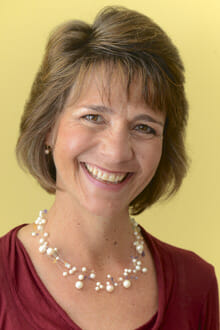
In 1987, Mary Stelletello of Madison, Wisconsin began volunteering as a field volunteer in Loja, Ecuador with Amigos de las Americas (AMIGOS), an international, non-profit organization that empowers high school and college students to develop leadership skills and increase multi-cultural understanding through training and community service in Latin America. Then, she served as a volunteer training director for two years (1995-97) on the Albuquerque Chapter Board and served for two years as president of the AMIGOS Albuquerque Chapter (1998-2000). Stelletello was recruited to the International Board of Amigos de las Americas in 2003. She served in various committee and chair positions (correspondent volunteer marketing, finance committee) and then on the executive committee as secretary, vice chair, chair and now past chair. Currently, Stelletello serves as the co-chair of the diversity-initiative work group and chair of the AMIGOS 50th anniversary celebration steering committee. Stelletello received the 2010 Veteran Service Award given by AMIGOS for outstanding service to the organization.
Gary Frahm
Gary Frahm has always felt compassion to volunteer, beginning with the Woodcliff Lake volunteer fire department for 12 active years and now is still currently an exempt firefighter.
In 2001, after retiring from his trucking business, Frahm found himself with the opportunity to continue to volunteer in a different capacity. In 2003, Frahm decided to volunteer at Hackensack University Medical Center because of its reputation as one of the leading medical centers in the country. He began volunteering as a courier; he delivered items to and from the units, such as blood, telemetry units, medical records, and lab specimens, and other items.
In 2010, when the medical center had their dedication for the John Theurer Cancer Center, Gary helped as a tour guide and felt drawn to the center because of the loss of various members of his family to cancer. He also began to help with serving lunches to patients who were in the infusion clinics. Patients who are on infusion for cancer treatment may be receiving treatment for up to eight hours and need nourishment because they need the hydration and to keep their strength up. Frahm enthusiastically agreed; however, because this was a new program in a new center, there needed to be a system set up yet to accommodate this service. Frahm took on the responsibility of setting up the lunch program. He diligently and consistently worked with kitchen staff, nurses, social workers, and volunteers until he created what is today a very successful and supportive lunch program that services more than 1,000 patients each week.
Today, Frahm can be found on almost any given day of the week, including weekends, volunteering in any capacity that helps patients and staff get through the day. He may be setting up lunches, serving them to the patients, or helping the pharmacy deliver medications. To date, Frahm has volunteered for Hackensack University Medical Center for more than 10,000 hours in 10 years. He is a one of a kind human being that has an immense caring for all people; and for those that are in need, there is no better ally.