LARRY BENDER
Larry Bender first came to the City of Hawthorne, a pocket of Los Angeles County dense with both residents and crime, in 1985 when he was hired by the city to work at the local cable channel. His initial tour of Hawthorne included a stop at the Richstone Family Center (for child abuse treatment and prevention), which sparked his 15-year commitment to volunteerism.
Bender’s involvement with Richstone started as a result of his work with the cable channel, getting the word out about community services offered by the Center such as counseling, supervised visitation, parenting classes, after-school programs, and holiday parties. His crews taped interviews or events to help publicize Richstone, which Bender calls the “oasis” in this desert.
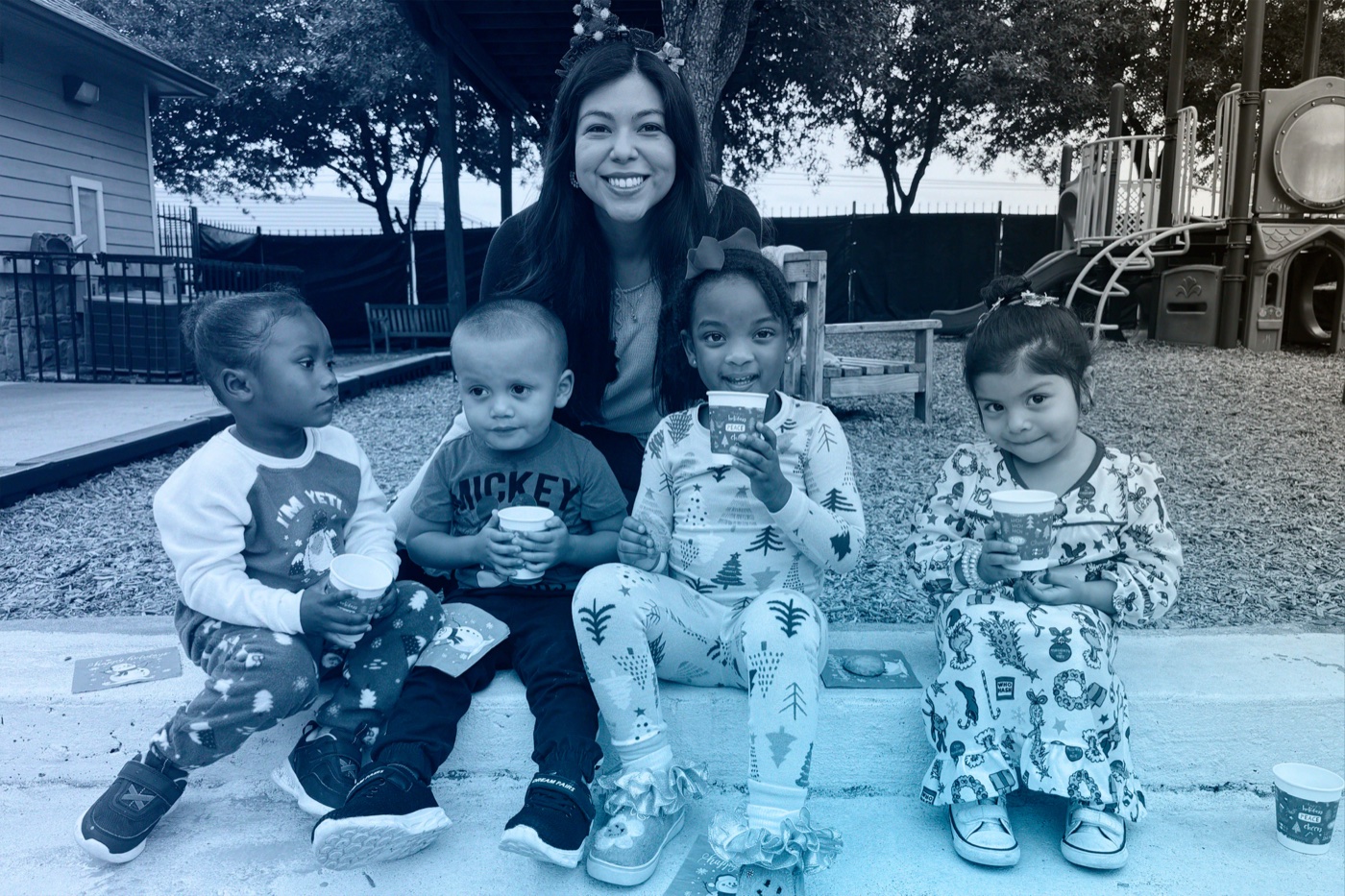
An active volunteer for Richstone’s programs, Bender later joined Hawthorne Rotary. Veteran Rotarians placed him in charge of the Interact Club, a collaborative between Hawthorne High School and Rotary #740. More than 50 languages are spoken at Hawthorne High, designated a Title I High School because of the students’ low test scores. Students interested in volunteering come together each Tuesday morning for Interact Club meetings with Bender. They volunteer in the community, and help at every Richstone event. Bender’s students are all at-risk themselves, and the positive intervention is supplying a pressing community need. Bender’s guidance converts them into mentors and role models for others.
Students interested in community volunteerism come together each Tuesday at lunch for their weekly Interact Meeting where they plan the participation for upcoming community events. The Interact Club students are eager to do hands-on projects and their positive involvement is supply a pressing community need. Bender’s guidance converts his 40-50 Interacters into mentors and role models for at-risk youth.
At every Richstone event, from neighborhood arts and crafts days to elegant fundraisers, Bender’s presence is felt. He directs Hawthorne Cable camera crews and his Hawthorne High School Interacters simultaneously. He helps with the set-up of the center for special events and is there at the end of the day to pitch-in with the clean-up. Finally, after a meaningful day spent helping Richstone’s abused children, Bender arranges the transportation so all of the teenage Interacters will return home safely.
In 1993, Bender began mentoring two Richstone boys in the after-school program. After tutoring sessions, the three would head straight for the basketball court. Fred, an African-American boy living with his aunt and six other children, and Nick, a Caucasian boy living with his grandmother and younger brother, might otherwise never have befriended each other. Yet, through their four-year relationship with Bender, the two carried their friendship with them beyond the boundaries of the Center.
On one particular occasion, Richstone’s Executive Director, Dorothy Courtney, received a last-minute request to show an informational video on Richstone at a charity event. She called Bender for assistance. With the help of his talented staff, they rushed over to tape the segment and were able to return to Richstone the next morning with the edited copy. In innovative and hands-on-ways like this, Bender continually offers his talents to Richstone. For the Richstone Family Center, Bender has impacted the lives of two decades of staff, volunteers, and most importantly, children.
Bender credits the Richstone Center’s staff for doing the heavy-duty work of peeling away the layers of abuse and neglect and helping the children and parents begin the healing process. According to Bender, “the Richstone Family Center is like a ‘magic castle’ – a place awash in love, caring, sharing, positive vibrations, and a strong sense of mission. It’s a sanctuary for the Richstone Kids.”
THE U.S. VETERANS INITIATIVE
Volunteerism is at the heart of the United States Veterans Initiative. Its very inception is the result of a group of prominent private citizens, organized by the Honorable Judge Harry Pregerson of the U.S. 9th Circuit Court of Appeals, to end the cycle of homelessness in Los Angeles County. The Genesis Committee volunteered its time and talent to create a long-term solution to the entire continuum of needs.
By the early 90’s, the number of homeless Veterans had increased to 20,000. During a particularly harsh winter in 1992, several of these homeless persons froze to death. The committee acted; the Los Angeles Veterans Initiative was created with a specific mission – “the successful reintegration of the greatest number of homeless veterans to their highest level of independence as rapidly as possible.”
The Genesis Committee identified housing as the key to any end-to-end strategy. If the total homeless continuum of care was addressed – from the streets to rehabilitation – Los Angeles needed more than the allocated 100 beds for Veterans. The Northrop University Residence Hall was targeted as the site for housing and rehabilitation. In March of 1993, the Initiative leased the property and a strategic plan began. In the ensuing seven years, the Initiative has established the following programs: job training and placement, with an 85% success rate, case management services for substance abuse, short-term crisis and transitional affordable housing, a non-custodial father’s program to reunite Veterans with their children, and rehabilitation services for disabled Veterans. The Initiative has housed and served more than 2000 homeless Veterans since 1993; 83% of them have successfully reclaimed their lives.
The real secret to the Initiative’s success has been its deft use of volunteers. Its most important strategic partner has been the Corporation for National Service’s AmeriCorps. The AmeriCorps volunteers started every major initiative that was undertaken to fulfill its mission: food service, the career center, outreach, and the clinical components. Young college graduates volunteered their time and efforts to build the foundation, the nascent outline of the stable of services through which Veterans would reclaim their lives.
During the early years, the Initiative relied solely on community volunteers. They would teach a course, offer a seminar, or help with holiday celebrations. Individuals would offer remedial math, and reading, computer repair, or “how to” courses like how to write a resume, and how to manage finances.
During a five-year period, from 1994-99, 350 AmeriCorps members, ages 22-70, have service approximately 70,000 homeless individuals, 50% of whom were veterans. Of the AmeriCorps volunteers, 40% are Veterans themselves, many of them formerly homeless. This year alone, AmeriCorps members reached 17,300 homeless individuals through outreach, 8000 referrals to specific services and 2000 were screened into programs, 775 homeless were helped in their search for long-term housing, 589 were placed in job training or found employment, 2,896 were provided individual case management services, and 1,000 were provided with meals.
R.S.V.P. OF BERGEN COUNTY
In 1992, the Retired and Senior Volunteer Program of Bergen County accepted the challenge of providing a substance awareness program for the third and fourth grade children of Bergen County. Since 1993, “Did You Hear About Billy?” a forty-minute assembly about the danger of substance abuse, has been seen in elementary schools throughout Bergen County, New Jersey. The program’s objectives are not only to educate young children about the effects of alcohol and drugs, but to also help educators identify children who may have a problem.
During 1998-99, more than 2,500 students in 25 schools participated in this unique program, which involves students in finding a happy ending for Billy, a puppet in jeopardy of giving in to the “stuff” he carries in a paper bag. Yearly, 19 volunteers contribute more than 700 hours to a program that is the only one to reach out to youngsters at this age level. By the end of the fifth year, the number of children who have participated in the “Billy” program has reached nearly 11,000.
During the “Billy” presentation, school personnel work together with RSVP volunteers and the RSVP coordinator to strengthen the joint effort of education children about the dangers of illegal substances and the misuse of prescription drugs. In addition to eliciting their knowledge of the subject, the puppet show and follow-up discussion examines the possible reasons that Billy became so involved (scared of taking tests, parents fighting, etc.). The team of teachers, principals, health educators, and DARE officers work with the children to understand these problems, as well as encourage the kids to seek help before the difficulties become overwhelming.
It is emphasized that the “Billy” presentation is only a beginning in stimulating further discussion both in the classroom and at home. The children are also asked to write a response to the question “Can there be a happy ending for Billy?” A letter explaining the show is sent home to the parents on the day of the program.
To date, evaluation forms, letters from school personnel and a pre- and post-test that measures the student’s increased knowledge, have measured the success of the program. Although a part-time employee coordinates the program, the volunteers present it at the schools. The RSVP volunteers make hand puppets for the students so that they can role-play the show or their own scripts on substance abuse in the classroom. They have been invited to the productions in some schools. As role models, RSVP volunteers are caring and sincere community members who have taken time to address issues that are essential to the well being of the children.
In 1998, a new initiative was introduced for 6th grade students called “What Happened to Billy?” Utilizing a short video, 10 volunteers contributed in excess of 60 hours visiting with 1,000 students to provide a wider discussion on conflict resolution and the refusal skills necessary in healthy young adults.
MICHELLE CRAIG
Michelle Craig, a 17-year-old student at Austin High School in Decatur, Alabama, has learned to become diversified in her volunteerism. She focuses primarily on the environment and the wildlife in it.
Michelle’s interest in wildlife started when she joined her 4-H Wildlife Club in 1996. When she first started she just thought the club was only to study for competition at Auburn University. However, the sponsor for the Wildlife Club, Mrs. Sandy Shepard, encourages the members to participate in helping to clean and beautify the Wheeler Wildlife Refuge once a month.
The projects that are done on the Refuge are to help the wildlife and the community when they come to visit. Some projects she has been involved in include planting wildflowers along the trails, making brush piles for the wildlife, planting trees on land acquired by the Refuge, posting identification signs on trees and plants, picking up trash on Refuge land, and making a Christmas tree for wildlife (decorated with food for the wildlife to eat). She has also volunteered at the Refuge independent of the Wildlife Club. At the Wheeler Wildlife Refuge’s Fishing Rodeo she helps with the younger children.
In the past year Michelle has expanded her leadership role in the club tremendously. In 1999, the Wheeler Wildlife Refuge started a new day of learning called the Backyard Habitat Festival. Many clubs and businesses were asked to create displays for the event, including the 4-H Wildlife Club. The Wildlife Club was asked to make a display that presented the wildlife management practices for urban and rural habitats. She was asked to make the display for the club. She took this opportunity and produced a final display that was much more than what her sponsor required. She created a board for the display which incorporated a slide-show. She also made wildlife magnets and pamphlets to help the community learn more about wildlife management practices.
In addition to her time in the 4-H Wildlife Club, Michelle also volunteers in her 4-H Club, the Teen Leadership Council. Since she joined 4-H in 1993, she has helped at the County Round-Up Comeptition that is held every year. The first few years she stayed after and helped put away chairs and straighten rooms. Now she is one of the first people at the Round-Up to help set up for the day’s events and show newcomers where they need to be. Throughout the day she runs errands for the event sponsors while competing in her own competitions. For the last two years, she has helped in the awards ceremony. This past year she was the Mistress of Ceremonies for the awards program. After the awards program, she always helpd clean up and she is usually one of the last ones to leave, making sure everything is done.
Michelle is there for many of the other 4-H activities that need volunteers. At day camps she helps to teach younger children. In one day camp, “Show Others What You Know,” she teaches children about the different areas that they can compete in at County Round-Up. At another day camp, “Zebra Mussel,” she helps children learn about the effects of Zebra Mussels in the environment. Michelle is also active in the United Way Youth Service Council. Last year they helped deliver food for Meals on Wheels, cleaned the local Boy’s and Girl’s Club and played with the children, and prepared bags for nurses that worked with Hopsice. She also helped with two fundraisers during the year for United Way, Dillard’s Benefit Sale and Applebee’s Pancake Breakfast.
Away from club activities, Michelle volunteers on her own. She helped with the Church of God’s Halloween Festival for the children of the church. At Christmastime, she went to the Salvation Army and bagged food for the less fortunate. She is a model volunteer whom many youth find an inspiring example for volunteer service.
GERTRUDE H. PEELE
Gertrude Hoffman-Peele has called Jacksonville, Florida, her home since 1929. Jacksonville has also been the main beneficiary of her lifetime of commitment to children and community activism. Mrs. Peele remains tireless in working to make this world a better place, especially for children. Known locally as “the voice of the children,” much of Mrs. Peele’s energy has focused on identifying the problems and finding solutions to the myriad of challenges facing children at risk, especially children who have been abused, neglected, or abandoned.
In 1980, she founded the Child Watch Partnership of Jacksonville, Florida, Inc. which has grown into a network of hundreds of volunteers serving in various roles, all committed to child advocacy issues. Mrs. Peele has stated that after retiring in 1968, she planned on spending the rest of her days taking care of her family, instead she has spent almost 30 years working to make her community a better place to live and raise families. She once said, “I quickly saw that I could not stand on one side of the street and watch children and families suffer on the other side. I had the energy, the time and I understood the problems of poor families and children. Somebody had to become the voice of children in need.”
Gertrude Peele’s work on solutions to community problems has manifested in many forms. In 1989, she was determined to not let fear allow drug deals and criminals take over the LaValla District in her community. Her second story volunteer office window overlooked a notorious “crack house” and an abandoned vacant lot. The building was occupied and being used by drug dealers and prostitutes, while the abandoned lot with overgrown bushes was used to hide their children. Peele said, “to me, it was personal because the entire LaValla District had become an environmental hazard, and if a change was going to be come, then I would be a part of the change by creating the ‘idea of change’ and working to make it happen.”
Mrs. Peele purchased the building and the empty lot, named the building The Center of Achievement, leased it to the National Council of Negro Women, Inc. Jacksonville, Florida Community Based Section and with a grant from the Department of HUD, the building was renovated and reopened as a community resource center. It provides office space for the NCNW, Inc., the Child Watch Partnership of Jacksonville, Inc. and Women In Community Service, Inc., an organization that works with youth ages 16-24 who are seeking education or vocational opportunities by offering supportive services. The Child Watch Partnership of Jacksonville spearheads programs that are initiated nationally by The Children’s Defense Fund in Washington, DC. More than 29 community-based programs are operated under the umbrella of these three organizations, including programs to feed the hungry, recruiting youth for the Job Corps, and raising awareness surrounding the need for adequate Foster Care Homes and seeking good homes for children in need of Adoption, and are under the auspices of the State of Florida Children, Youth, and Families.
Thanks to the efforts of Mrs. Peele, the building that was once a haven for aberrant activity is now part of the solution rather than part of the problem. Mrs. Peele’s resolve to improve lives has led to the revitalization of an area once known as “the Harlem of the South” for its historical and cultural offerings, until plagued by urban decay and crime. The transformation of her building on Beaver Street in Jacksonville was the first step in a process that has resulted in a renewed, safer, healthier neighborhood that now boasts restaurants, a cultural theatre, and museum, and the LaVilla School of the Arts.
Mrs. Peele has put action and commitment behind her words by selflessly serving as Volunteer Director of the Center of Achievement for more than 10 years; serving as Coordinator for Stand for Children and Watch Projects for the Children’s Defense Fund; serving on numerous local and national boards of organizations, including the Jacksonville Community Council and the Mayor’s Commission on the Status of Children, just to name a few. She has been described as “a true champion for children’s rights.” The lives of many more children that just those living in Jacksonville is better because of Gertrude Hoffman-Peele.
Gertrude Peele is also a 2004 recipient of the Florida Governor’s Point of Light Award, which recognizes Florida residents and organizations that demonstrate exemplary volunteer service to their community.
BLAIR HORNSTINE
Blair Hornstine is a 15-year-old student at Moorestown High School. Five years ago, Blair co-founded a new service organization in the Moorestown Public Schools known as the Moorestown Alliance for Goodwill and Interest in the Community (MAGIC). MAGIC provides social support and hope to the elderly, school children, disabled, and underprivileged. MAGIC’s primary efforts are directed to Camden, New Jersey, an urban community that has been named the “most distressed” municipality in New Jersey and the second “most dangerous” city in America.
For the past few years, Blair has been moving force behind MAGIC’s community service activities. In order to expand student, parent, faculty, and community participation, Blair’s projects are wide and varied. Under Blair’s leadership in the Fall of 1999, MAGIC joined forces with community leaders in Camden, the Centreville Caring and Safe Environment Association, Juvenile Justice Commission, The Camden Learning Collaborative, and Together As One, to reclaim a neglected community center and transform it into a library for neighborhood children. The library is adorned with new carpet and furniture. The exterior of the center was painted, flower boxes were made, and mums were planted. Additionally, a violence prevention read-a-thon was held. Blair was instrumental in having computers donated for Internet access. More than 100 volunteers participated in this event on Make A Difference Day.
Blair is also co-founder of the Tri-County Student Food Drive. Over the past three years, 75 elementary, middle, and high schools have joined MAGIC’s efforts to collect necessary good staples and to raise public awareness of hunger. An estimated 20,000 students have donated approximately 25,000 pounds of food to the Food Bank of South Jersey.
Over the past two summers, Blair mobilized a community service project at St. Andrew’s Episcopal Church, which serves the Hispanic community in Camden. The improvements included painting both the interior and exterior of the church, restoring the brick steps, and installing new bathroom fixtures. Fifty church parishioners and MAGIC members were involved.
Each autumn for the past four years, Blair has organized a beautification and revitalization program in cooperation with the Cooper Landing Civic Association. Since its inception, new planters with mums and cale have been placed in front of homes over a 10-block radius. In addition, Blair founded the Tri-County Prom Dress Drive. She contacted all high schools in three counties for assistance in collecting prom dressed and accessories for distribution to young women who would like to attend formal affairs but are financially unable to do so. This spring, Blair distributed approximately 180 dresses to students in the tri-county area.
Blair has raised money for The Smile Train, an international nonprofit organization that is committed to eradicating the problem of cleft lips and palates. Blair donated sufficient money to fund a cleft operation for a needy child.
JAMIE LYNN SCHOENER
Faith is an important value to Jamie Lynn Schoener. She feels that she can best serve her church by living as an example of a true Christian to those who need such an example in their lives. She serves her church as a lector and recently accepted an appointment in Special Ministry of the Eucharist. She works at festivals, fundraisers, and has addressed the adults of the church on the youth of today. She has also served as chairman of an eyeglass collection in which she recycled more than 1,000 eyeglasses. Through this collection, Jamie has helped someone read a book, enjoy a sunset, or earn a living.
Jamie has served a mentor to all seventh graders in Victoria. Spending one day at each intermediate school, she presented a healthy life style by teaching skills to resist peer pressures of sex, drugs, and other problems facing teens of today. The students related to her as being someone close to their age and asked many questions. Jamie gave these students the “tools” needed to resist peer pressure in many situations.
Jamie also coordinated a Friends Helping Friends Retreat by hosting area 5th graders in teaching them leadership skills on how to become responsible people. These special people were almost destined to become gang members because of their peers and home environment. Jamie found abuse, lack of role models, food, and clothing to be prevalent concerns of these youth. She, in turn, showed them how to maintain a positive outlook on life, even when negative things happen around you.
Alcohol is an important problem in our community and Jamie has taken a stand to help her peers realize how important it is to stay alcohol and drug free. She has written letters to the editor and presented talks to different community groups such as the Rotary, Lion, and Kiwanis Clubs on youth activities. She shares her community involvement and is always ready to answer questions on problems facing today’s youth.
In addition to these activities, Jamie served as chairman of a “Special Delivery” by coordinating the gathering of food, clothing, shoes, toys, and gifts for the less fortunate. She has fed the hungry by preparing and serving meals at Christ’s Kitchen. She coordinated activities for “Strengthen Our Capacity To Care” by working with juveniles who made wrong choices. The host of many events at nursing homes and a volunteer for the American Cancer Society, Jamie is a 4-H Project Leader and coordinator of an “Adopt-a-Highway” program, and she still finds time to serve as a reading mentor to elementary children.
Throughout all of her countless acts of volunteerism, 18-year-old Jamie maintains an “A” average and has balanced her time to be able to give to her community.
RONALD SHULTS
In 25 years, Ron Shults has had ample opportunities to observe the interaction between children and law enforcement personnel. Due to the nature of their duties, police officers often have an introduction that can be negative in the eyes of children.
In 1995, a group of business associates making trading cards for the Dallas Police Department invited Shults to assist them with their efforts. He joined the Board of Directors and his employer, Guaranty Federal Bank, helped fund the growing effort to promote positive interaction between law enforcement personnel and children. The project was named the Kid’s and Cop’s™ Trading Card program. Each of the officers in the program are nominated by their peers, reviewed by Internal Affairs and selected by the Executive of their agency.
During Shults’ first year, it has grown from a 25-card program issuing 500,000 cards to a 37-card program issuing 740,000 cards. He has been instrumental in obtaining a logo and a card design, along with overseeing quality control for the final cards.
The sponsors and volunteers from the community have assisted in setting up card signings at locations such as: hospitals for children, shopping malls, elementary school, the State Fair of Texas and many other opportunities where kids are in abundance. The officers are also encouraged to distribute their cards while doing their regular assignments. They love to meet the kids and autograph a special comment for each child on their Trading Card. Additionally, the officers pose for photographs with the kids, often next to a helicopter, horse, motorcycle, squad car or other items that intrigue children.
In 1997, the program was embraced by the entire Houston Police Department, and in 1998, 700,000 cards featuring 69 officers were distributed in the diverse Houston community. As the program gained momentum in Houston, new corporate sponsors and volunteers were easy to find. Later that year, Shults introduced the program to Austin’s Chief of Police and the Chief immediately saw how the program could greatly enhance his Community Policing Program. During the first year, 240,000 cards featuring 12 cards and 12 officers were distributed.
The Kid’s and Cop’s™ Trading Card Program has had a distribution of more than 8.3 million cards honoring officers from the Dallas, Austin, and Houston areas. Officers line up to be a part of the program in each of the cities. Shults continues to oversee the selection, card design and production, along with enjoying the signing events in all three cities, and is in the process of expanding the program in Stockton, California.
JOY OF SPORTS FOUNDATION
Since 1989, the Joy of Sports Foundation (JSF) has been making a difference in the lives of at-risk children in the Washington, DC area. JSF programs have served more than 6,0000 area children and have been recognized as models by the President’s Council on Physical Fitness and Sports, the United States Tennis Association, and the Washington, DC Association for the Education of Young Children. The Joy of Sports Foundation is a nonprofit 501(c)(3) organization whose mission is to use sports to assist children, particularly those growing up in disadvantaged circumstances, in fully developing themselves in body, mind, and spirit and learning life success skills. Andrew Oser, a local tennis pro, with a desire to serve children from low-income families, founded the organization.
For the past 10 years, JSF has been utilizing “The Star Program” and “Tennis Plus” to enrich to lives of those it serves. The Star Program is an integrated series of physical games and exercises designed to teach children five key life success skills – self-esteem, concentration, relaxation, cooperation and imagination. The Star Program is being used in schools, recreation center, Boys & Girls Clubs, and Head Start programs, and has served more than 500 youngsters. The recently published instructor’s guide for the program now makes it possible for children around the country to enjoy the benefits of the Star Program.
Tennis Plus utilizes tennis instruction and academic enrichment to help children develop the self-esteem and skills to succeed in school and in life. Using the innovative “Effortless Tennis” approach created by JSF Executive Director, Andrew Oser, children improve their concentration and self-esteem, while learning the basic tennis strokes. The academic side of Tennis Plus features Adopt-A-Watershed, an innovative hands-on environmental education program, which helps children learn science, math, and English in an integrated, enjoyable way. Tennis Plus has been serving Alexandria youngsters year-round since 1994 and has been recognized by the IBM/ATP Tour and the President’s Council on Physical Fitness and Sports.
JSF recently launched a multi-faceted Training and Public Education Program designed to impact youth sports in the Washington, DC area and nationally. JSF provides training for coaches and youth program leaders on how to most effectively build life success skills through sports.
JSF’s accomplishments include:
- providing 4,000 children in some of DC’s worst neighborhoods with a program of physical activities
- administering an after-school basketball program for more than 50 D.C. youth, providing an alternative to street life
- partnering with the Boys & Girls Clubs to bring tennis programs to more than 300 children in public housing and other low-income neighborhoods
All of JSF’s achievements have been made possible primarily through volunteer support. More than 200 volunteers work directly with the children in JSF programs, serving as coaches and mentors. Many JSF volunteers are teen leaders who provide excellent role models for the younger children in JSF programs.
JOHN WYSEMAN
John Wyseman left a lucrative career as a geologist to work in an inner-city high school in New Orleans and help students learn skills to be successful in life. “I made a lot more money, but I was a very unhappy individual because I wasn’t helping anyone except myself,” said Wyseman, founder and director of the Fortier Career Development and Training Center. He has developed this program, along with the On-Site Tech Program and Campus Employment Center at Alcee Fortier High School in response to seeing students struggle in their efforts to better themselves in the workplace.
A Special Education Teacher at Alcee Fortier High School, Wyseman realizes that special education students faced tremendous difficulties finding jobs after they earned their certificate of High School completion. To motivate his students, Wyseman started the Special Education Honor Roll, a program that provides banquets, awards, and field trips for special education students. In addition, he started the Special Students Vocational Training Program for students with disabilities to provide them with work experiences to prepare them for lifelong careers. The goal of the Fortier Special Vocational Training Program is to help those disabled students build marketable skills to obtain meaningful employment after graduation.
The vocational training program was transformed into the Career Development and Training program, a unique program that only exists at Alcee Fortier Senior High School. The Career Training Program also involves at-risk teenagers in a wealth of personal growth experiences. It has been nationally recognized on television stations in every major city in the country. The program provides students with the opportunity to learn marketable skills for a smooth transition from high school to career through:
- Participation in a co-op program at Louisiana Technical College
- Internships on job sites
- Job Shadowing experience
A Campus Employment Center, also developed by Wyseman, operates after school hours and teaches skills such as filling out applications, interviewing, and work ethics. The students are given assistance in finding part-time employment and personal counseling to assist them in overcoming personal problems and dealing with crisis situations.
Fortier Senior High School’s Tech Program was also the brainchild of Wyseman. It started ten years ago for special education students but has now expanded to include any student at the high school. At Fortier, an inner city school of 1,200 students, some of whom have criminal records, tech program students spend mornings at a local trade school and afternoons in the classroom. Individuals and businesses sponsor each student in order to purchase tools, textbooks, and supplies. In the ten year of the program’s existence, 200 students have participated and 85% of these are still in the job of their choosing. Teenage pregnancy, criminal activity, and expulsion among this group of students is nonexistent.
Wyseman’s programs are breaking the cycle of students at Fortier H.S. who perform poorly with little expectation of significant achievement in the workplace and society.