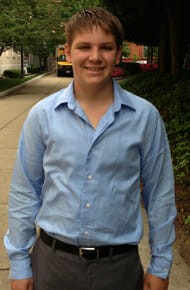
Allen Nelson
Allen Nelson serves as the Chairman of the Board for Atlanta Ballet. In addition to serving Atlanta Ballet as a volunteer board member, Nelson is the executive vice president, general counsel, corporate secretary, and chief administrative officer of Crawford & Company.
Arturo Jacobus, executive director of Atlanta Ballet, noted that “Nelson’s time as chairman of the board has been one of many successes. In addition to completing the largest and most successful capital campaign in Atlanta Ballet’s history, the organization achieved several other milestones, including the sale of our former building, the grand opening of the Michael C. Carlos Dance Centre, the return of the Atlanta Ballet Orchestra, five campaign gifts of $1 million or more, critical investments for artistic programming, expansion of the endowment, and the establishment of a case reserve fund and an artistic innovation fund.”
Additionally, Arturo noted that Nelson has the vision that a leader must possess and is able to articulate that vision to the board, and is committed to building the organization through strategic planning, capitalization, stability, and sustainability. “To him, it isn’t a job; he has a genuine passion for this organization, the art form, the staff, and most important, the artists. It is his experience, ability, skill, and nature that allow him to be a knowledgeable and wise leader for the Atlanta Ballet board.”
Pam Koner
Photos in the New York Times, showing ramshackle houses with dirt floors and children going hungry, changed Pam Koner’s life. She was astonished at what she saw. The photos depicted scenes not from an impoverished country, but from Pembroke, Ill.
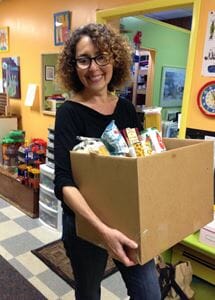
“I stared at a photo of a little girl in Pembroke and I couldn’t believe it was a scene from the United States,” says Koner, who had left a 20-year career in the New York fashion industry years earlier to pursue more personally meaningful work. “I literally felt compelled, right then and there, to do something to help.”
In 2003, Koner founded Family-to-Family, an organization based on the idea of providing support to the needy by directly linking families with more to those with less. Koner contacted relief workers in Pembroke, who identified for her the 17 neediest families in town. She then recruited 16 of her neighbors, and together they began mailing monthly boxes of food and personal letters to their sponsored families in Pembroke.
Koner began recruiting new donor families online, and – with the help of extensive national media coverage – the organization expanded rapidly. Over the past 10 years, Family-to-Family has provided more than 1.5 million meals to families in 22 communities in 12 states.
Sponsorship has become easier as the organization has grown and technology has advanced. Individual or monthly donations can now be made online, and food is purchased and shipped locally to recipients.
“Online donations have allowed us to reach a much wider base and eased the traffic of packages mailed out,” says Koner, who operates Family-to-Family as a volunteer from the basement of her house in Hastings-on-Hudson, N.Y. “We now work through the Feeding America Network to identify needy families and link them to sponsors.”
Family-to-Family has expanded its services to include emergency response. In 2005, when the Gulf Coast was struck by Hurricane Katrina, Family-to-Family mobilized its sponsor base to assist more than 1,000 families who were displaced to temporary housing. Donors sent household essentials such as blankets, towels and clothing. Family-to-Family also organized a Christmas drive that provided toys to more than 15,000 children affected by Katrina.
Family-to-Family has also recruited donors to assist hundreds of families affected by Hurricane Sandy in New York. Most notably, the group partnered with Peapod, an online grocery service, to deliver care packages containing food for 16,000 meals, along with cleaning products and other necessity items, to more than 800 families affected by the storm.
Last year, Family-to-Family launched a literacy program to serve low-income families. The group works with the Boys and Girls Clubs of America to identify households with children in need of books. Sponsor families are linked with individual kids and send them one book a month, so that every child served receives a dozen books over the course of a year.
The literacy program includes an innovative project, GivingWorks, aimed at transforming impoverished young people into “givers.” Through GivingWorks, Family-to-Family provides low-income middle school and high school students with backpacks containing books for preschoolers. The older students visit Head Start daycare centers and read the books to the preschoolers, who then receive the books and backpacks as gifts.
“GivingWorks is my personal favorite program,” says Koner, who runs a daycare that teaches creative arts to children. “It has such meaning because these older kids have always been on the receiving end. We’re trying to end that by letting them enjoy the giving experience and understand deep in their psyches that they can be providers.”
Dress for Success Des Moines Volunteers
Dress for Success Des Moines is a volunteer driven organization that promotes the economic independence of disadvantaged women by providing professional attire, a network of support, and career development tools to help women thrive in work and in life.
They have 12 dedicated and passionate volunteers who come into the boutique each week to service women in the community as well as a few additional volunteers who volunteer a minimum of 20 hours outside of the boutique working on projects to ensure the organization continues to grow. In 2012, volunteers logged over 8000 hours.
Dress for Success Des Moines opened its doors in 2011. Since opening its doors, volunteers have held over 300 suitings, served more than 200 women, mentored women in the Going Places Network program, and provided computer training.
Kathy Cole
Kathy Cole, a retired teacher, serves low-income and uninsured families in the Carson City, Nevada. Through Cole’s direct outreach and advocacy efforts, she encourages seniors, parents and children to visit the Sierra Nevada Health Center to learn more about healthy eating habits and lifestyle choices as well as how to prevent and decrease childhood obesity.
For the past three year, Cole has been actively involved with high-risk families in Carson City. Cole’s dedication to helping others access health care is her top priority. She posts flyers in low-income neighborhoods, often speaks one-on-one with families, and overall advocates the importance of being established with a primary care doctor. For example, during the Happy Healthy Halloween event, Cole engaged 1,250 seniors and 40 children from the local community to take personal initiative to access their health care needs.
Cole is an outstanding volunteer who is unique, enthusiastic and ready for service. From large to small tasks, Cole whole heartily believes one person can change the lives of others. Her energy is admirable when it comes to reaching out to someone who is in need of medical services, and her kindness and willingness to help, has made a difference in so many lives.
Denise Garrison
Denise Garrison serves as CASA (Court Appointed Special Advocate) in Indiana’s Adams and Broomfield Counties. As a CASA volunteer, Garrison advocates for children that have been abused or neglected and ensures their voices are being heard in court.
Moreover, Garrison has been dedicated to one case in particular since 2004. She has worked with a youth client throughout the years to help maintain consistency because the youth is without any immediate family members.
Over the years, Garrison consistently visits with the youth even though she lives quite a distance from her. She maintains contacts with the youth’s educators, placement providers all the while still helping to keep the youth engage in high school and social activities to provide a sense of a normal teenage life.
Kimberly Bryant
As a black woman studying electrical engineering and computer science at Vanderbilt University in the late 1980s, Kimberly Bryant saw she was in a distinct minority among her classmates. Twenty years later, when she decided to start her own mobile health technology company in the San Francisco Bay area, she discovered there was still a strong culture and gender divide among the area’s technology professionals.

“I was networking in order to start my business and I saw a huge diversity problem,” says Bryant. “Women of color were seriously underrepresented in the field.”
Bryant had been a regular community volunteer throughout her long career in manufacturing design and IT management. She put plans for her health technology company on hold and instead turned her attention to helping close the digital divide for women of color.
In 2011, she founded BlackGirlsCode, a nonprofit organization that introduces girls of color to in-demand skills in computer programming and technology. The girls range from age 7 to 17, a time when they may be considering what careers to pursue. Since holding its first Bay Area pilot program in October 2011, BlackGirlsCode has taught workshops in robotics and the development of webpages, mobile applications and games to more than 2,000 students in 10 U.S. cities and internationally. In Johannesburg, South Africa, the organization has held three workshops in partnership with the international software company ThoughtWorks.
“It was a personal passion for me,” says Bryant. “There are cultural, economic and gender barriers that are keeping girls of color from heading where tomorrow’s jobs will be. … My own daughter was 12 when I started BlackGirlsCode. I want her, and all the girls we teach, to be able to pursue good jobs at good companies. We’re working to create a place for them.”
BlackGirlsCode offers one-day workshops, one-week summer camps and six-week workshops held on consecutive Saturdays. Because students come from diverse economic backgrounds, some pay their own tuition, but 80 to 90 percent receive full or partial scholarships from partner corporations such as Google, Microsoft, Twitter and Kapor. BlackGirlsCode has conducted follow-up surveys of its workshop participants over the first three years, and a large number report they are taking additional steps to further their education in technology.
Bryant says that while schools in San Francisco helped to promote the organization’s workshops, the rapid growth of BlackGirlsCode was mostly sparked by promotional efforts and word of mouth.
“The growth has been amazing,” says Bryant. “We’re all volunteers except for one paid staff member. Right now, we have 1,000 volunteers in our database, and we’ve only worked with about half of them, mostly because the others are in cities we haven’t reached yet.”
Masonic Angel Fund
The Masonic Angel Fund (MAF)program has served children in need since 1998. Beginning as a local charity in Orleans, Massachusetts, the program has expanded to over 150 chapters in 12 states. MAF provides modest assistance to children in need who might otherwise fall through the cracks of the social service system. A volunteer-staffed charity, MAF has minimal overhead and uses 100% of money donated "for the kids".
MAF provides grocery cards, retail gift cards, gas cards, after-school tuition, eyeglasses, winter clothing and more to children referred by local schools. MAF volunteers are required to respond to all requests within one business day. Children are able to go about their learning activities with proper eyeglasses, properly fed, warmly clothed. Many are equipped with laptop computers. MAF helps remove distractions to children's education so they can focus on learning. In addition to thousands of dollars in "traditional" MAF assistance, MAF's Laptops for KidZ project has refurbished and placed over 500 refurbished computers with children in southeastern Massachusetts in the past three years.
Nicki and Dick Benz
Nicki Benz of Jackson, MS, sat in her living room years ago amazed at what she was watching on the news—women in prison being physically and verbally abused. The guard on the screen yelled at one young lady, asking why she kept landing up in prison.

At that moment, Nicki decided to dedicate her life to showing former female inmates they are “treasures.” In 1999 she and her husband, Dick, began a ministry in that same prison once every week, but Nicki found herself eventually going back every day.
After Nicki saw the spiritual progress in so many of the women, the Benzes began bringing women into their home, so the women would have a place to stay and plan their next steps. As the number of women grew, the couple opened Buried Treasures Home.
The home strives to be a place women can go after leaving prison to realize that “they are not trash, they are treasures,” as Nicki explains. Because so many women have no place to go upon their release, Buried Treasures Home gives women and their children a place to live for up to a year. During that time, women receive opportunities to earn their GEDs, earn scholarships to community college, study the Bible and reintegrate into society.
Buried Treasures Home sits by a lake on 65 acres, where women can get some fresh air, ride horses, exercise and reflect. Dick runs the home with Nicki, who describes him as “the rock for these women,” a strong male figure that has been absent from many of the women’s lives. He also tends to the residents’ needs by bringing them groceries, starting activities or just sparking conversation.
Both in their 70s, the Benzes see the home as their calling from God. “We can’t change anyone, but we can give them the right atmosphere,” Nicki said.
More than 100 women have lived at Buried Treasures Home. While some stay for as little as 30 minutes, many stay for the entire year, becoming part of a community. One of the residents wrote to Nicki in a letter during her stay, “I’m sitting here looking at the lake, praising God for His beautiful creation. I believe this is holy ground.”
Levi Fallavollita
Teen advocate, Levi Fallavollita from Tucson, Arizona is no stranger to bullying. He has been bullied in the past, but has taken a difficult situation in which he wanted to die and turned it around into something positive.
Bullying is a serious issue and has been linked to numerous incidents of violence in schools. Fallavollita addresses this problem by standing up against bullying and empowering others to do the same.
Fallavollita’s inspiration to advocate for bullying victims comes from personal experiences, and wanting to stop bullying throughout the country. Fallavollita wrote and published an anti-bullying book “The Good the Bad and the Bullies” as a means of helping other kids who experience bullying. In addition, Fallavollita runs anti-bullying workshops, and visits schools and organizations to share his story. Through his work, he was able to collaborate with the Fund for Civility, an organization founded by Congressman Ron Barber. Through their partnership and collaboration, Fallavollita launched an anti-bullying Youth Advisory panel in Tucson.
In the future, Fallavollita’s plans include writing another book, expanding the anti-bullying Youth Advisory Panel project, writing anti-bullying opinion pieces for his local newspaper, and continuing to visit schools, organizations and run workshops. In May, Fallavollita was a guest of Congressman Barber on the Congressional House Floor.
Connecticut Fallen Heroes Foundation, Inc
On September 28, 2013, the Connecticut Fallen Heroes Foundation will hold its tenth Annual Fallen Heroes Memorial Tribute.
The Connecticut Fallen Heroes Foundation personally remembers fallen heroes each year at their annual tribute event outside at a local park in Connecticut. It has become the largest gathering of Gold Star Families in Connecticut. Since 2004, the Connecticut Fallen Heroes Foundation has remembered 45 fallen heroes from Connecticut, New York, Rhode Island and Massachusetts killed in Iraq and Afghanistan. Gifts of remembrance are given to each Gold Star Family as well as handmade colored portraits and quilts to the new families that are being personally remembered that year.
Additionally, the Foundation has adopted school in Bridgeport where each year members provide Christmas gifts to underprivileged children, invite a Veteran to speak on Veteran's Day, read to classes throughout the year, and hold a beautiful ceremony on Memorial Day.