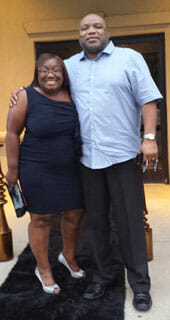
Brenda & Tyrone attending Volunteer2ServeNGive Christmas Party with the volunteers in Charlotte NC
In every city there is a population of people who face severe financial hardships. For the low income families in Charlotte, North Carolina, during their most difficult times, it is the Parson family on hand to lend their support.
The Parson family has been a pillar in the Charlotte community for years. Founders Brenda Parson, and her husband Tyrone Parson, run the nonprofit organization, Volunteer2ServeNGive. The family organization targets those who are truly in need. Aware of the difficulties and the immense financial burden that single mothers face, Volunteer2ServeNGive is helping to make their lives a lot easier.
The main goal of Volunteer2ServeNGive is to take families from poverty to home ownership. Their mission to bring awareness and engagement to impoverished communities is not only meant to improve and strengthen the local community, but foster an attitude of volunteerism as well. The nonprofit organization offers an array of services that empowers individuals as well as families, and gives them the confidence they need to bring about positive change.
“We started Volunteer2ServeNGive because our life is about how we can better serve our community where we work and live,” said Brenda Parson. “Service is our lifestyle. When you’re making a difference to inspire or empower, you’re also providing hope.”
Volunteer2ServeNGive organizes and host events that directly benefit the local community. The Back2SchoolExplosion consist of monetary donations as well school supplies, providing over 300 children with fully packed book bags for the start of the new school year. They also host an annual clothes drive to support their Brelyn Giving Closet Initiative. This initiative provides gently worn clothes to assist women and men returning back to the workforce.
The Parson family and their selfless nature goes beyond Charlotte, NC. Their efforts and devotion to serve is truly inspiring for us all.
Daniel and Gabriel Vasquez
For brothers Daniel and Gabriel Vasquez, volunteering started in response to others’ requests. A friend who was moving asked Daniel to find homes for excess books, and Gabriel’s grandfather requested he play music for older adults at a senior day center.
Without a second thought, the brothers embraced the opportunities, and they’ve since created independent programs. In 2012, Daniel launched “For the Love of Reading,” and Gabriel started “Silver Tunes for Golden Memories.”
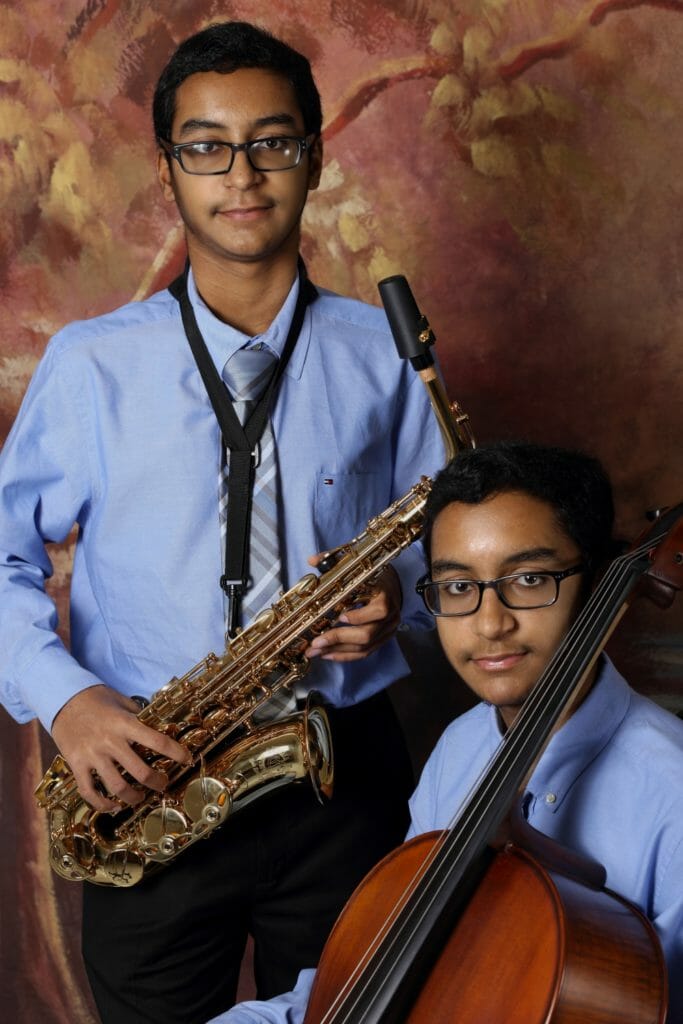
Daniel (L) and Gabriel (R) Vasquez
Through his organization, Daniel organizes book drives and accepts book donations throughout Florida’s Miami-Dade County. Through nine book drives he’s facilitated donations of approximately 3,500 books to the Boys’ & Girls’ Clubs, Salvation Army, and Ronald McDonald House. He also receives requests to donate via email with an average donation of 15-to-20 books. Additionally, he’s given the Miami-Dade Library 120 books and has taken many to Jackson Memorial Hospital’s pediatric floors.
“My family taught me to give back to the community, and I always loved reading,” he said. “This seem like a good idea.”
As a saxophonist and cellist, Gabriel – along with alto saxophonist Daniel – performs for area senior centers as often as possible, playing songs popular with that age group. For many older adults, most of whom are Latino, it’s a reminder of days long gone, he said.
“When I initially played for my grandfather’s senior center, for many, it was the first time they’d heard their national anthem in years,” he said. “They were crying, singing, and dancing.”
To date, the brothers have performed for an hour 55 times at various senior centers, including one rehabilitation facility. They enjoy the smiles and laughter their music prompts, he said.
“We’ve impacted a lot of people, helping many of them remember their youth,” Gabriel said. “They have a chance to talk about their youth, and it makes them happy.”
J.C. and Candace Crane
The Cranes in St. Louis
J.C. and Candace Crane have shared a lot in the five years they’ve been married.
But in the past year, the St. Louis couple has taken their shared values to another level by volunteering together to mentor at-risk youth enrolled in ServiceWorks.
Now in its second year, the program is a combined effort of Points of Light, the Citi Foundation and AmeriCorp to give low-to-moderate income youth 16-24 a better pathway to college or career through service learning.
And service isn’t a new concept to either of the Cranes. Candace, 36, was raised in a Baptist home, with church and community a central theme in her life.
For her husband J.C., 48, who grew up in a tough neighborhood on the south side of Chicago, working with young people through church and community programming has been a part of his life for almost 18 years.
“Where I come from is a bad place, with drug and gang activity,” said J.C. “I know from experience that impoverished youth need to be uplifted to succeed.”
It was about a year ago the couple discovered ServiceWorks and its Service Scholars program, a five-week mentoring program that provides a service-based education in areas ranging from project management to resume building to networking and leadership development.
J.C. jumped in first. He volunteered to facilitate weekly sessions geared towards the 16-24 year-old Scholars. “We might talk about conflict resolution, communication skills, personal finance, motivation techniques,” he explained. The 90-minute interactive sessions start with a presentation, then the class breaks into smaller groups with volunteer success coaches.
J.C.’s enthusiasm spilled over at home, and Candace signed on as a volunteer success coach. During her first cohort, she worked with two young adults, ages 20 and 24. “There are suggested topics for us to discuss, like resume writing and how to deal with conflict, but we also get into issues relating to their personal relationships, friendships and family life. I try to be there to encourage them – sometimes life happens, challenges come up, but they can get through it,” she said.
Winning her charges over didn’t happen overnight. “They’ve both been through a lot,” she said. “They were guarded, not so open to talking at first.” But with continued support and understanding, her first two mentees graduated successfully from the ServiceWorks program.
Sharing a commitment to helping these young people move forward and achieve their goals has brought the couple closer together, said Candace. J.C. agreed. “We don’t have children at this time, and listening to these young people helps us stay connected to the younger generation. We have a lot to talk about. We understand that many of these kids probably feel trapped, or that no one cares. But I want these Scholars to know that I care, that my wife cares. We’re here to use the gifts God has given us through our church and community to positively affect these young people and make their world a better place.”
Sharon Bates
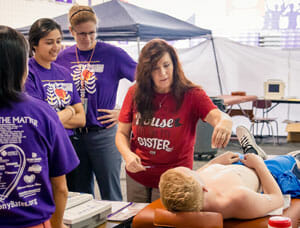
Bates (center) administering a free cardiac
screening.
The old saying goes “There’s nothing like a mother’s love.” Sharon Bates is a loving mother who started the Anthony Bates Foundation after her son Anthony Bates died of a genetic heart disease.
Anthony Bates was an avid sports member playing football for a majority of his life. Being a football player meant regular physicals and pre sport’s monitoring to ensure that he was in the best shape. Over his football tenure, Anthony had over 25 pre-participation sports physicals, in which his heart disease was never detected because ECG’s were not required.
Since her son’s death in 2000 Sharon has dedicated herself to her foundation in her son’s honor to ensure that other youth don’t suffer the same needless death. The Anthony Bates Foundation is dedicated to preventing needless death from sudden cardiac arrest through free cardiac screenings and free training for high school students, school staffs, and members of the community in CPR and the use of an automatic external defibrillator (AED).
ABF has screened over 10,000 people since its inception, and has detected 1,158 life threatening diseases. In 2014, not only were two people lives saved by AED’s purchased by Sharon, but she also purchased and donated AED’s to Arizona’s schools and paid for staff certifications to use them.
In the past 15 years Sharon has co-founded a non-profit called Parent Heart Watch and has recently retired to expand ABF and its reach. Sharon websites states that “With early detection of HCM, young people will have a choice to live life. A choice that Anthony was not given.” Sharon has truly been a saving grace to many and will continue in saving young people’s lives.
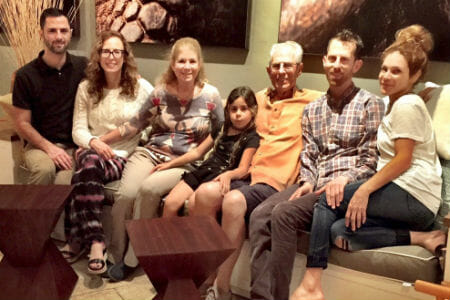
The Engelman Family
Meet the Engelman family of Santa Monica, California, Daily Point of Light Award honorees. Read the family’s story and nominate an outstanding volunteer, family or organization as a Point of Light.
The Engelman family
When Eric Engelman was diagnosed with multiple sclerosis at age 23, he vowed not to let it slow him down. Twelve years later, Eric is a successful businessman and father. Inspired by Eric and guided by a commitment to volunteer service, his entire family has made it a tradition to support the National Multiple Sclerosis Society – raising more than $1 million.
It was Eric’s sister, Traci, who suggested the California-based family participate in the chapter’s annual Walk MS fundraiser. She was living across the country in New York, but nonetheless, in its first year, Team Engelman had 25 walkers and raised $22,000. The team’s goal: to “help the National MS Society fund research, advocate for change and help people with MS live their best lives.”
Over the years, the family has helped bring in donations from all over the country. As many as 80 walkers have participated in a single year.
“Our annual walk team is a vital family activity,” says dad Barry. “We spend hours together sending emails, mailing letters, updating the team website, educating friends and family and strategizing how we can get even more people involved.”
And they don’t just walk. Seven years ago, Traci and brother Jamie, who also designs the team T-shirts, decided to branch out and form a team for the annual Bike MS Coastal Challenge. Their team – Rowdy Riders – raised nearly $30,000 in its first year and this year, the 75 cyclists on the team are projected to raise $150,000.
“I’ve always had the fundraising and volunteering bug,” Barry says. “My parents were involved in the Jewish Federation all their lives, as volunteers and raising money for federation activities.”
Barry’s volunteer service has included a continuation of his parents’ commitment to the Jewish Federation and 20 years of fundraising and board membership with the Juvenile Diabetes Research Foundation, a relationship that began when a friend’s son was diagnosed with Type 1 diabetes.
“My wife Julie, along with Traci, Jamie and Eric, have all been part of the family tradition of giving,” Barry says. “When Eric was diagnosed with MS in 2003, it was natural for us to turn our attention to working for a cure – and better treatments – for MS.”
“With more time, I can go to conferences and also support other causes that are important to me, like the Commission for the Senior Community here in Santa Monica and the Climate Reality Project,” Barry says. “Julie is very interested in working with foster children as a Court Appointed Special Advocate as well as our family support of Team Engelman and Rowdy Riders.”
To support the Engelman family’s National Multiple Sclerosis Society fundraising efforts, visit the webpages for Team Engelman and Rowdy Riders.
The Carroll Ballers
College students are busy, trying to fit academics, athletics, and any volunteer service into limited hours. Ohio’s John Carroll University students found a way to do two at once – the Carroll Ballers.
Launched in 2012, Carroll Ballers combines basketball and mentoring, bringing together University students and more than 20 Cuyahoga County Juvenile Detention Center residents between ages 12 and 14. Initially, the program focused on male residents, but it expanded recently to include females. Students visit the detention center weekly, said program founder Michael Gong, and selecting basketball as an activity was easy.
“It’s a common denominator,” he said. “Everyone enjoys it, and it makes it easier to get to know residents.”
The program’s original intent, according to junior volunteer, Becky Bursa, was to help residents get back on track and reduce repeat crimes, but it turned into a life coaching experience where students discuss life and job skills, what to wear to interviews, how to apply to college, healthy eating, and time management with the residents.
“We tell our students that consistency is key,” Bursa said. “We refuse to cancel on them, and we really do get to build relationships every week.”
The University’s Center for Service and Social Action transports students to-and-from the detention center, and the five students in charge share responsibilities for fundraising, such as holding raffles and selling T-shirts, and meeting planning.
University students meet with residents to talk about a topic for an hour, eat pizza, and play basketball, said Justin Bland, a Carroll Ballers leader who manages the relationship between the University and the detention center. During his three years with the program, he’s seen time spent talking with resident changes lives.
“These residents realize one mistake doesn’t define their lives,” he said. “In many cases, when residents leave the center, they seek us out to be friends.”
George and Diane Gravlee
George and Diane Gravlee receiving a plaque in July 2015 from the Red River Valley Habitat for Humanity affiliate in Grand Forks, North Dakota in recognition of having completed their goal of helping build a house in all 50 states.
Poverty and homelessness is a very real issue plaguing many people all around the world. With over 1.5 million people worldwide living in impoverished conditions, and 95 million of those in America, it is going to take a superhuman effort to turn these staggering numbers around. With the help of the Gravlee family, there is still hope for a better future.
For the past 22 years, George and Diane Gravlee have served as dedicated volunteers for the Habitat for Humanity International RV Care-A-Vanner Program. What started out as a mission to Hawaii to restore the hurricane ravished island of Kauai back in 1993, has evolved into a steady commitment responsible for building homes all across the country.
The RV Care-A-Vanner Program is a volunteer based program open to anyone who wants to travel and help Habitat build homes. George and Diane are some of the longest serving RV Care-A-Vanners. Through three decades of selflessness, the Gravlee’s have partnered with 96 Habitat affiliates, helping build homes in all 50 states, a feat no other group of Care-A-Vanners has yet to achieve. While it is noted that some 319 families have been impacted by the work of George and Diane, there is truly no way to quantify the blessings that come along with a stable home.
“Some of the children of the homeowners in the houses we first worked on have now graduated from college, married and have successful lives,” said Diane. “For us, it is really all about giving the children a chance to have a safe and dry place to grow, study and play.”
While the unfortunate effects of poverty are wide spread, the efforts of Care-A-Vanners like George and Diane are truly helping change the world.
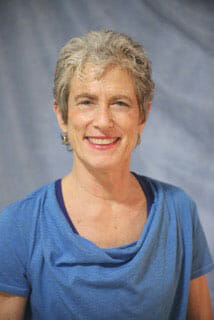
Lynn Medow
Lynn Medow
The health benefits of holistic methods are undeniable. Yoga in particular creates harmony in both the body and mind while bring strength and awareness. For many people, yoga is an essential part of their daily routine; providing a crucial workout for the body while bringing a sense of balance. However, not everyone has access to these kinds of holistic healing approaches.
In 2011, Lynn Medow recognized this need and began the Yoga by Design Foundation(YBD) . YBD is a non-profit organization that offers and abundance of healing and life management skills such as stress reduction, improved fitness, management of chronic diseases and PTSD, as well as tools for self-care and self-control all through yoga.
Yoga helps offer life training, life-management tools, reducing stress, anxiety and even health care costs. Through Yoga students learn to release anger and pain, identify strengths and create confidence to make real change in their lives. Yoga helps at-risk youth shift their attitudes and behavior, human trafficking victims sleep again, children with obesity learn to appreciate their bodies, and veterans improve in their ability to ‘stand down’ from PTSD.
The YBD Foundation has nine different programs for abused and neglected children, political refugees, victims of human trafficking, homeless and runaway youth, and veterans. Since 2011 over 350 people have been served by the YBD Foundation, and currently 125 people participate in the nine ongoing programs in South Michigan.
Medow’s work with Yoga by Design is truly extraordinary. Not only has she created the foundation but over time she has donated thousands of hours to manage the finances, seek funding, review all requests, and even accepting awards on the foundation’s behalf. In 2014, Medow and Yoga by Design raised $25,000 towards their yoga programs.
Medow has taken extraordinary steps in assuring that the healing benefits if yoga is available to all. She is deeply dedicated to healing communities by empowering people through yoga-giving them opportunity to change their lives for the good.
Daily Point of Light Founder
On Jan. 8, 1993, President George H.W. Bush submitted a report to the nation on his efforts to engage Americans in service. He called these volunteers “points of light.”
From his first day in office, President Bush devoted special attention to voluntary community service as a means of helping solve some of America’s most serious social problems. He was the first President in history to establish a White House office exclusively charged with this work. His leadership resulted in the creation of Points of Light, as well as the recognition of thousands of volunteers whose stories were shared widely as examples to others. Between 1989 and 1993, the Points of Light movement became a defining mission of the Bush administration.
In 1998, Points of Light and the Corporation for National and Community Service reinstated the Daily Point of Light Award with a mission to honor those who take action to create change in their communities. Since then, Points of Light has inspired and recognized thousands for their volunteer service and celebrated the impact volunteers have on communities around the world.
On July 15, 2013, President Barack Obama joined President George H.W. Bush in presenting the 5,000 Daily Point of Light award at the White House. President Barack Obama said of the 5000 Daily Point of Light award honorees during the presentation, “If the purpose of this award is to celebrate Americans who work to make our country and the world a better place – not for their own advantage or for any ulterior motive, but just to serve, pure and simple – I cannot think of anyone more deserving than Kathy Hamilton and Floyd Hammer.”
Chris and Eddie Canales
For a year after the accident that left him paralyzed in the final four minutes of his last regular season football game, Chris Canales struggled with a dark depression. “My whole life was about playing college football,” he recalled. “It was a hard pill to swallow.”
Then his dad took him to his first football game since the accident, Everman High School’s bid for the Class 3A Division I state championship at the San Antonio Alamodome. During that game, he saw a player, Corey Fulbright, go down. “I said to my mom and dad, we have to do something, we have to help him and his family with what they’re going to be dealing with,” recalled Chris, now 32.
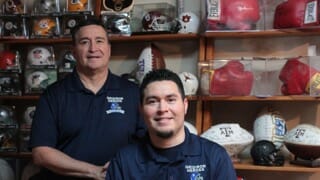
Eddie (L) and Chris (R) Canales
That shift in focus, from his own injury to the spinal injury suffered by another football player, was a turning point for Chris. It was also the genesis of The Gridiron Heroes Spinal Cord Injury Foundation, the non-profit Chris founded with his dad and caregiver, Eddie Canales.
“That first year was tough on all of us,” recalled Eddie. “We’d almost lost Chris three times. We could see the depression taking over. All we could offer him is that if the lord wanted him by his side, he had three chances. He was still here for a reason. Being at that game and seeing Corey get hurt – that was the reason – to help him and his family. That’s what the lord intended us to do.”
It’s been 14 years since that game changer for Chris. With the help of his grandfather, a retired grant writer, Gridiron Heroes was launched with $10,000 in funding. “And we’ve never looked back,” said Eddie
Gridiron Heroes provides immediate as well as long-term resources and support to players struck down with a catastrophic spinal cord injury through activities associated with high school football. This outreach ranges from personally going to the hospital to be with the injured player and his family to providing wheelchair-accessible vans, organizing training clinics and lobbying for safer tackling techniques.
Loving the game of football isn’t at cross-purposes with the work they do, explained Eddie. “We don’t want to deter anyone who loves the game from playing football. There is a greater chance of being hurt in a car accident than on the football field – yet we don’t keep our kids from driving. We just need to do a better job keeping the players safe on the field.”
And just like on the battlefield, when a soldier’s mission is to never leave a fallen comrade behind, these fallen athletes can’t be forgotten, added Eddie.
“There’s help for the first six months or so, but then it dwindles. Once high school is over, the families have to fight and scramble for everything they need.”
To date, Gridiron Heroes has provided financial and moral support to 72 injured players around the country. Chris and Eddie drive to wherever they need to be to support the family and mentor the fallen athlete. They are always just a phone call away.
“Families need information, they need to prepare for the worst and be ready to help their son or daughter. It happens so fast. They get out of rehab and the caregivers have to deal with pressure sores and bladder control and where to get supplies. It doesn’t sink in until you live it every day.”
Connecting with other injured players was hard for Chris at first – “I would relive my injury all over again,” he said. But as time went on, I stopped thinking about myself and started thinking about them.”




 Daniel (L) and Gabriel (R) Vasquez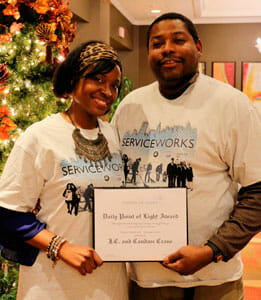
 The Engelman family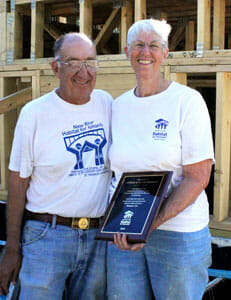
 Eddie (L) and Chris (R) Canales