Meet Daily Point of Light Award honoree Bruno Serato. Read his story and nominate an outstanding volunteer or organization as a Point of Light.
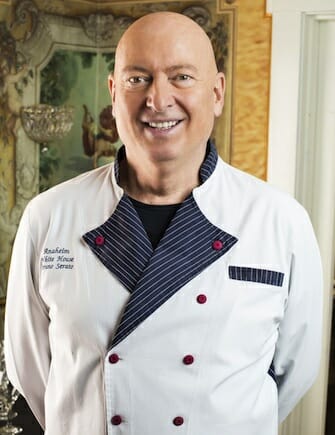
Bruno Serato
When Bruno Serato was a boy growing up in Verona, Italy, his mother, Caterina, always made sure that the family dinner table was “abbondanza,” groaning with food. After coming to California in his 20s – with just $200 in his pocket and a fervent desire to learn English – he wound up staying to embark on a career in the restaurant business.
He worked his way up from dishwasher to busboy to waiter to manager to, finally, restaurateur. Since 1987, he’s been making sure that everyone who comes to his upscale Italian steakhouse, Anaheim White House, leaves happy and plenty sated.
It took a visit from his mother, though, to help him understand that not everyone goes to bed each night with a full stomach.
“My mom had come to my restaurant for a nice lunch and we were just finishing our espresso, and she said, ‘What should we do now?’” Serato, now 59, recalls.
He knew his mother loved children, so he suggested they visit the Boys and Girls Club nearby.
“There was one kid who was eating potato chips and the director explained to us that that was probably going to be her dinner,” Serato says. “We were kind of shocked.”
Serato remembers this conversation with his mother:
“Why don’t you bring her to the restaurant for a big bowl of pasta?” she asked.
“Great idea!” he responded.
A decade later, Serato distributes close to 1,500 bowls a day to feed children at some two dozen locations throughout Orange County, California. In fact, his program – named Caterina’s Club, after his mom, who passed away last year – recently handed over a steaming plate of pasta to its 1 millionth kid.
“My mother would be the happiest woman in the universe to know that we have served so many children,” Serato says. “On the other hand, she was such a very humble woman that she would think it crazy to see that we have been featured on CNN and on Italian television.”
Three years ago, the club received nonprofit status, making it eligible to receive grant money; before that, Serato funded everything himself.
Serato, who doesn’t have children of his own, says with a laugh, “I have 1,500 children every day.” The reaction from “his” kids is his greatest reward, he says, adding, “They act like I have three Michelin stars. They are my best reviewers.”
Because many of the kids who spend time at Boys and Girls Clubs have no stable homes – often bedding down instead in a series of motels – Serato recently started another program, Welcome Home. The effort, which provides the first and last months’ rent so that households can get situated in apartments, has so far helped almost 90 families, or 500 people.
“Our children are the future of America,” says Serato. “We all need to take care of them.”
Florina Rodov
New York City, the big city of dreams where anybody can accomplish their goals, is very well known by many. Former teacher, Florina Rodov, who immigrated to the big city of dreams from The Soviet Union, knows all too well how true this can be.
Rodov propelled her way through NYC’S public schools, eventually attending Columbia University and achieving grave professional success. With her success looming over her, Rodov figured that she could help others who stemmed from at-risk populations achieve their dreams like she did.
As a teacher Rodov became known for her instrumental influence in propelling low-income, first generation students into top universities on full scholarships. Notably, three of her recent students were accepted into Skidmore and Columbia, totaling about $600,000 in scholarship money.
Although she has since stopped teaching Rodov still continues to make a lasting impact on students. Through her foundation, Authentic Manhattan Foundation, she is dedicated to countering the school-to-prison pipeline for gifted students from low-income backgrounds through a variety of programs and initiatives implemented in public schools.
The Authentic Manhattan has many initiatives including an entrepreneurship program called “Starting Up”, and an intervention designed program “The Failure Party, designed to increase grit in gifted students of poverty.”
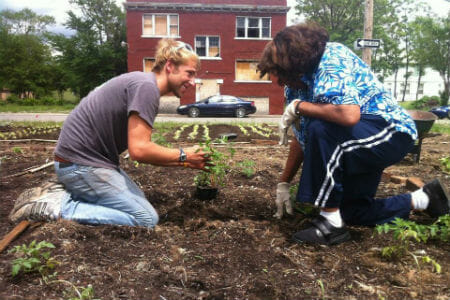
Tyson Gersh, left, and community member Delores Bennet plant seedlings together.
“Anyone have a little free time today? We could use a few extra hands on site!”
Tyson Gersh posts countless variations of this query on Facebook and Twitter, as he grows the Michigan Urban Farming Initiative, a nonprofit he cofounded in 2011 to address the lack of access to fresh food in some urban neighborhoods.
Since acquiring empty buildings and vacant lots in Detroit’s North End at an auction – some 30 properties altogether – Gersh has counted on an ever-growing troop of 8,000 volunteers to turn ruins into a thriving farm that distributes the fruits of its labor for free.
“Everything we do has come from leveraging social media,” Gersh says. “People are eager to help. They ask me what I need, and I say, ‘You’ll have to come to find out.’ It could be tearing down a building, it could be weeding a garden.”
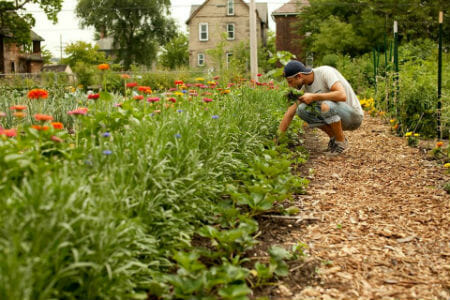
Tyson Gersh weeds a Michigan Urban Farming Initiative garden.
Once they come – whether from down the block or out in the suburbs – Gersh takes photos of them at work, then posts the images.
“There they are looking super dirty and their friends see it and want to get in on the fun,” says Gersh, 26. “The networking has just gotten easier.”
Gersh got the idea for the Michigan Urban Farming Initiative a few years ago, while – as part of his studies in social psychology at the University of Michigan – he worked as a research assistant for the Urban Community Oral Health Project.
His interviews helped him understand the relationship between socioeconomic status and physical and economic access to a variety of healthy foods.
The relatively simple idea of developing a community garden that would provide good food for all has morphed into a project that aims to “drive innovative green and blue [water-focused] infrastructure by a new model of blight deconstruction,” Gersh says.
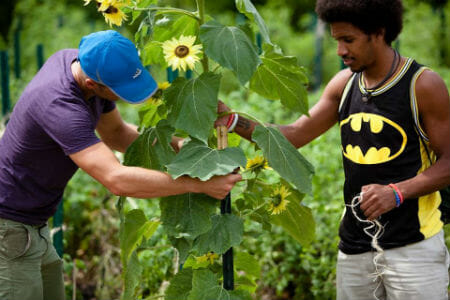
Tyson Gersh, left, and volunteer Michael Anderson stake sunflowers for the Michigan Urban Farming Initiative.
For instance, one crumbling structure is being torn down, leaving only its basement, which will be converted into a retention pond to provide water for the farm.
“In Detroit, there are 80,000 blighted properties; the city’s response is to tear them down, which leaves behind vacant land, a feeling of disinvestment and danger,” Gersh says. “We want to figure out ways to repurpose these existing buildings relatively cheaply.”
Gersh adds that because two-thirds of the cost of demolition goes toward removing the basement and foundation, it benefits the organization – and the community – to use that piece.
“Tyson Gersh exemplifies the shifting – and expansive – nature of volunteer service today,” says Tracy Hoover, Points of Light’s president. “By using social media, his background in social psychology and a desire to make life better for others, he is drawing from his skills and passions to recruit volunteers and transform a neglected community.”
Last year alone, the Michigan Urban Farming Initiative grew 15,000 pounds of organic produce, some 230 varieties of crops – including 30 kinds of tomatoes and 25 kinds of carrots.
“The neighbors get really excited about having access to fresh food,” Gersh says. “Since most of them also serve as volunteers on the farm, they are literally reaping the rewards of what they sow. The experience of taking ownership and changing the world around you is really empowering.”
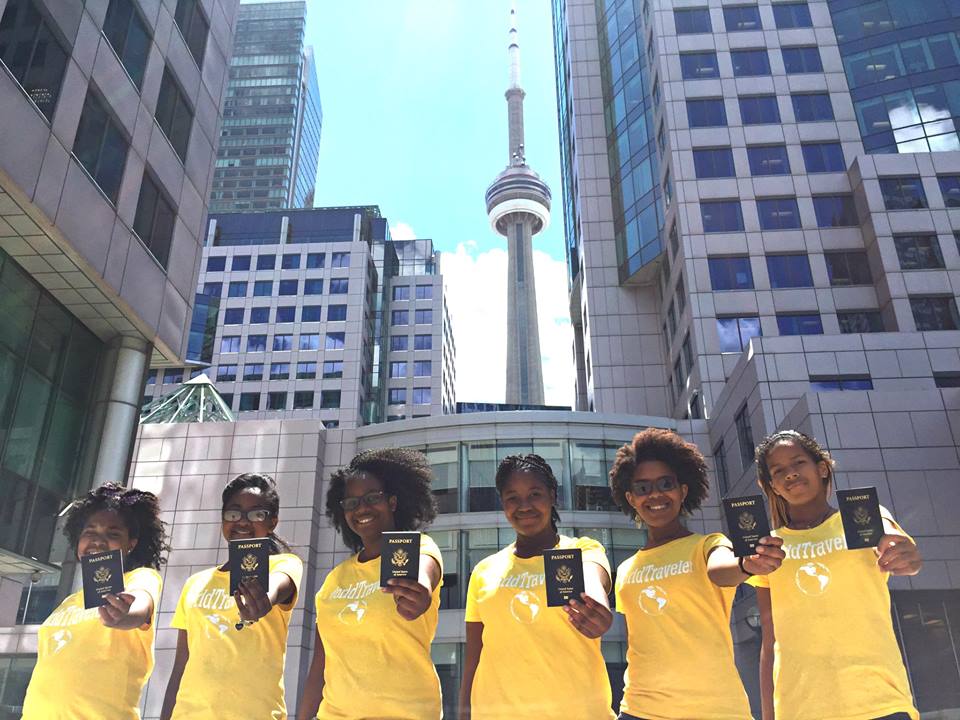
When it comes to international travel, Tracey Friley is always on-the-go. But, it wasn’t until she took a group of girls to the U.S. Virgin Islands in 2010 that she realized how important the opportunity to see the world really is.
That trip sparked her passion for opening the world to girls from underserved communities and led her to launch the Passport Party Project (PPP). This National Geographic-award winning program helps young girls secure both their first passports and first passport stamps.
According to national statistics, 35-38 percent of Americans hold passports, and underrepresented groups likely account for a small portion of that population. Through PPP, Friley hopes she can change the face of international travel and foster global citizenship.
“Giving a passport has a trickle-down effect. If a child is the first in a family to get a passport, other family members are more likely to get them, too,” she says.“I want to open the door to the world for anyone who comes into the world on an uneven playing field – girls, those from culturally diverse backgrounds, and those who might come from varied socio-economic backgrounds.”
Passport Party Project is helping girls learn about the world and all it has to offer
To attract girls and their parents to PPP, Friley uses social media and partners with both local and national organizations like Visit Oakland (the local tourist board where she is based), and Mocha Moms, Inc., a national mothers’ organization, to spread the word. Photos and Facebook posts are frequently shared during trips and put nervous parents at ease about letting their daughters travel internationally without them.
PPP is open to American girls in the 48 contiguous states and the District of Columbia who are between the ages 11 and 16. They must maintain a 2.5 grade point average, must secure parental permission to travel, and must be available to participate on trip dates. Overall, parents pay some money toward trip costs, and PPP, PPP sponsors & PPP advocates cover the remainder, including the nine-day trip, airfare, all transfers, room-and-board expenditures, excursions, and expenses.
To date, the initiative has completed two phases with a third in-progress. Phase 1, fully funded by Expedia.com, secured passports for 100 young girls, six of whom received their first passport stamps on a trip to Belize. Phase 2 scaled back in an effort to connect with the girls more closely, and gifted 10 girls with passports, and provided housing, maps, and monetary support to six girls for a trip to Toronto. Phase 3, which just closed for applications, will, again, take girls to Toronto, which is being sponsored in part by Toronto Tourism.
These aren’t strictly pleasure trips, however. Instead, these journeys teach the girls to “travel with heart”, as Friley calls it. Each selected girl must complete 6 weeks of online global awareness training while being assigned to a Travel Mentor, as well as be part of a service project. In Belize, the newly-minted passport holders played with children at a local orphanage. In Toronto during Phase 2, they donated children’s books to Toronto-based Planeterra Cares, a non-profit building a library in Egypt. Bigger #travelwithheart plans are currently in the works for Phase 3, though Friley will at a minimum take cues from Travelocity’s #TravelForGood volunteer initiative and drop off a few cases of water at a local homeless shelter.
Ultimately, Friley says, PPP exposes girls to other cultures and grows their abilities and interest in being part of a global community.
“Getting passports into kids’ hands all by itself changes how they think in general,” she said. “This is a global mission. If I don’t do anything else, I can be the Pied Piper of Passports
One day as the Cunningham family was driving to an afterschool activity, they started talking about how they could do something nice for others.
During that car ride with her young daughters – Harper and Maggie – Melissa Cunningham wondered aloud, “What could we do?”
“I want to give books!” responded Harper.
“And I want to give a blanket!” added Maggie.
That moment was the start of Books and a Blanket, which promotes literacy and well-being by giving children in need a collection of books and a warm blanket each year before school breaks for the winter.
During 2012, its first year, the effort reached 119 children and distributed approximately 1,200 books. By the end of last year, 802 children had each received a blanket and a basket of 15 books.
“I think books are the most important things in a household,” says Harper, 12. “I knew that some of the kids in my school didn’t have very many at home.”
Chimes in 10-year-old Maggie: “And I thought they might not have blankets. The two go together.”
Now at the beginning of each school year, the team sends a donation request form to the nine area schools that participate in the program. Then, the girls start sorting thousands of books by grade level.
Maggie Cunningham
“We started by giving away the girls’ own books that they had outgrown,” says Melissa. Now everything is donated, and about 15,000 books fill a storage unit.
“I can’t go more than five minutes without stopping to bury myself in a book,” says Maggie. “Mom has to keep telling me to get back to work!”
In this family effort, everyone has a job to do. The girls’ dad, George, created the Books and a Blanket website and helps man a booth during events. Meanwhile, Melissa helps the girls manage their time and get them to where they need to be when deliveries start.
“When families come together to serve their communities, kids get into the habit of thinking beyond themselves, parents and children spend quality time with each other, and bonds get stronger,” says Tracy Hoover, Points of Light’s president. “By sharing the gifts of reading and warmth with kids in need, the Cunningham sisters and their parents show us the value of volunteering as a family.”
Driving the Cunningham family’s work is research showing that being able to read by third grade is critical to success in school and as an adult. Plus, the sisters say, reading is simply one of the great pleasures in life.
“I love books, especially fiction, because they can take you on adventures and make you feel like you’re part of a whole other world,” says Harper. “It’s important for all kids to have that experience.”
To learn more about the Daily Point of Light Award, or to nominate a volunteer or organization, please visit www.pointsoflight.org/dailypointoflight.
Adam Hoffman
Meet Daily Point of Light Award honoree Adam Hoffman. Read his story and nominate an outstanding volunteer or organization as a Point of Light.
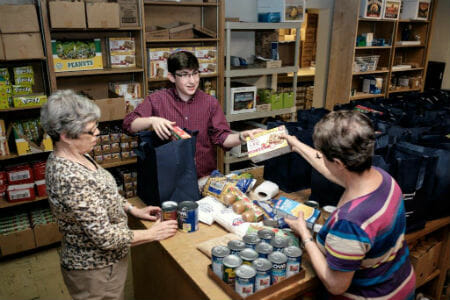
Adam Hoffman, center, working with volunteers at the Braes Interfaith Ministries Food Pantry.
When Adam Hoffman was growing up, his grandmother, Anna Rosenthal – a Holocaust survivor who was imprisoned at Auschwitz and two other Nazi camps – told him stories of hunger and helping others.
During her imprisonment, Rosenthal, who is now 89, would sneak out at night to retrieve potato peels from the garbage. Though she herself was hungry, she would give the thrown-out food to the sick in the infirmary.
Adam, who lives in Houston, says his grandmother’s stories have helped shape him. He began volunteering at a local food bank and was concerned that much available food offered to banks and pantries by area grocers eventually expired because the food banks did not have enough personnel to make regular pick-ups.
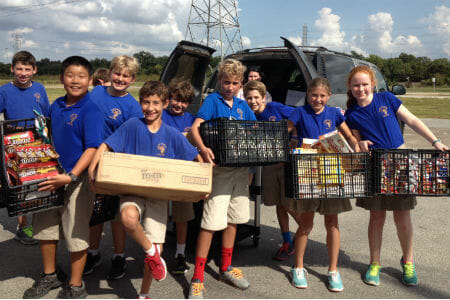
Houston middle school students help Food4them deliver donations to a a local food pantry.
In 2013, when he was just 13, Adam founded Food4them, a charitable organization dedicated to collecting as much available food from local grocers as possible and to deliver it not only to Houston food banks and pantries, but also to pantries in rural towns where poverty rates are high.
Adam approached grocery corporations directly and offered to pick up donated food every two weeks so that it would not sit until it expired on loading docks. Today, Adam has negotiated pledges with several local grocery chains that enable Food4them to deliver more than 700 pounds of food each month to pantries in Houston and nearby towns.
“If my grandmother was able to do good deeds and give people food under the most horrible circumstances, I don’t just feel a responsibility but an obligation to do it when I’m an American living in good times,” Adam says.
Impressed by Adam’s resourcefulness, the Houston Food Bank joined local corporations as a Food4them partner, helping Adam “learn the trade,” but now he has his own sources and suppliers. Adam has five core volunteers who collect and deliver food.
“Two things set us apart from other local food charities,” says Adam. “First, we pick up more regularly from grocers so that food doesn’t expire and go to waste. Second, we make deliveries to small towns not served by Houston-area banks and pantries.”
Adam, now 15 and a high school sophomore, has enlisted help from his classmates.
“What has impressed me most since we started Food4them is how great a difference one person can make, whether it’s me or someone else who has volunteered,” Adam says. “One kid who helped us told me it was an extraordinarily inspiring moment and that he wanted to do more of it. Some kids have gone on to volunteer independently for food banks. It’s an incredible experience, and I think that if everyone took a few hours out of their week to volunteer, together we could make an amazing difference.”
Khady Lusby
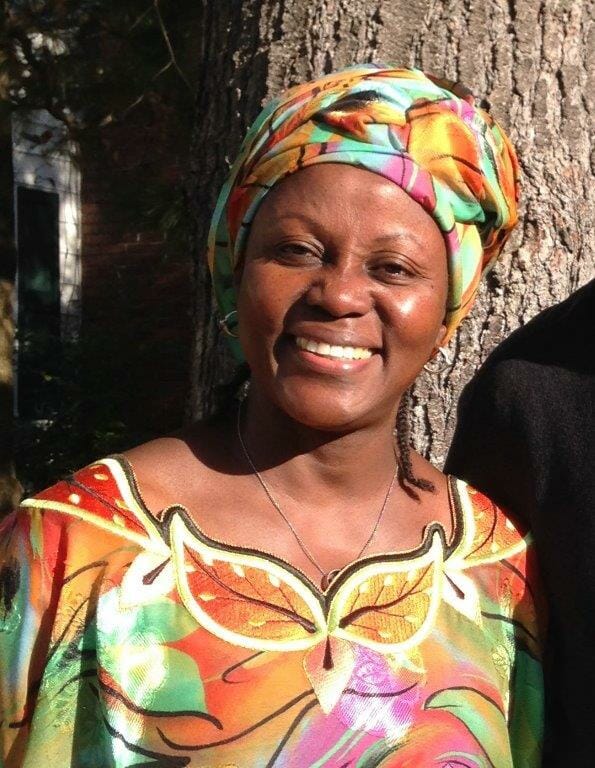
When Khady Lusby was growing up in the small town of Nioro in her native Senegal, she considered her mother to be one of the smartest people she knew. Yet her mother never went to school, and couldn’t even sign her own name. “When she was growing up, girls just weren’t given that opportunity,” recalls Lusby, a French language teacher living in Arlington, Virginia.
Khady Lusby
Shortly before she passed away, Lusby’s mother said she wanted to buy a piece of land and sign her own name on the deed. With her daughter’s help, her mother, Adja Penda Ba, got her wish. After her death, Lusby found out that her mother had left her that land. “I felt that was a sign that something special had to happen there,” she says.
That land is now home to College Adja Penda Ba, named in her mother’s honor. After raising $2,390 at a Taste of Africa event in Arlington, Lusby founded the school in 2009. Besides giving girls the chance to continue their education past the 8th grade – a time when many dropped out of school, College Adja Penda Ba also empowers students with classes in agriculture and technology. Lusby founded her non-profit, OPEN International in 2010, dedicated to the education of children in Nioro and the villages in the area.
Although girls can be educated now in Senegal, the reality is that in impoverished areas children have few opportunities to learn. Lusby spent her own time and money getting her project off the ground, meeting with the local elders in the town to build consensus and get parent’s support for the project. She invited local advisors and town officials to serve on the Open International board.
“We are very small,” she says. “But we are growing. We started with 25 kids and two rooms, now we have 300 kids in 11 rooms and 20 computers.”
Her hope is that through grassroots fundraising and sister school partnerships in America, more students can be sponsored and educated. She dreams of hiring more teachers, having a reliable Internet connection at the school and developing an onsite farm. “Our students here in America don’t realize how fortunate they are to receive a good education,” she says. “These partnerships will help all the students involved become better world citizens.”
Nikki Williams-Rucker
After teaching for over 10 years in urban schools, Nicki Williams-Rucker realized reoccurring problems that continuously affected her students. Upset with the wide range avoidable patterns that her student’s were facing, Rucker decided that she would set out to make a change for students that would extend farther than just the classroom.
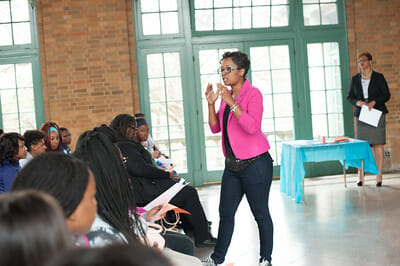
My Sister’s Keeper of Chicago (MSK) is an initiative that Williams-Rucker started based off her realization of increasing drop-out rates and unplanned pregnancies the summer before college. For the past six years, MSK has been an organization that prides itself on providing urban girls with the tools they need to become stronger young women and future leaders.
Williams -Rucker speaking to a group of future leaders
The program offers year long, in school, curriculum-based programming to 10th-12th grade students, as well as hands on workshops that are based on the Illinois State Common Core Standards. The organization also includes four other programs aimed at helping young women, including a mentorship program entitled Lifting as we Climb On-on-One. The program designed to increase retention rates amongst MSK graduates, pair graduates with women from various professions to encourage and help students.
Since the start of her program there has been a noted 75% increase in sense of self-esteem amongst participants in middle and high school. There has also been an increase in college acceptance and interest amongst her senior high school student, as well as a 91% increase in media messaging awareness and an 85% increase in positive/healthy relationships amongst peers and teachers. Parents have also reported a positive change from their children even with skills such as resume writing and interviewing.
Despite the declining funding for after school programs for many Chicago area schools, Williams-Rucker is doing her best to ensure the sustainability of MSK and the message it provides to young women
Shine Adams
Though America Is commonly referred to as, theland of opportunity, or the land of second chances, there are still too many people in this country who face adverse circumstances. Understanding these harsh realities, Shine Adams uses his resources to better his community and create lasting change.
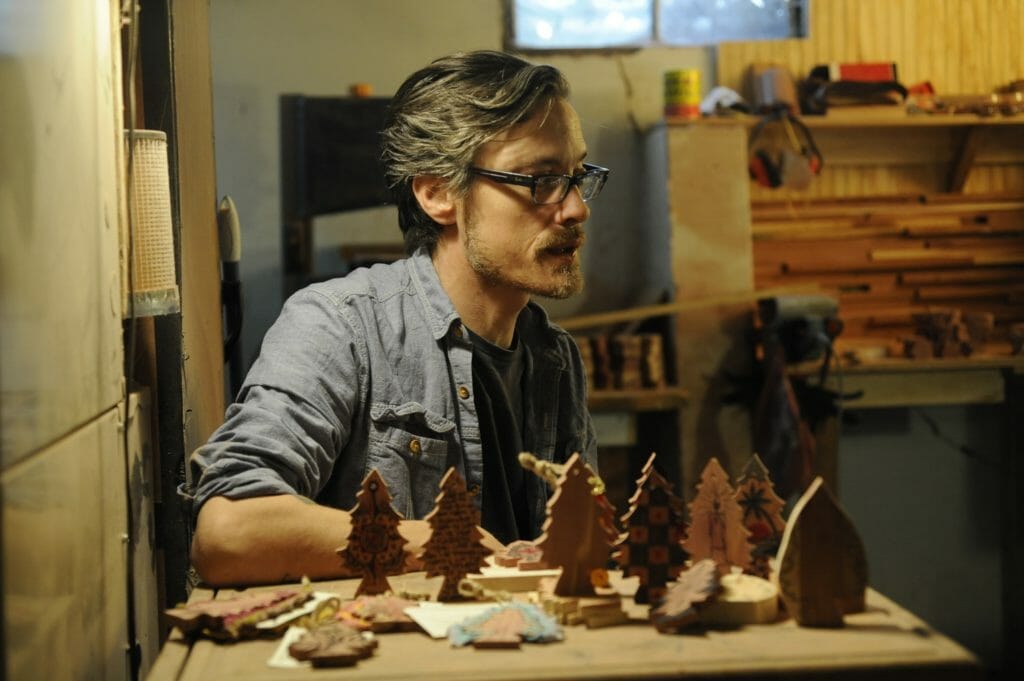
Adams is the founder of the non-profit organization, Sun Cedar. Sun Cedar produces naturally aromatic cedar ornaments and cedar wood sachets. Currently working in Social Service, combined with his extensive experience as a carpenter, Adams created the manufacturing company in hopes of providing people with a second chance and an opportunity to work.
Adams believes in a second chance and Sun Cedar has offered that to so many people.
“I know from personal experience how it feels to have doors closed to me,” said Adams. “It felt good to be on the other side of things, and actually be able to give others a chance. I have always believed that everybody deserves a chance to work.”
Adams not only provides opportunity, but inspiration as well. Sun Cedar gives employment to those in transition, specifically the homeless, ex-offenders, and others facing severe economic disadvantages. Paying double the national minimum wage, the job does not only help with financial stability, but the steady work also helps instill a sense of purpose.
While a long-term career may not be promised, Sun Cedar does provide their employees with a long-term plan. A percentage of proceeds goes directly toward an employee trust. This “Employability Fund” supports individuals as they reintegrate into the workforce. From resume building and interview clothing, to help with acquiring legal documents, the employee trust assists with a variety of needs.
Sun Cedar has proven to be not just a business or a job, but more so an outlet for a better future.
Kathleen Foley-Hughes
Sometimes the answer to a simple question isn’t good enough.
That’s what happened to Kathleen Foley Hughes when her developmentally disabled son Charlie was in middle school in Palo Alto, California. “I asked what was the plan to prepare Charlie and kids like him for after high school.” The answer was to bus the kids to a program at the VA Hospital. “These kids are already marginalized,” she says. “IT didn’t make sense to me to take them away from the school they are used to.”
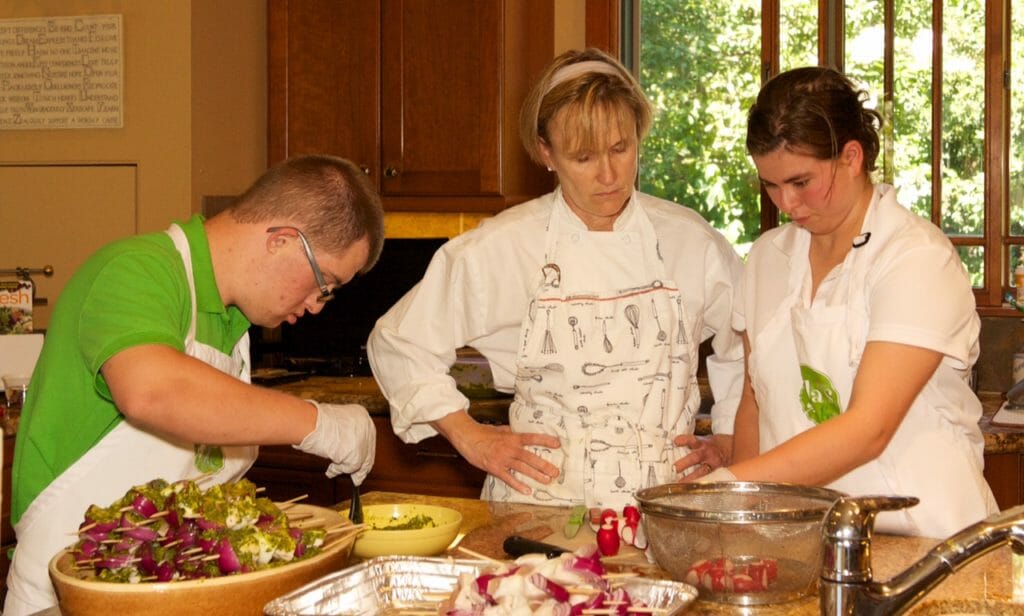
Foley Hughes is helping put people with disabilities to work.
So Foley Hughes proposed a program that would train people with disabilities to work in commercial food service. Her background is in events and catering. “There are a lot of mainstream jobs that these kids and adults could do with the right kind of help.” The school agreed, as long as she handled funding and managing the program.
So she did. That was in 2008 and the response was so overwhelmingly positive to the onsite café at the school that the notion of going public was the next natural step.
When a café space was proposed for a local library, Foley Hughes competed with the likes of Peet’s Coffee and Starbucks and got the contract. When construction problems delayed the opening, Foley Hughes ramped up the catering business to keep her kids working. Ada’s Café finally opened in December 2014. .
Foley Hughes and her son Peter, 26, Charlie’s twin, run Ada’s -a reference to the Americans with Disabilities Act. “Peter has a degree in education and is wonderful at breaking job responsibilities into meaningful tasks that our employees can master. He sets them up for success.”
Charlie is also on the job five days a week. There are 52 people on Ada’s payroll ages 16 to 54, with 33 of them adults with disabilities. “Our team is phenomenal. They do just about every job, from making sandwiches and salads to running the cash register and waiting on the guests. The Espresso machine is tough, but other than that, they do it all,” says Foley Hughes.
“Some of these folks commute two hours on public transportation each way to get to work,” she said. While there are occasional snafus with service – as there are in any restaurant – Ada’s is known for its friendly atmosphere and welcoming smiles. “This is a labor of love,” she says. “The sense of accomplishment and pride our people feel is just priceless.”




 Bruno Serato
 Tyson Gersh, left, and community member Delores Bennet plant seedlings together.
 Tyson Gersh weeds a Michigan Urban Farming Initiative garden.
 Tyson Gersh, left, and volunteer Michael Anderson stake sunflowers for the Michigan Urban Farming Initiative.
 Passport Party Project is helping girls learn about the world and all it has to offer

 Adam Hoffman, center, working with volunteers at the Braes Interfaith Ministries Food Pantry.
 Houston middle school students help Food4them deliver donations to a a local food pantry.
 Khady Lusby
  Williams -Rucker speaking to a group of future leaders
 Adams believes in a second chance and Sun Cedar has offered that to so many people.
 Foley Hughes is helping put people with disabilities to work.